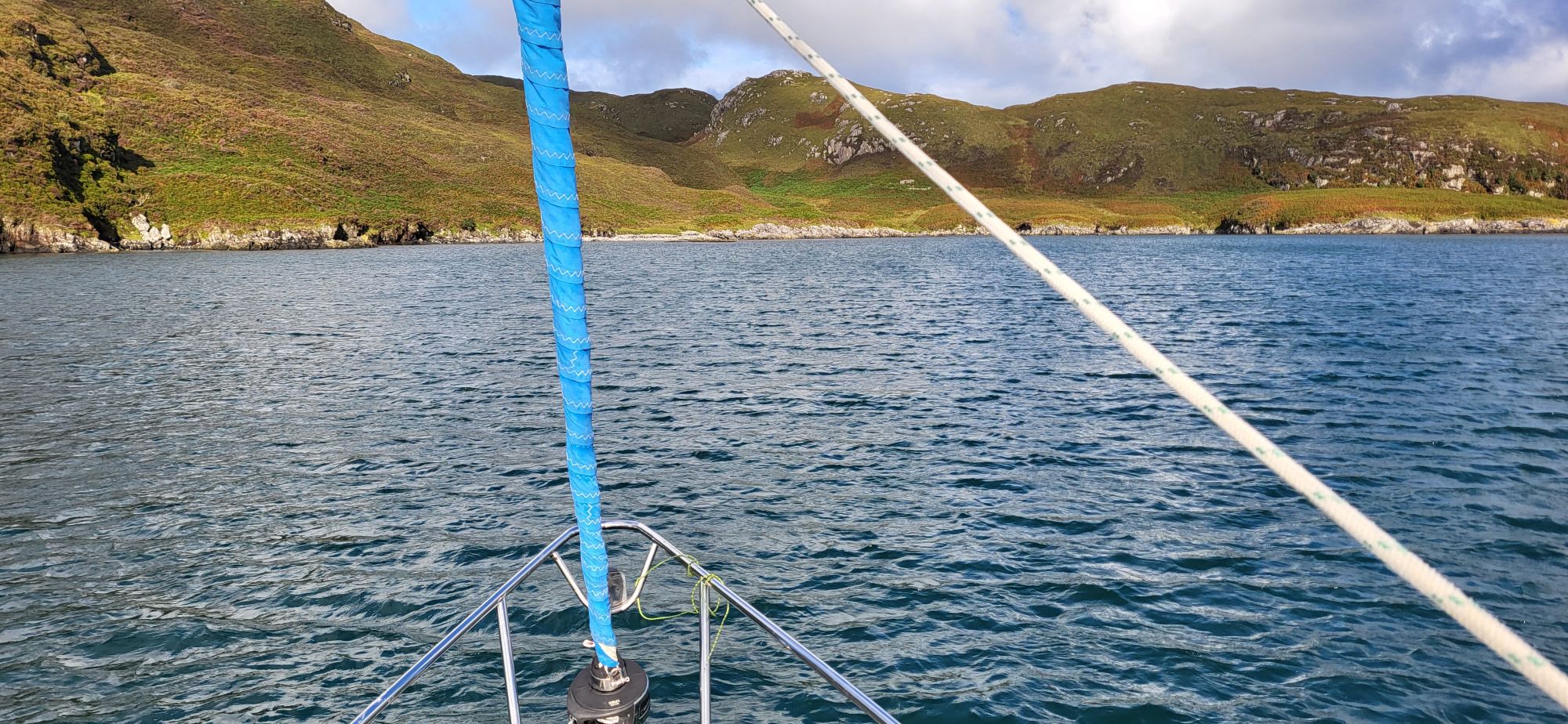
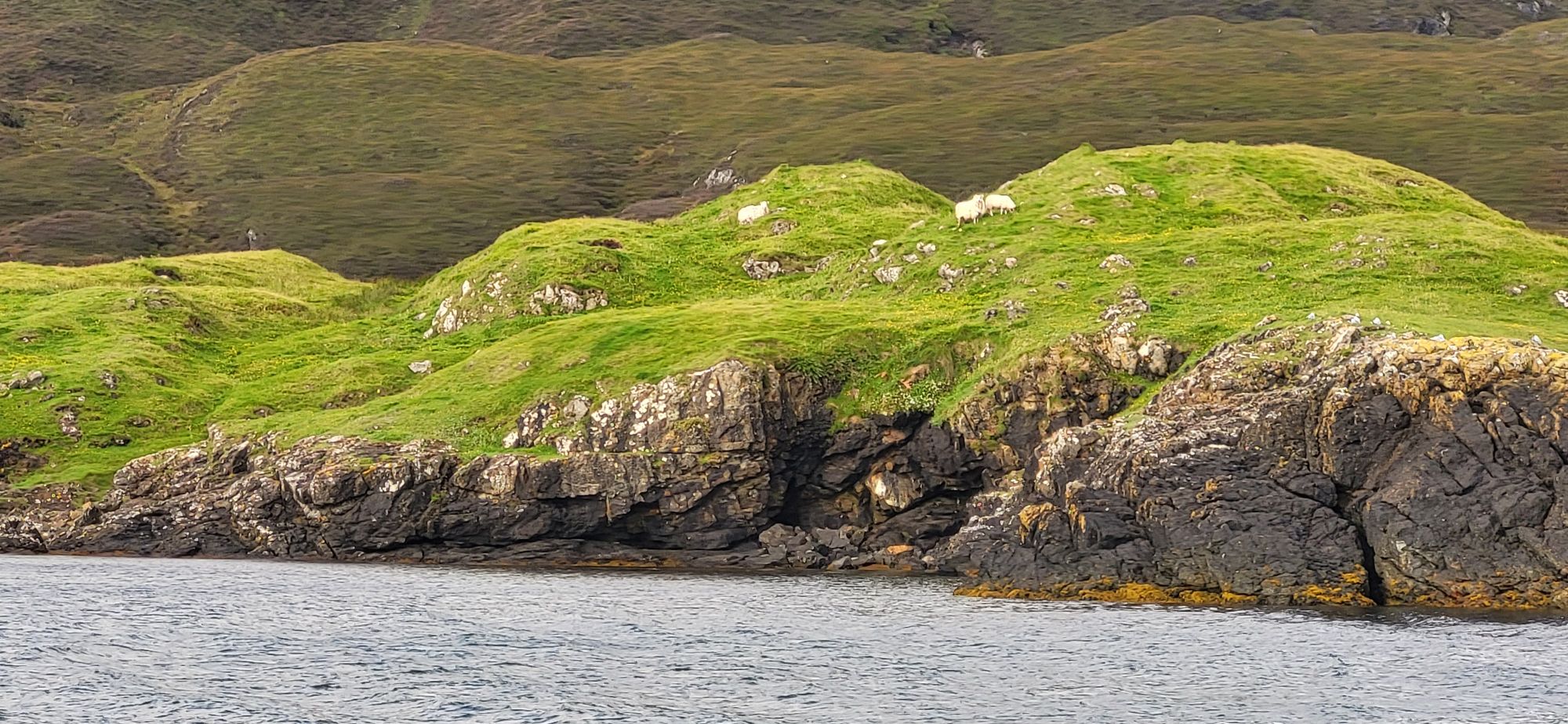
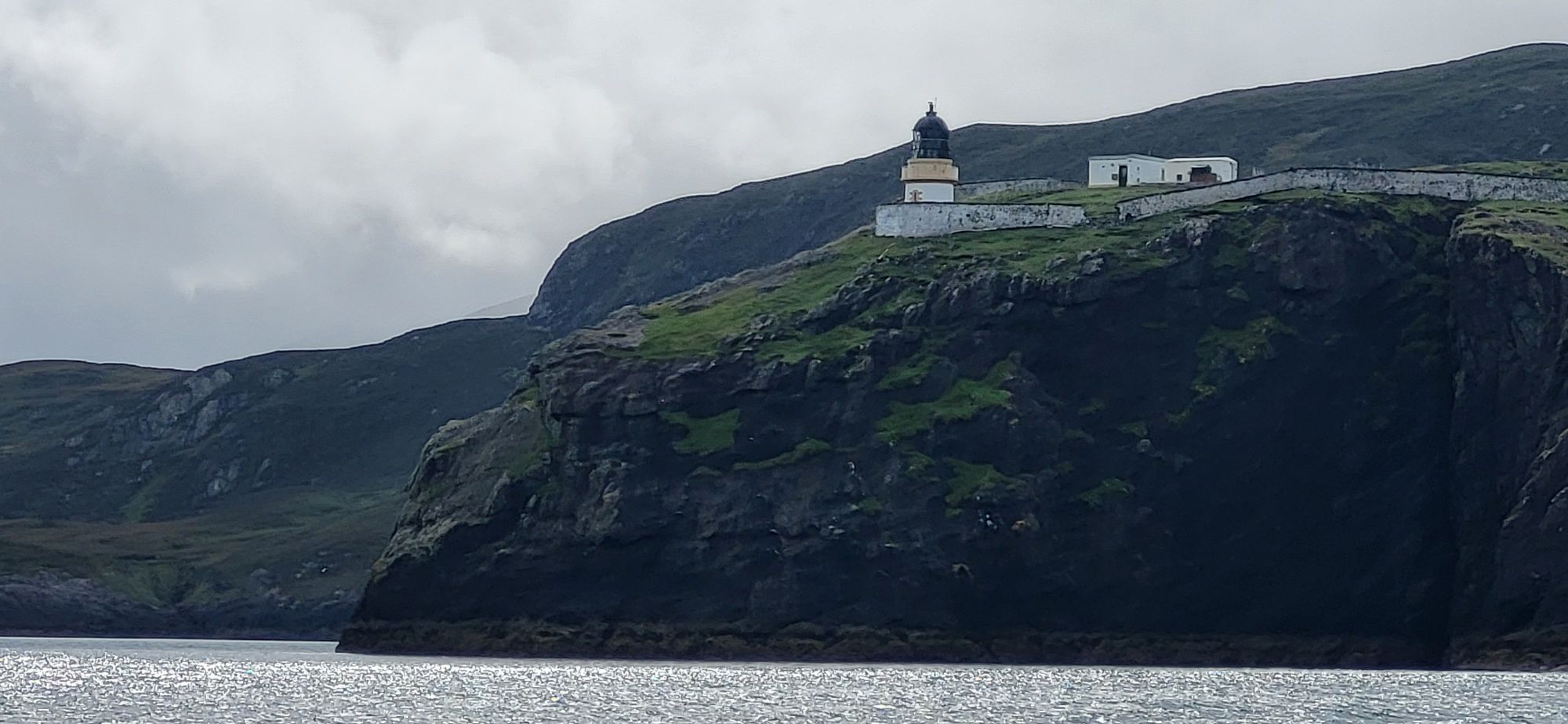
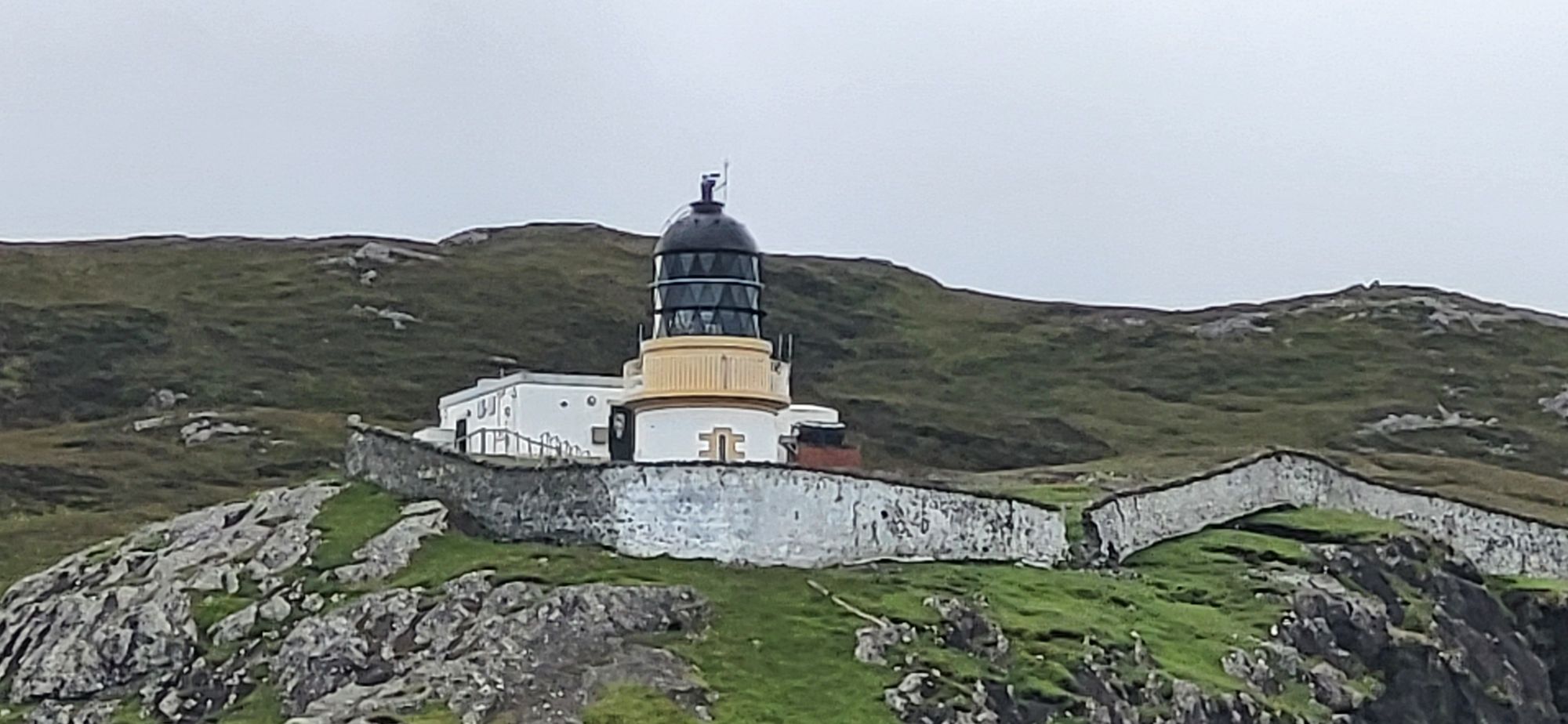
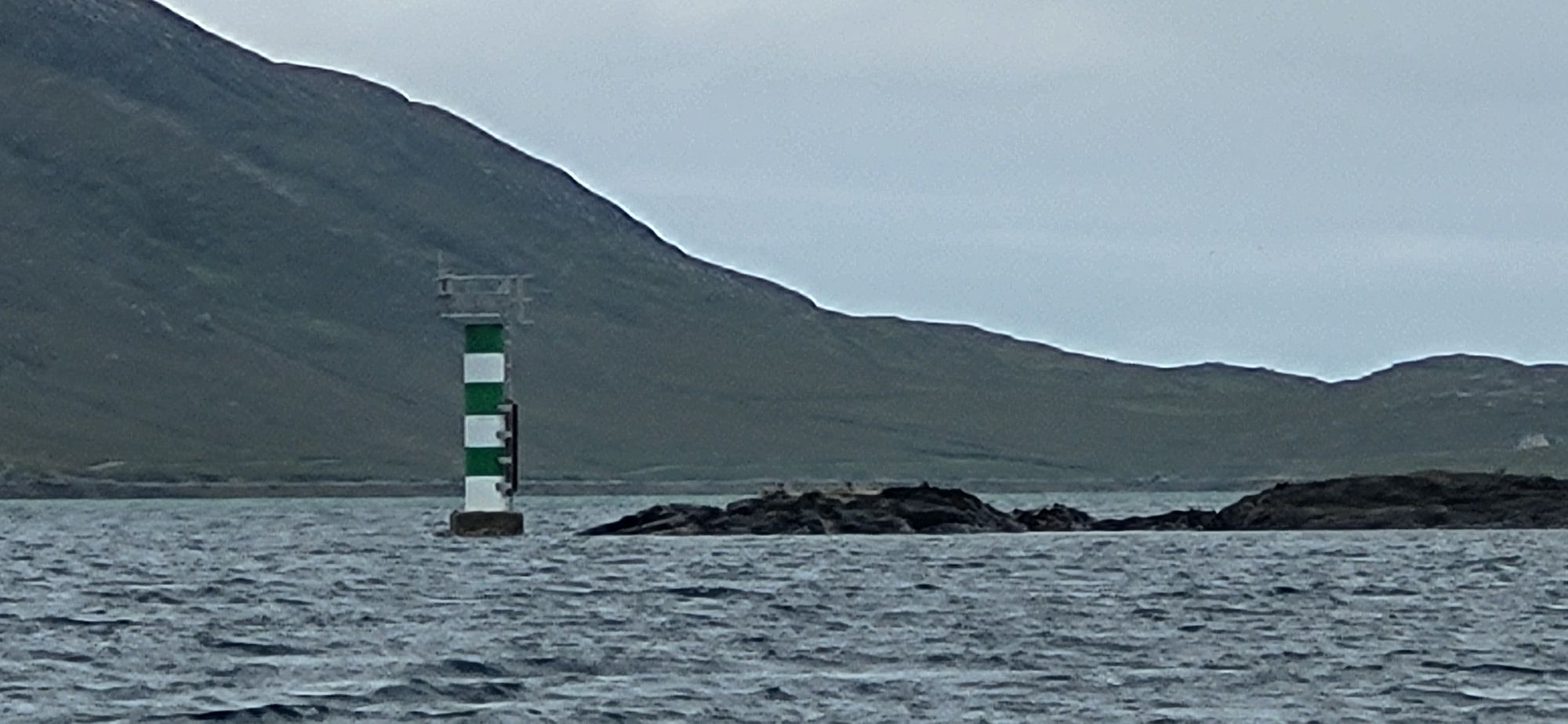
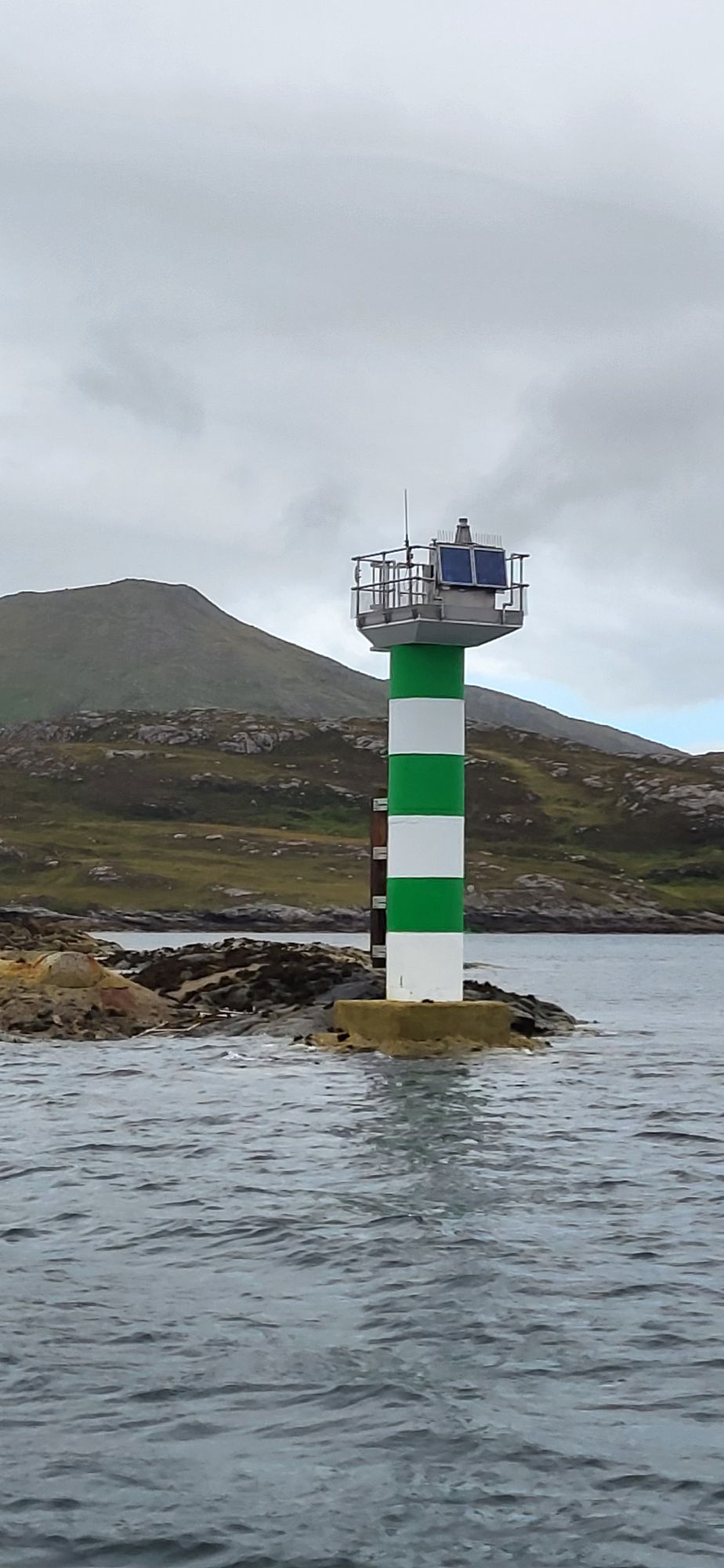
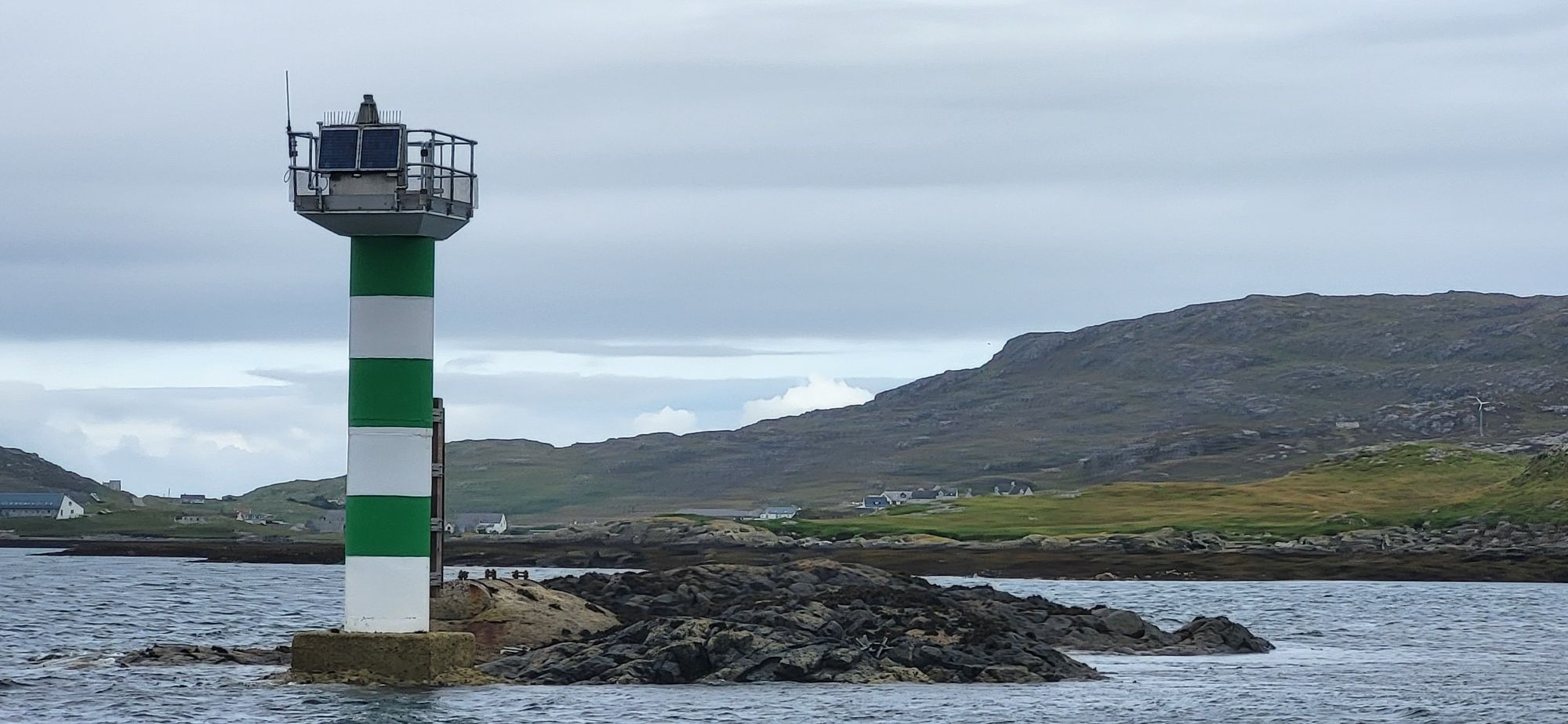
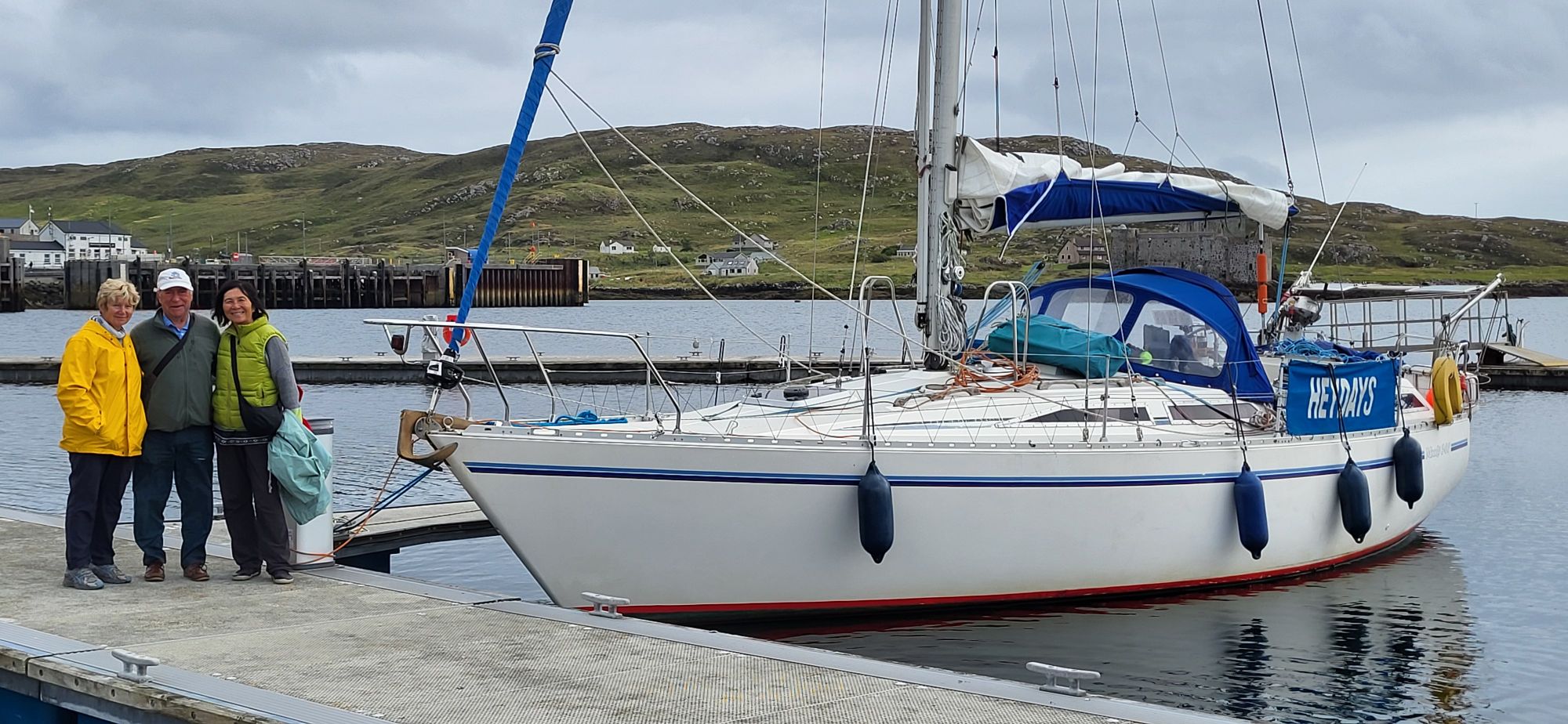
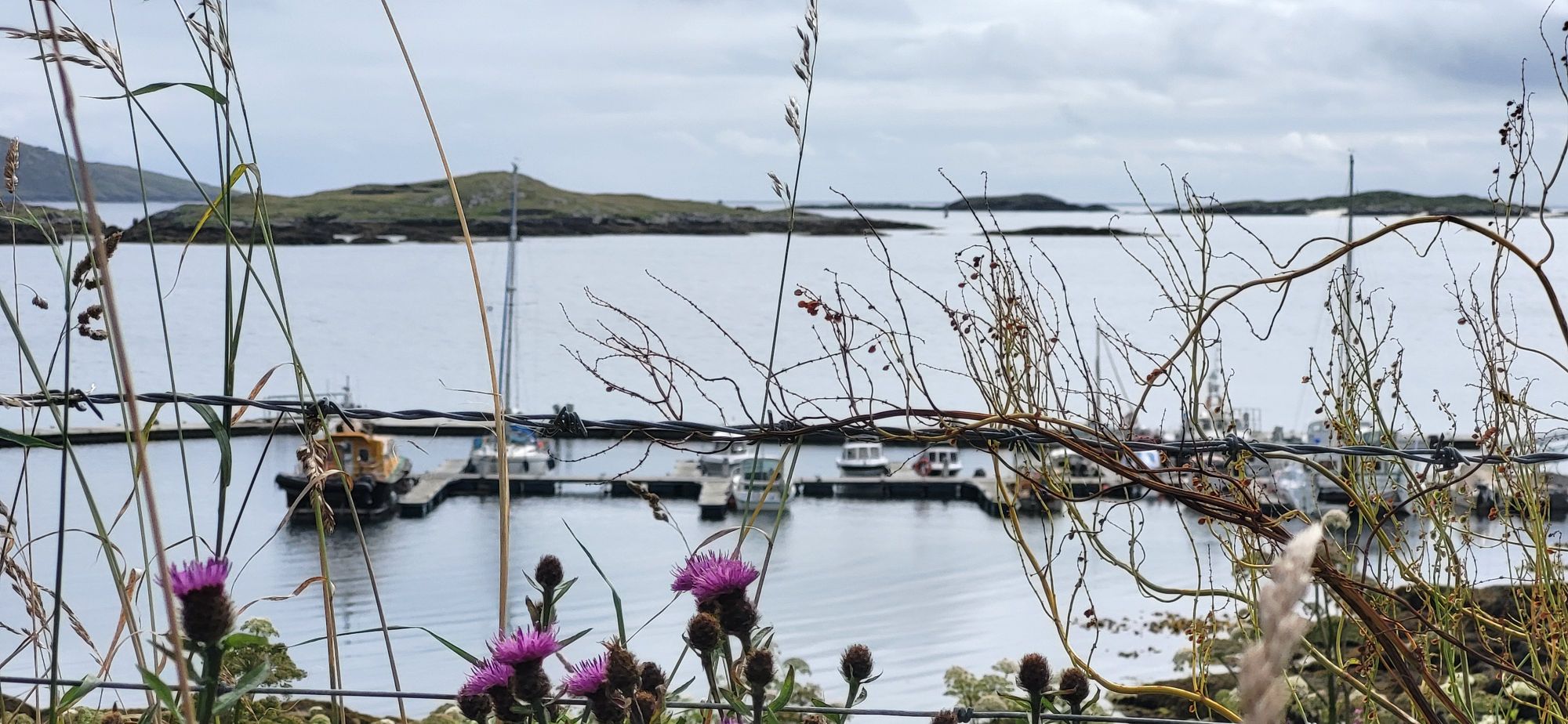
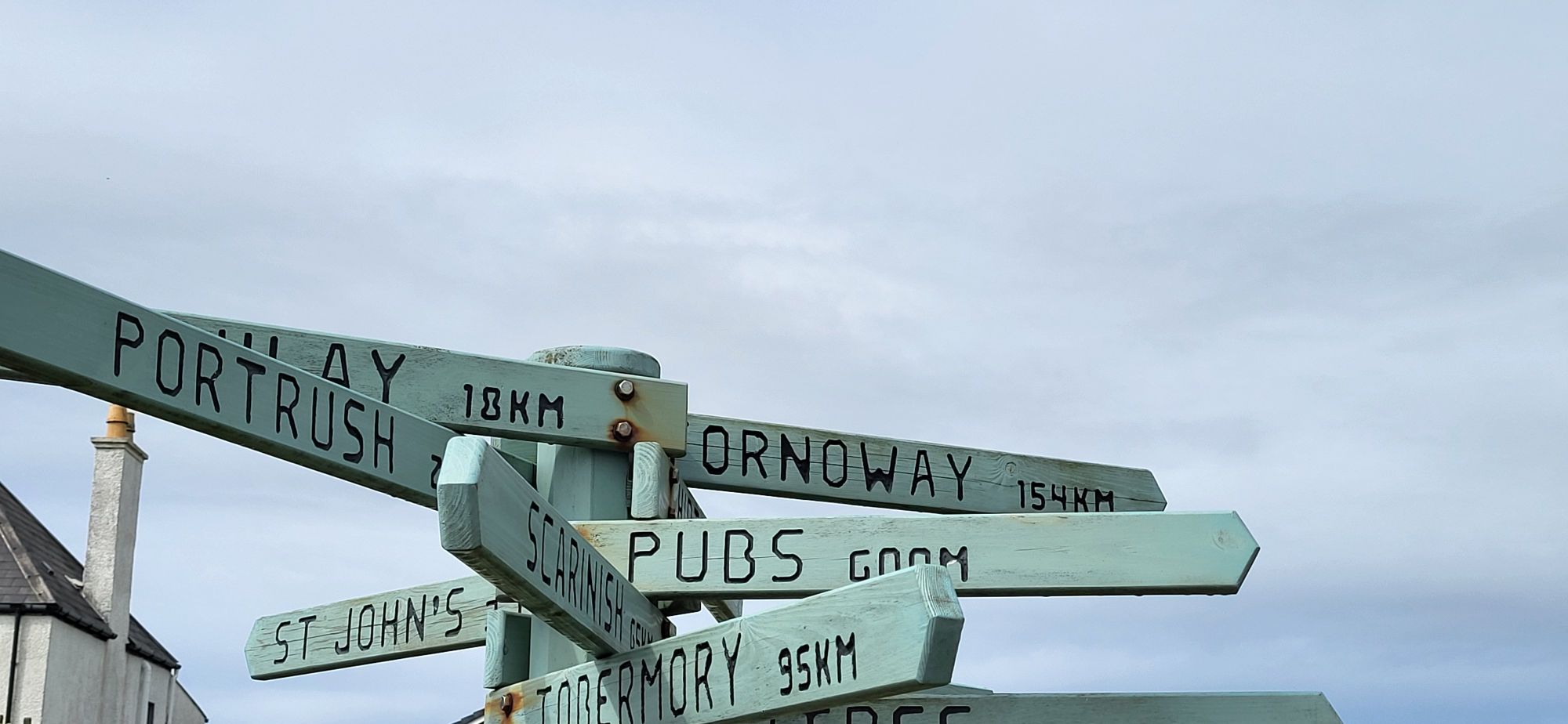
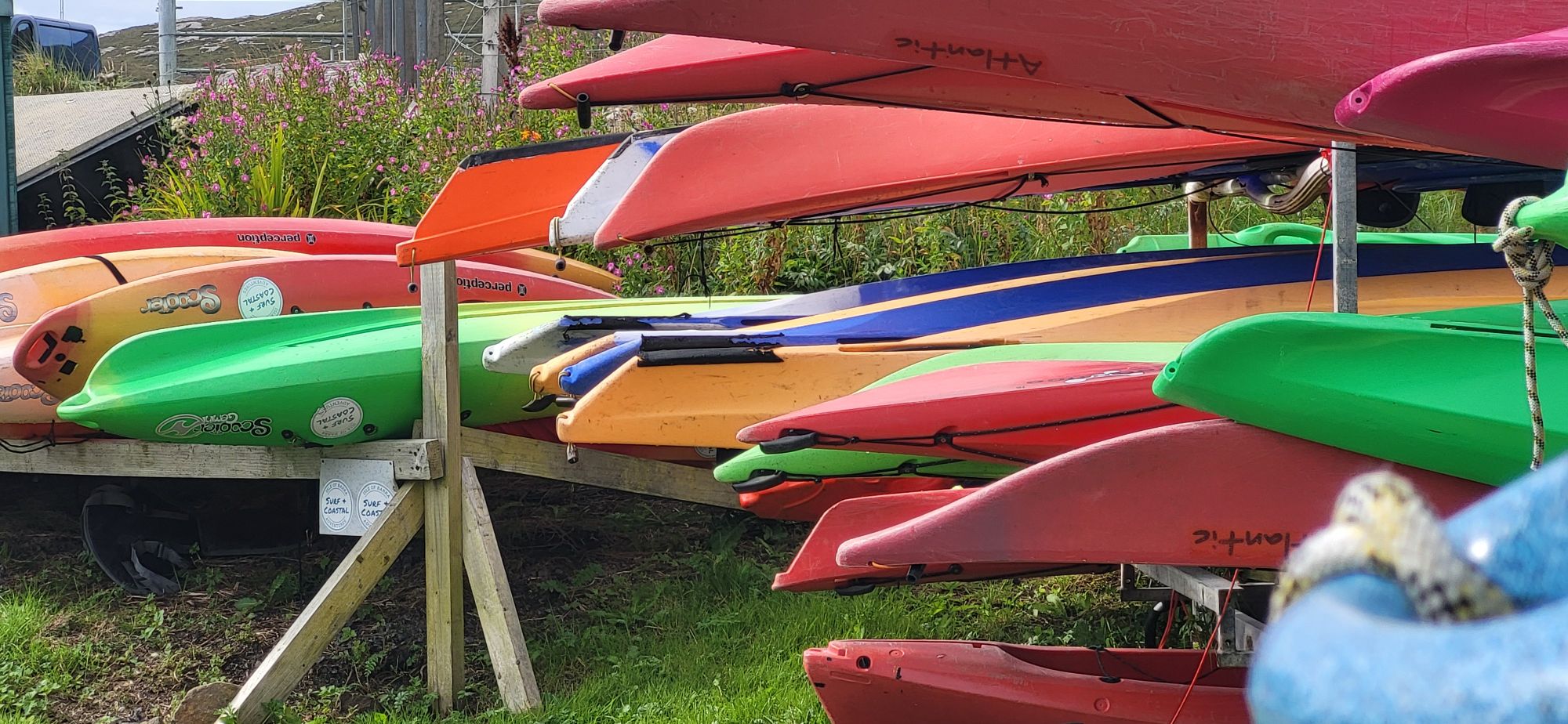
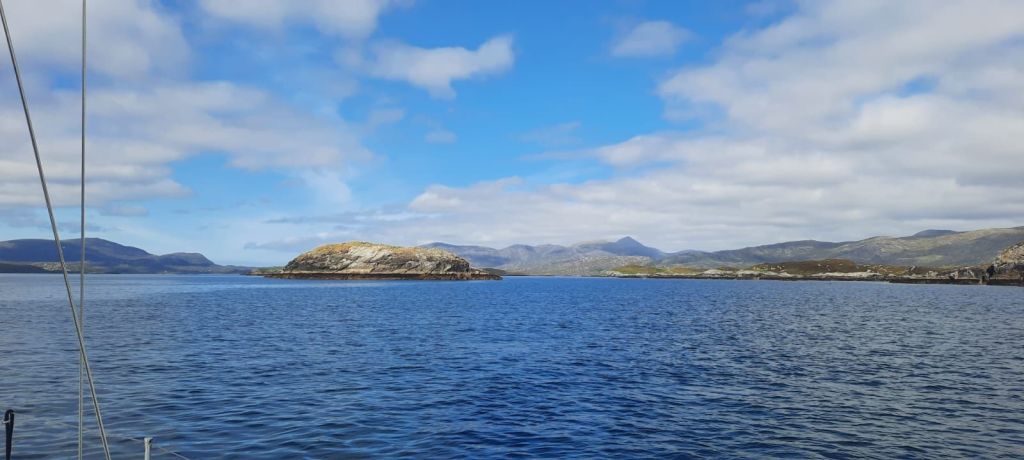
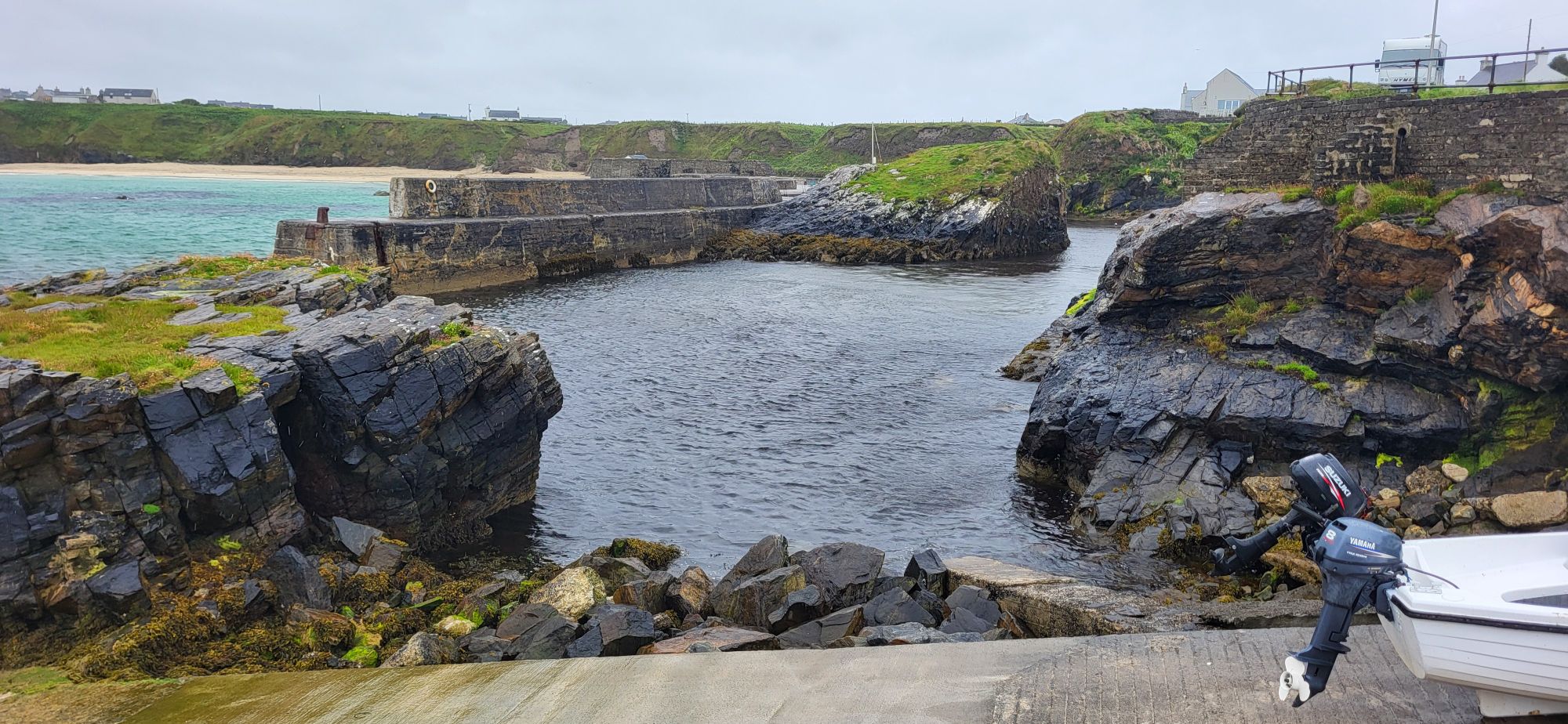
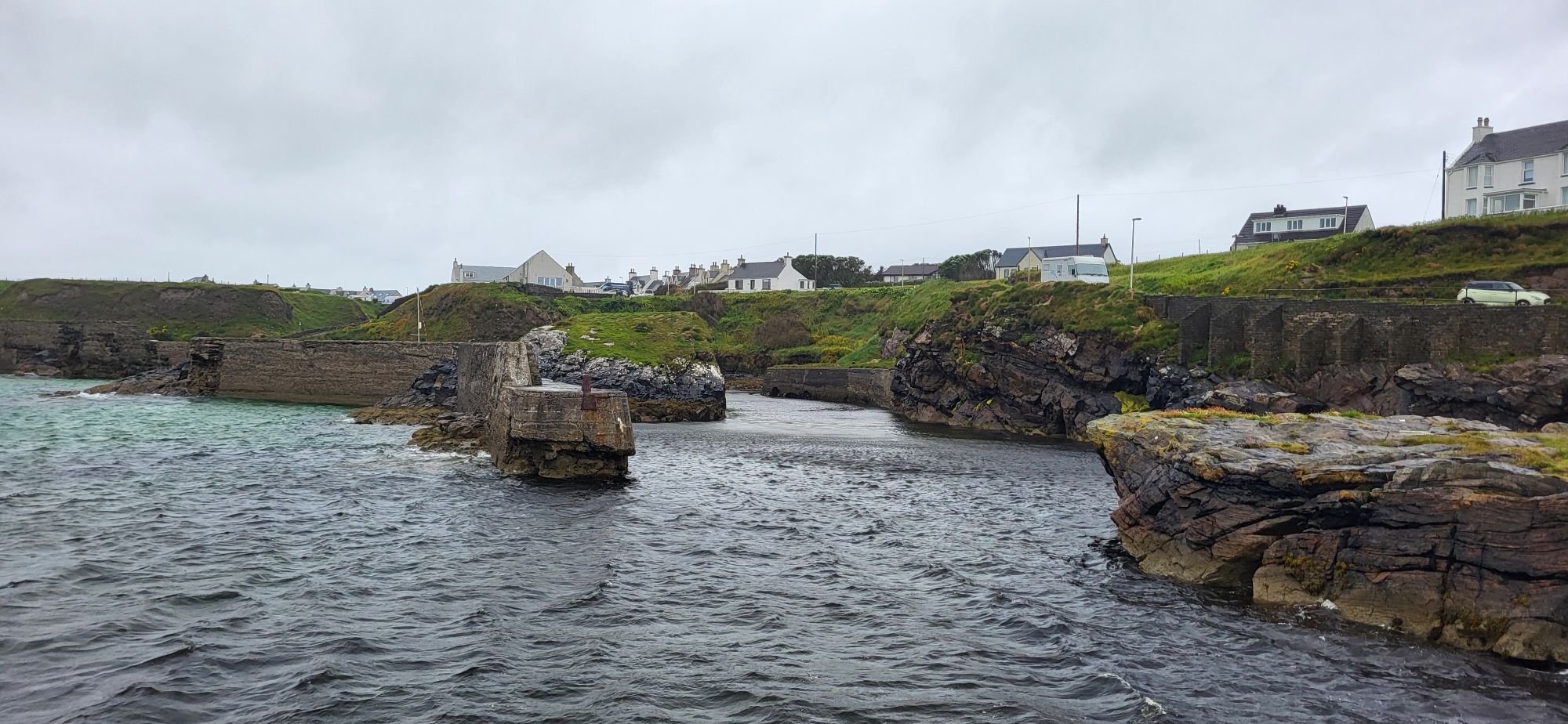
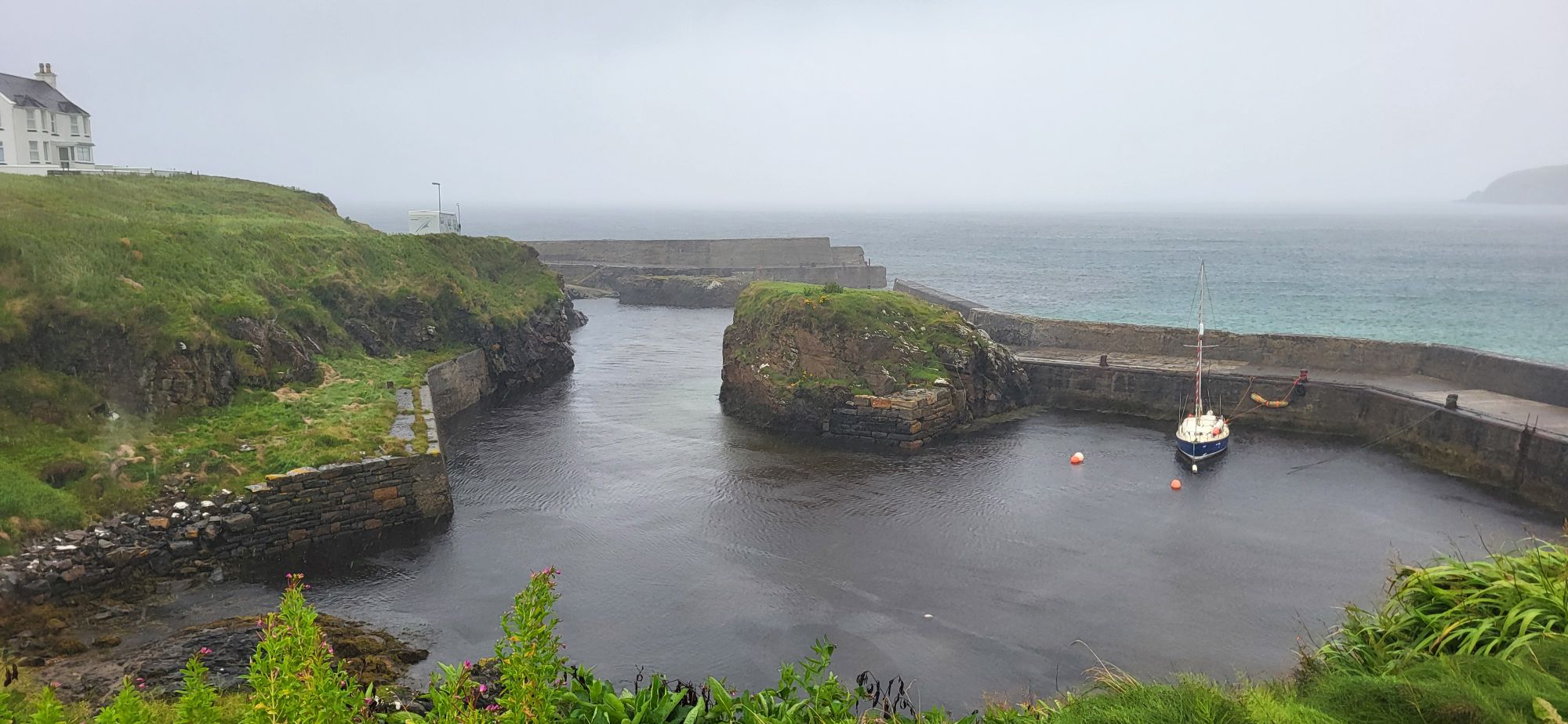
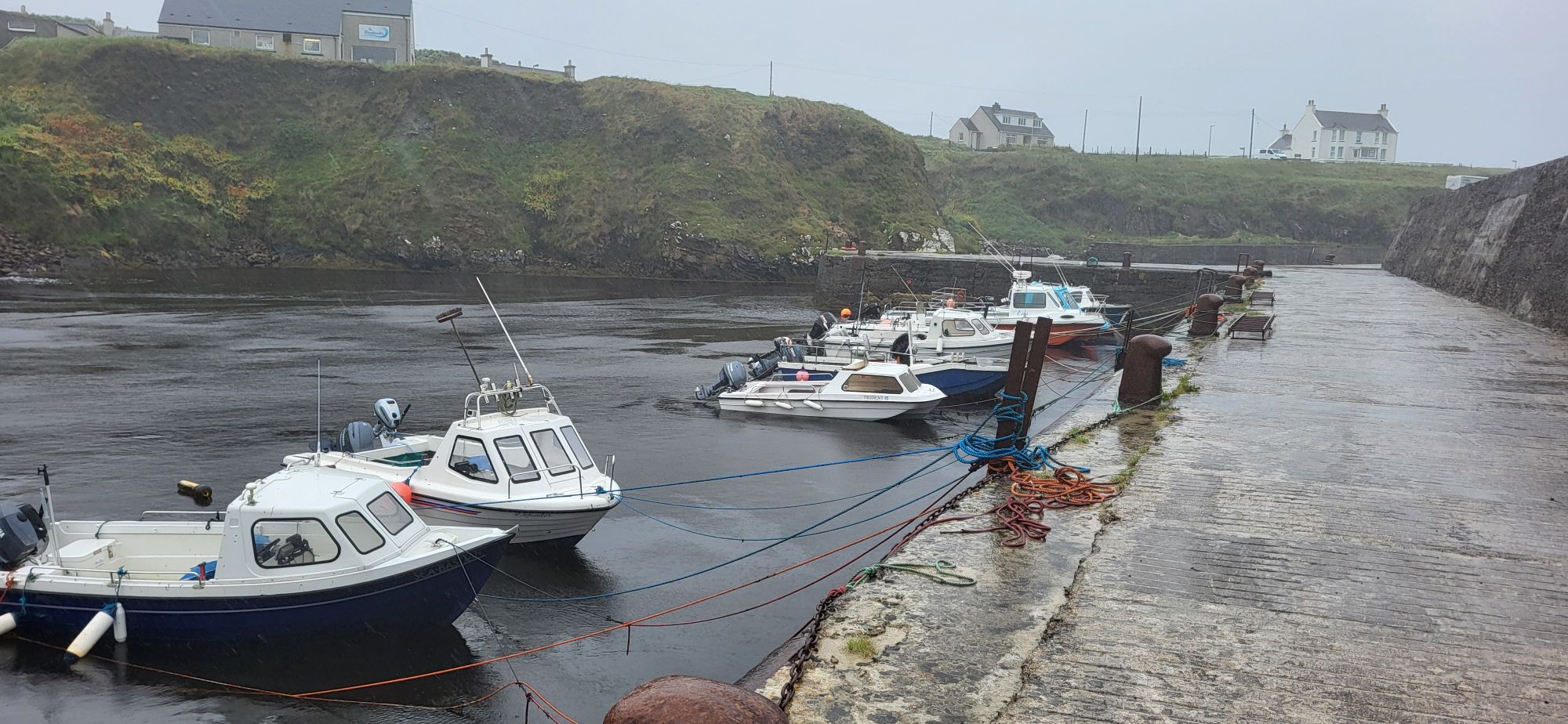
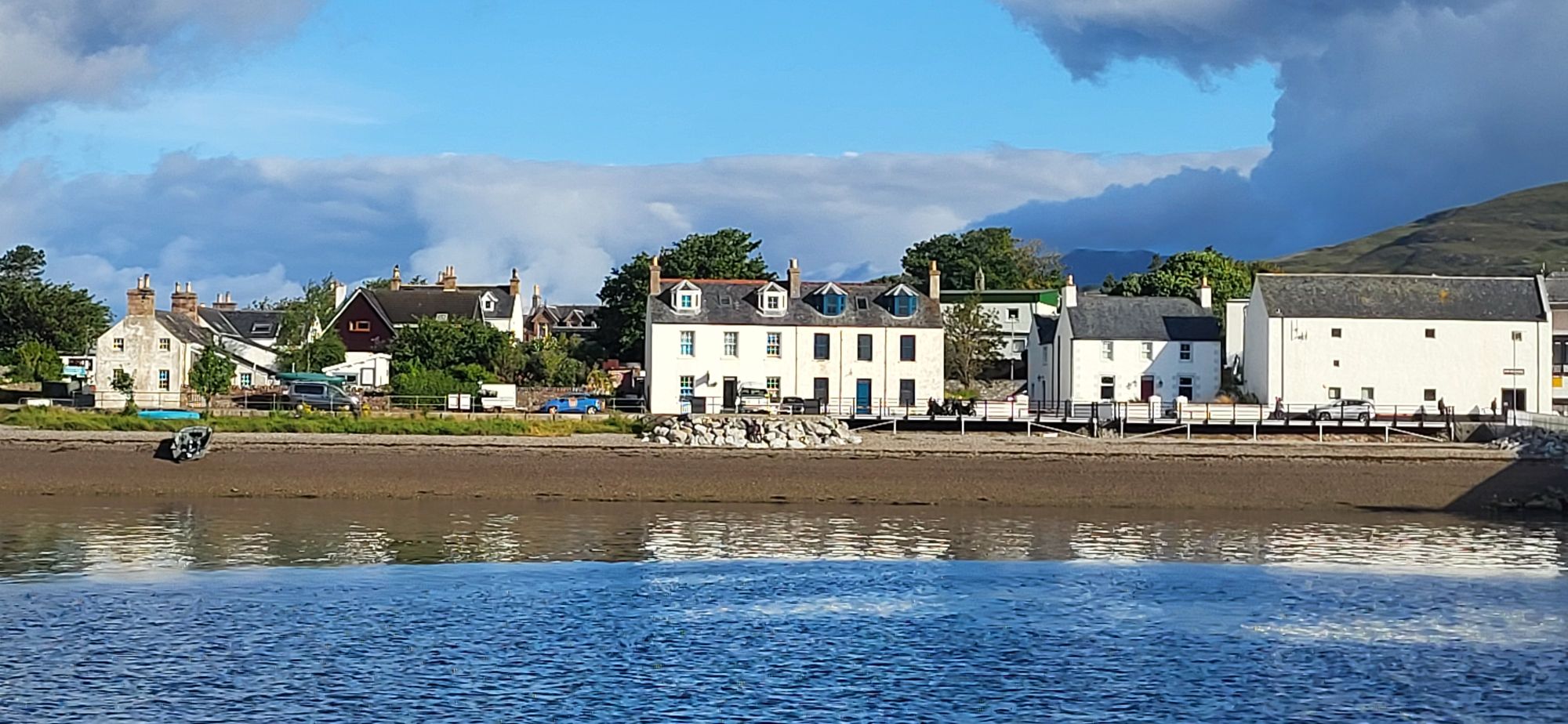
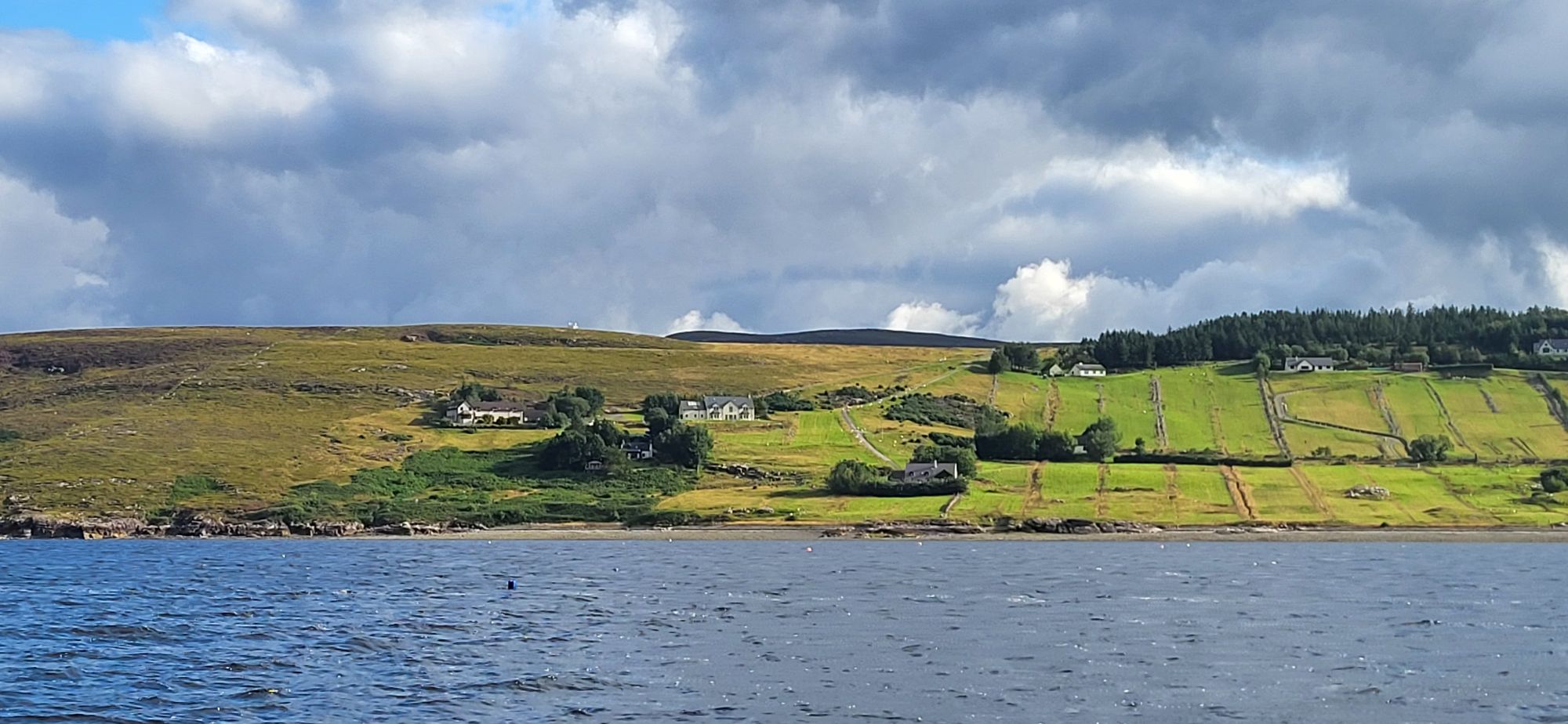
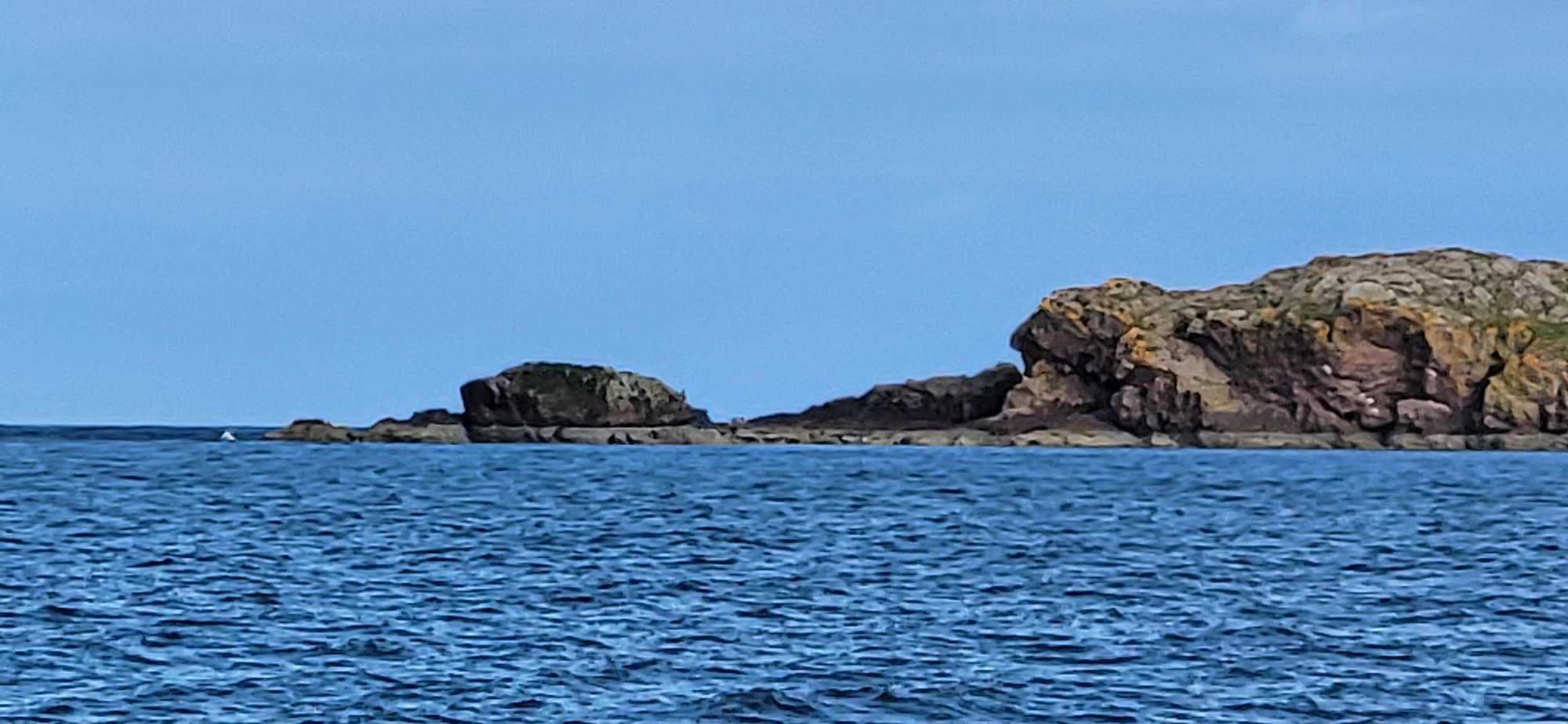
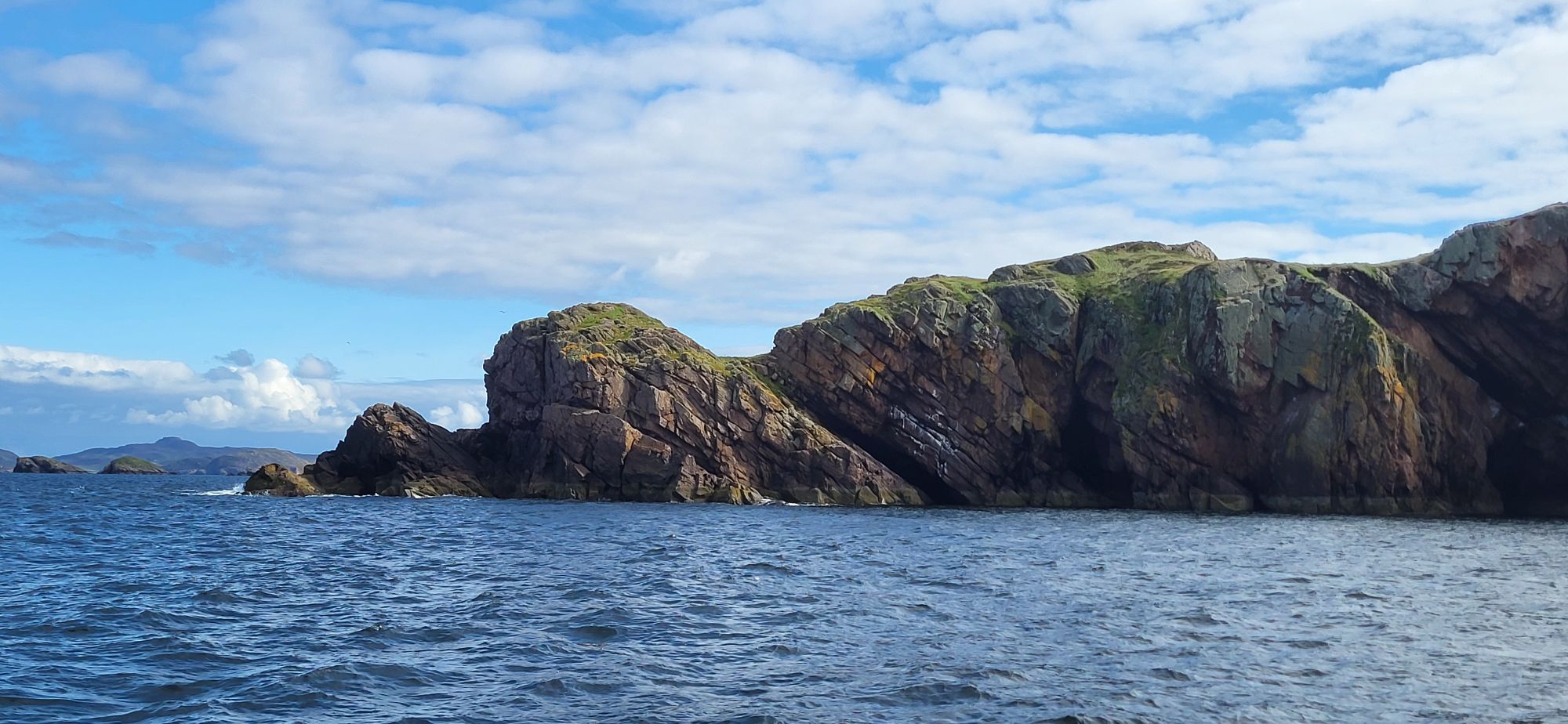
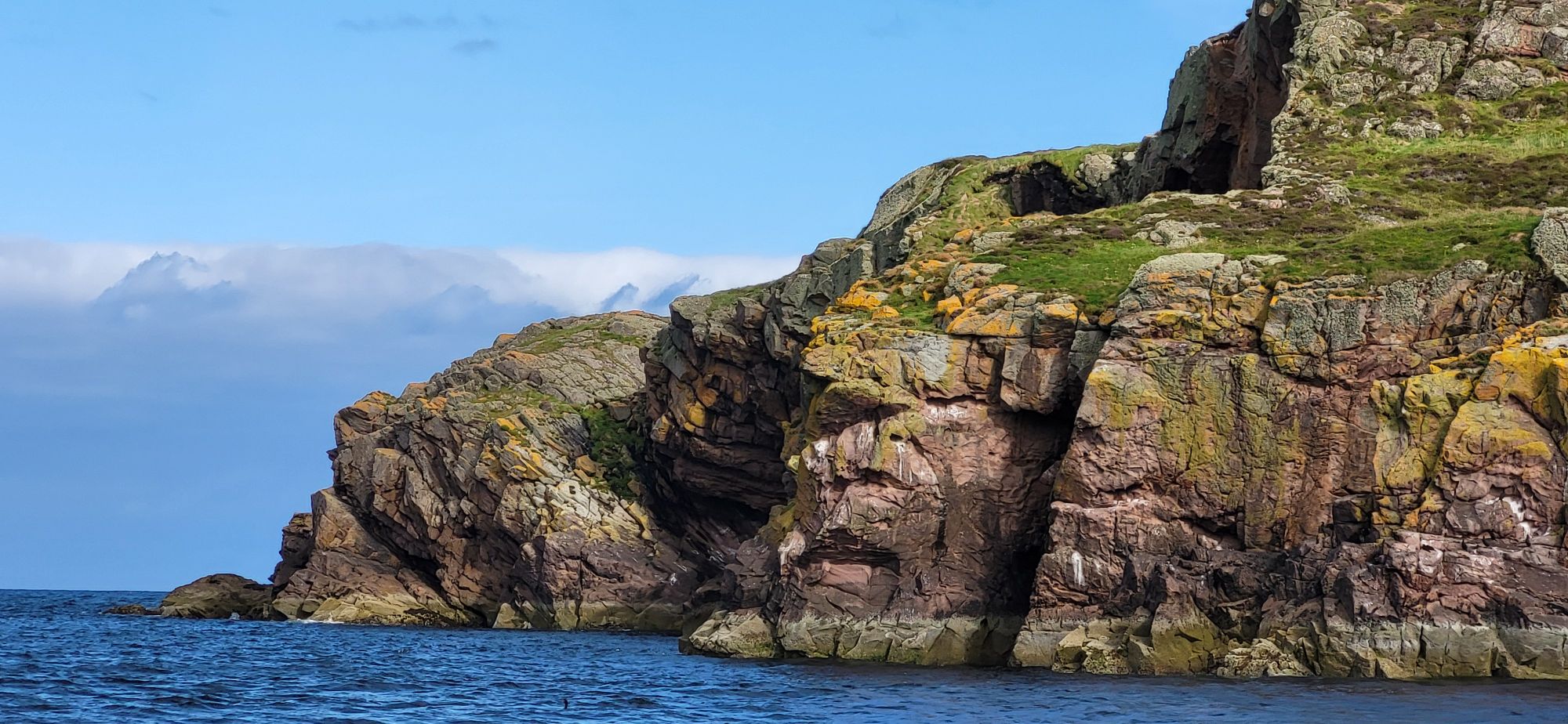
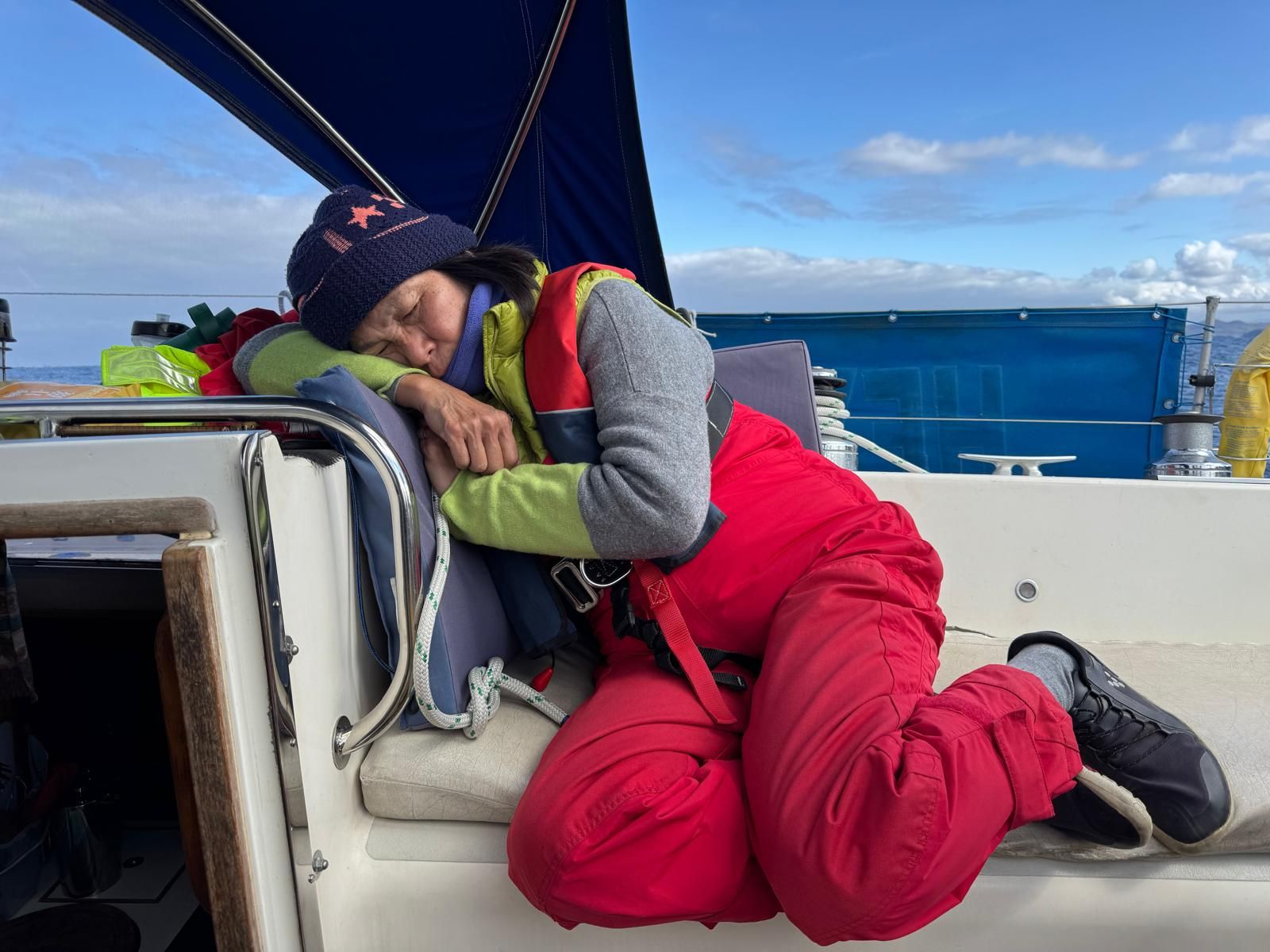
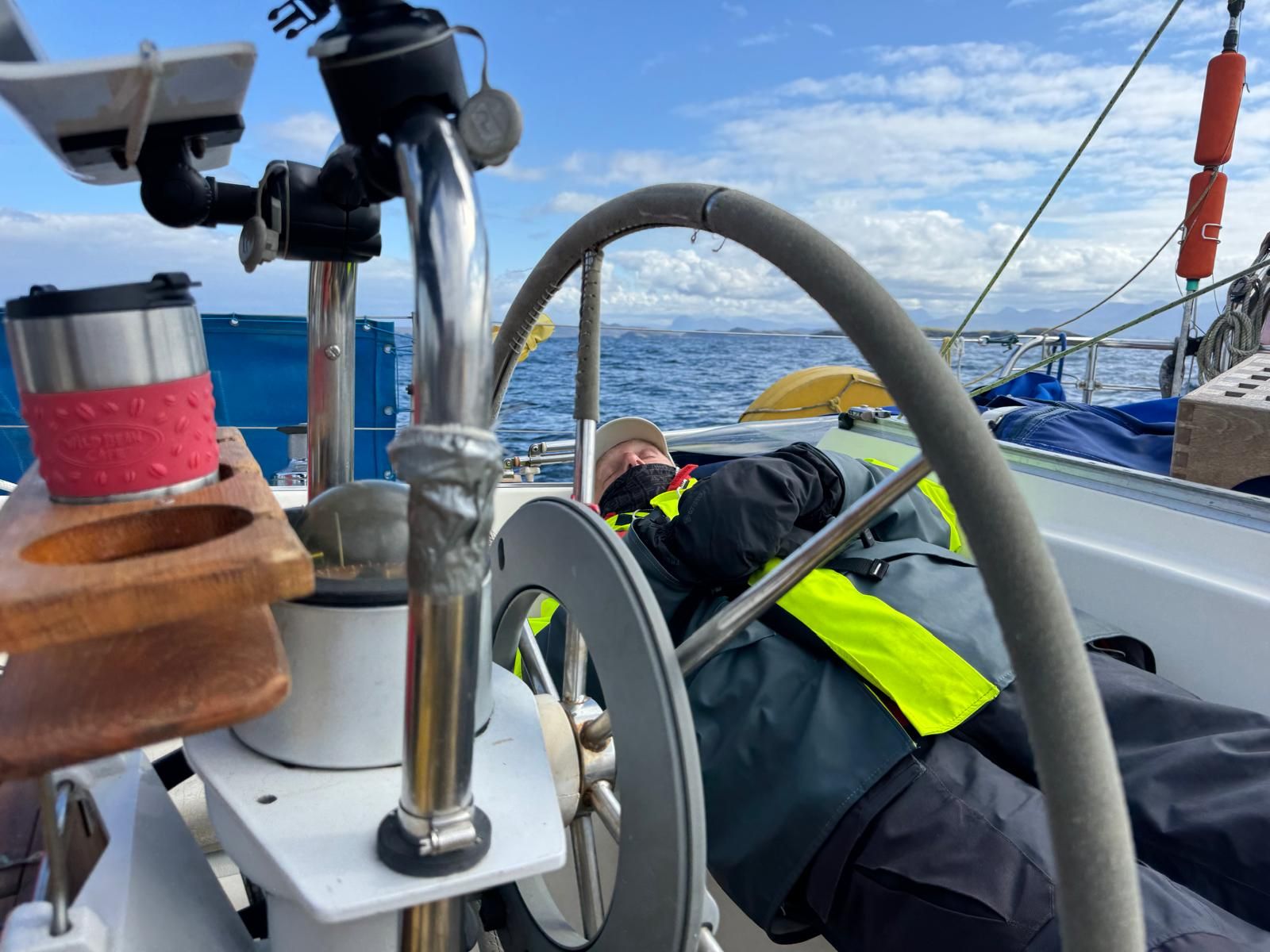
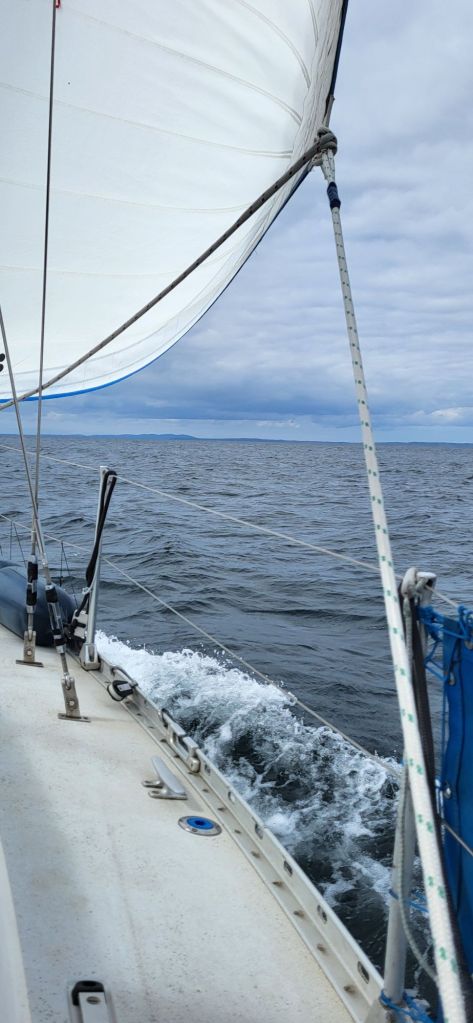
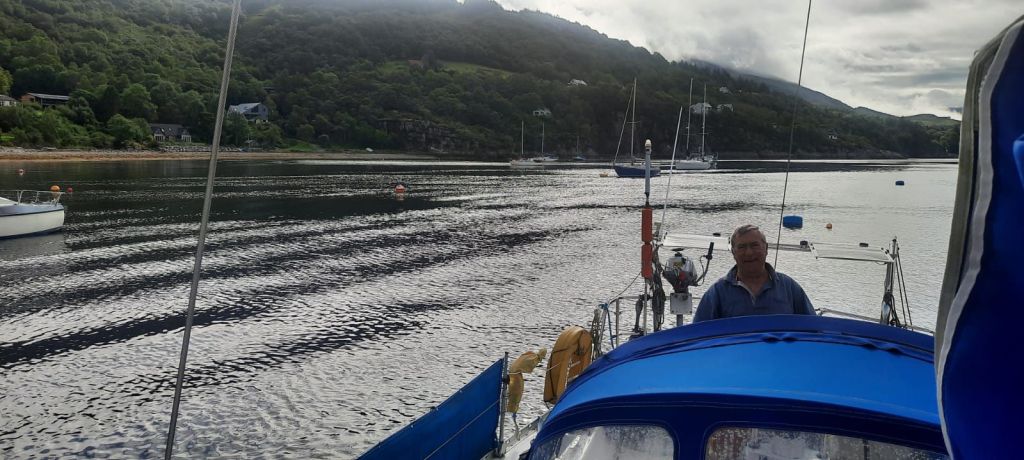
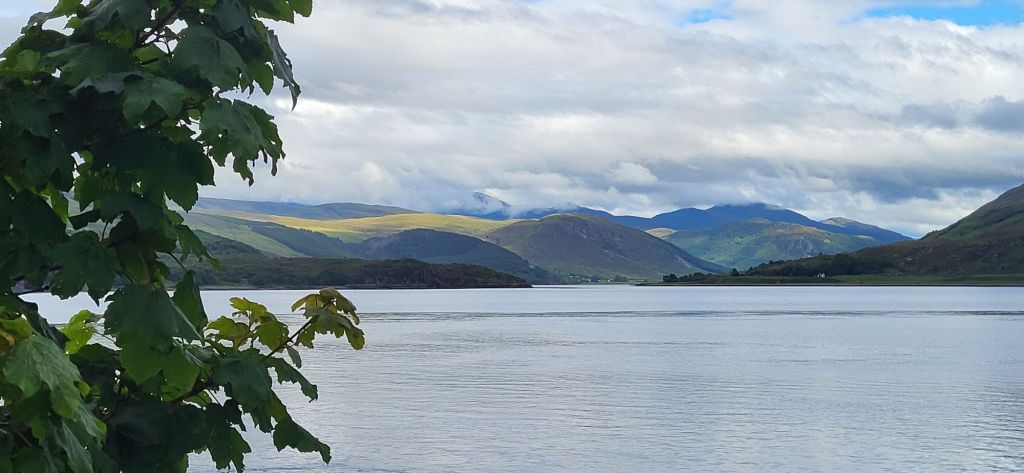
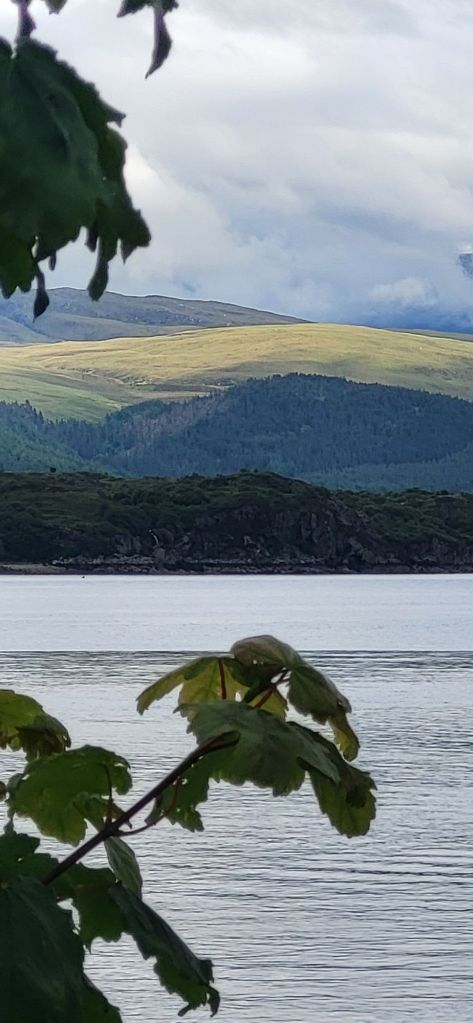
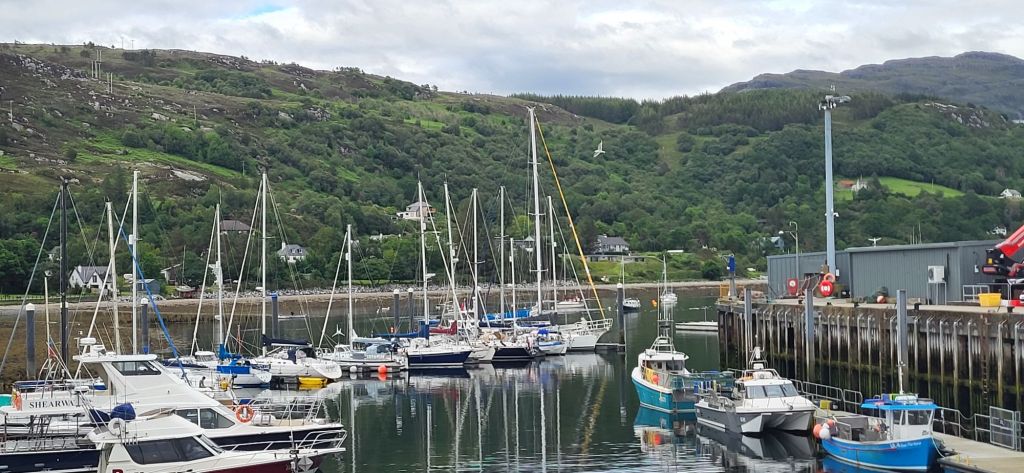
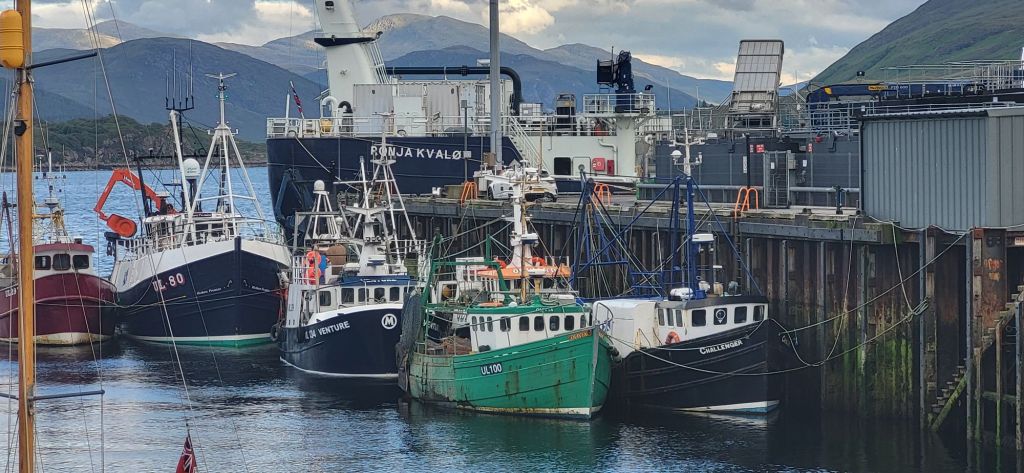
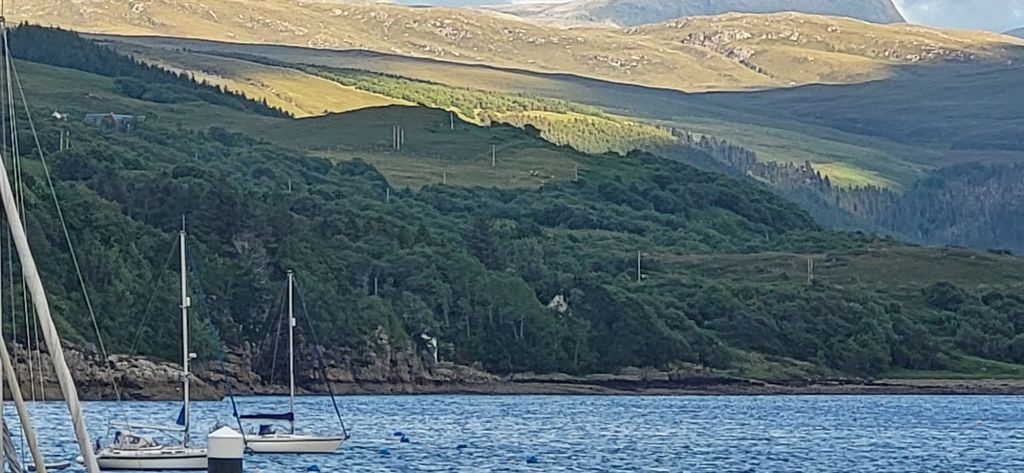
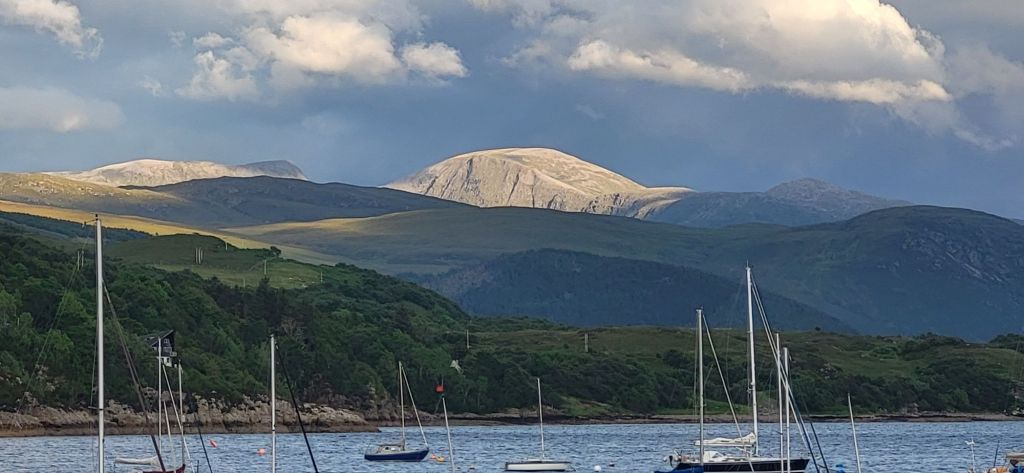
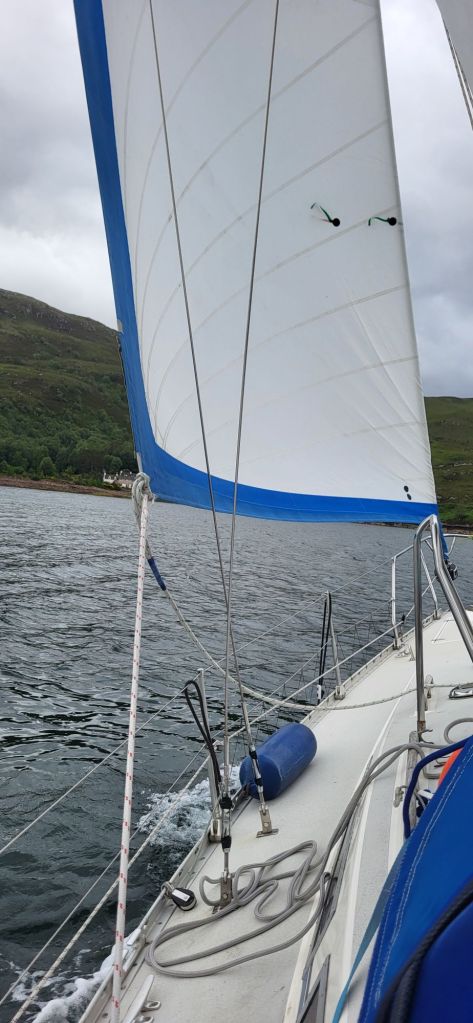
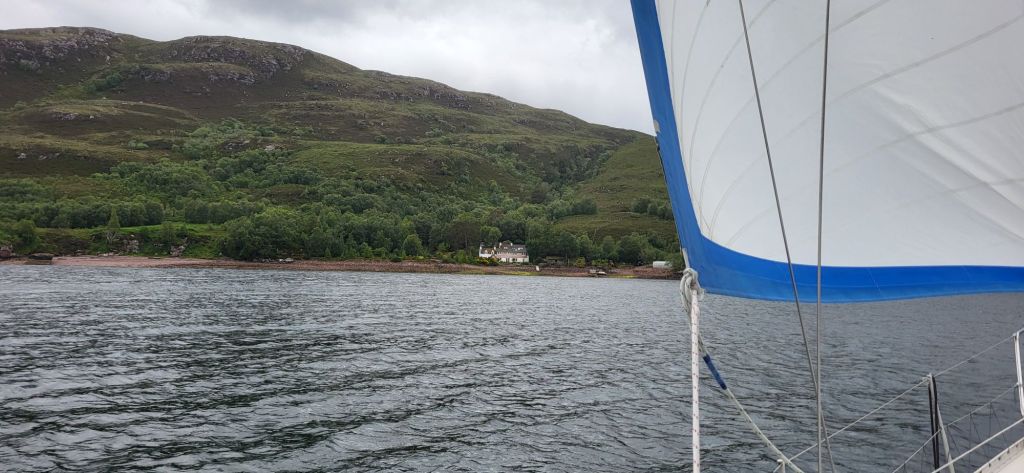
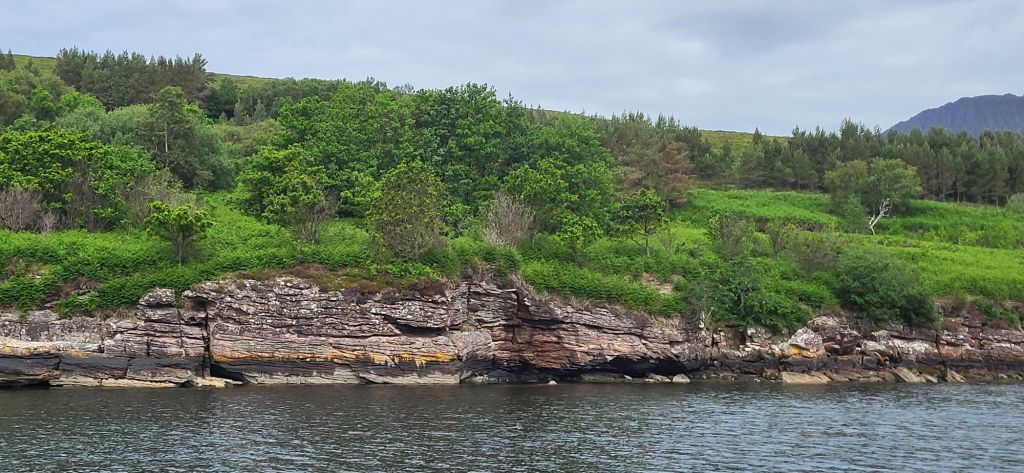
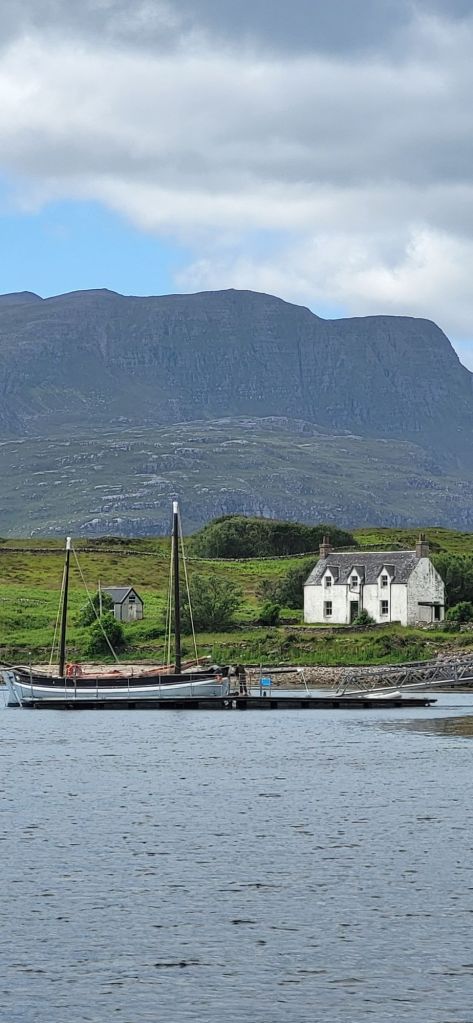
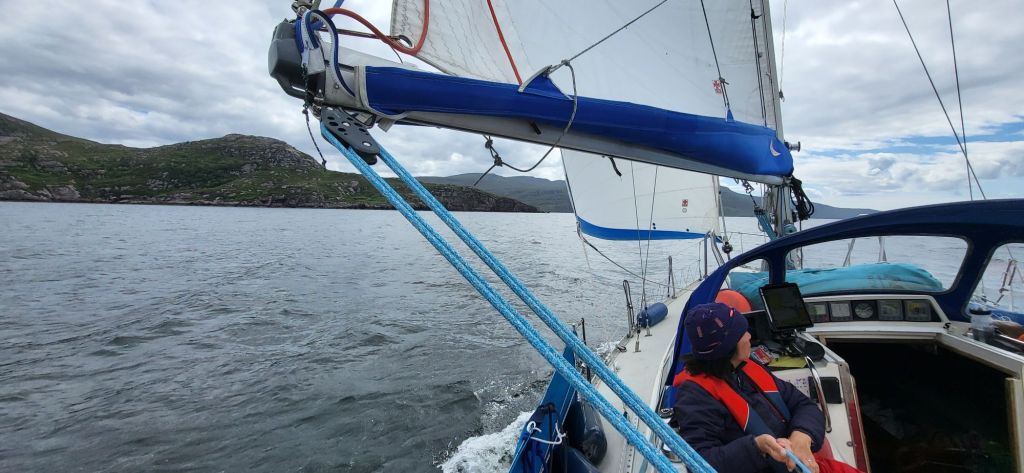
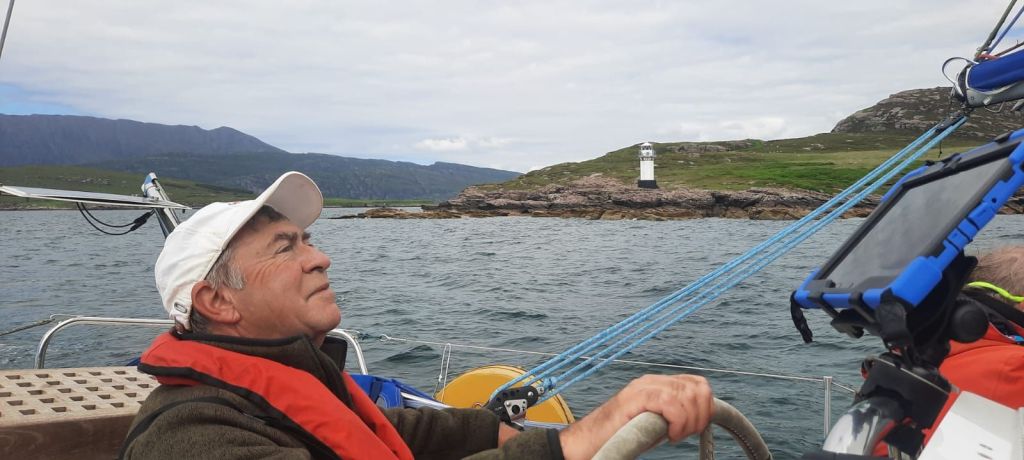
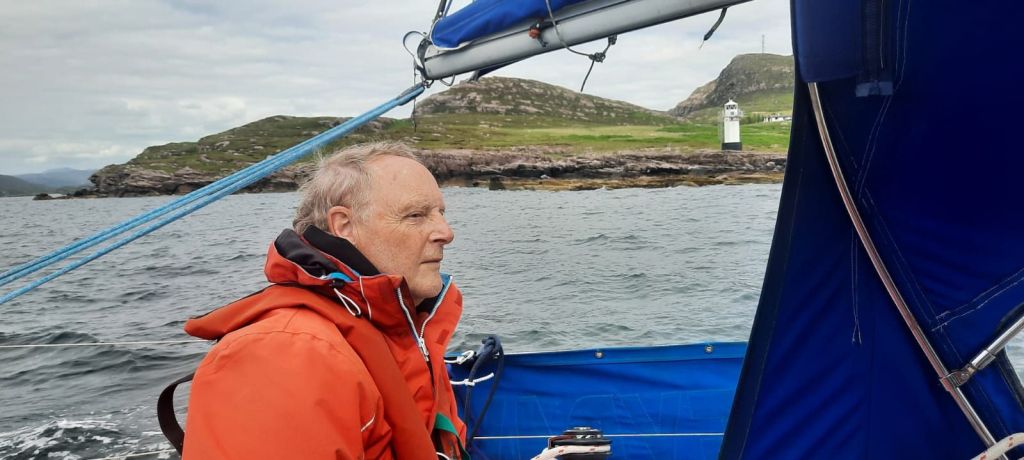
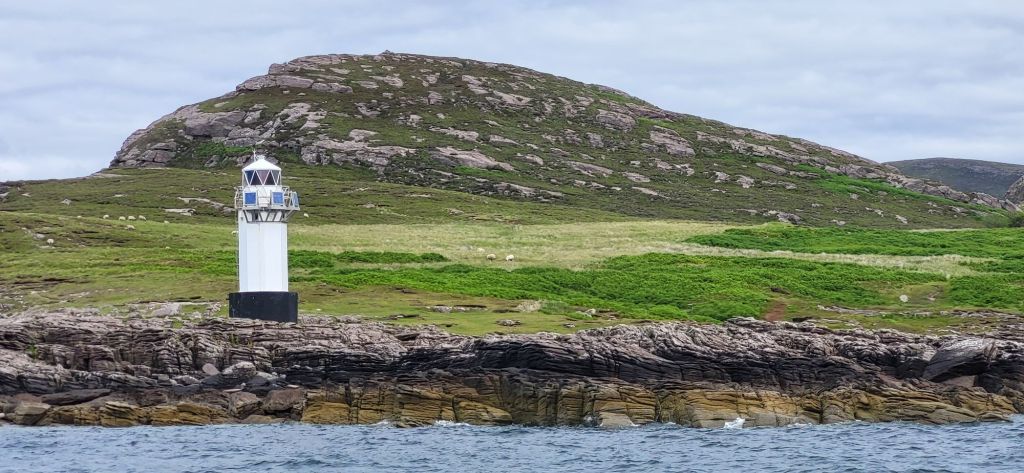
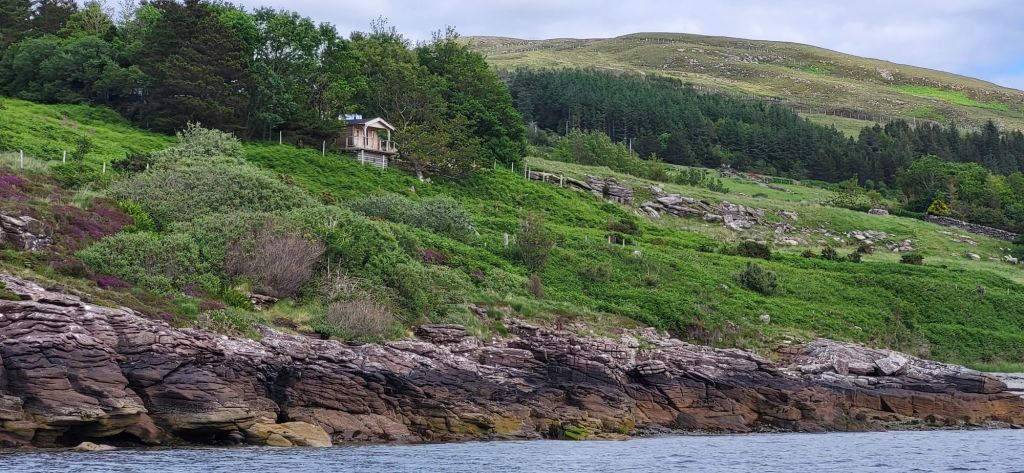
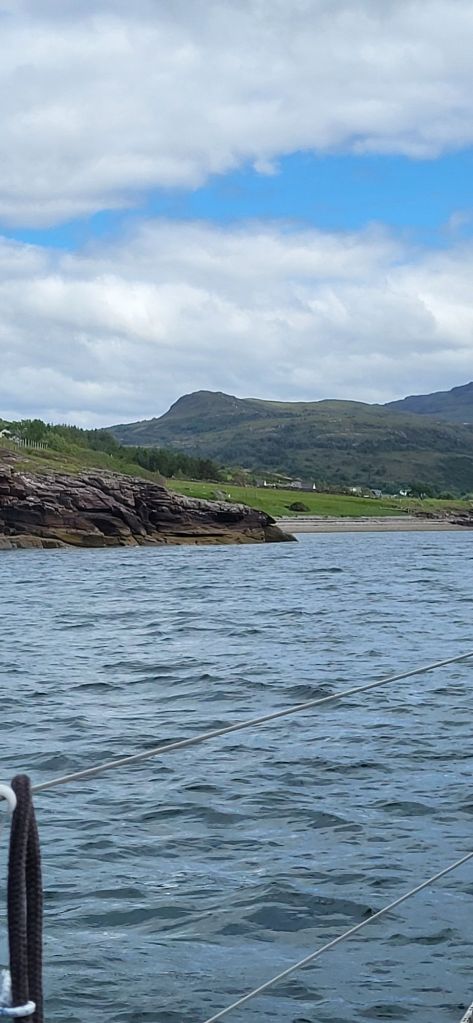
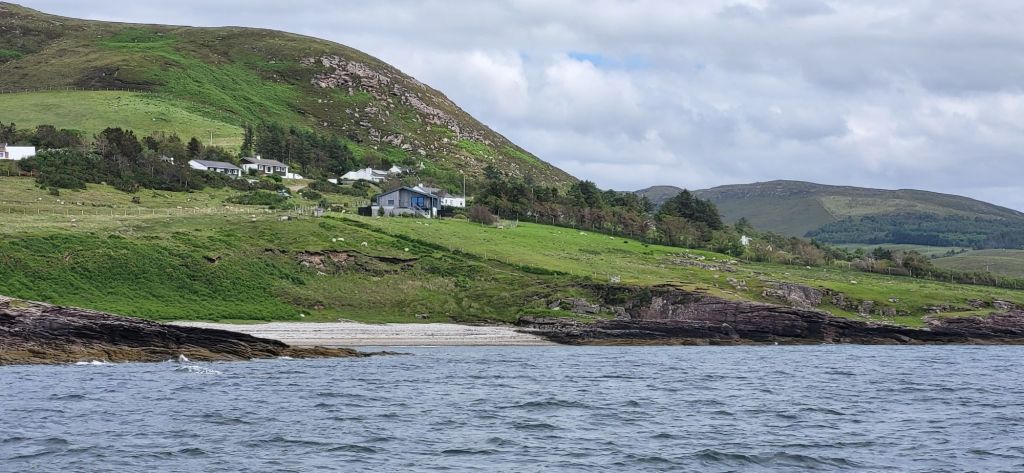
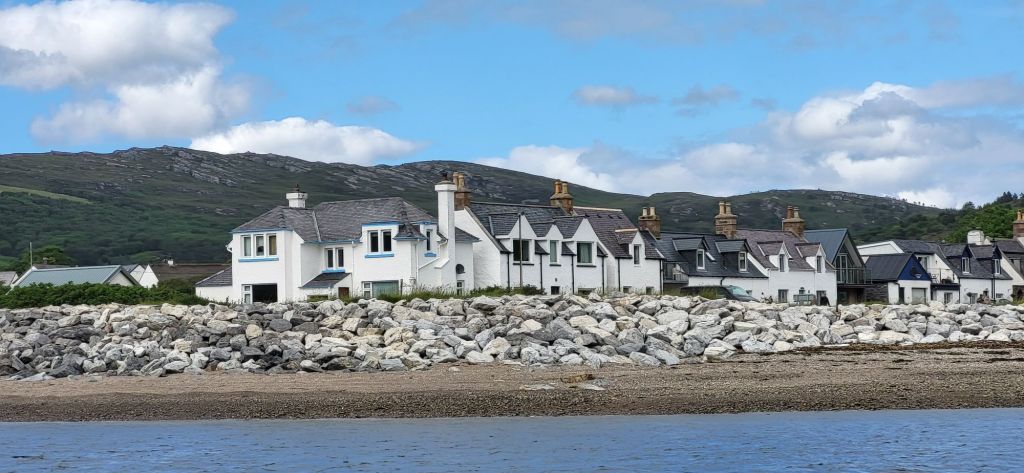
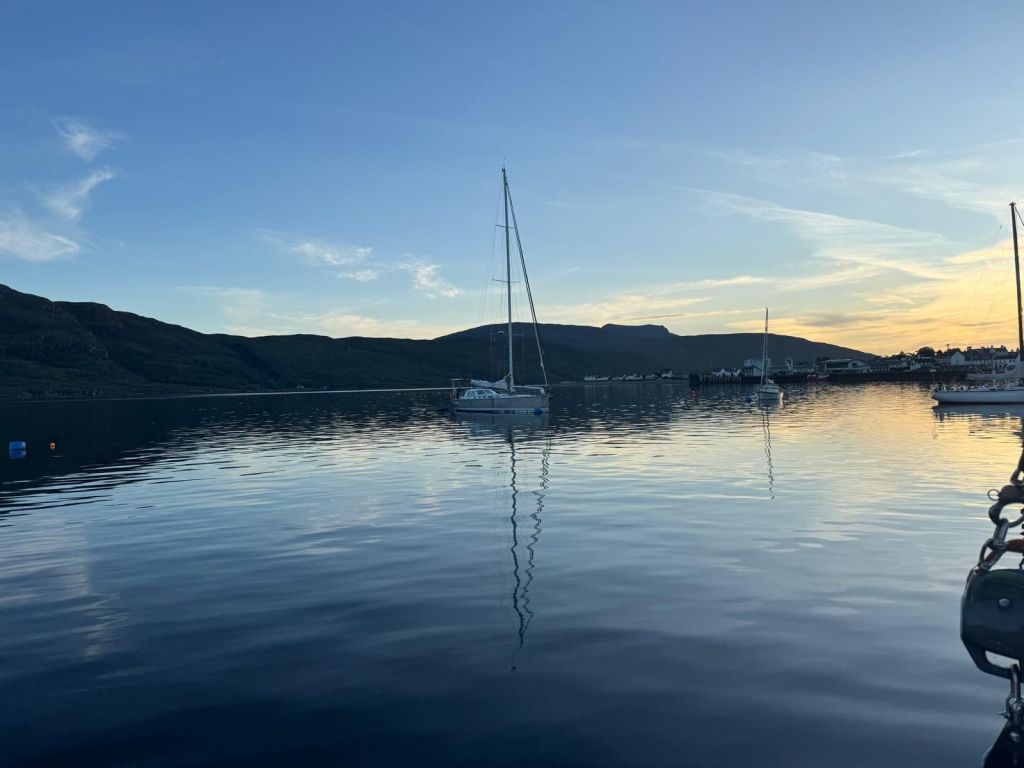
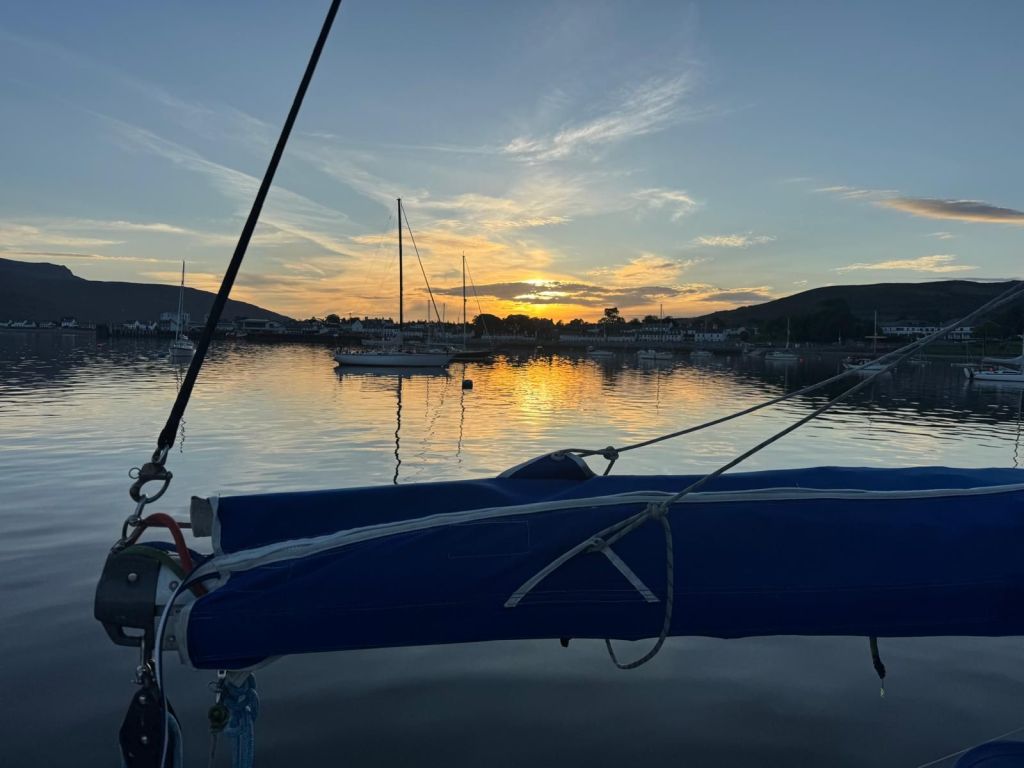
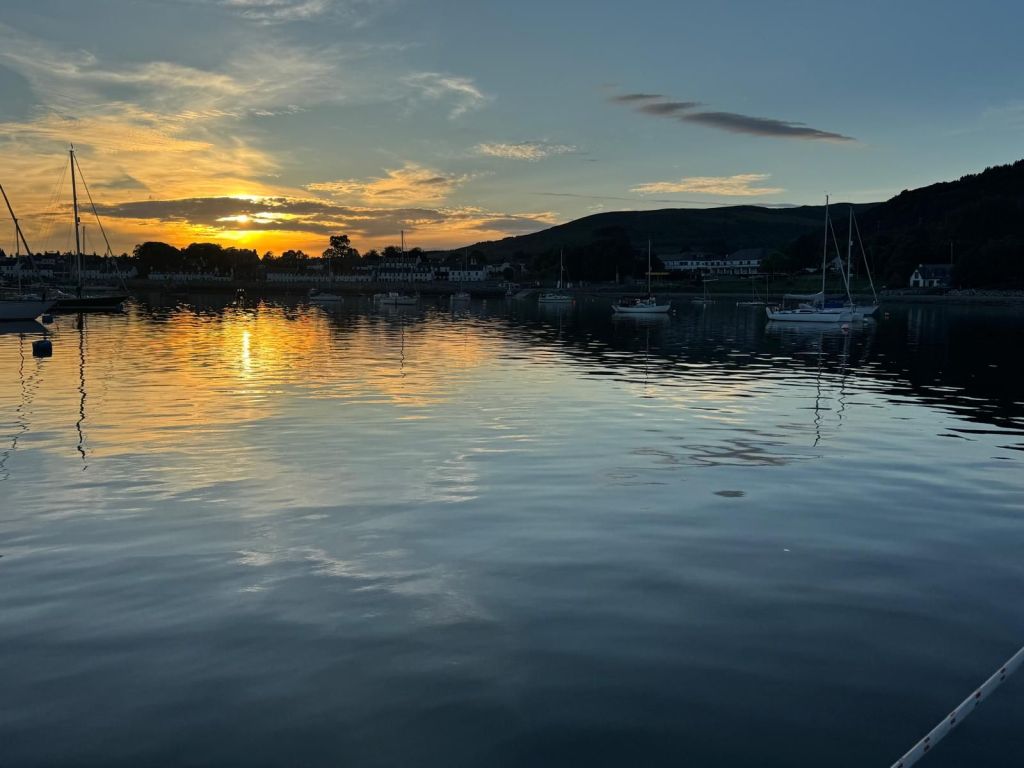
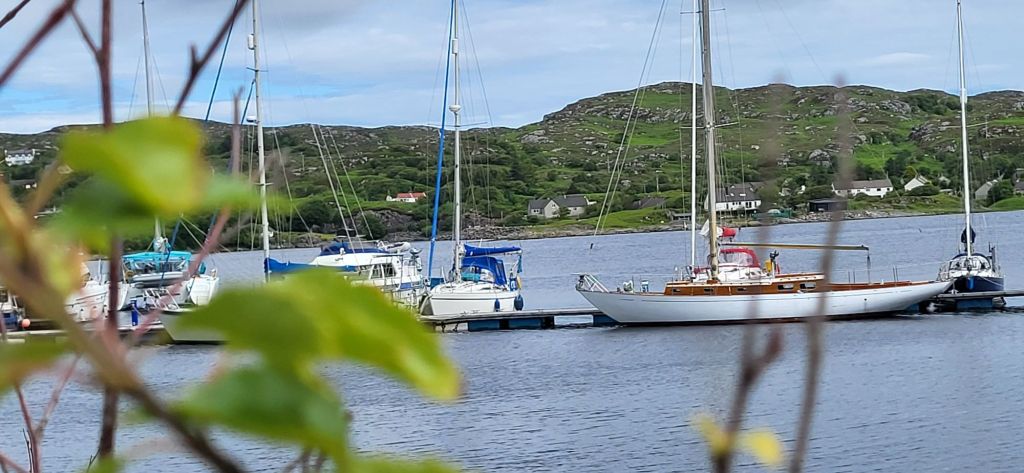
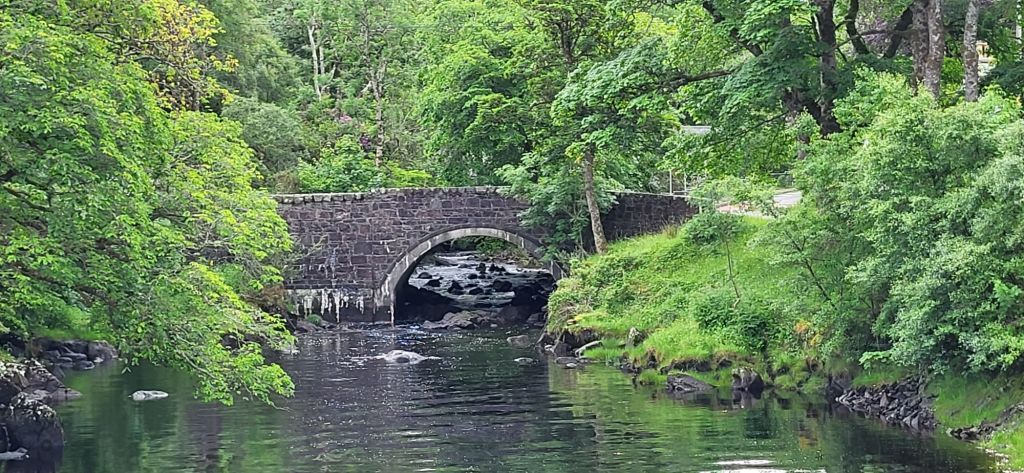
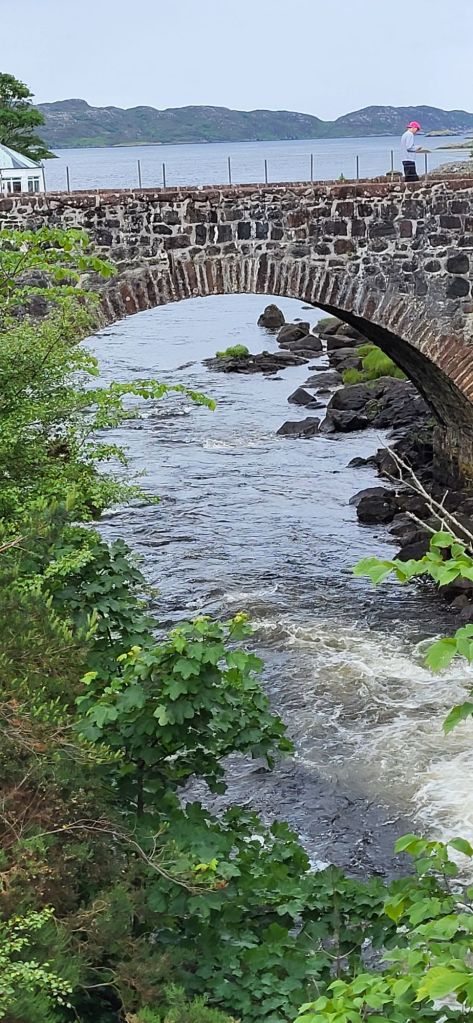
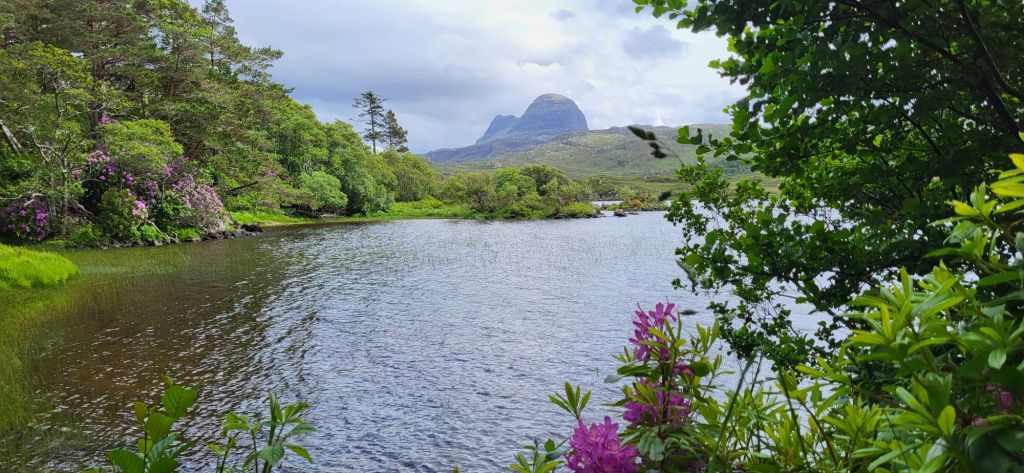
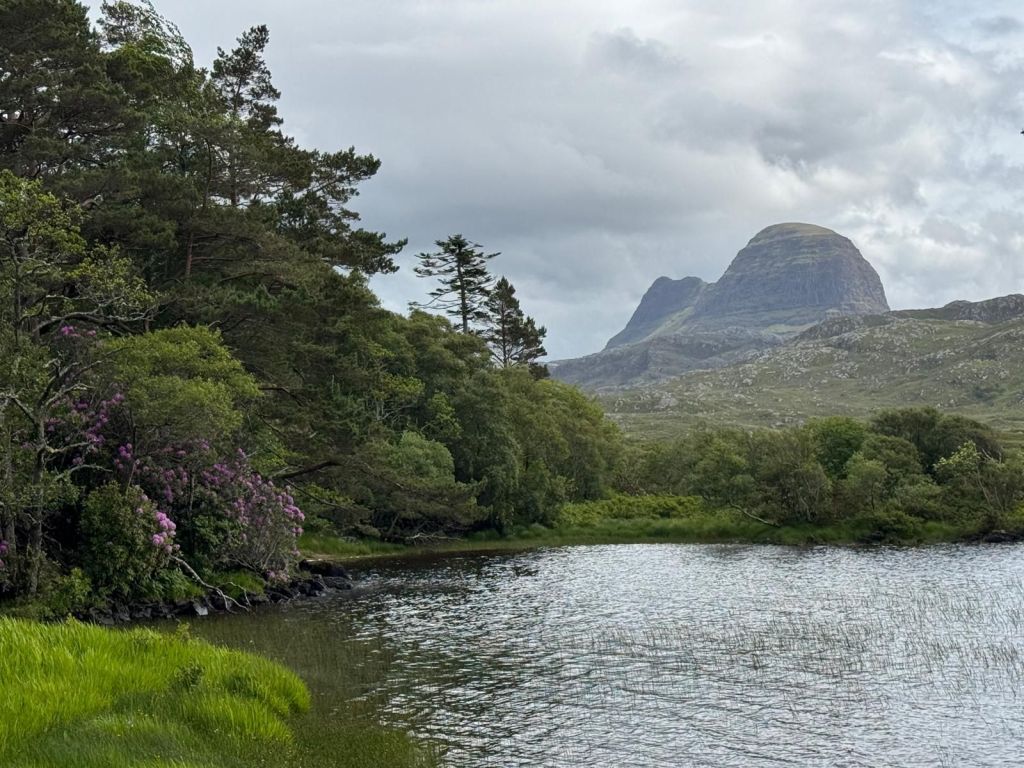
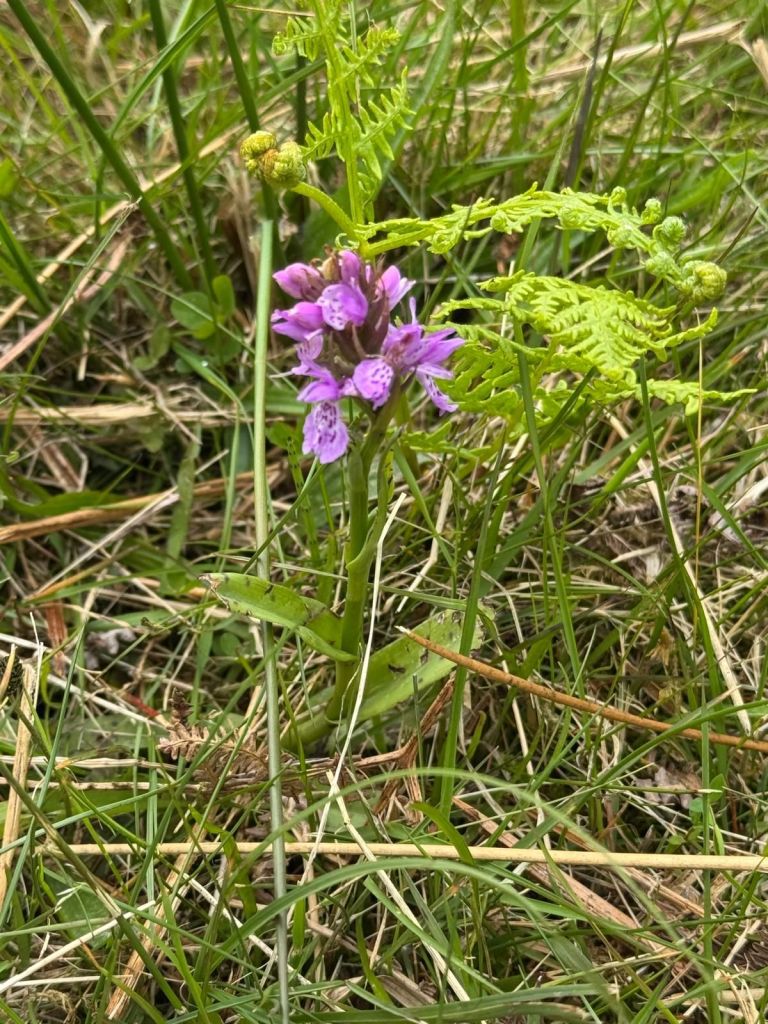
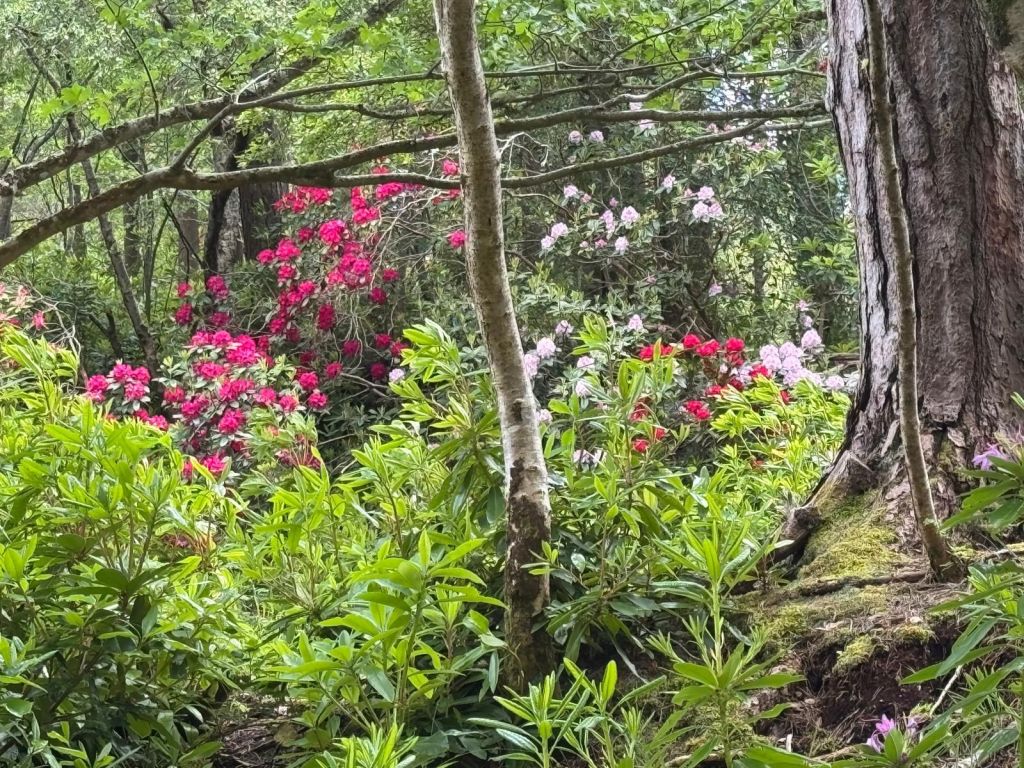
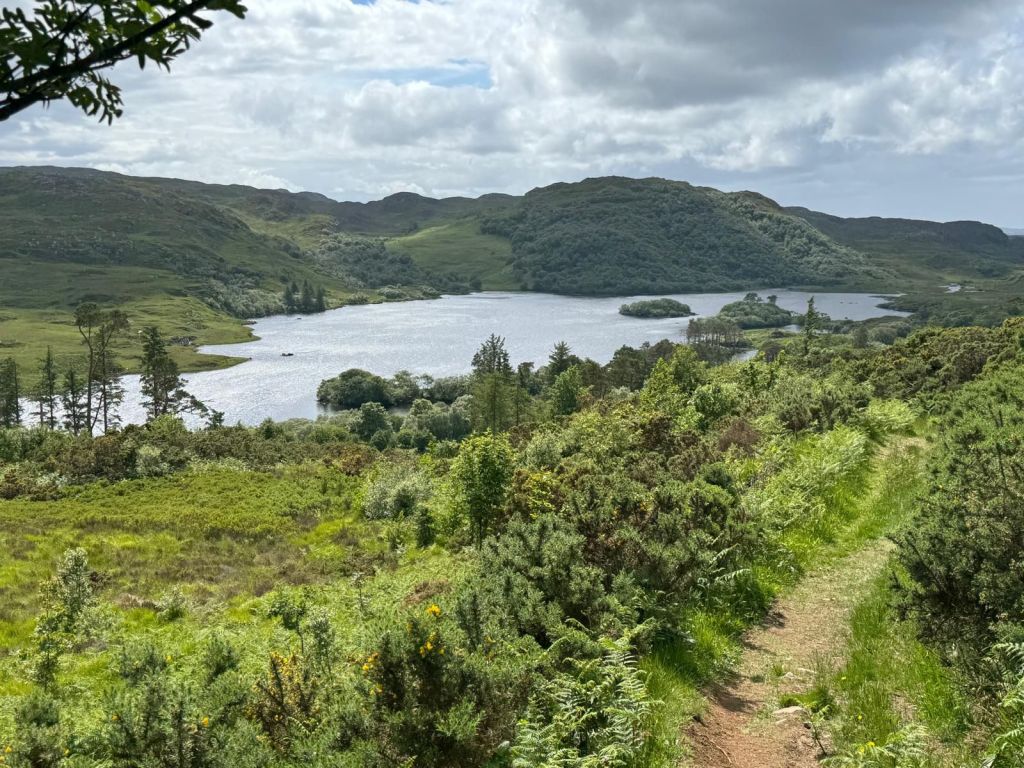
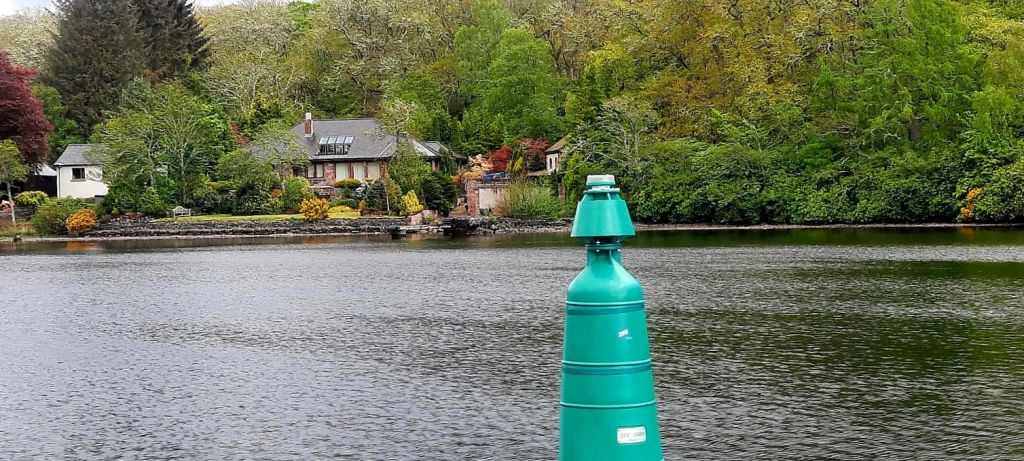
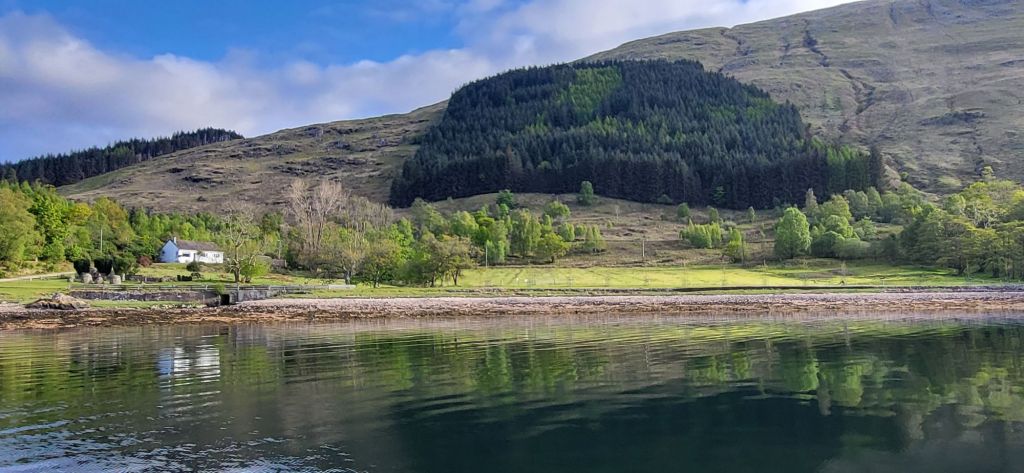
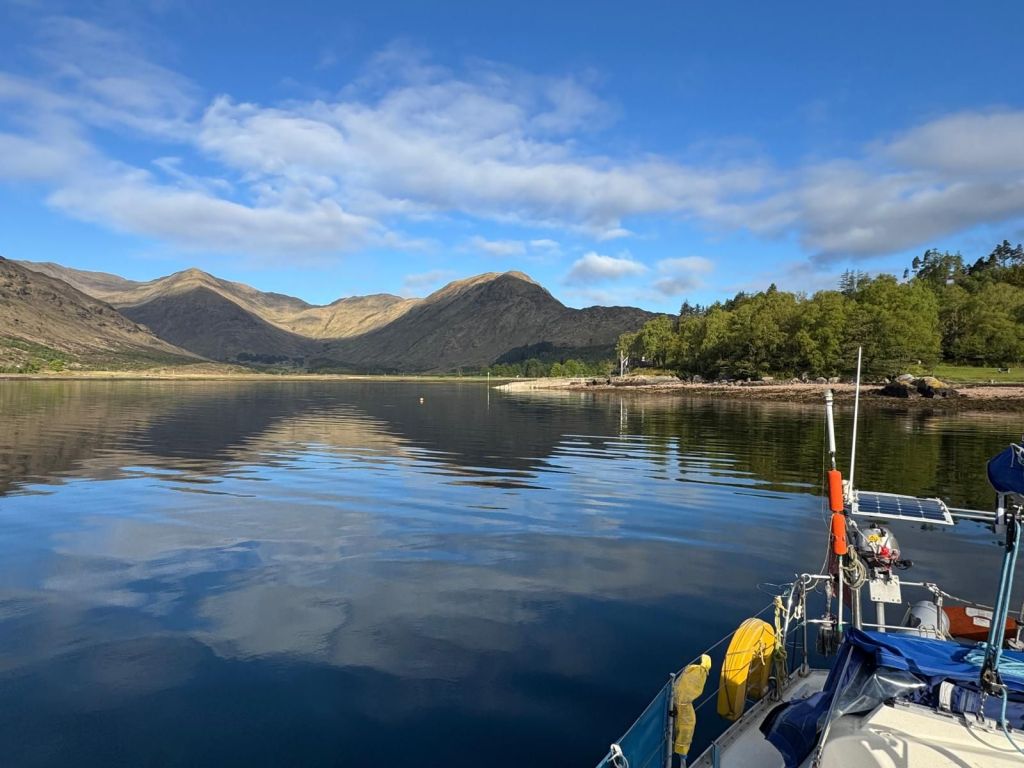
The middle-of-the-night alarm is one of those unwelcome but necessary disciplines of anchoring somewhere remote …up to check the transits still line up and that Heydays hasn’t decided to go for a wander of her own. As it turned out, our concern was entirely wasted…she sat rock solid all night, unmoved and unmoving, while we lost sleep on her behalf.
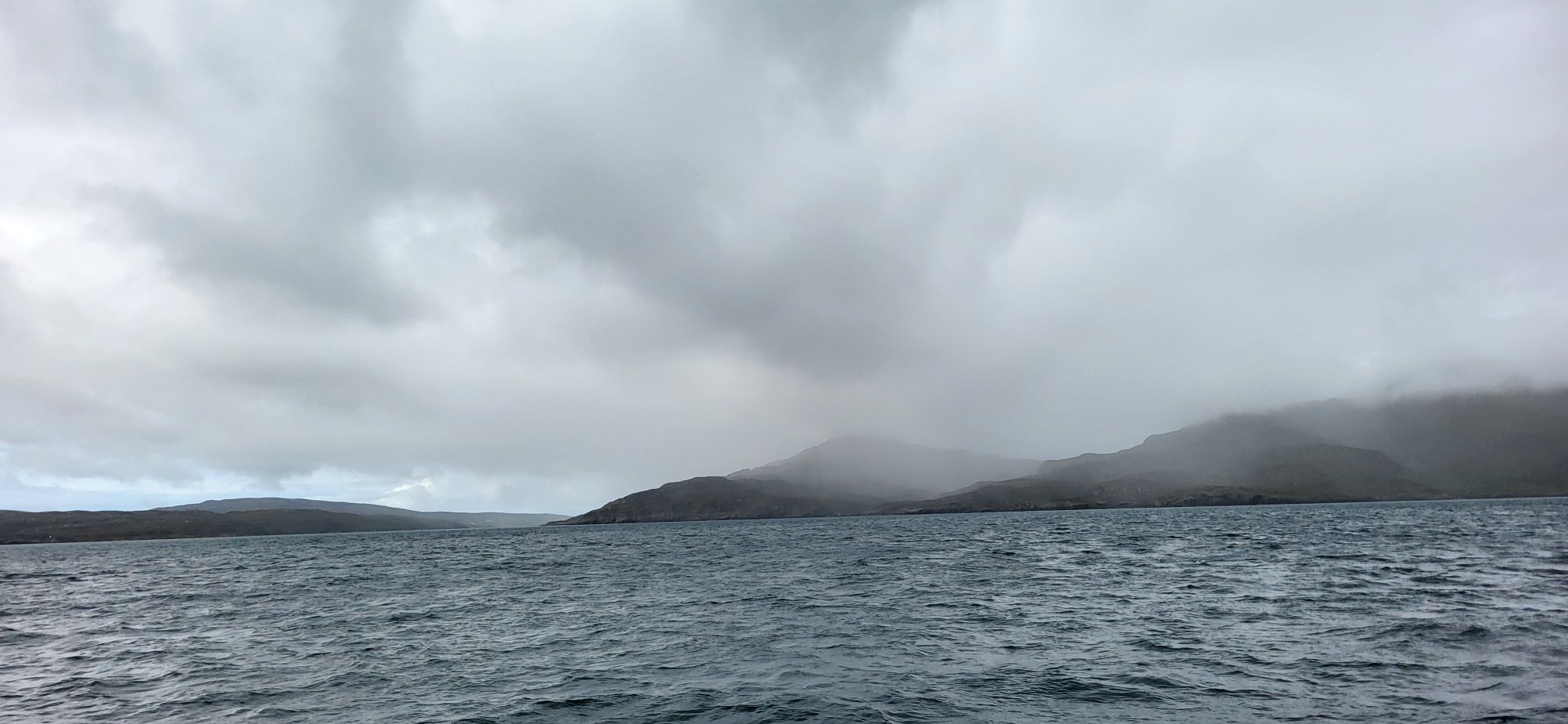
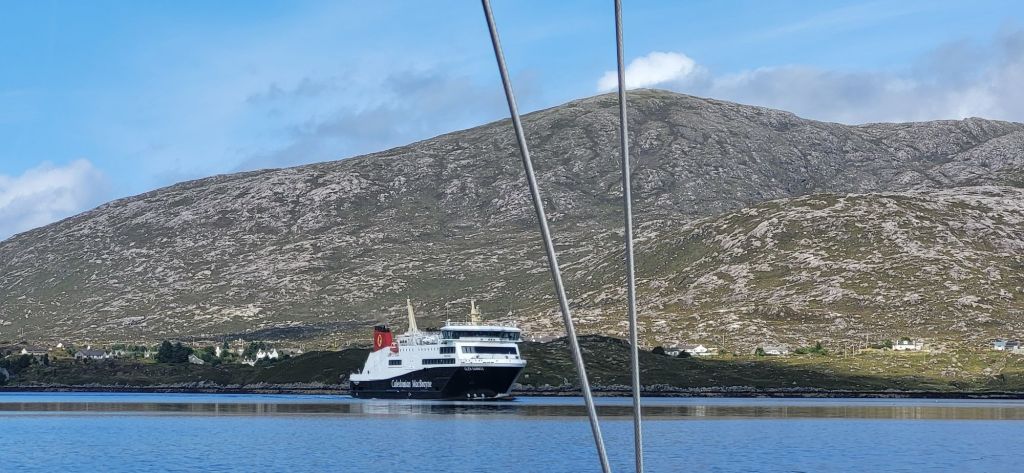
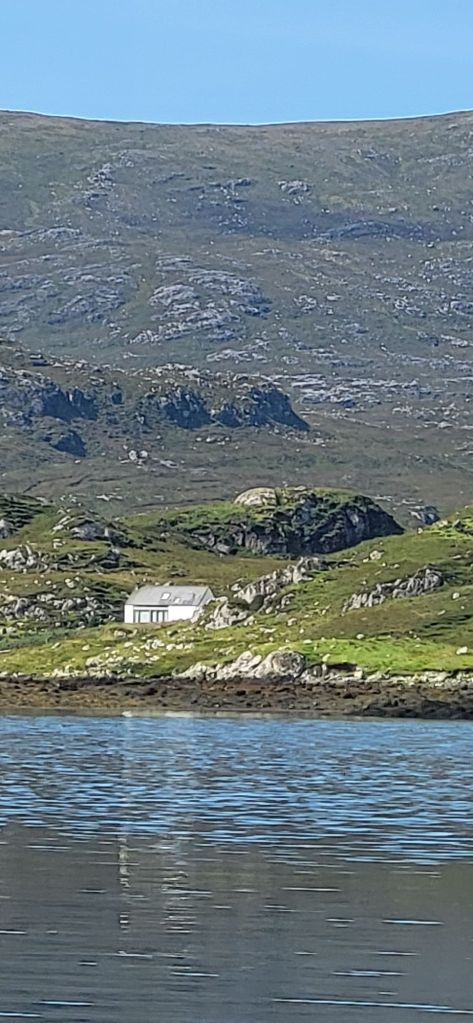
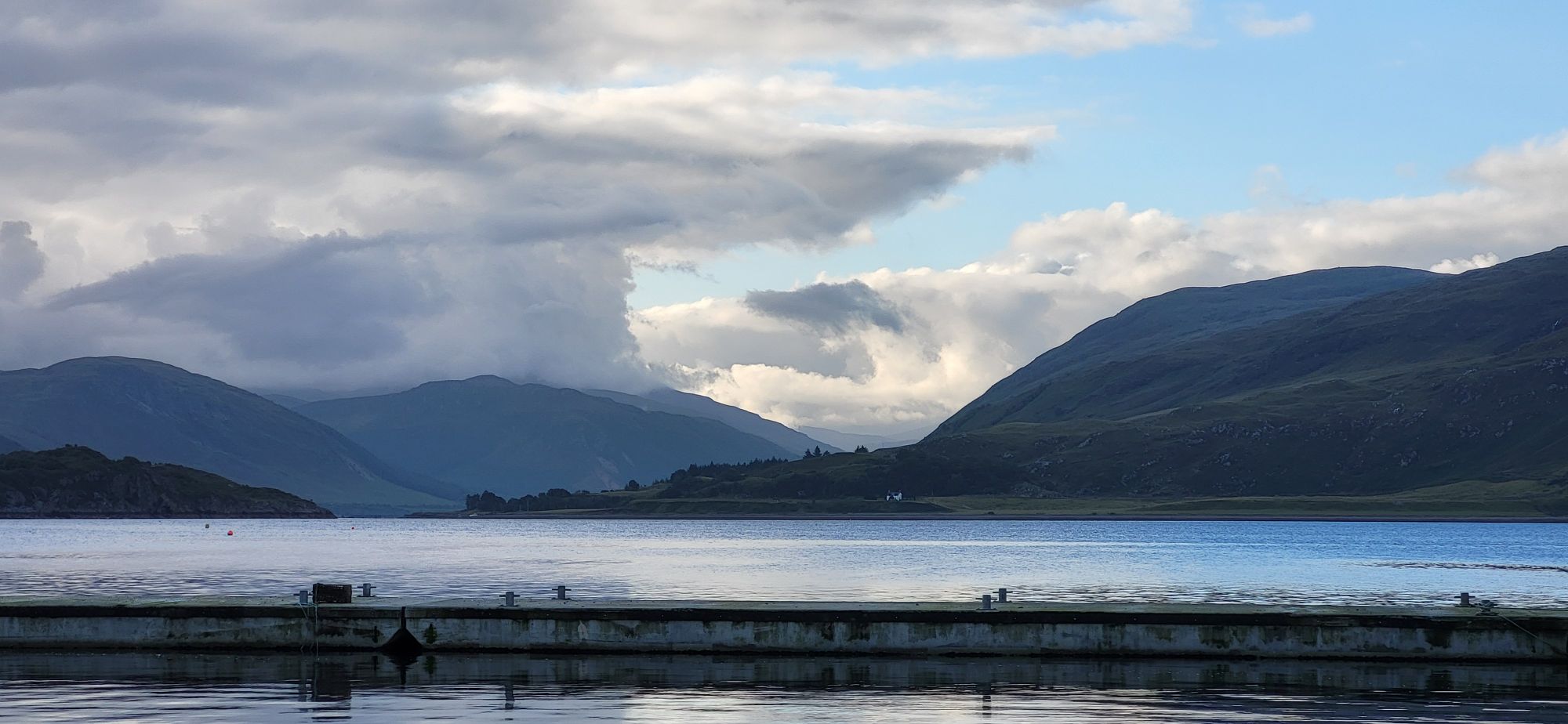
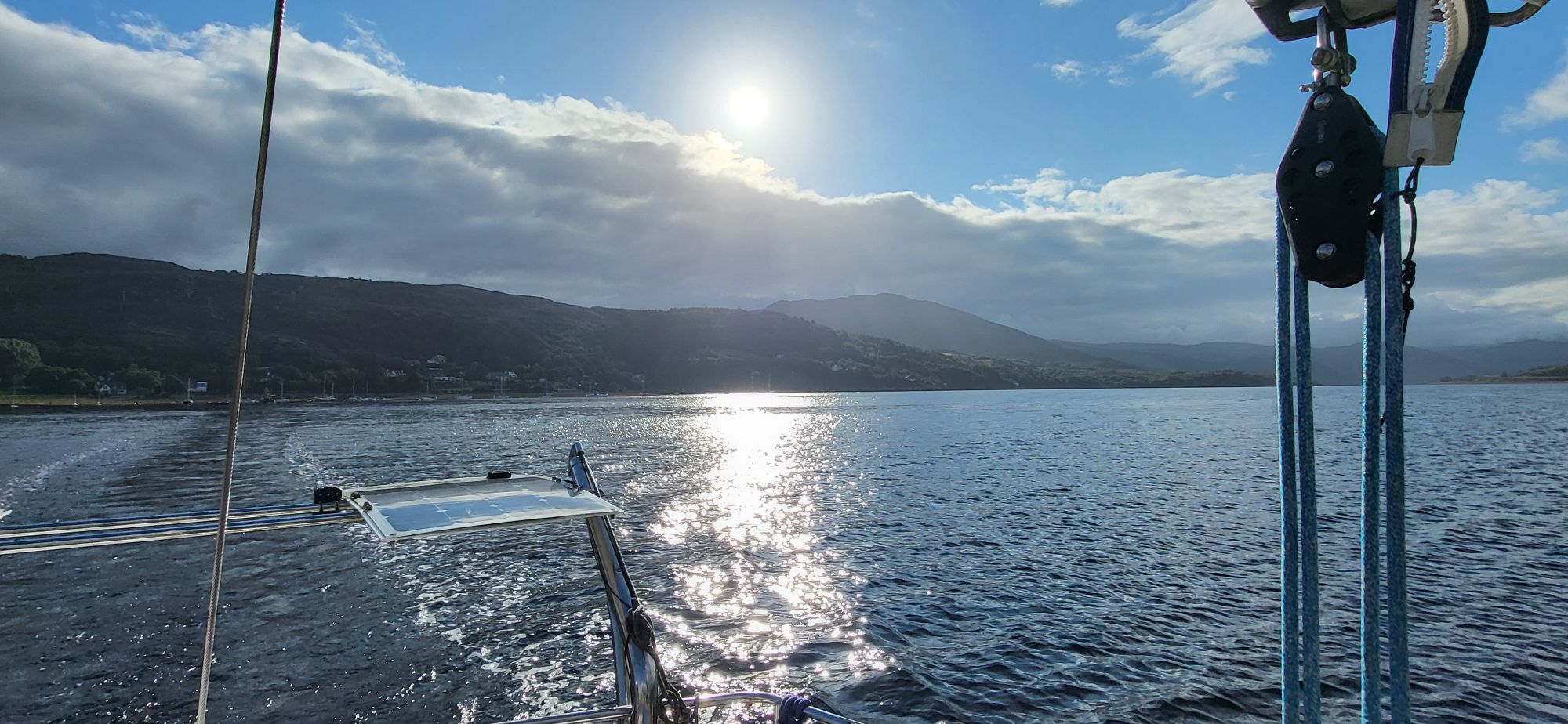
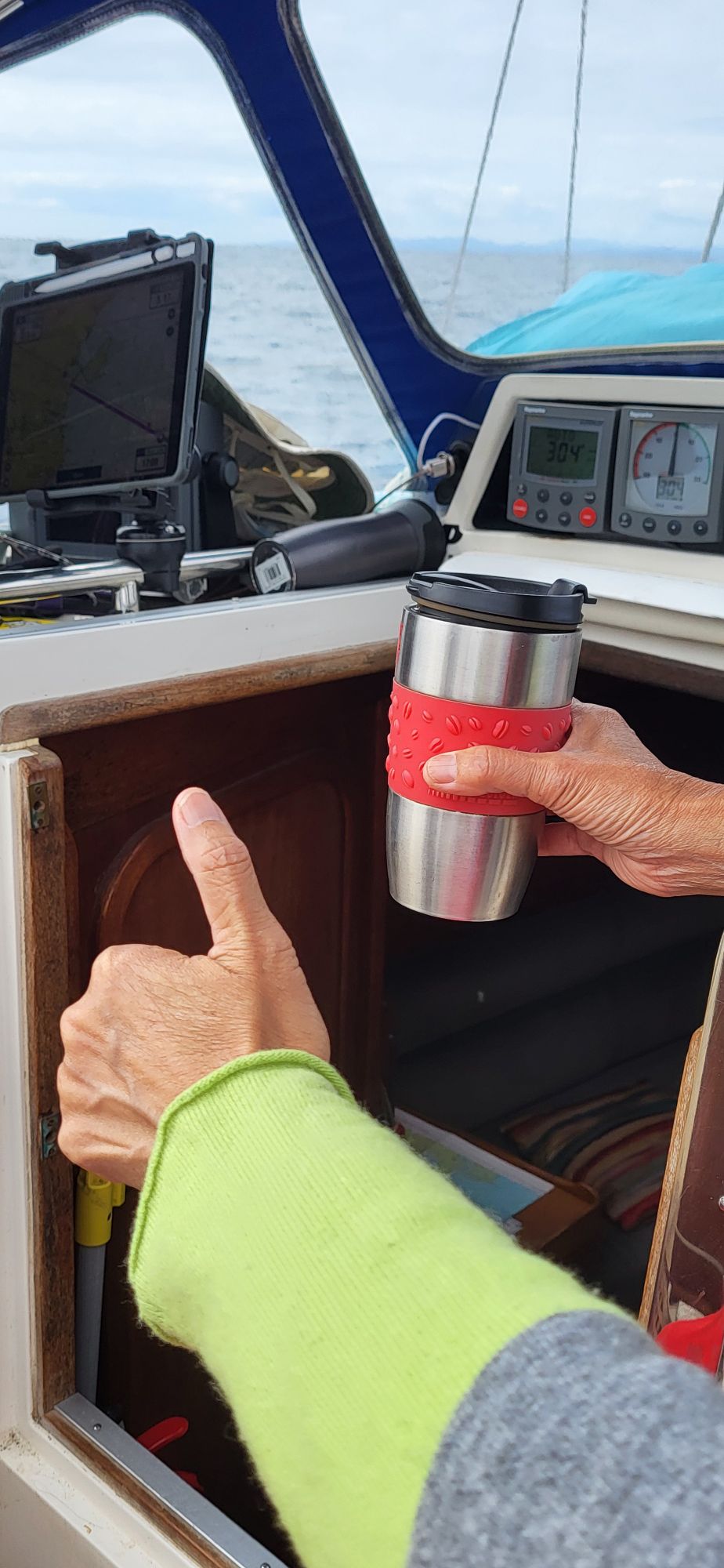
Morning brought glorious compensation, a loch entirely deserted but for us, lit up in early sunshine. There is something properly magical about that kind of isolation, not another soul in sight, and it seemed almost a small betrayal to be thinking about leaving. But time was pressing, and Barra, one of the southernmost islands of the Hebrides, was calling, so coffee was made in mugs, breakfast promised for underway, and Heydays readied for the day. We weighed anchor in the early light, hauling up a good quantity of South Uist mud in the process, almost certainly the only part of the island we will actually touch, which seems a shame.
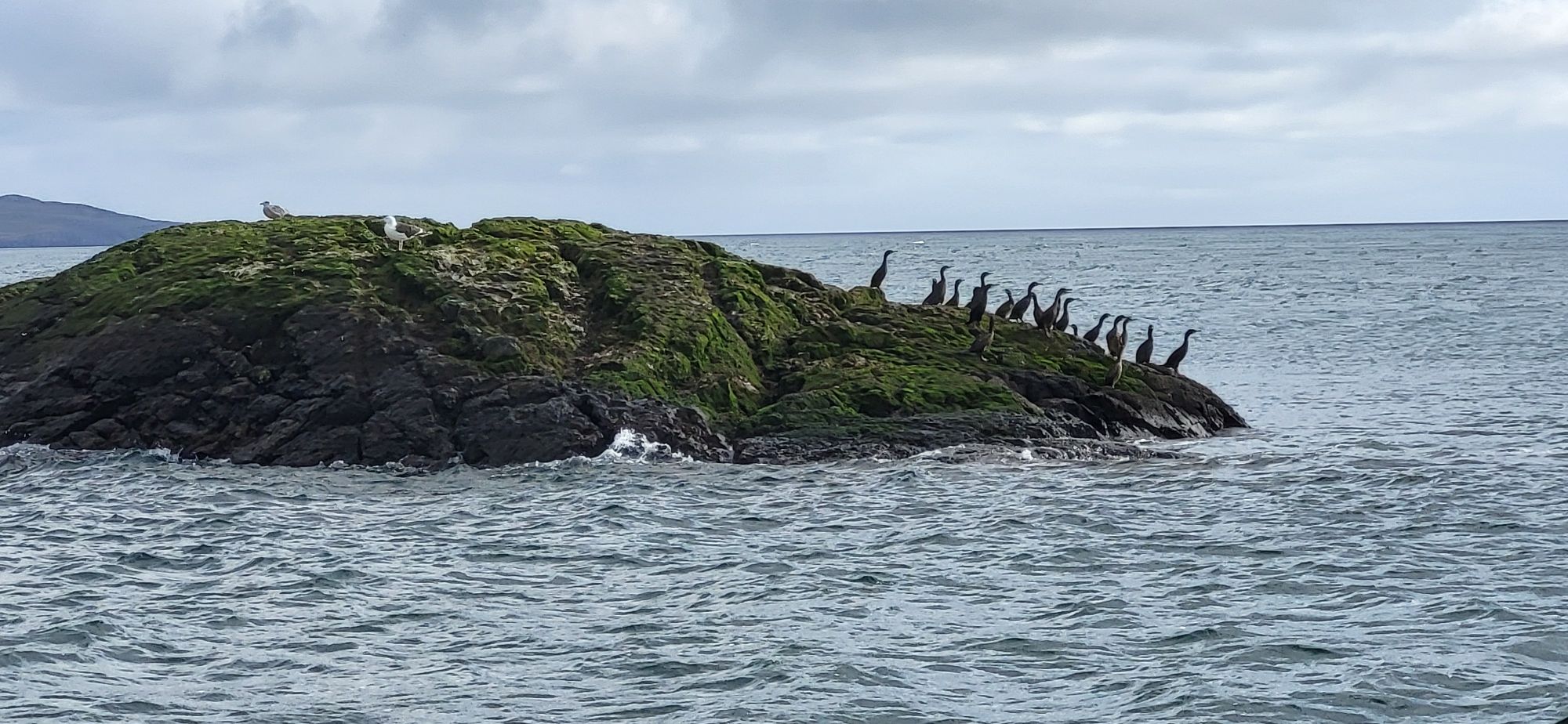
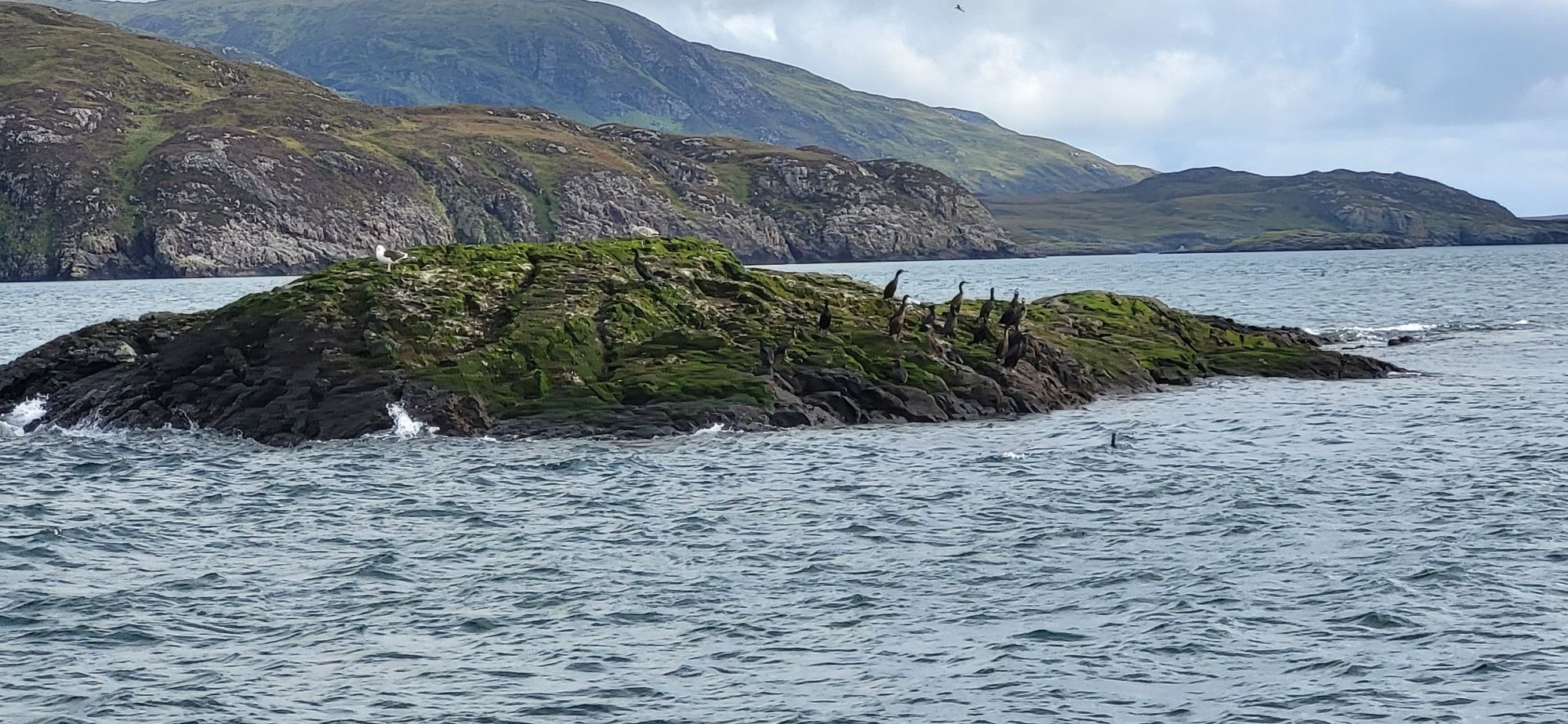
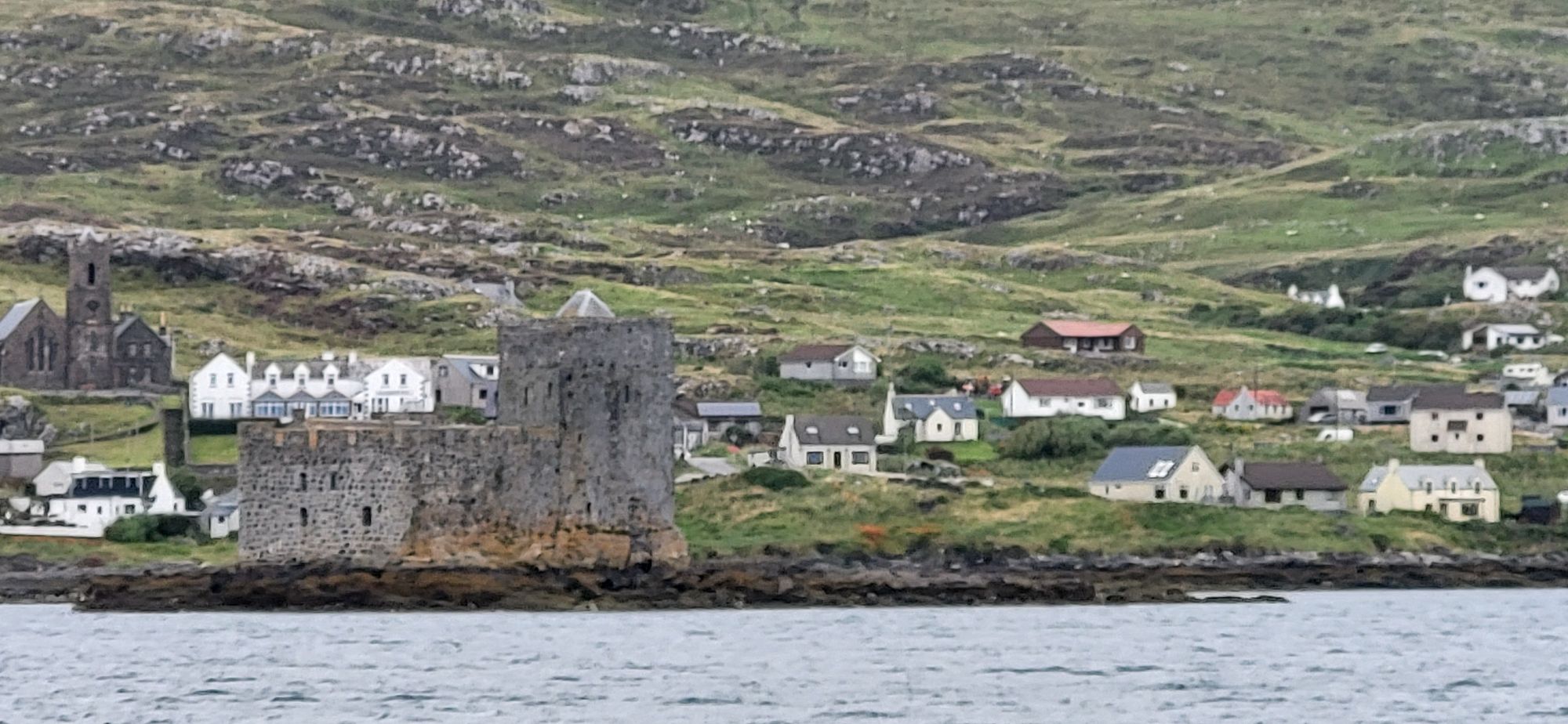
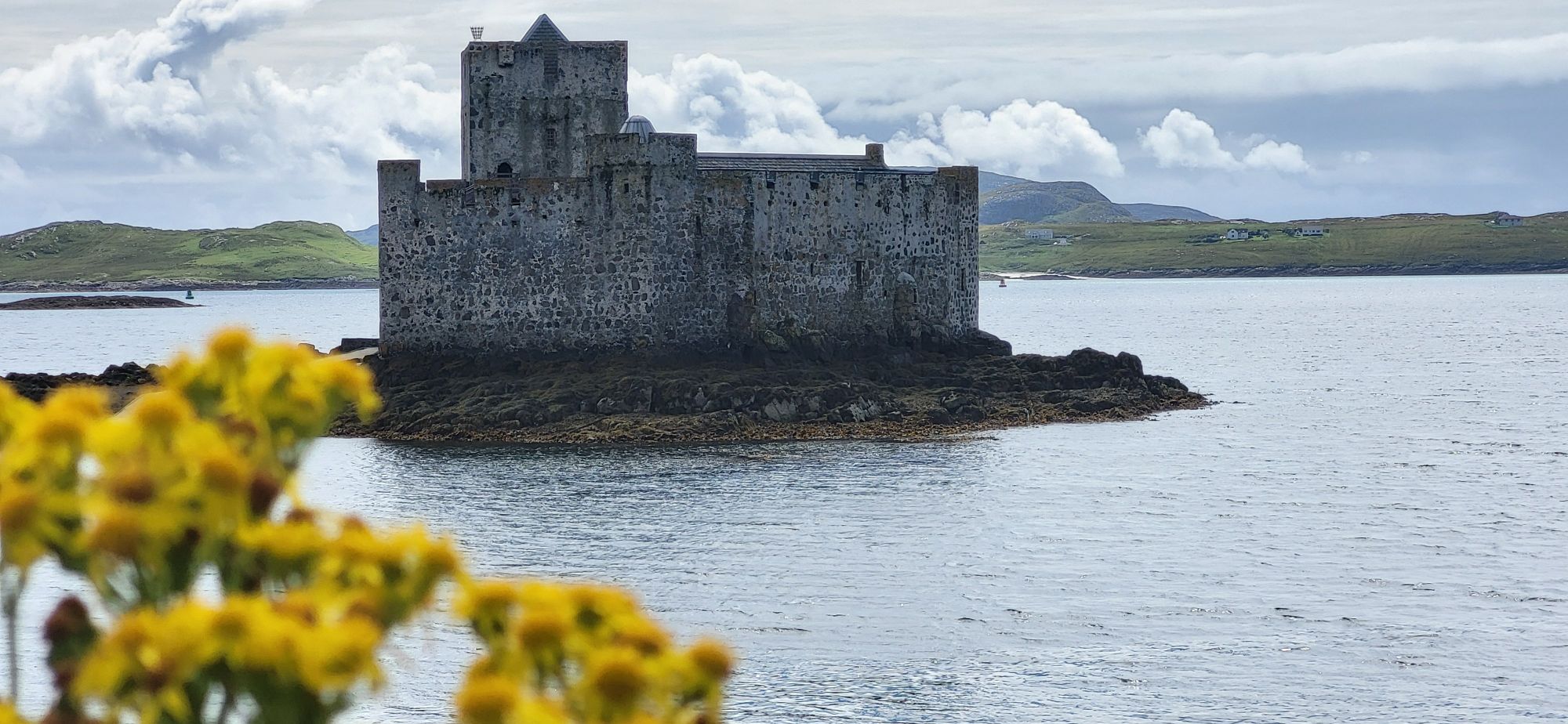
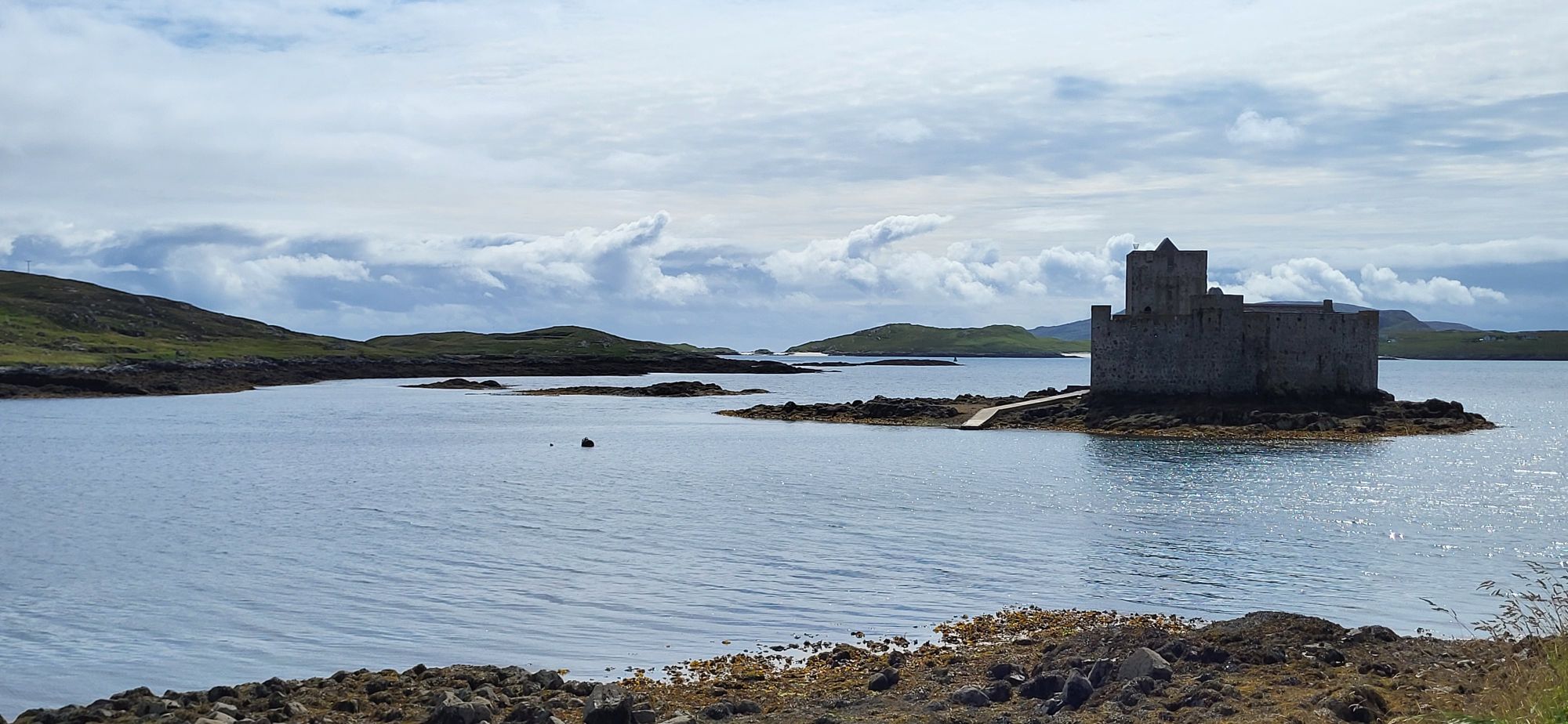
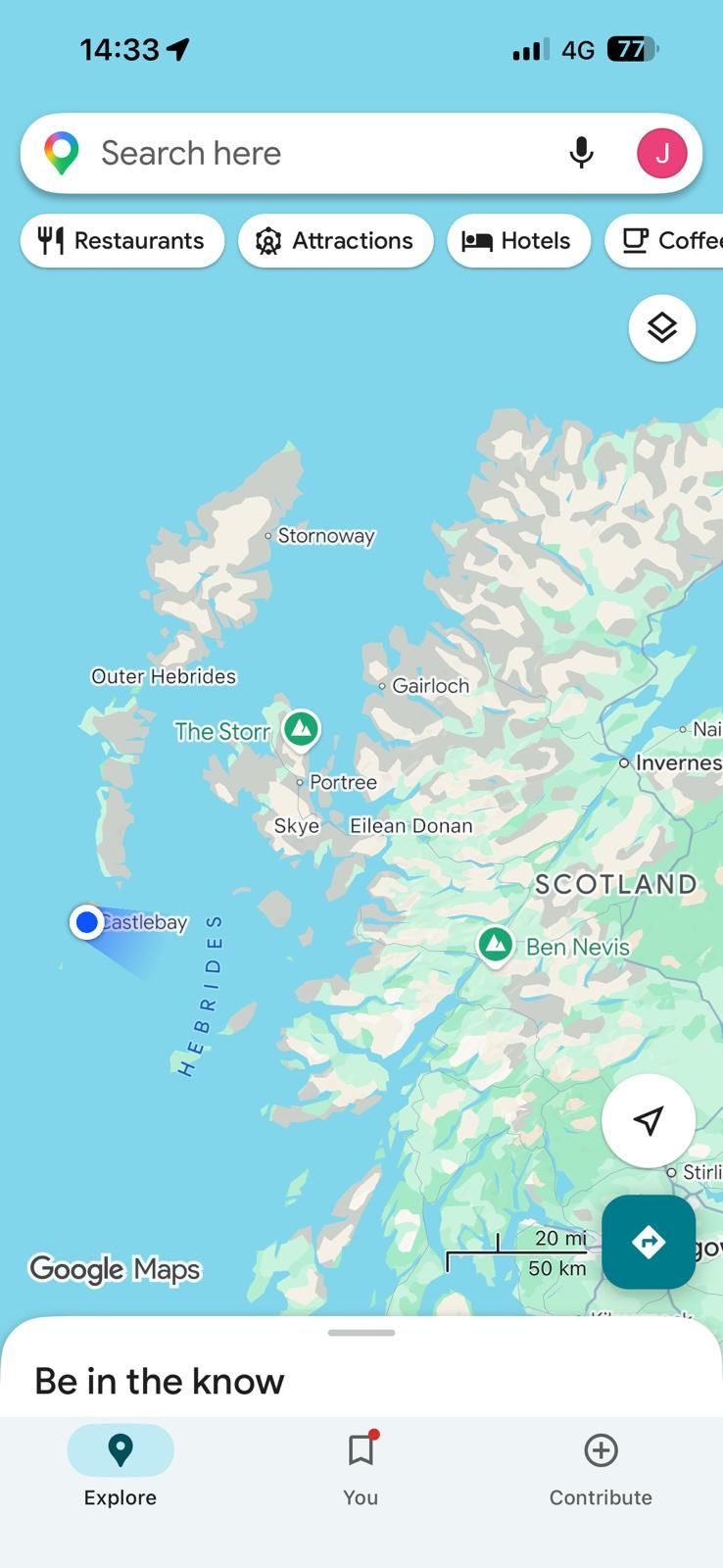
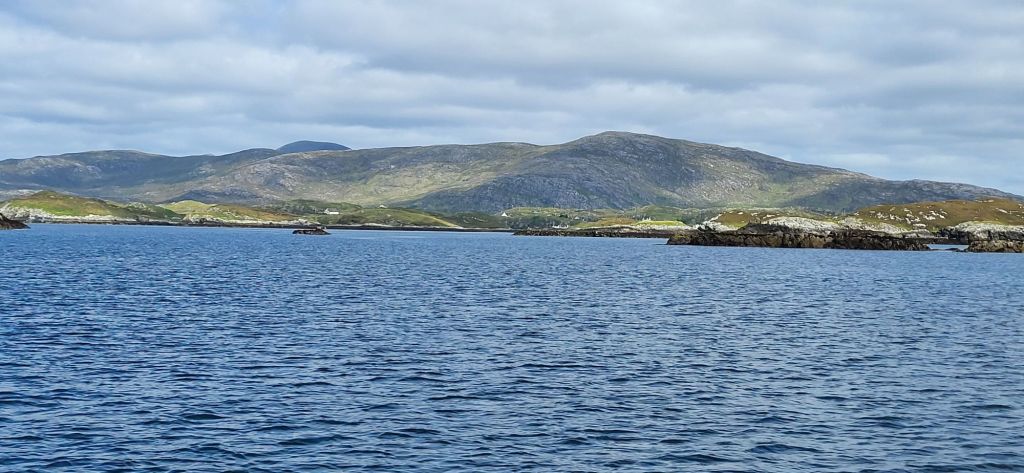
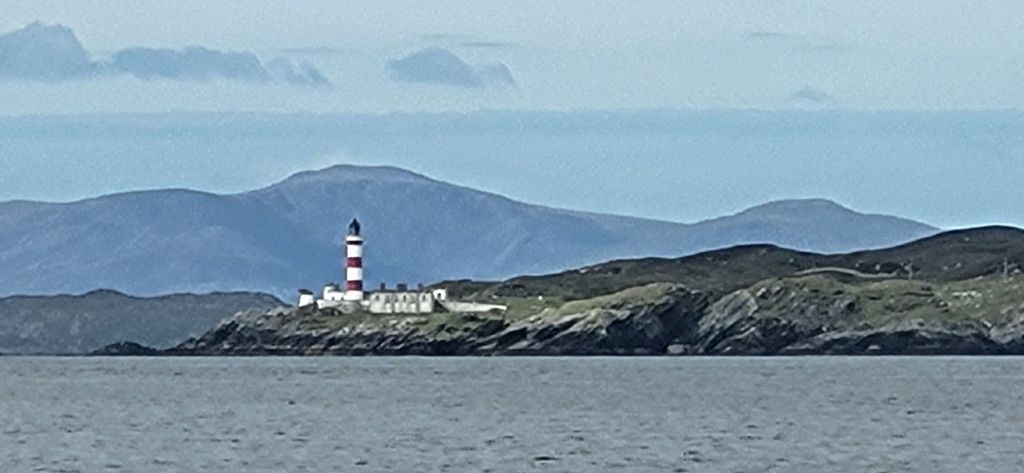
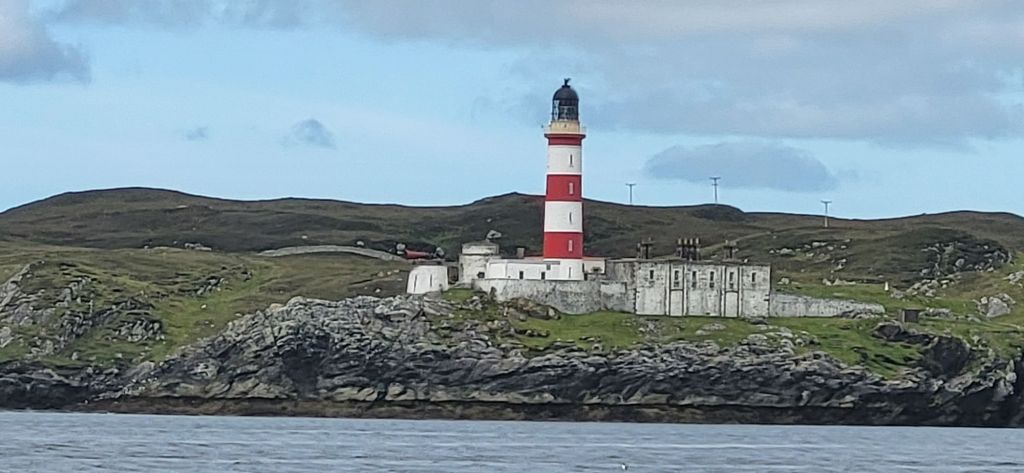
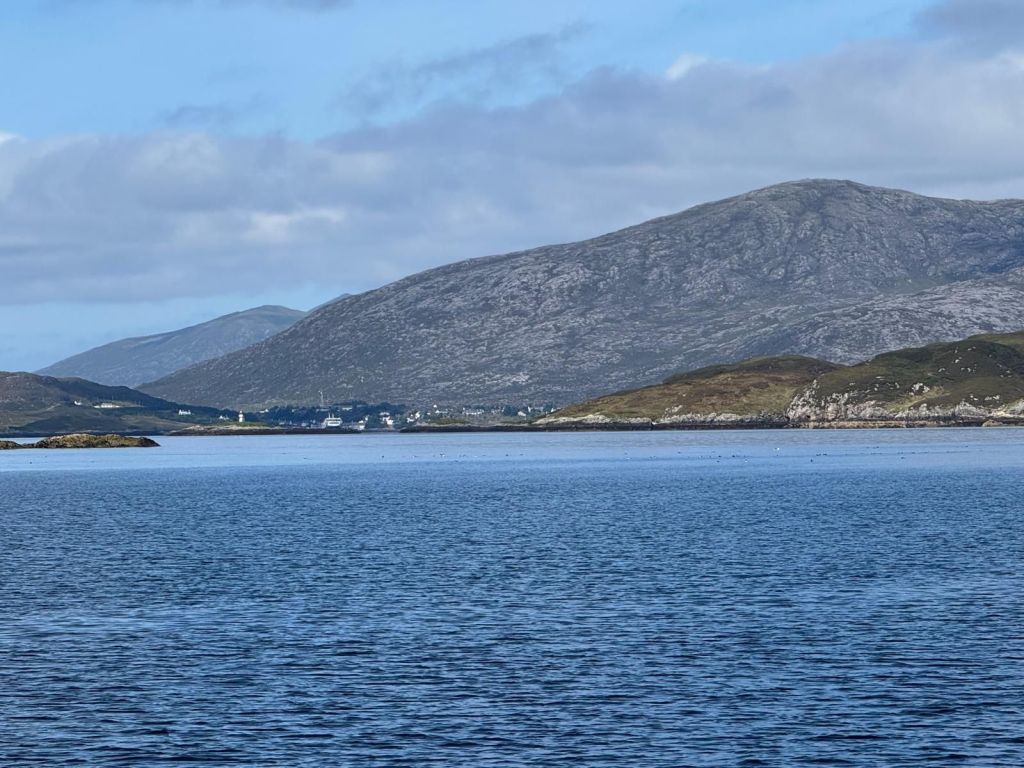
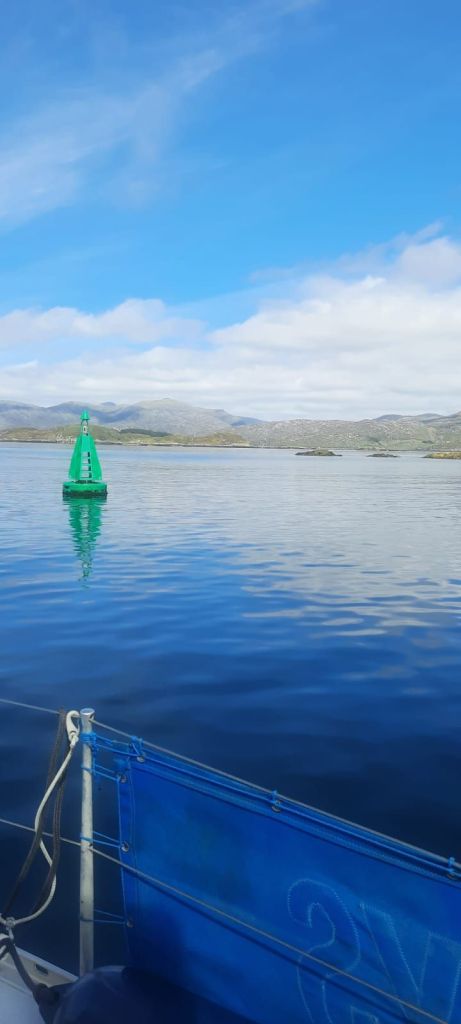
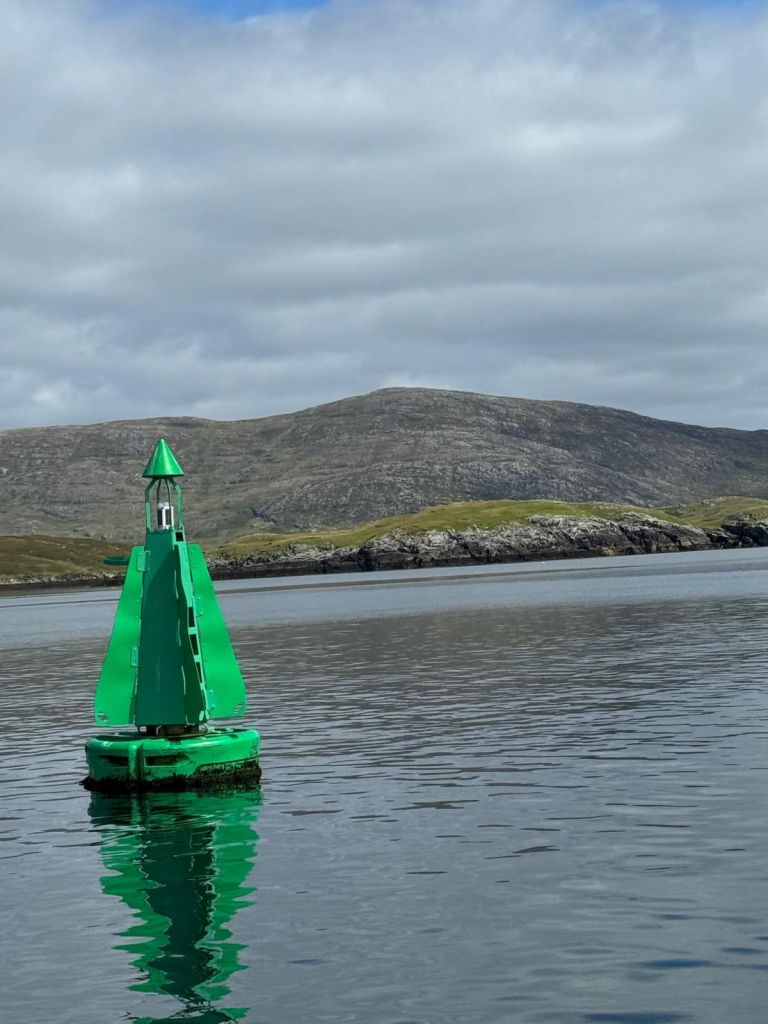
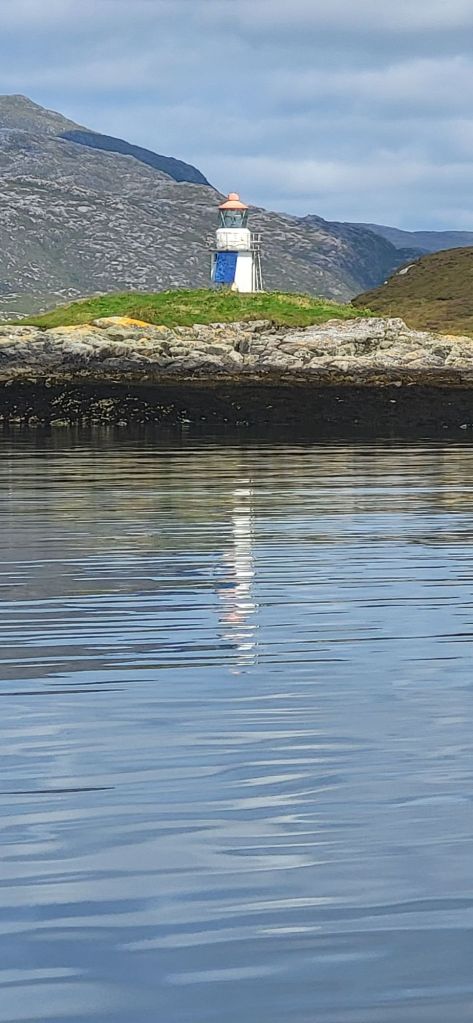
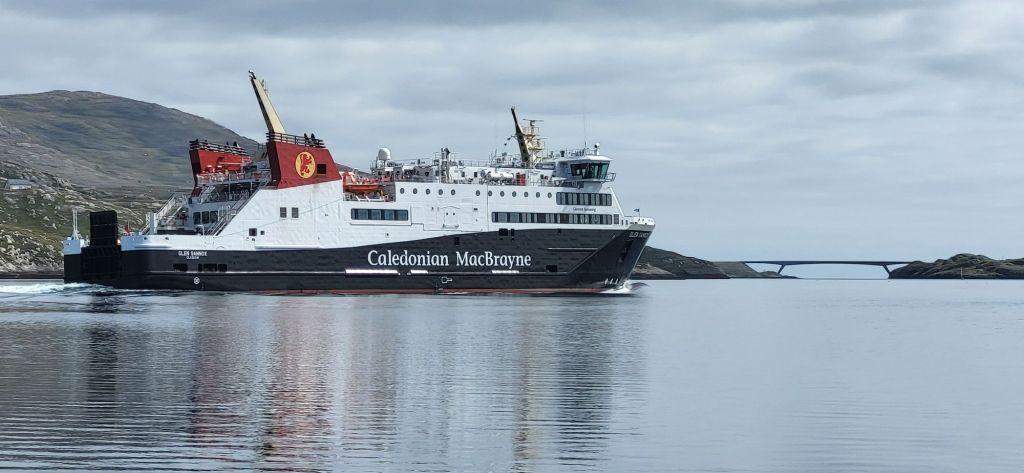
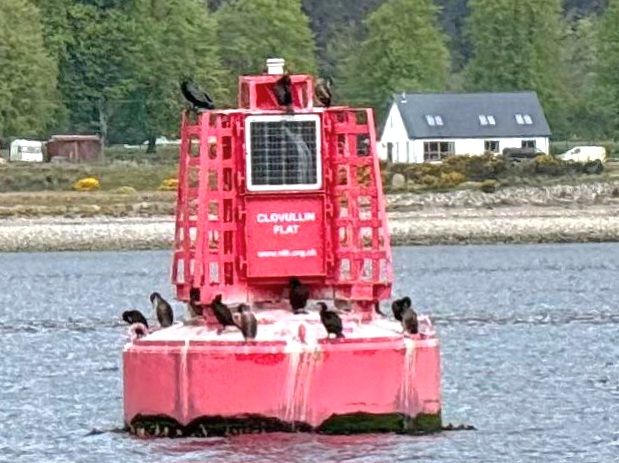
Out of the loch and past an island of disgruntled cormorants, we turn south. The wind is kind enough to stay in the west and give us a fine sail past South Uist and Benbecula. Then, at last, Barra itself, and the business of finding the entrance to Castlebay, a channel with enough rocks scattered about it to concentrate the mind. The name, it turns out, is not merely decorative…there is indeed a castle sitting right in the middle of the bay. Kisimul Castle (we learn later!) is Norse in origin, the MacNeils’ seat for several centuries, and a reminder that these waters were Norwegian long before they were Scottish.
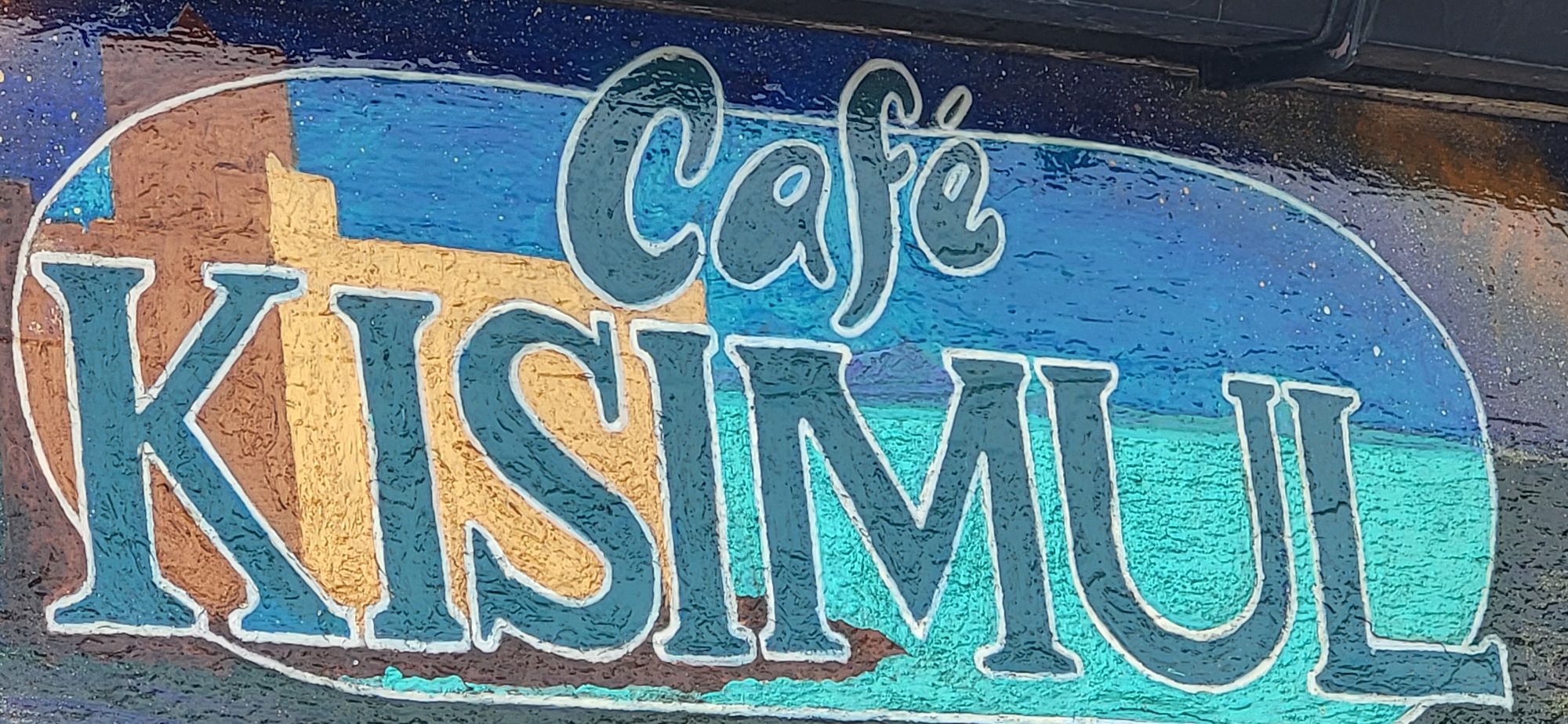
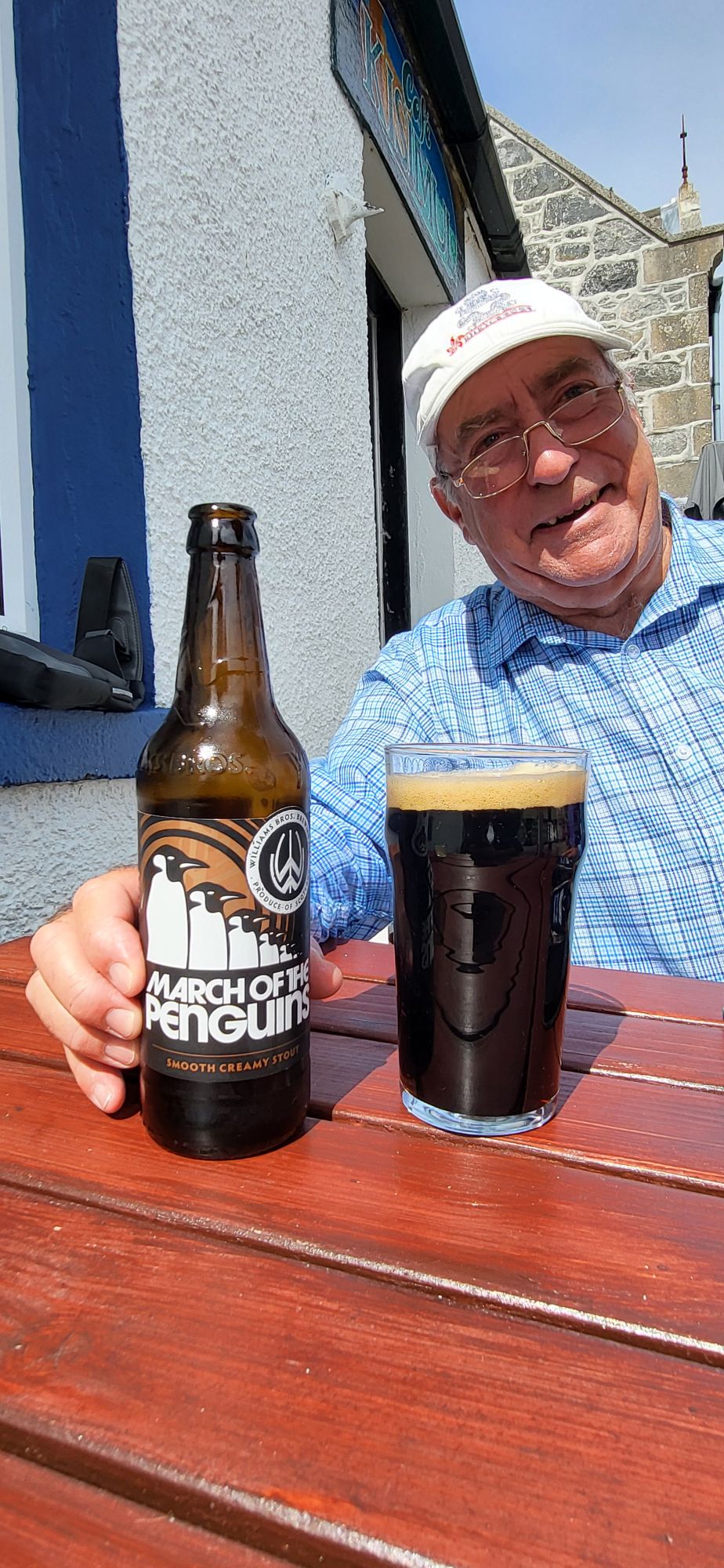
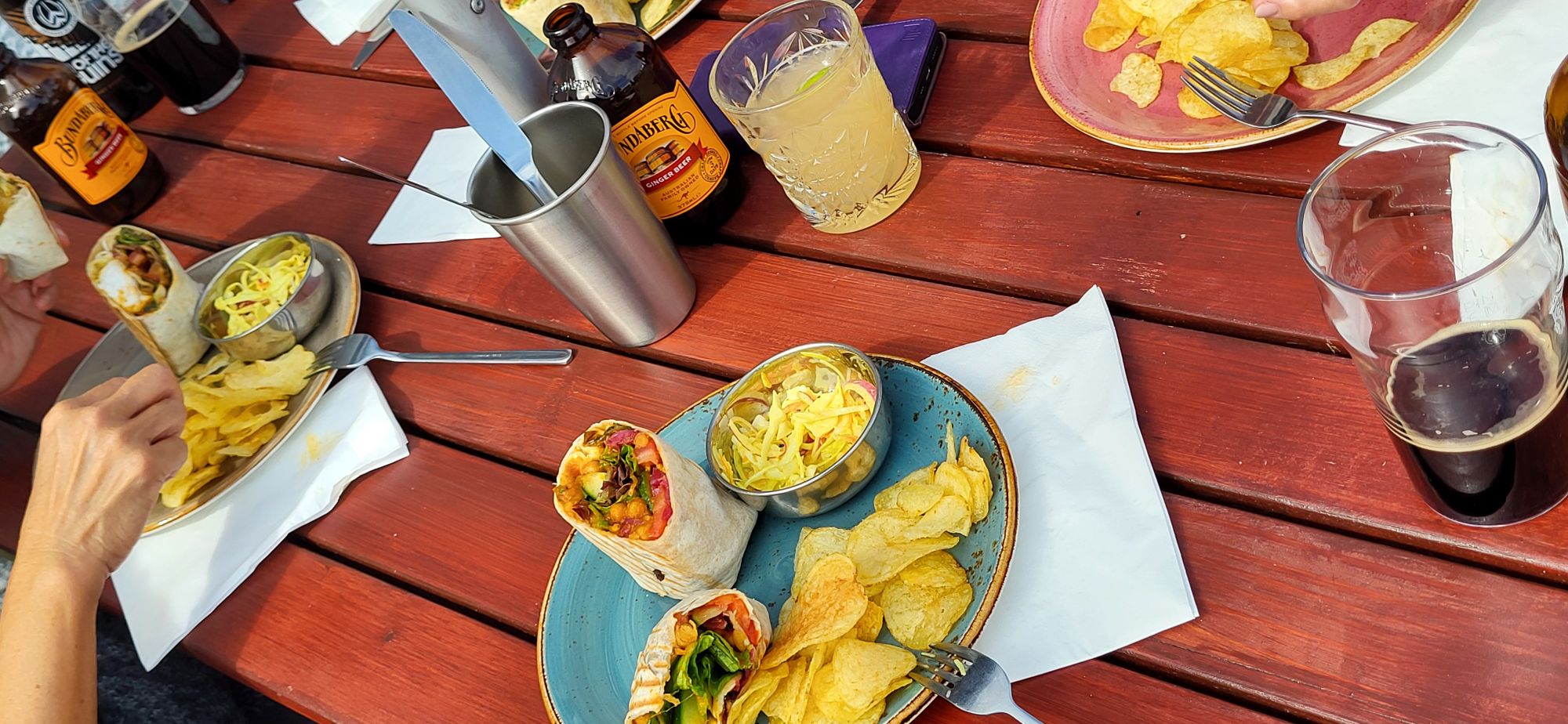
The marina is tiny, community-run, and home to only a couple of other visiting boats. We wandered up into the bustling metropolis of Castlebay itself…bustling being a relative term here…to discover we had missed lunch at the hotel by a single minute. Consolation arrived in the form of the Café Kisimul down by the harbour, which turned out to be rather better than the alternative anyway…excellent Indian-themed wraps, an oddly named beer, and a sunny spot outside in one of the loveliest villages at the tip of the Hebrides. We had assumed, reasonably enough, that the café’s name was a nod to its Indian menu. We were entirely wrong — it is named, of course, for the castle in the bay.
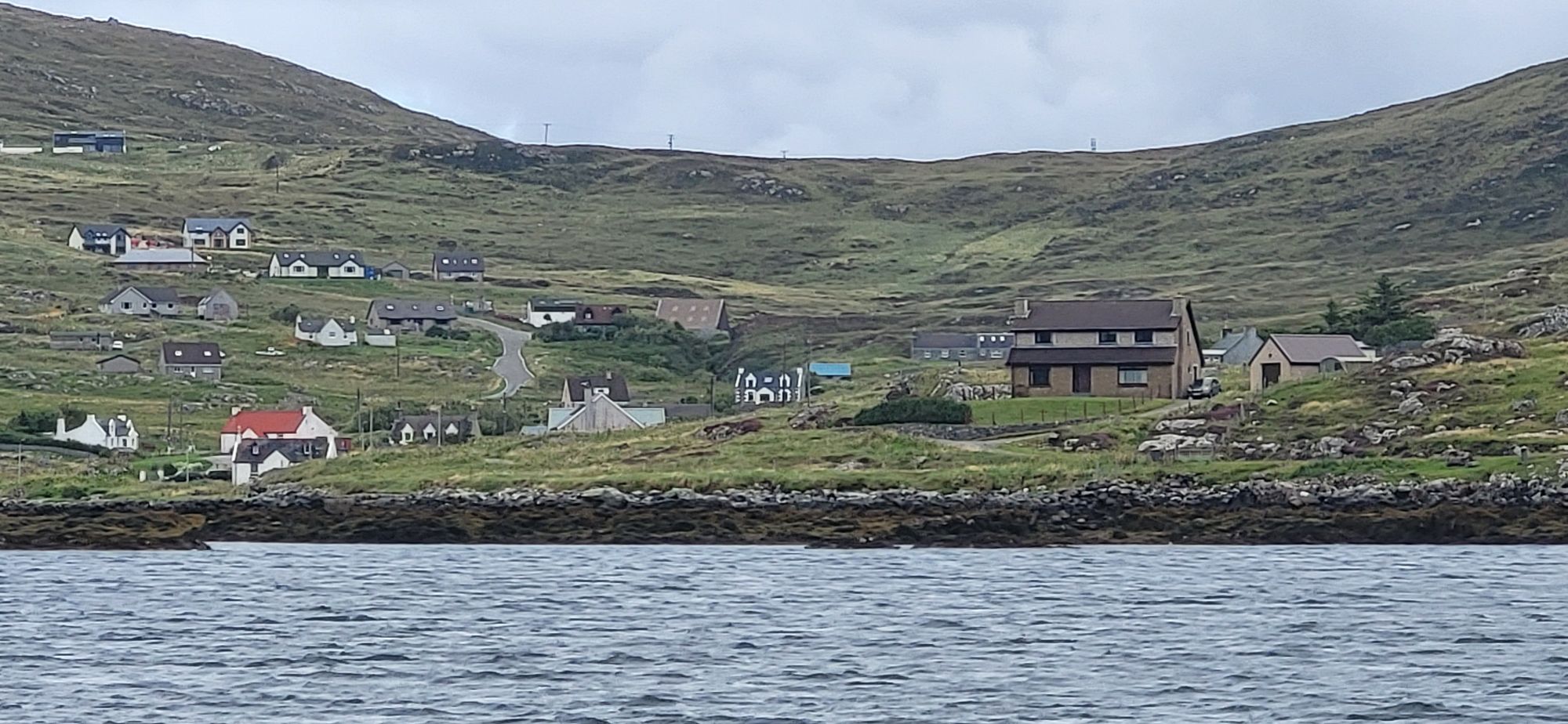
An all too brief wander around the little town and we have a feel for life at this southerly end of the Hebrides…
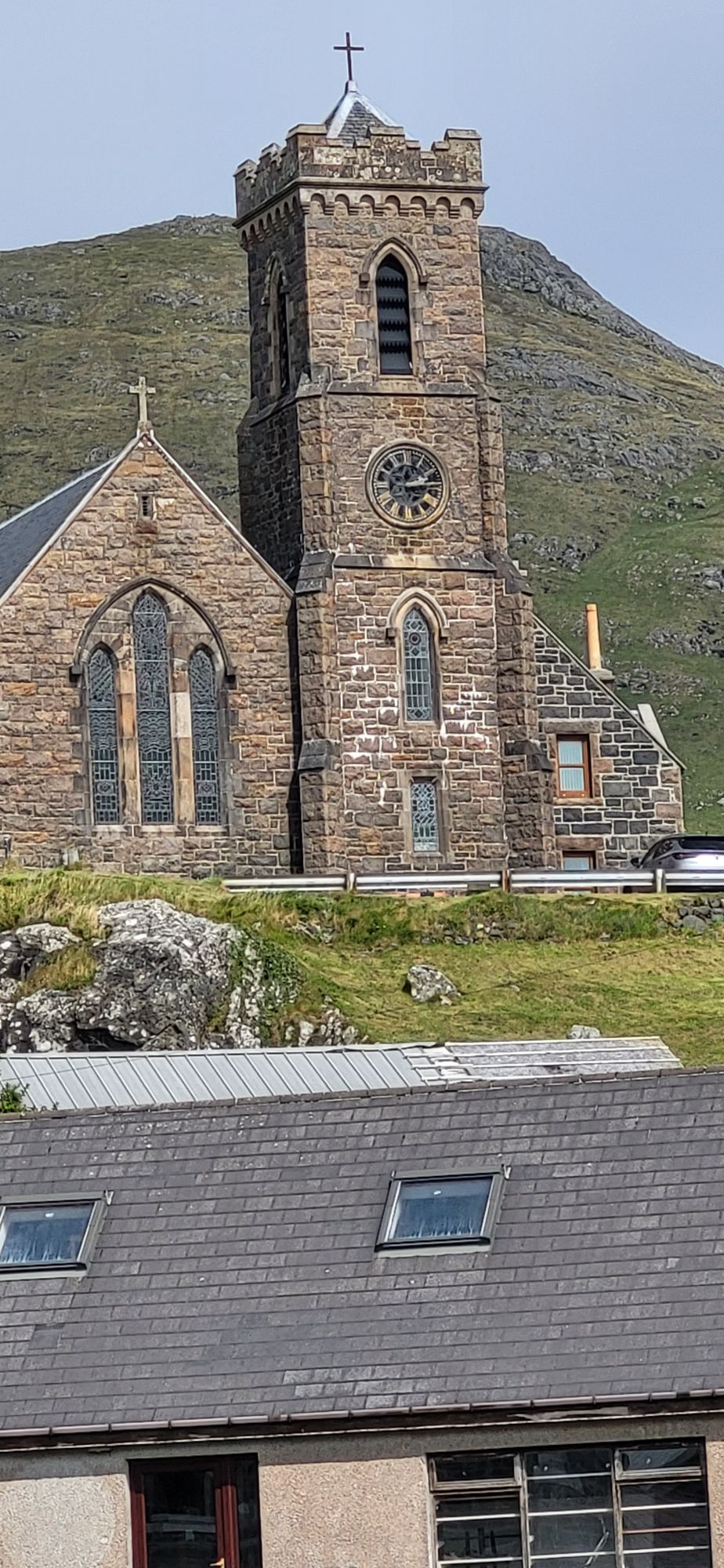
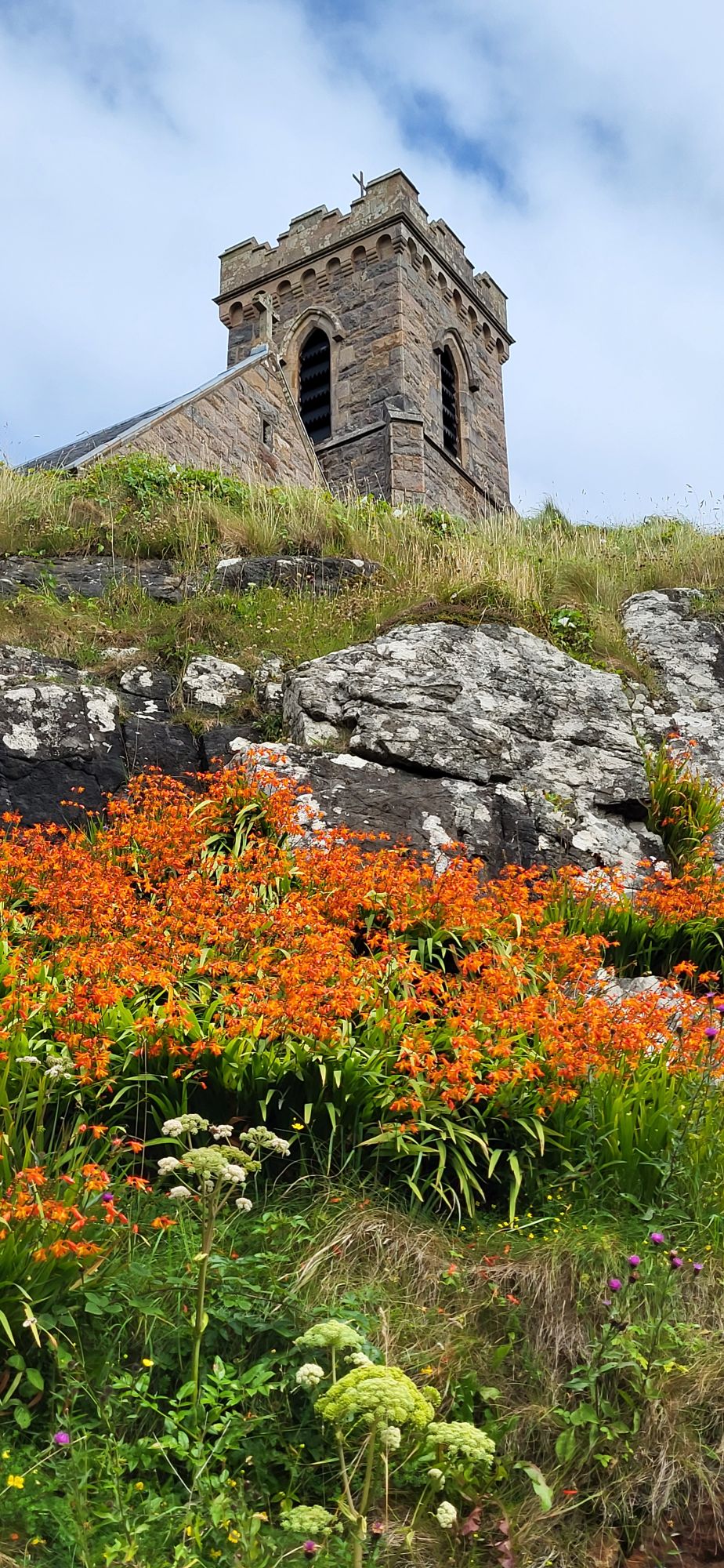
We fell to musing, as one does in places like this, on how small remote communities are obliged to pull together in ways the mainland forgets. One final observation…where the northern isles remain firmly under the Scottish Church’s Sabbath…everything shut on a Sunday… Barra feels different, and not only in temperament. It is the Catholic Church that dominates the town physically here, and, remarkably, there are places open on a Sunday.
The strong winds and squally showers of the last few days are gone and we are looking forward to a few days of lighter winds and maybe even something rain free.
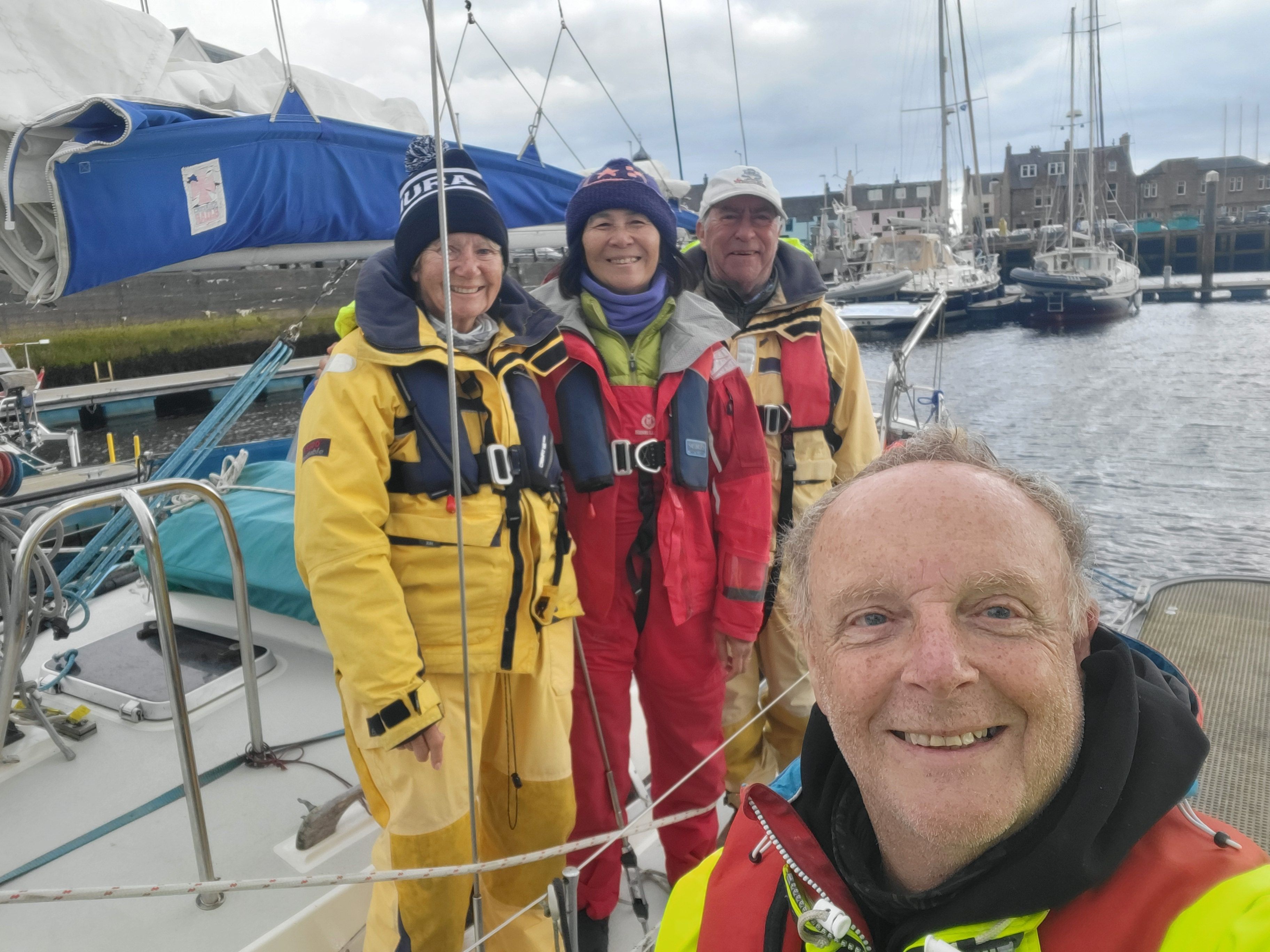
The 6am alarm is its usual unwelcome arrival, but routine kicks in and the boat comes to life…warps and ropes made ready for departure, water topped up, sail covers unzipped…and the first coffee of the morning ready in mugs.
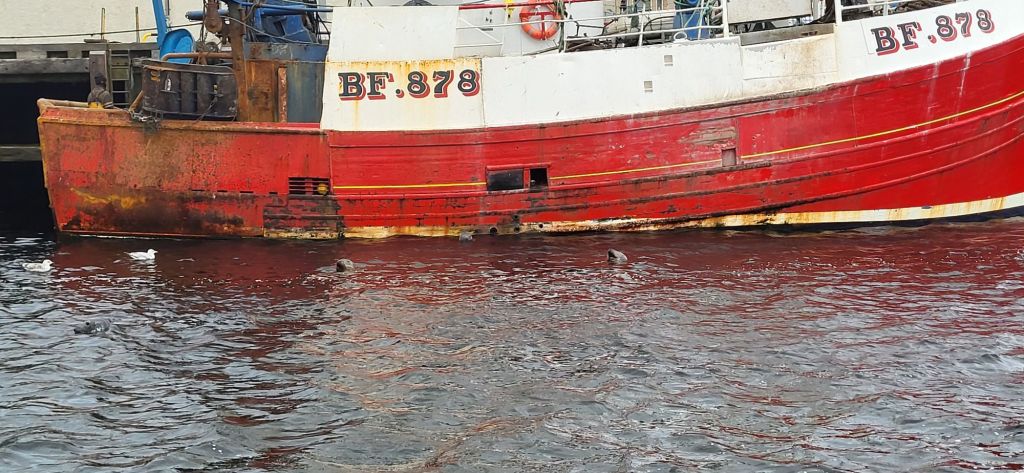
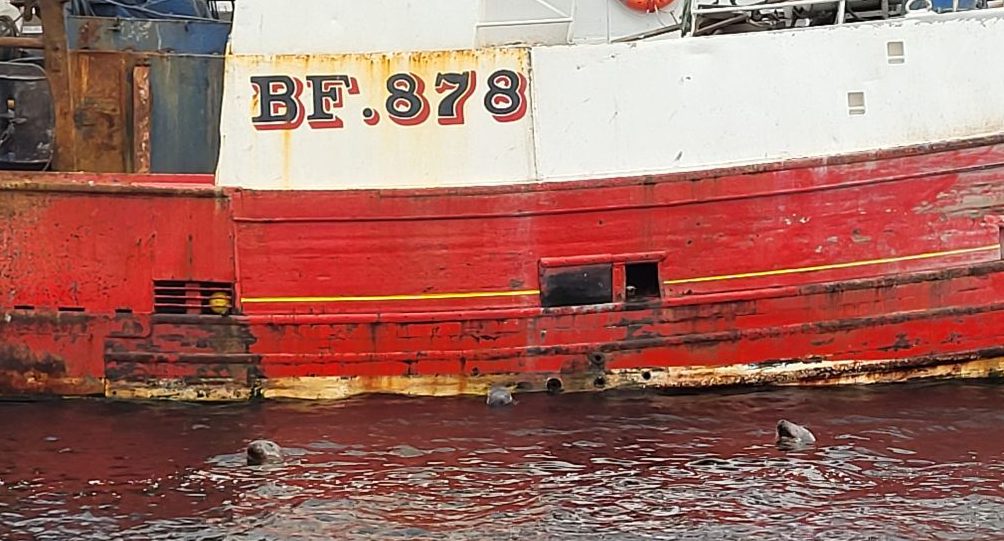
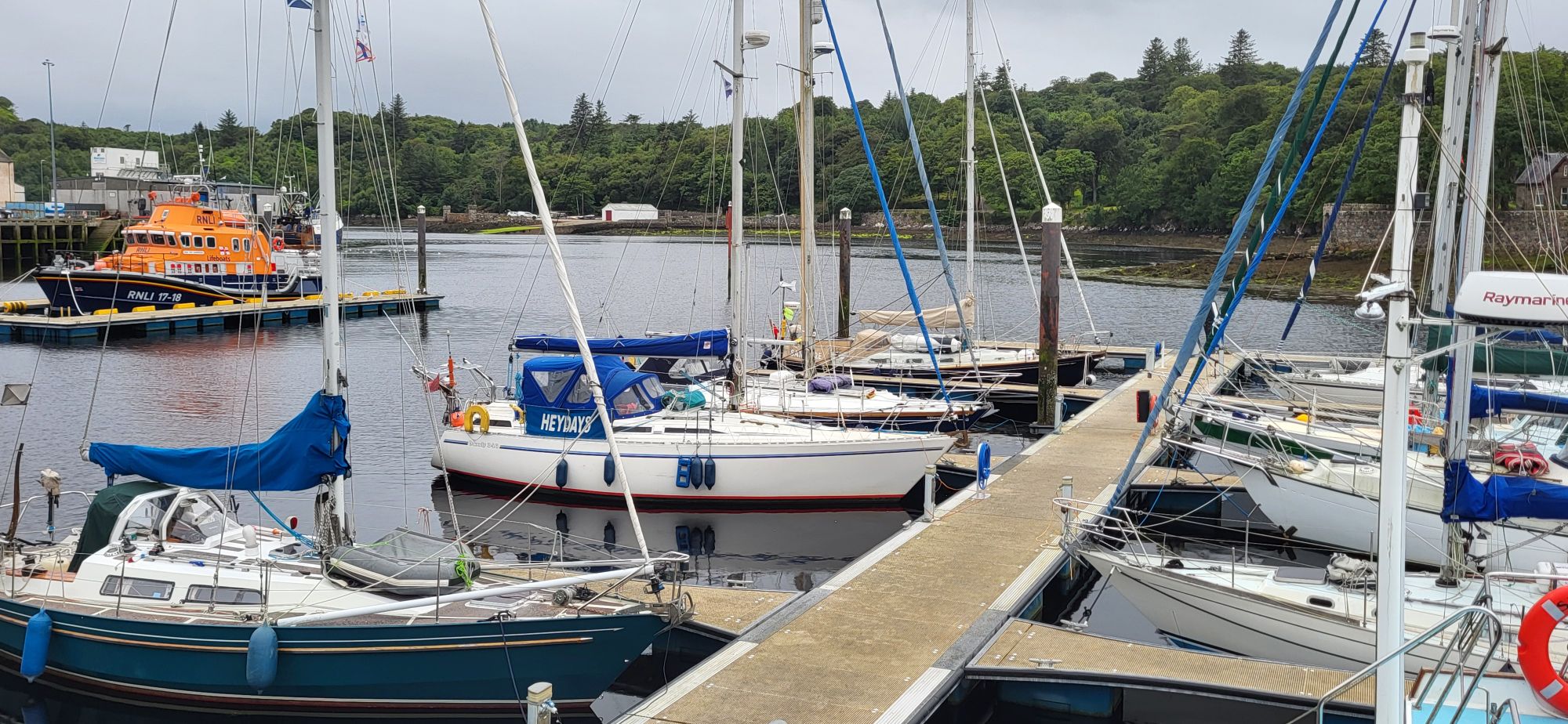
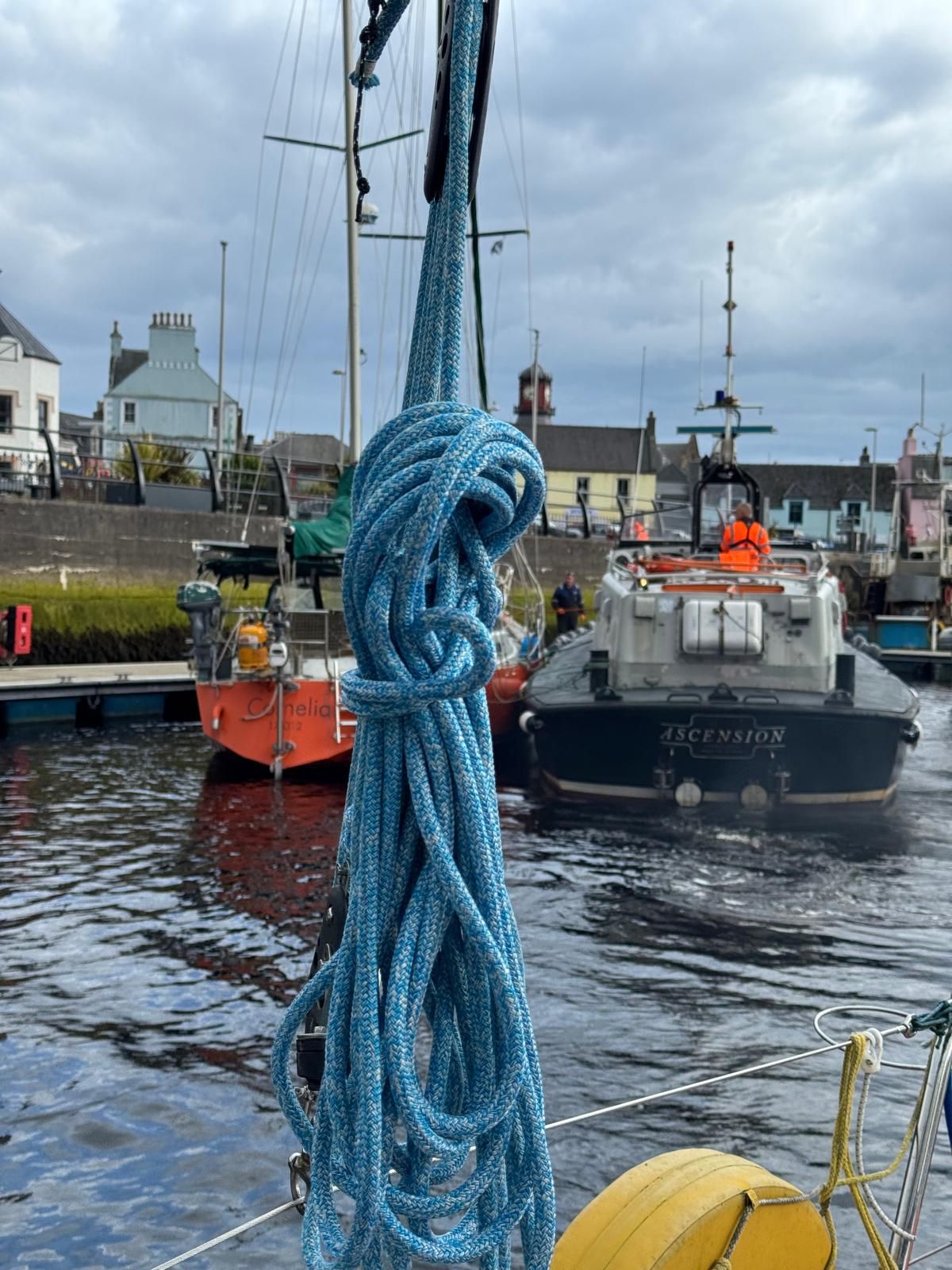
By 7am we have confirmed with the harbour authority that the ferry is clear and we can slide away from Stornoway into what is still a gloomy sky. The seal hanging around by the fishing boat shows us no regard at all, mostly on account of the fact that we have no handy fish guts to toss overboard…
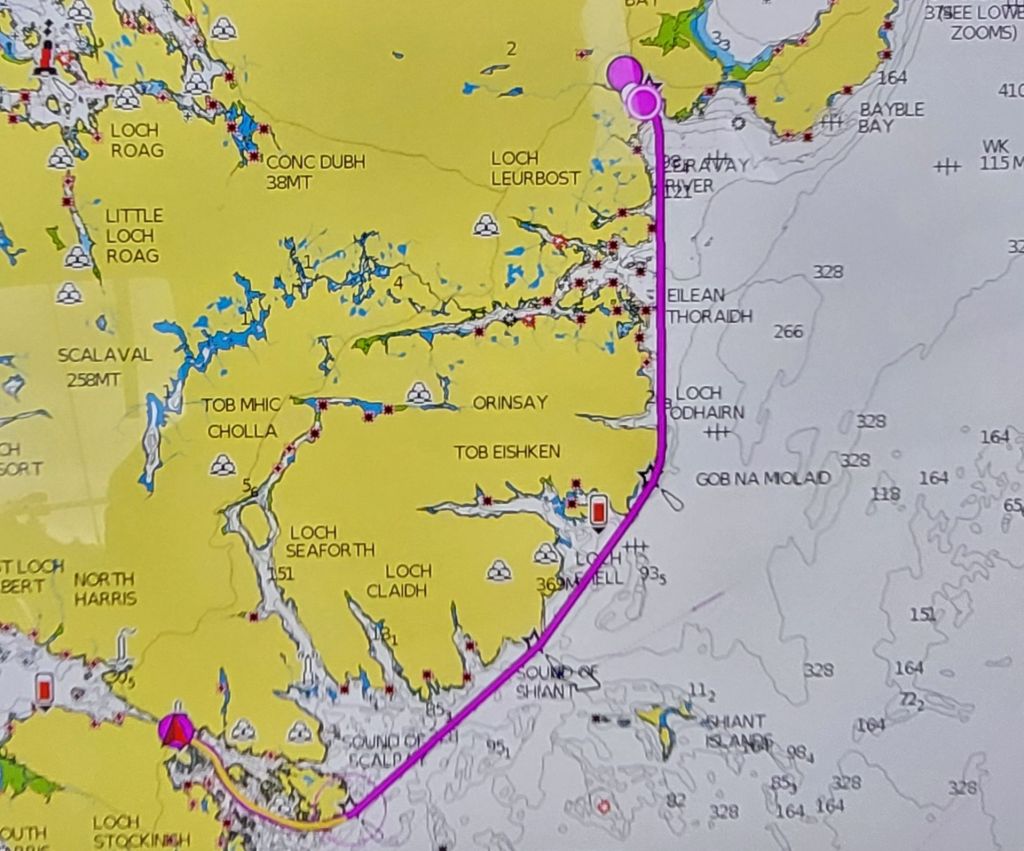
With such a rocky landscape, we are able to hug the coast….none of the wariness associated with the off lying sandbanks and shoals of our home waters…just a few rocks to contend with. Fortunately these mostly don’t move (at least not in our human timescale), and we can pass mostly within the proverbial biscuit toss.
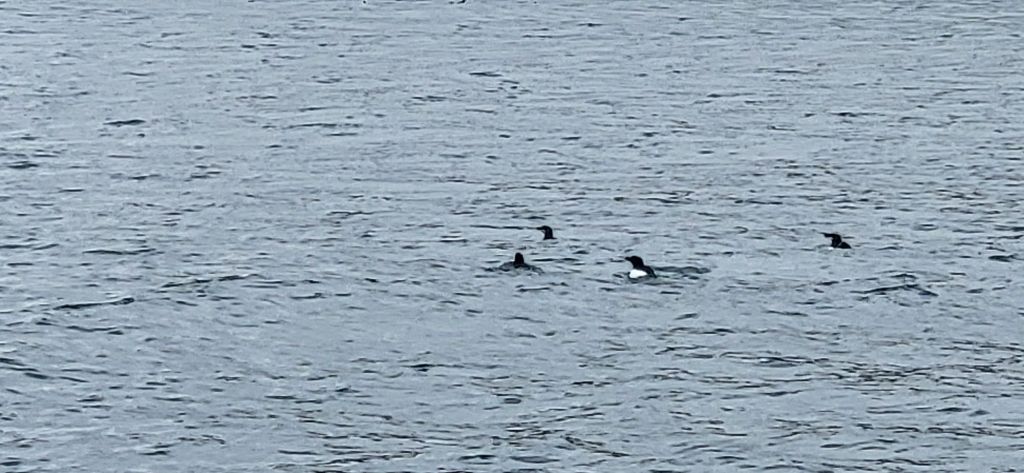
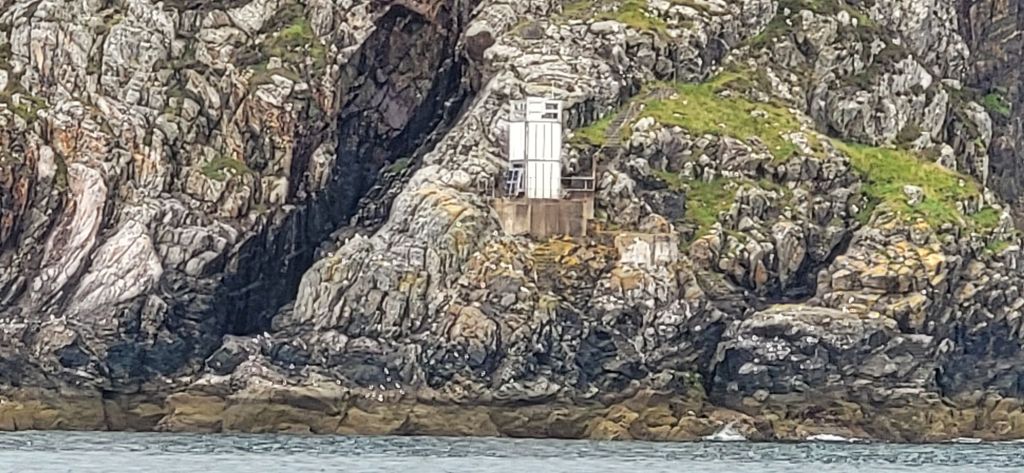
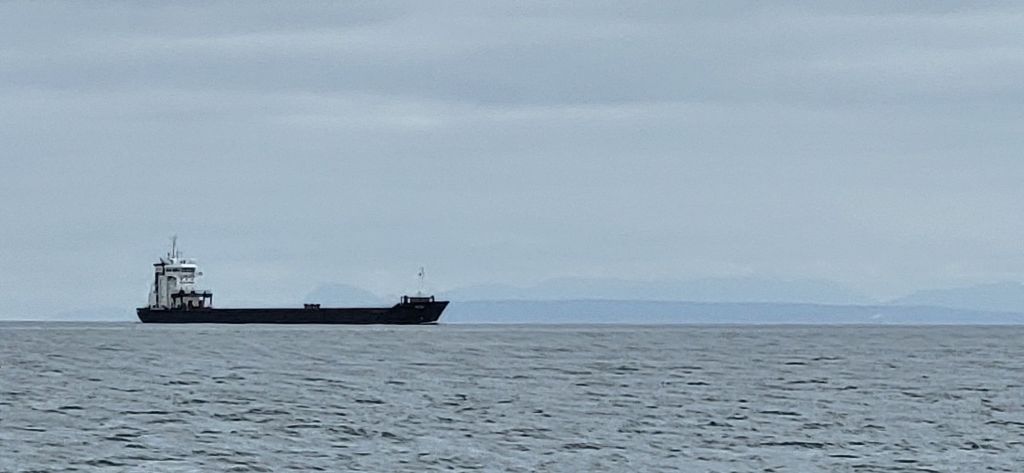
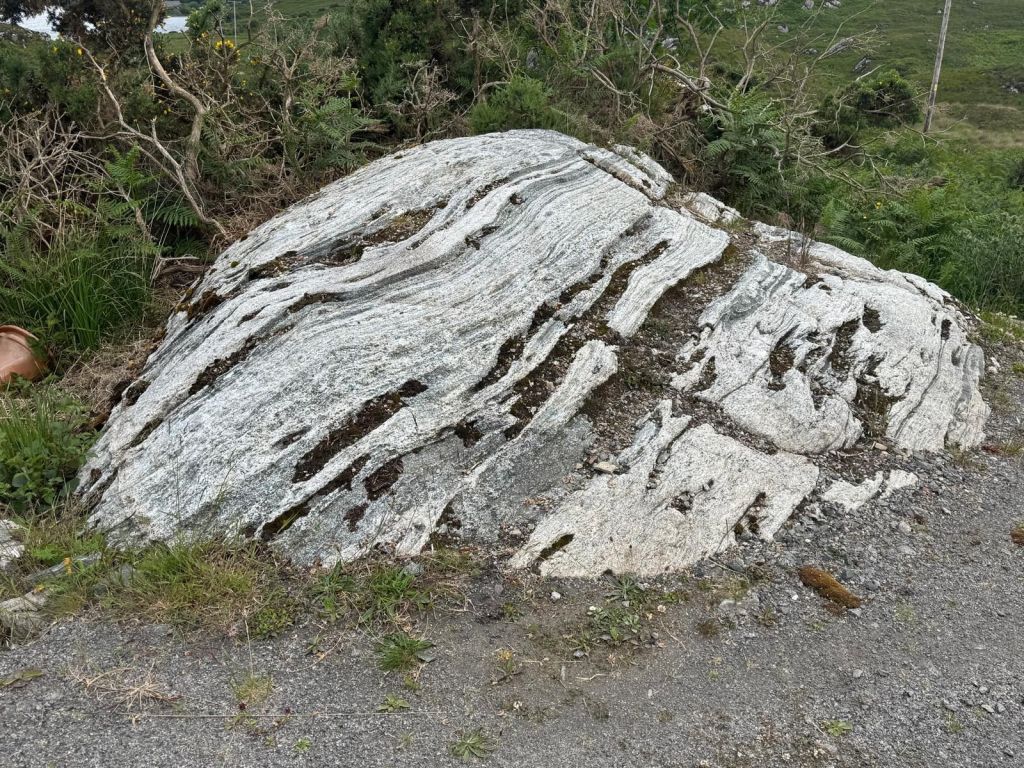
With a full main and genoa in light airs and a calm sea, we trundle on down the east coast of Lewis, accompanied by a small coaster making its way down the Minch, a couple of disinterested dolphins, the usual guillemots, and a cheeky tern which sits for a while on our mast, defying the others with some seemingly furious cries. The rocky coast slides past with its Lewis Gneiss, waterfalls and occasional light…and Skye looming in the background….
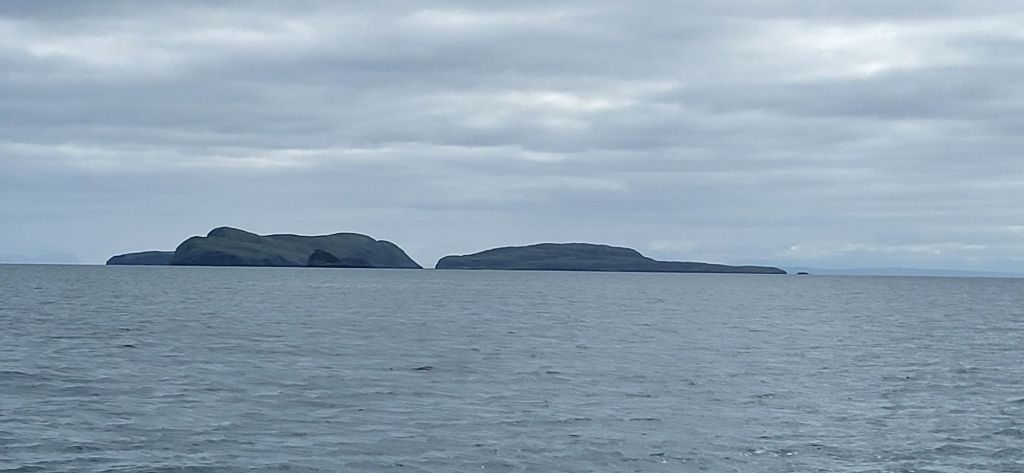
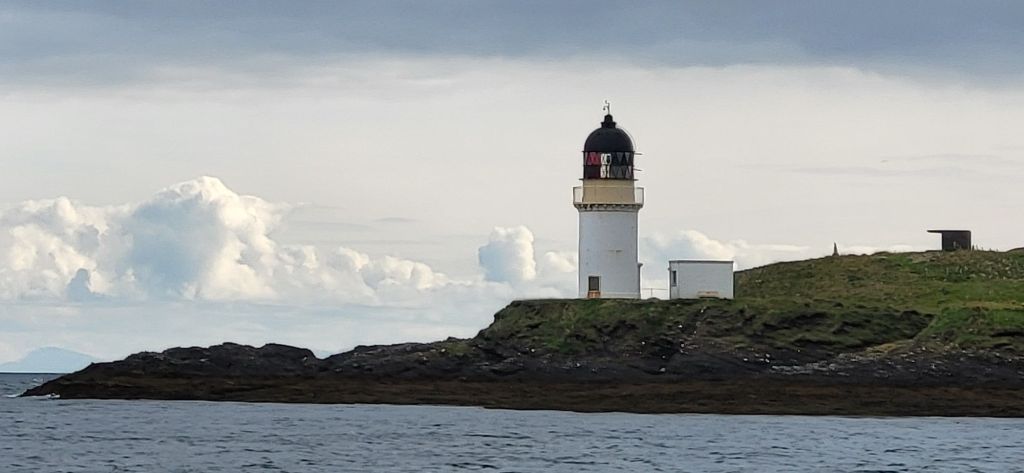
Off the light house at Gob Na Miolaid we start to turn a bit more west and into the wind, which has now dropped to a barest puff. Needing to get past the Shiant Islands before the tide turns, we furl the genoa and turn our boat once more into a diesel hybrid.
The sea becomes ever more glassy and as we round Scalpay, the sun greets us over Tarbert (not to be confused with Tarbert on the mainland!).
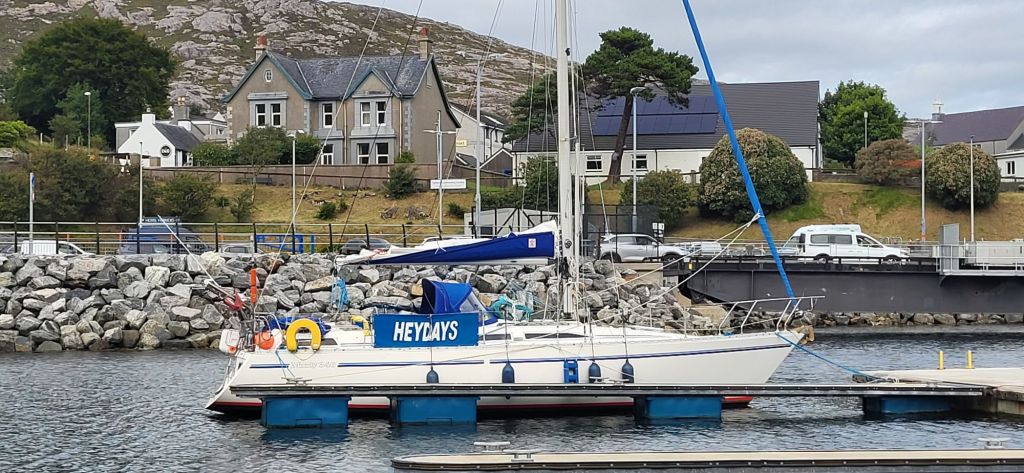
Calmac leaves and the harbourmaster is waiting to greet us on the pontoon….what service. The little harbour here has been recently renovated, but we have our choice of places…none of the mad late afternoon scramble often encountered in the Solent…..
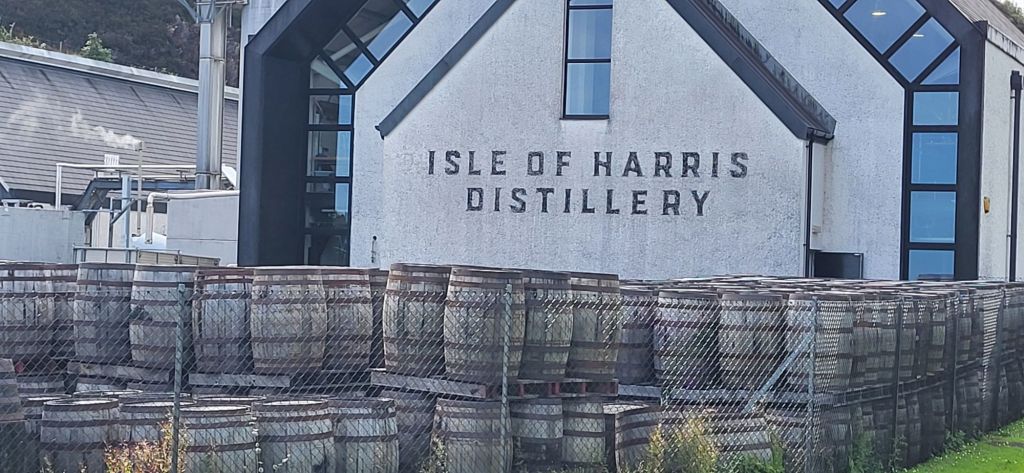
Ashore, we are too late for the distillery which is handily placed right at the end of the pontoon…oh well….we’ll just have to stay another night…
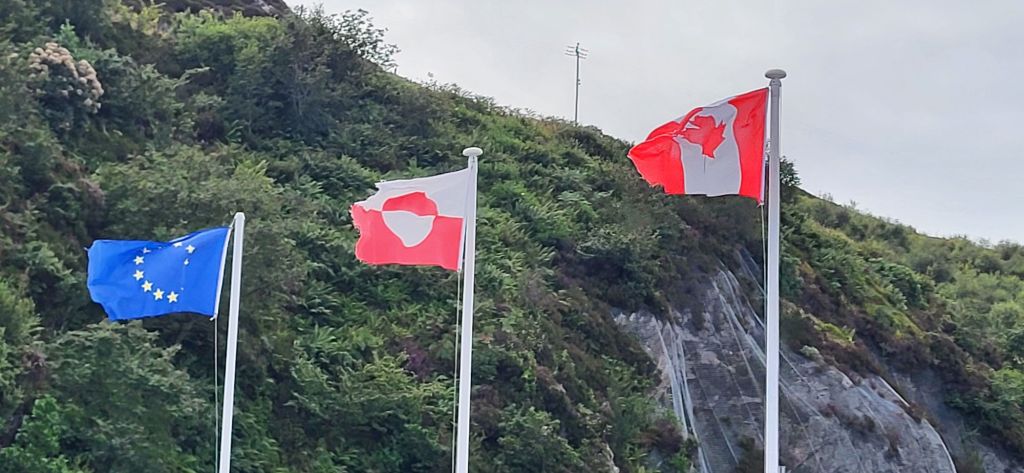
Footnote: Three flags at the end of the pontoon…EU, Greenland and Canada…what could they possibl;y have in common we wonder, apart from possibly, the subject of the ire of a certain North American President!!
Last year, in Arklow, we fell into conversation with a couple on a boat called Restless (Ann and Tim) on the strength of restless having “Stornoway” painted on her transom. Since we had hopes of getting here ourselves one day, this seemed sufficient grounds for a chat. It transpired she was actually from Oban, and it was they who first pointed us towards Peter May, a local author responsible for a trilogy of detective thrillers set up predominantly in Lewis and Harris. We have all now read them, and are agreed that they are really pretty good. A visit to the tourist information office gave us a leaflet and map identifying the key locations, and we have been treating the island as a literary I spy ever since.
We should note for the sake of accuracy, that the weather has been grim since our arrival and shows no sign of improving before Monday. As this is being written the wind is getting through the rigging at an alarming rate, comfortably over 25 knots, with a noise best described as something out of a cheap horror movie. Monday looks more promising, so in the meantime we have hired a small car for a couple of days of land-based sightseeing, weather having made the sea-based variety unadvisable.
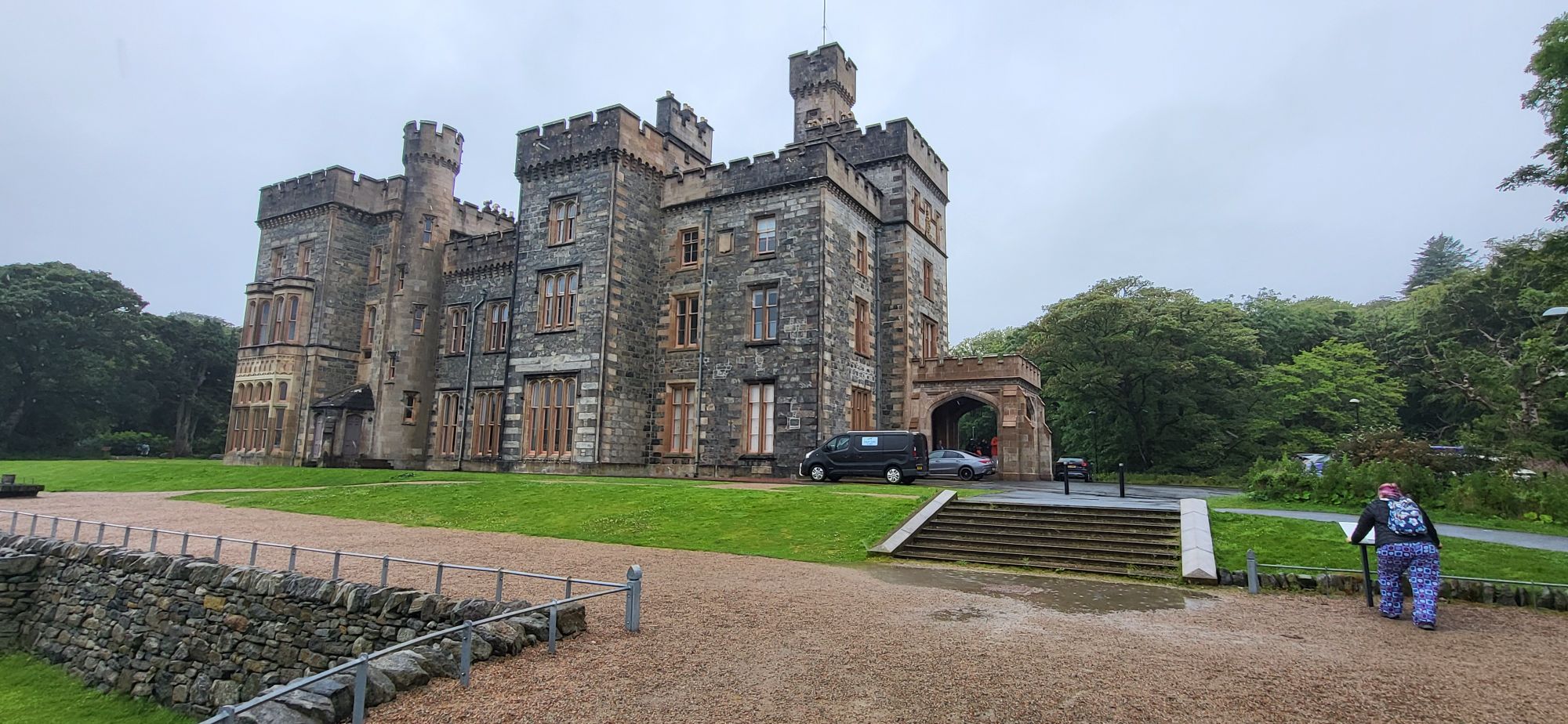
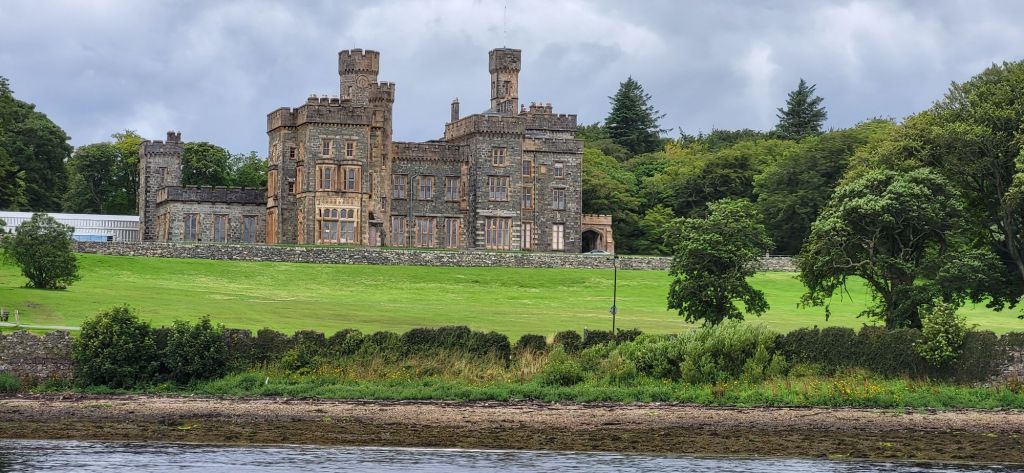
The castle, it turns out, is a relative newcomer as these things go, nineteenth century, and for all its grandeur carries a history one would not choose to have inscribed on a family crest. One James Matheson made his fortune selling opium to the Chinese, a detail of particular interest to Yee Tak given the wider history of Hong Kong, and used the proceeds to buy up a dilapidated castle, which he then rebuilt entirely, having first cleared the local crofters and demolished a village that had the temerity to interrupt his view. A most public-spirited gentleman.
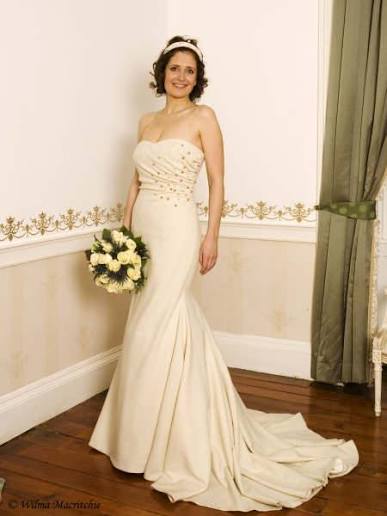
The attached museum, happily, redeems the visit, compact enough not to feel like a forced march, and full of genuinely good material on Hebridean life. A lovely lady there took us thoroughly under her wing, and was so taken with the subject of Alyth McCormack’s wedding that, well past closing time, she was still pulling photographs from drawers to talk us through a dress woven in fine white Harris Tweed. (Alyth McCormack is a noted local Gaelic singer, long associated with The Chieftains.)
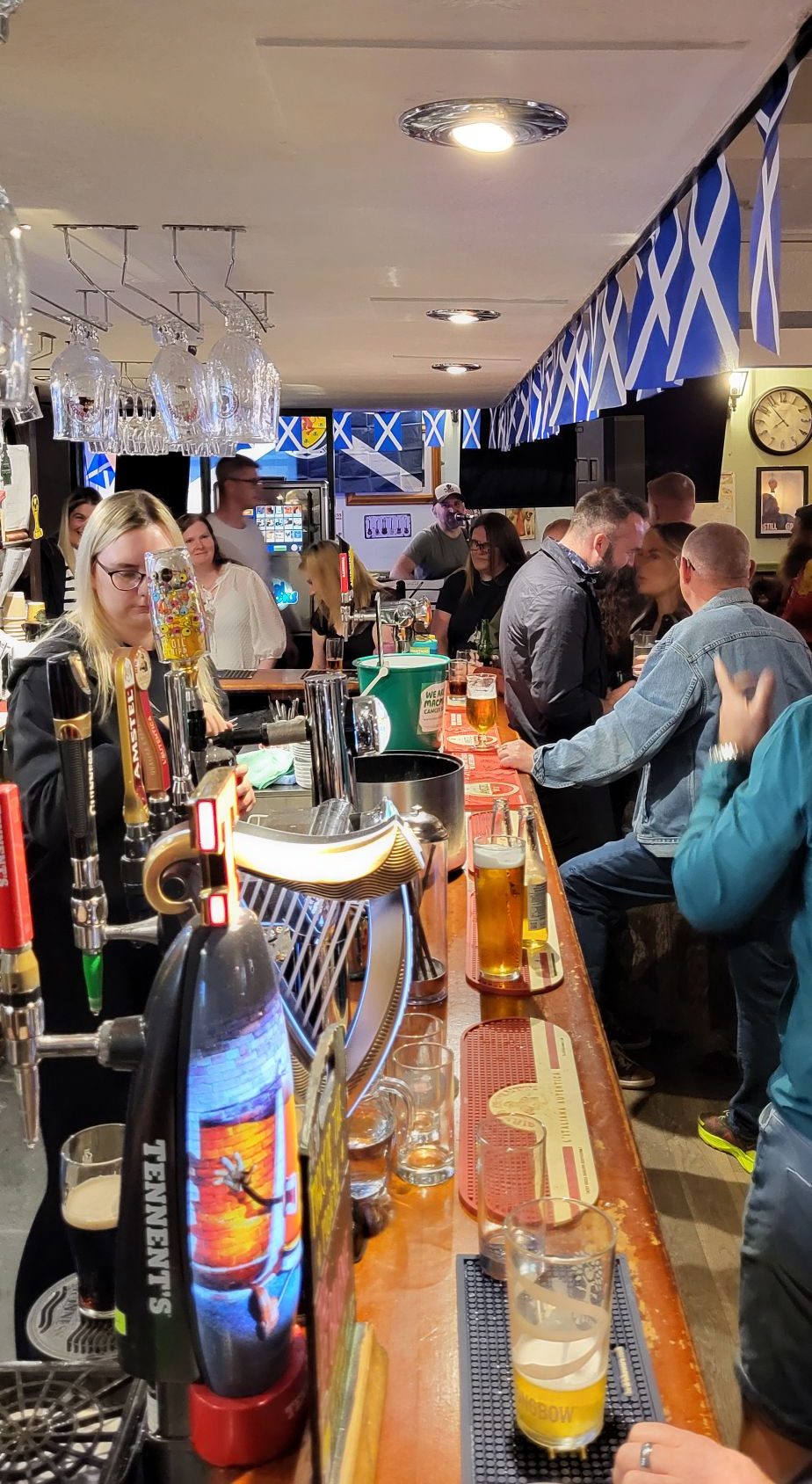
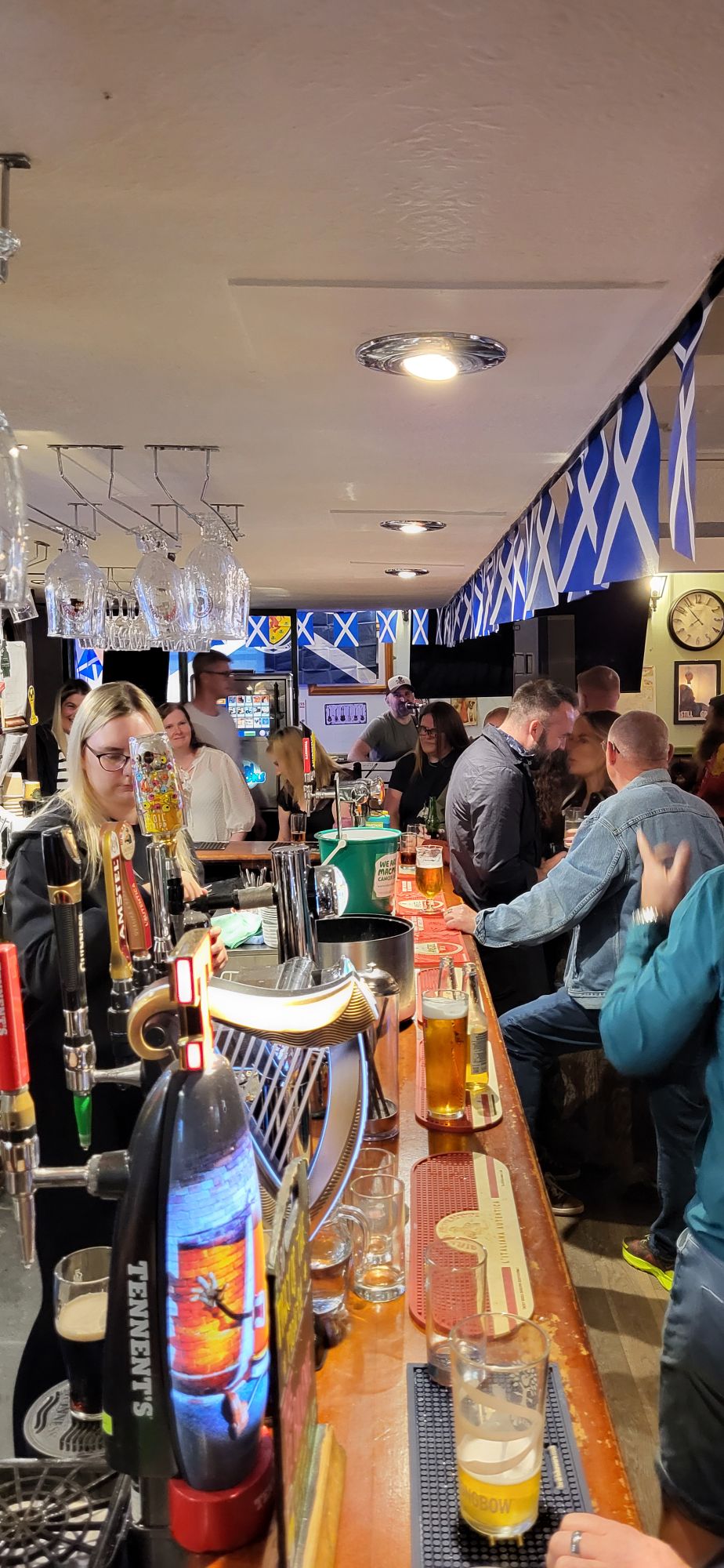
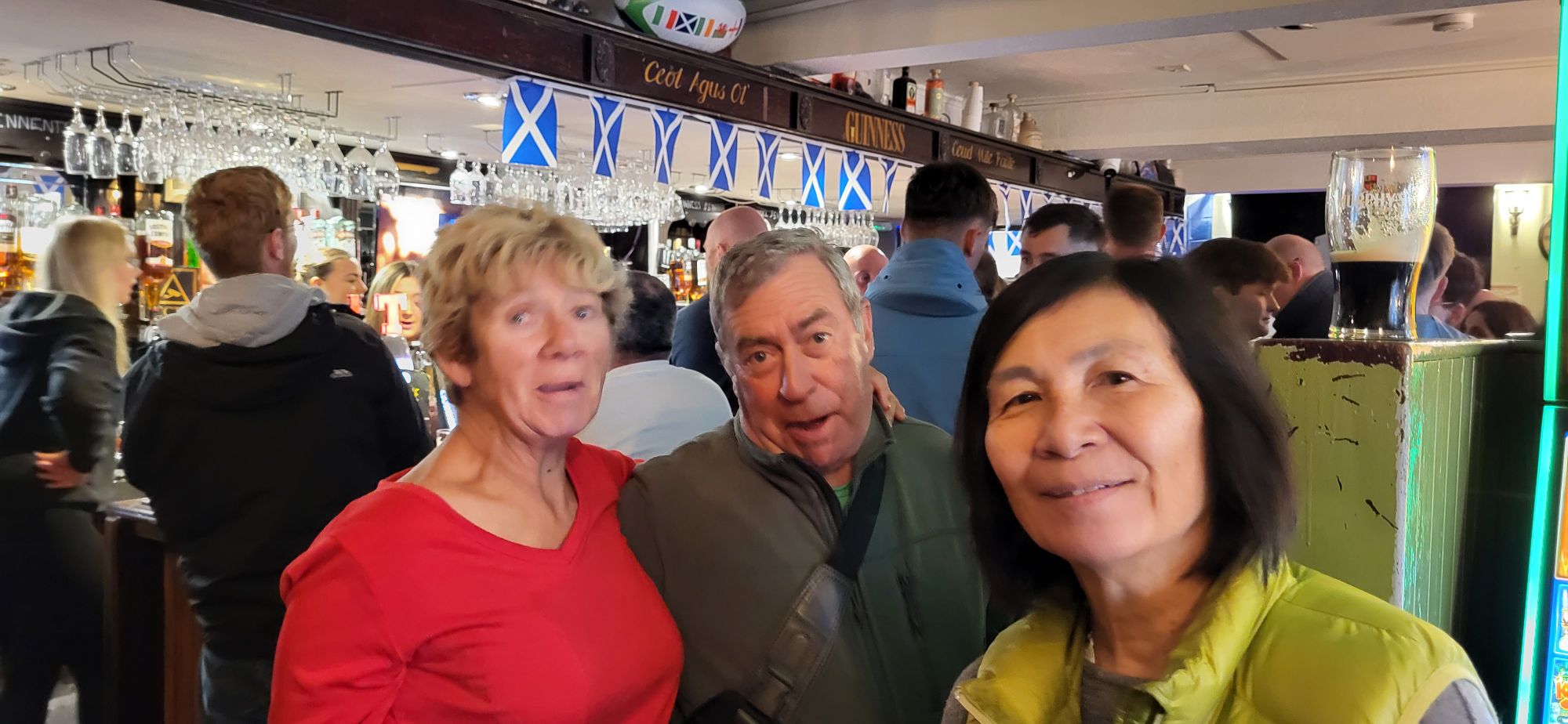
From there we repaired to McNeill’s Bar, another haunt of Fin Macleod, Peter May’s detective, we are trying hard not to turn into some sort of Hebridean version of I-Spy, with limited success. It is a proper old-fashioned boozer, refreshingly unburdened by gastro-pub pretensions or artisanal olive oil.
The night delivered pounding rain and rigging-whistling wind in equal measure, neither showing the slightest inclination to ease off by dawn. We heard that a cruise ship, due in, had abandoned the attempt and pressed on to Iceland instead, apparently they could have got in well enough, but the forecast made getting back out again look unwise.
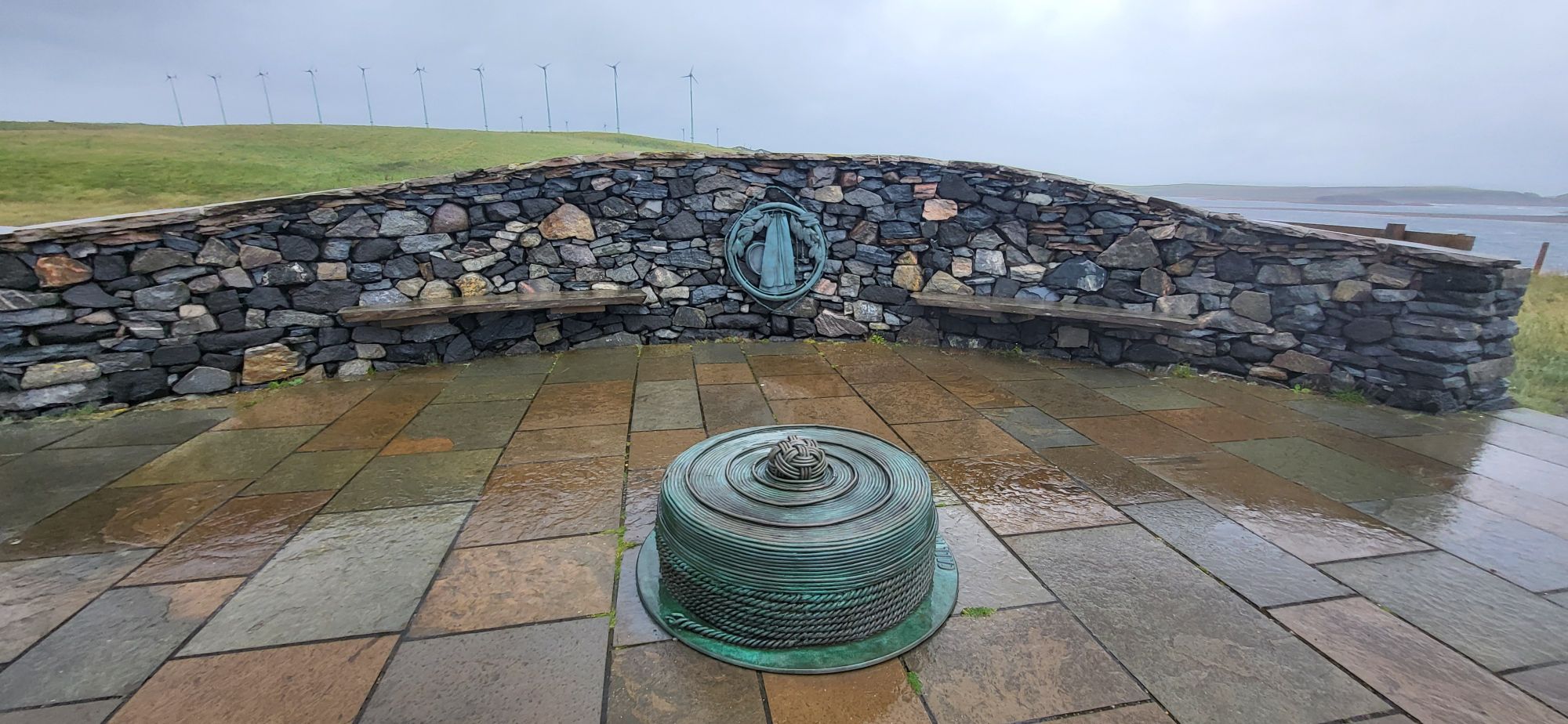
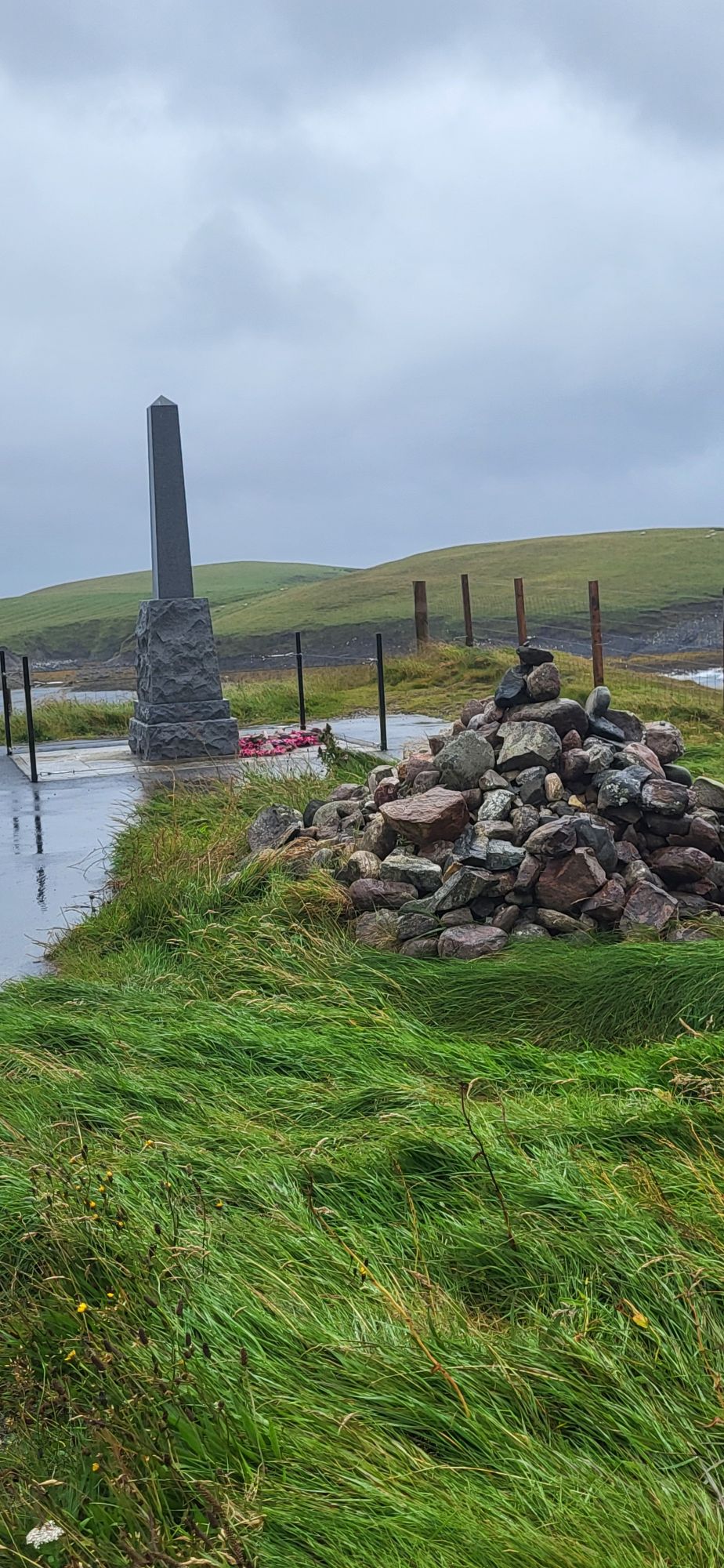
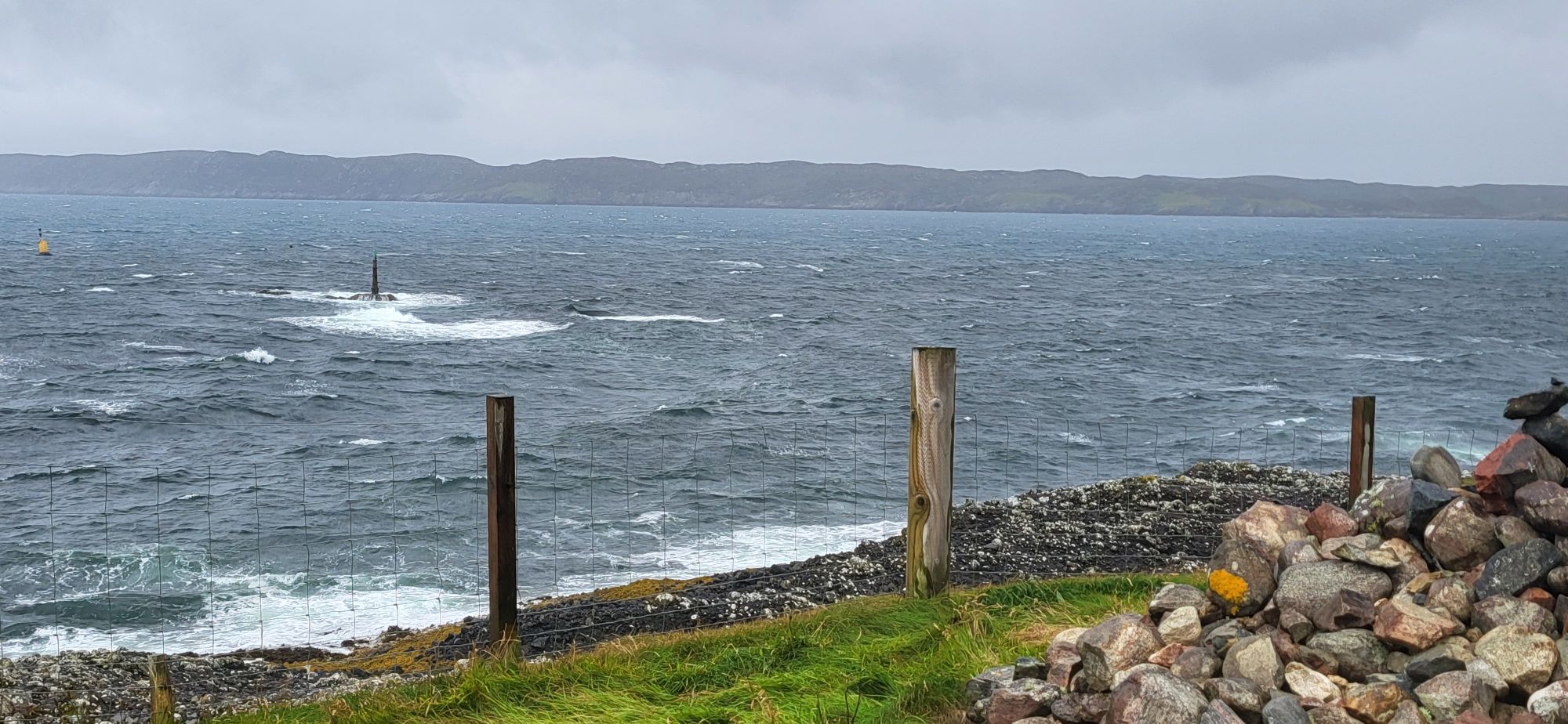
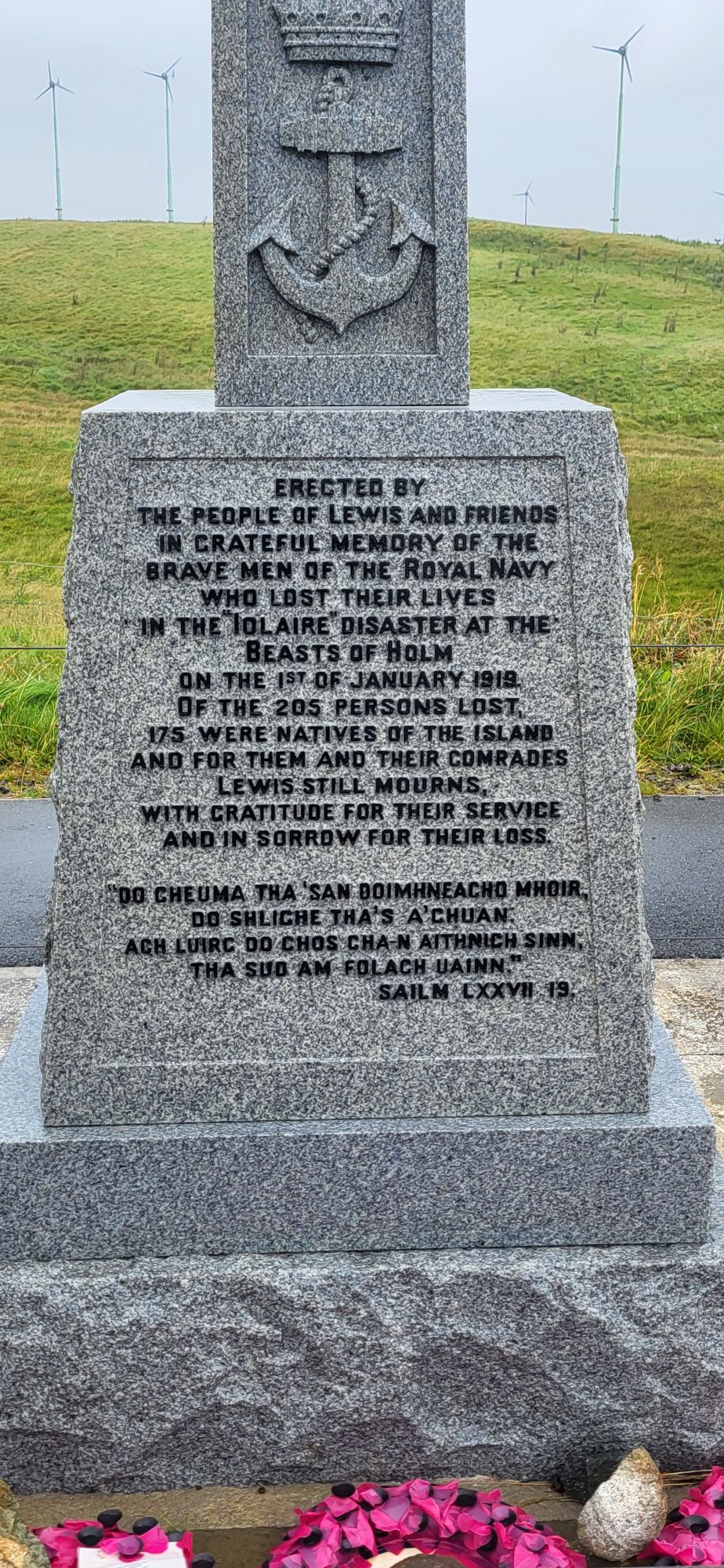
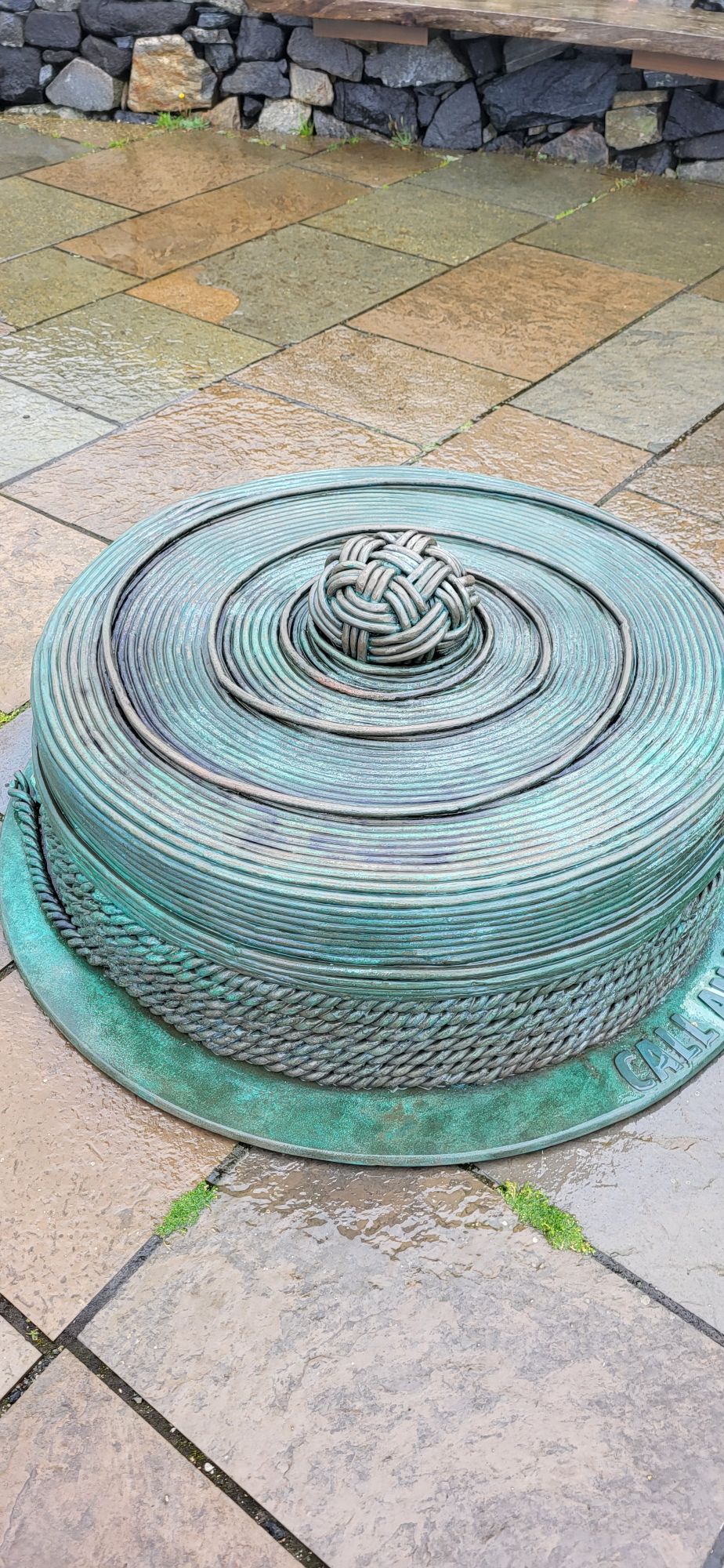
We started our little car tour by visiting the site of a disastrous shipwreck just ouside Stornaway. The Iolaire was carrying navy reservists home for leave when, with an inexperienced skipper and crew, she struck the rocks which we hasd passed just a day earlier. The sites of these tragedies are always quite emotional to visit, but this was made all the more poignant by the fact that we visited in a near gale and could understand the horror of men losing their lives just a few meters from the shore…
It became apparent to us, speaking to some local folk, that this is still a raw and needless tragedy which touched most families on Lewis…
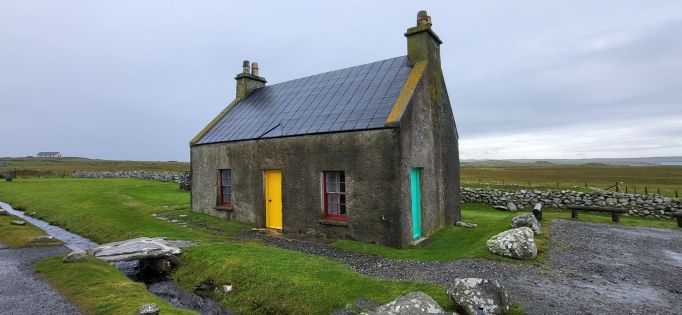
Our little car excursion then took us through the geography of the novels proper: the house Fin grew up in, his aunt’s house, the site of the fictional body’s discovery, the church and the manse, all real, all rather wonderful to stand in front of. Despite the driving rain and gale-force wind, or perhaps somewhat because of them, we felt we were beginning to understand these remote and occasionally inhospitable islands — and perhaps even to glimpse why they might incline towards a dour and faintly vengeful strain of Christianity.
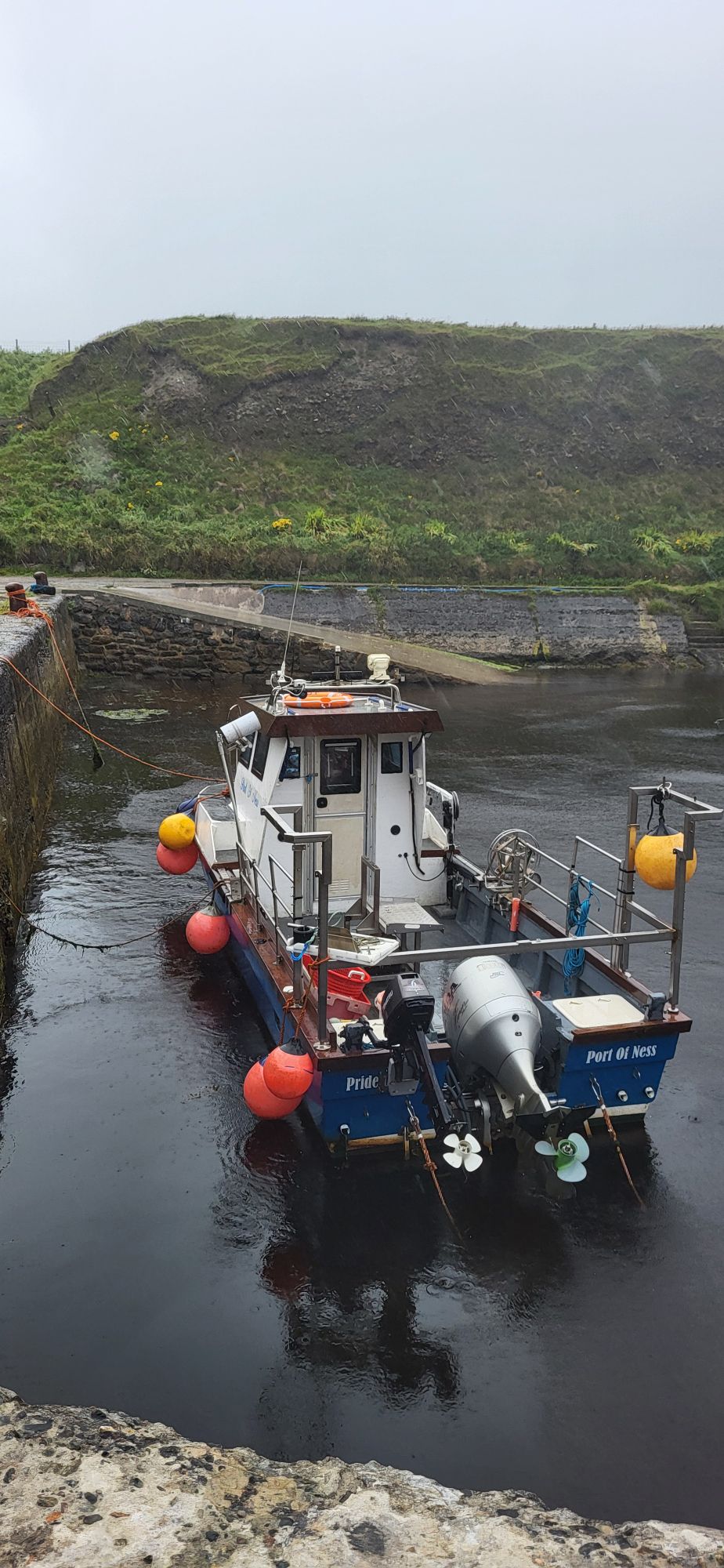
The little harbour at the very northern tip of Lewis, Point of Ness, seems impossibly tight and narrow to even think of entering in calm weather, let alone in the 140 out of 360 days when a gale blows…
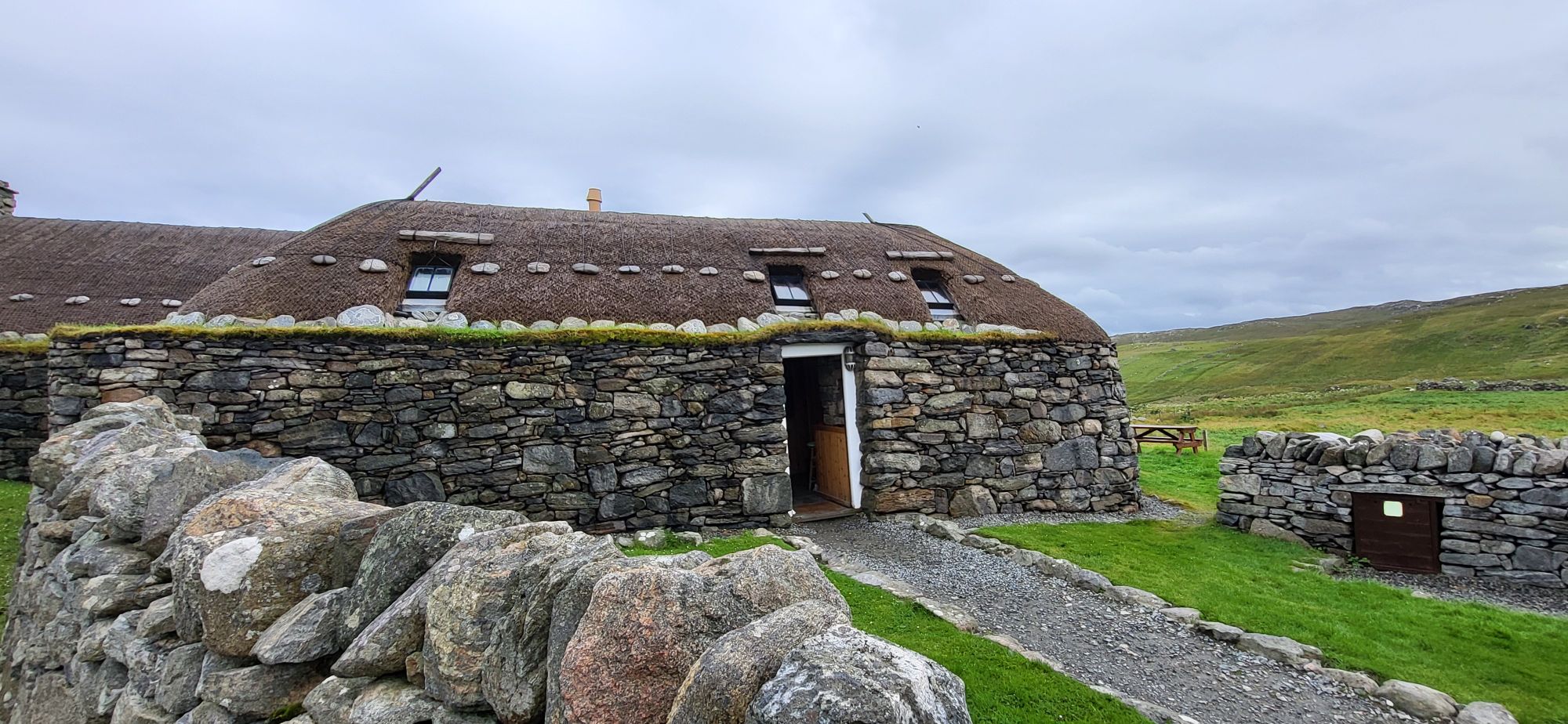
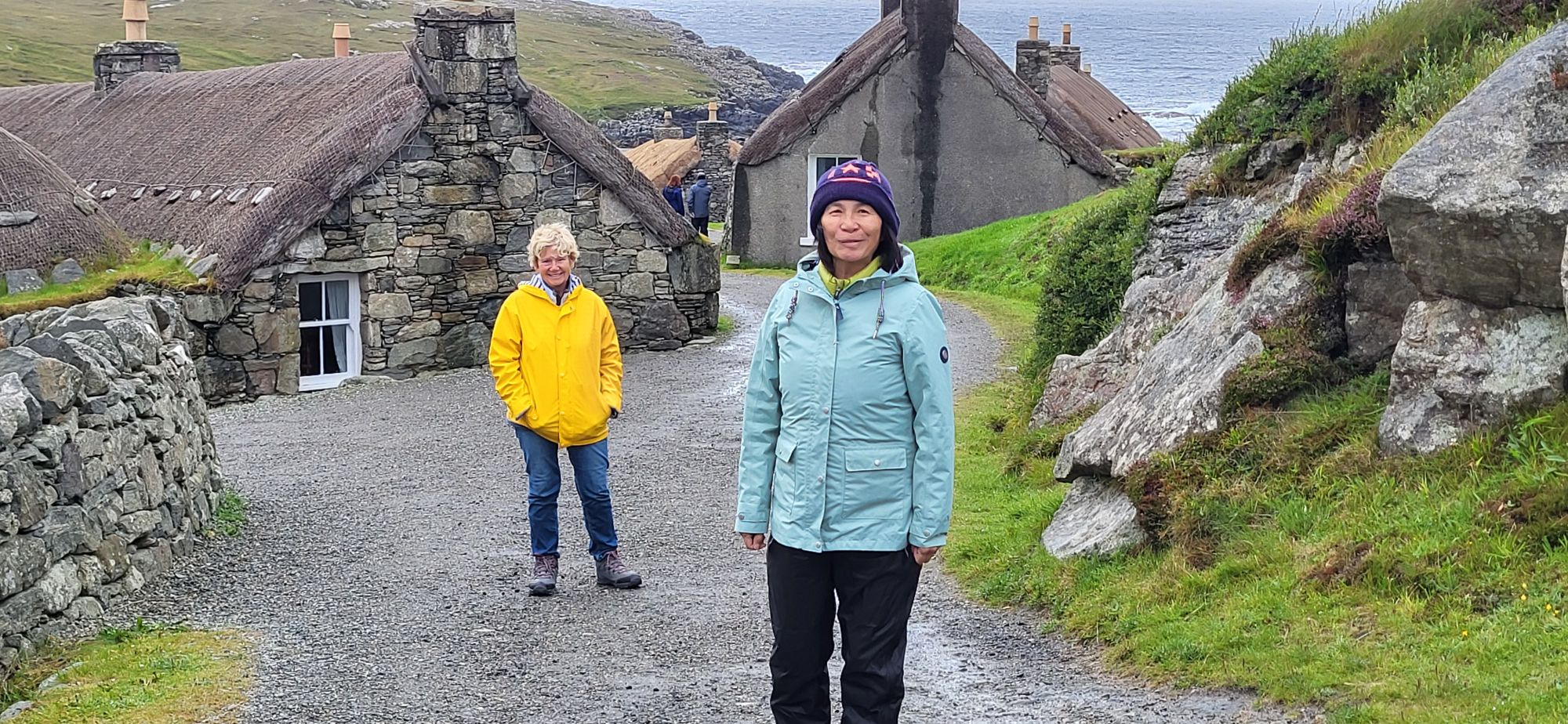
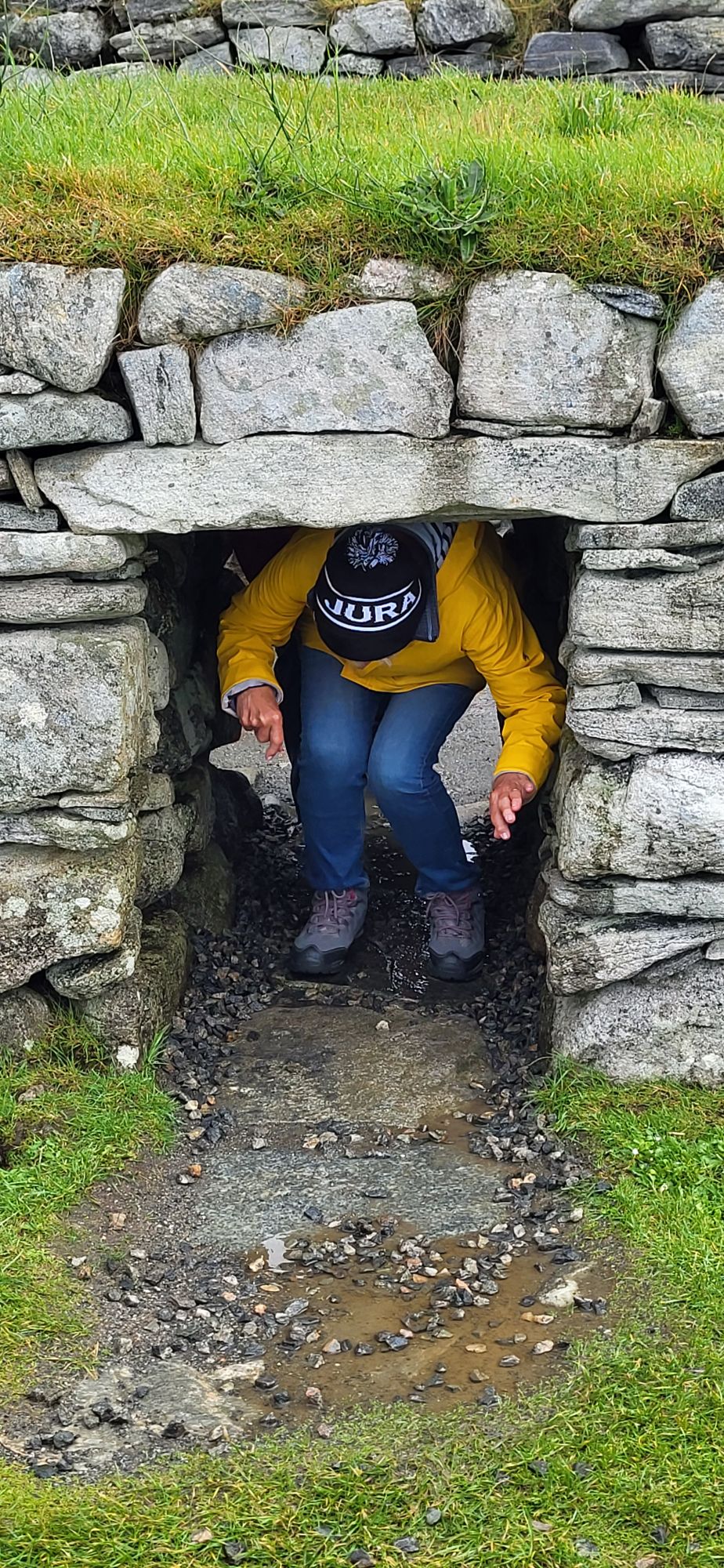
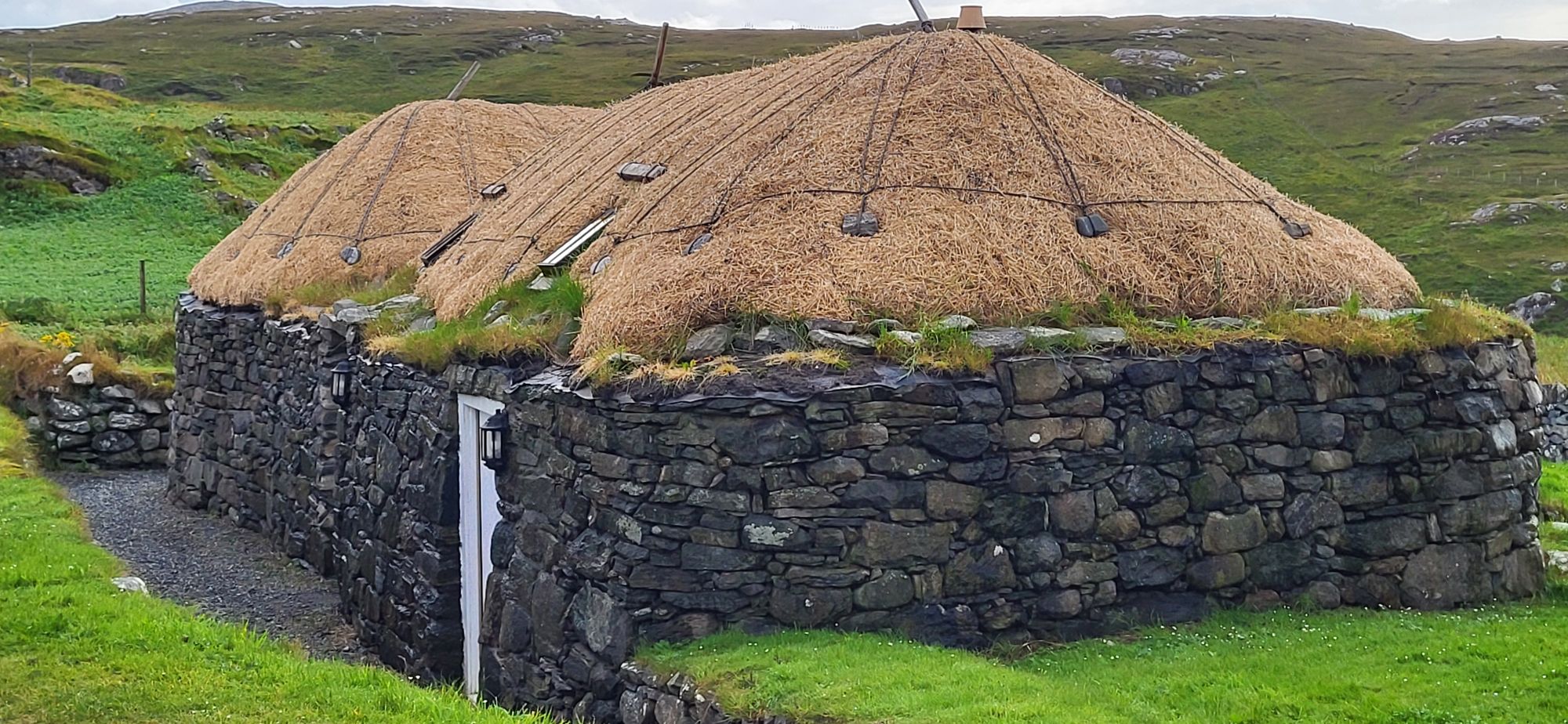
The island tradition was of ‘Black Houses’…simple stone cottages with double thick walls and rooves of thatch held in place by netting and they feature heavily in the novels. The accommodation was often shared with the animals and a peat fire was lit right in the middle of the main living area. The village here, was inhabited until the early 70s when the last inhabitants were moved into modern council houses…
Peat is still very much in use as an everyday fuel…
The black houses were gradually replaced in the early 20th century by the ‘white houses’…
We ended up back at McNeill’s, where a local musician was giving the assembled company precisely what it wanted — everything from the Bonnie Banks o’ Loch Lomond to the Proclaimers’ 500 Miles — sung with tremendous enthusiasm by band and early-evening drinkers alike, the latter well on their way to becoming the genuine article.
…the sabbath…
Tesco have only recently been allowed to open on a Sunday (noon to 8pm to enable the locals to go to church), for the rest of Lewis and Harris (the ‘protestant’ islands) nothing is open…
Without even a hot coffee on offer, we pack a lunch and set out for the beaches of the very rugged West Coast. The drive is stunning and the landscape is rugged…and there is the inevitable norse chessman…
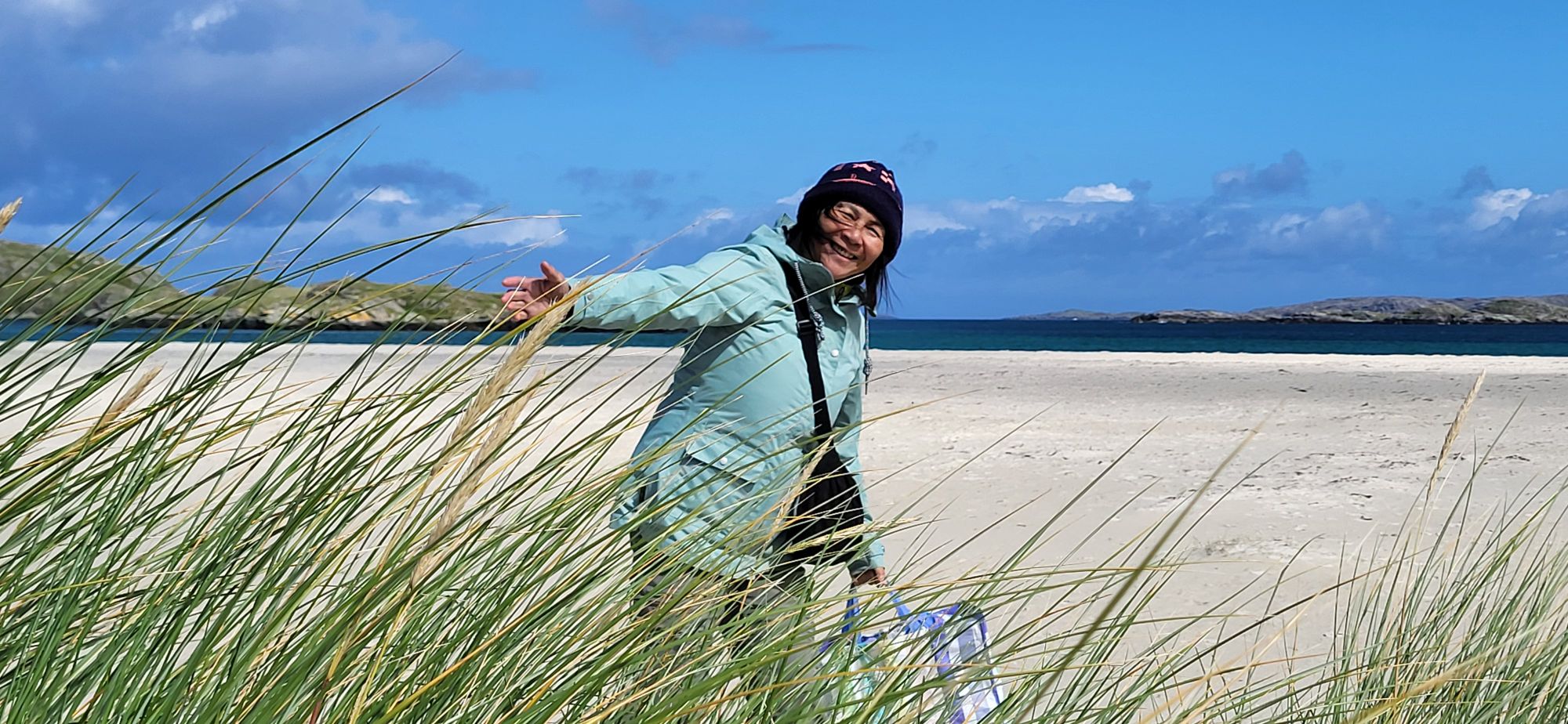
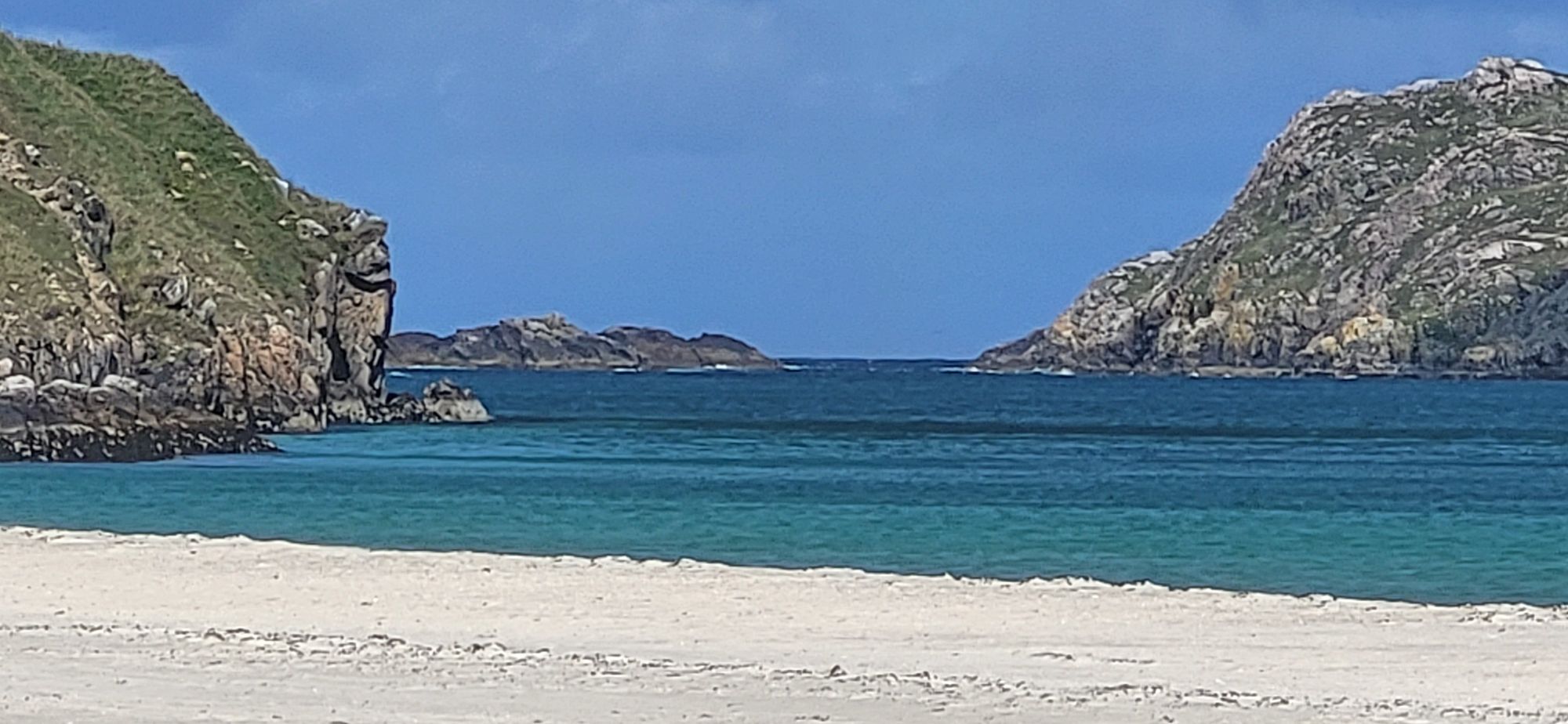
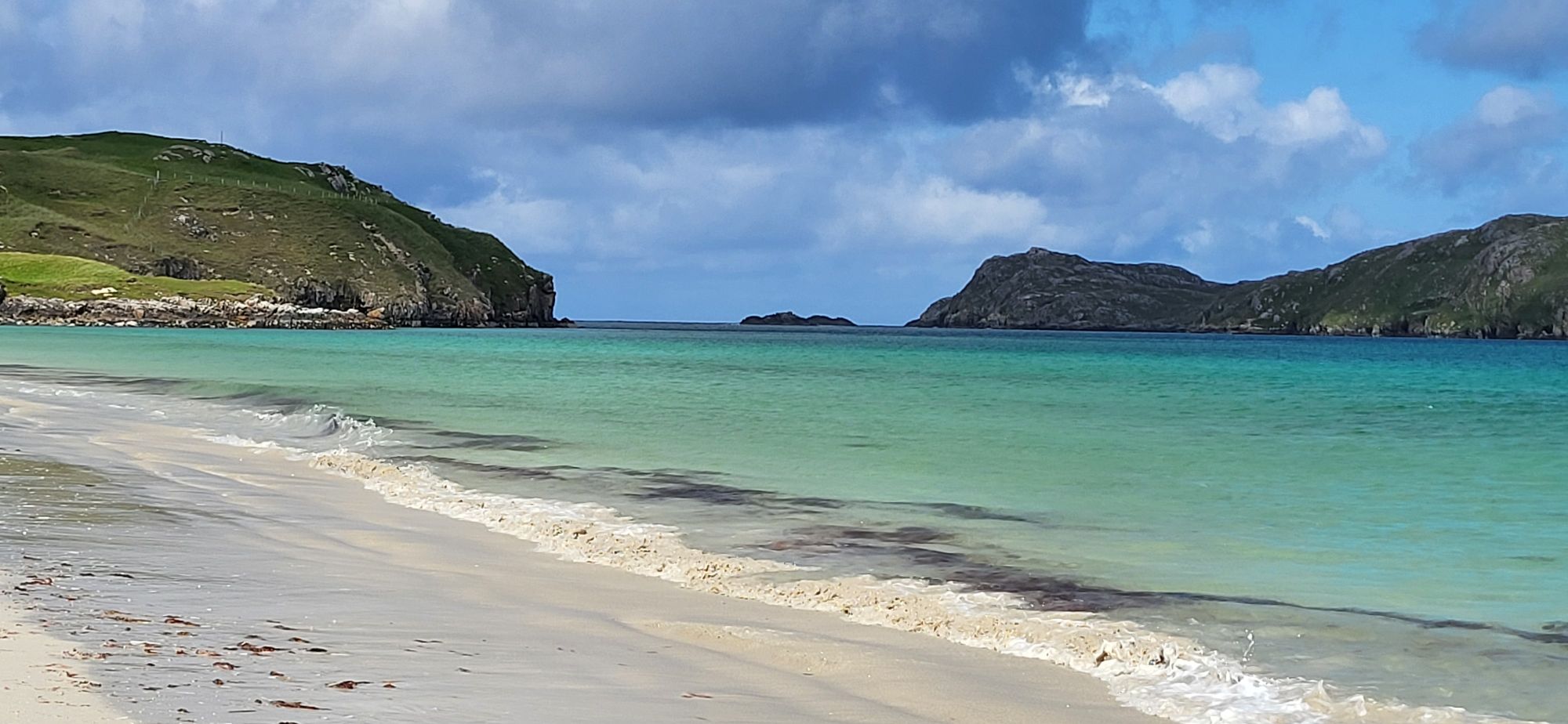
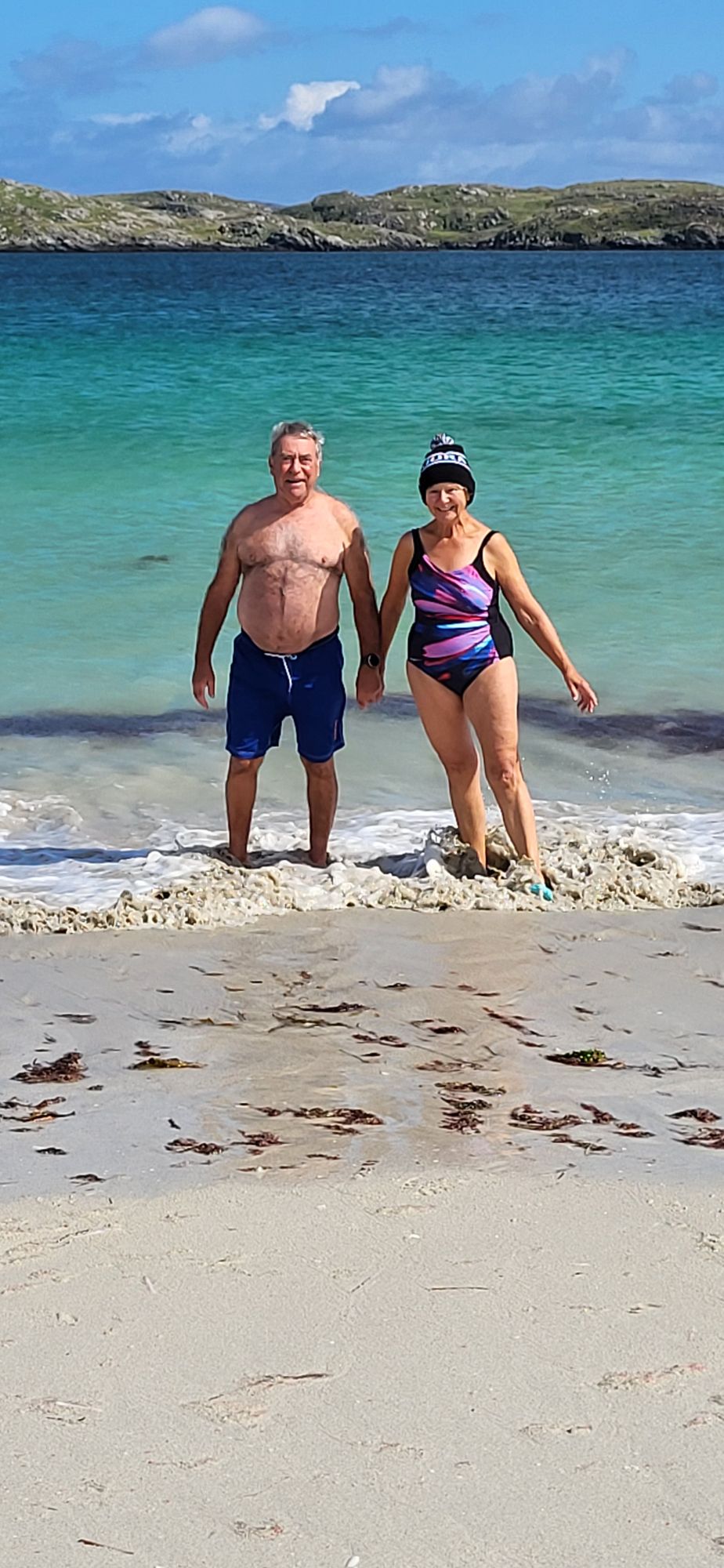
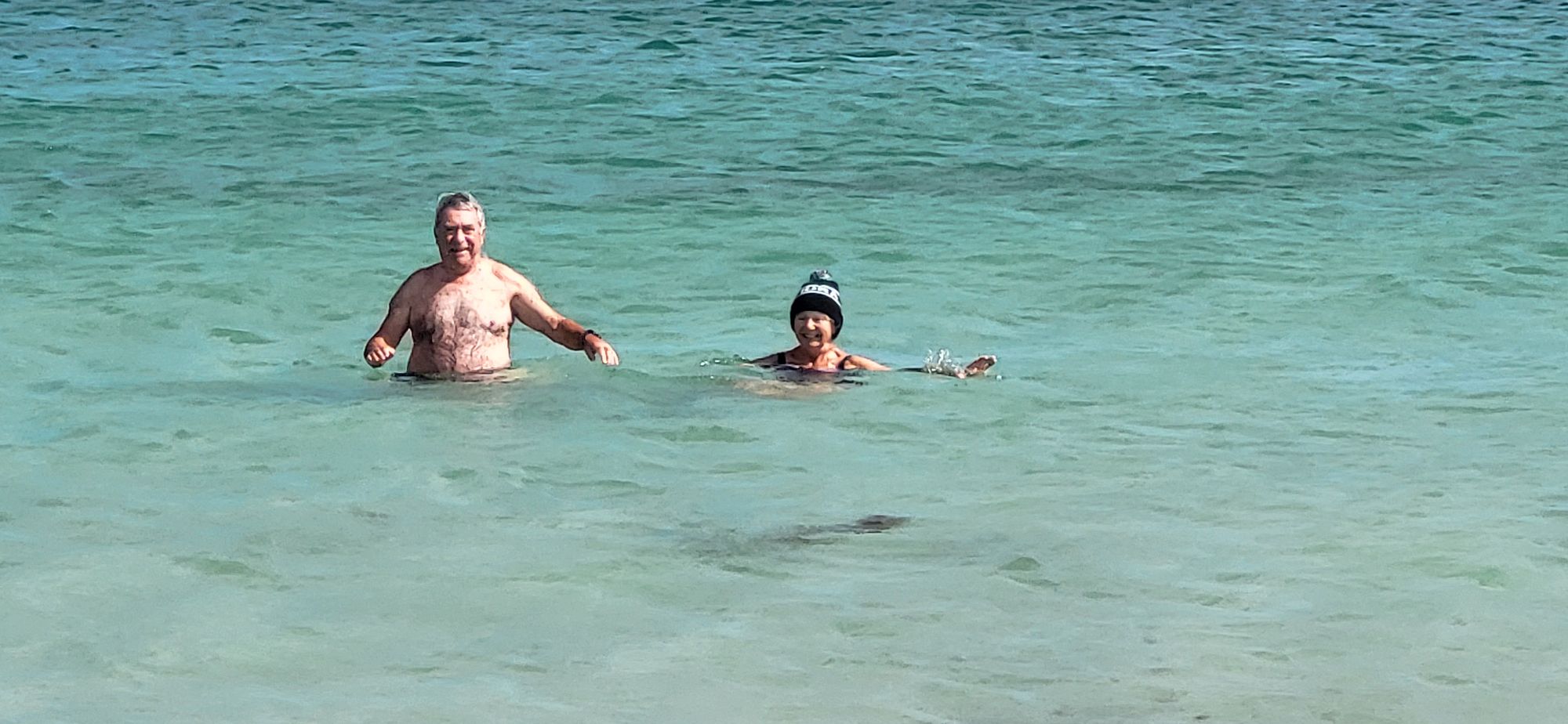
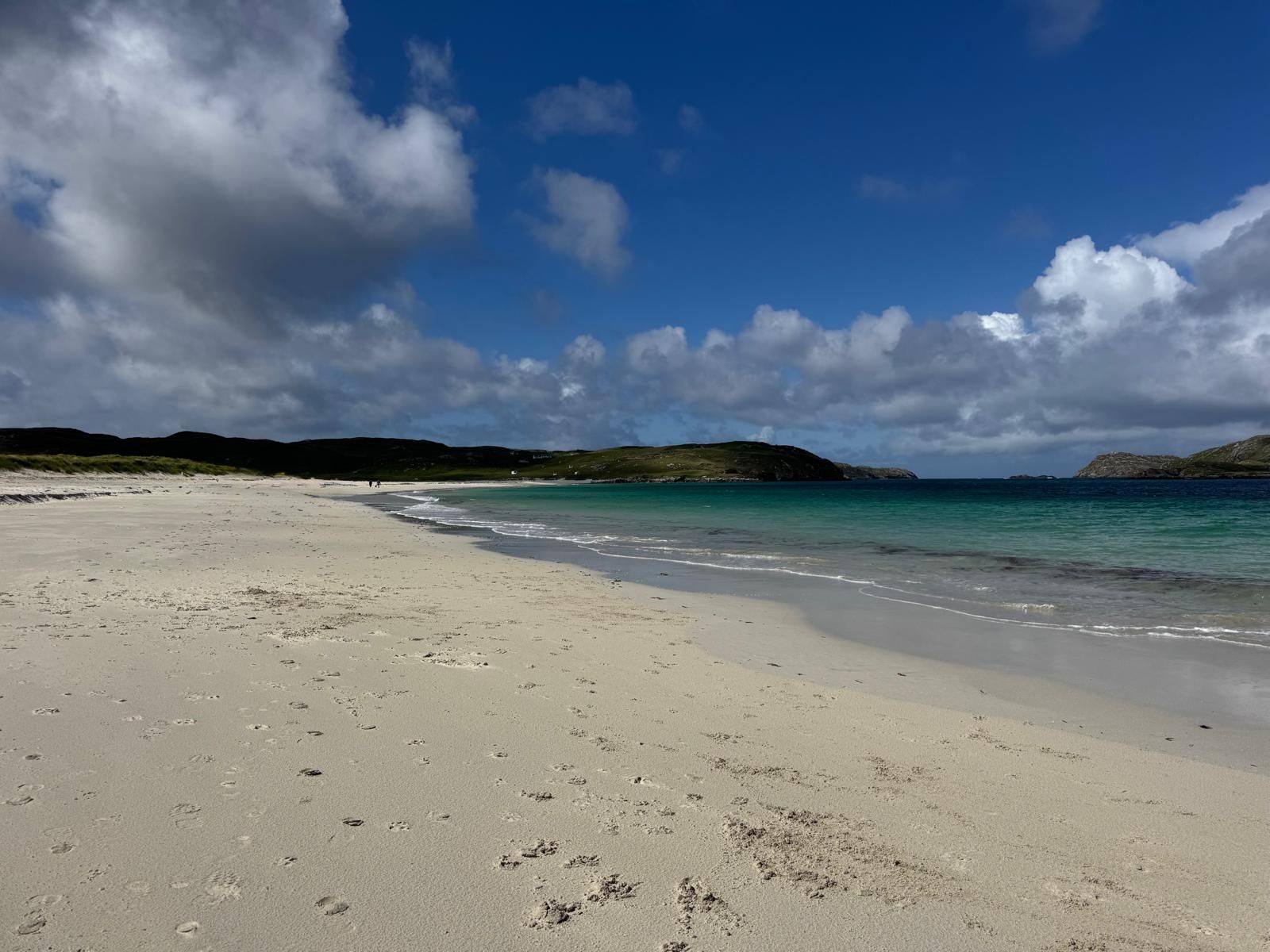
…and the beaches are incredible, tempting the hardier members of the crew in for a brief dip…
The weather is set fair for us to press on tomorrow, which will mean a reasonably early start, but for now, back aboard Heydays, we find ourselves musing on this corner of the Hebrides, and drawing, inevitably, comparisons with Orkney. This is, to our admittedly first impressions, a markedly less prosperous society, and one in which the rather austere Church of Scotland continues to exercise real influence. Sunday here is still observed as the Sabbath, and external entertainment is neither permitted nor, in practice, available. The towns lack something of the vibrancy and gaiety we found further north, though the scenery more than compensates. We find we can manage perfectly well without shops or pubs on a Sunday; it rather forces one into simply inhabiting the present, and being part of a place quite different from the frantic, consumption-driven south we normally call home.
It is also, we have noticed, a place that attracts a rather higher calibre of adventurous sailor than we are used to, a marked departure from the “only leave the marina on a fine day” school of seamanship more commonly encountered in Lymington. There was the New Zealand couple on their steel Van der Staadt, Dutch-built, currently planning a passage to Norway before crossing the Atlantic (for the third time) en route home. There was the Dutch singlehander who had just come in from the Faroes, two days of it thoroughly rough. And there was Restless, mentioned above, who completed their second Atlantic crossing only last year. These islands, it is fair to say, are not simply just another part of the country.
Footnote: A large French boat arrived in harbour this evening, with what appeared to be a very odd black and white flag flying. We then realise that this ‘flag’ was in fact a very large (and presumably very expensive) genoa split from tack to clew (side to side|). After a big struggle they finally got it under control and dropped on deck…this is a sober reminder that these waters can catch even the cautious and well prepared…
Here we are, then, at Stornoway, on the Outer Hebrides — arrived at last, and at the third attempt. The first was nine years ago, on our original circumnavigation, when we simply ran out of time. The second came in May, when, having reached Tobermory on Mull, we found several days of unrelenting headwinds ranged against us, and elected instead to go where the wind actually wanted us to go, which turned out to be up the canal to Inverness. However, we are ahead of ourselves…
Today turned out to be a weather window not to be missed. Strong winds on Wednesday, and more forecast for Friday, left a narrow gap through which to scuttle across The Minch. Sailing, as we’ve said before, is a business of a hundred small decisions, go or stay, is the wind kind or merely tolerable, too strong or too weak, will the tide still be OK when we arrive? Today offered its usual quota of these. Stornoway lies roughly north-west of Ullapool, and the wind for the first four hours was rather unhelpfully, coming from precisely that direction. A shift to the south-west was promised later, which would suit us perfectly, though quite when “later” might arrive was anyone’s guess. So do we motor on the direct line, or tack laboriously upwind for six hours and see what turned up?
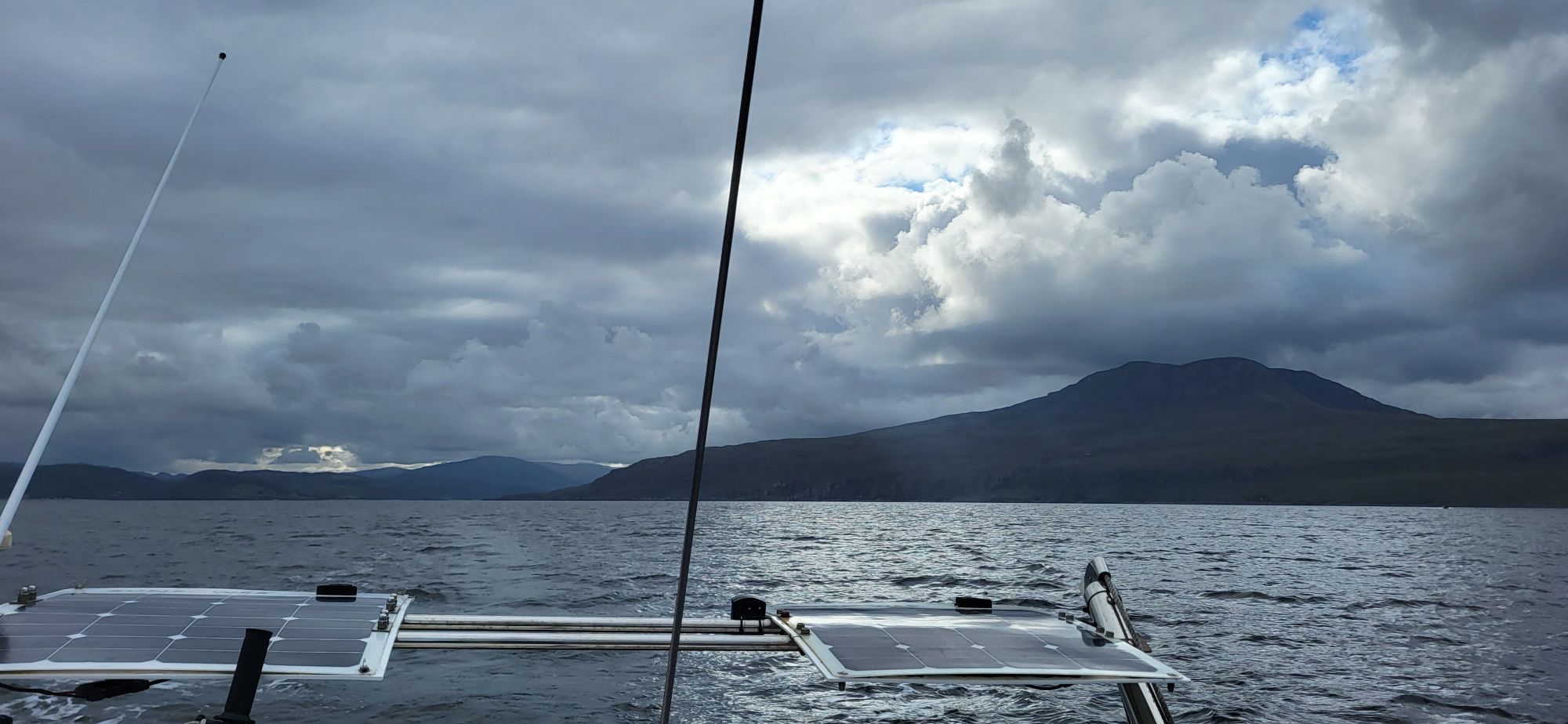
We decided to go. With the cupboards rammed, the diesel tank nearly full and the water topped up, we slipped from the pontoon into the early morning light over the loch, the sky a noncommittal mix of cloud and blue that gave nothing away about what the passage west might hold.
It being early August, we were dressed in our summer finest…summer, that is, by Scottish reckoning, which less shorts and more thermals…
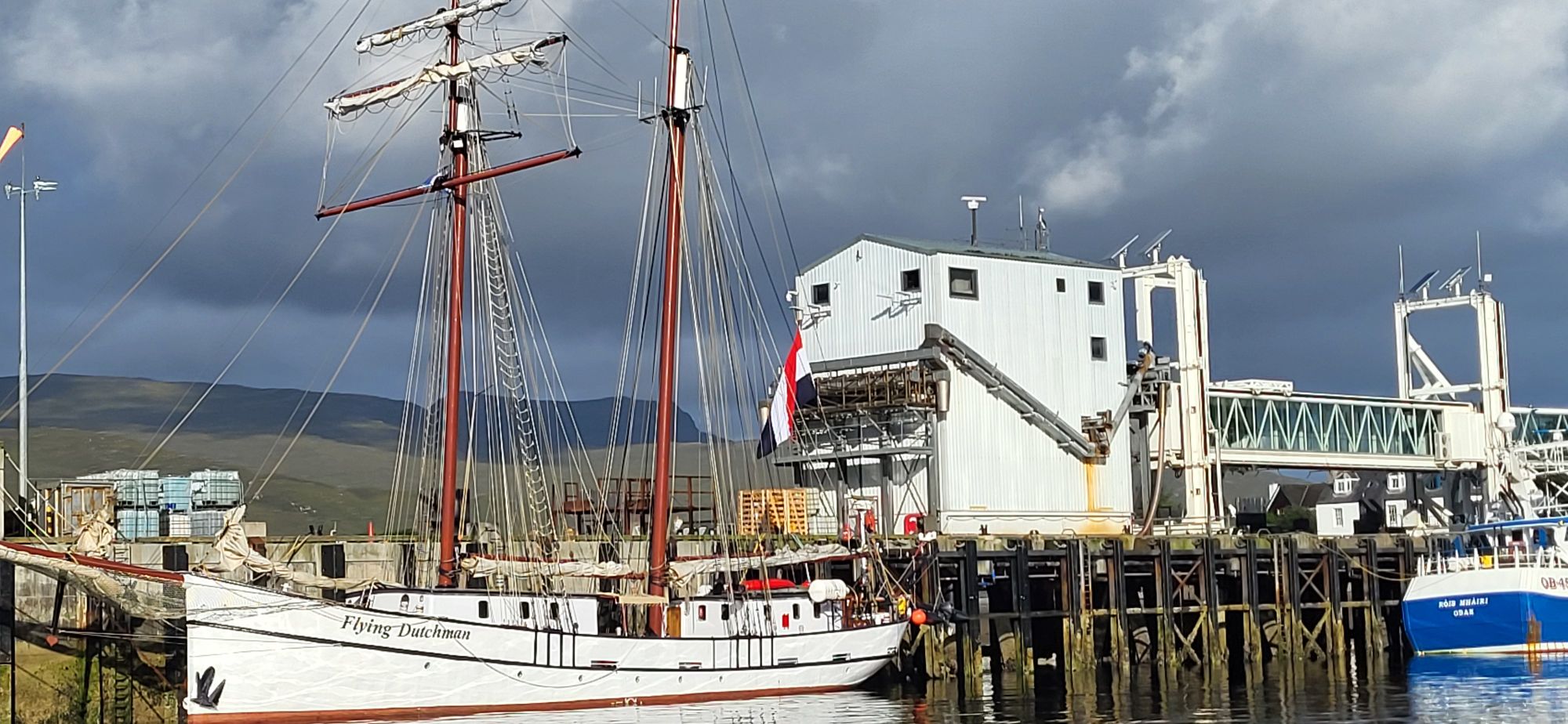
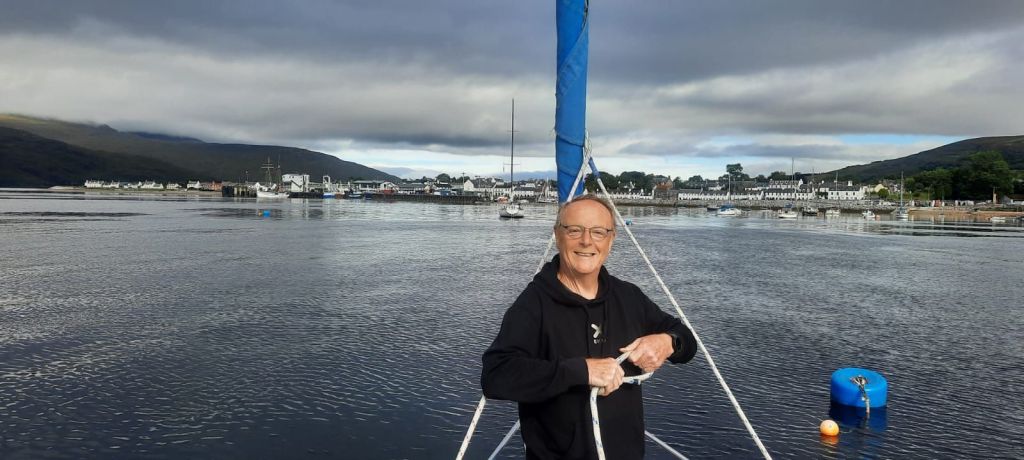
As we eased out, there was little sign of life aboard the elegant tall ship Flying Dutchman, nor on the fishing boats still tied up at the quay, and Ullapool looked lovely in the early light as we motored gently away, promising ourselves, as one does, that we’d be back.
The loch’s exit is guarded by a scatter of rocky outcrops and islands, past stern-faced cliffs that seem set there for the purpose, and with a swell running from the north and the wind stubbornly on the nose, we simply motored on, trusting that the promised sou’wester would arrive sooner rather than later.
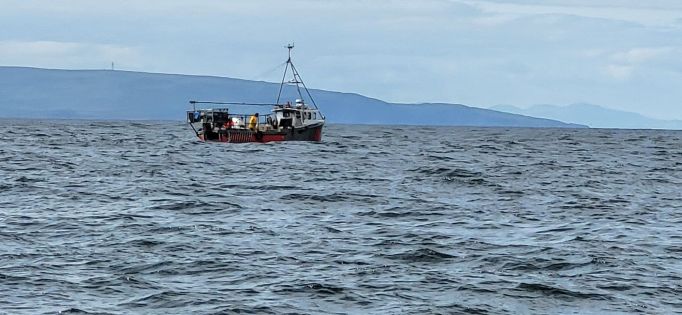
For company we had, for a while, a single small fishing boat, and little else, as we chugged steadily westward.
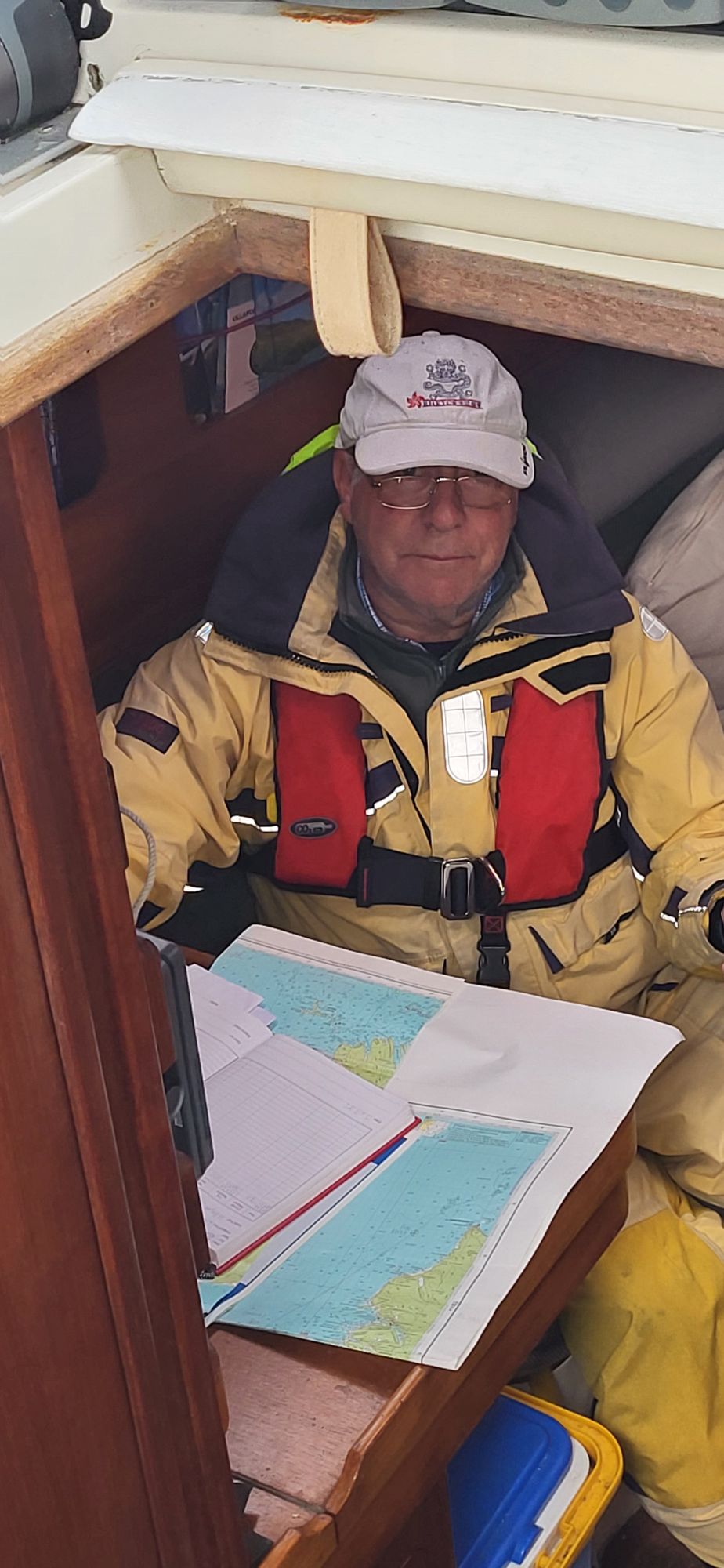
A passage of eight or nine hours soon settles into its own rhythm: coffee at reasonably regular intervals, the odd biscuit, a nap here and there, and (old habits persisting) the log kept up hourly and the position dutifully plotted on paper charts, which we still favour. There remains something quietly satisfying about reaching the next fold in the chart. With a lumpy sea running, lunch was soup, from mugs rather than any tureen, silver service being conspicuously absent, and chunks of bread, and still the rain held off, for all the darkening cloud now gathering over what was unmistakably Lewis and Harris. Somebody’s god, evidently, was smiling on us.
When the wind shift finally came, it came quickly, and Heydays was soon scudding along on a glorious beam reach, full main and genoa drawing beautifully through a rainless, occasionally sunlit afternoon. The wind built steadily over the next hour, sending us back on deck to put a couple of reefs in the main and roll away some genoa. It also brought with it the short, confused chop of wind against tide, and although Heydays is a dry boat as boats go, we still shipped the odd lump of green water over the side for our trouble.
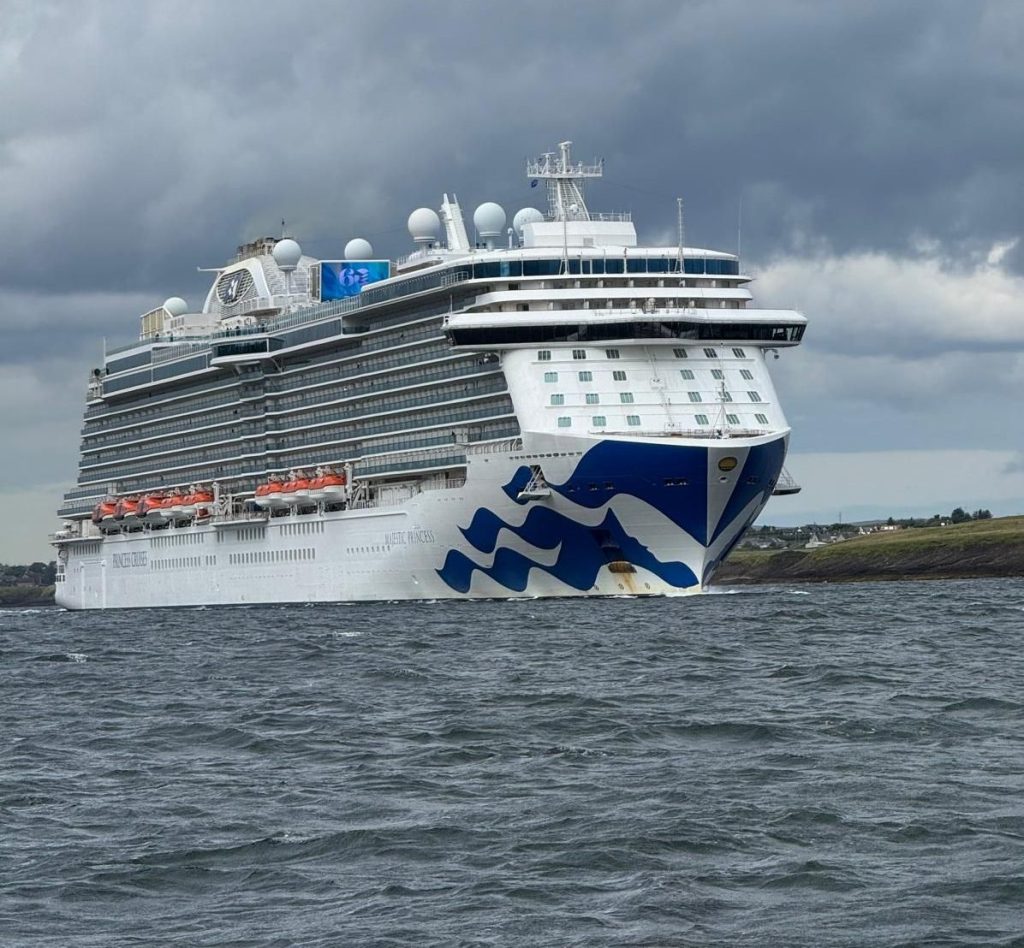
This was sailing at its best, and all too soon we were thirty minutes out from Stornoway and thinking about sails down and the business of entering harbour. We were asked, along with a fishing vessel also waiting its turn, to hold station while a vast cruise ship negotiated what for it was a decidedly narrow entrance. We idled about, occupying ourselves with ropes and fenders and the general choreography of arrival, and were rather amused to hear the harbourmaster politely informing the cruise ship that he had a yacht and a fishing boat waiting, and would it kindly get on with it. It steamed past in due course, trailing a cloud of exhaust,
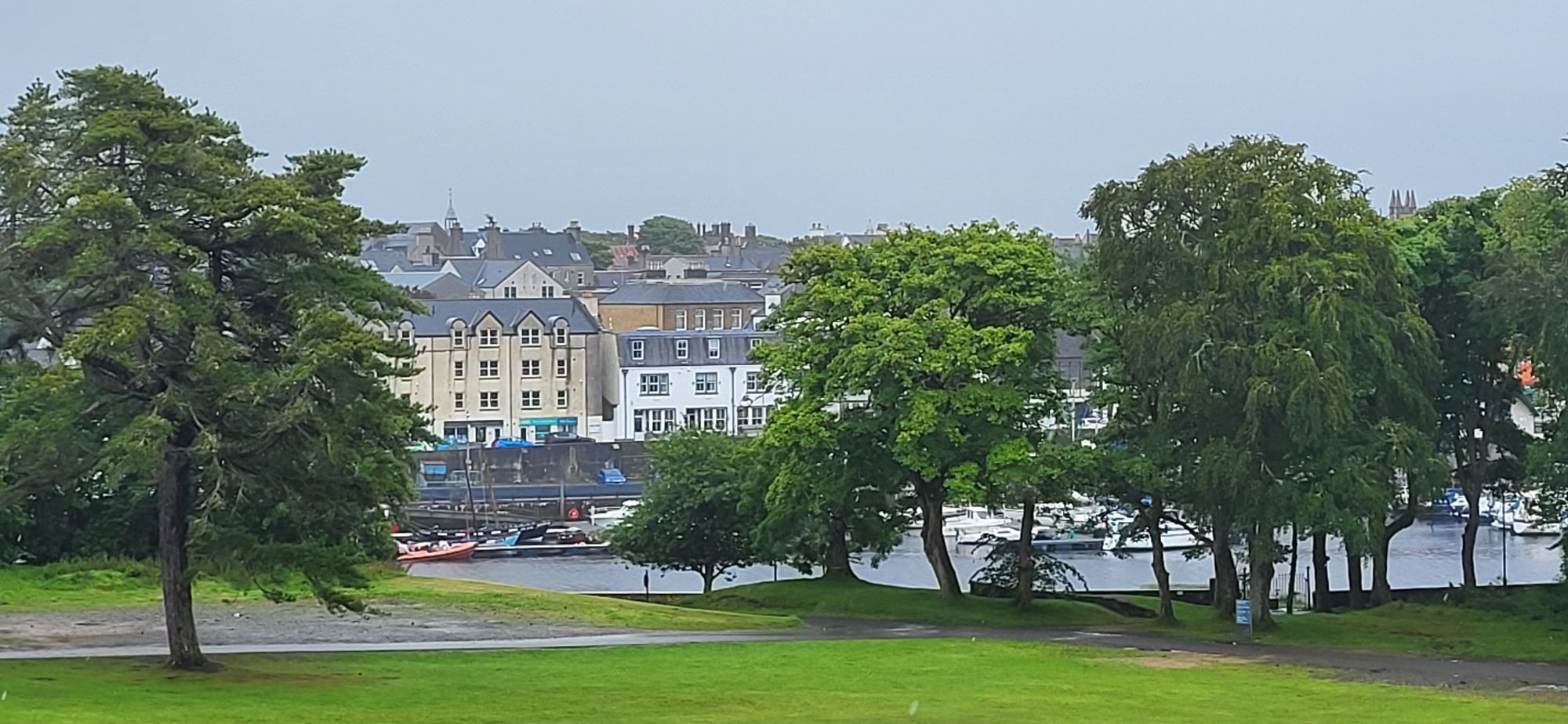
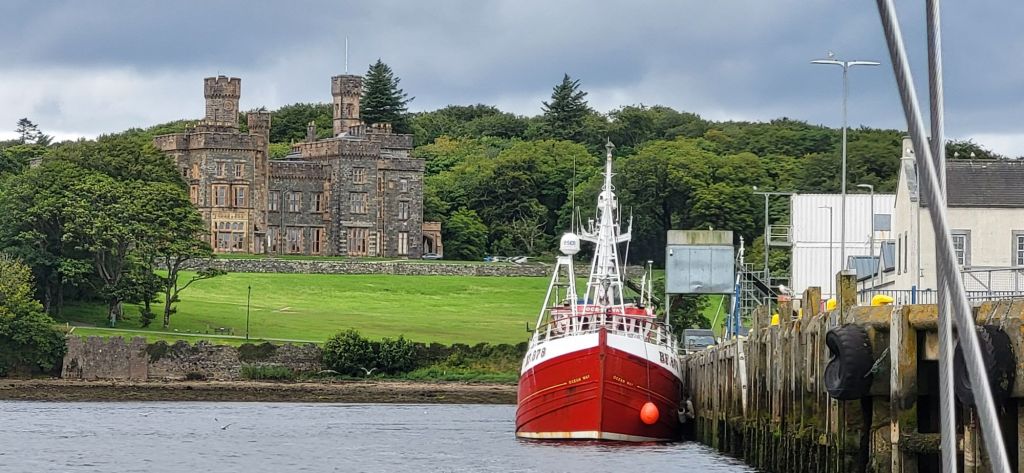
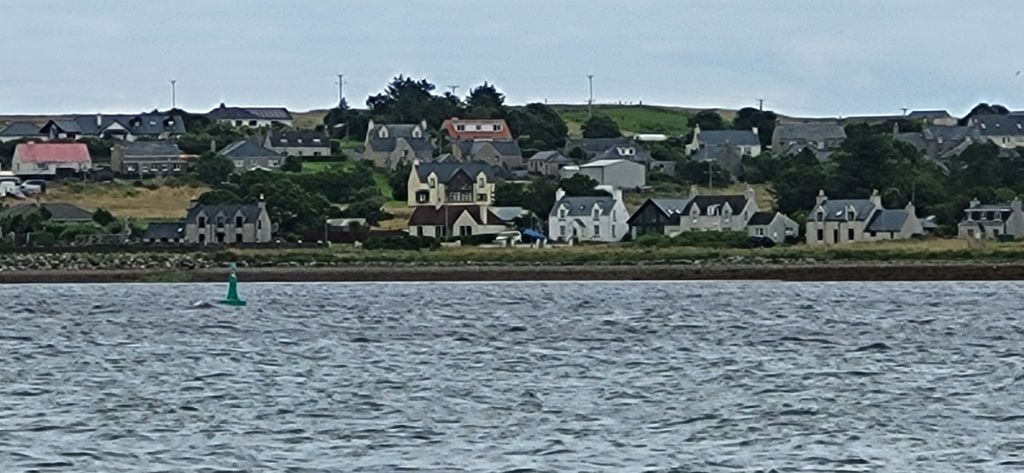
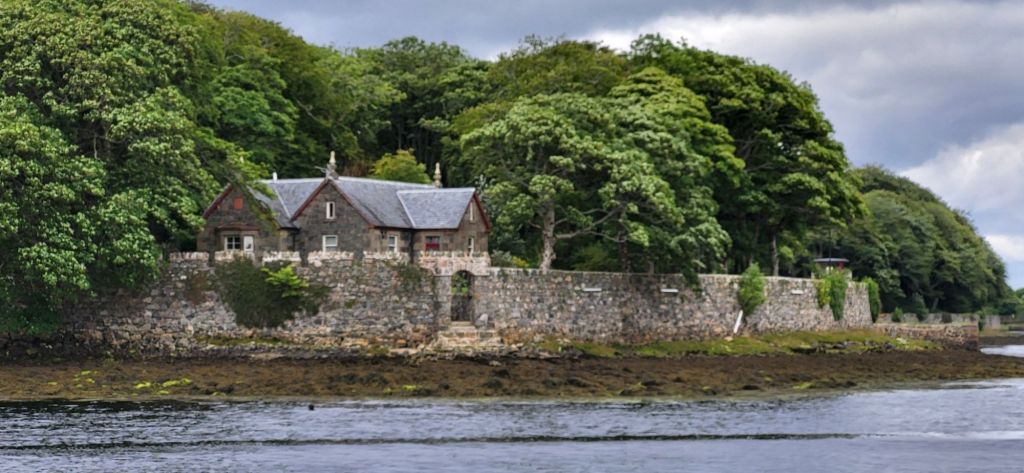
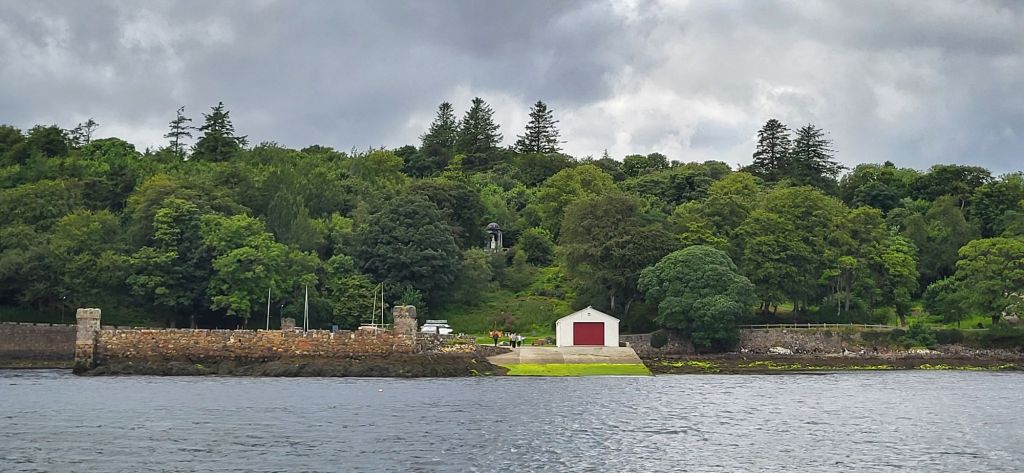
and we came in behind it, past the imposing bulk of Lews (correct spelling!) Castle,
…and a couple of seals waiting patiently next to a fishing boat…
…to our first landing in the Hebrides.
The weather is closing in for the next 3 days and so we will do some general touristy bits, but for us…this felt like an adventure. Not the stuff of oceans, but a sense of achievement at bringing the old girl to one of the more remote parts of the country…
July has been spent “down south,” as they probably don’t say here in Ullapool, re-acquainting ourselves with friends, family, grandchildren, and the various small trials that come with each.
The south of England, meanwhile, treated us to its third proper heatwave of the summer, temperatures loitering in the low thirties and sleep reduced to a nightly fight over which side of the pillow might, briefly, pretend to be cool. Be careful what you wish for, as someone once said.
Tuesday the 4th duly arrived, waking us bleary in the near-dark for the thirteen-hour haul north via Milford on Sea. We had, of course, been watching the forecasts, and knew perfectly well that the north-west of Scotland had not been sharing in the south’s toasting. What we hadn’t quite bargained for was the precision of it: roughly a degree lost for every hundred miles, so that by the border we were down to sixteen and hunting for a jumper. The waterproofs came out not long after. The landscape, it must be said, was doing rather better than Dorset’s uniform brown, lush and green in a way that had an obvious explanation, which duly arrived in the form of driving rain and wipers struggling to keep pace. This, apparently, is what we had wished for.
By Ullapool the deluge had eased to something merely damp, and after a few unsuccessful circuits in search of anywhere still serving food, we settled for the Essence of India, unprepossessing from the outside but generous with both flavour and value, and a great welcome home.
The harbourmaster ran us out to Heydays through the gathering gloom, and we were soon aboard, unpacking in a very cursory way at the end of a long day, fortified by a couple of nips of rum. Sleep came quickly after that, with no fan whirring in pursuit of nonexistent cool air, and, for once, no need to sleep on top of the covers rather than under them.
Heydays had been on a mooring in the loch for the last few weeks, but we decided for convenience to bring her into a pontoon for a day. Despite a rather grey morning, it was great just to get water flowing past her keels again, even if it was just for a few hundred metres and in the company of the morning ferry from Stornaway…
The day’s plan is the usual mix: an aging old girl requiring her now-customary quota of small repairs and general fussing to keep her in fine form, and a Tesco run for the essentials, namely coffee, wine, bread, milk, eggs, and wine.
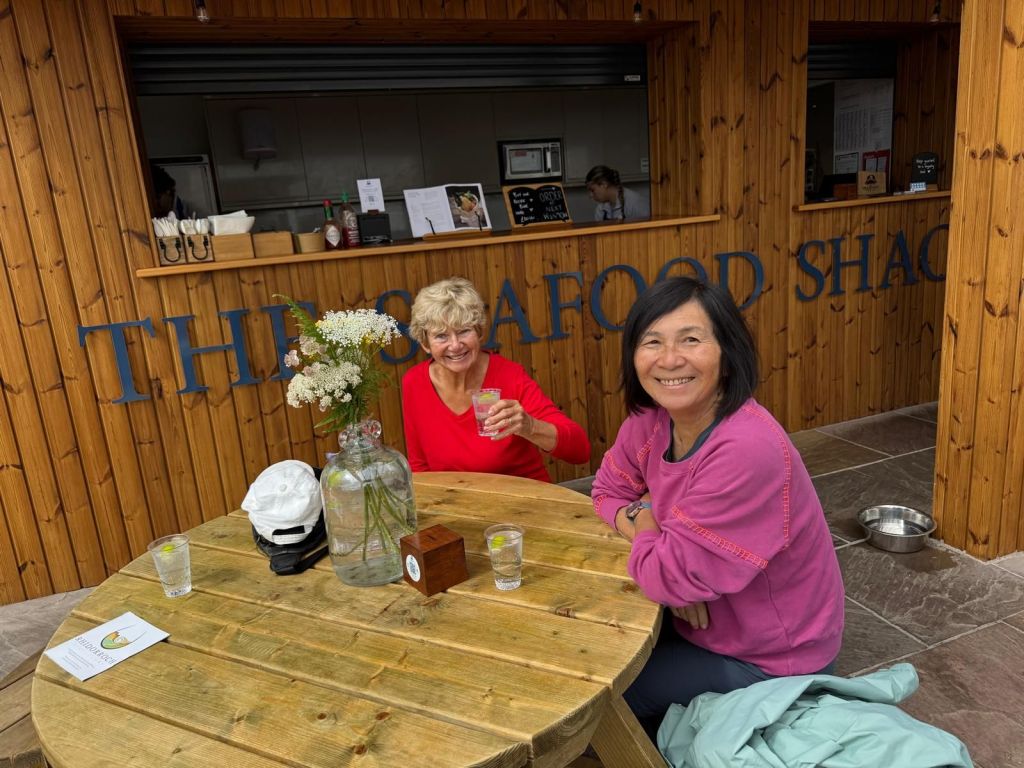
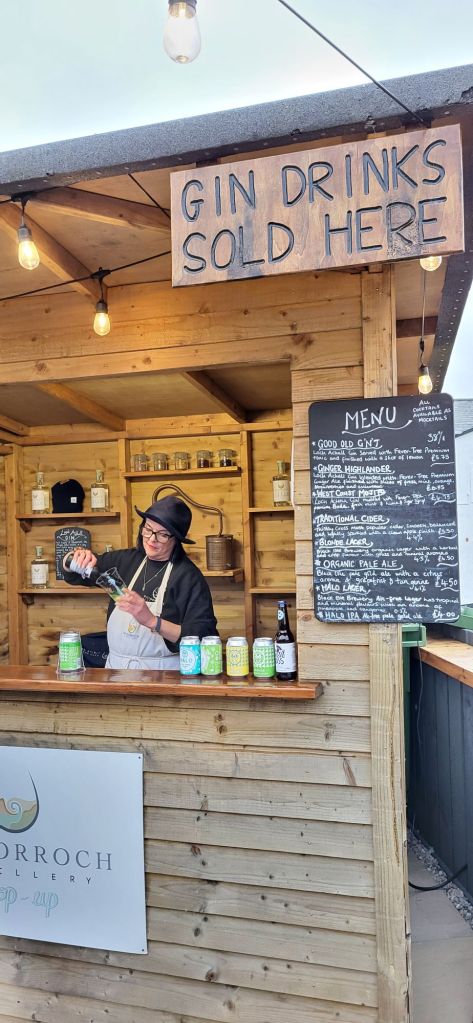
With rain forecast we set off with the loose intention of shopping first and finding lunch second, though a hint of sunshine rearranged our priorities, and noon found us at The Seafood Shack, a real favourite from last time. It has the considerable advantage of a gin bar next door, which by five past twelve was already close enough to the first drink of the evening.
A thoroughly glorious place, made more so by harbour staff kind enough to let us park the car for a few weeks in what I gather is the harbourmaster’s mother’s own space.
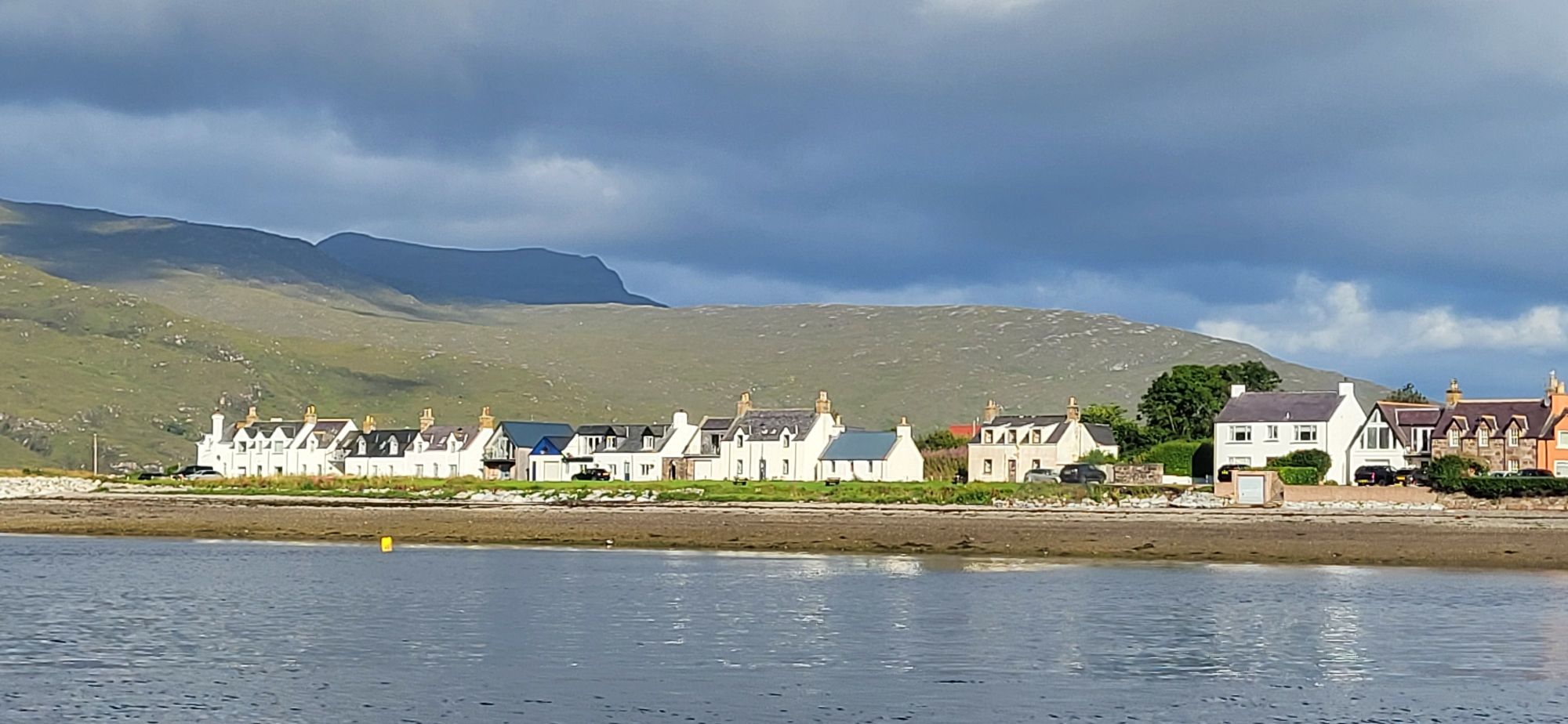
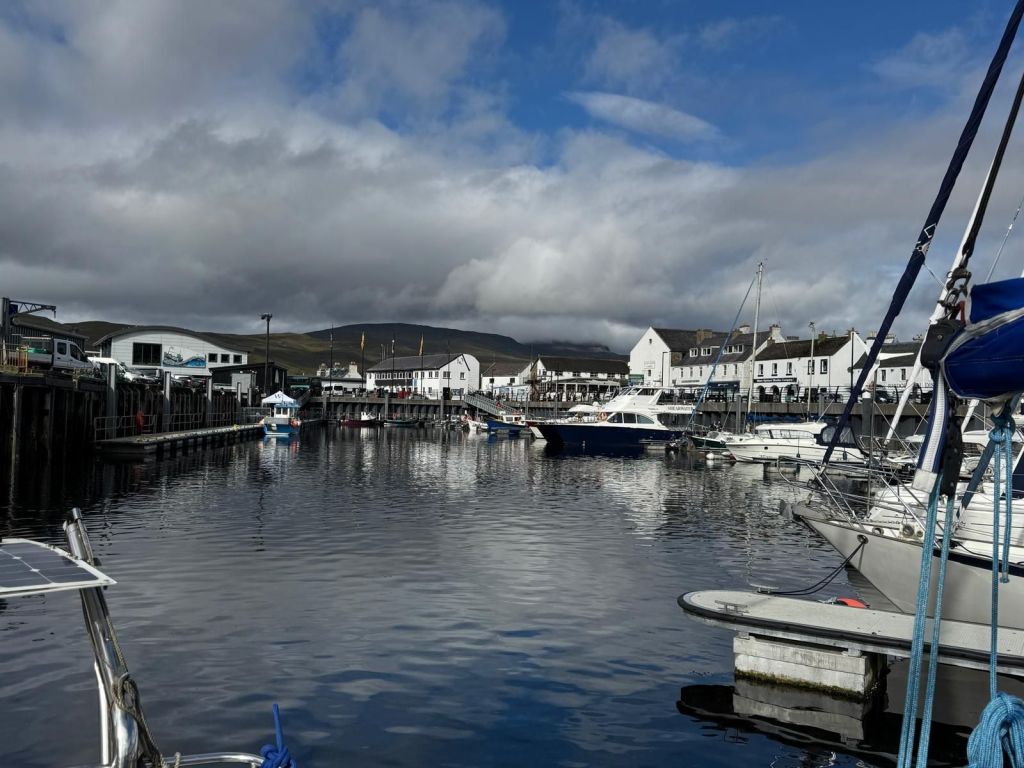
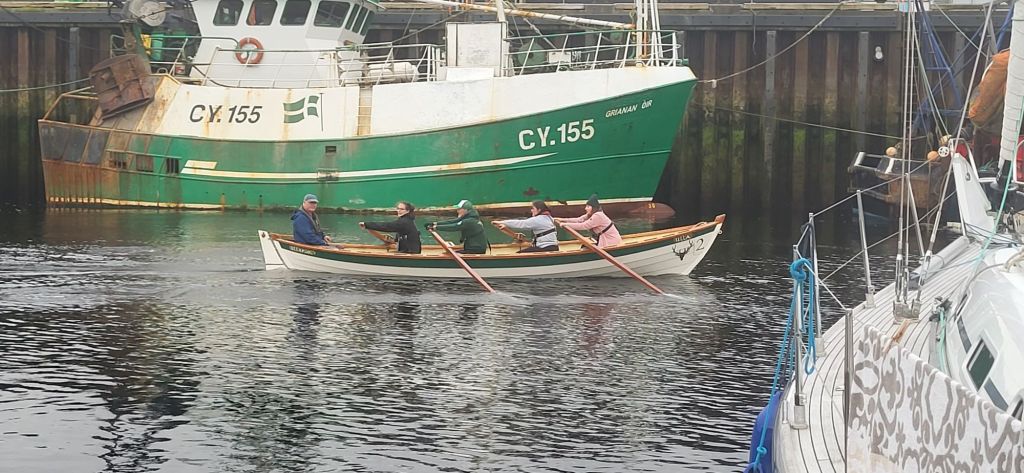
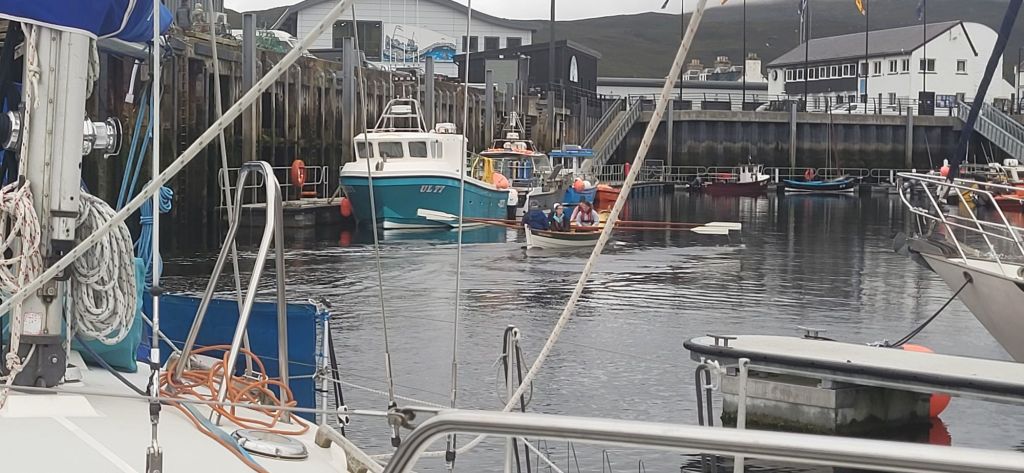
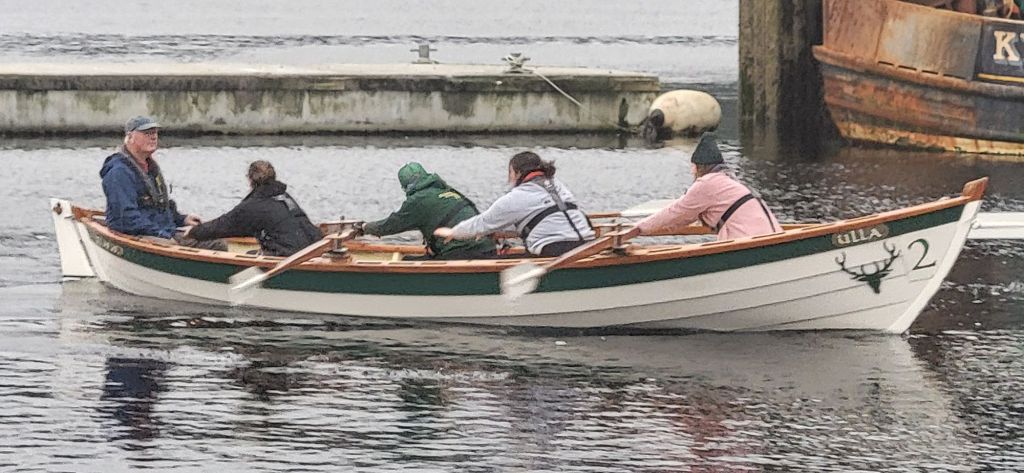
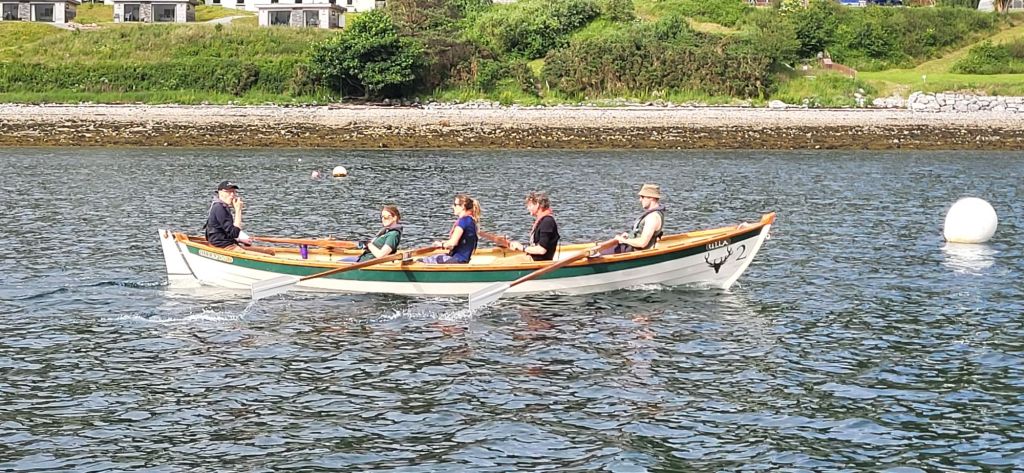
Ullapool is a funny mix of the charm of a fishing village, complete with local gig rowers….
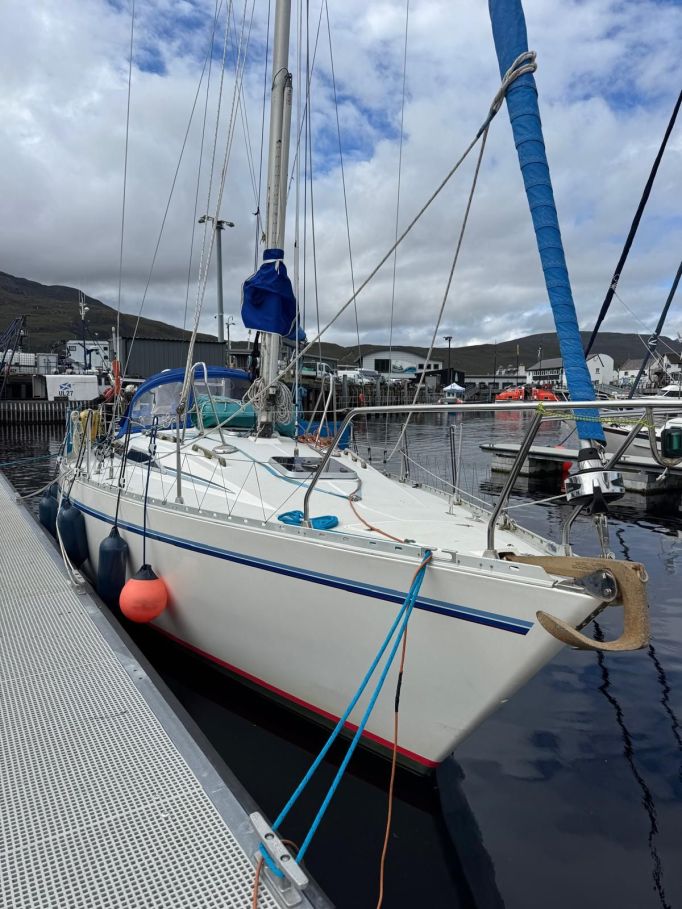
…and of course a small marina for the likes of us…
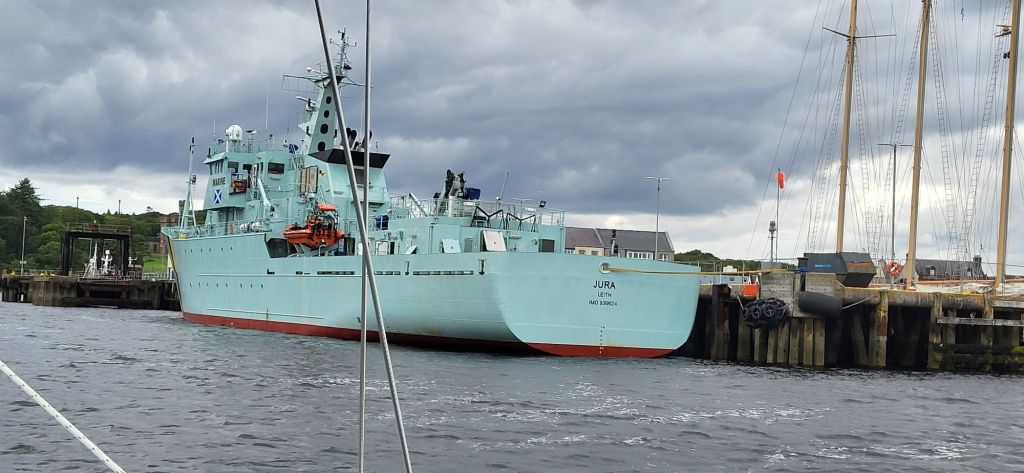
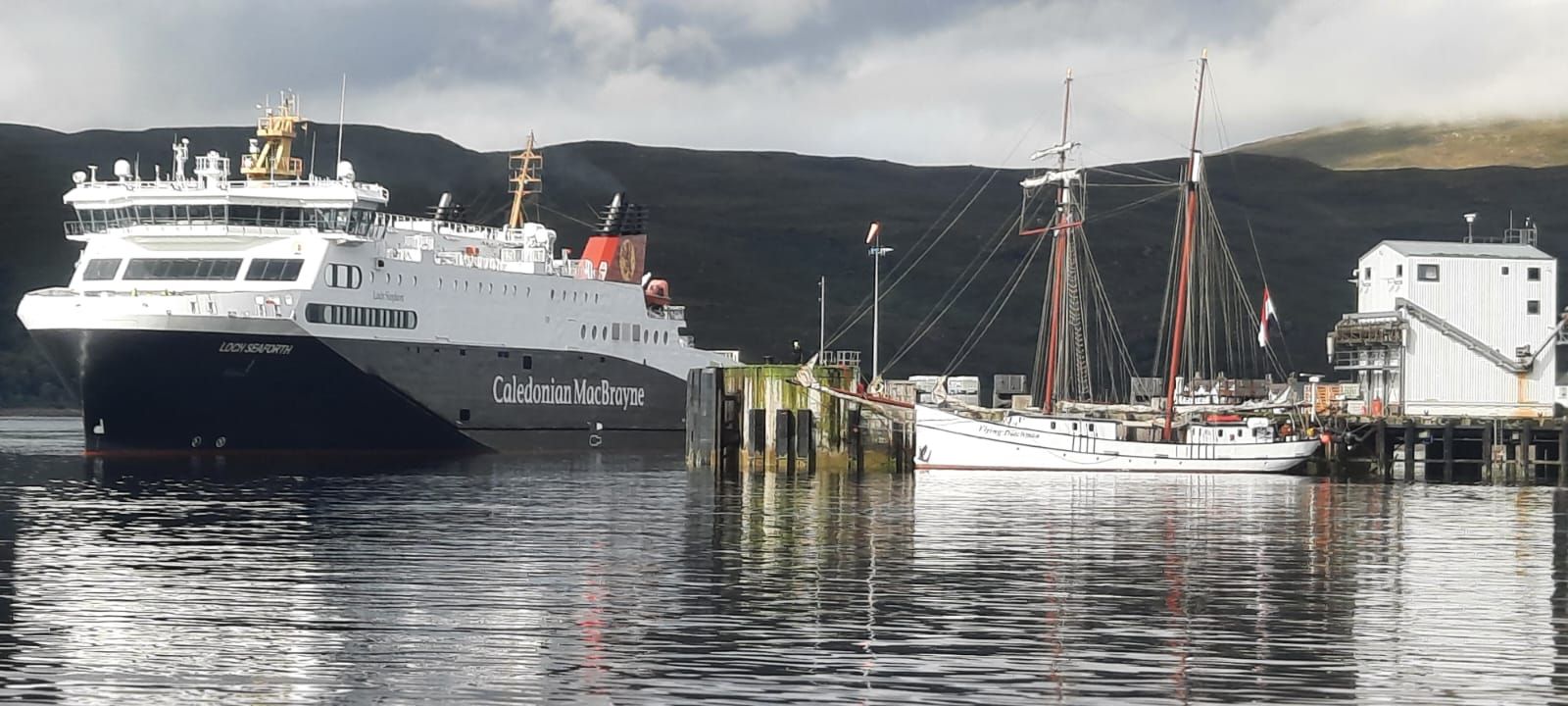
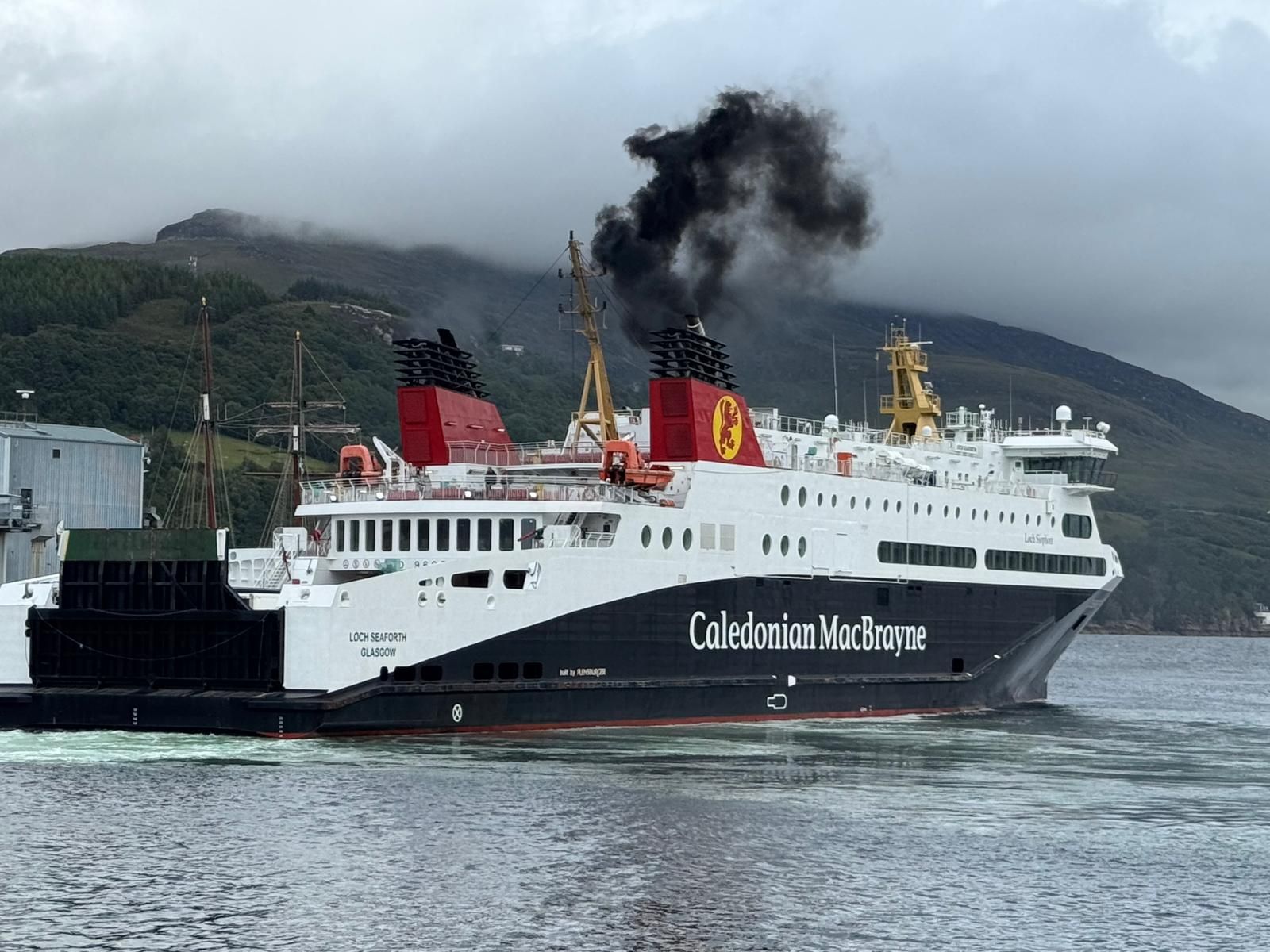
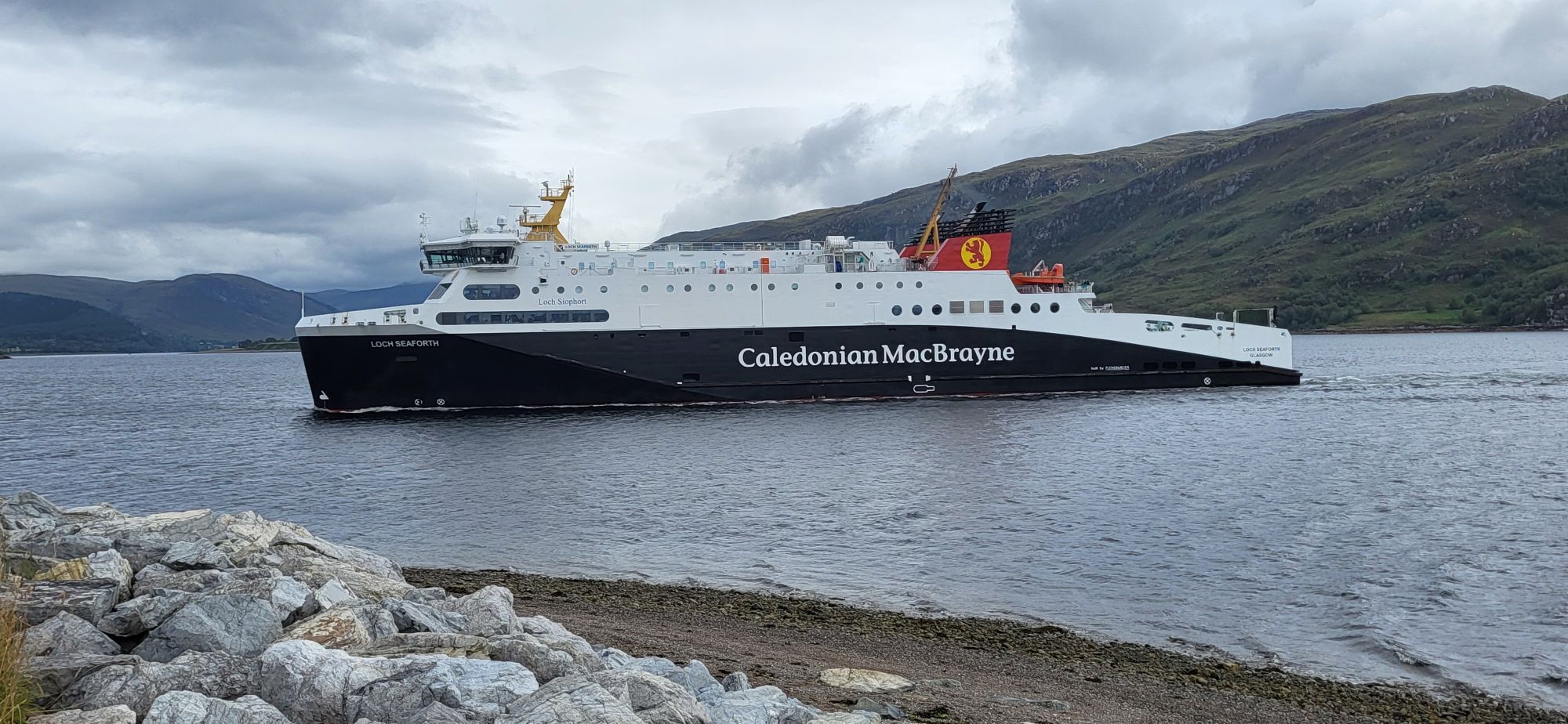
…set against the major ferry terminal serving the Outer Hebrides, providing a stark juxtaposition of the old dutch topsail schooner, against the rather less than environmentally friendly modern ferry…
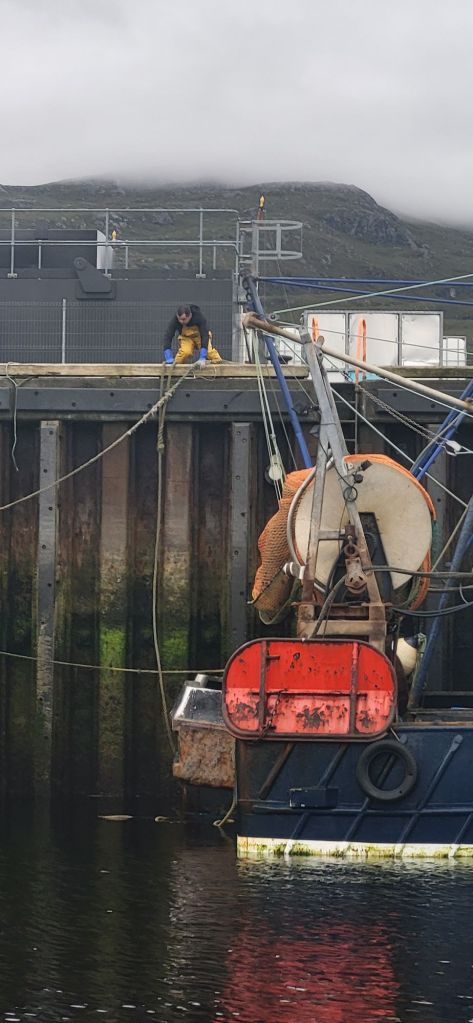
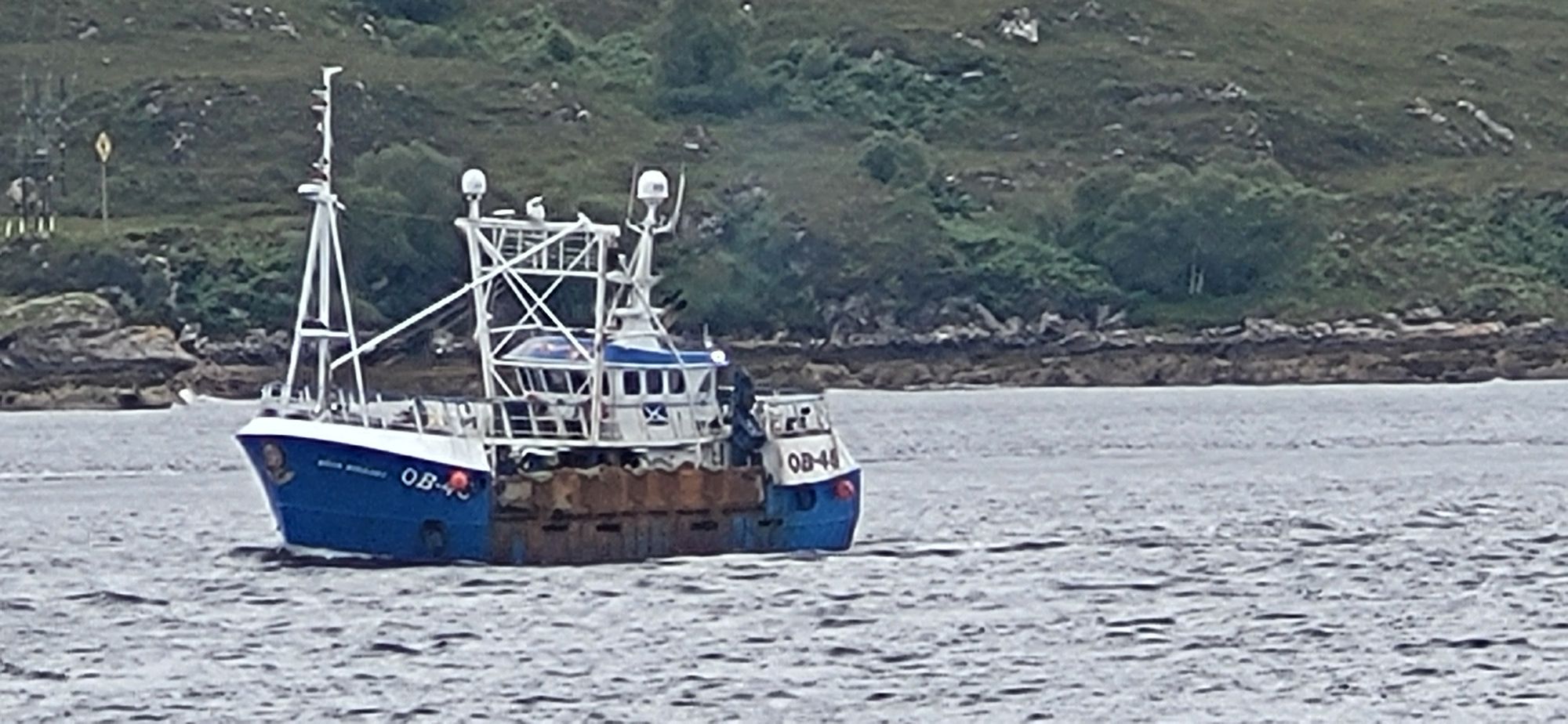
With the rain still politely holding off, we managed a feeble gesture towards exercise, a stroll along the loch to watch the CalMac arrive in from Stornoway with a small fishing boat trailing dutifully behind.
We rounded the day off with a trip back to the pop-up gin bar and seafood shack and some very local music. Its funny how live music in context becomes entrancing, even if it is not something we would naturally be drawn to …
Tomorrow we follow the CalMac ferry back the way it came, wind permitting, with plans to take our time down through Lewis, Harris, the Uists, and Barra, before swinging back to Oban via the small isles, Canna, Rum, Eigg and the rest. That, at least, is the plan…this part of the world has a habit of making fools of the best laid plans.
Footnote: We hope not to follow the ferry in any literal sense…it reminded us of a very early trip acxross the chanel from Poole to Cherbourg (possibly even our first). This was in the days before decent GPS and when radio direction finding was considered state of the art (OK…so we’re old!). The fog came down, we were uncertain of our position, and then a ferry loomed out of the gloom and we followed it, hoping that it was the Cherbourg ferry and not the one bound for St Malo! It did go to Cherbourg, we did get there in one piece and we never fully trusted RDF again!
We’ve decided to leave the boat here in Ullapool while we scoot back south for July. There’s a good bus service to Inverness, where the car is, and more importantly it’s a sensible jumping off point for our planned trip to the Outer Hebrides and the Small Isles in August, where, hopefully, Chris will join us.
We arranged for a water taxi to bring us ashore in time for the 10am bus to Inverness. On the radio, checking whether they’d called us, we hear another yacht asking if there’s space on a pontoon, having watched someone leave. We put the same question to the harbourmaster and get the same answer, yes, there’s a berth, and yes, they can take us. We’re fond of lying to a mooring in surroundings like these, but we need diesel, water, and to get a few things sorted before the drive home, so a pontoon is genuinely useful, and there’s a happy side effect for the local economy too, since we end up spending rather more ashore. Overindulgence in the pub is not, after all, ideal preparation for a dinghy ride back to the boat in fading light.
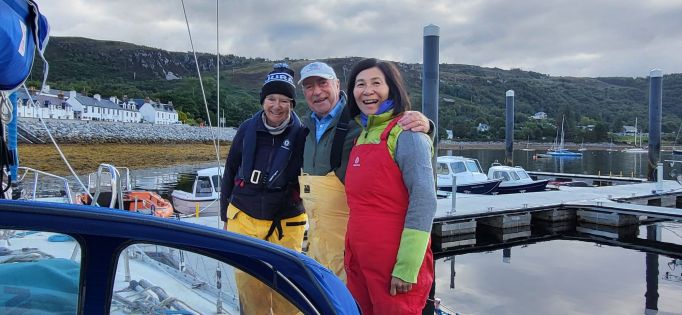
With indecent haste, Heydays slips the mooring buoy and motors towards the harbour. The harbourmaster is waiting and puts us onto a berth normally kept for the tenders ferrying cruise passengers ashore. We’ll have a couple of nights here before returning to the mooring, where she’ll sit snugly for the next month.
On our earlier call, the harbourmaster had mentioned, almost in passing, that their laundry and shower facilities are “the best in Scotland.” Tied up and squared away, we wander over to the office and are met by an enthusiastic, helpful team who are clearly proud of what’s been done for visiting boats. The whole harbour has been done up properly, and it’s a genuine pleasure to be here. We can’t speak for the rest of Scotland, but they are, without question, the best facilities we’ve come across so far.
We’d pre booked bus tickets on a tip from Ian and Maureen aboard Andiamo, and it proves an excellent piece of advice, the bus back is packed with passengers fresh off the Stornoway ferry.
Back in Inverness, we pick up a couple of decent carabiners, ready for a trial run up the mast using a borrowed mast climbing system.
The forecast had threatened wet and windy, but back in Ullapool there’s barely a hint of rain and conditions are calm enough, so up the mast it is. Deep joy.
This means getting into the bosun’s chair, an item that looks and feels like a giant blue nappy and carries roughly the same amount of dignity. We hoist a line with the mast climber attached, and fix a prusik knot to the chair. The system works like this: sit in the chair, feet into the straps, then stand, which raises and locks a foot bar beneath you. From standing, you push the prusik up the line, sit back down, and repeat the cycle all the way to the top. The YouTube video made it look entirely straightforward.
Reality was fine to begin with, though the YouTube mast had, conveniently, none of the clutter ours has, halyards, winches, cleats, all needing to be negotiated on the way up, and the result was a certain amount of unnerving see sawing early on. Relax, James, we’re only two metres off the deck. Next, the descent. The theory is that you sit back in the chair as before, then lift your feet with a twisting motion to unlock the foot bar, while simultaneously pressing down to release the prusik. Sadly, my ankles and knees turn out not to be quite double jointed enough for the manoeuvre, and instead of descending, I continue, mysteriously, to inch upward. A small audience on the dockside takes a renewed interest in proceedings.
Fortunately, John is on hand, releases the foot bar from below, and I begin inching back down, which, thankfully, works. Had this happened at the top of the mast rather than two metres up, John would have been considerably less on hand. A rethink is clearly required, and in any case, mast climbing is overrated. We do our best to look composed, as though this had been the plan all along, and retreat below. Lunchtime, conveniently.
Ullapool itself is lovely and seems to be thriving. We stumble on a little courtyard called The Seafood Shack, which comes with the considerable bonus of a small gin bar shed serving Loch Achall Gin, distilled nearby at Rhidorroch Distillery. Both food and gin are excellent, tempura battered haddock in a wrap, monkfish stew, langoustines, all cooked properly and priced fairly.
The rest of the afternoon goes on laundry, sparing us the indignity of hauling dirty washing home and back again. A domestic chore of a paragraph, this one.
There’s a bar and restaurant near the ferry terminal, name withheld, since I don’t believe in saying anything unless it’s broadly kind. We were shown to a couple of uncomfortable bar stools, despite fourteen of the sixteen tables sitting empty, and charged £7 a pint for Guinness. Six langoustines, we noted, came to £39. We left, and went instead to The Arch Inn, a genuinely friendly pub with views over the loch, where Guinness was £5.50. The Seafood Shack, by contrast, charged £14 for five langoustines. Just saying. The good places are out there, just not always the obvious ones. Ullapool in the evening sunshine is lovely…
Sunday morning dawns bright, and we need to clear our pontoon berth to make way for tenders from an incoming cruise ship. With the weather holding, we decide to explore Isle Martin and Loch Kanaird instead. We slip away and are soon sailing in a fresh but distinctly changeable breeze, the steep sided loch and valleys throwing down sudden downdrafts and gusts with little warning. Still, a fine morning to be sailing. CalMac makes its usual scheduled appearance, and just as we bear away towards the island, the cruise liner rounds the headland behind us, we’re simply glad to be out of Ullapool for the day.
The coastline and surrounding islets are wonderfully craggy, riven with deep fissures in the rock. The bay behind the island offers good shelter, with just one other yacht at anchor. The cliffs drop almost sheer into the sea, and even fifty metres or so off the shore we’re still showing twenty metres on the depth sounder, a world away from the muddy shoals we’re used to in the Solent. We finally drop the hook in ten metres, close enough that a decent run up might just get you ashore. We’re only stopping for lunch, in any case, with the wind nudging us steadily off the land.
A couple of houses, an old ruin, and a small pier, and that’s the whole of Isle Martin accounted for. It’s a wonderfully peaceful anchorage, and it’s a shame we can’t stay the night, since a night here would be close to perfect.
The run back is lazy, the breeze comfortably behind us, and we slide past the shore…
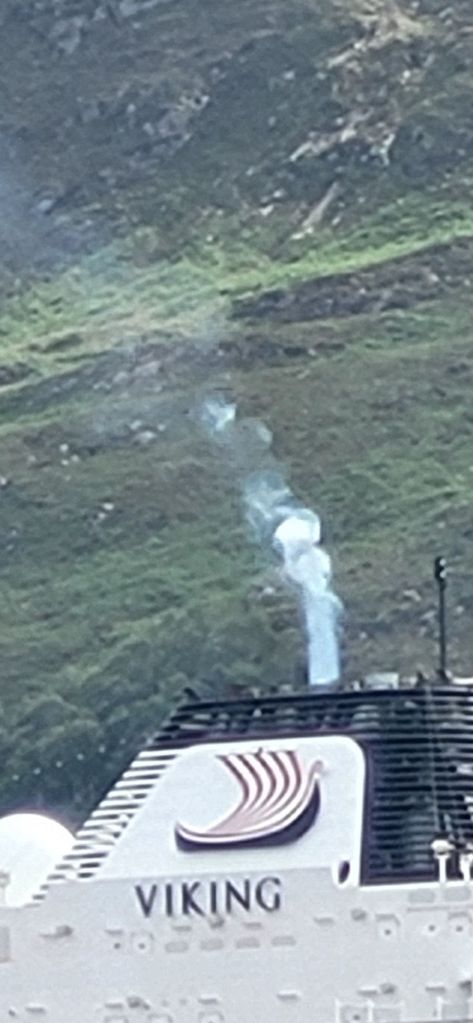
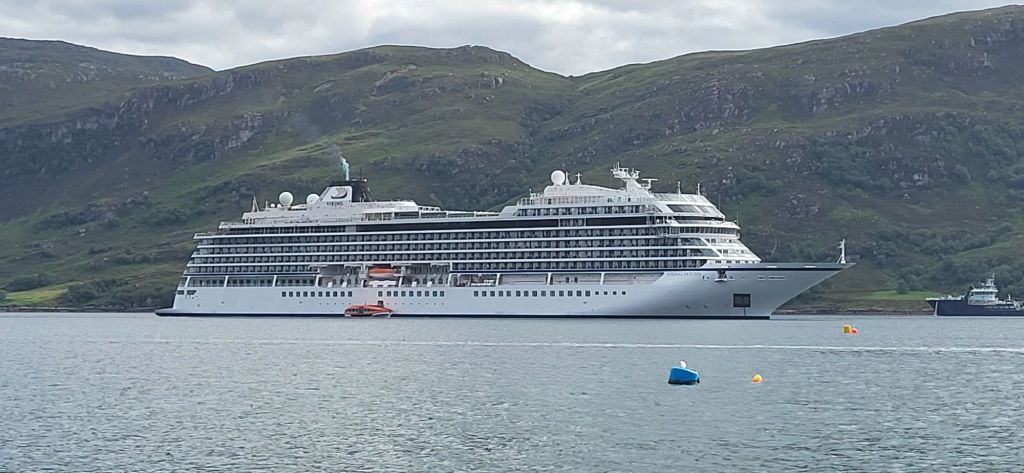
…though the cruise ship now dominates the skyline, dwarfing the little town entirely and trailing the usual steady plume of generator exhaust, blowing away from us, fortunately.
We tie up again on the mooring buoy, where Heydays will sit for the next few weeks while we head south to renew acquaintance with houses, family, and friends.
As we have our dinner in the last of the evening sunshine, the cruise liner leaves taking its constant toing and froing tenders and exhaust smoke with it. We suppose that cruise ships are good for the gift shops, but probably less so for the eateries and the rest of the town….
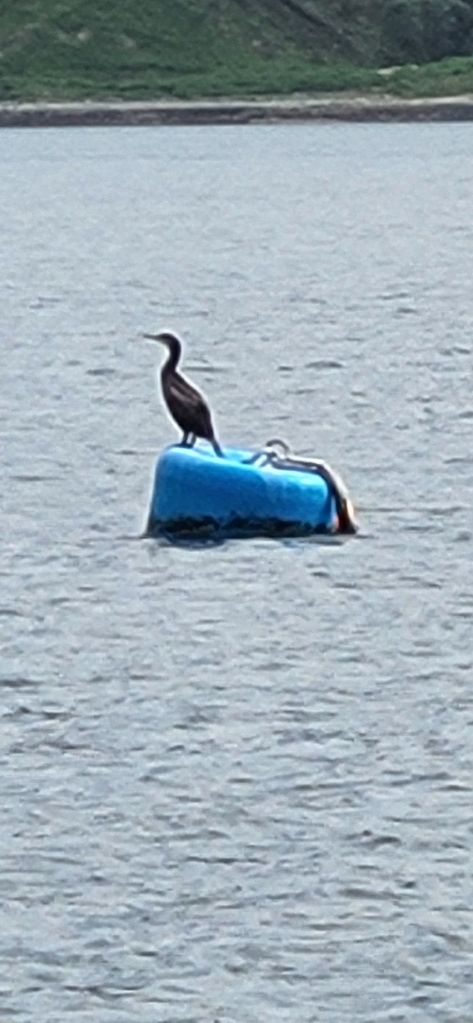
Just a couple of cormorants and a gig to keep us company…
This is the last entry for a month or so, so I trust our reader can contain their excitement in the meantime.
Sailing, it has to be said, is a largely sedentary pursuit. There are bursts of real effort…fenders, lines, sails, as we leave or enter a harbour, and precious little in between. On a long passage, the most strenuous task of the day is often just nipping below to put the kettle on. Yes, a lumpy sea demands constant bracing, but nobody’s pretending that counts as cardio.
So we resolve to spend at least a day in Lochinver, with vague ambitions of a hill walk if the weather allows, and no great objection if it doesn’t.
Annoyingly, there’s a job up the mast that can’t be put off any longer. We’ve got a wireless wind instrument on the way out, and entirely in keeping with Heydays’ character, the original anemometer still up there alongside it, having served faithfully for as long as we’ve known her. Lately, though, it’s been telling us fibs…wind clearly on our left cheek, instrument insisting it’s coming from astern. A look aloft suggests it’s rotated on its spindle, very possibly the work of a passing bird with no respect for instrumentation.
We idly wondered yesterday afternoon whether now might be the moment to go up and sort it. Unhelpfully, the pontoon beside us is occupied by a couple of boats with young crews and weathered-looking skippers, exactly the audience nobody wants. Going up a mast is never dignified, and it always draws a crowd. We still carry the scar tissue from a sunny afternoon in Dartmouth, watched by several dozen ice-cream-licking spectators, all presumably hoping for a dropped spanner or an ungainly plunge. Not keen to repeat the performance, we fall back on the old principle that any properly seasoned sailor should be able to feel the wind and trim accordingly. Technology, we decide, is overrated.
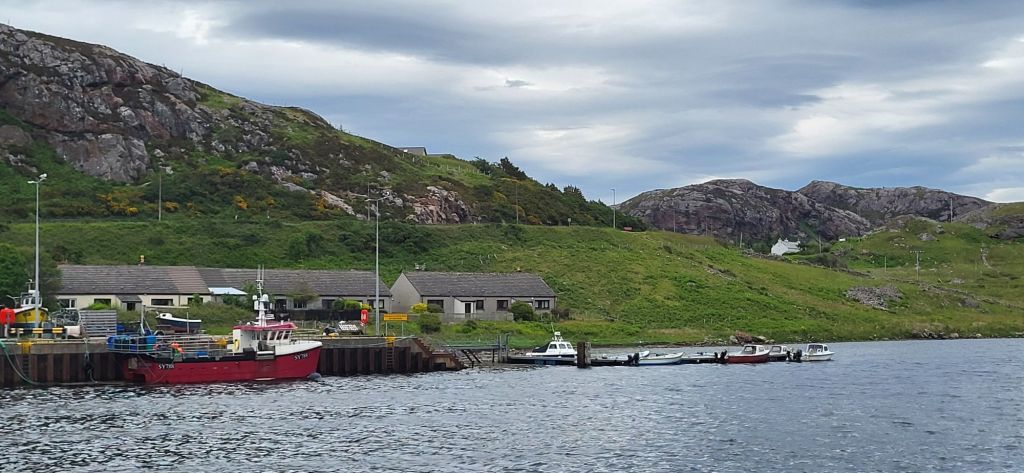
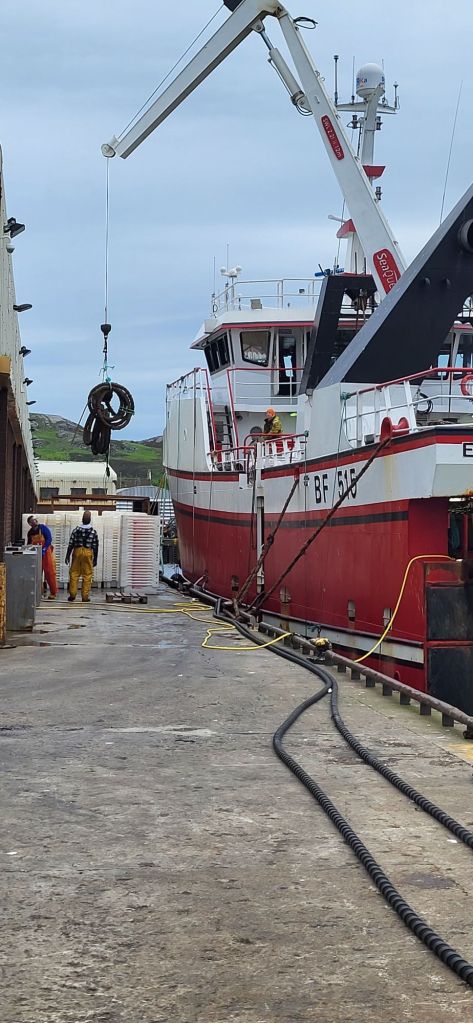
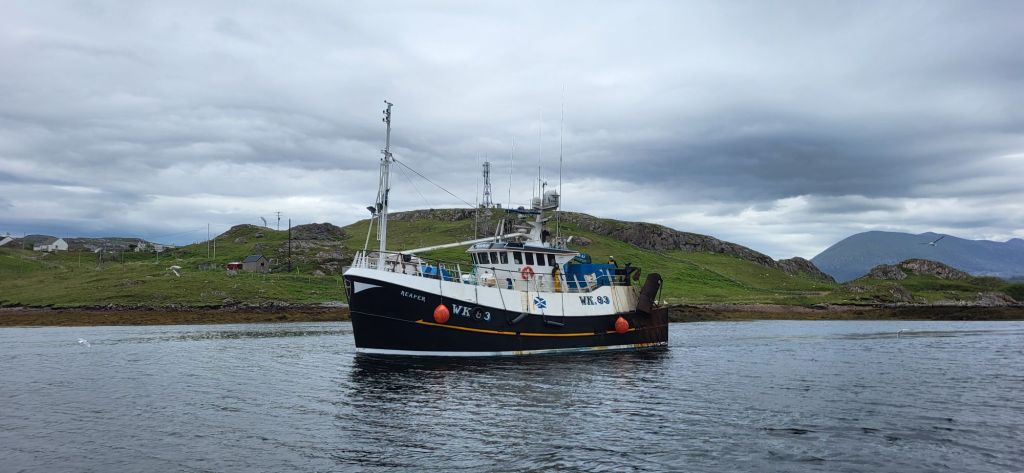
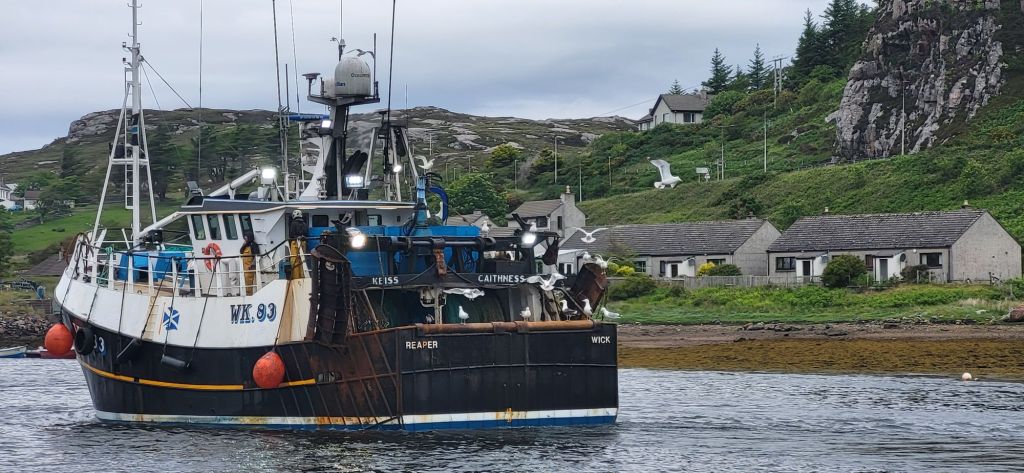
With our pontoon neighbours gone and the weather looking kind, we drag ourselves up for a walk round the village and along the River Inver. The fish dock is heaving, a large trawler is landing a serious catch, and the harbourmaster tells us she belongs to the French supermarket chain Intermarché. The fish goes straight into sealed crates and onto lorries headed for France. Two big Spanish boats are expected on the same basis before long: trawling international waters, but landing in the UK because it’s cheaper to truck the catch to Europe afterwards than to sail it there.
Despite the very commercial nature of the fish dock, the loch itself is very pretty and with reminders of an older style of life still around…
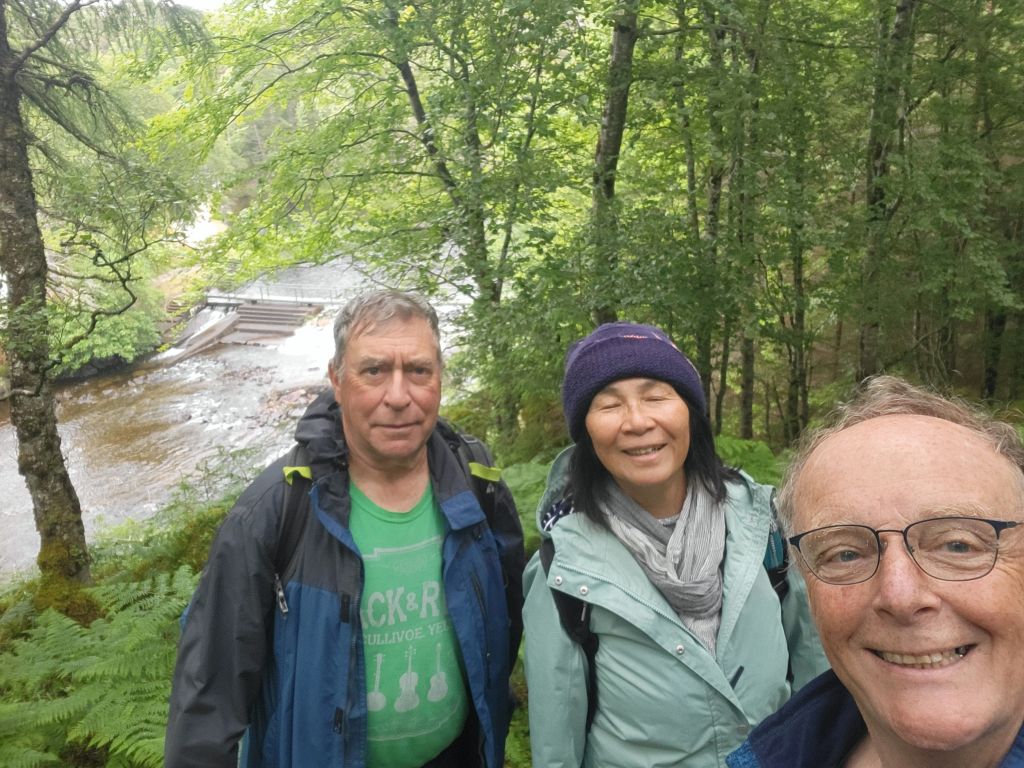
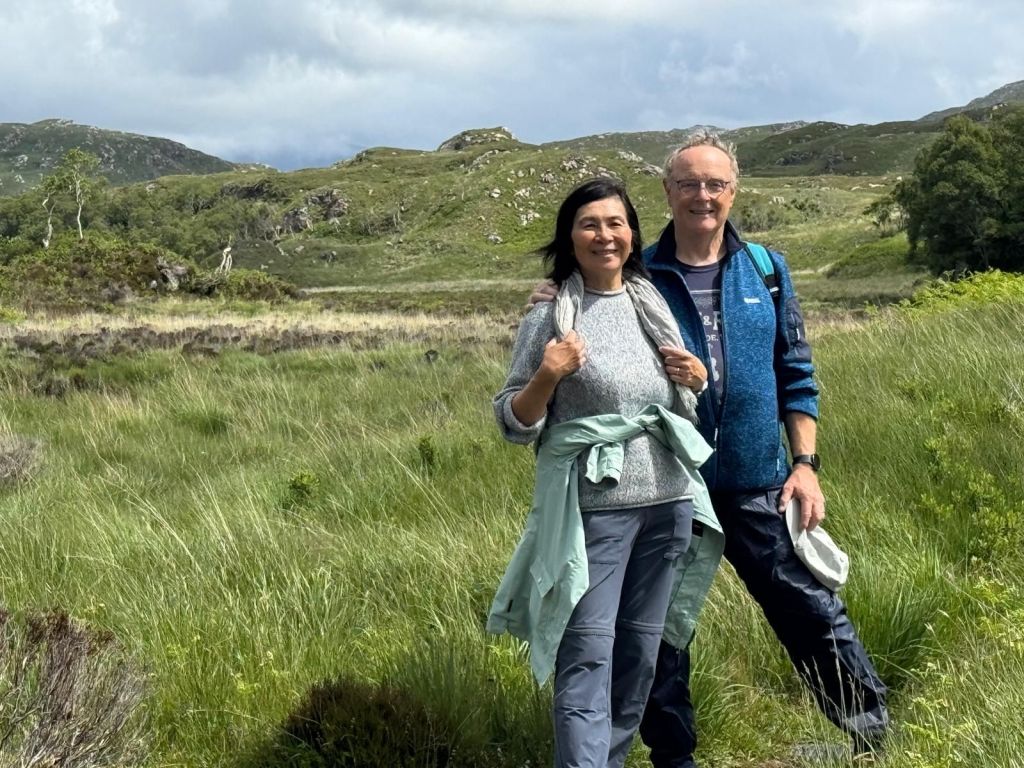
James fails entirely to steer John and Yee Tak past the butcher’s window, where a large piece of venison has clearly been waiting for them all morning. What follows is several minutes (possibly hours) of earnest deliberation over what, exactly, one does with a haunch like that. The village itself is buzzing, full of campervans and motorbikes doing the North Coast 500 circuit, and it’s obviously a lifeline for a place this size.
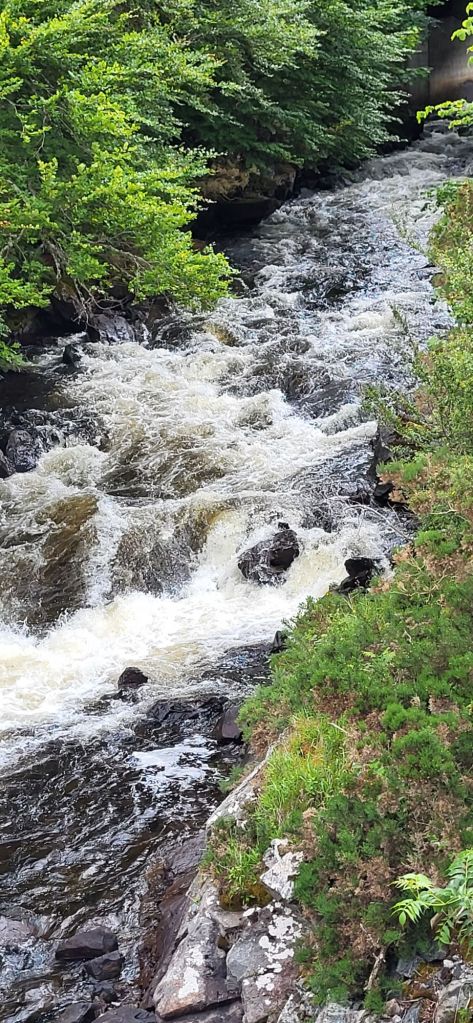
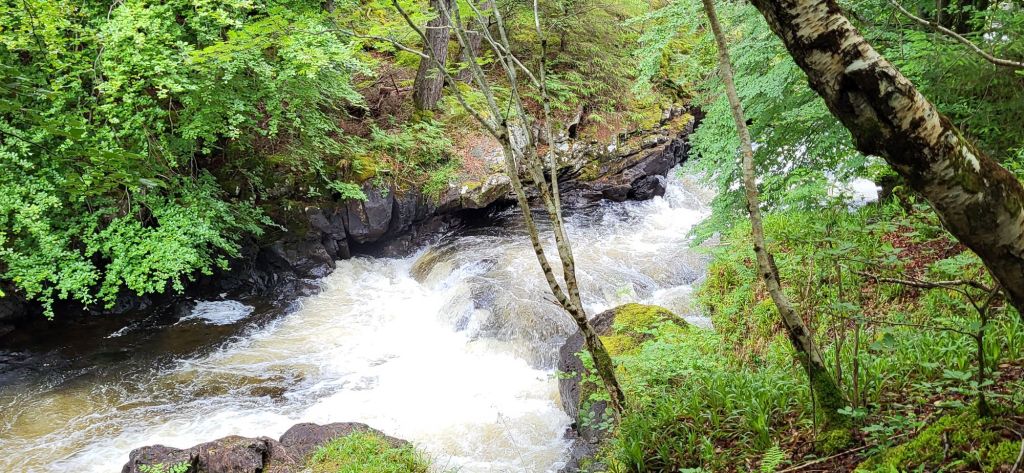
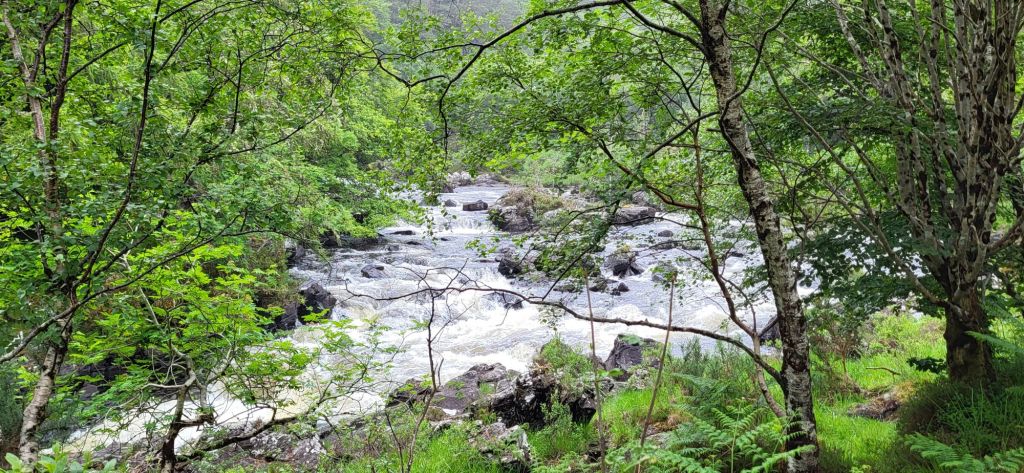
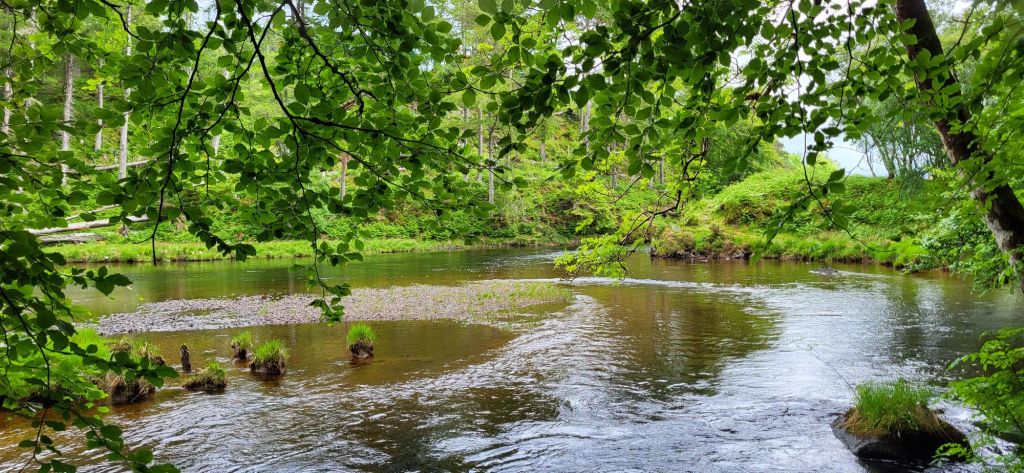
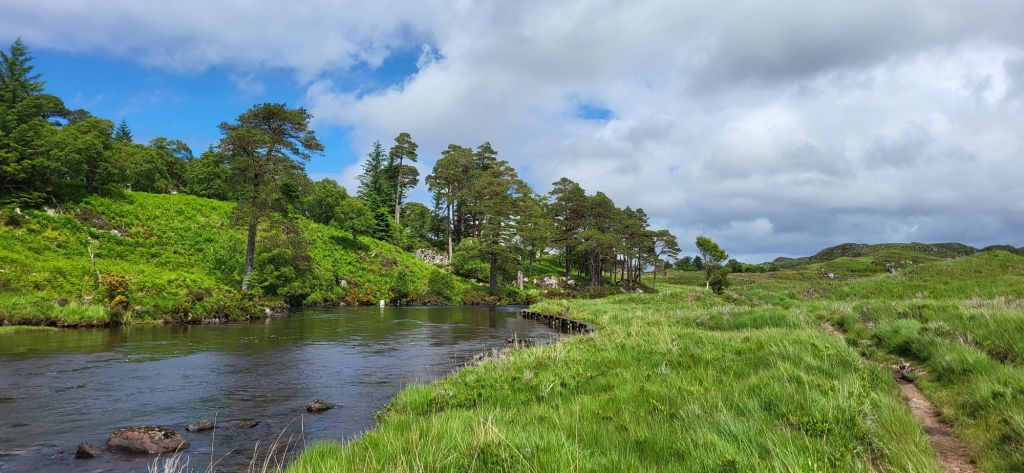
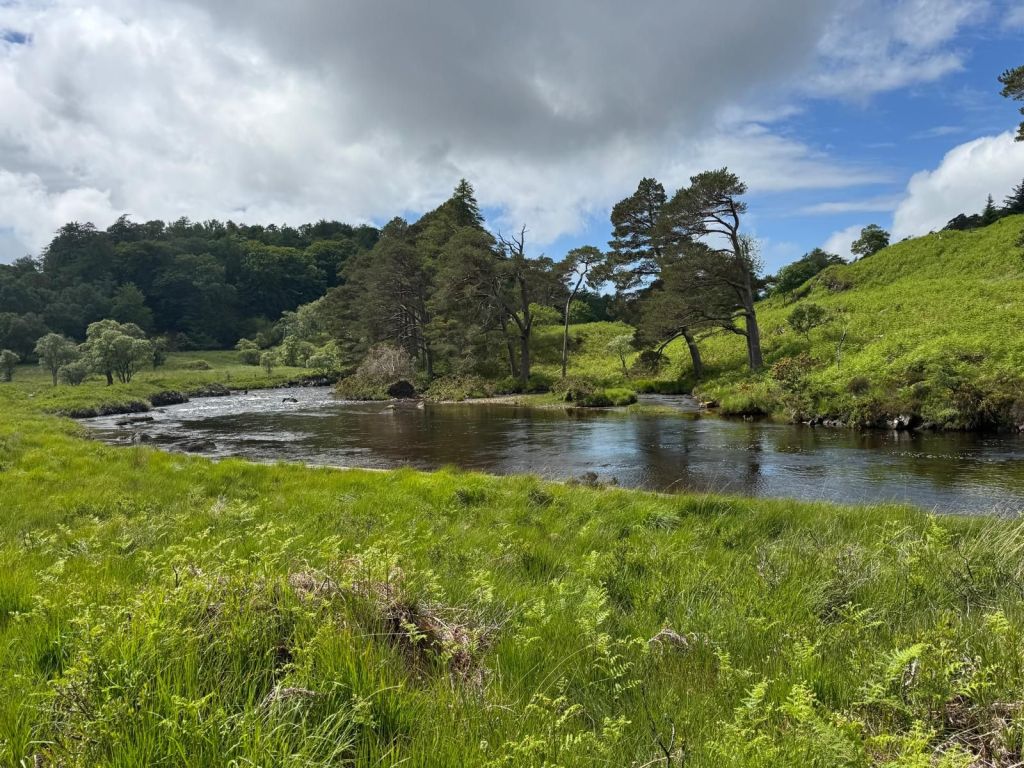
The Inver is in full spate, and we follow it upstream past roaring waterfalls, a weir, and a string of rocky pools, some of them clearly man-made, presumably for the benefit of the salmon fishing rather than the salmon.
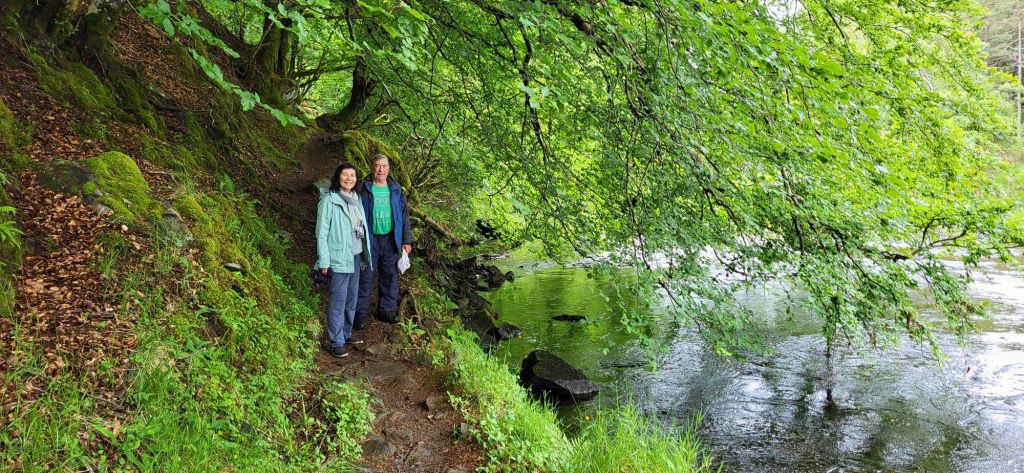
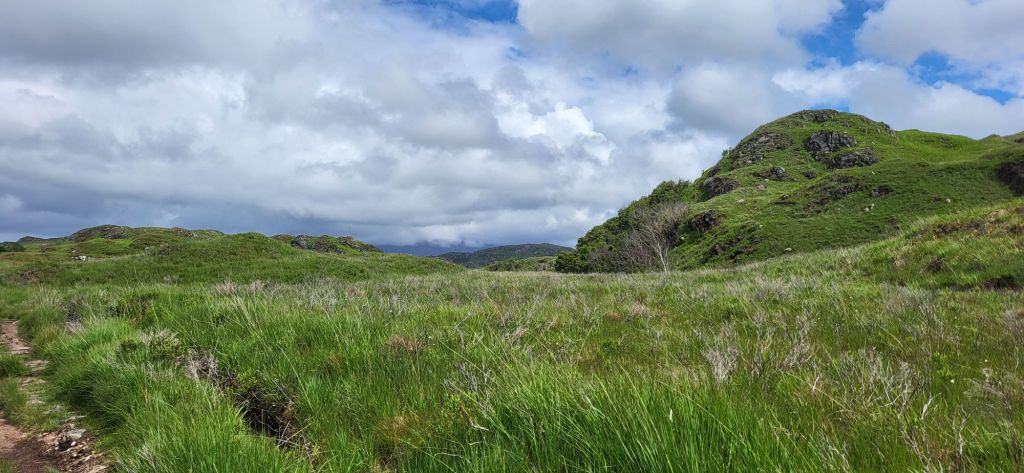
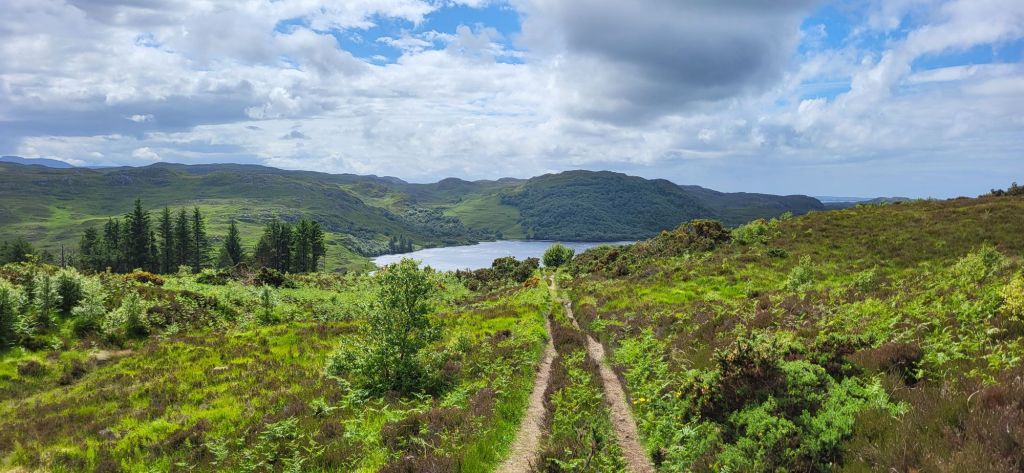
Eventually the path peels away from the river and we’re out into wild, empty hill country behind the village, nothing but deer fences for company.
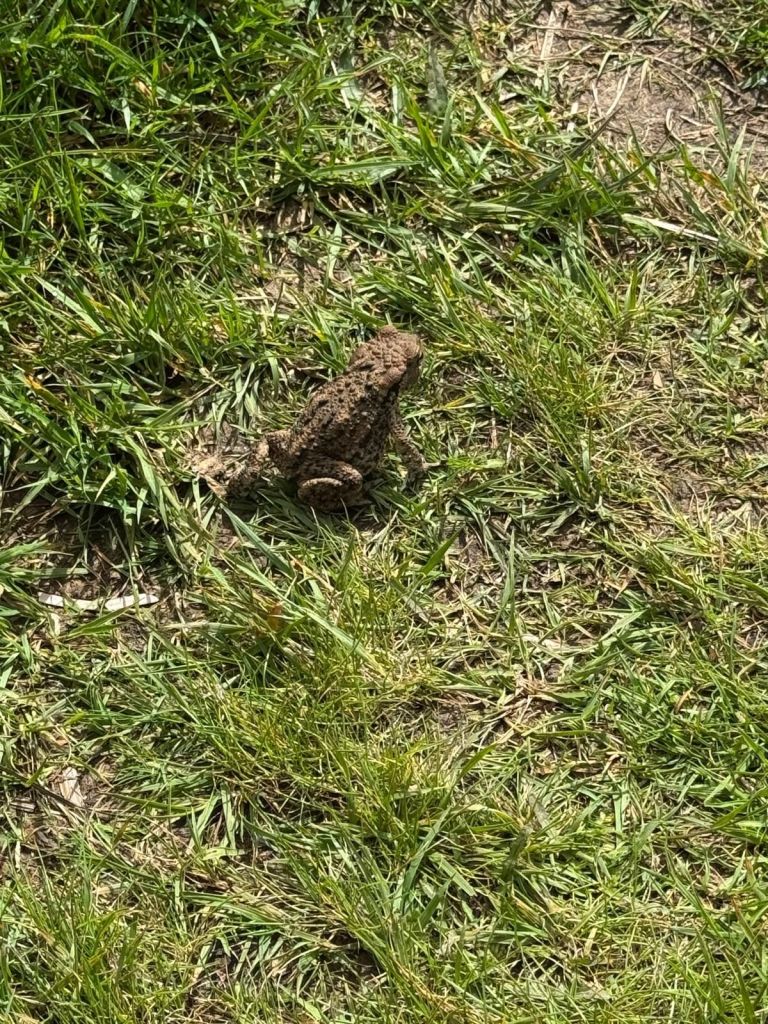
…and a very brave little toad…
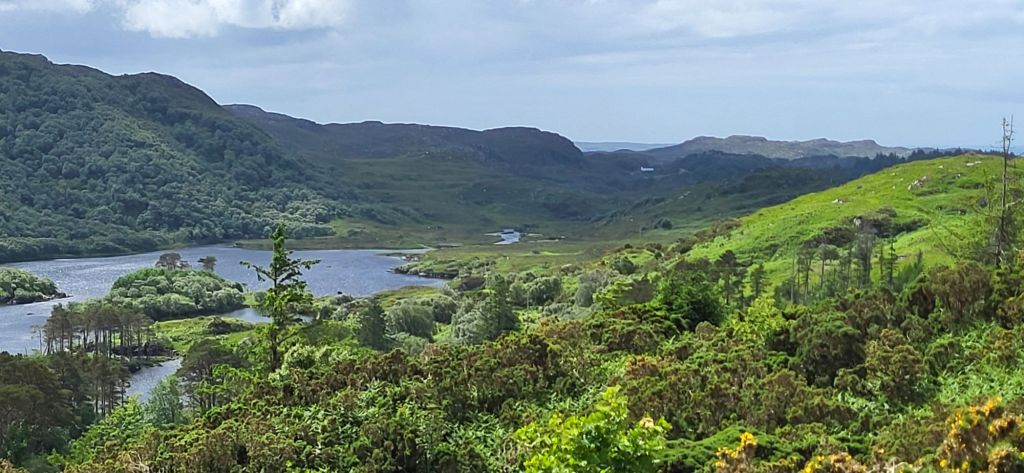
The loch above the village is calm and lovely in the early afternoon sun…
…and then we turn finally for home with a definite sense of having earned the venison waiting for 2 of us.
It’s a place that rewards you from both directions, land and sea, and we count ourselves lucky to have seen it from both. But tomorrow this should be back to a sailing blog about sailing…
The weather window looks promising, a few days of settled southerlies or south-westerlies across the Minch, which is about as good as it gets up here.
Kinlochbervie is a gem, but a small one. The hills are calling, and under other circumstances we’d answer, but the calendar has us in its unforgiving grip, and we decide to press on to Lochinver, a short hop really, from Ullapool, where Heydays will hopefully sit quietly at rest while we scoot south for July.
A wander round the village turns up some lovely beaches and two cafés, which, combined with the steady trickle of campervans, confirms this is firmly on the North Coast 500 circuit.
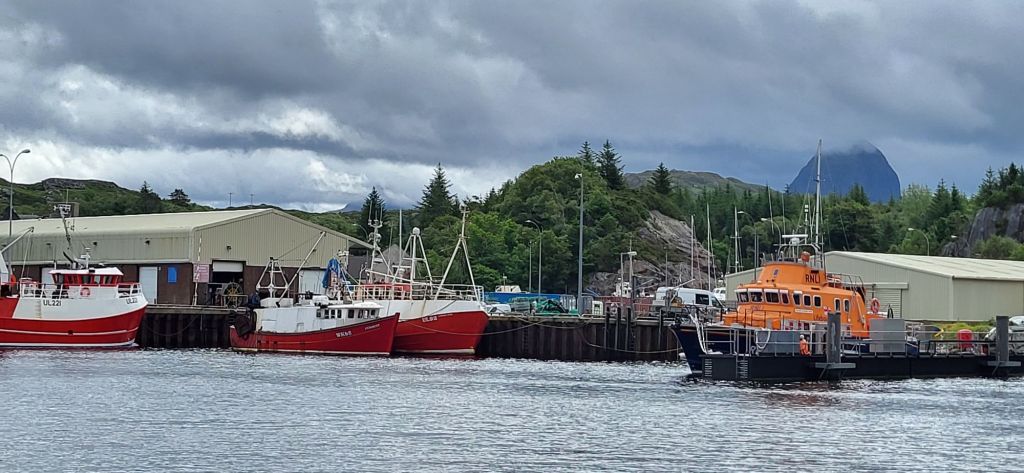
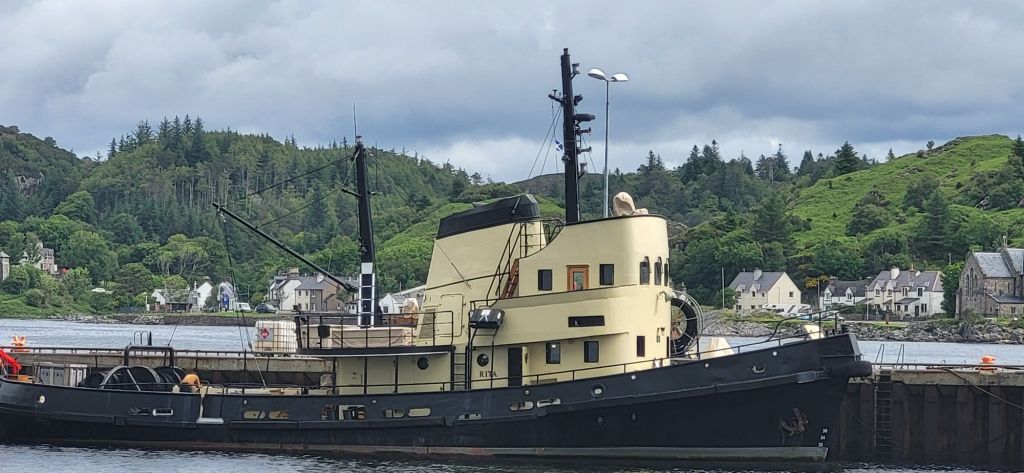
There’s also a sizeable trawler alongside, disgorging 1,700 crates of Ling and Monkfish with impressive efficiency. She came in around half six, swapped crews at some point, and was back out through the heads by noon, ruthlessly commercial, and slightly dispiriting for the smaller boats trying to scratch a living alongside her.
As she leaves, another comes in…
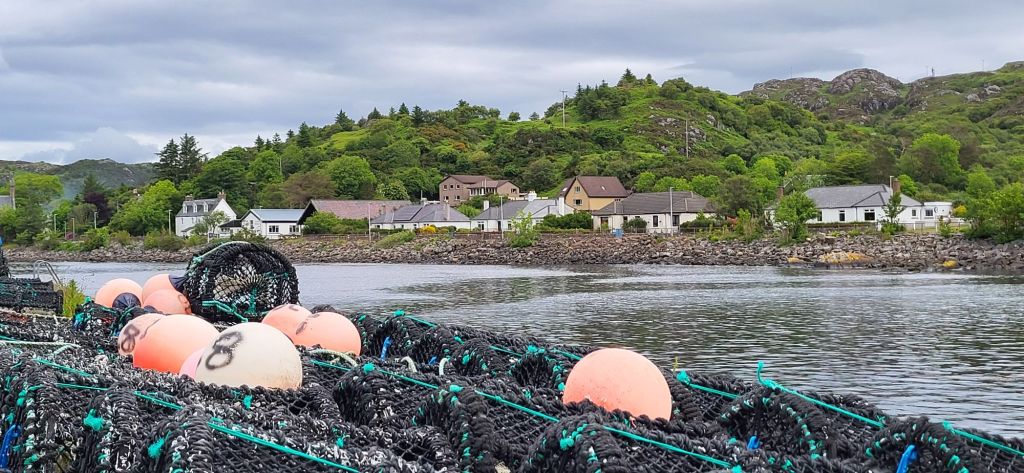
Yet the dock and its infrastructure tell a once, more optimistic story… ice plant, lock-up garages, decent facilities, all clearly intended to welcome boats of every size. We pass a pleasant few minutes with a local who’s heading out to lift his prawn and lobster pots further up the loch. There are, it seems, still gaps in the market.
The forecast for the Minch, meanwhile, proves to be, how to put this charitably, aspirational. The apps had promised a nice beam reach to Stoer Head on a decent south-easterly. What we get is glassy calm and the unmistakeable sound of diesel. Sorry, Joshua. The engine gets its moment.
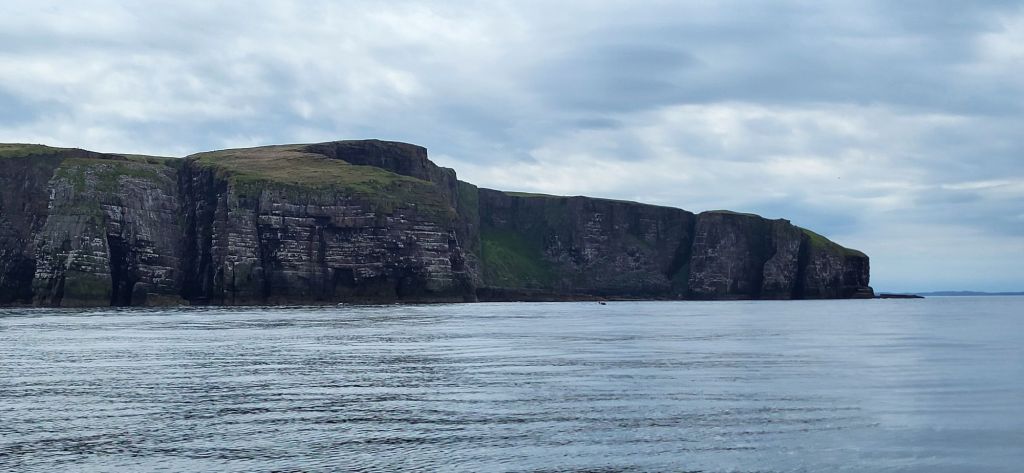
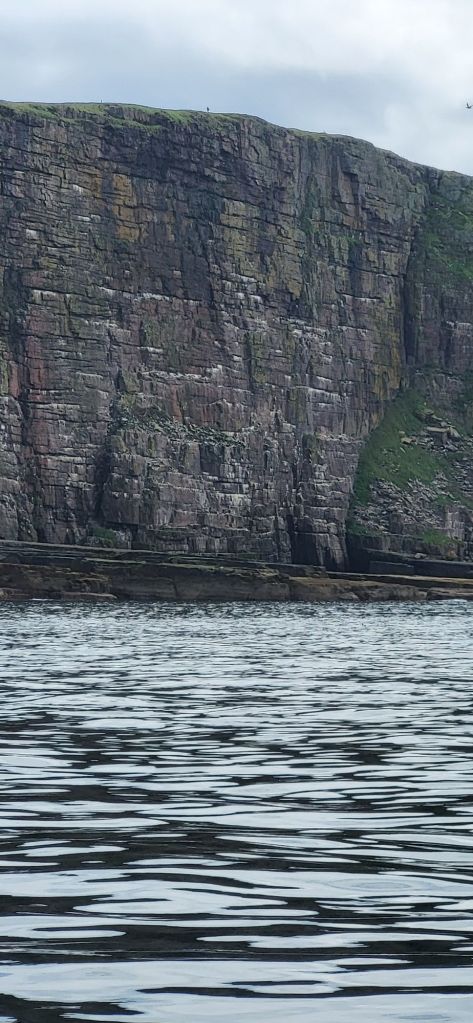
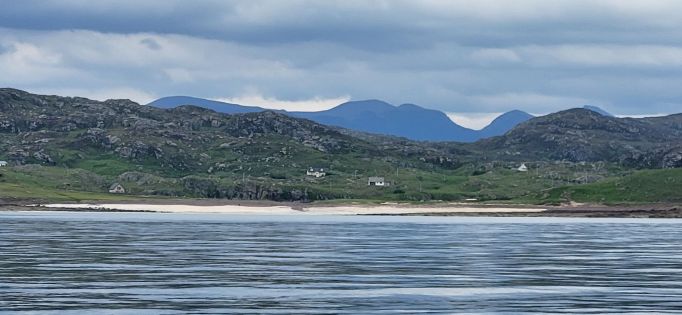
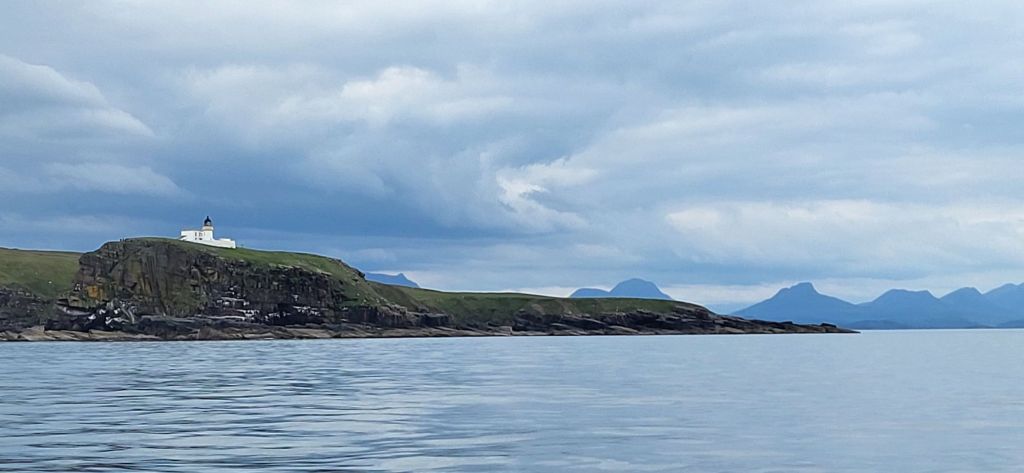
In fairness, it’s hard to grumble. The calm gives us time to sit back and revel in this extraordinary coastline, ragged, ancient, barely populated, with beaches that would be heaving with sunloungers anywhere south of Inverness.
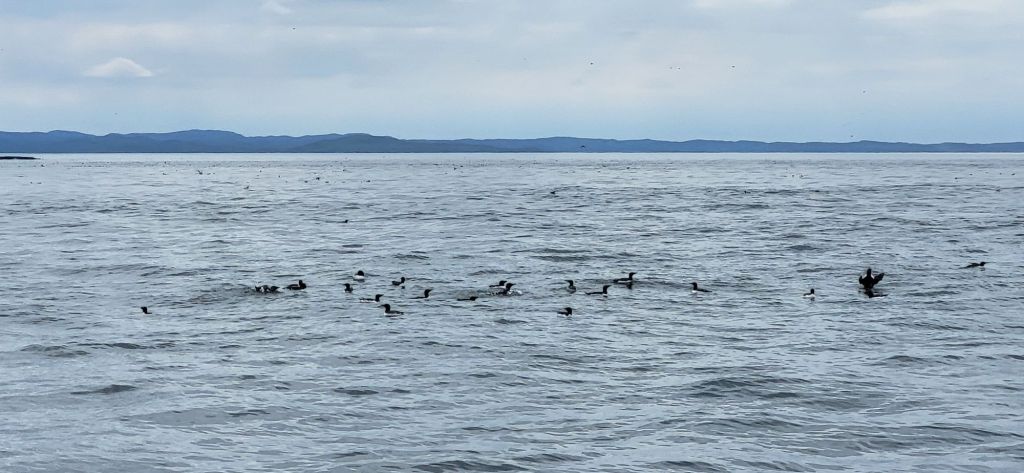
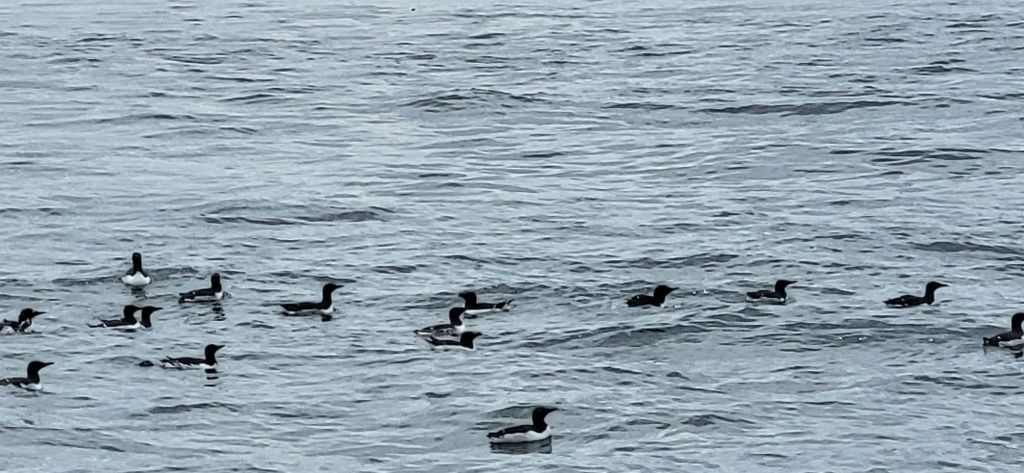
The guillemots have colonised the cliffs, and they seem to play chicken (guillemot??) with us as there are hundreds sitting communing in sociable rafts, leaving it until the last minute to flap away across the water or to dive down. We don’t seem to run any over, but we keep checking to see if we are leaving a trail of feathers behind us…
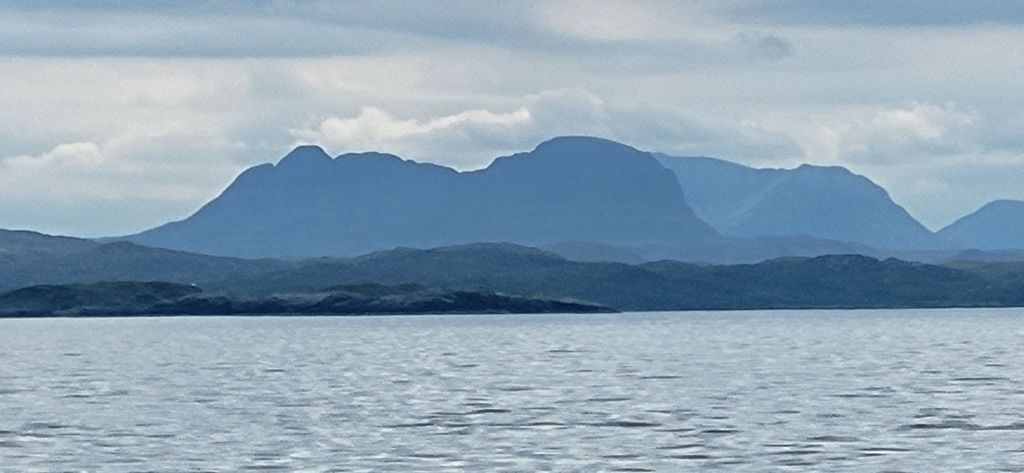
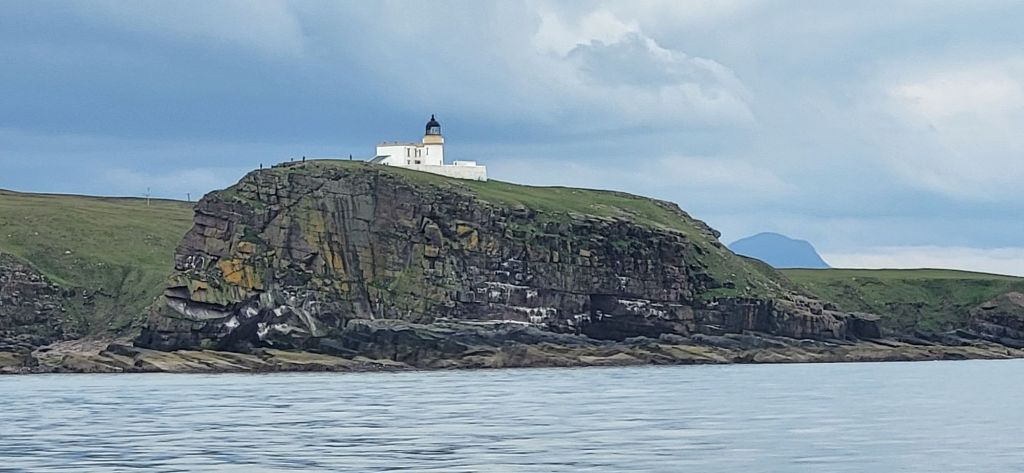
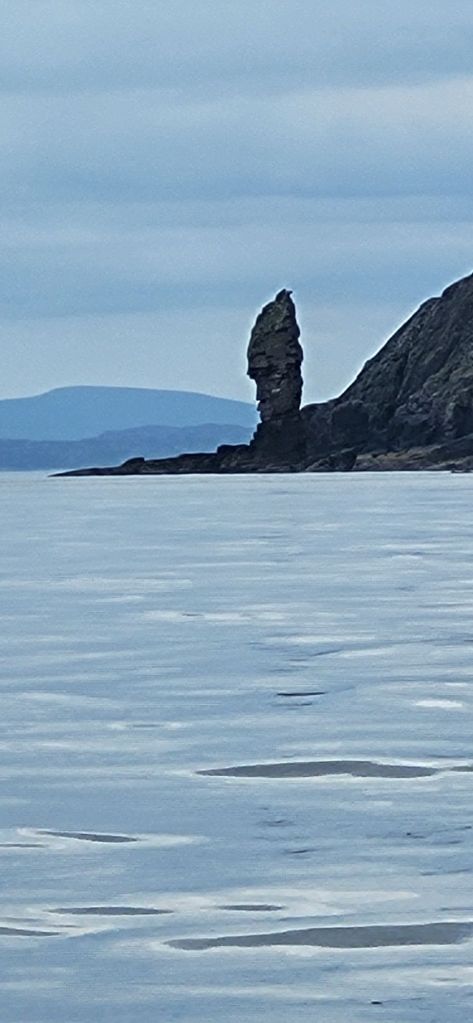
The mountains march away into the distance, and headlands come and go, some with lights and other with fanciful names …why are stacks always “Old men” of something. This one is the Old Man of Stoer…
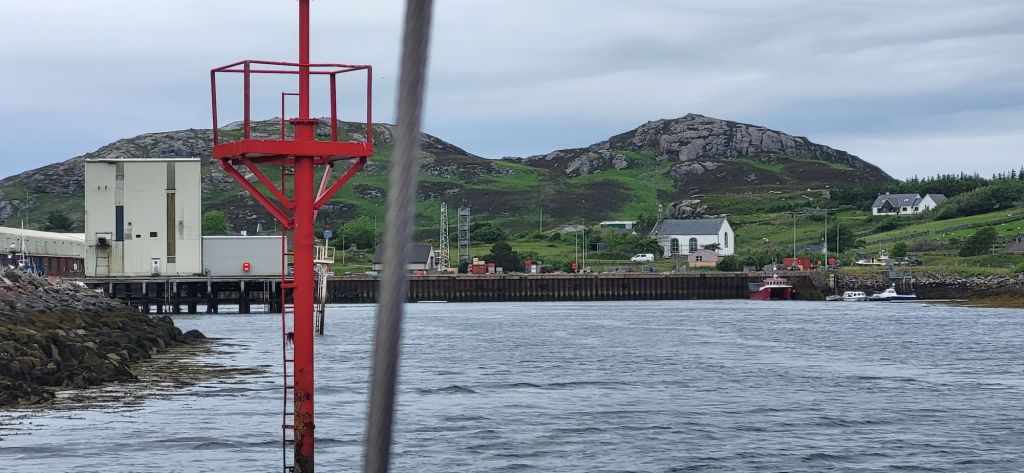
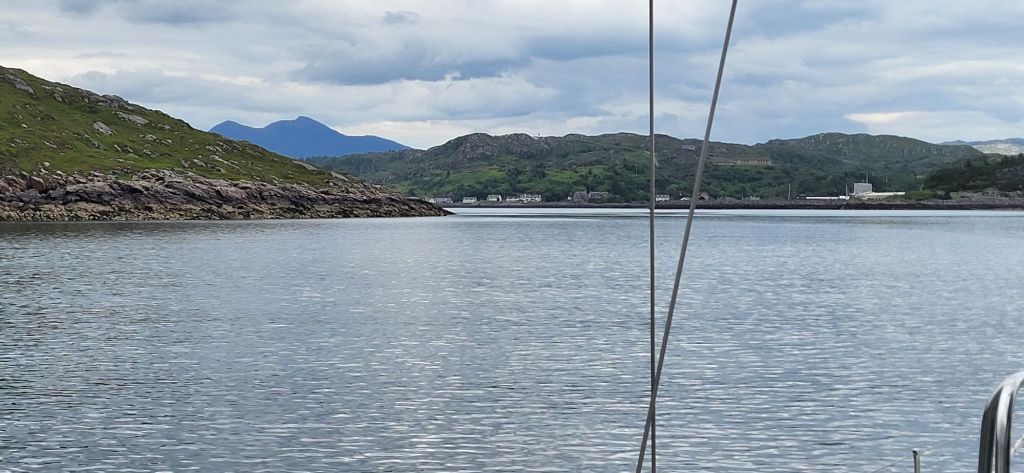
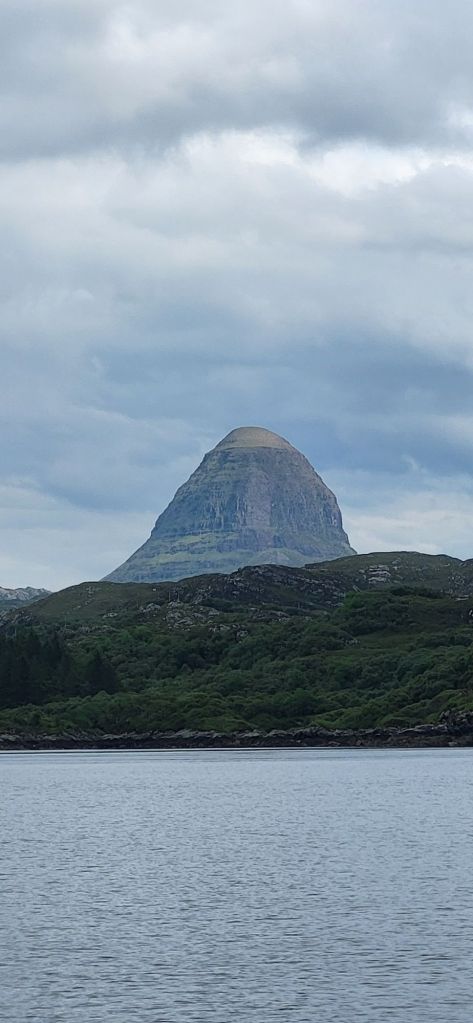
The approach to Lochinver offers the same mild anxiety as Kinlochbervie…you aim at what looks like a solid wall of rock and trust that something will give. It does, the village opens up at the last moment, and with it a neat little dock for leisure boats, where we are soon tucked in just as the rian sweeps across….all glowered over by what we think is the very carbunkle-like Caisteal Liath mountain.
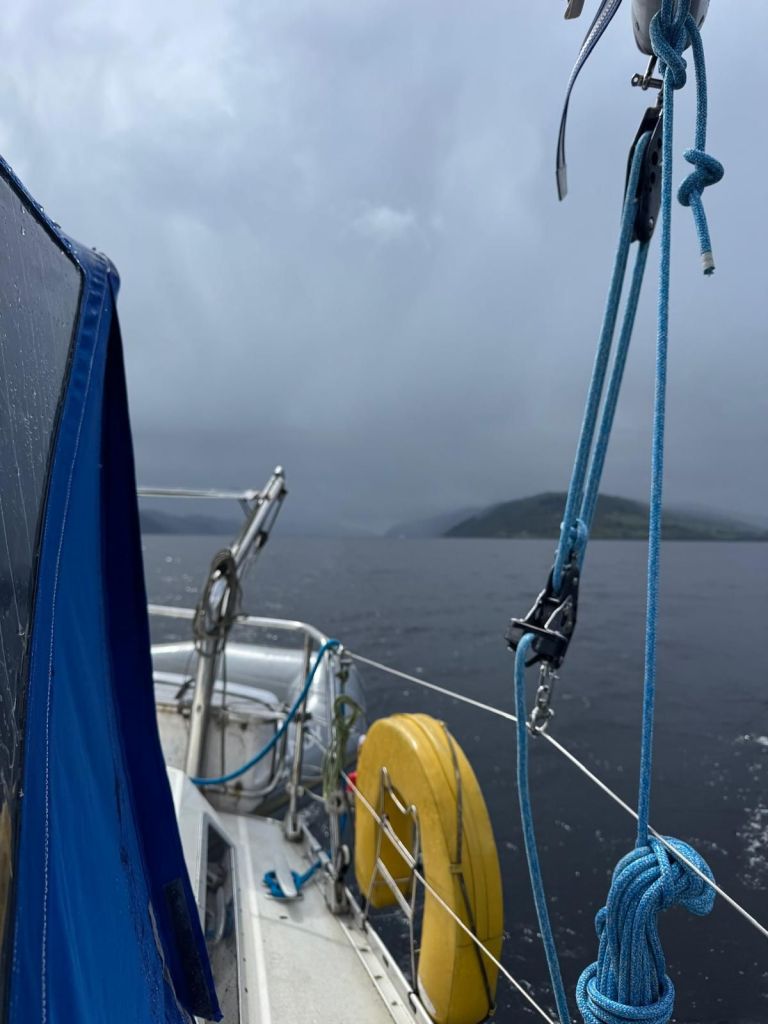
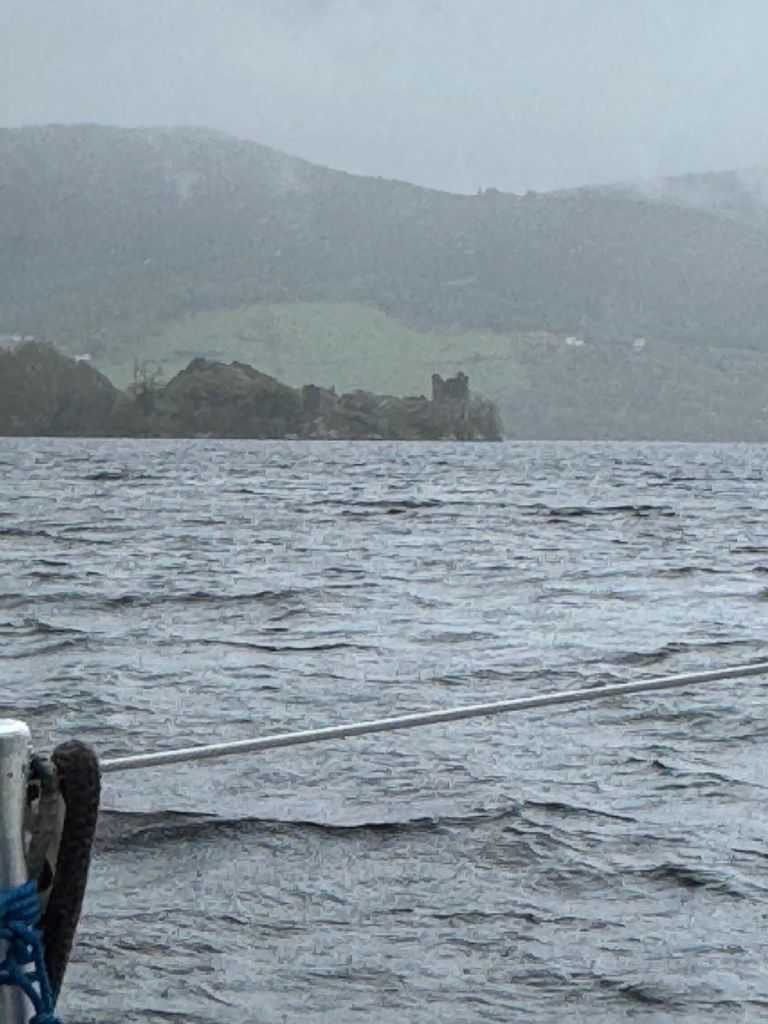
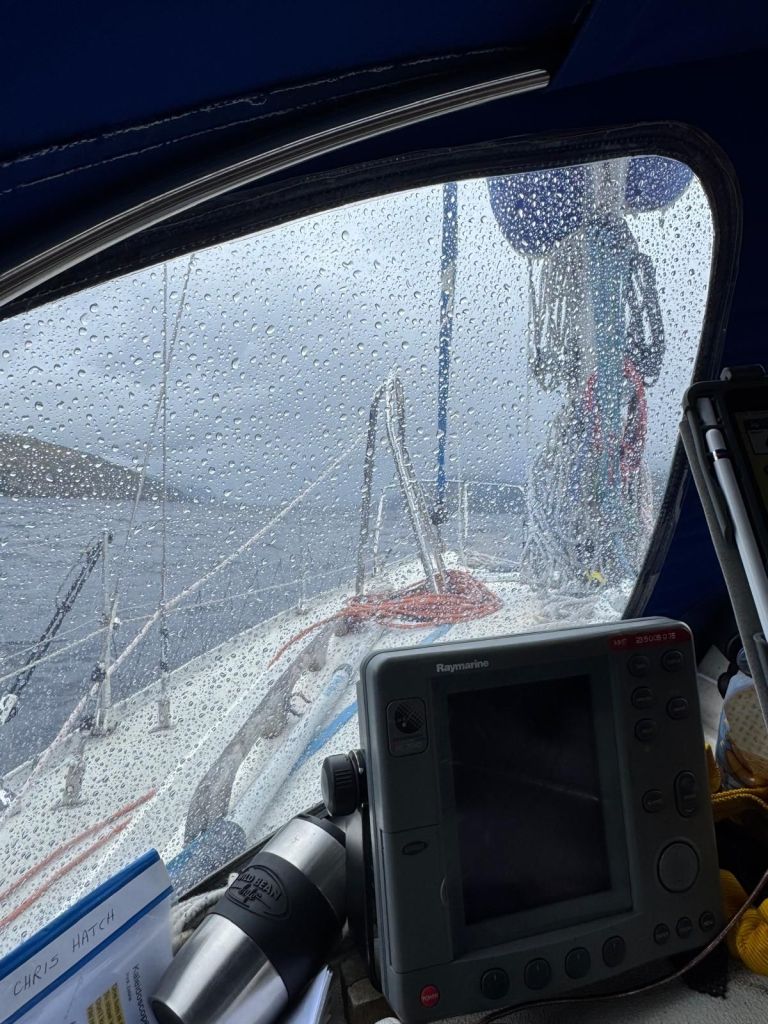
To be fair, Nessie himself (herself? Themselves?), could have given us a scaly tap on the shoulder or swum around the boat taking selfies, and we would barely have registered, through the driving rain and gloom.
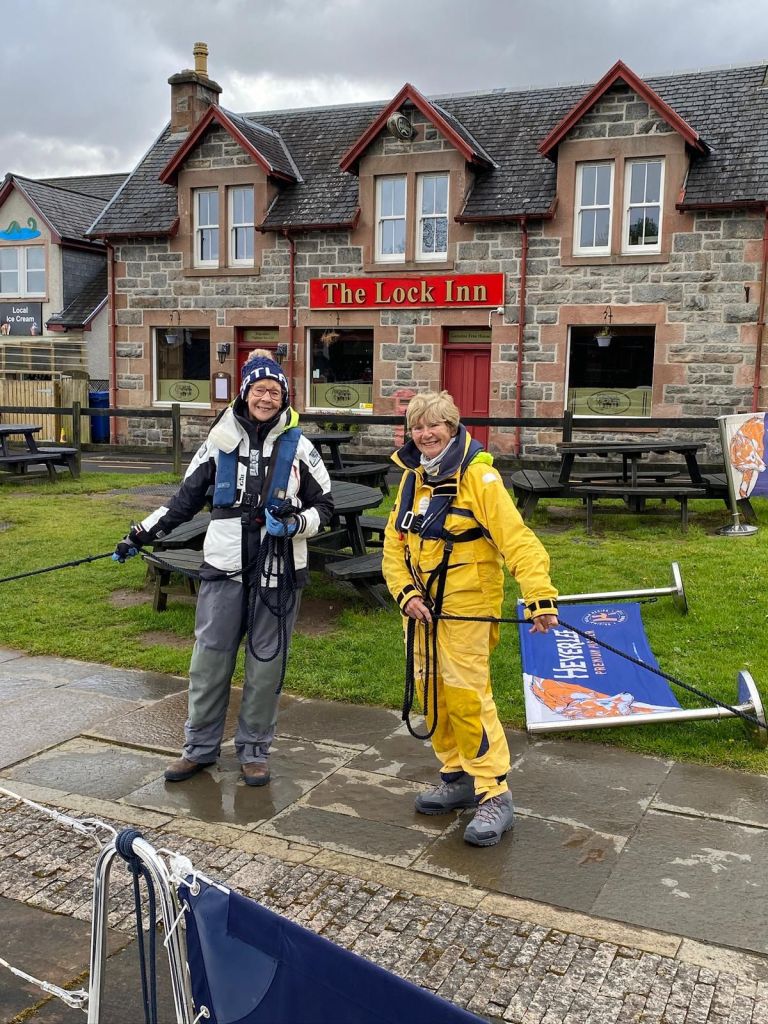
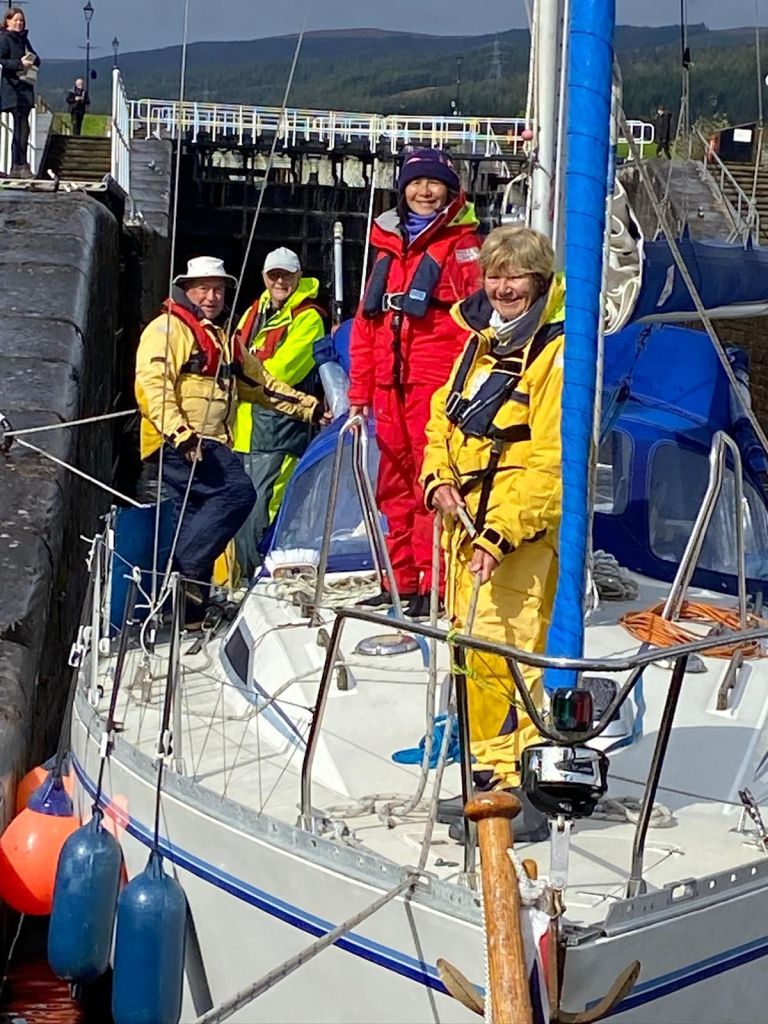
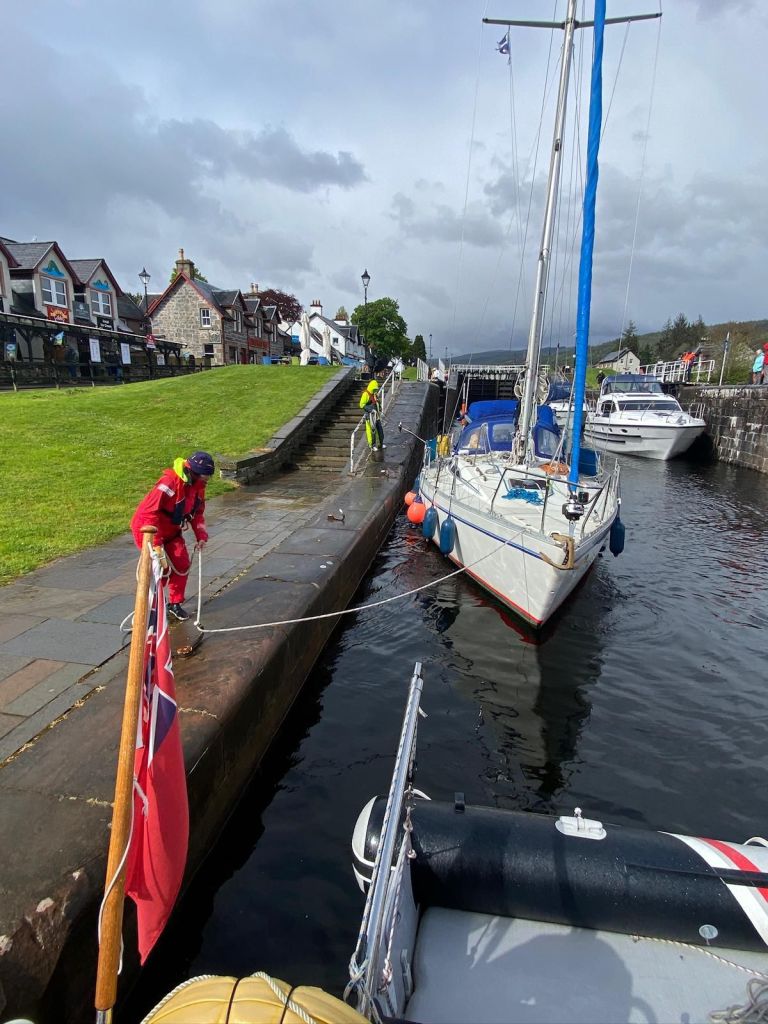
The day started a bit dampish as we slipped the lines and began the descent of the 5 lock flight to Loch Ness . Once again we were in the company of Ian and Maureen on Andiamo. As we passed the Lock Inn, three of us (OK…Ian, John and James) were reminded that the beer and whisky went down really well, and that this morning we feel slightly less than our best…we dont get much sympathy…
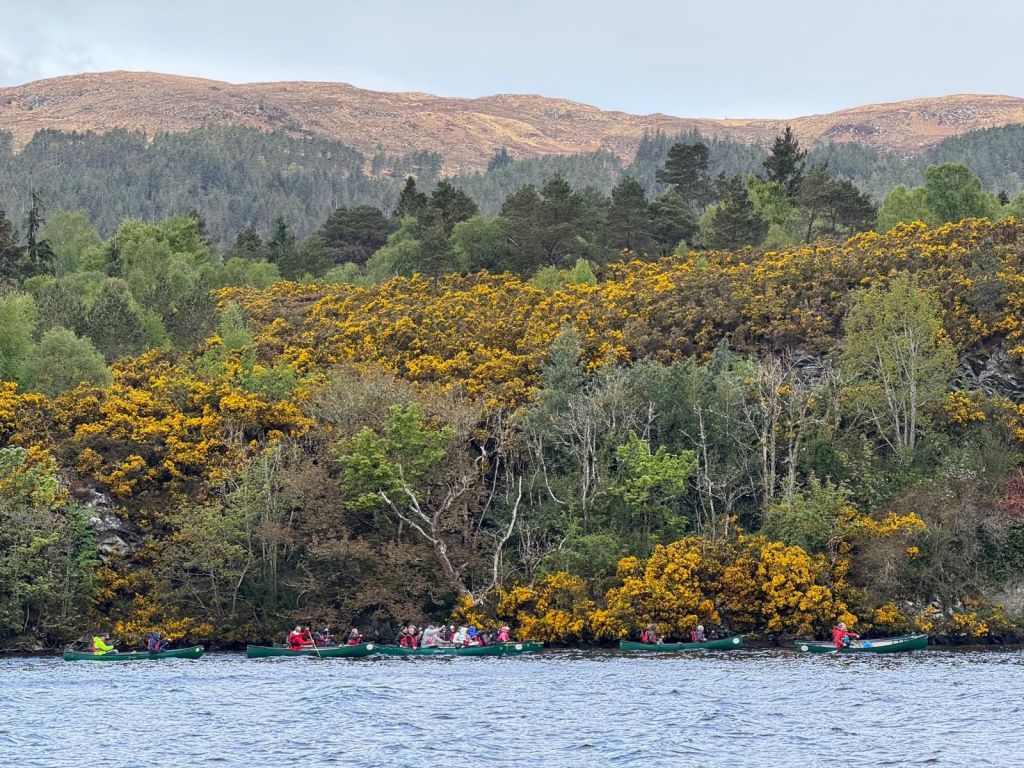
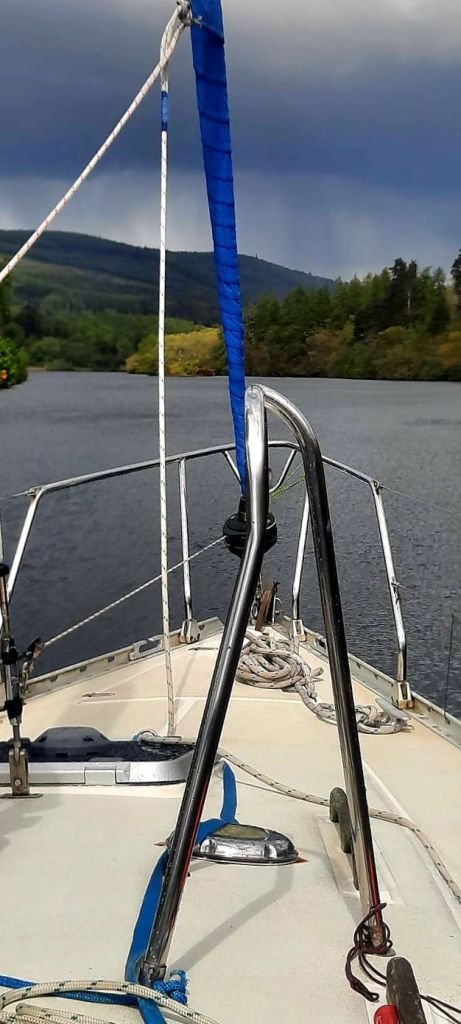
Through the swing bridge and Loch Ness opens out into a wide and deep stretch of straight water. The wind was directly on the nose (of course), and at times, sent sheets of water barrelling down the loch. We kept the cockpit cover up and at least kept dry through the worst of the squalls…
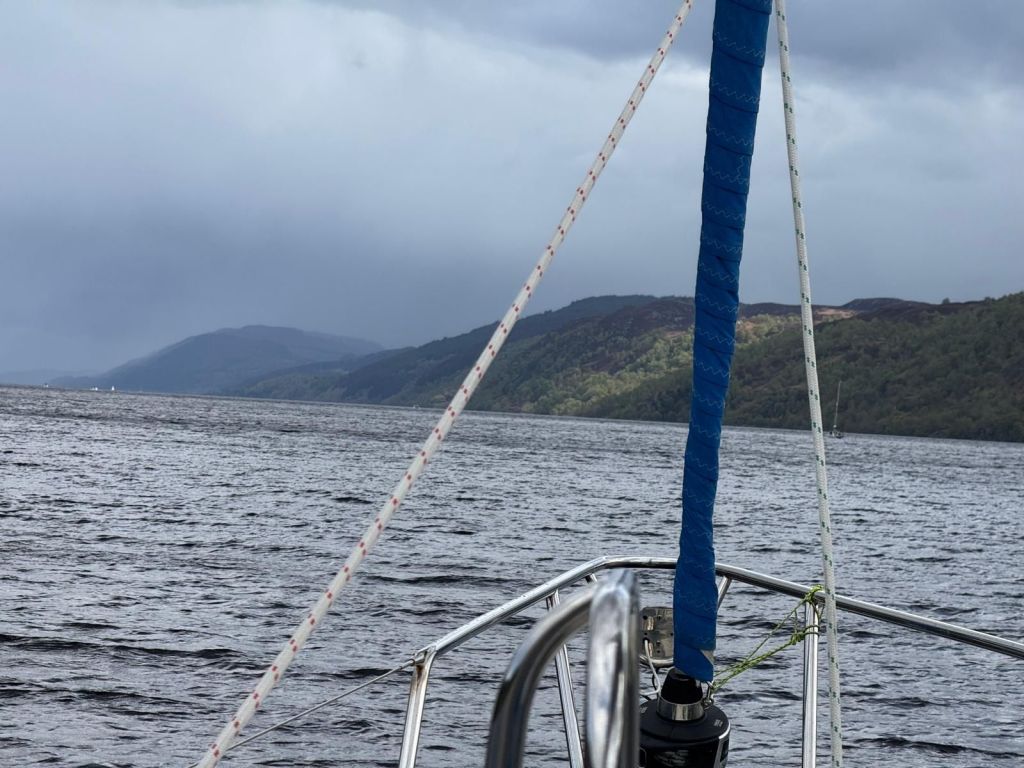
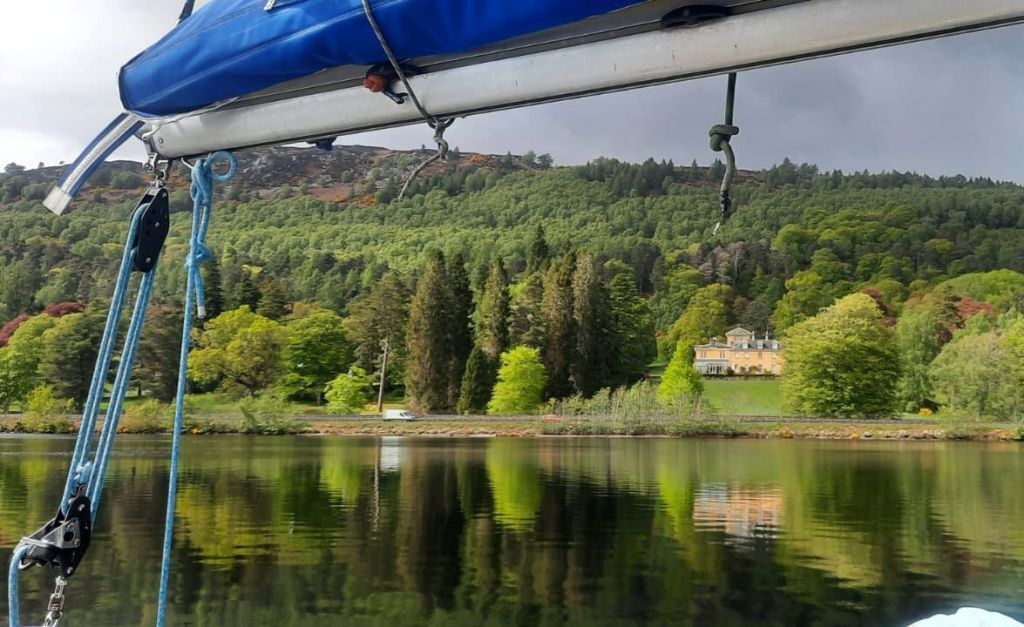
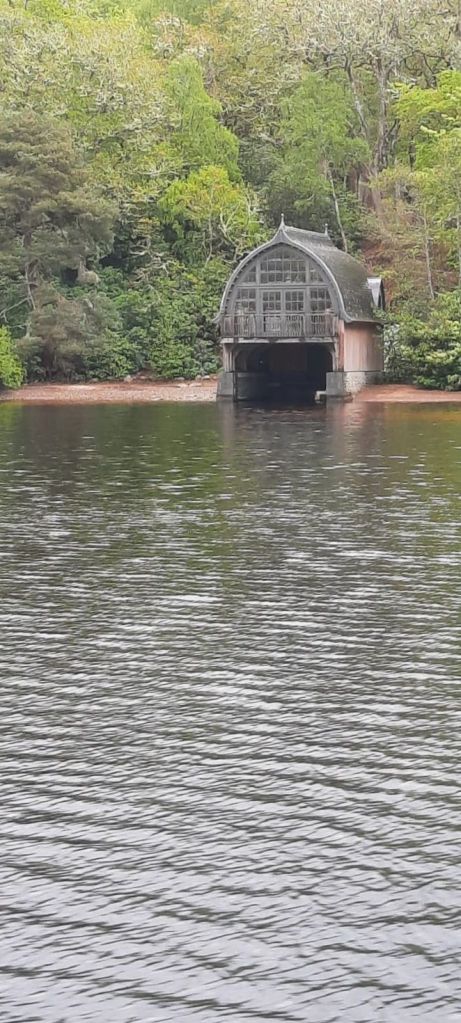
The Loch is around 20 miles long, so we settled in for a 3 to 4 hour passage. From time to time the rain stopped and the Loch teased us with glimpses of beauty and colour in the sunlight…
At its northern end, Loch Ness becomes narrow and changes into Loch Dochfour. Its just like cruising up a river. The wind has died, the sun toys around with us…
…and as we see more excursion boats taking trippers to see ‘Nessie’, we realise that our solitude and tranquility are slowly diminishing as we get closer to Inverness, now only a few miles away.
Dochgarroch is busy, but the two boats manage to find some berths above the lock. This is something of a tourist hotspot as the departure point for boat trips to Loch Ness. The cafe is nice, but the gift shop most definitely knows its tourist market and charges accordingly. Whisky has less of an attractuion tonight and we’re all tucked up and in bed before 10pm…so much for a rock and roll lifestyle…
By the time we made our way back across the water to the boat last night, the weather had already decided to give us a break. The gale that accompanied our arrival had eased considerably, still breezy, still a little lively in the dinghy, but nothing like the conditions of a few hours earlier. We returned aboard well fed, moderately windswept, and largely content…and went to bed without any great delay.
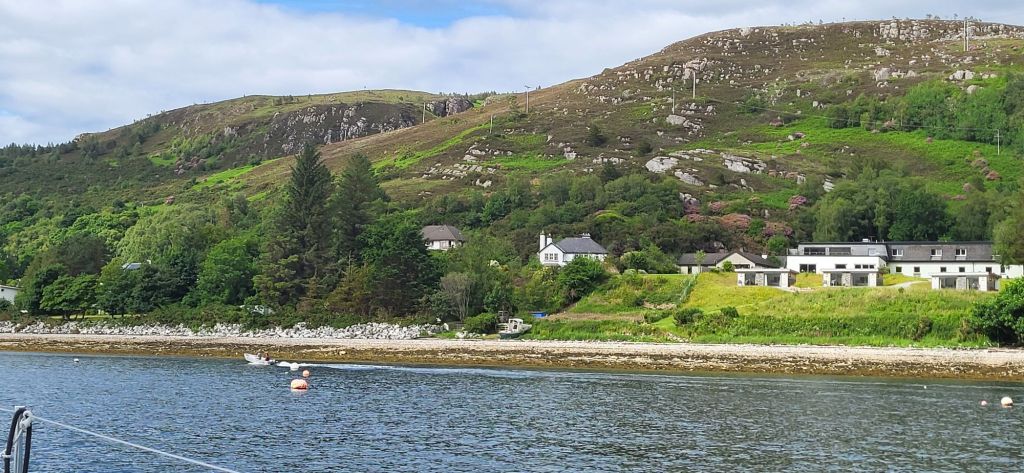
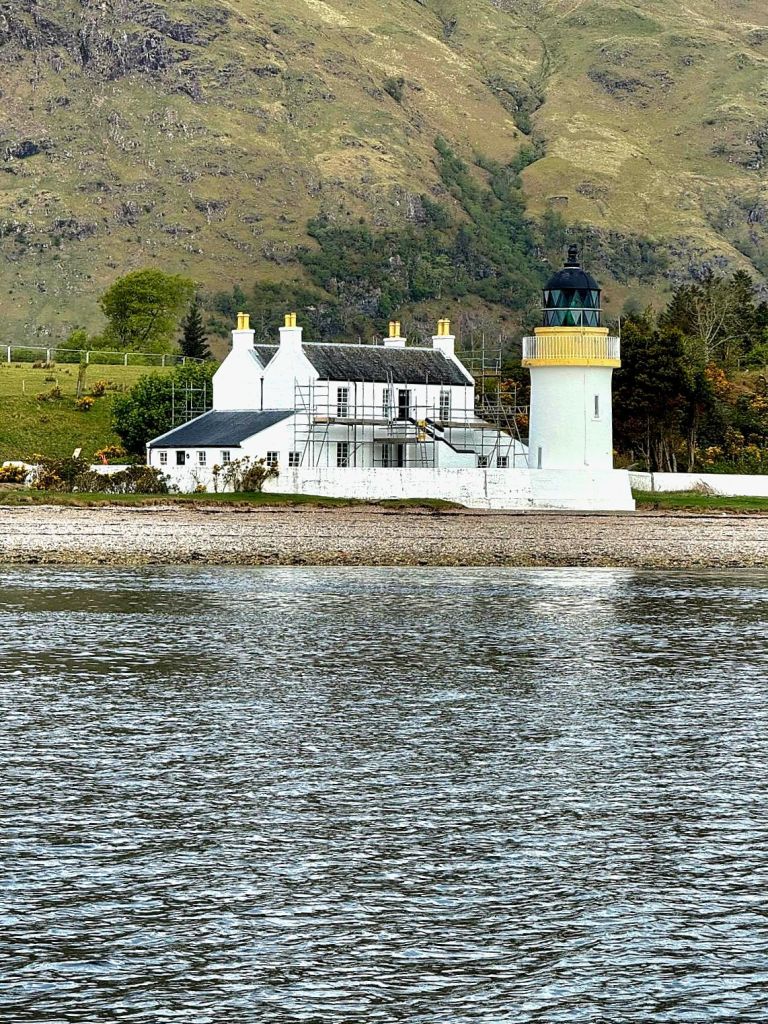
Morning brought a transformation… the loch was completely still, glassy and quiet, with perfect reflections of the mountains, the trees, and the little cottage opposite, in the waters around Heydays.
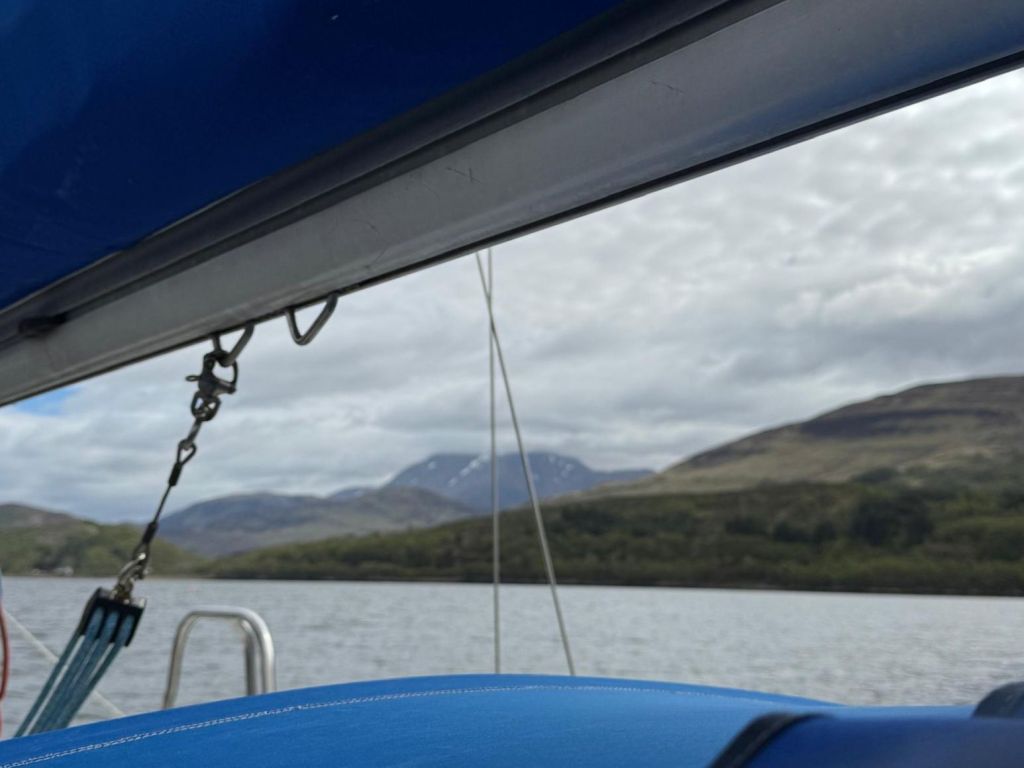
We had a schedule to keep, however. The narrows at Corran are a tidal pinch point midway up Loch Linnie, and this required us to pass through before the tide turned against us, so by eight o’clock we were underway, coffees in hand, gliding up Loch A Choire in conditions that bore absolutely no resemblance to yesterday’s arrival. We had hoped for a little wind as we turned out into Loch Linnie proper, but the loch had decided otherwise, and we motored on without complaint into what was, in fairness, a genuinely beautiful morning.
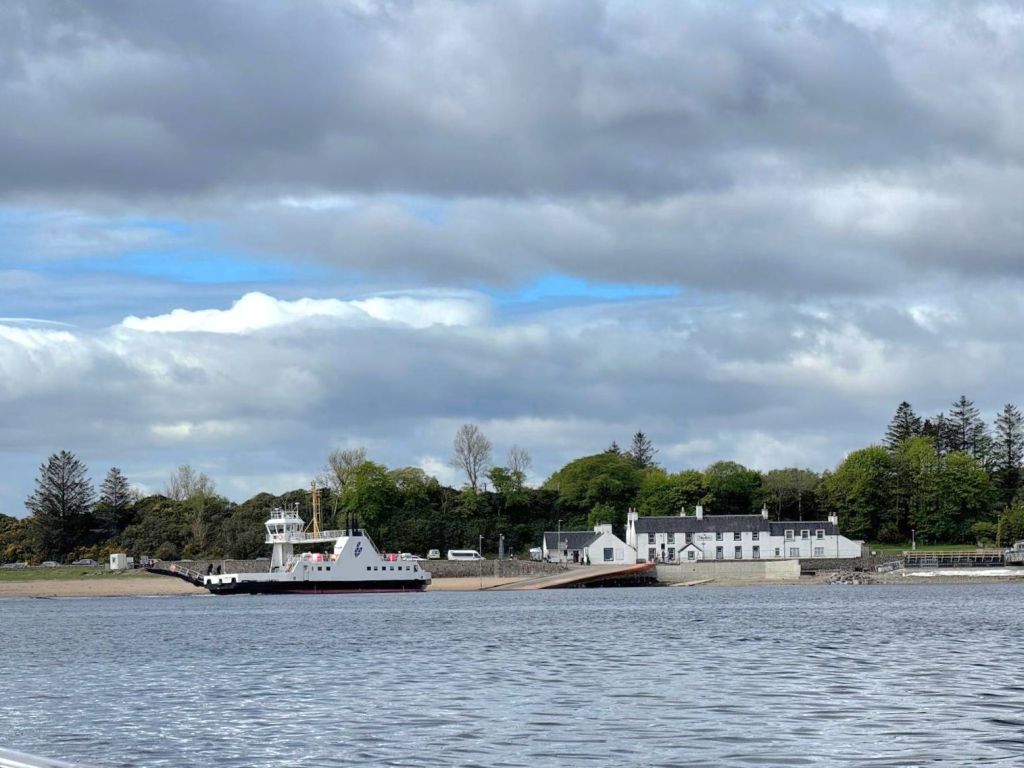
The narrows at Corran were quiet, save for a handful of motorcyclists waiting for the cable ferry on the far bank, and not much else. The Corran ferry skipper, we noted, was a more patient individual than his counterpart on the Studland crossing in Poole, where the approach with a yacht has an ambiguous quality…the ferry tending to depart at precisely the moment most inconvenient to all concerned. Here, he waited for us to pass before setting off, and we continued north with goodwill on all sides.
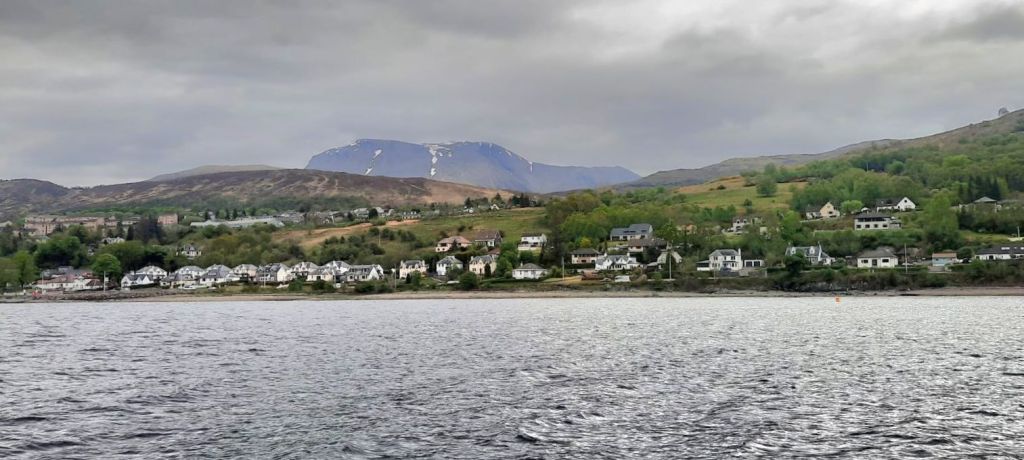
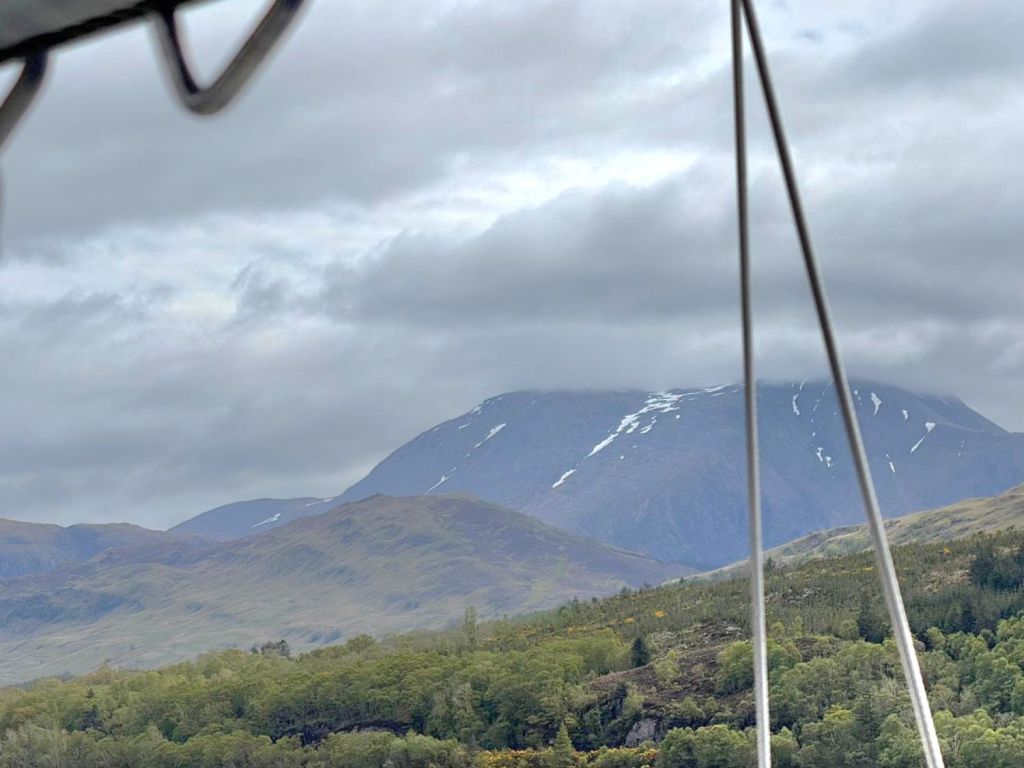
Loch Linnie narrows steadily toward its head, where Fort William sits on one shore, with Ben Nevis looming over…
…and the small town of Corpach on the other. Corpach is, in fact, the southern entrance to the Caledonian Canal, and we tied up at the community-run marina there — one of several such places in these waters, operated by local groups on something closer to goodwill and honesty boxes than the brisk commercial efficiency of larger marinas. Refreshingly so, even if refreshingly is doing some work in that sentence.
Formalities at the canal office were straightforward: forms, insurance details, facility keys, and a nine o’clock lock slot booked for the following morning. A seven-day canal pass, at £277 for the boat, gives ample time for the transit, most crews manage it in three or four days, but we intend to take our time and see something of the country on the way. Conveniently, seven days also brings us neatly to the point at which the four of us are planning to leave Heydays for a fortnight and head home, so the timing works rather well.
There is a small café beside the sea lock. We went in for coffee. This, as so often happens, evolved into fish and chips, loaded fries with haggis, and an excellent bowl of tomato soup, at which point we conceded that this constituted lunch and that, it being Sunday, a proper lunch was entirely in order.
We made our way back to the boat in the early afternoon moving, it must be said, with the slow plod of people who have eaten well. The rain arrived shortly after, and the mist settled low over the surrounding hills. The mountains are not quite the same in cloud as they are in sun, but they remain grand, and impressive, and it remains a privilege to be here, whatever the weather is doing.