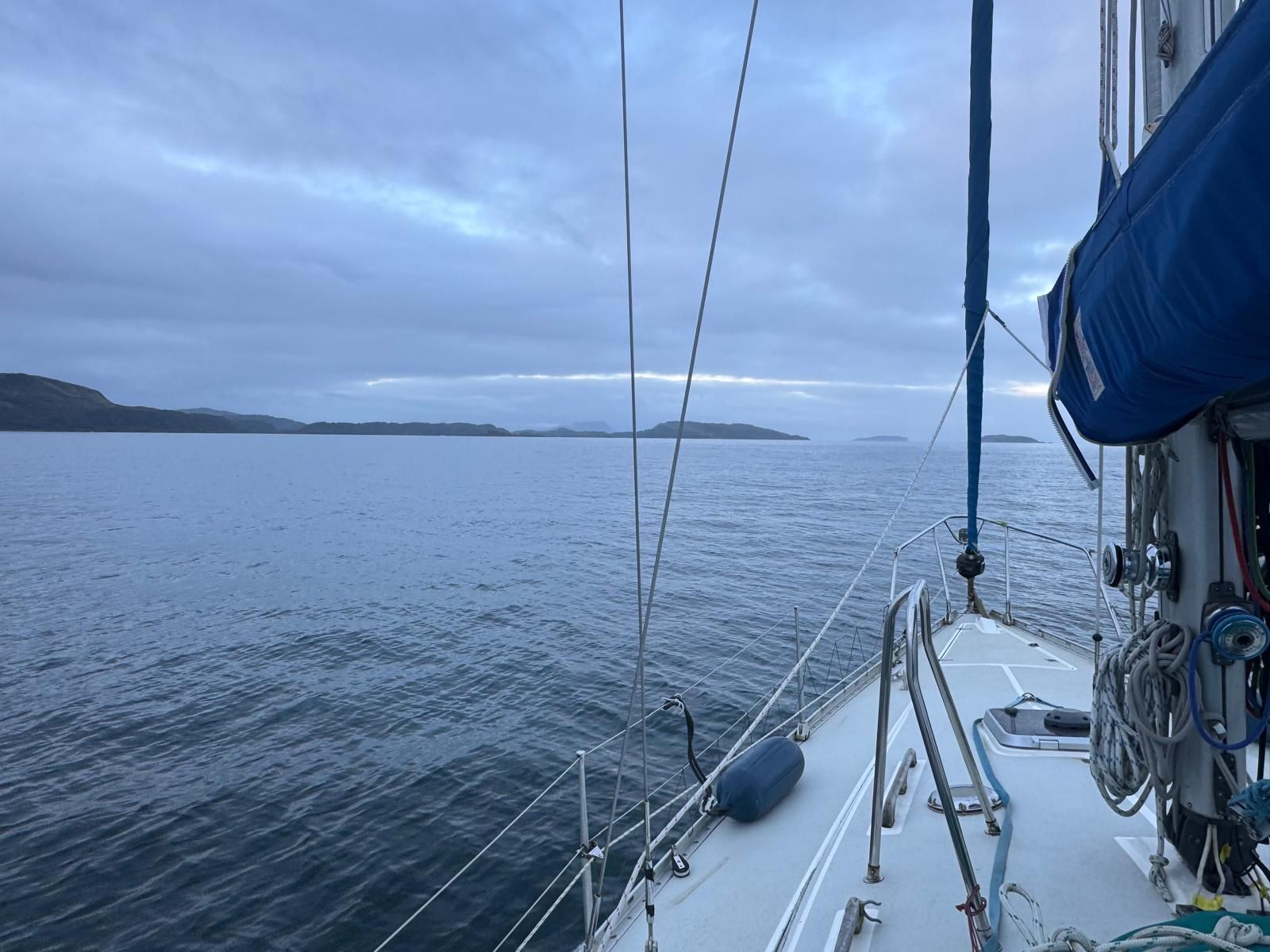
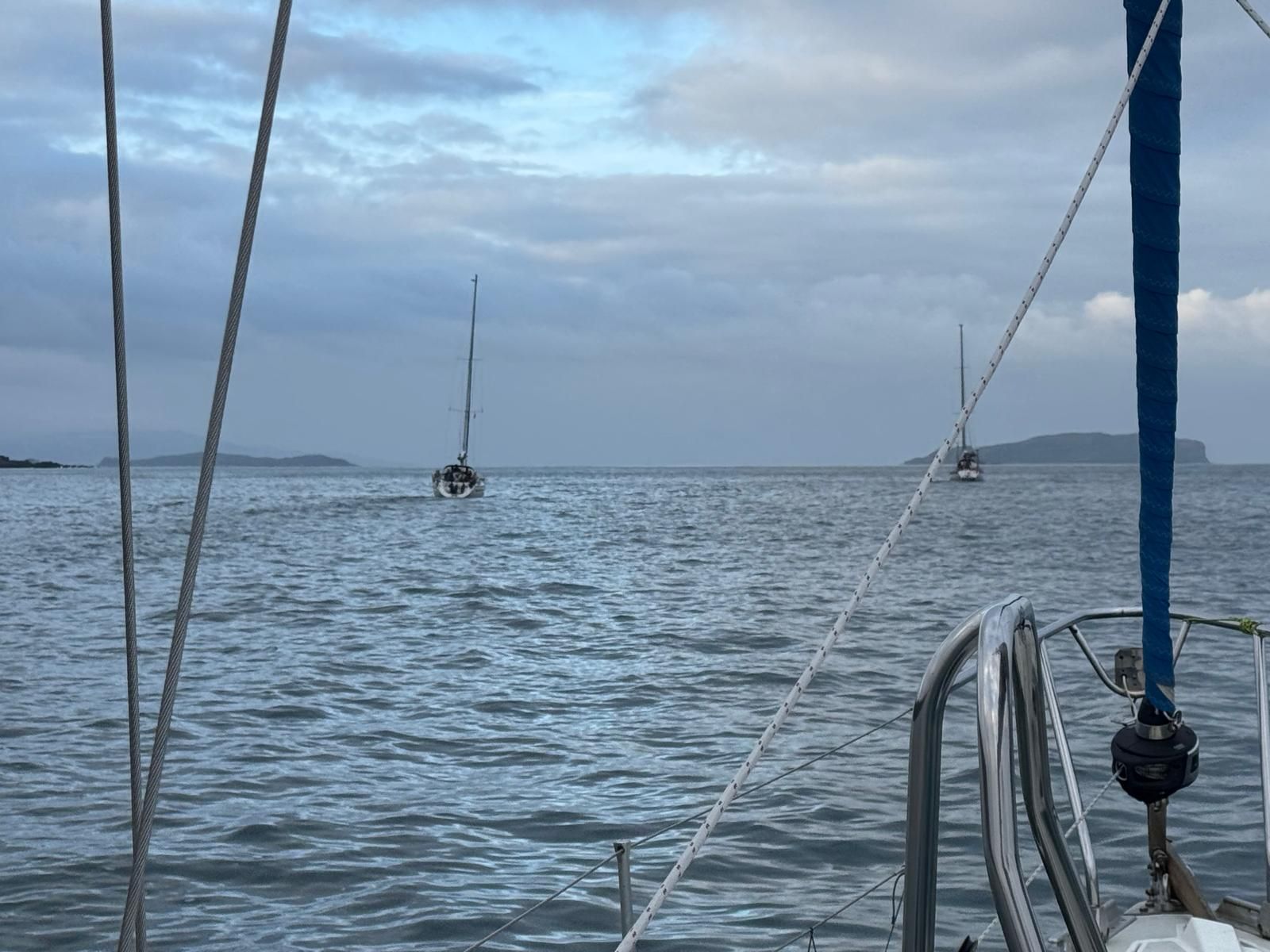
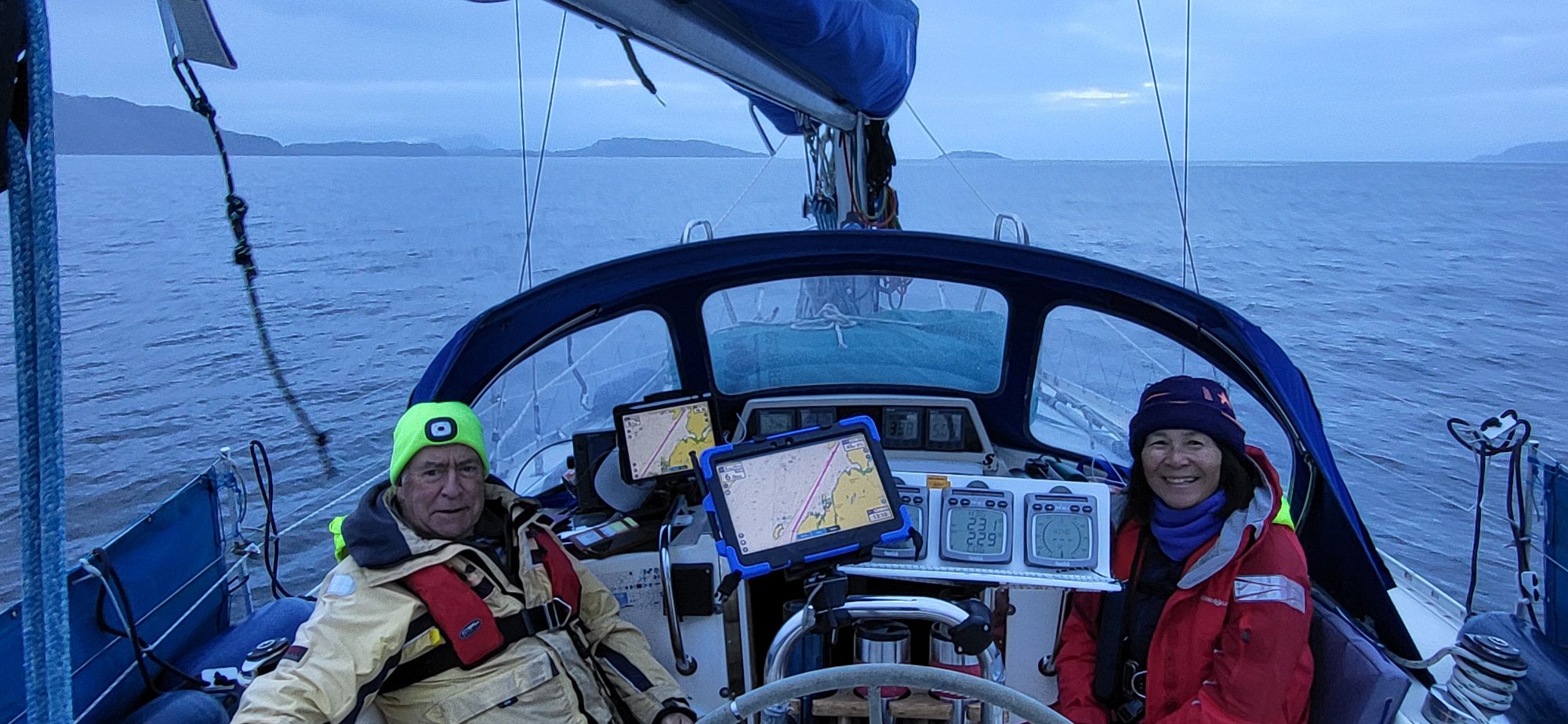
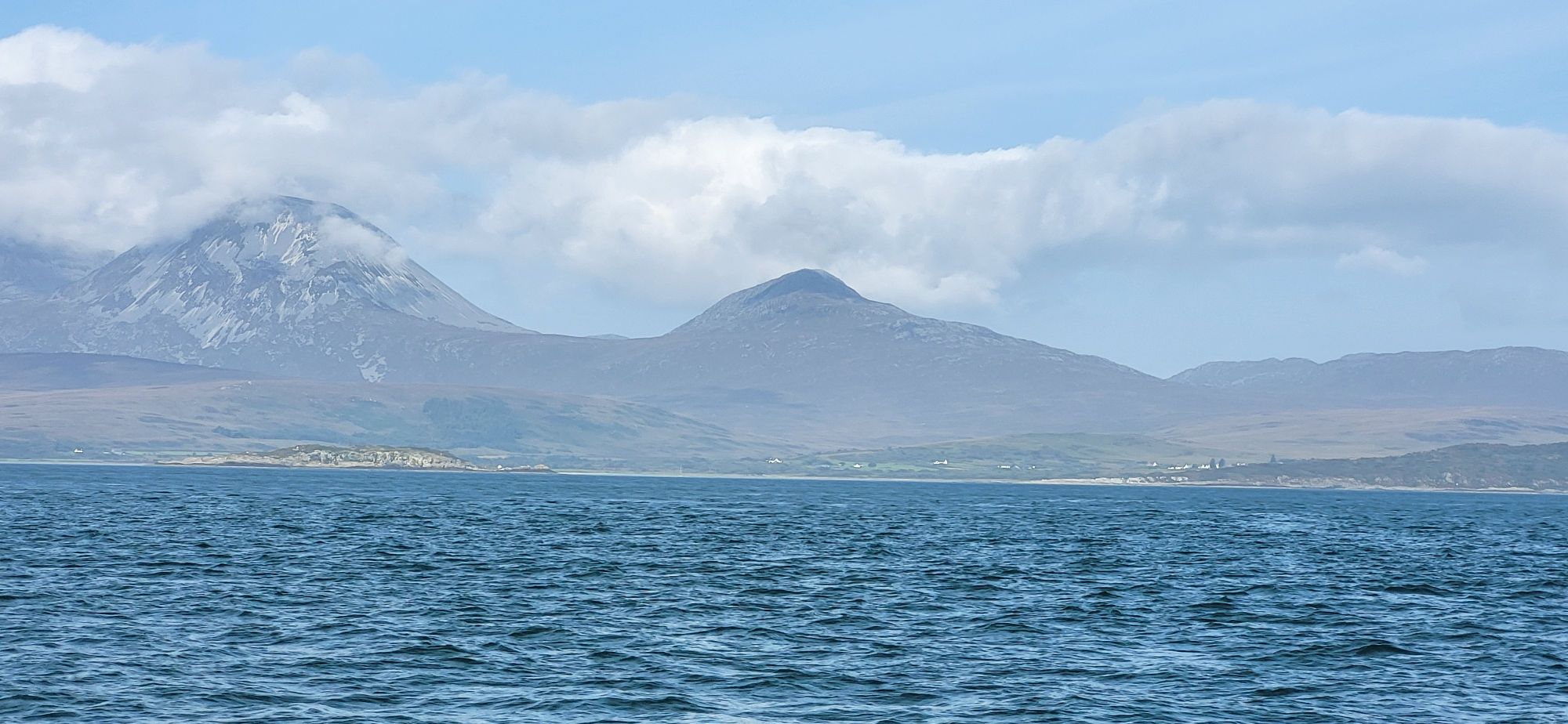
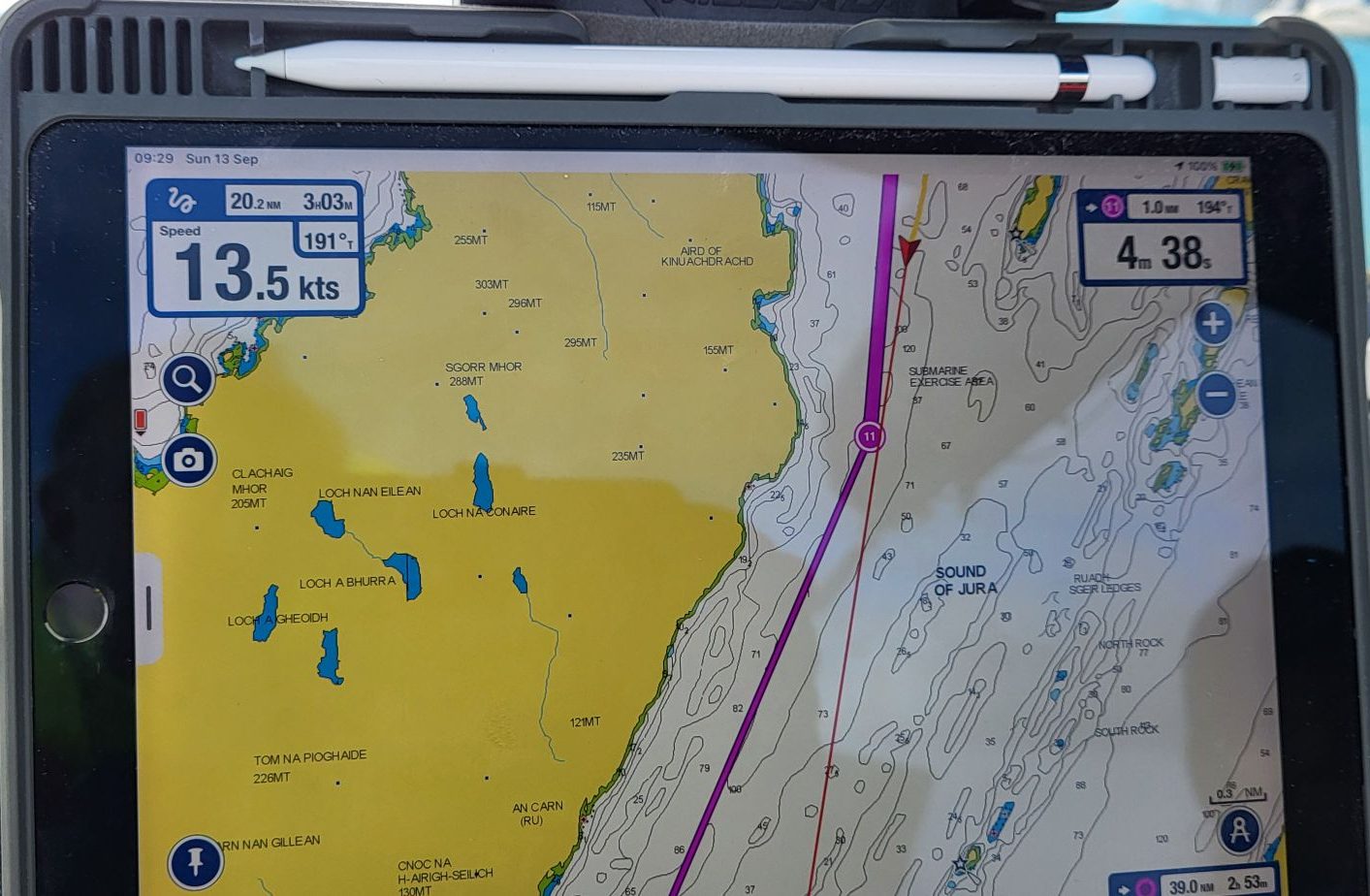
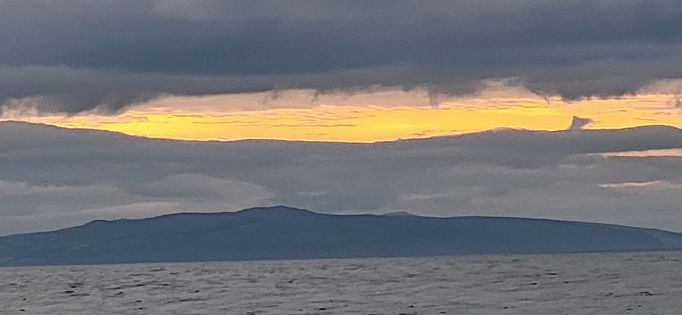
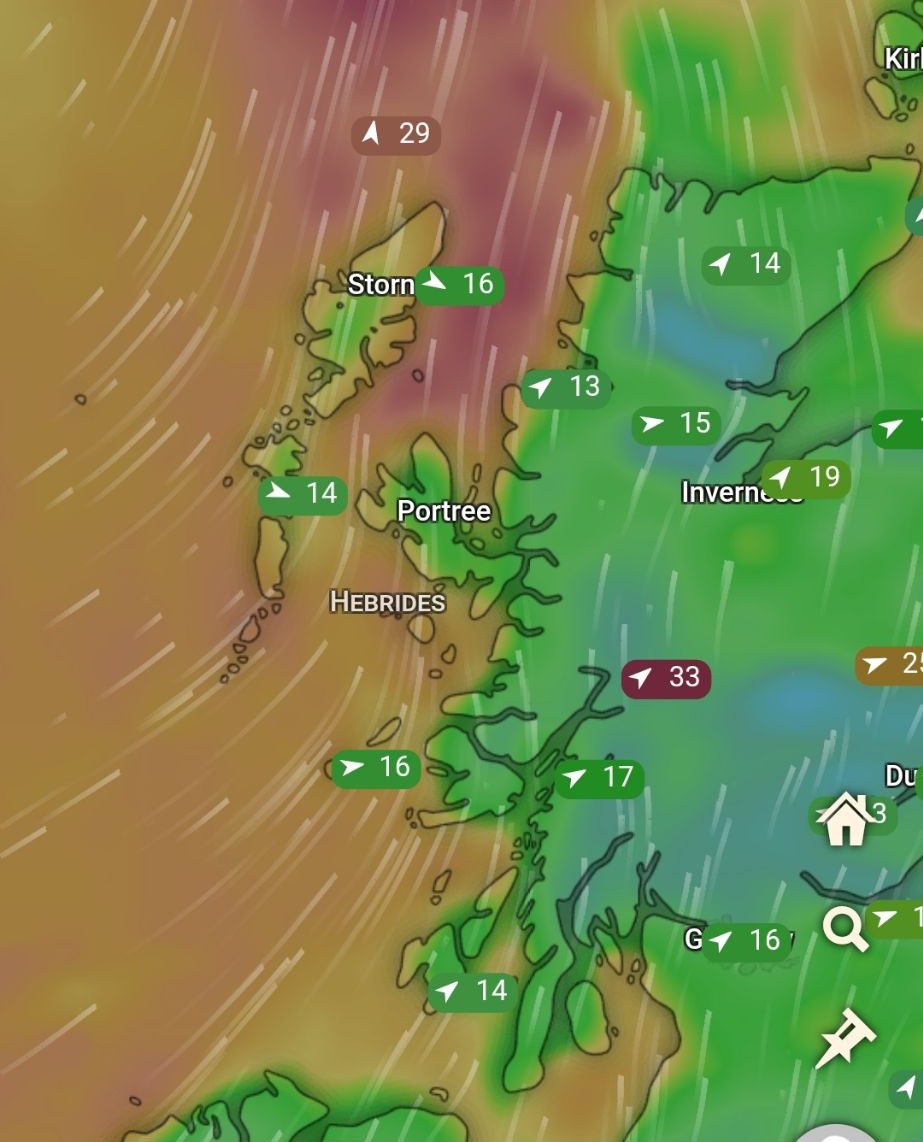
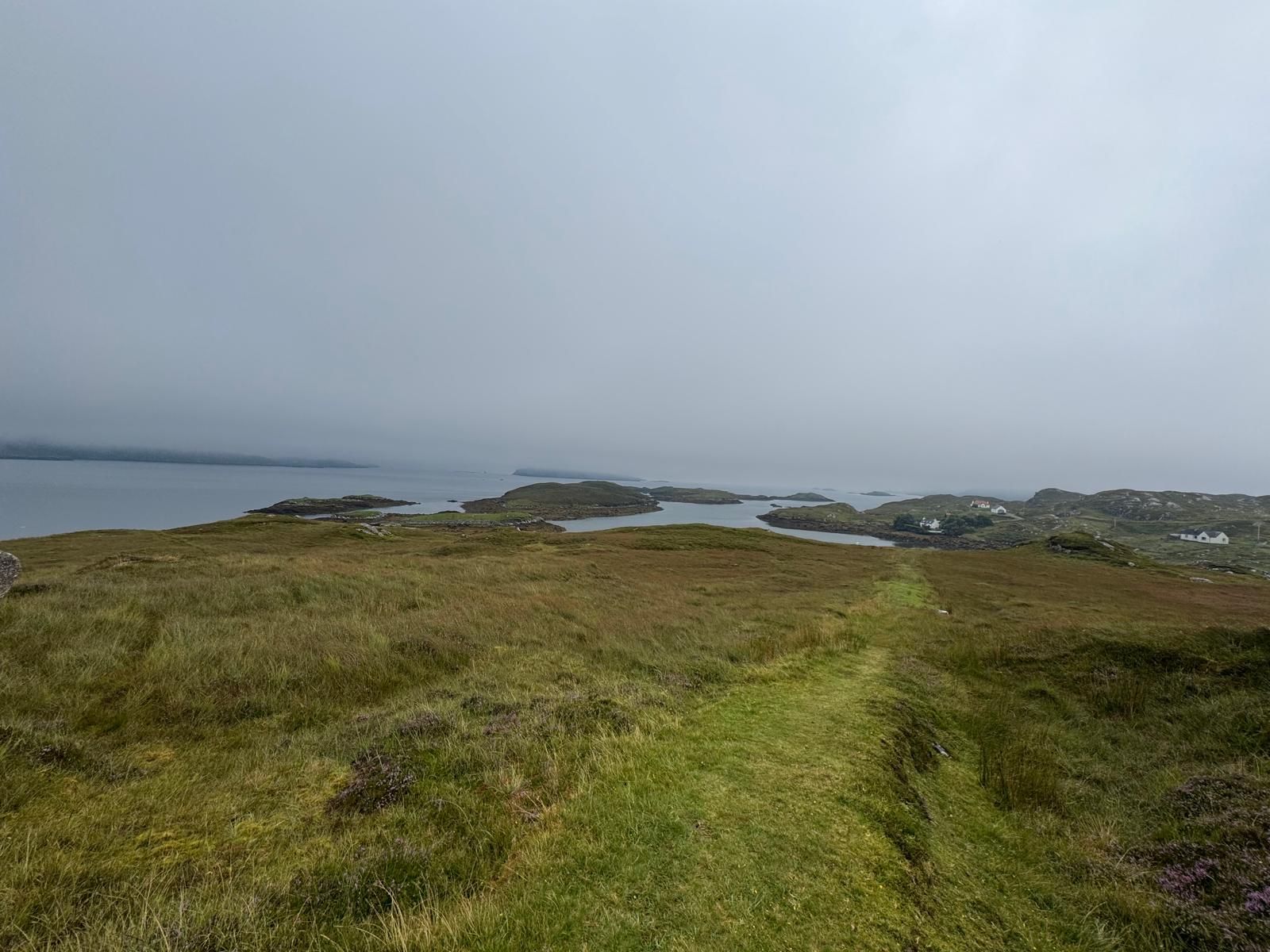
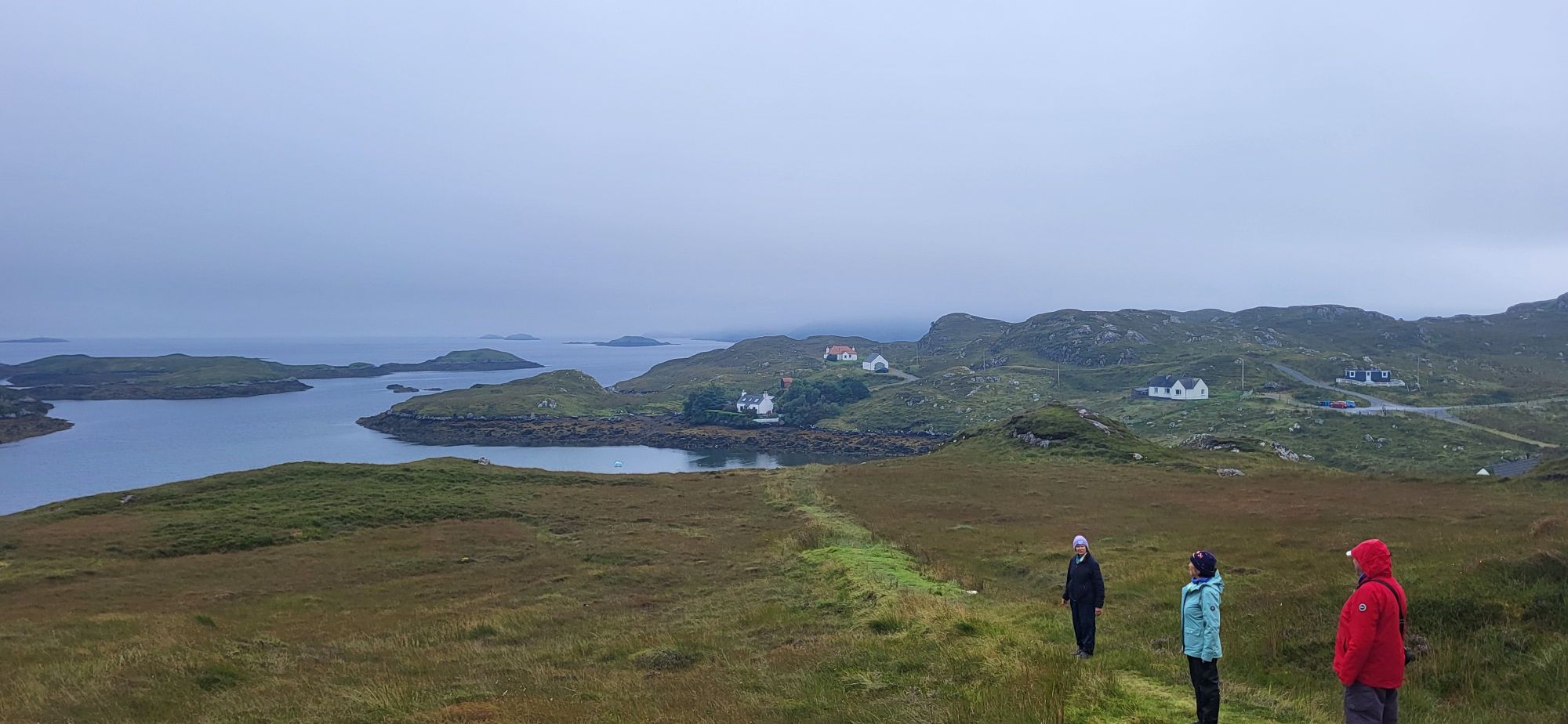
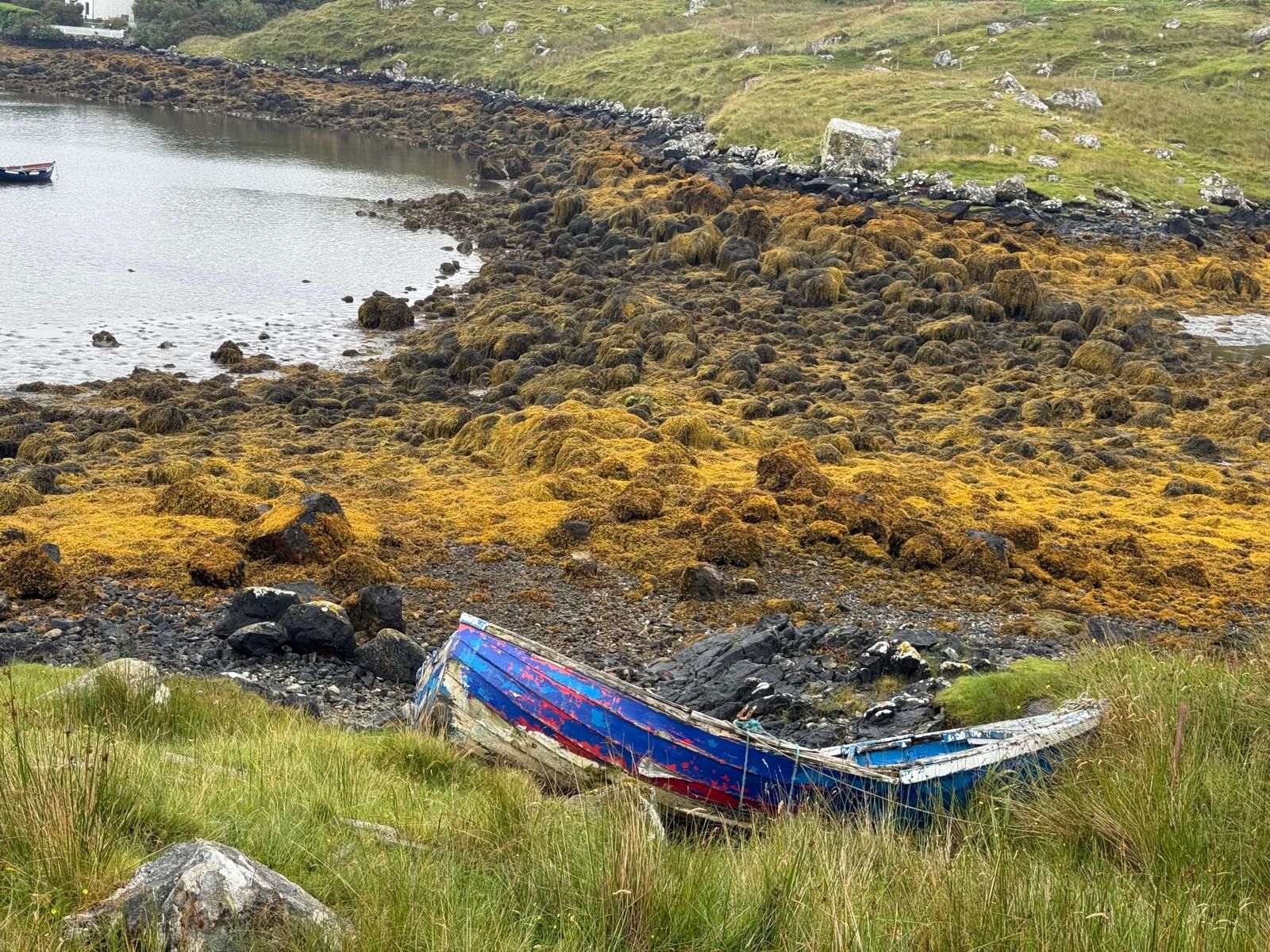
The weather window looks promising, a few days of settled southerlies or south-westerlies across the Minch, which is about as good as it gets up here.
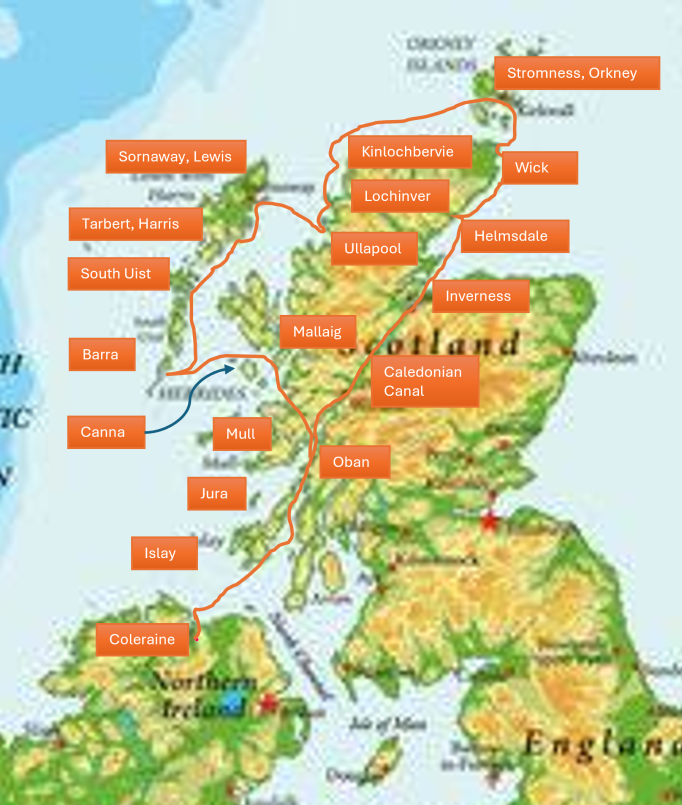
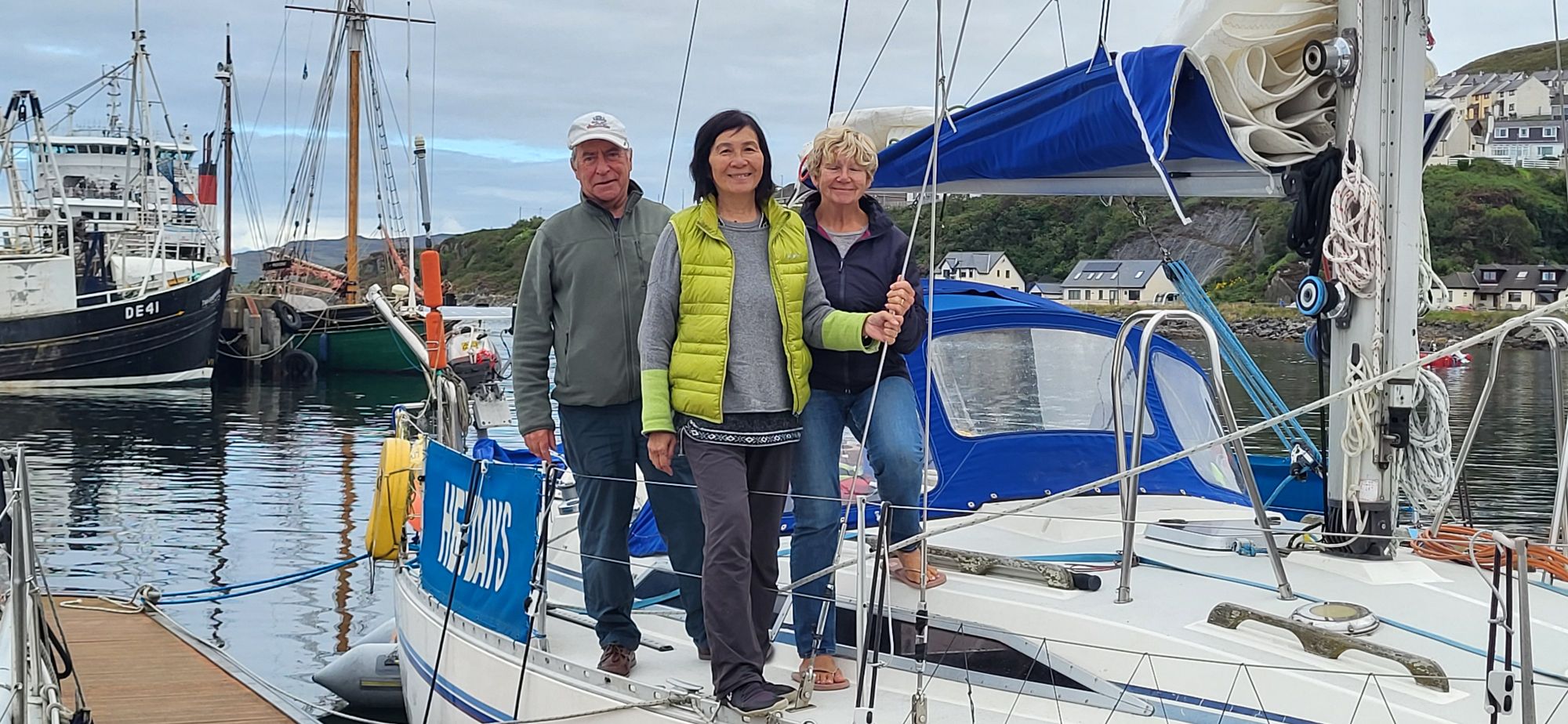
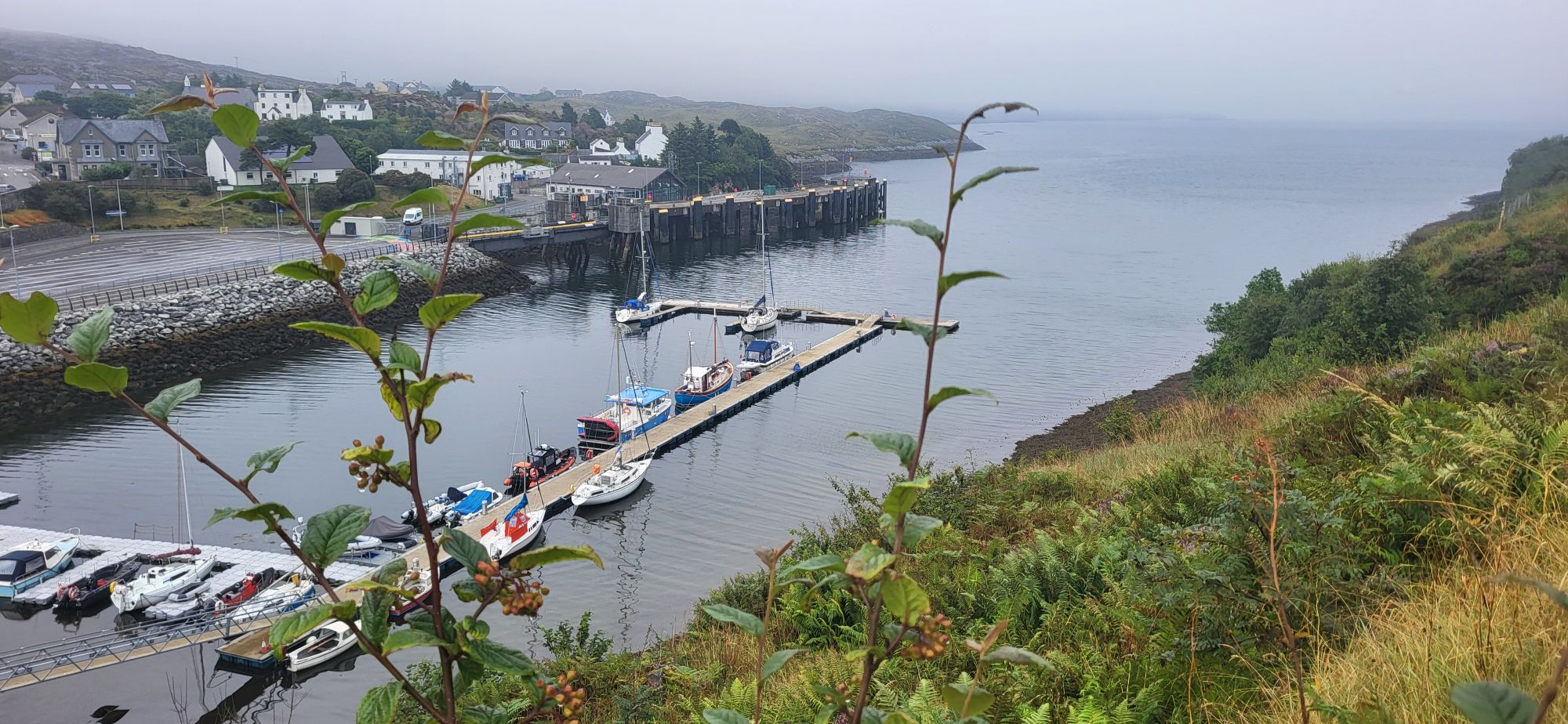
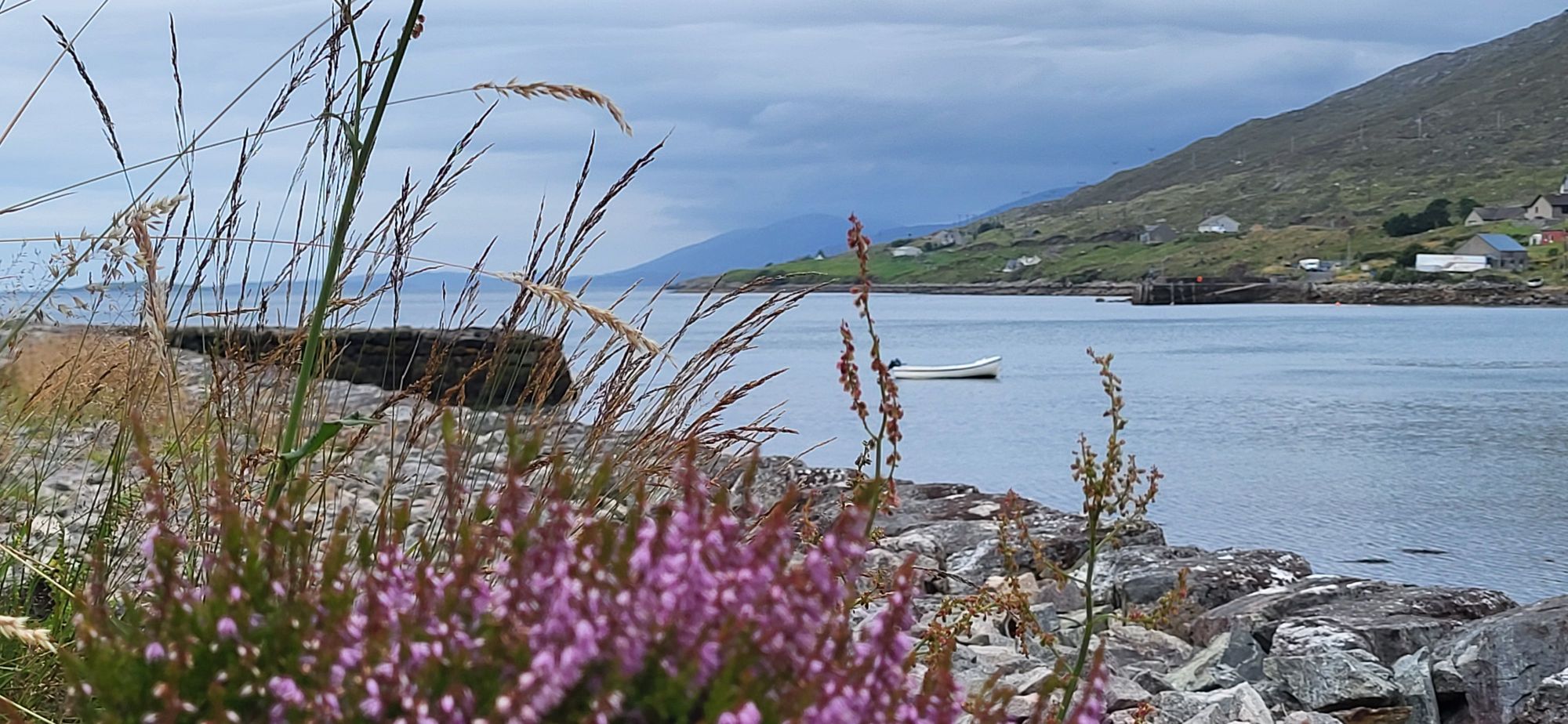
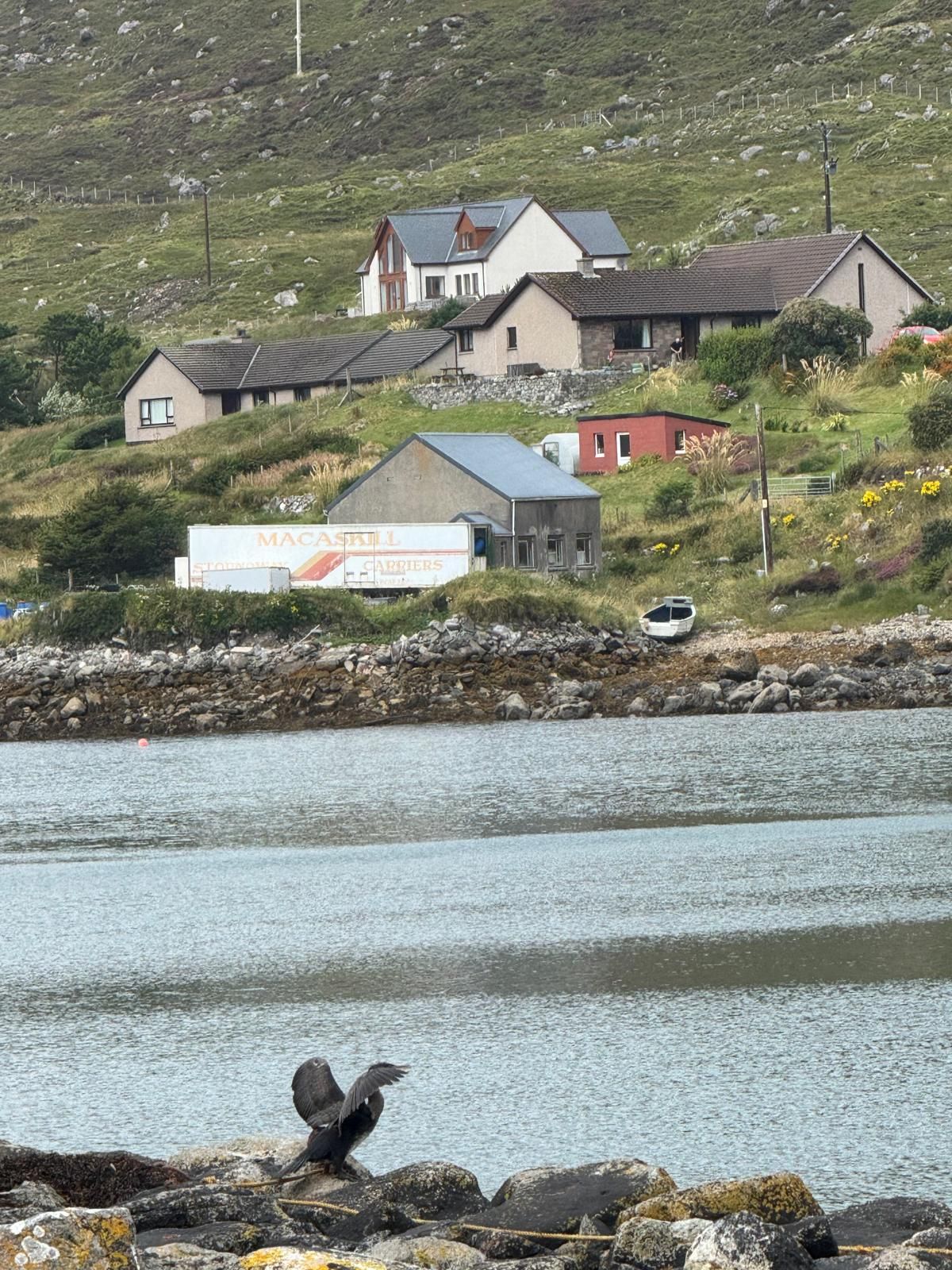
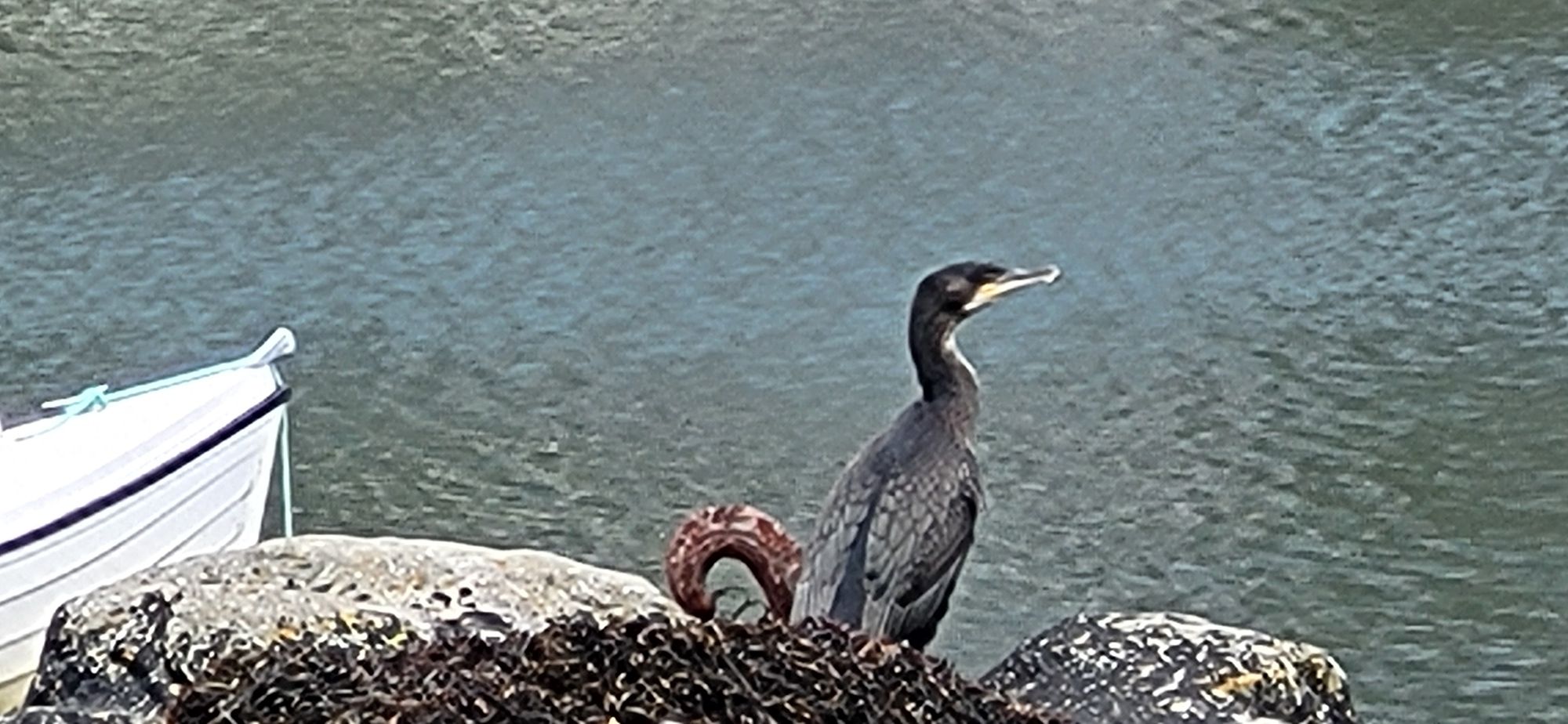
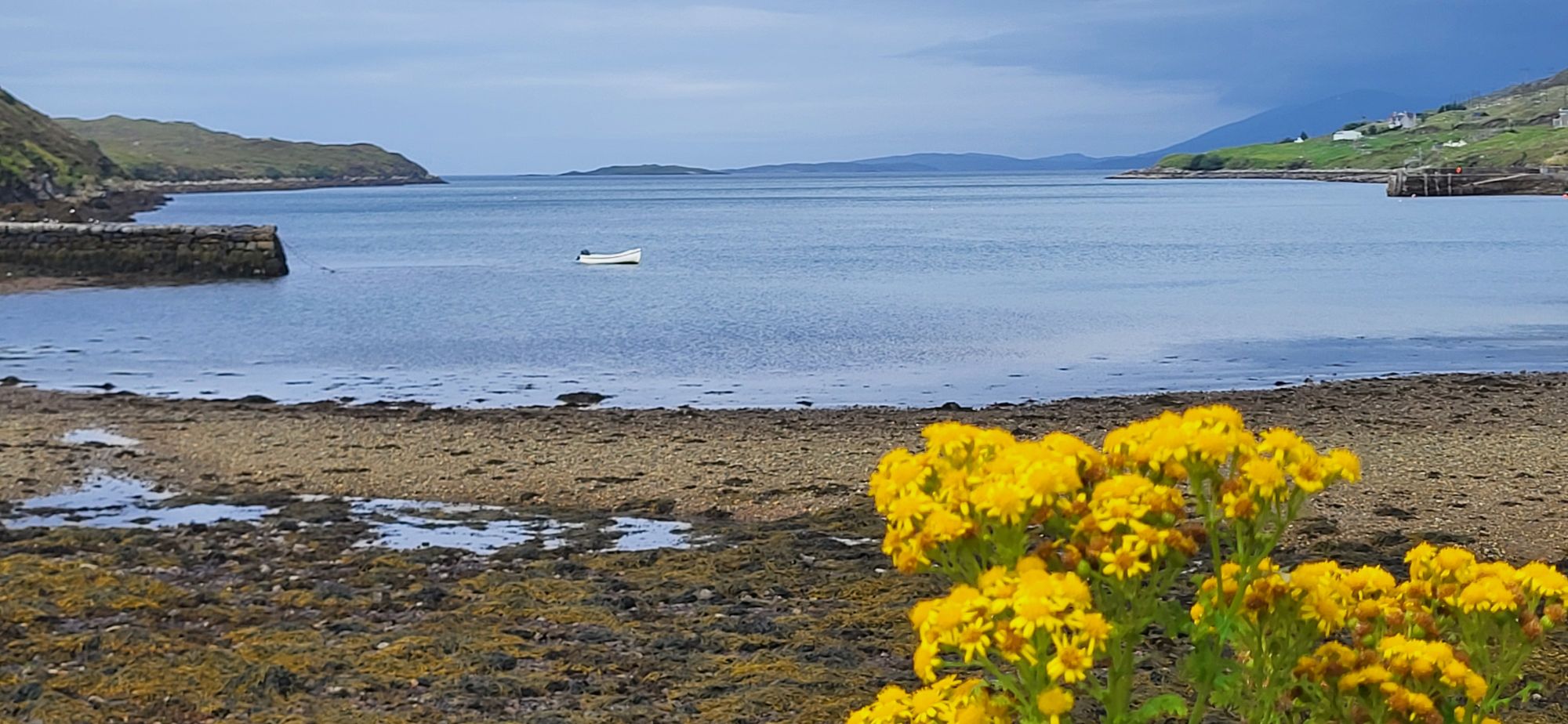
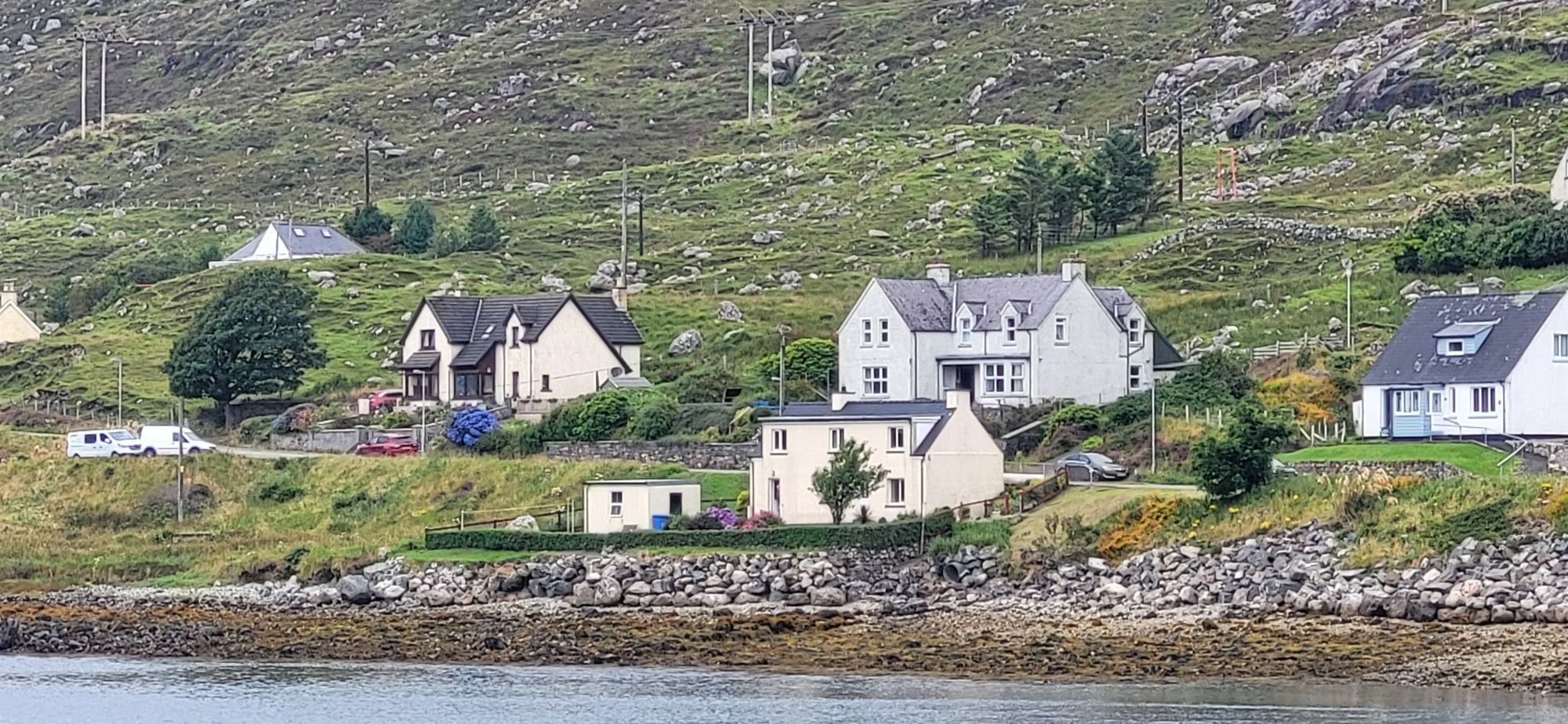
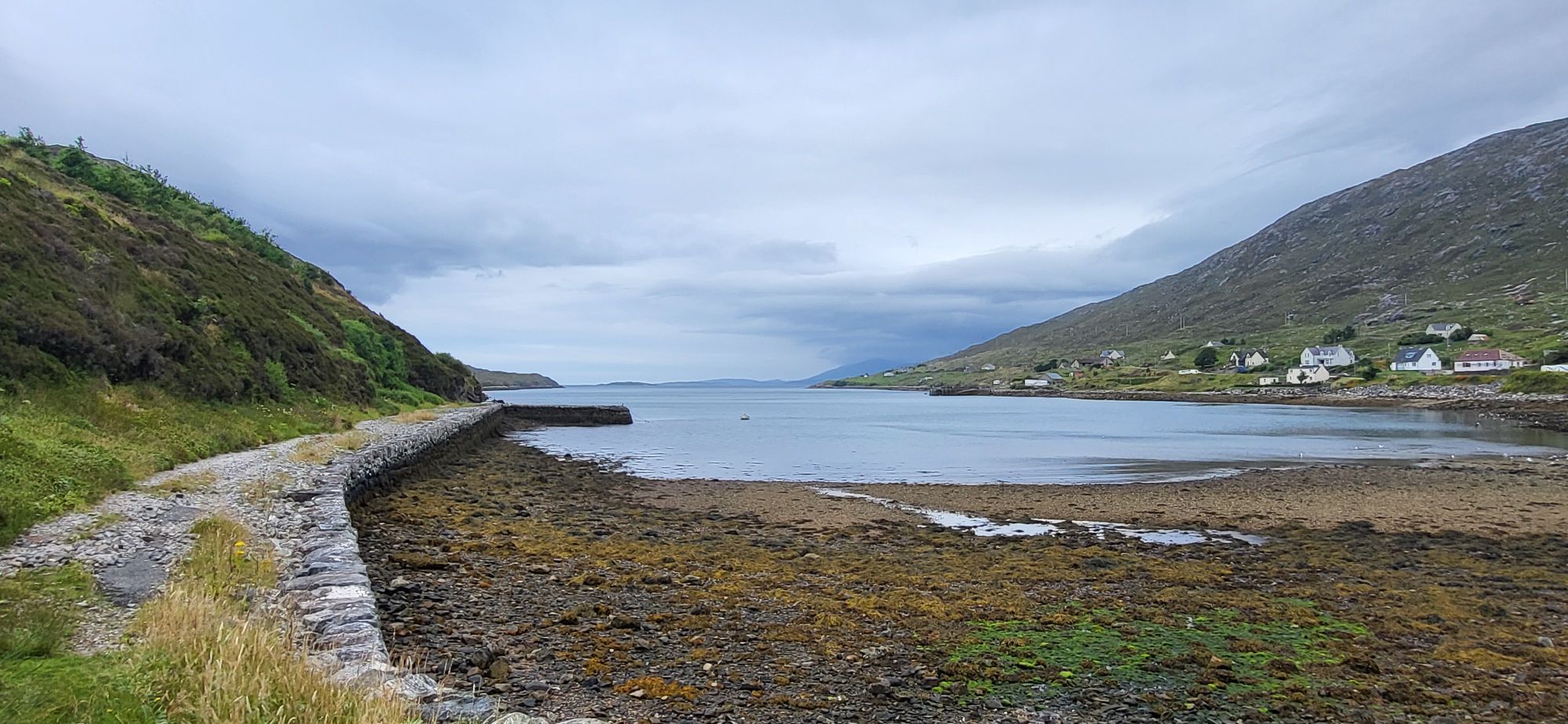
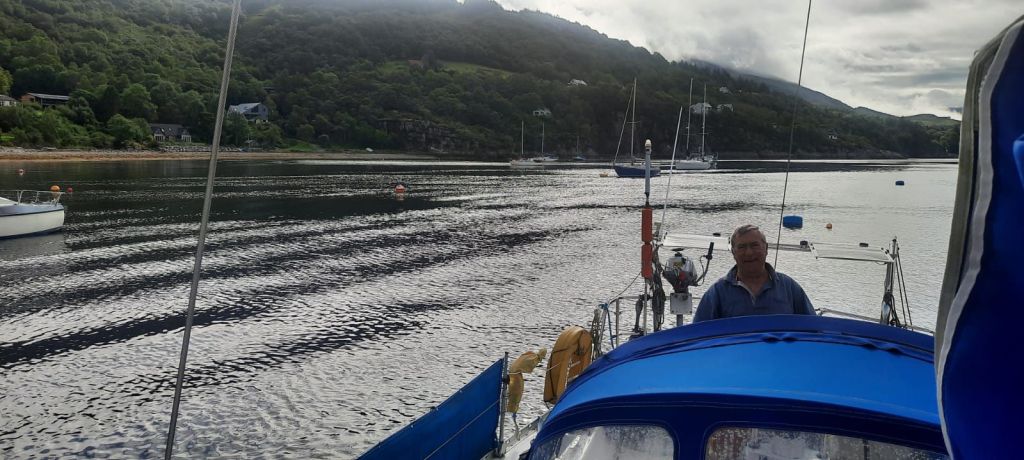
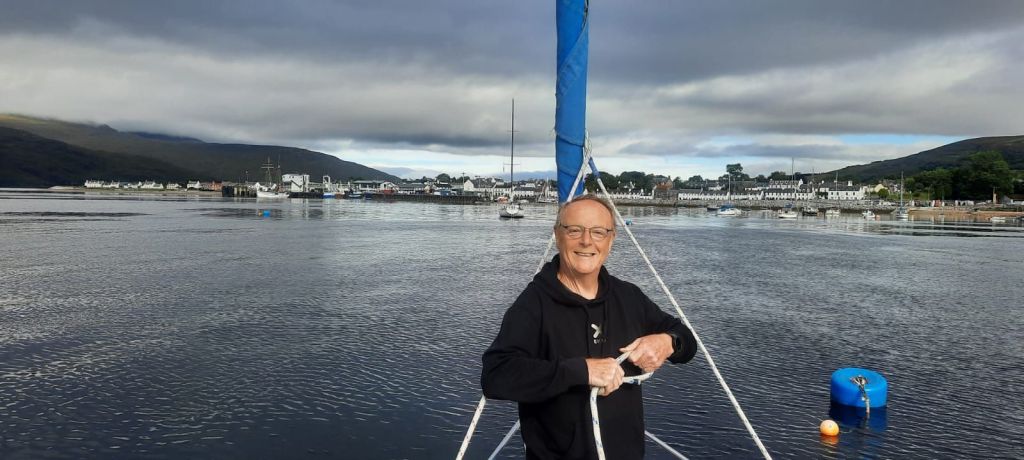
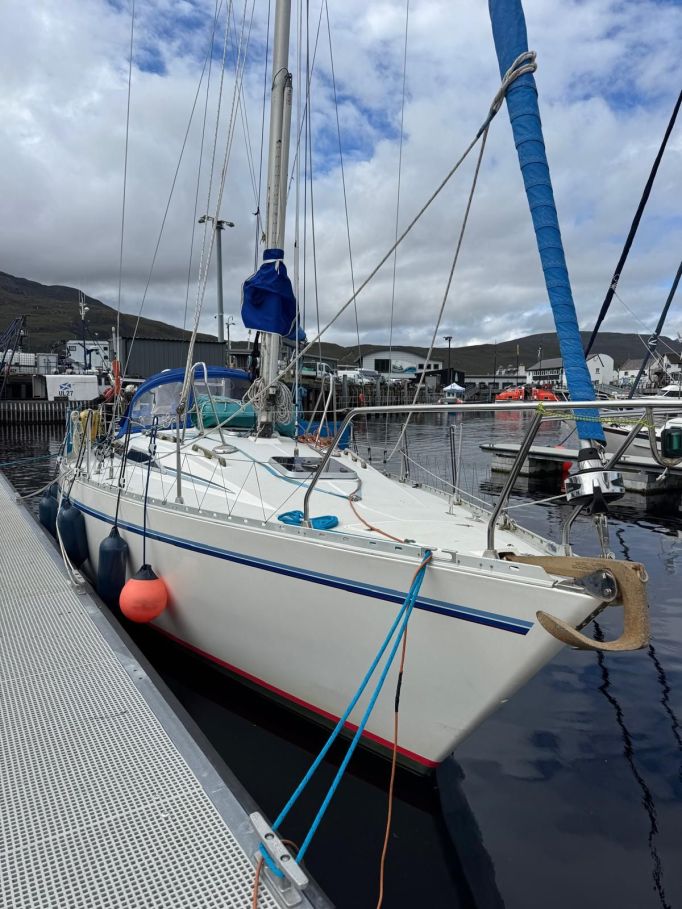
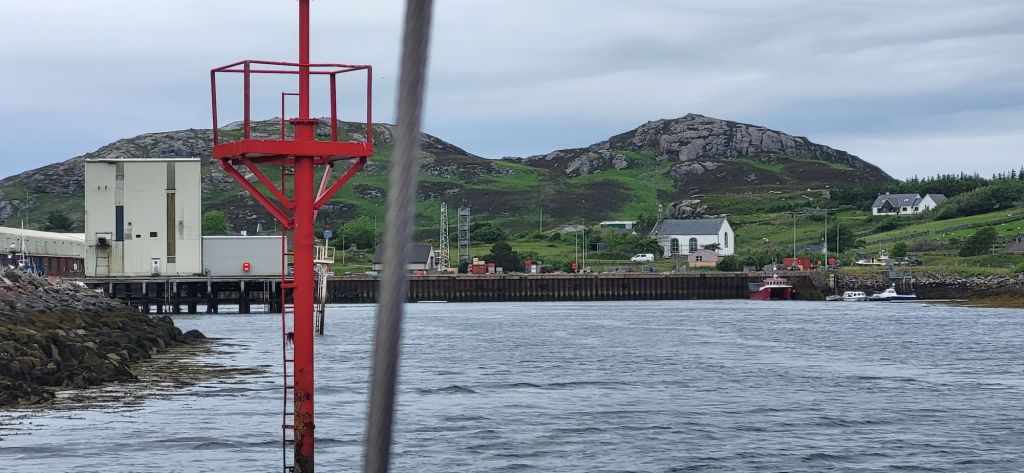
Kinlochbervie is a gem, but a small one. The hills are calling, and under other circumstances we’d answer, but the calendar has us in its unforgiving grip, and we decide to press on to Lochinver, a short hop really, from Ullapool, where Heydays will hopefully sit quietly at rest while we scoot south for July.
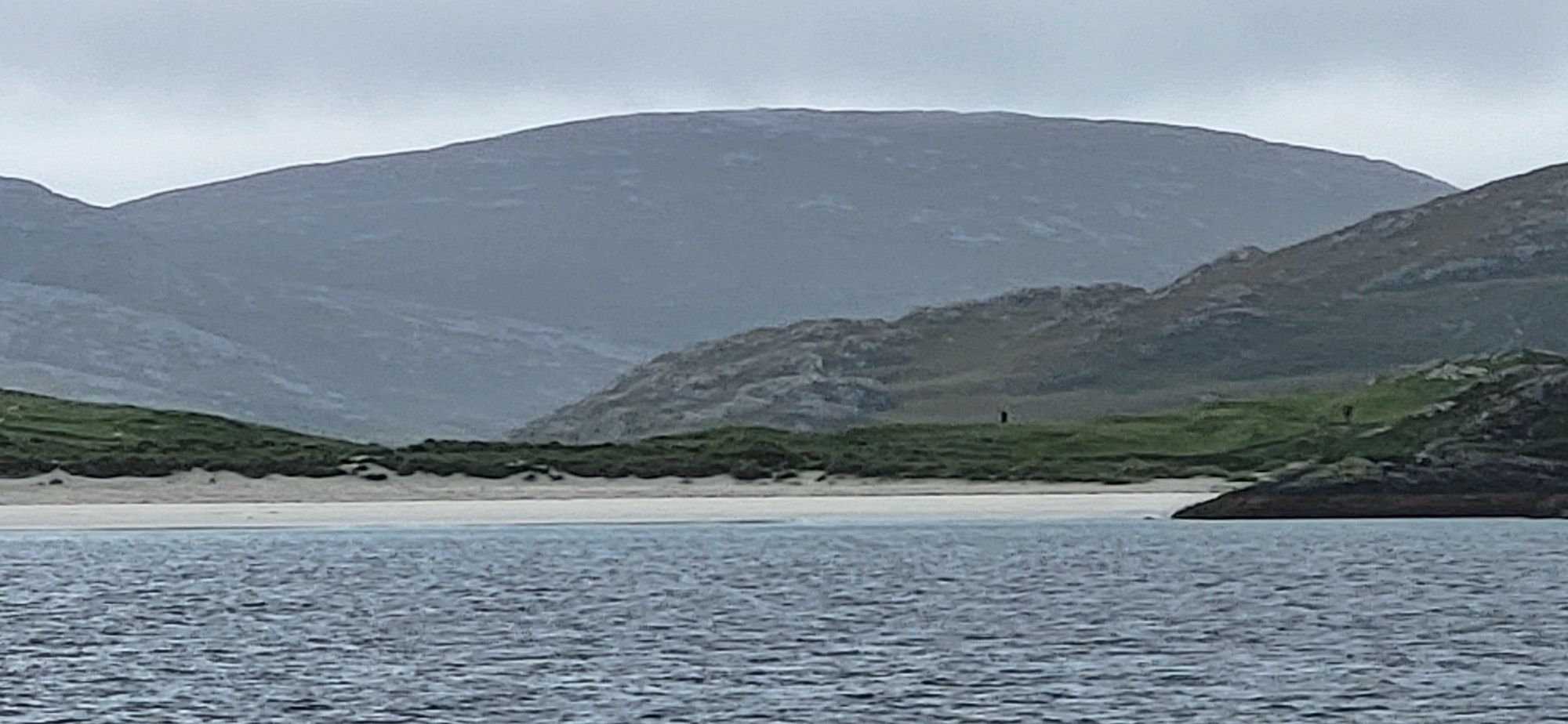
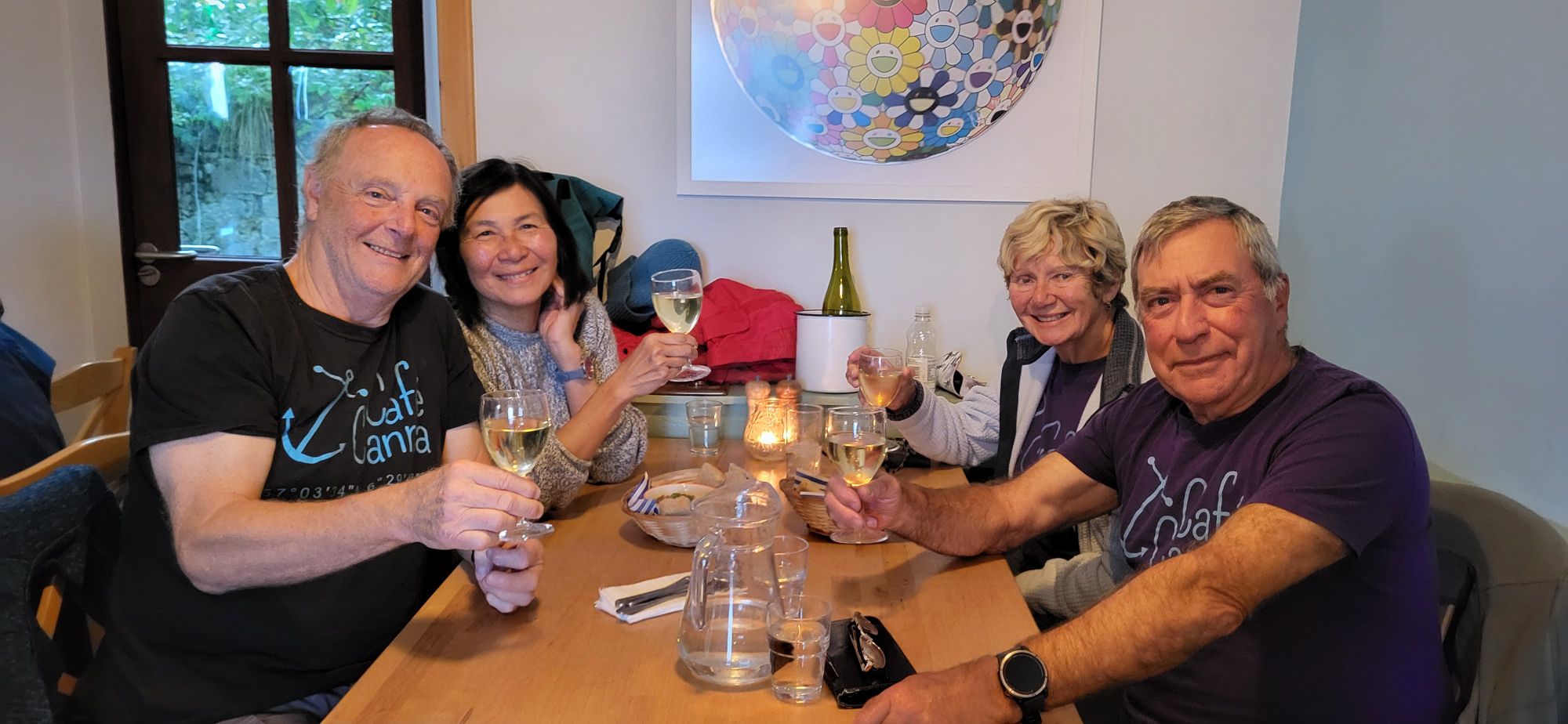
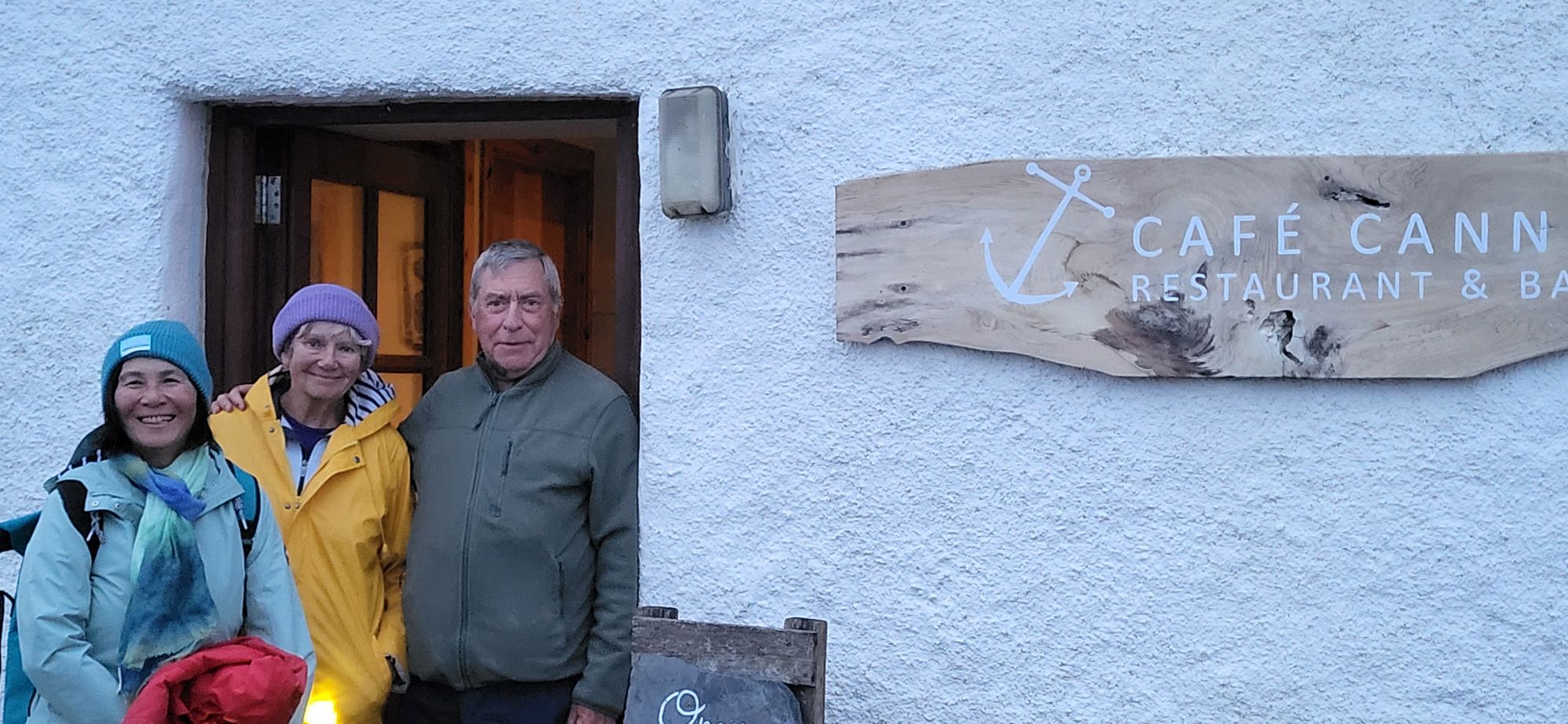
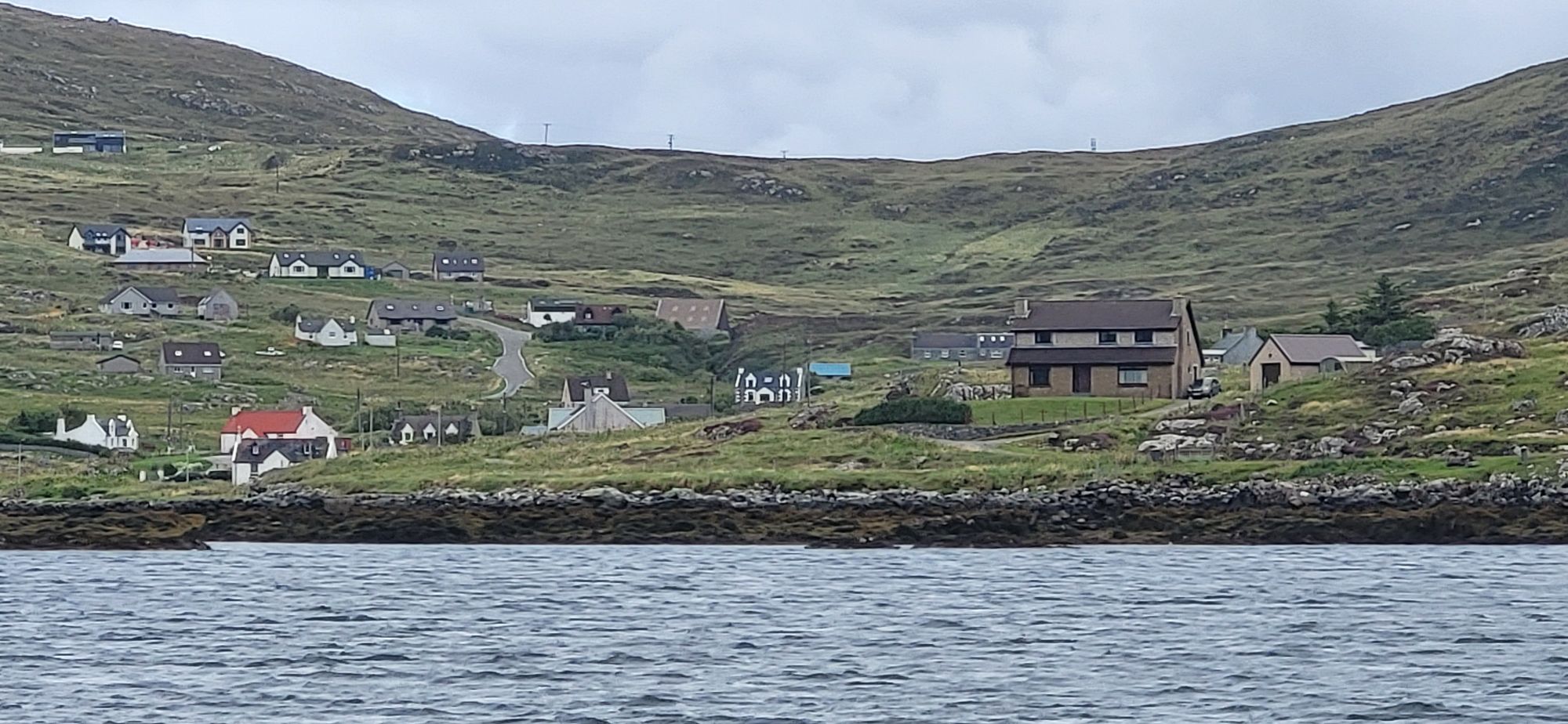
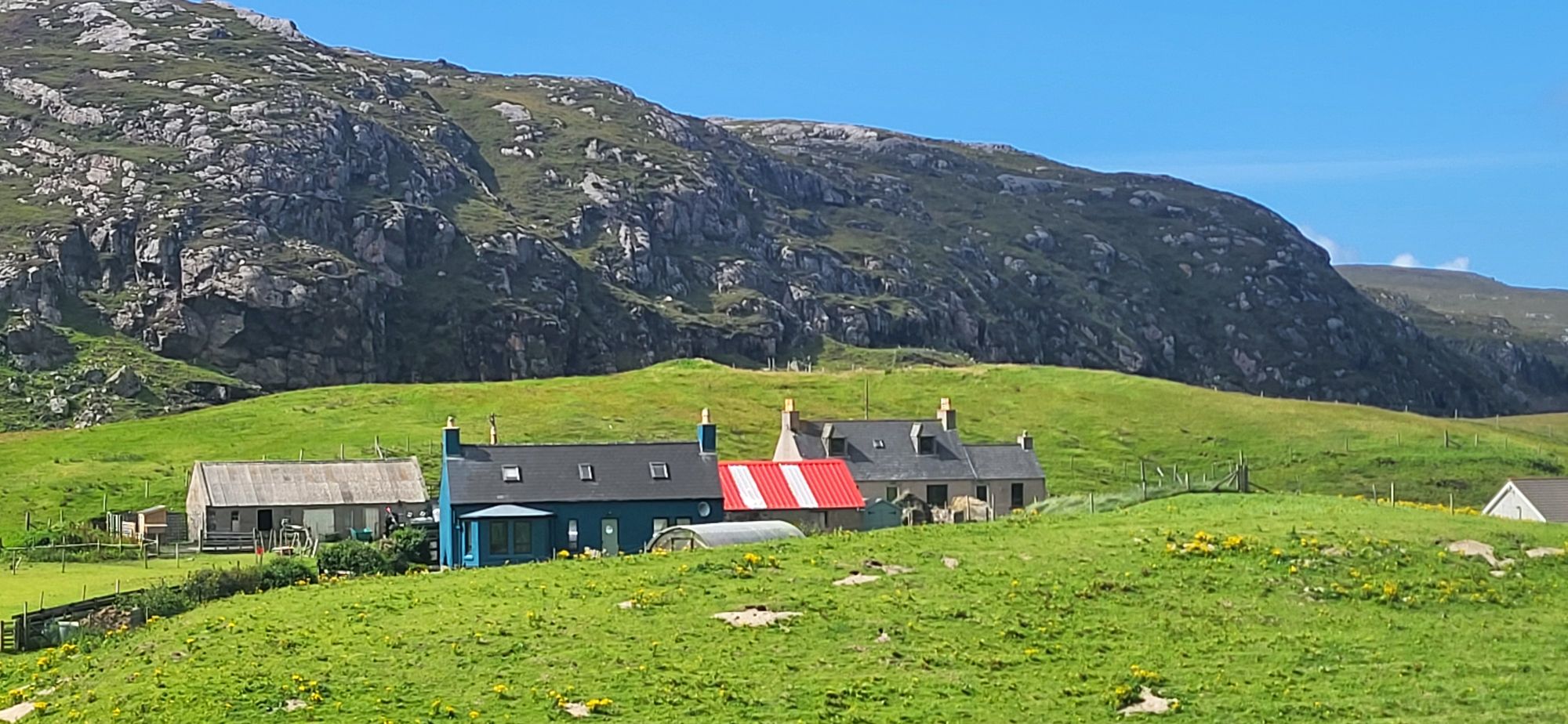
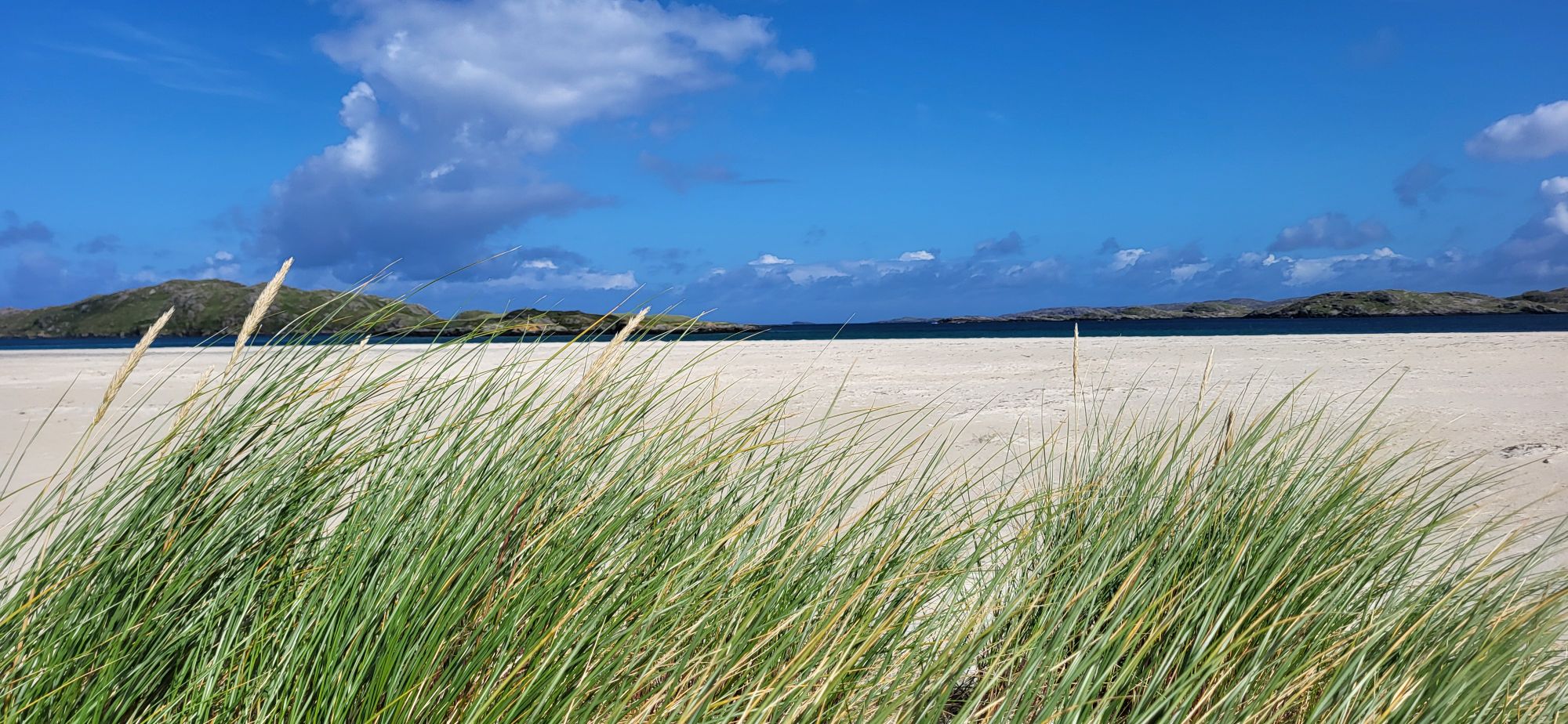
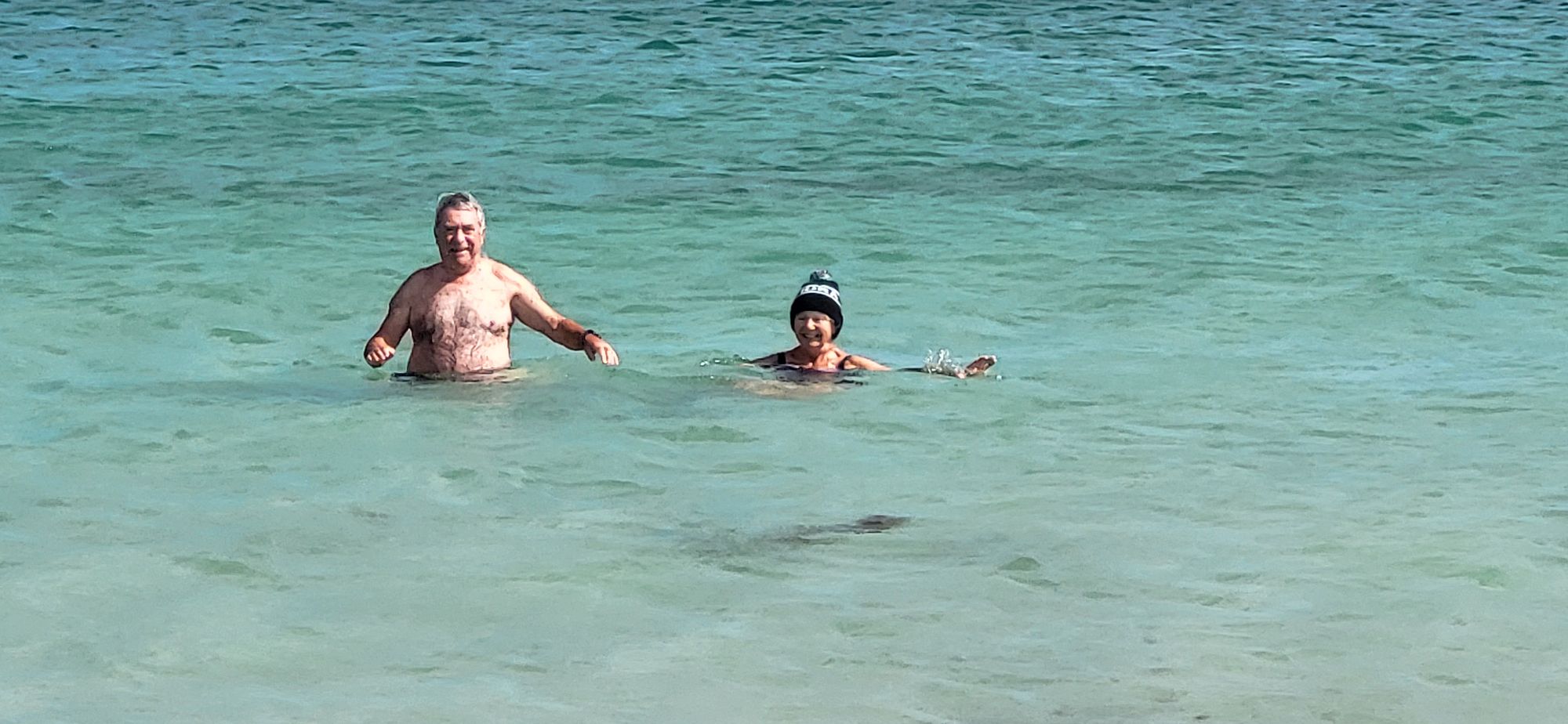
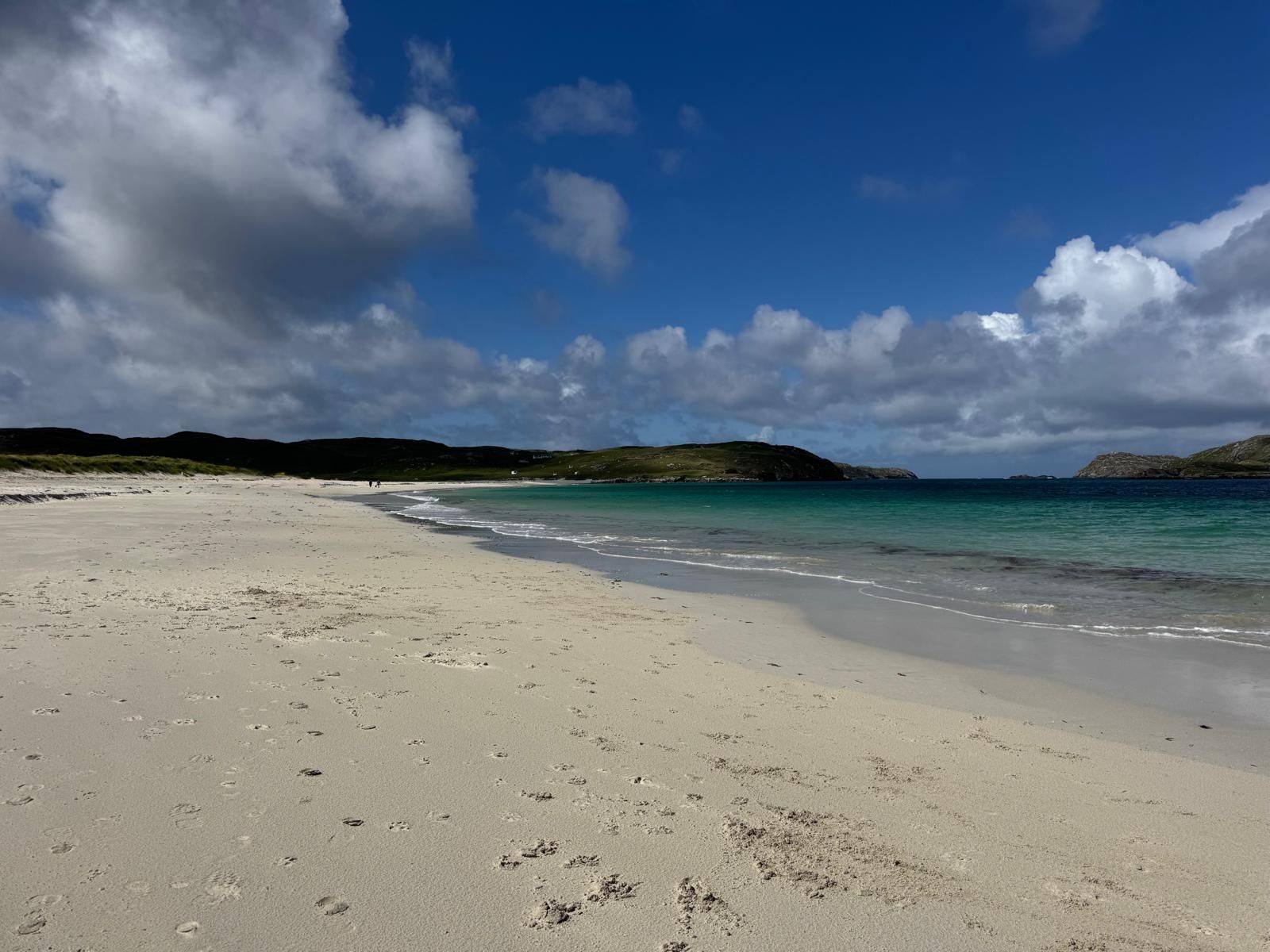
A wander round the village turns up some lovely beaches and two cafés, which, combined with the steady trickle of campervans, confirms this is firmly on the North Coast 500 circuit.
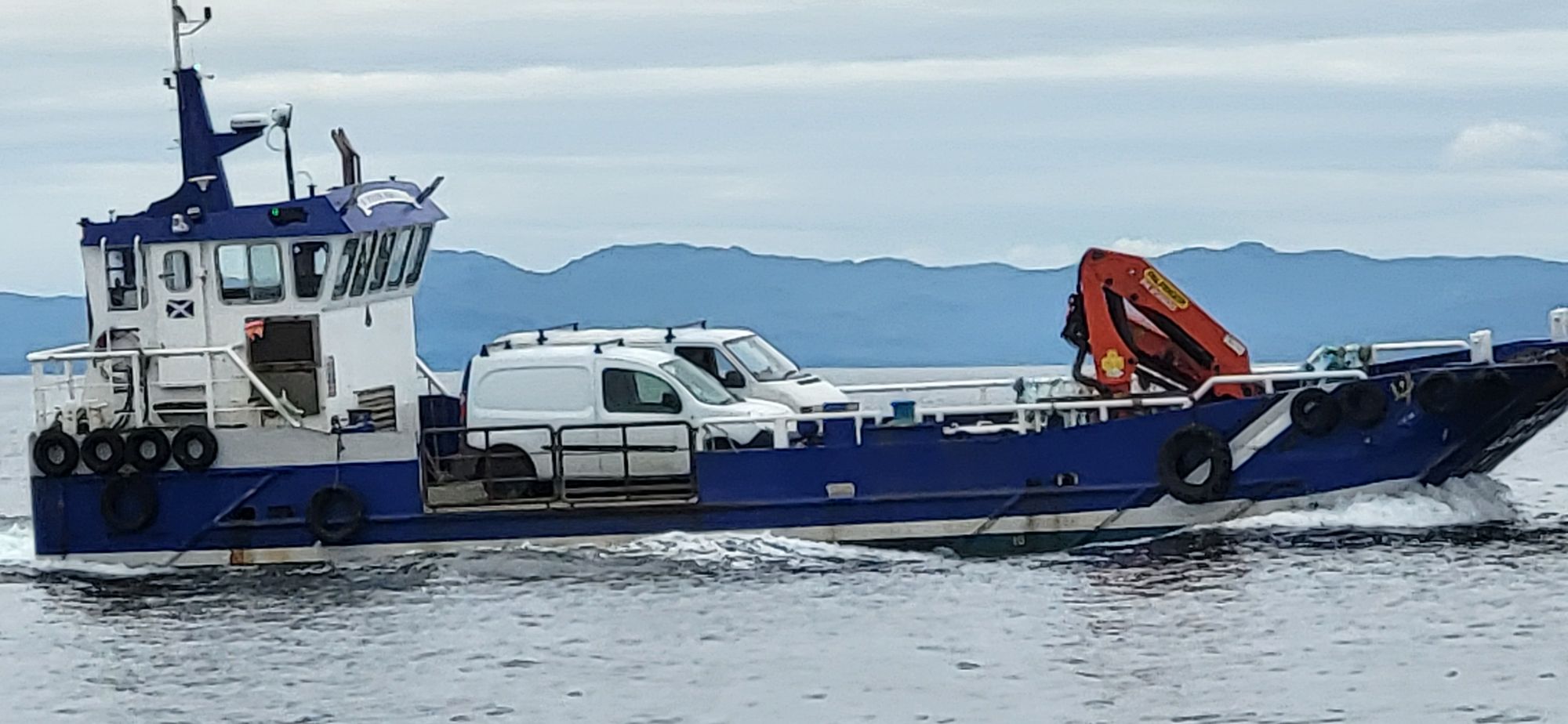
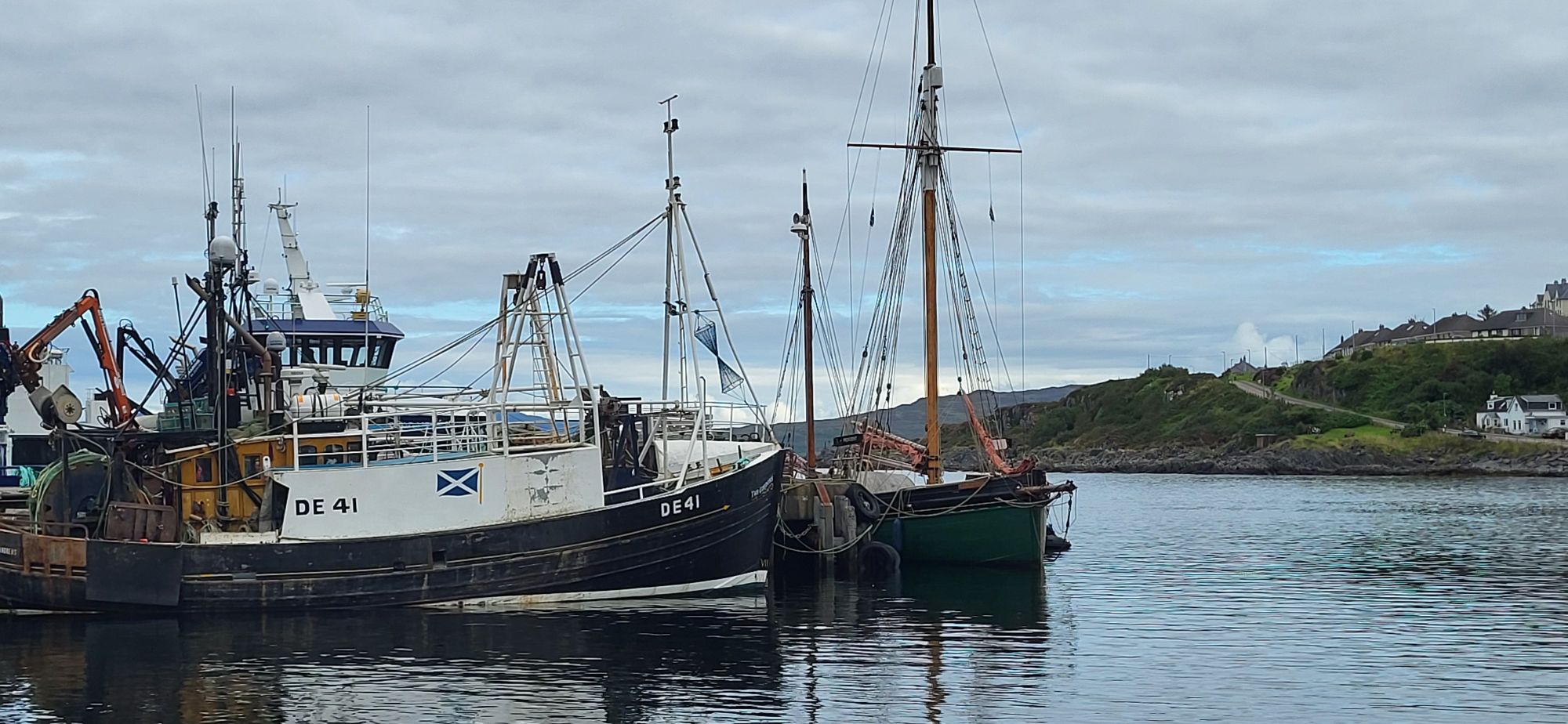
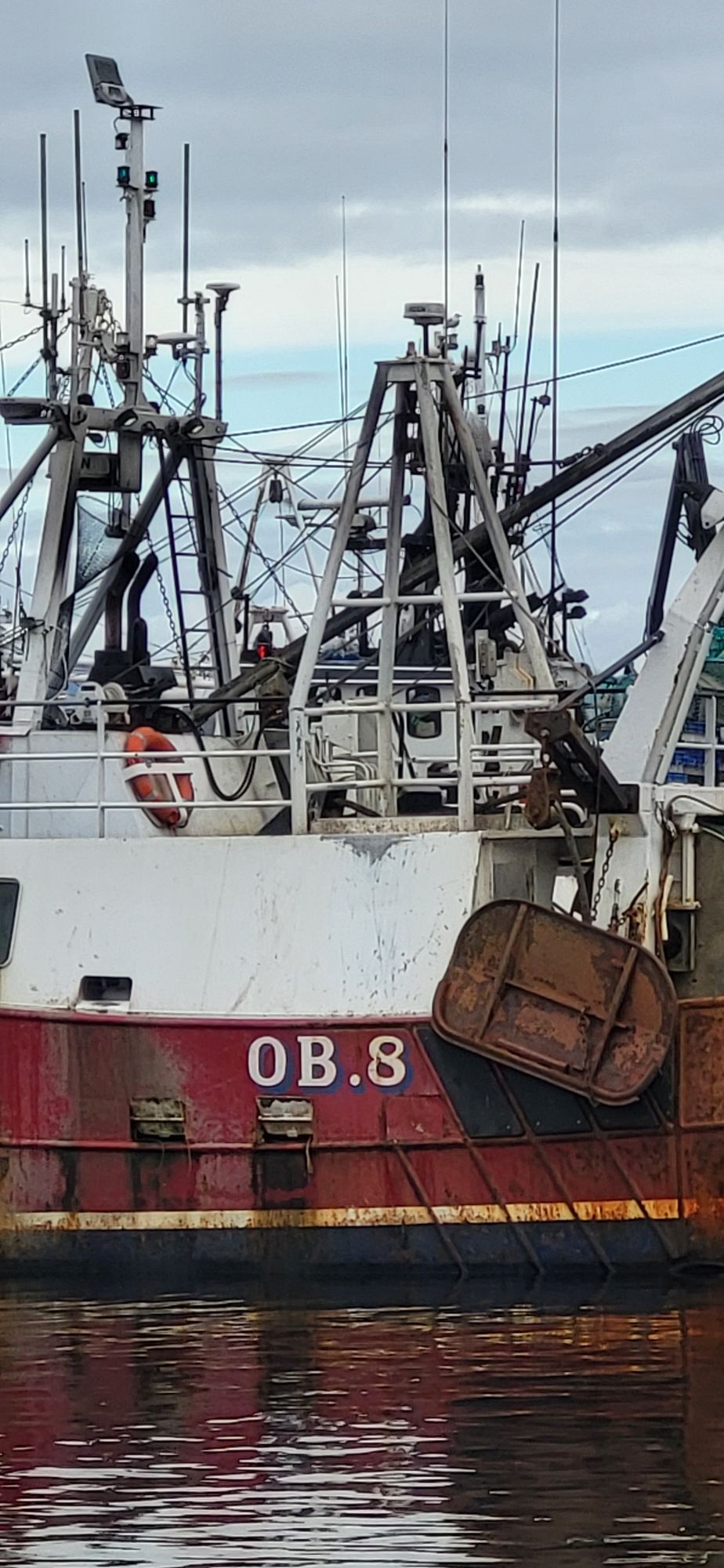
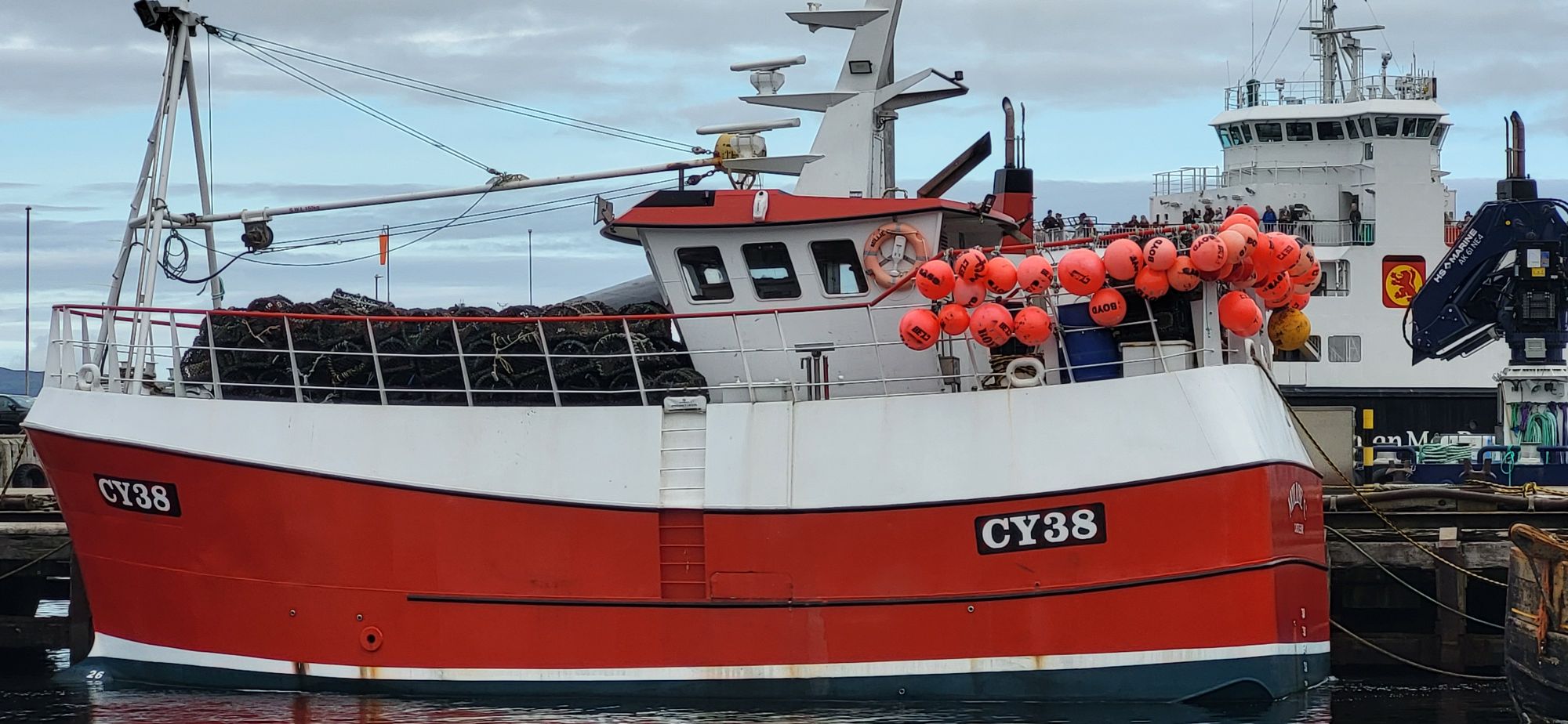
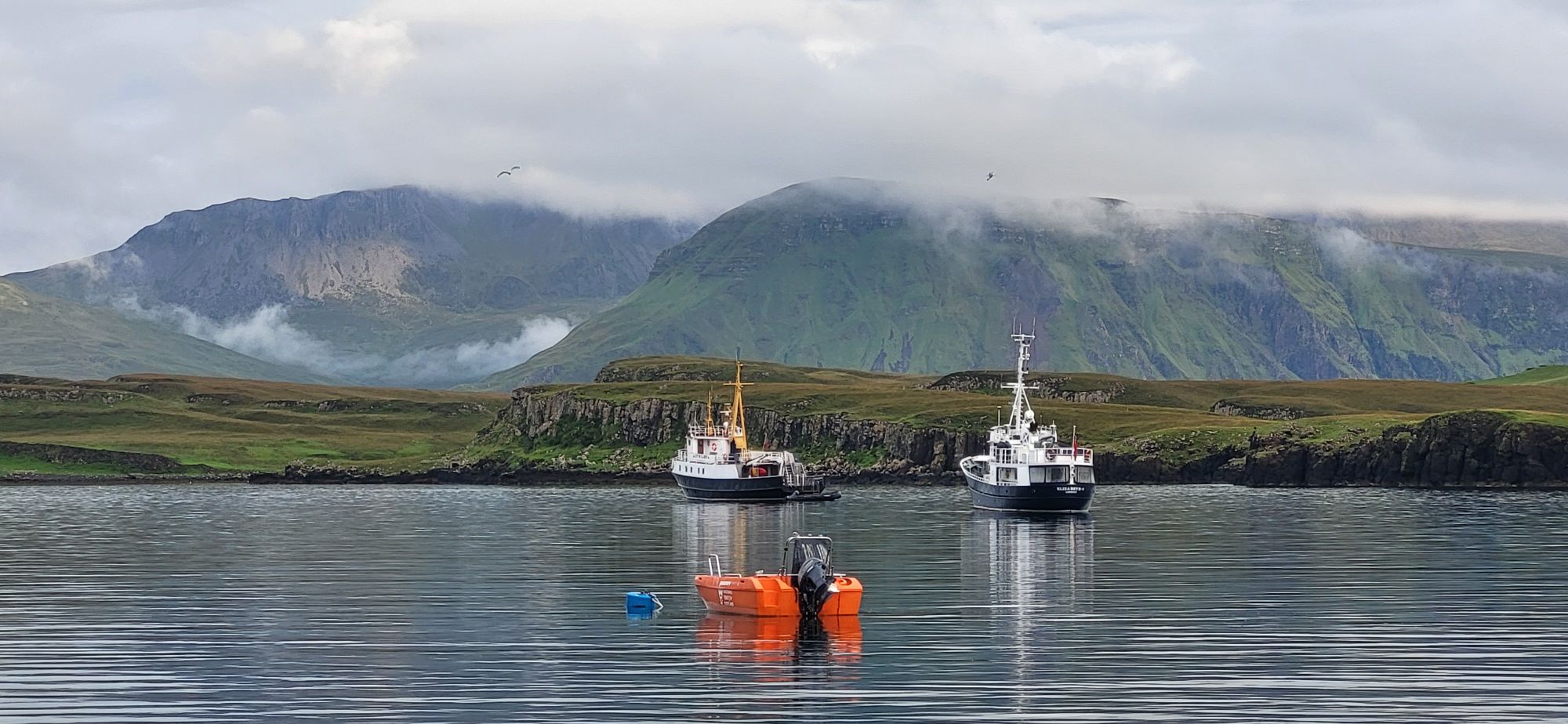
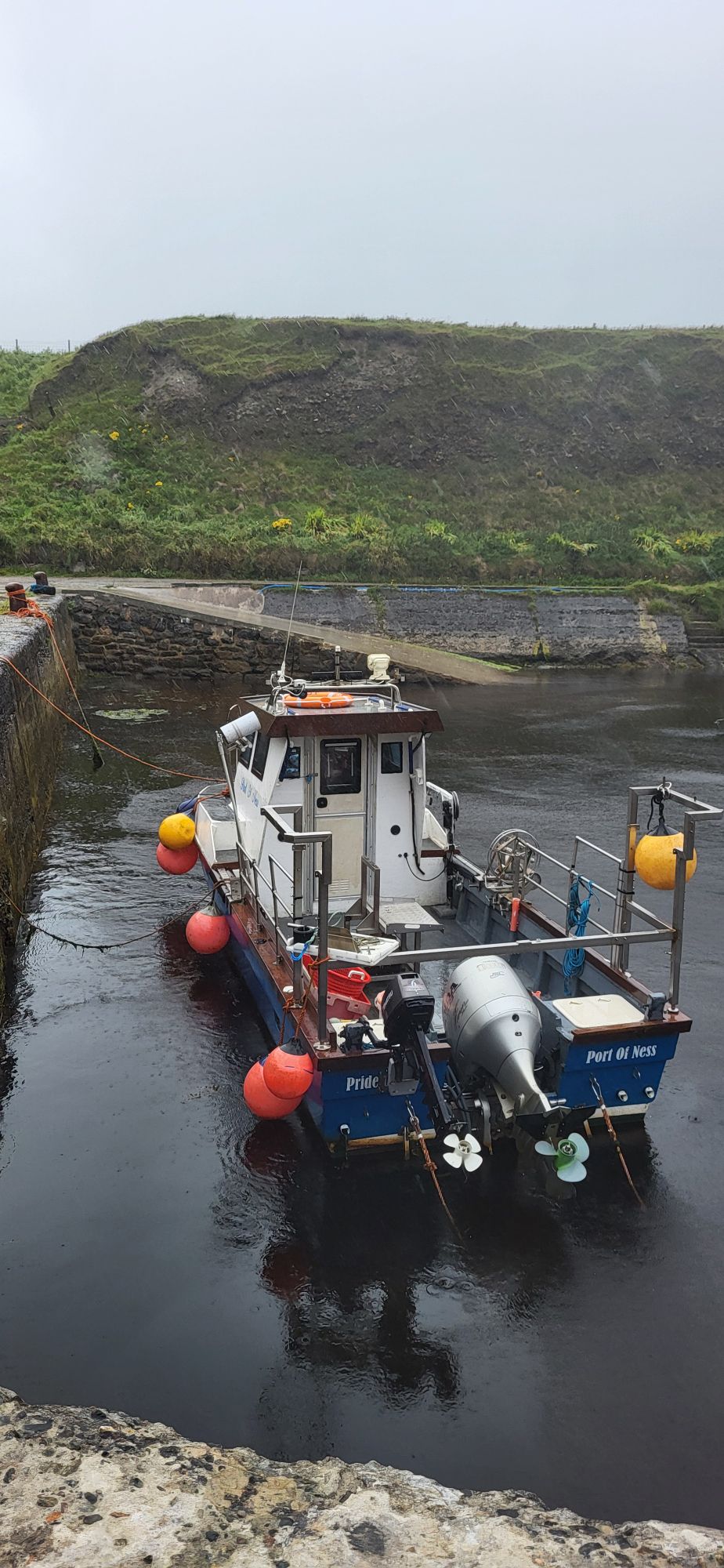
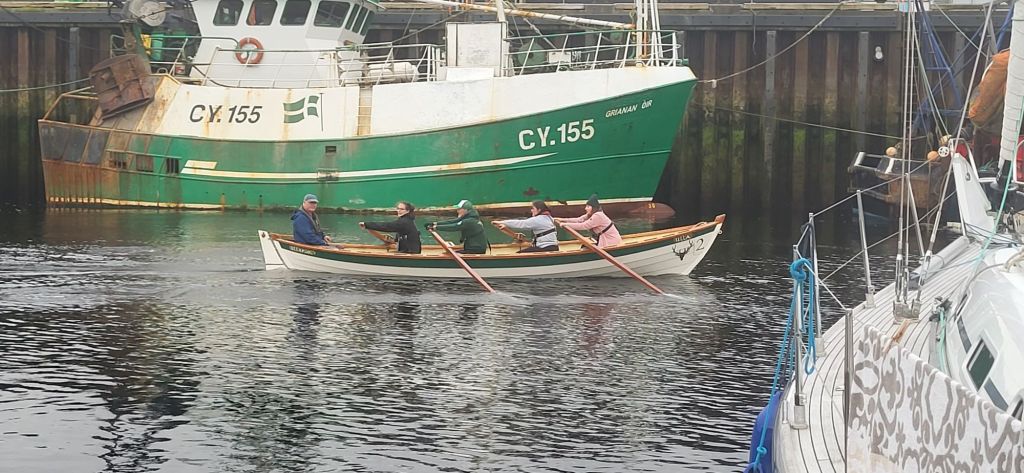
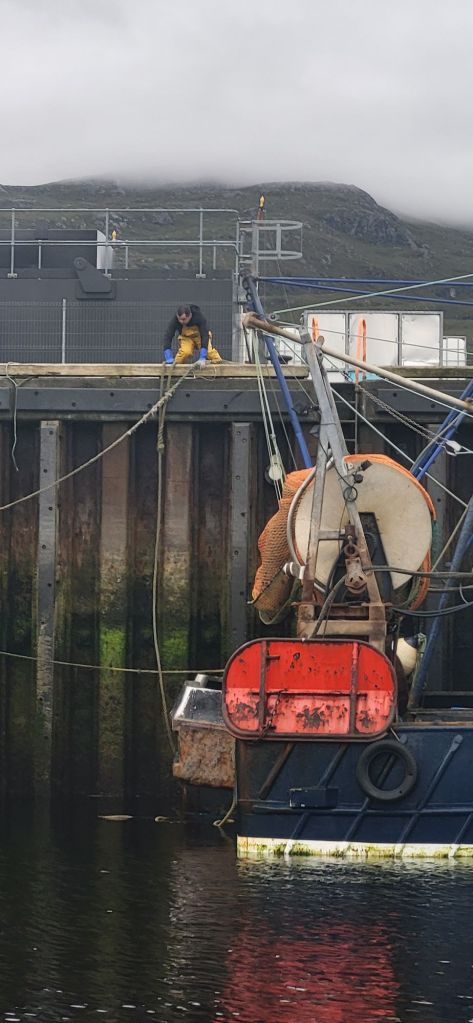
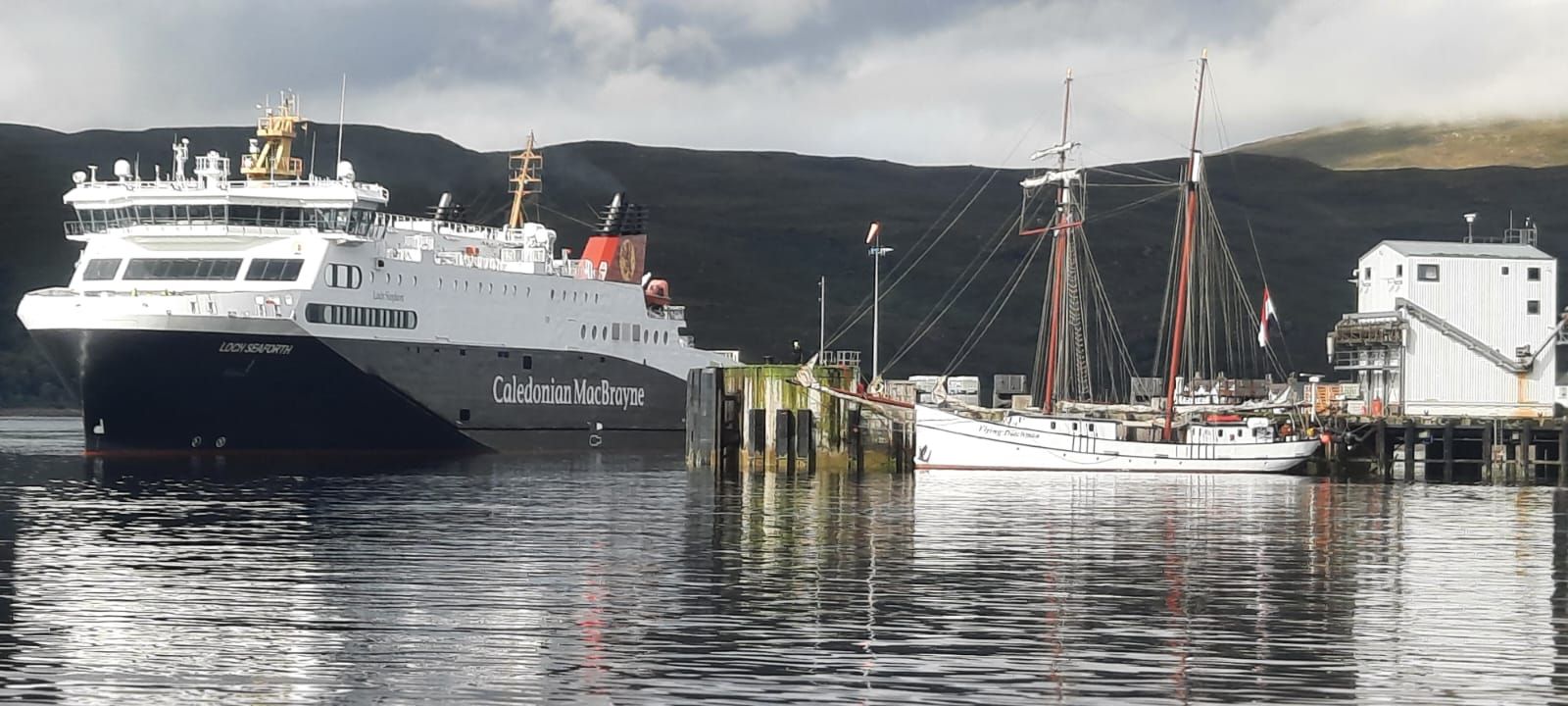
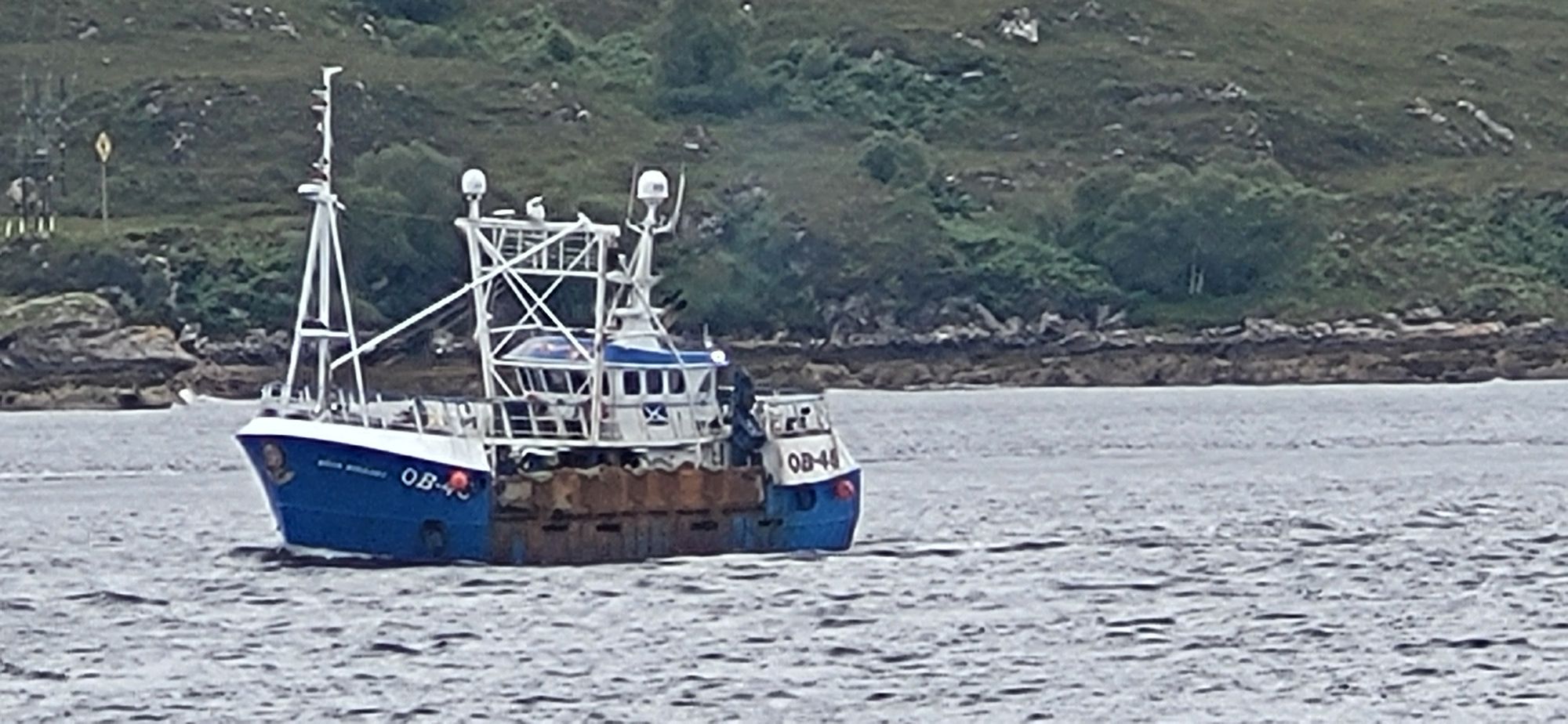
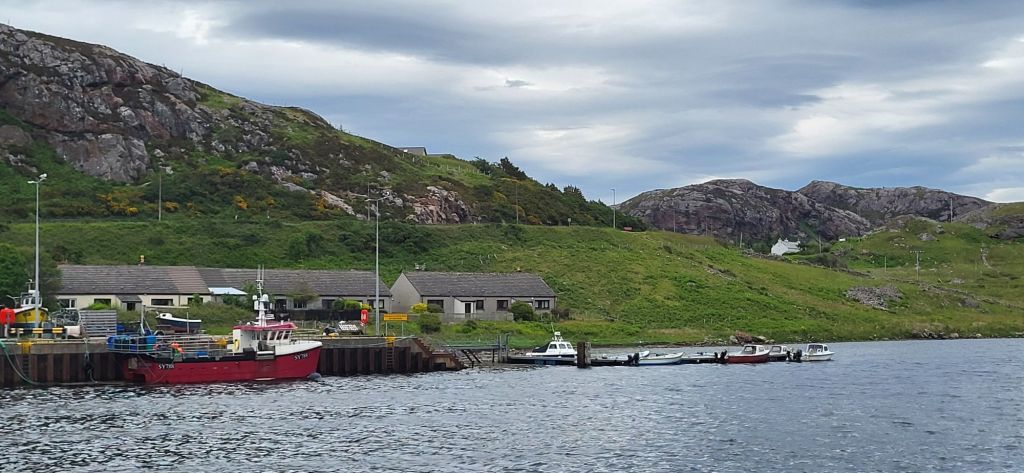
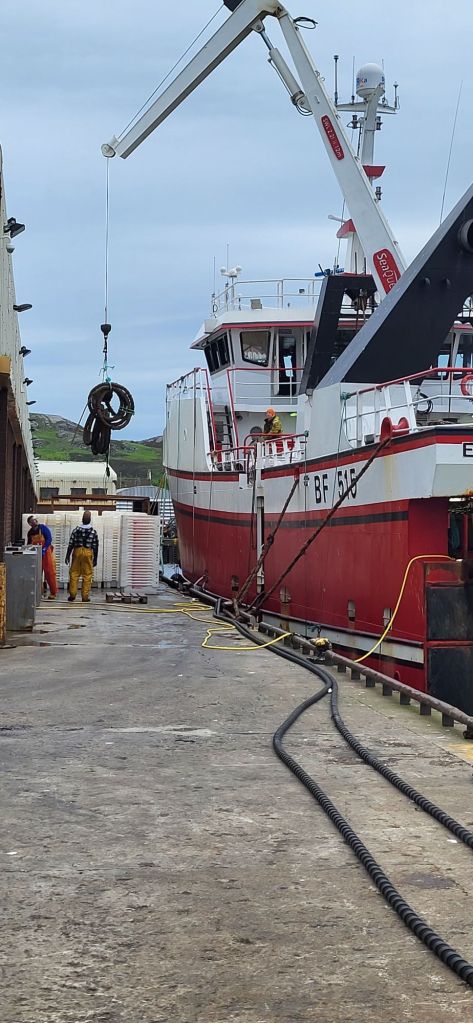
There’s also a sizeable trawler alongside, disgorging 1,700 crates of Ling and Monkfish with impressive efficiency. She came in around half six, swapped crews at some point, and was back out through the heads by noon, ruthlessly commercial, and slightly dispiriting for the smaller boats trying to scratch a living alongside her.
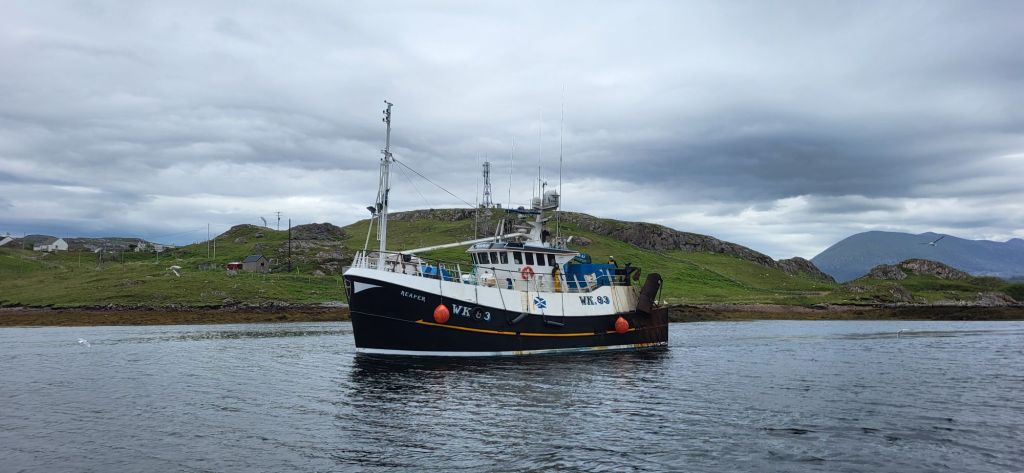
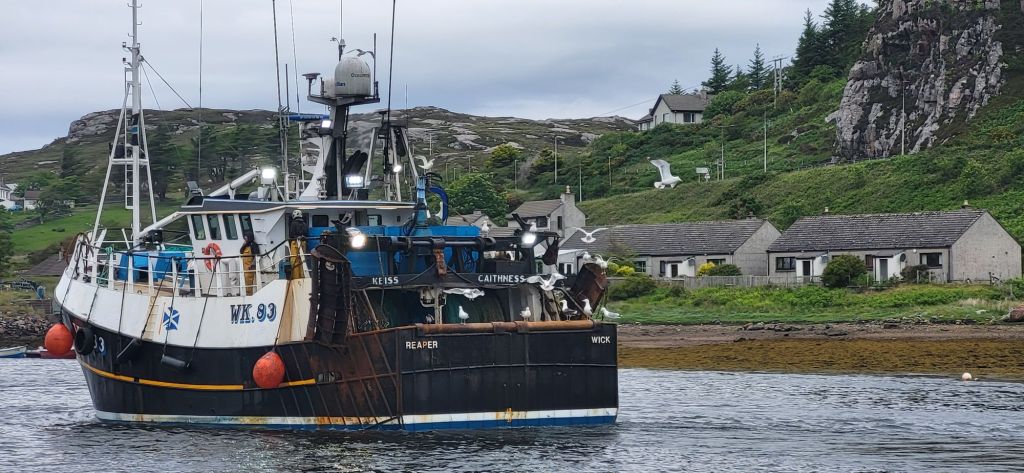
As she leaves, another comes in…
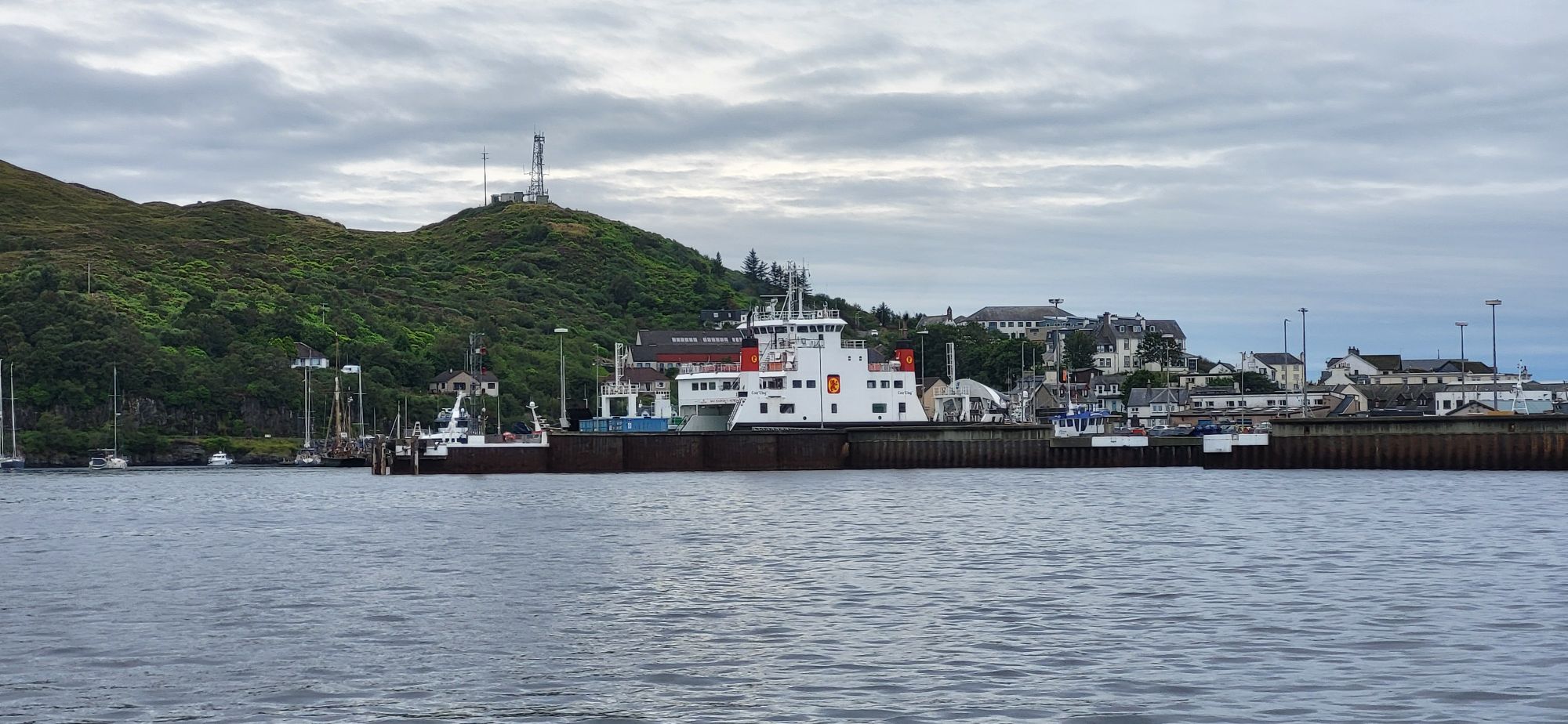
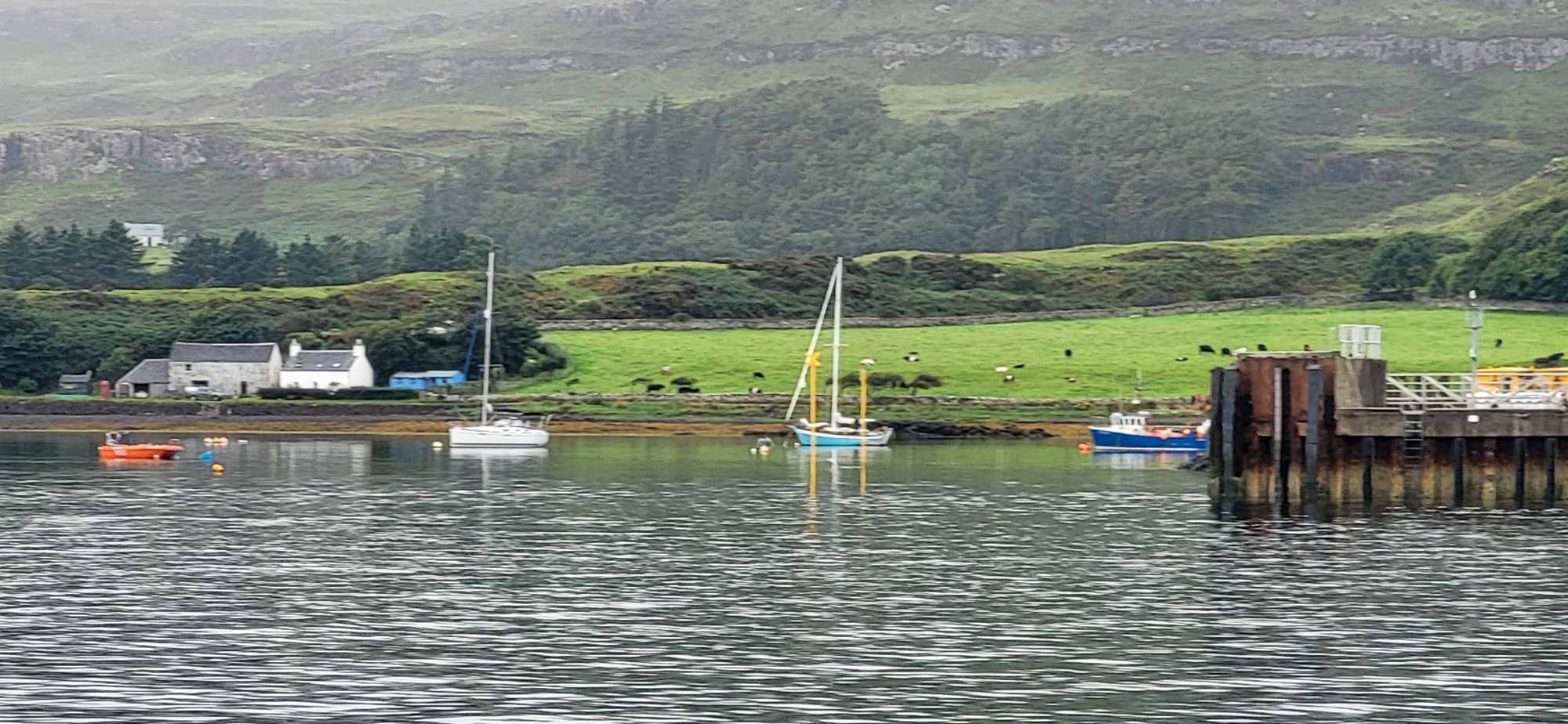
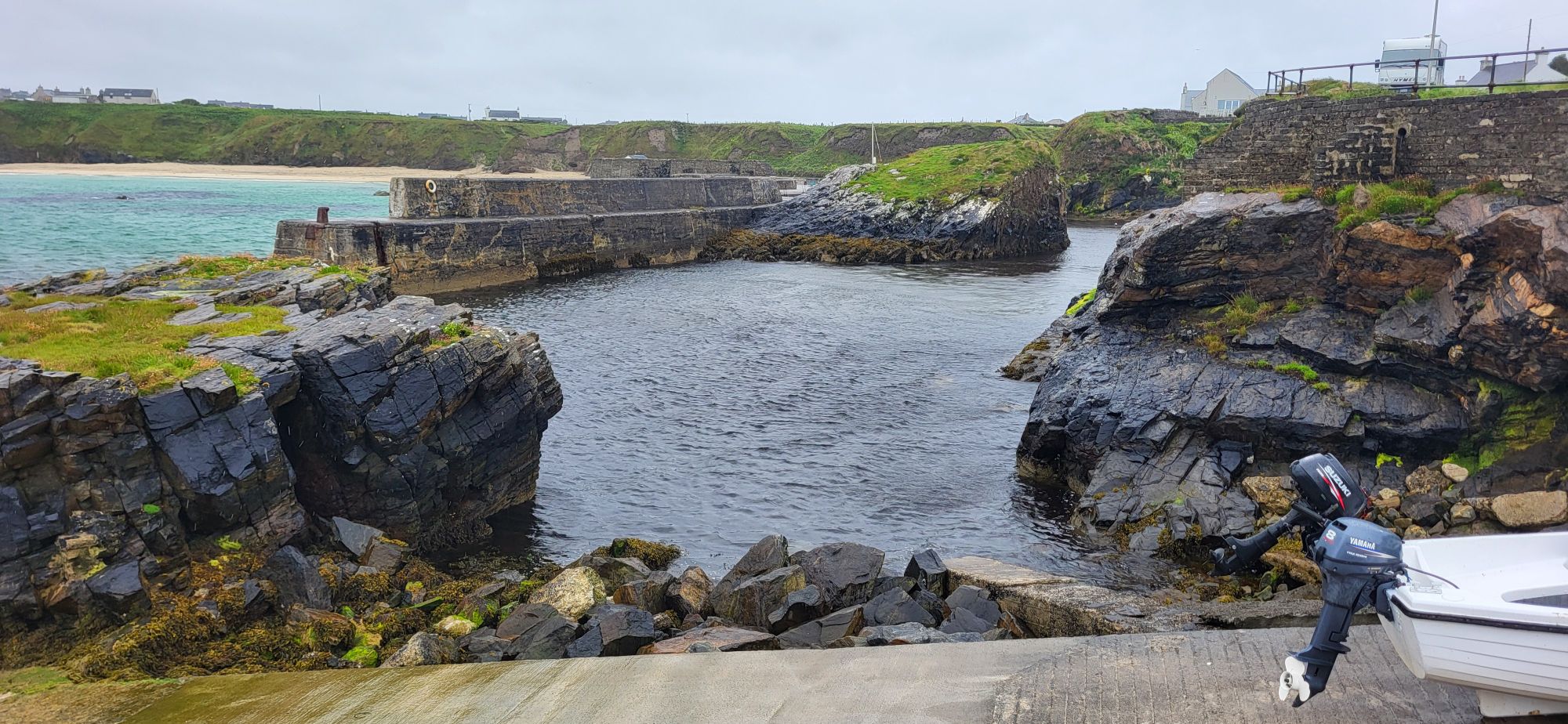
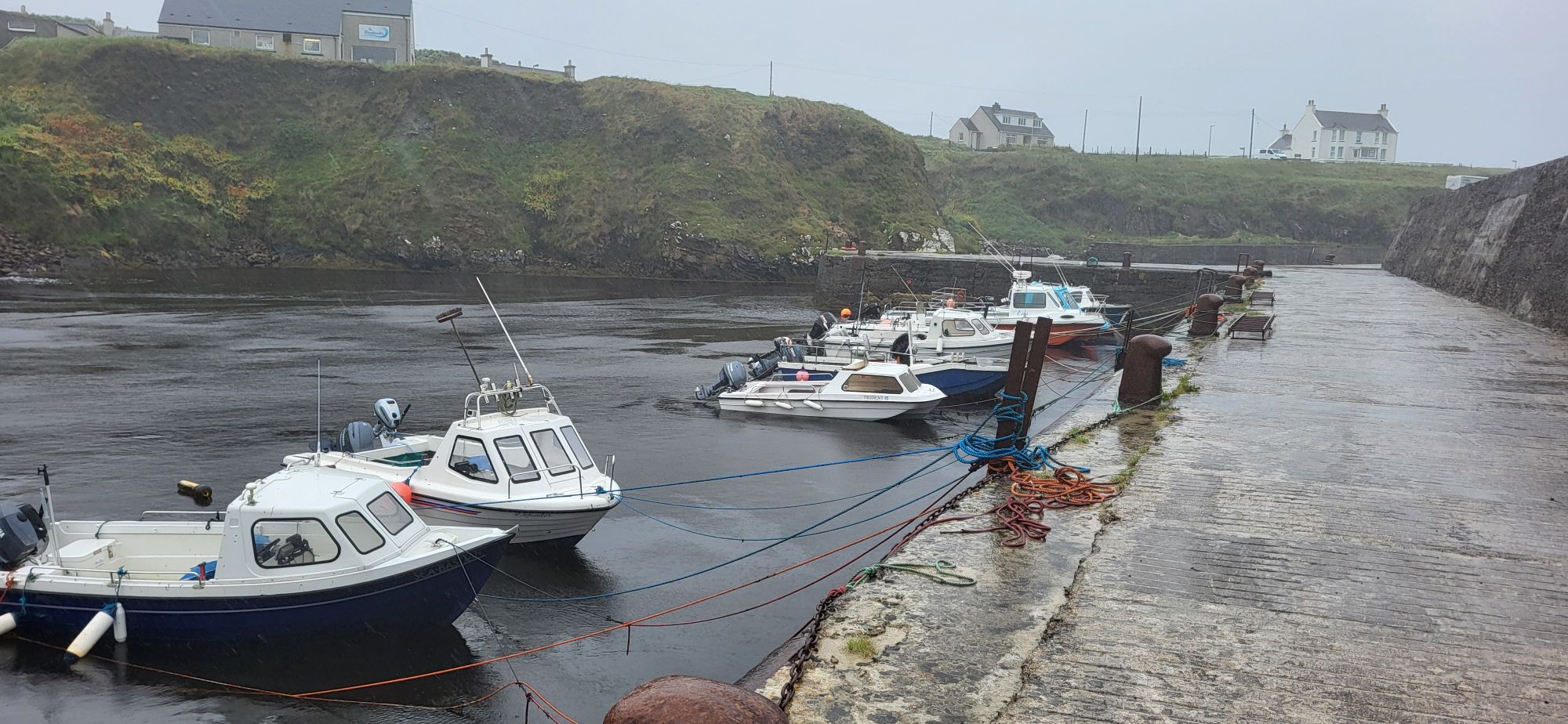
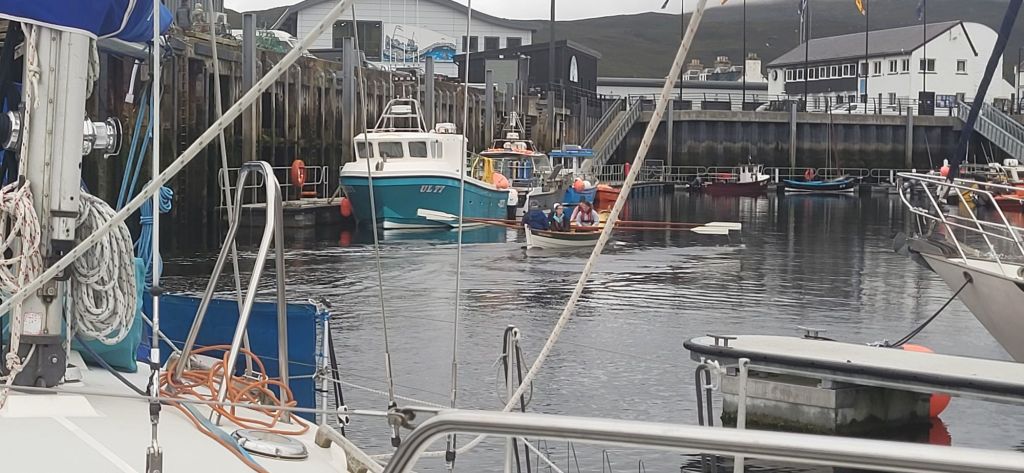
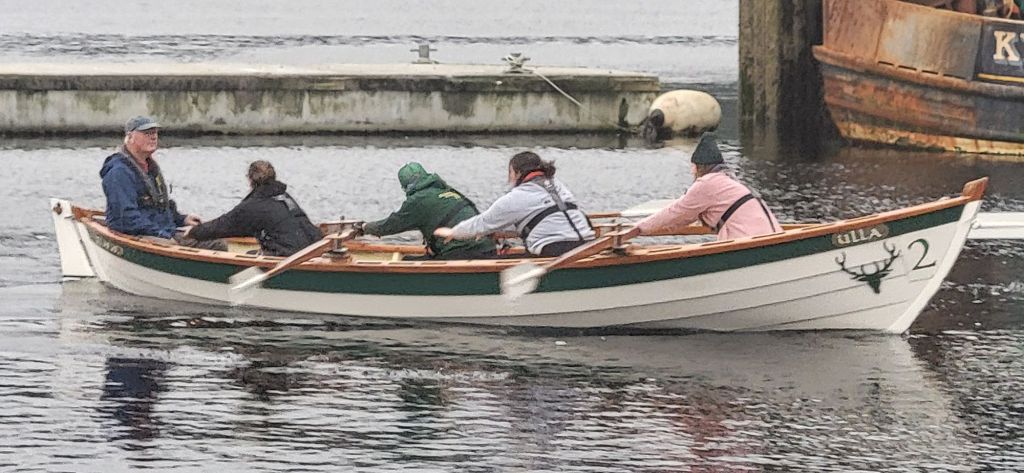
Yet the dock and its infrastructure tell a once, more optimistic story… ice plant, lock-up garages, decent facilities, all clearly intended to welcome boats of every size. We pass a pleasant few minutes with a local who’s heading out to lift his prawn and lobster pots further up the loch. There are, it seems, still gaps in the market.
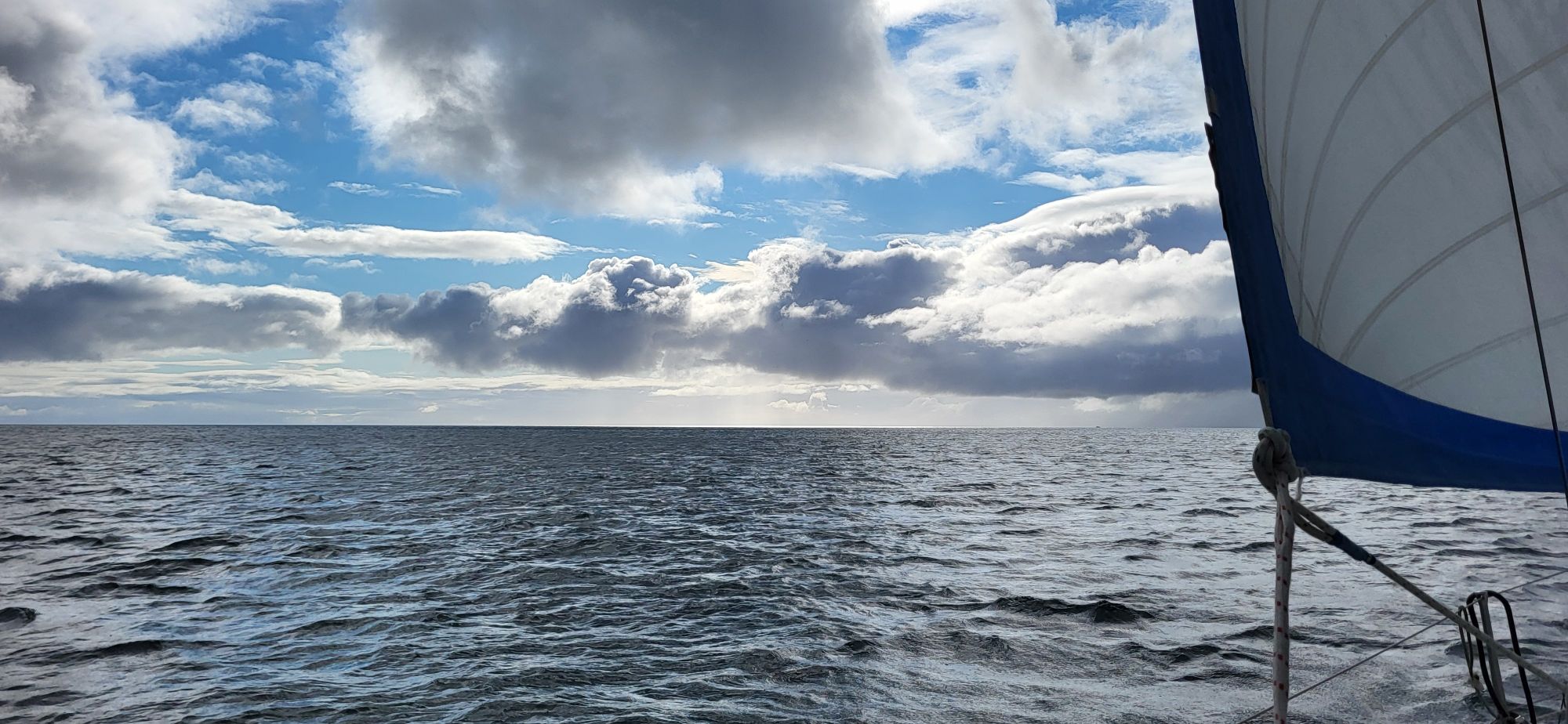
The forecast for the Minch, meanwhile, proves to be, how to put this charitably, aspirational. The apps had promised a nice beam reach to Stoer Head on a decent south-easterly. What we get is glassy calm and the unmistakeable sound of diesel. Sorry, Joshua. The engine gets its moment.
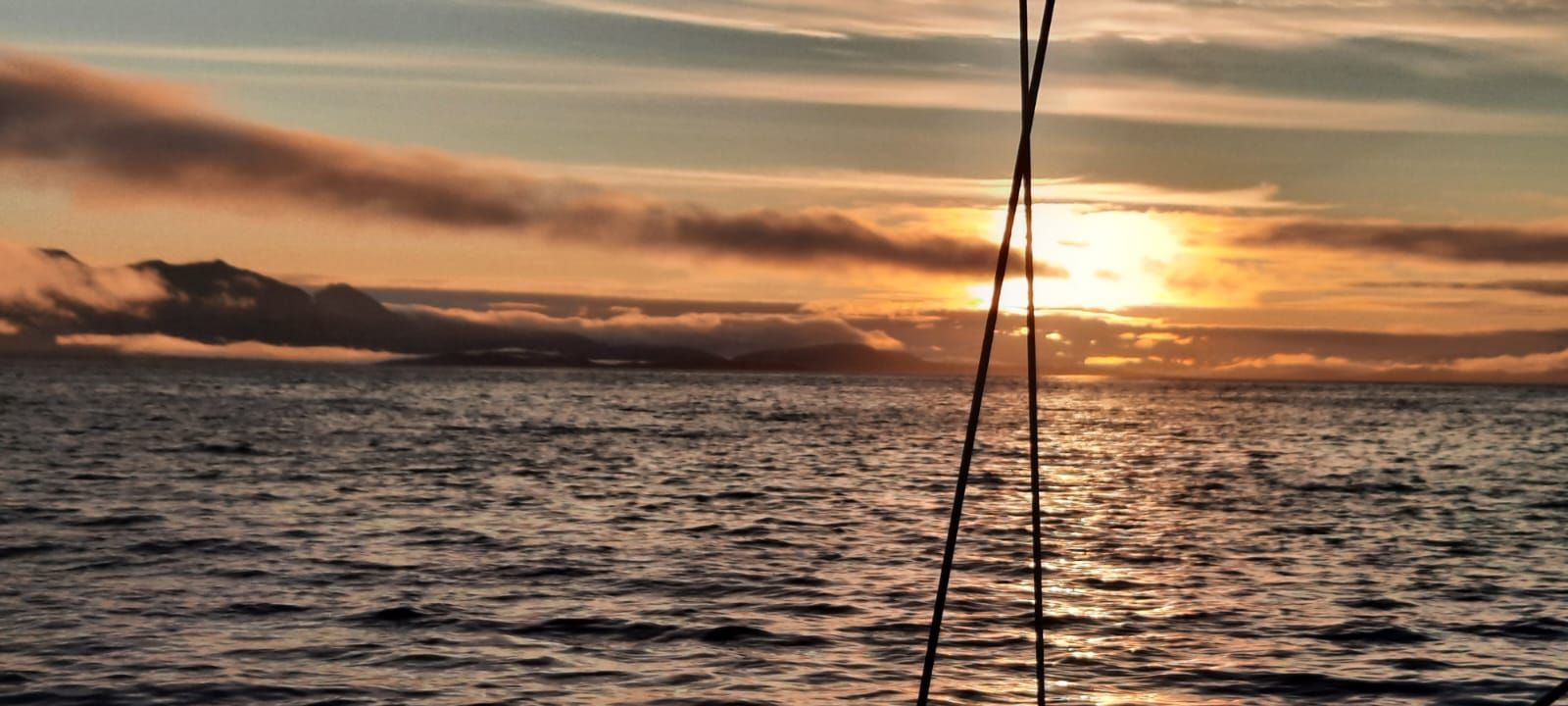
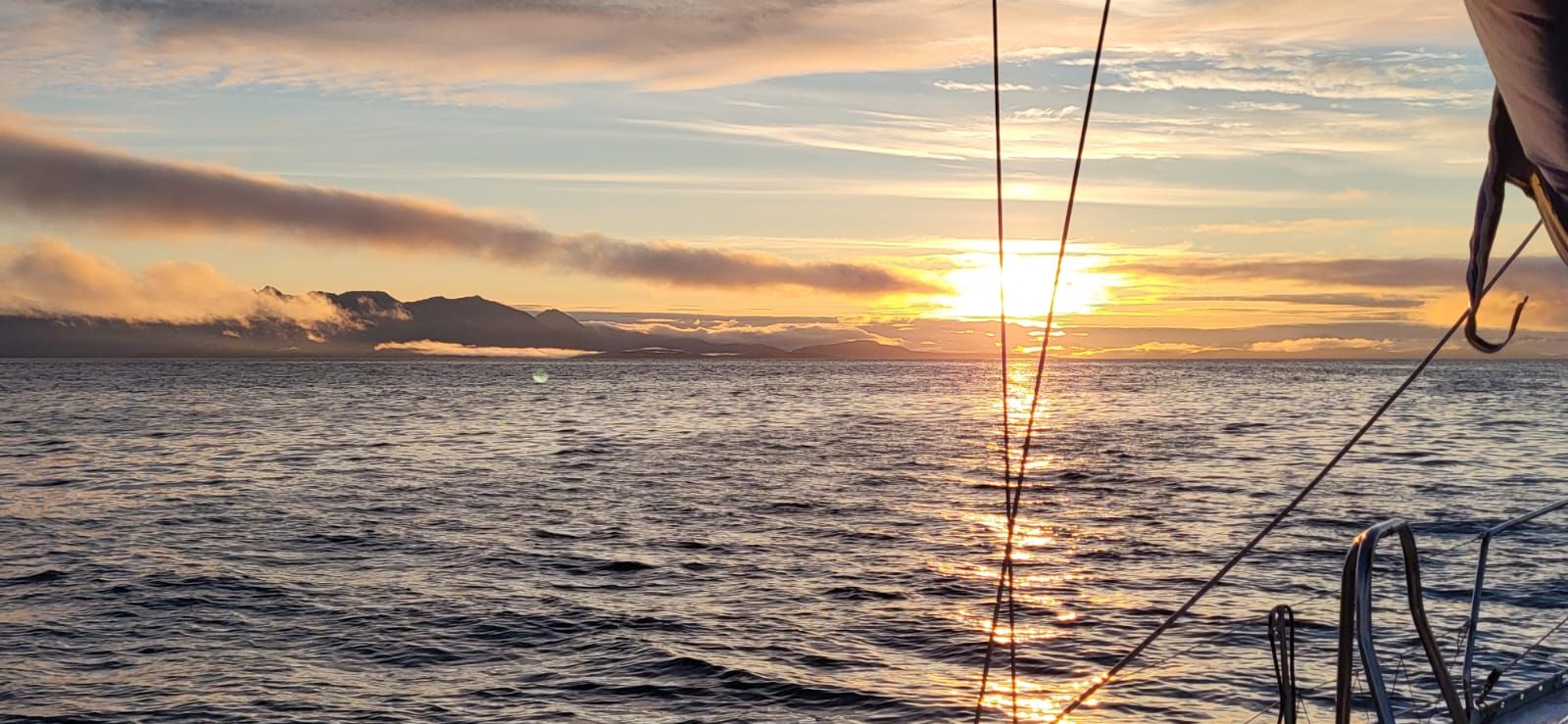
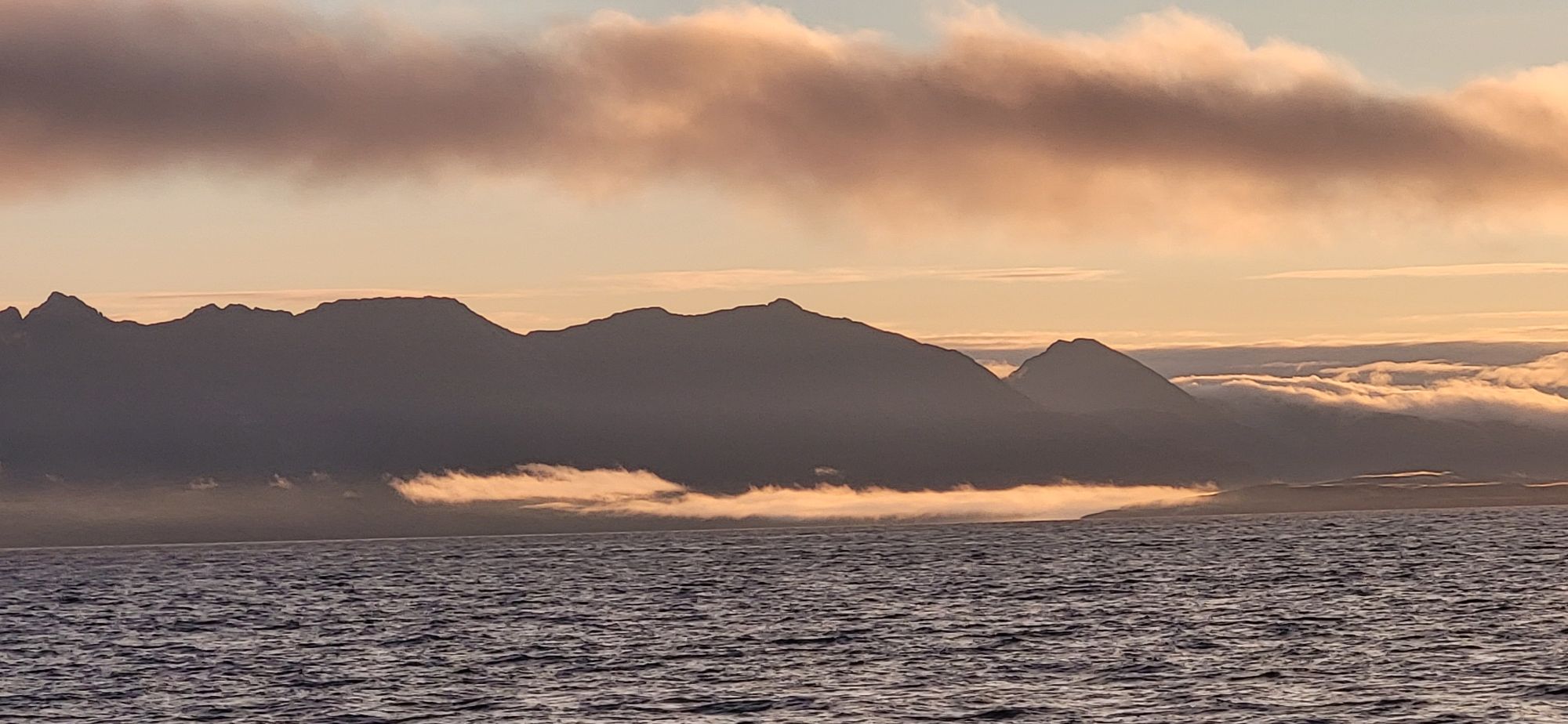
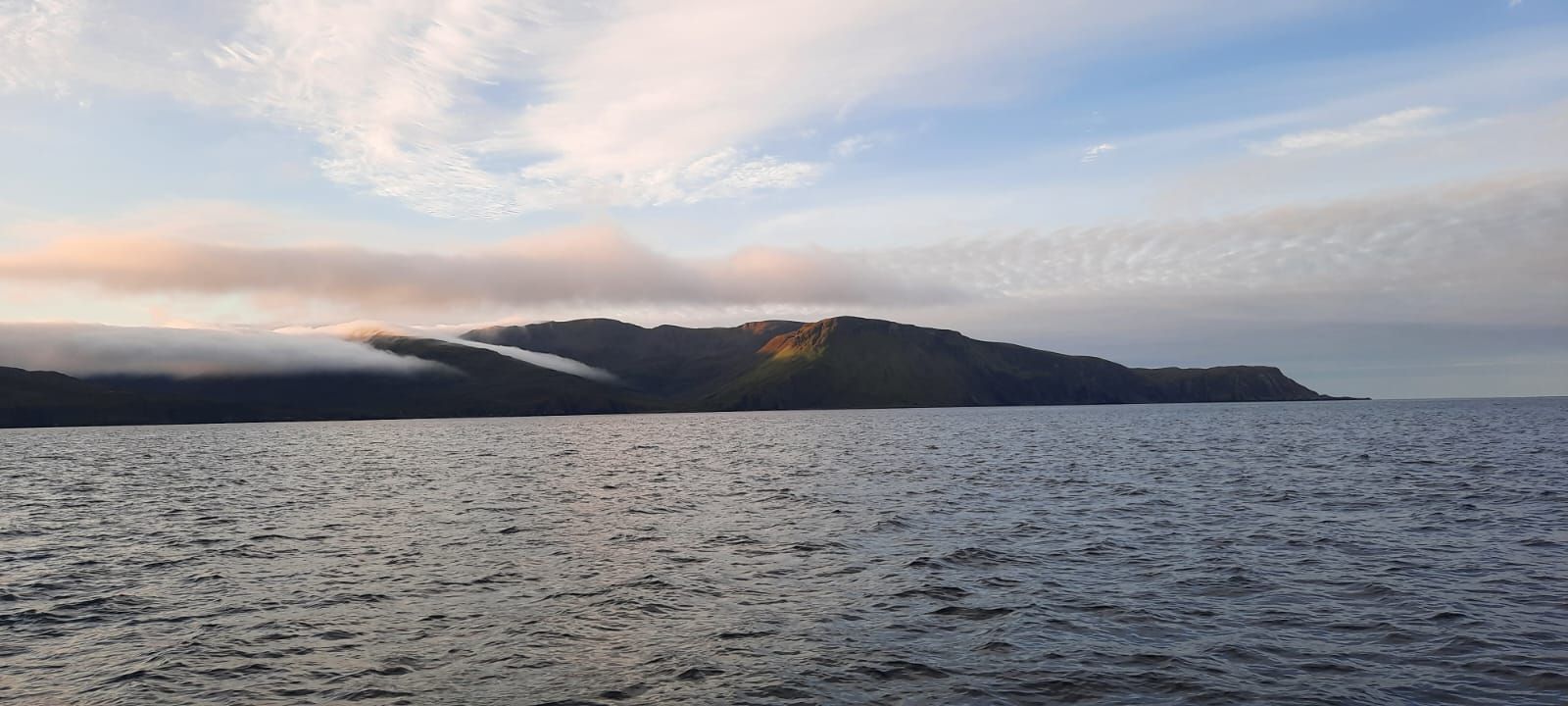
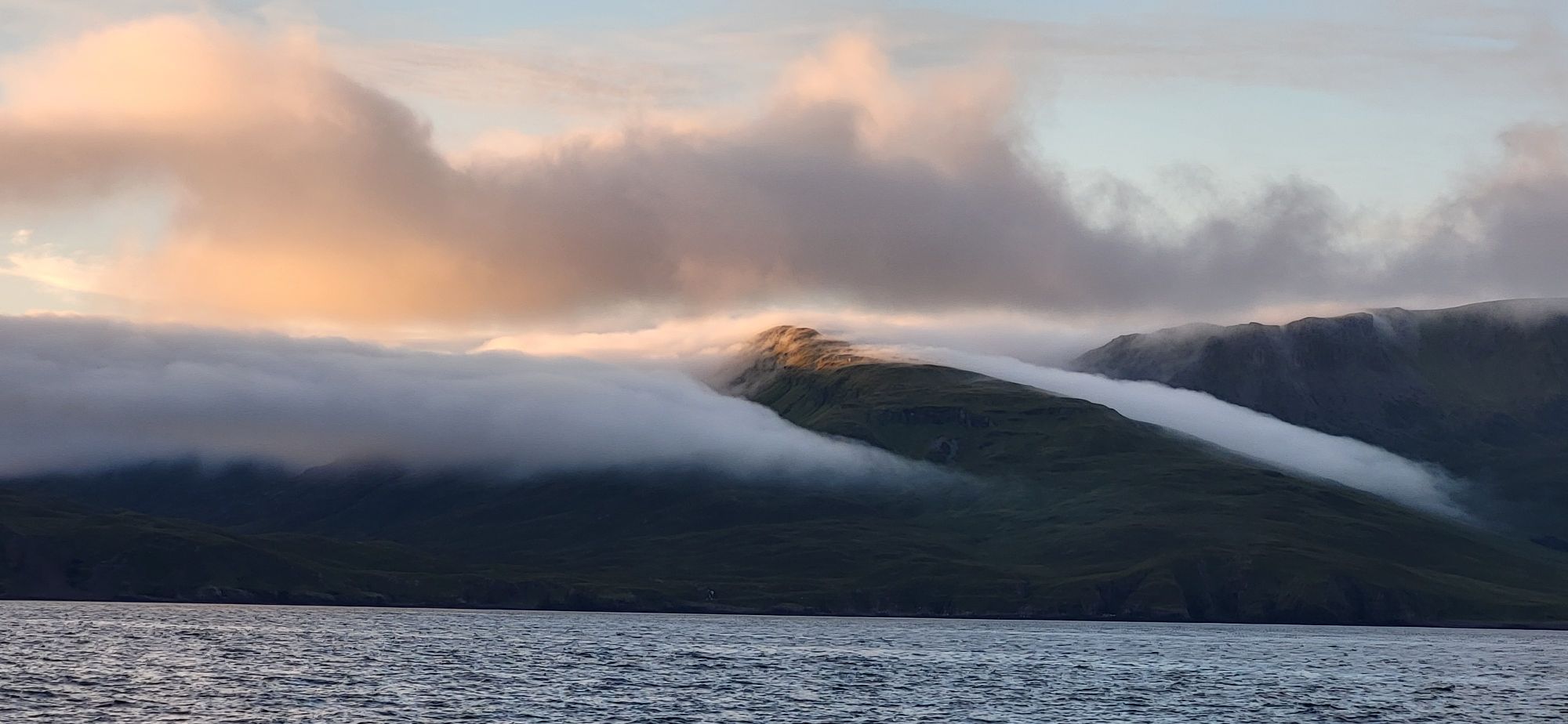
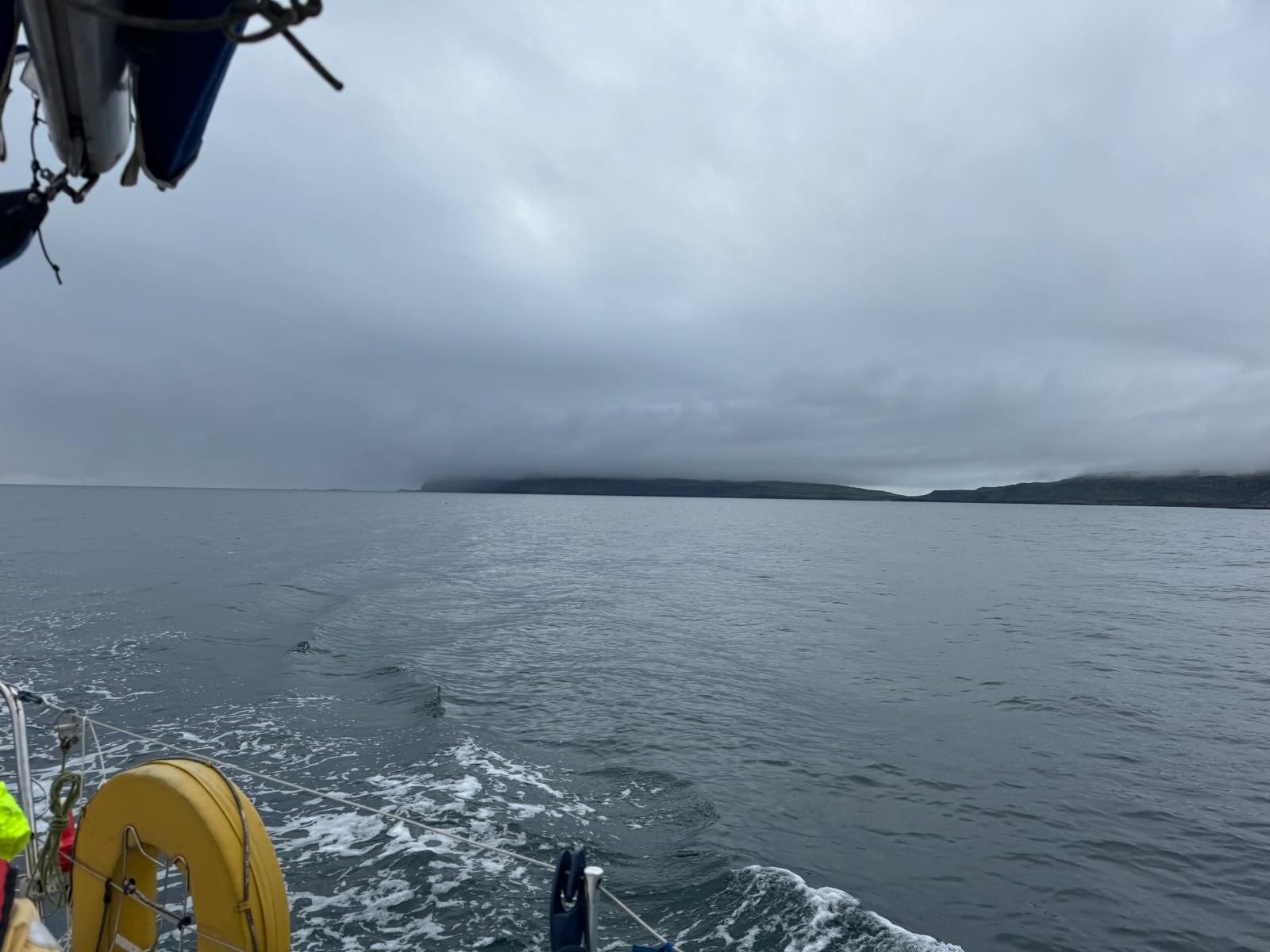
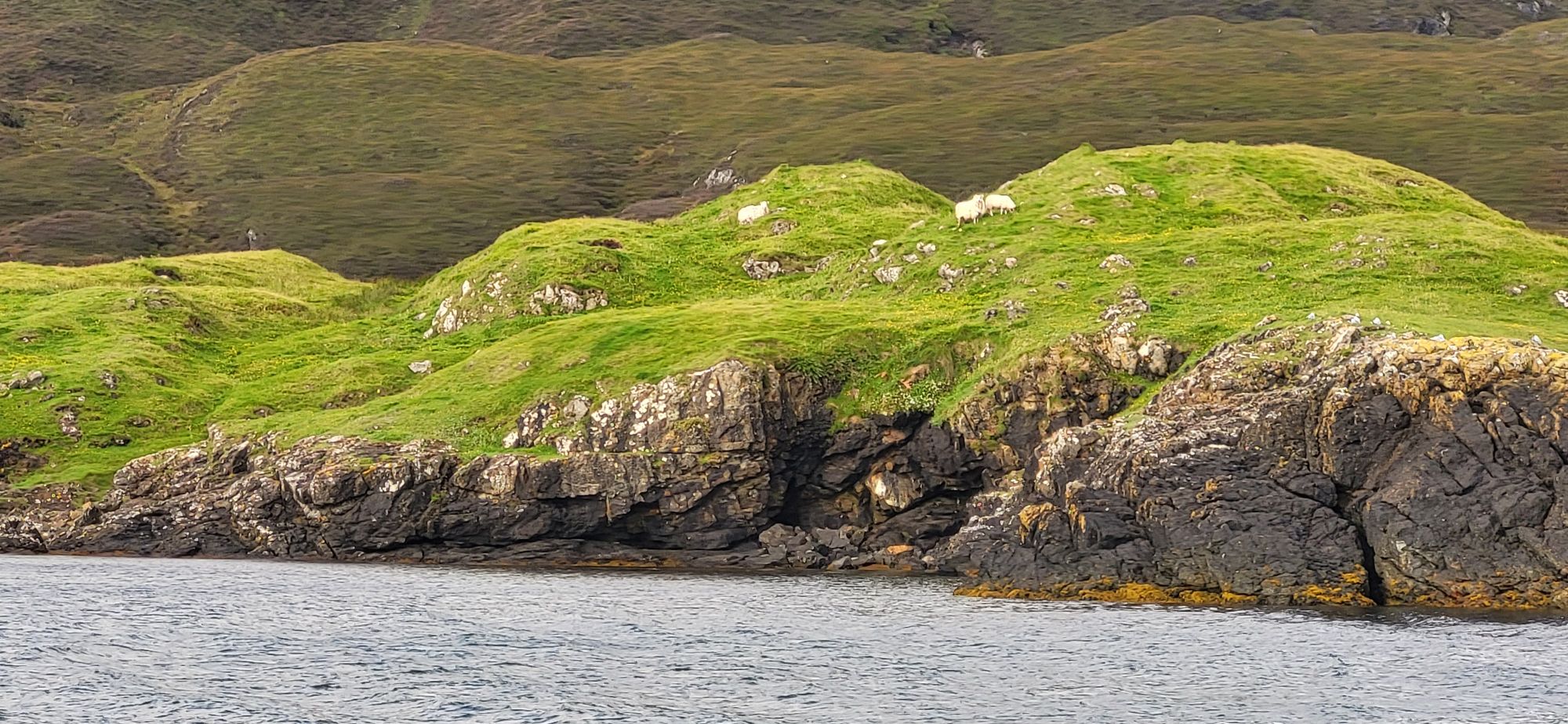
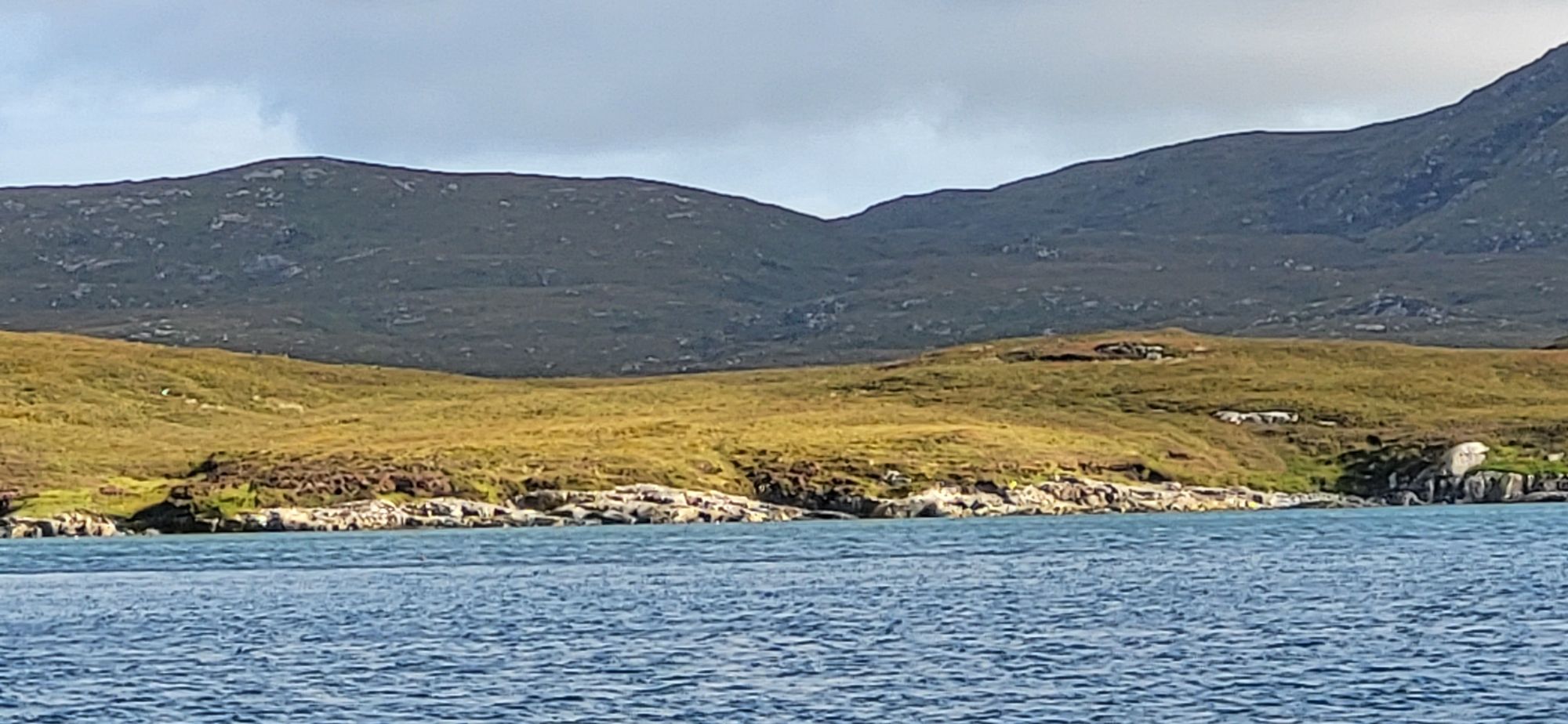
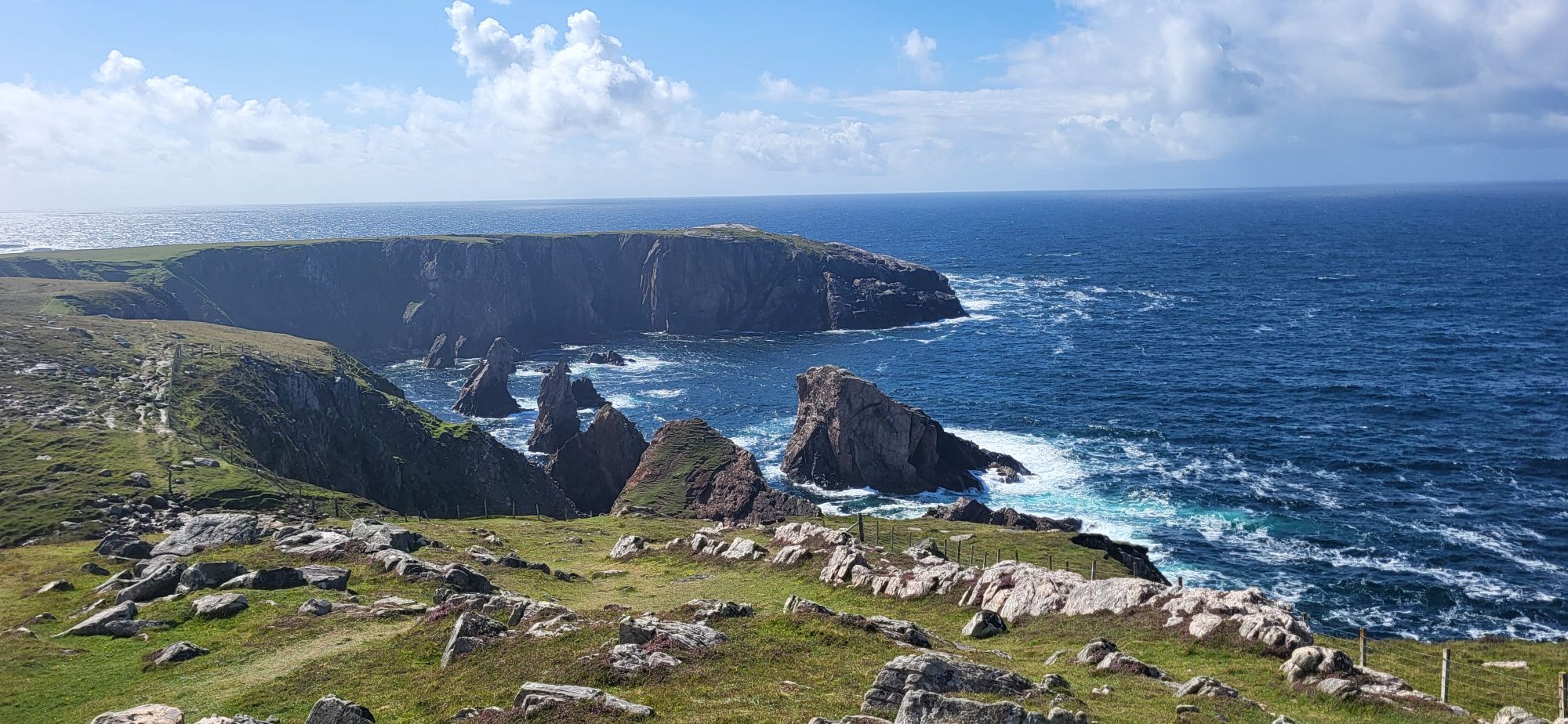
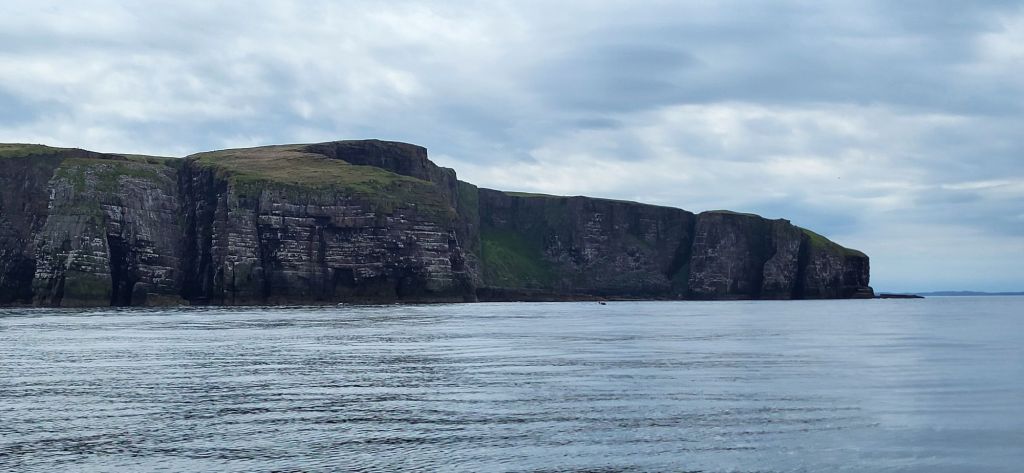
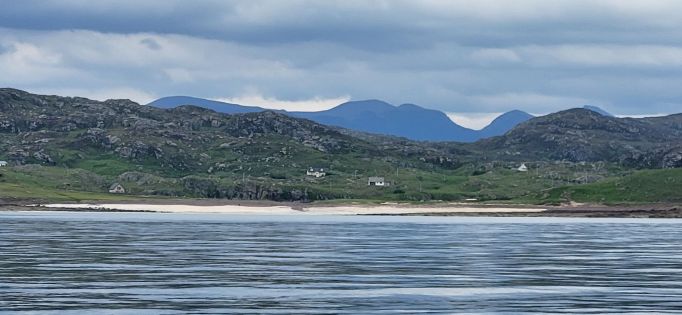
In fairness, it’s hard to grumble. The calm gives us time to sit back and revel in this extraordinary coastline, ragged, ancient, barely populated, with beaches that would be heaving with sunloungers anywhere south of Inverness.
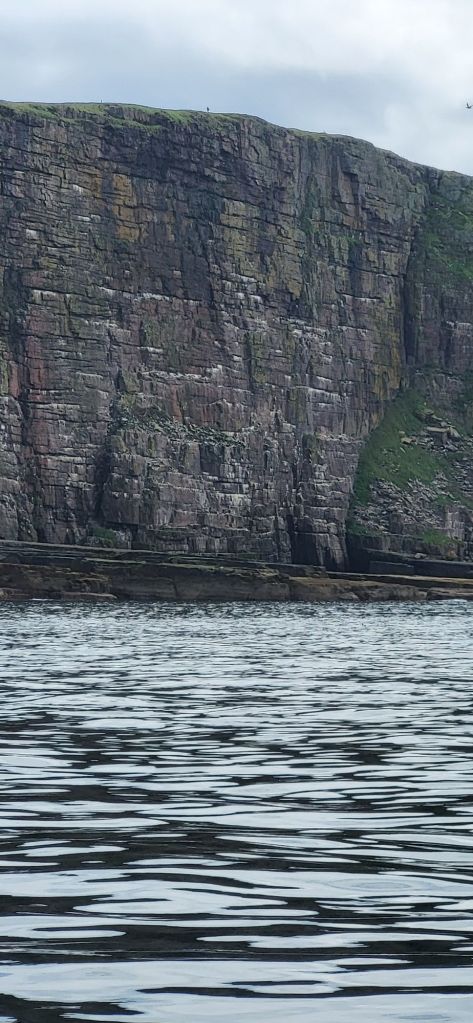
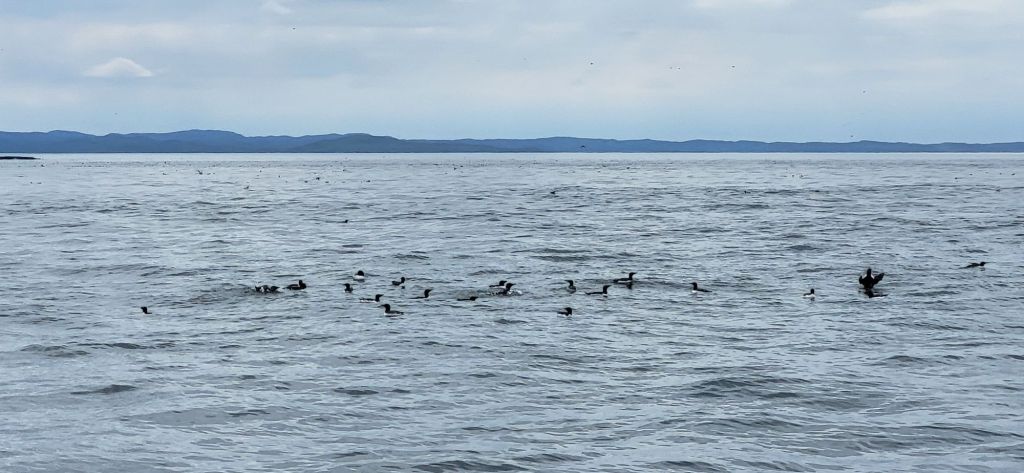
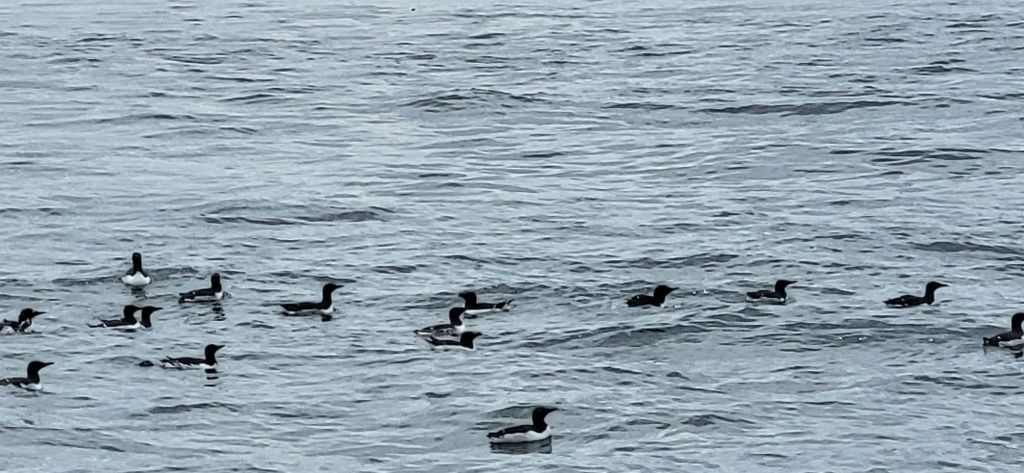
The guillemots have colonised the cliffs, and they seem to play chicken (guillemot??) with us as there are hundreds sitting communing in sociable rafts, leaving it until the last minute to flap away across the water or to dive down. We don’t seem to run any over, but we keep checking to see if we are leaving a trail of feathers behind us…
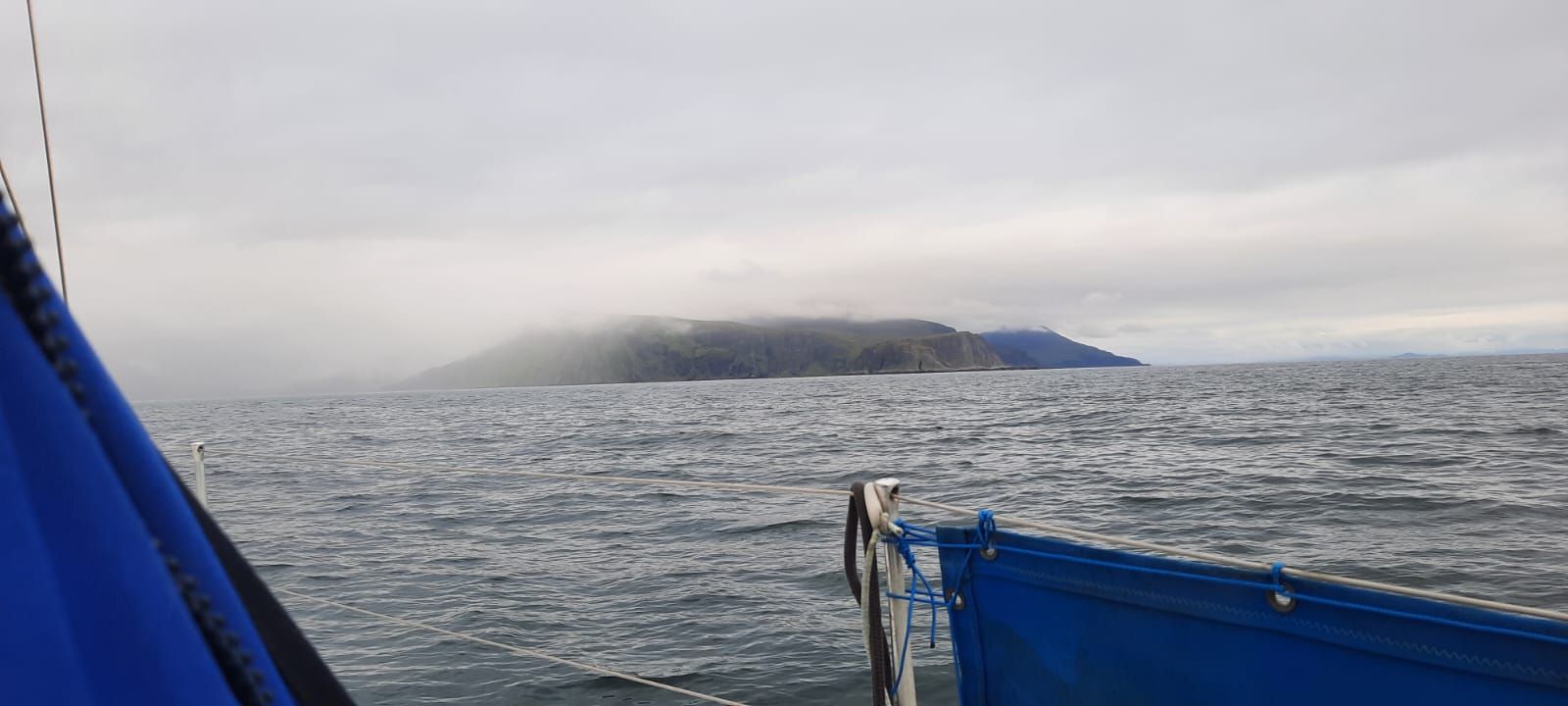
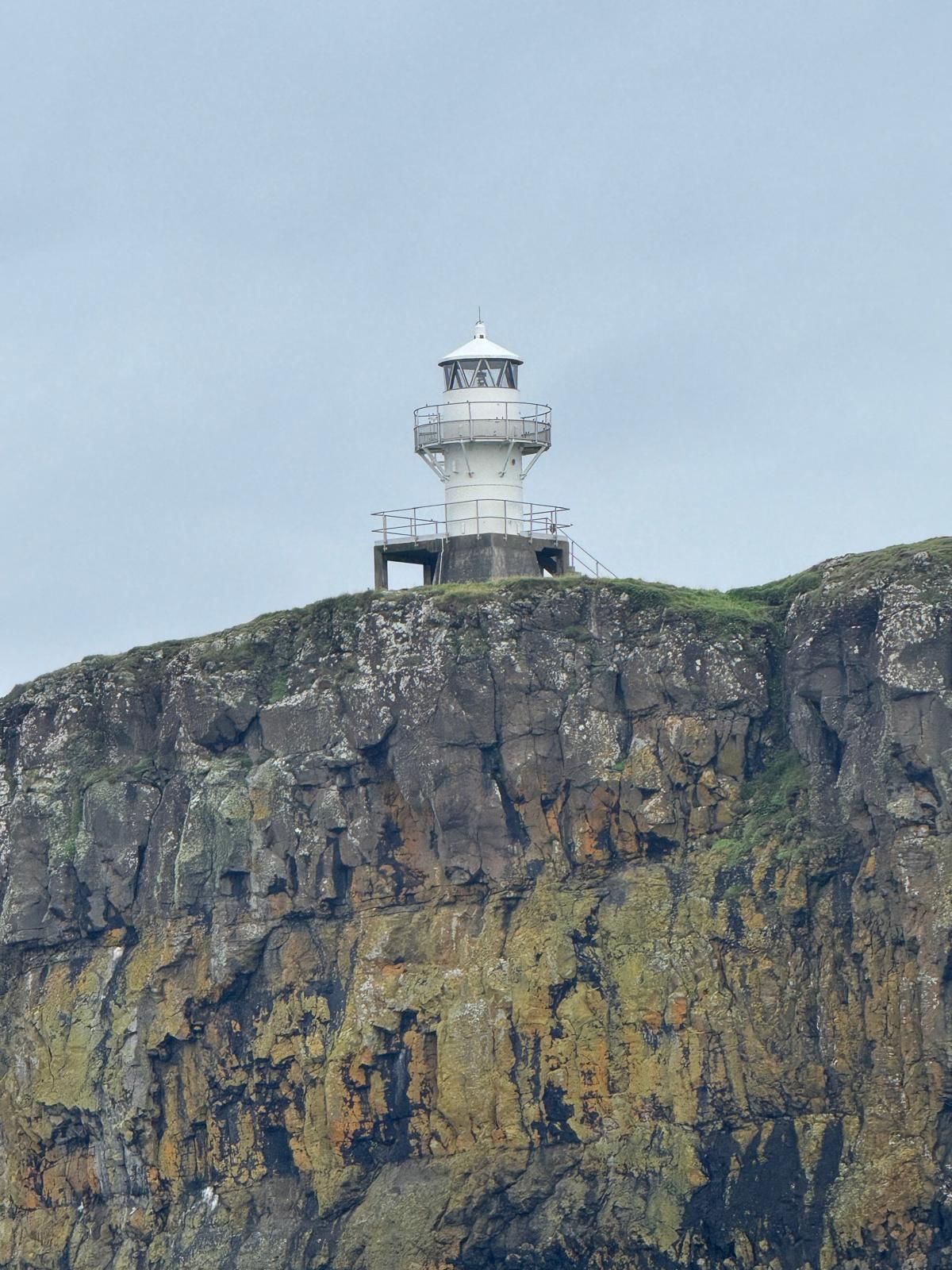
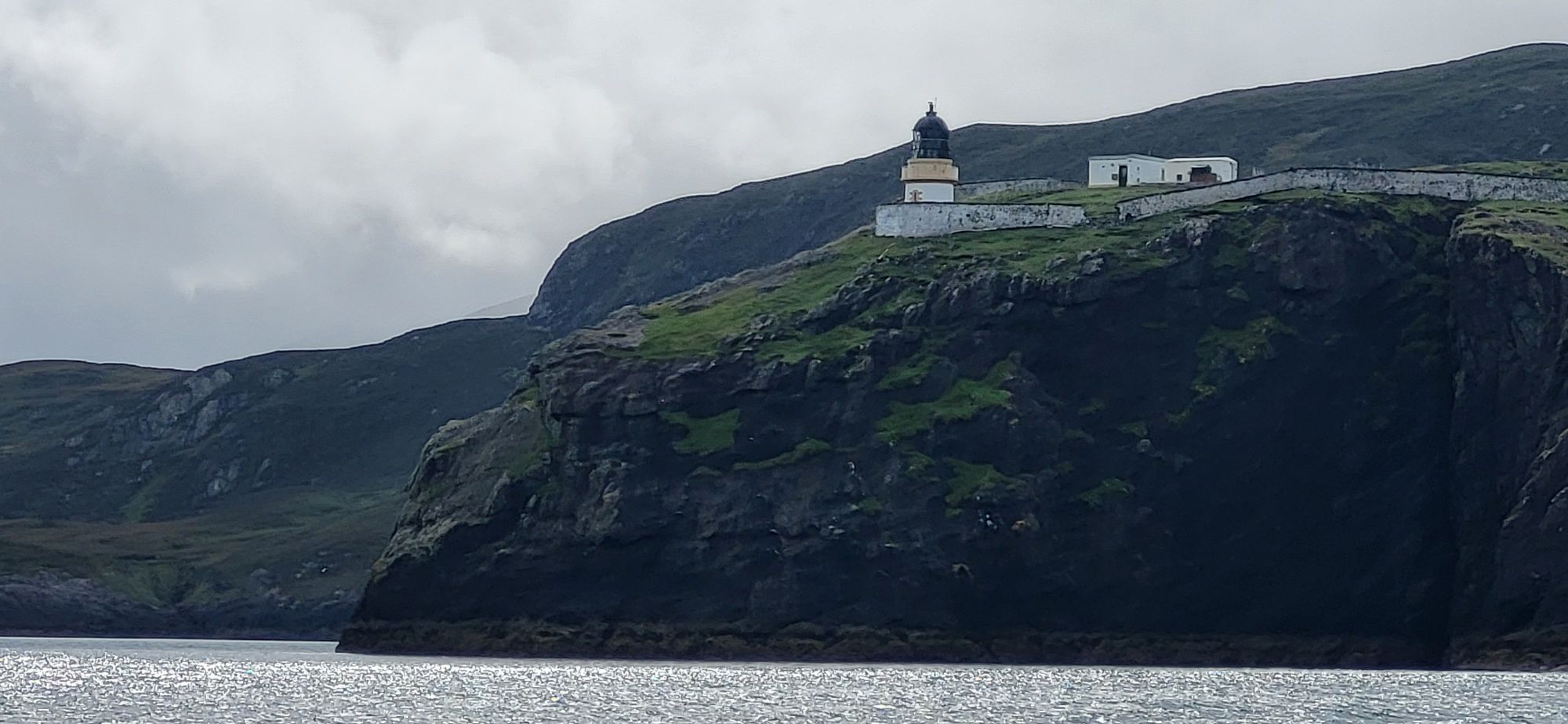
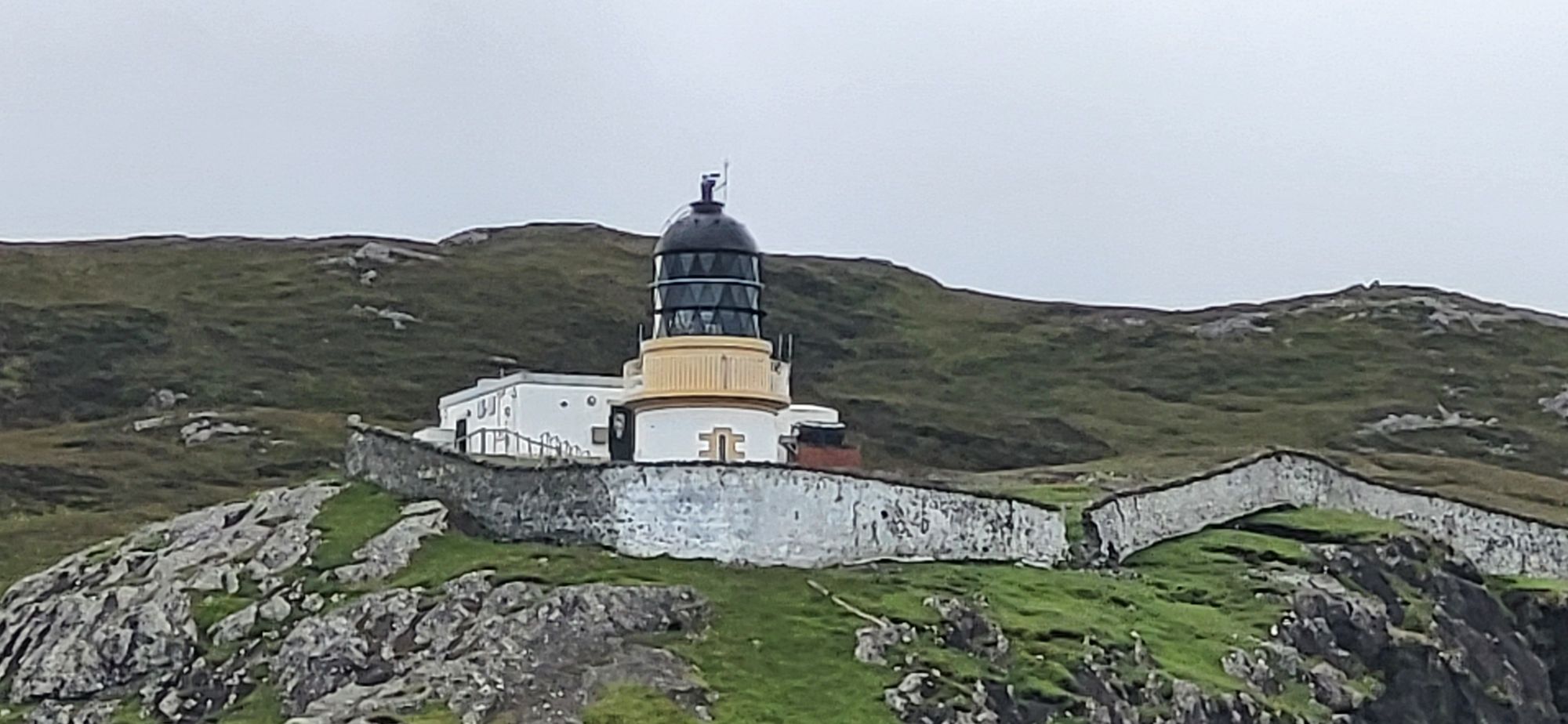
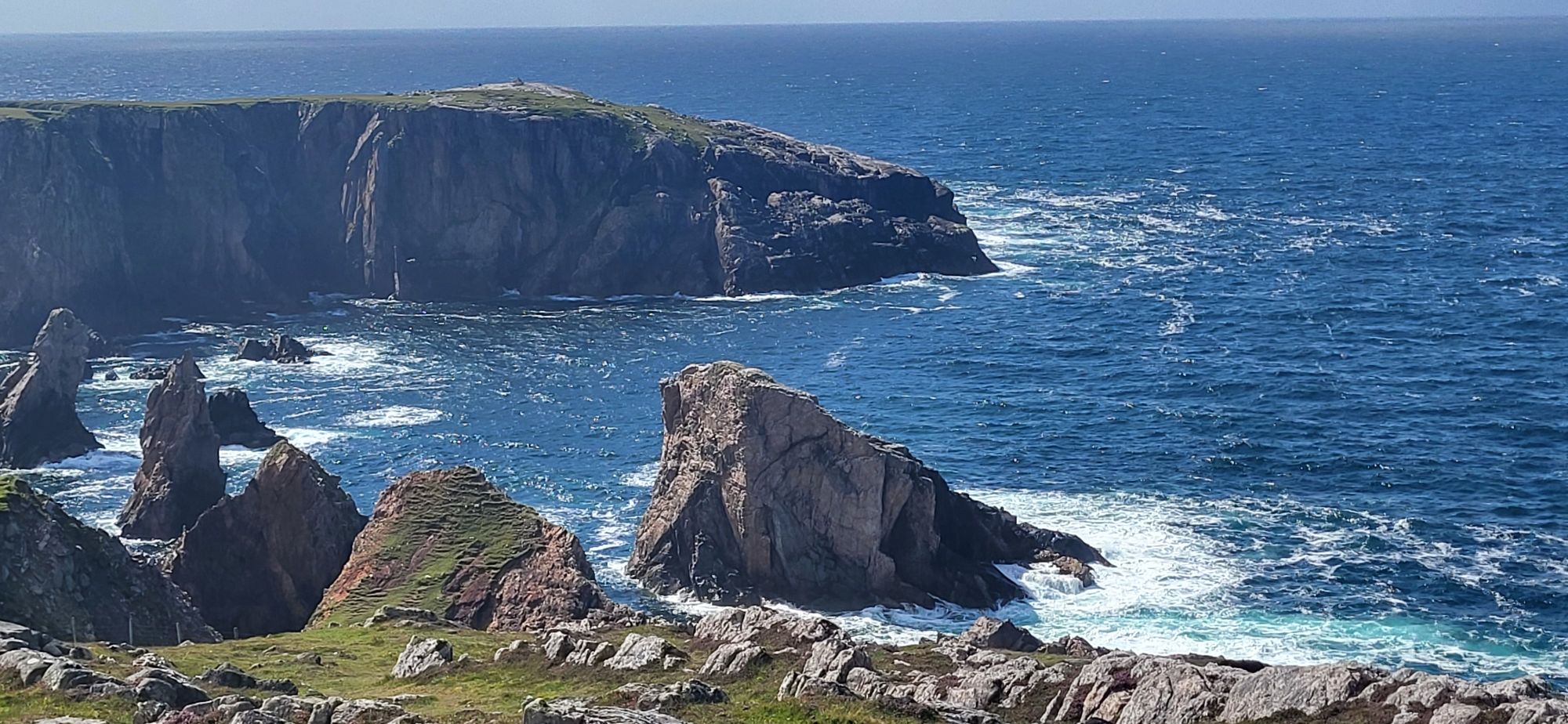
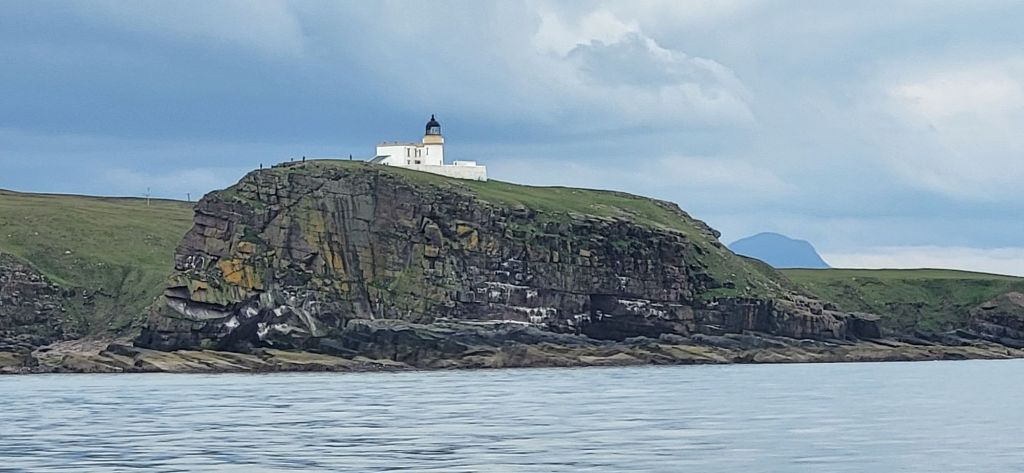
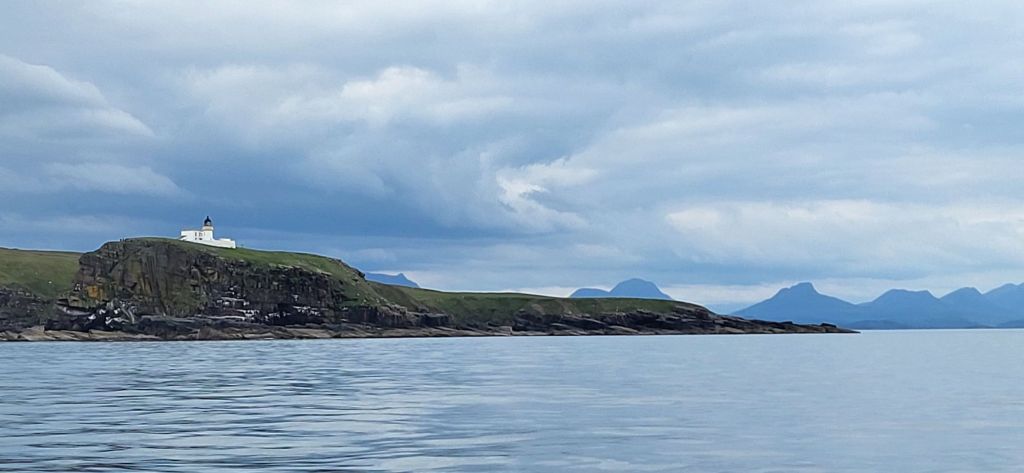
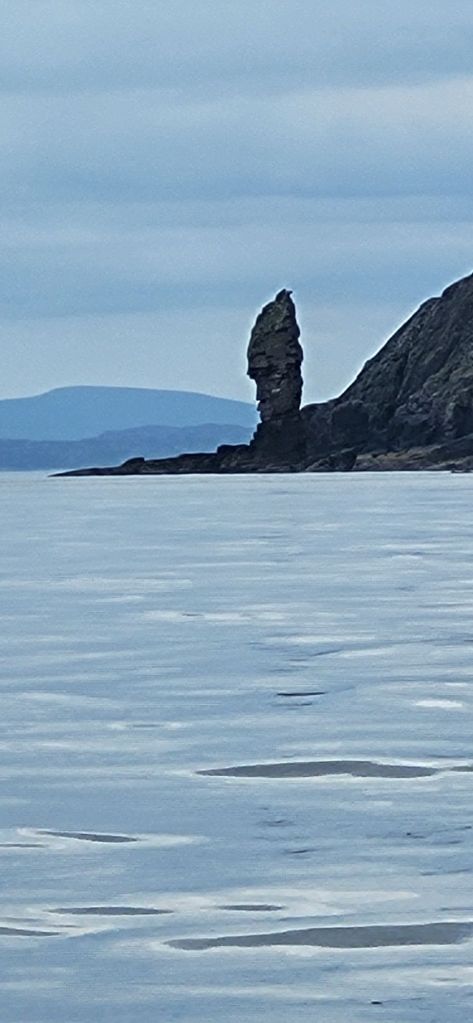
The mountains march away into the distance, and headlands come and go, some with lights and other with fanciful names …why are stacks always “Old men” of something. This one is the Old Man of Stoer…
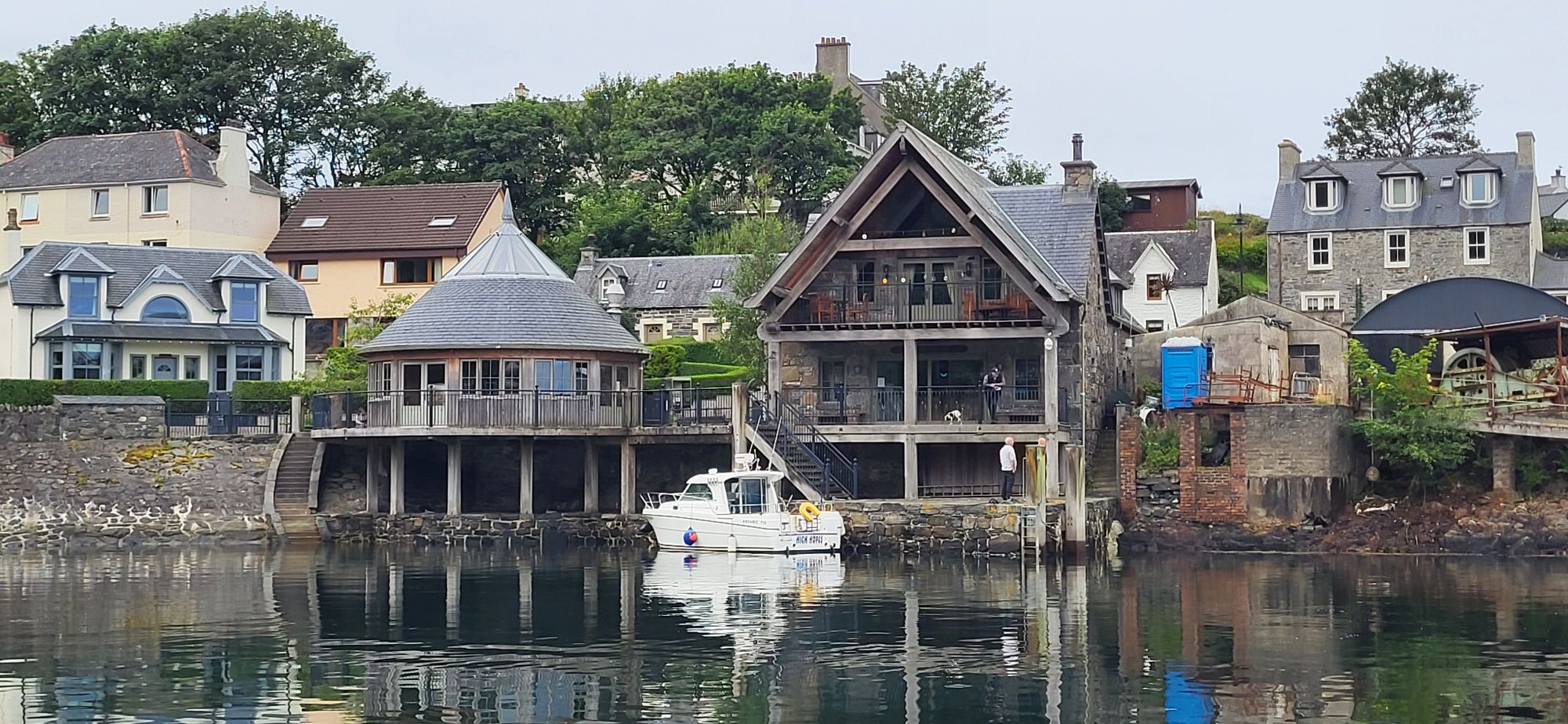
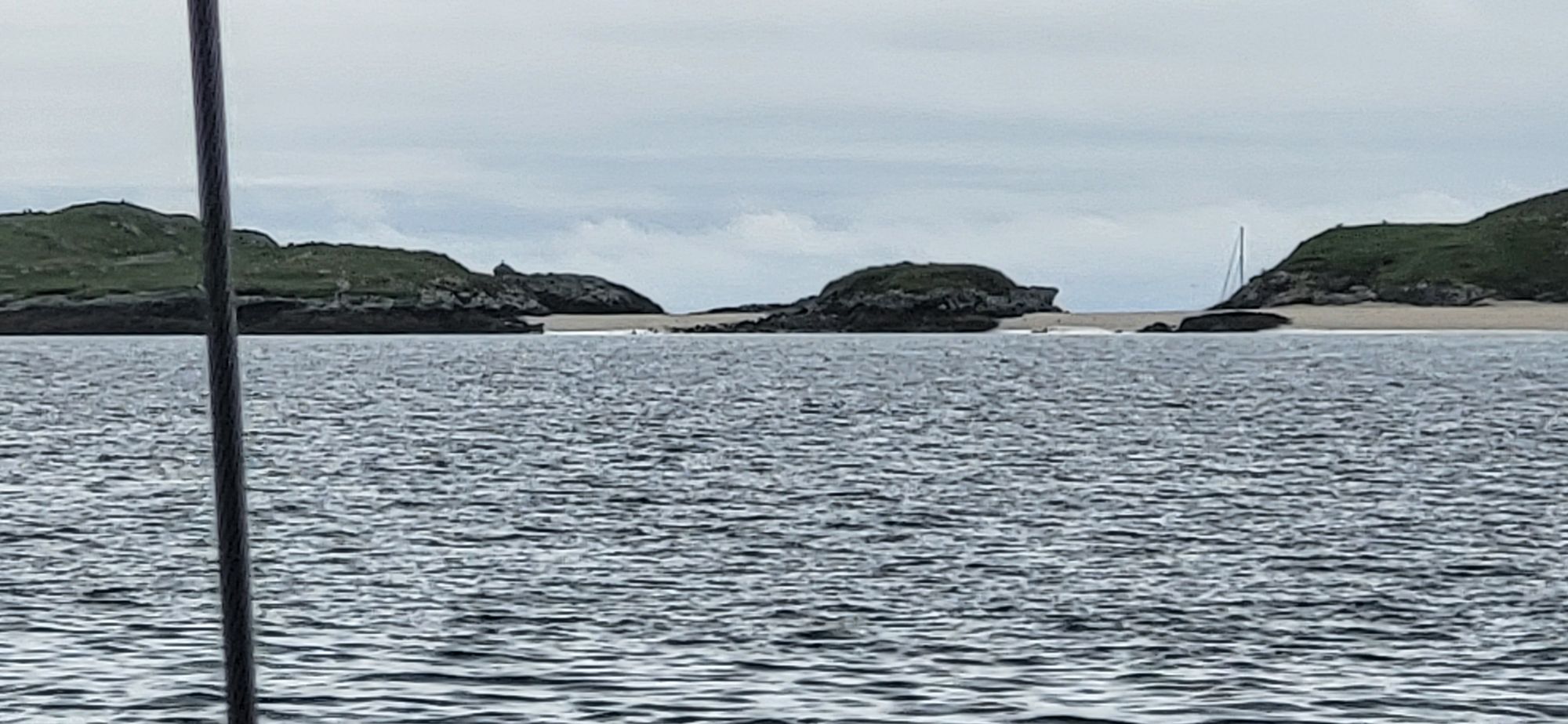
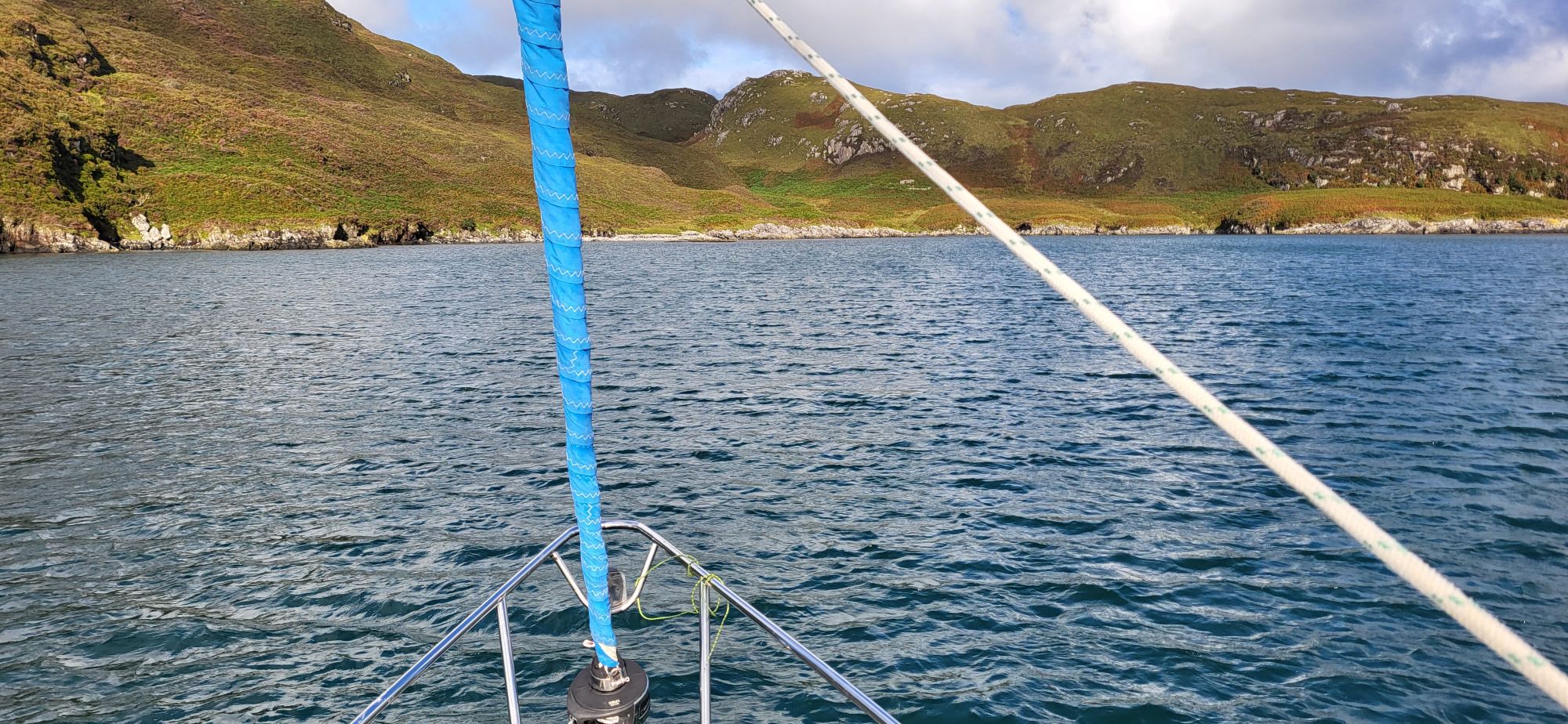
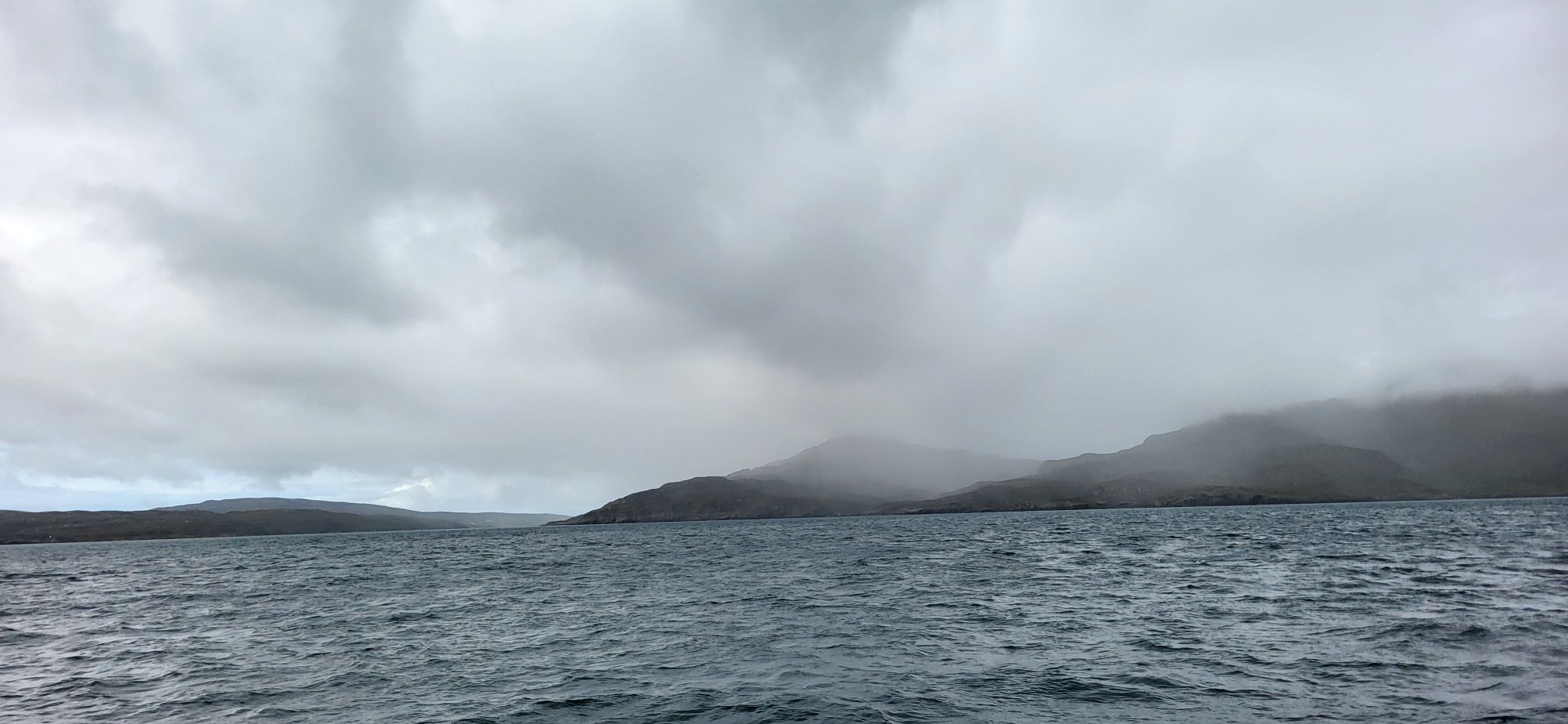
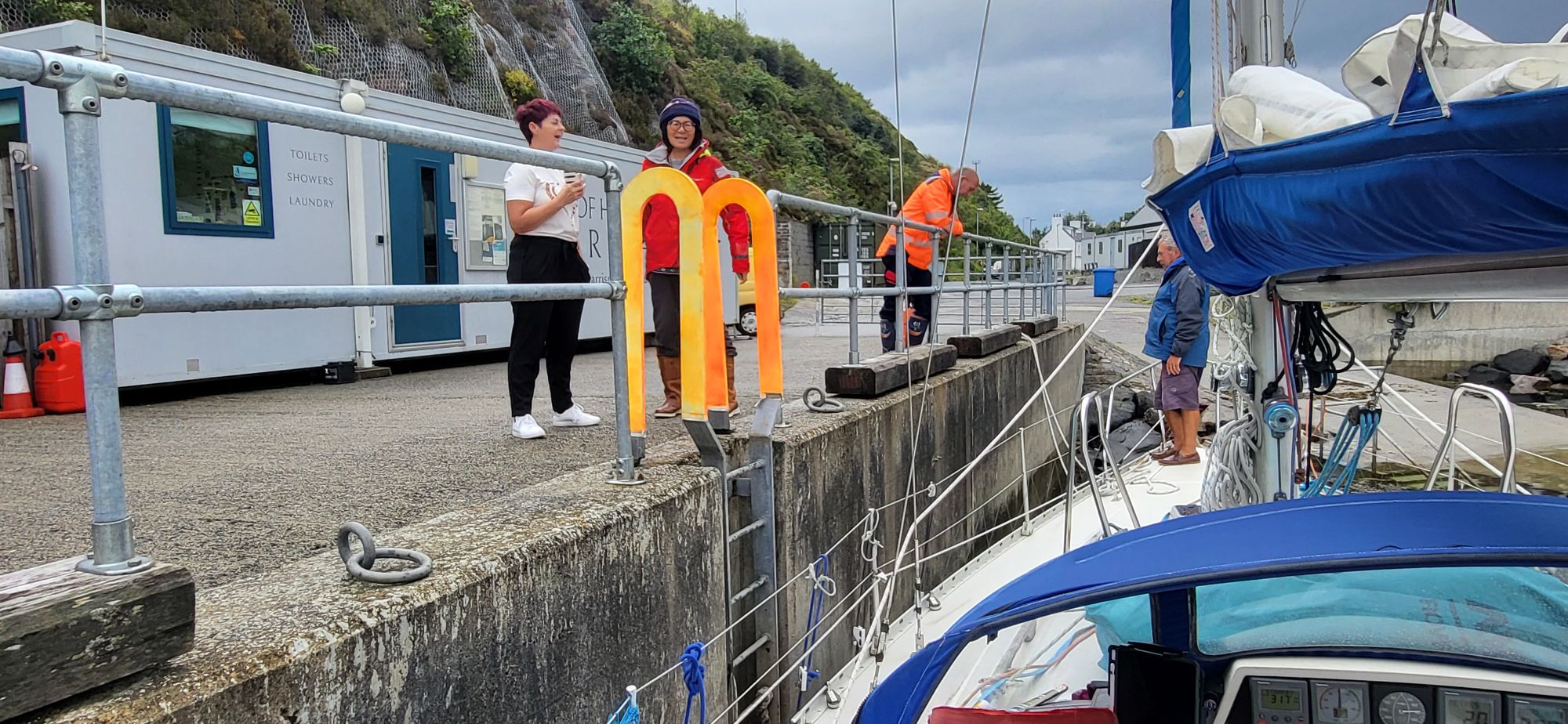
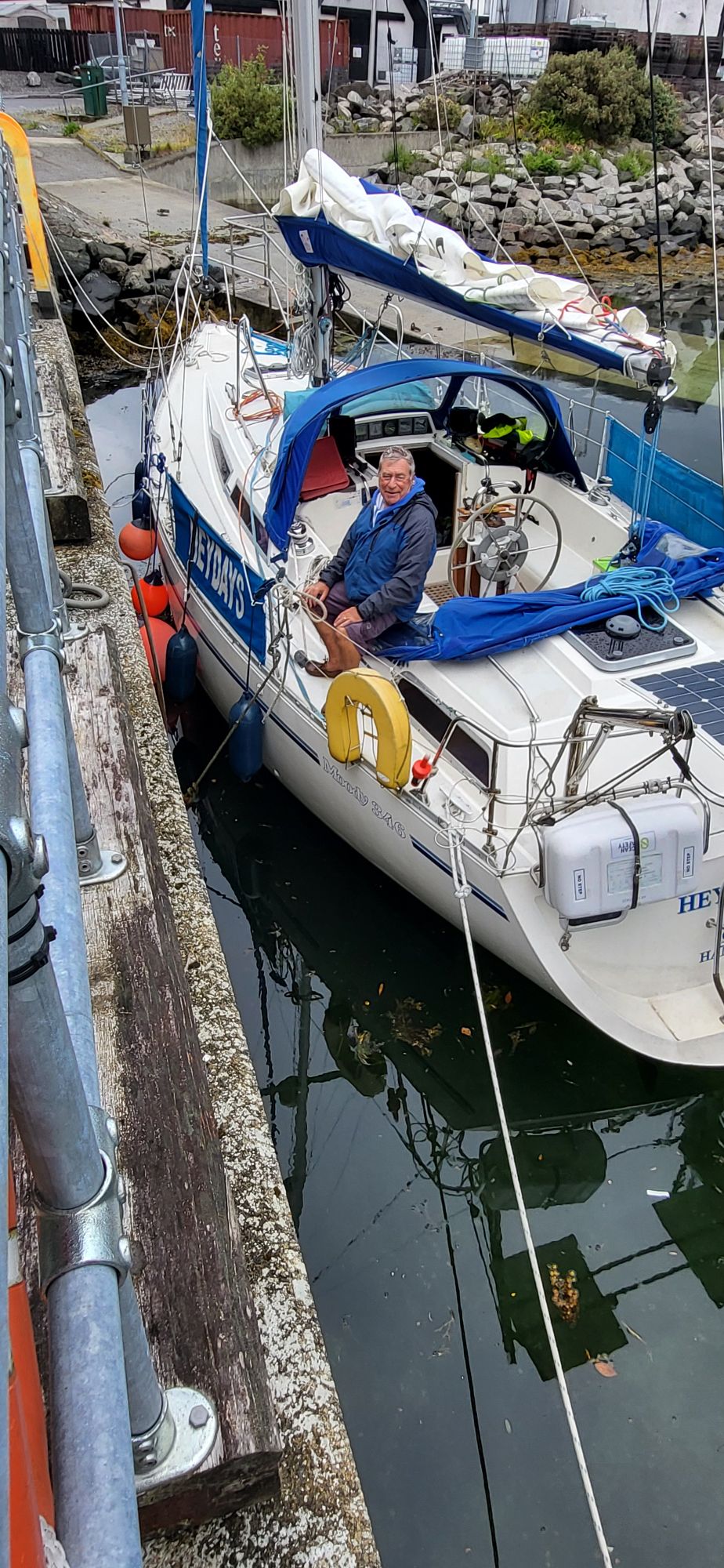
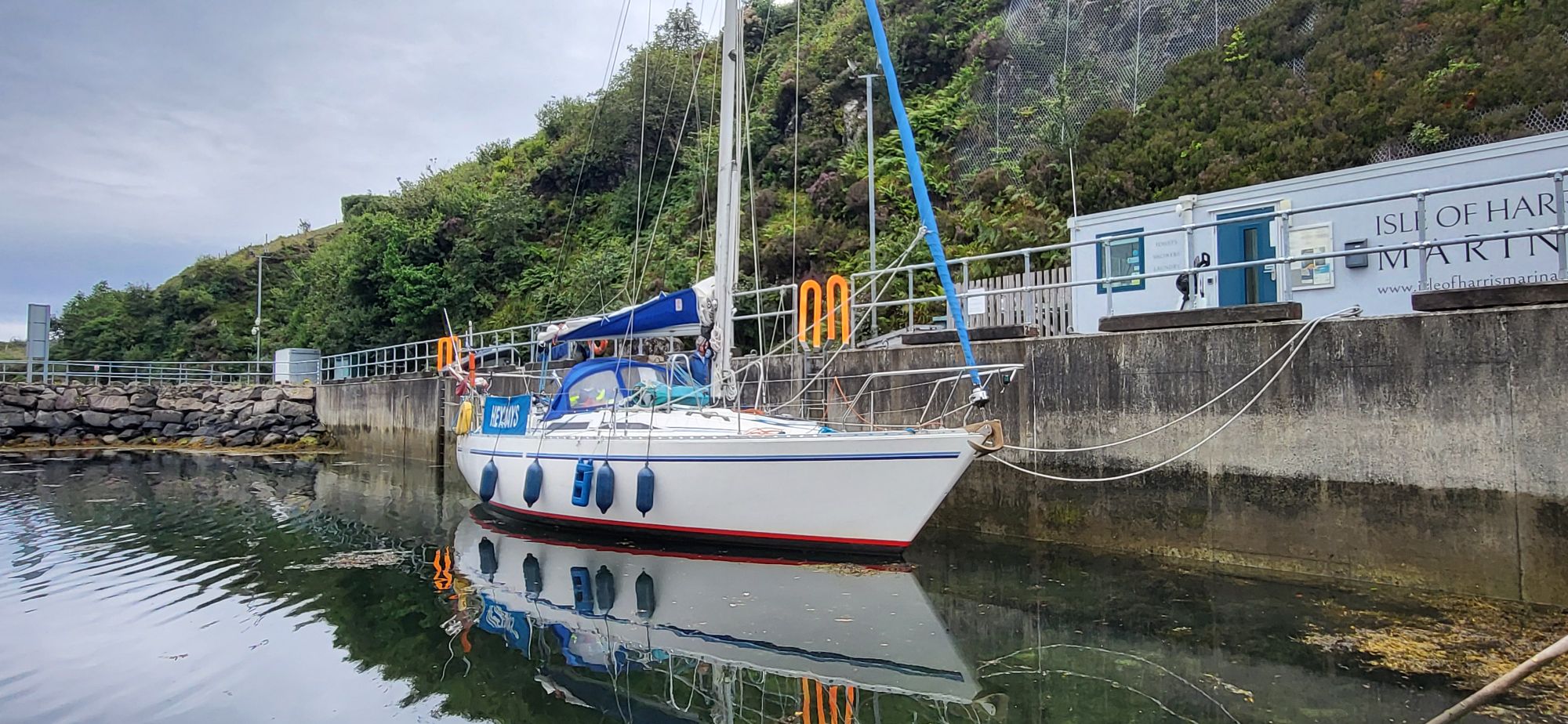
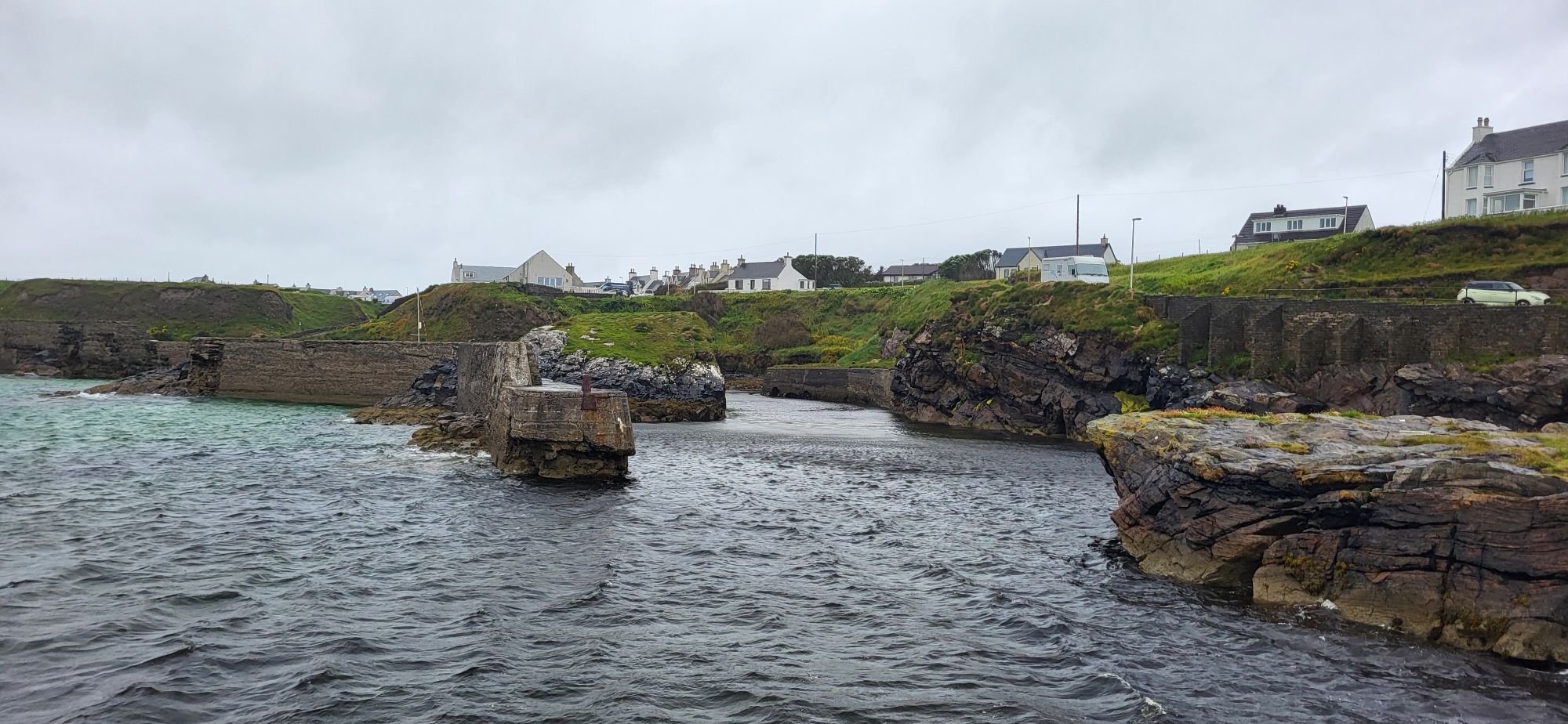
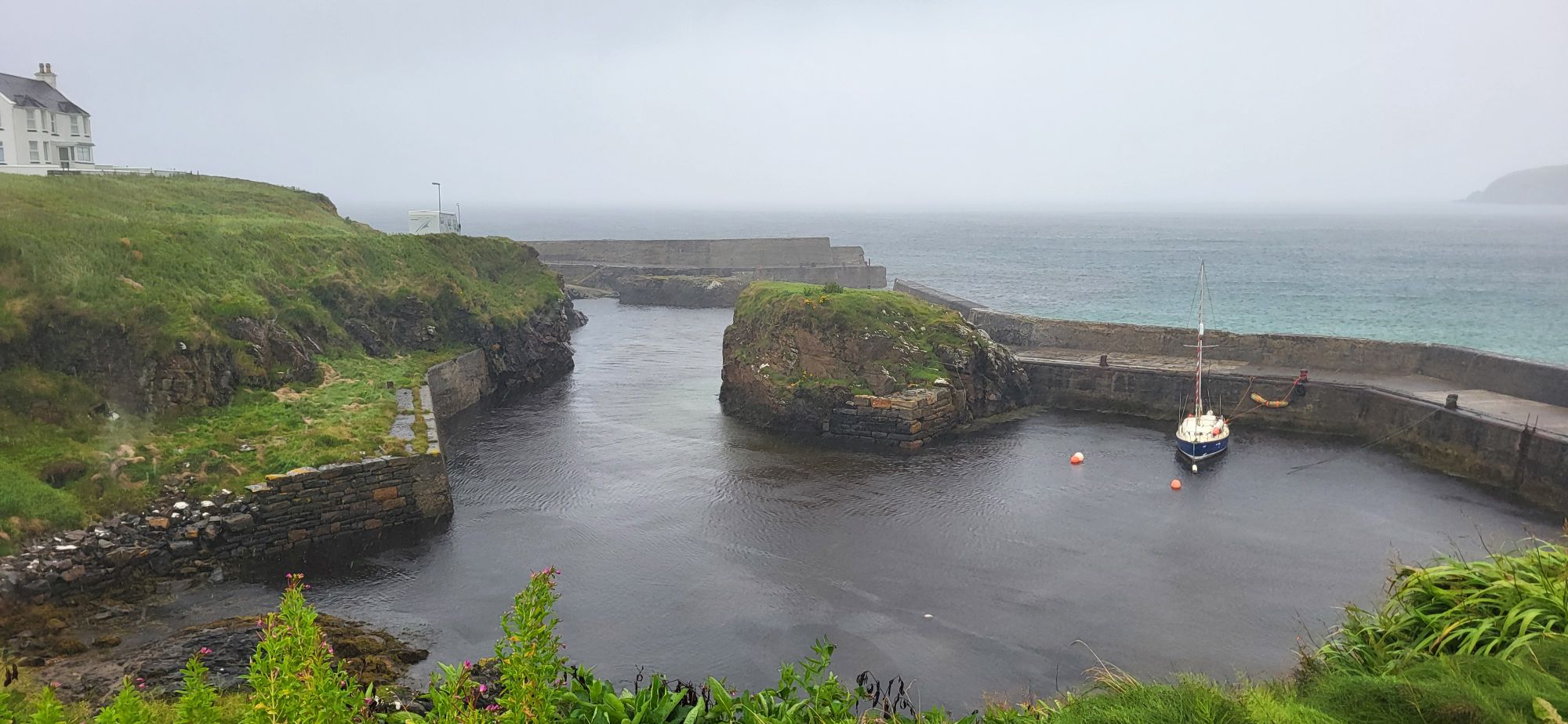
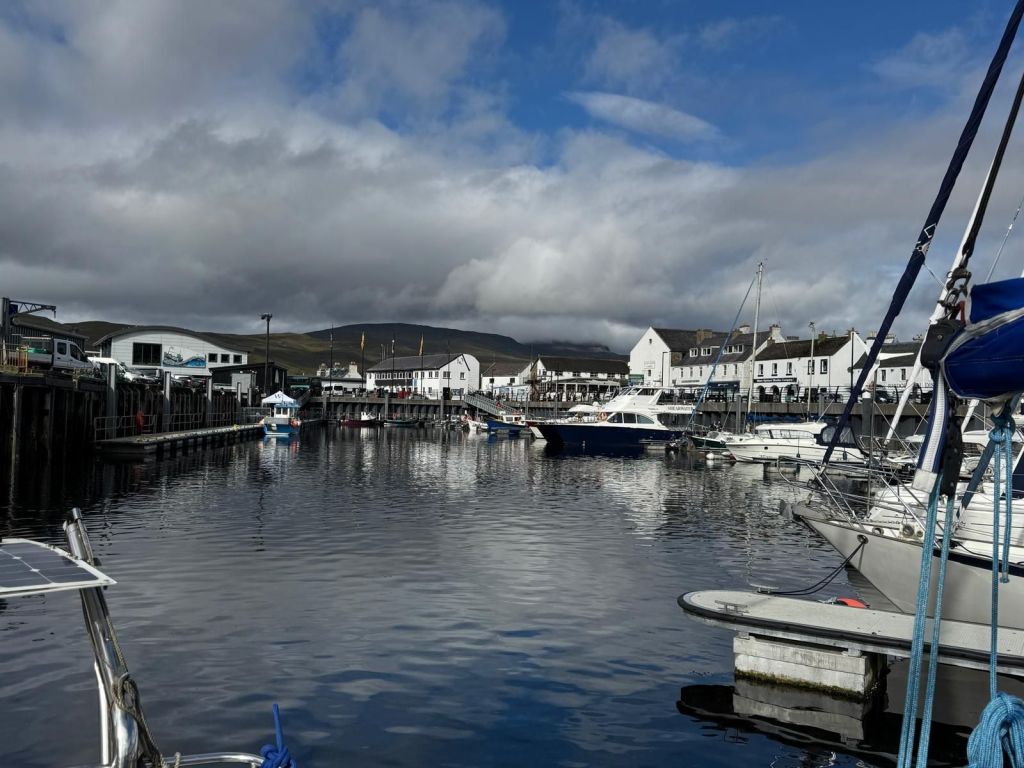
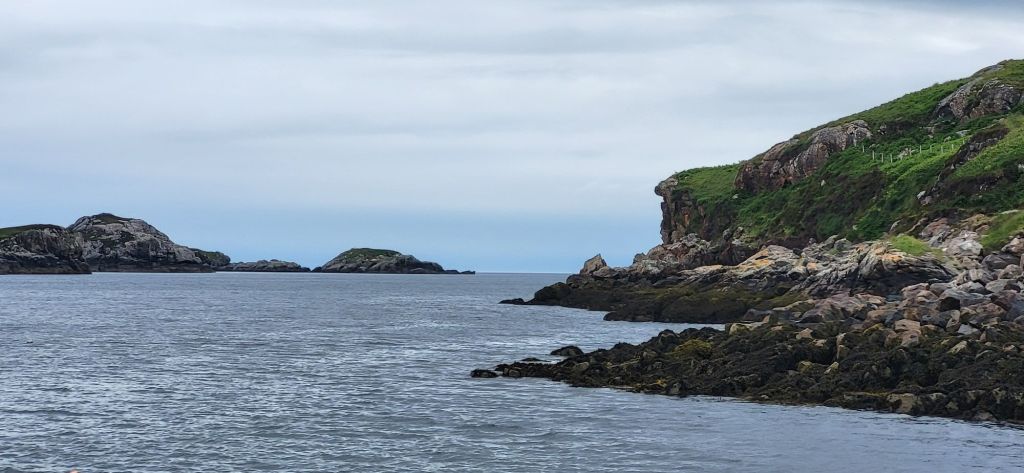
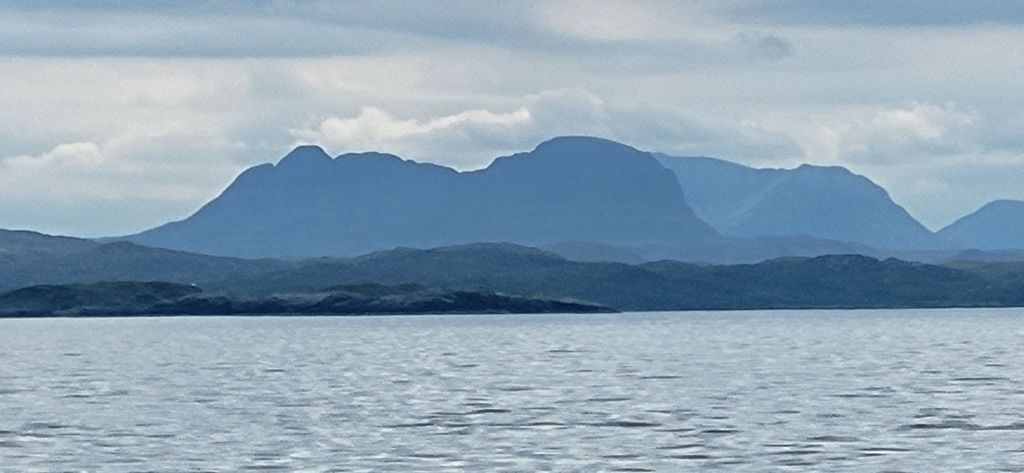
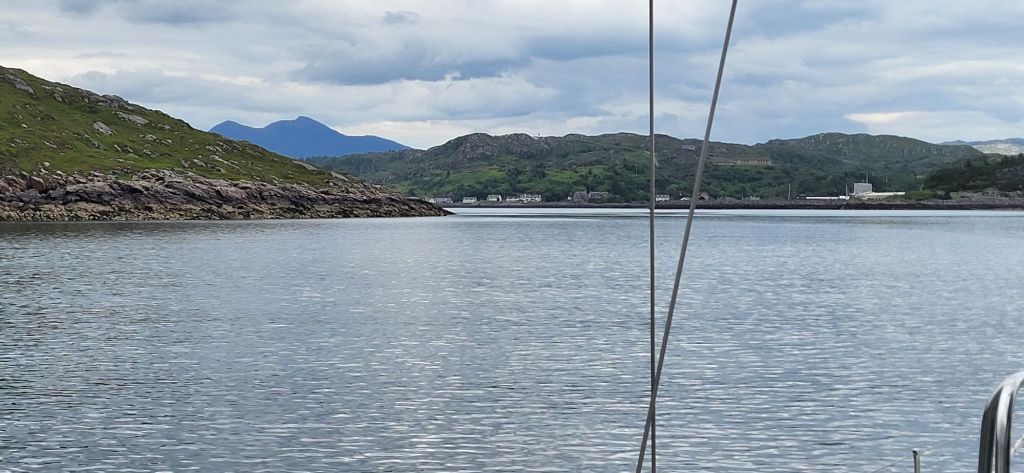
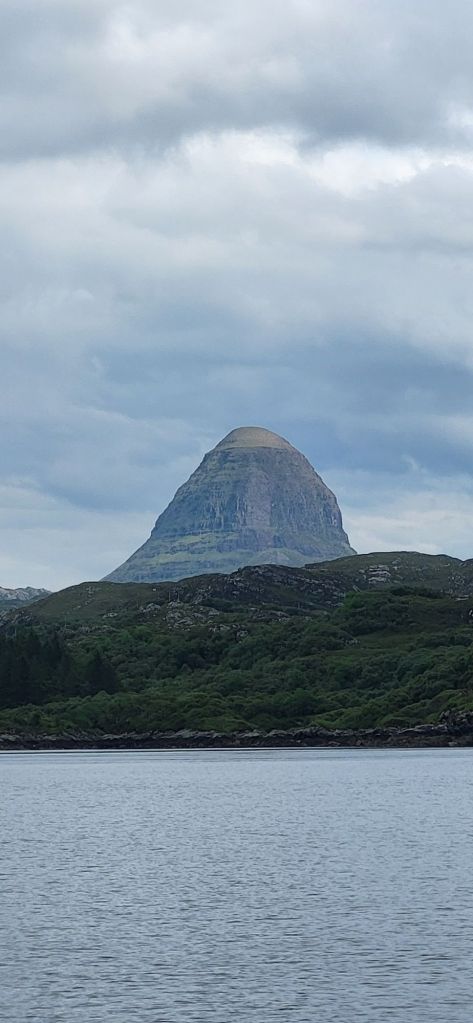
The approach to Lochinver offers the same mild anxiety as Kinlochbervie…you aim at what looks like a solid wall of rock and trust that something will give. It does, the village opens up at the last moment, and with it a neat little dock for leisure boats, where we are soon tucked in just as the rian sweeps across….all glowered over by what we think is the very carbunkle-like Caisteal Liath mountain.
Revisiting places full of happy memories can sometimes be a bit of a fool’s errand. The food will be worse, the weather will be worse, and we will be older. Nevertheless, here we are in Stromness, nine years on, and we are delighted to report that the pessimists are, on this occasion, entirely wrong.
But we are getting ahead of ourselves.
Two consecutive pre-dawn starts had left us in a condition politely described as knackered. Wick offered the prospect of rest and recuperation, and we embraced it wholeheartedly, until we discovered that Sunday public transport in this corner of Scotland amounts to one train and a rail replacement bus, both timed specifically to be of no use whatsoever. Old Pulteney distillery, which might otherwise have provided a perfectly reasonable programme for the day, was shut. Clearly, some activity was going to be required.
We compromised. We took a taxi.
Castle Sinclair Girnigoe turned out to be entirely worth the journey. Perched on sheer cliffs in a manner that would have any modern planning department reaching in fits, it is both magnificent and deeply alarming. Its history is, if anything, even more dramatic than its location. One clan chief, apparently not bothered by the norms of fatherhood, imprisoned his own son within its walls and sustained him exclusively on salt beef until the poor man died of thirst. We don’t think he would have done well in the current era of parenting.
Cromwell passed through briefly, and thereafter the castle got on with the business of falling into ruin.
The coast here is very craggy and we understand why you would build a castle here if you distrust some of the locals, even if it seems completely precarious…
The Noss Head lighthouse nearby has acquired a coffee caravan, which was doing brisk business. The baked goods on offer were extensive, and we concluded that the walk back to Wick would require more calories than strictly needed for nutrition. The cliff-top path being very boggy, we took the road instead, which proved longer but considerably drier, and passed through countryside that once formed part of the Coastal Command network, intercepting signals from German ships and occupied Norway and sending them south to Bletchley for decryption.
Back aboard Heydays, we turned our attention to Orkney. The weather forecast, as is normal round here, is everchanging making life or passages hard to plan. We wanted to reach some of the smaller islands missed on the previous visit, but after some debate, we settled on Stromness as the obvious first port of call, well-placed, well-sheltered, and an entirely acceptable place to be pinned down by the weather for several days should that prove necessary. Up here, this is what is known as a plan.
The Pentland Firth demanded its usual degree of respect. The tidal streams through here are not merely strong, they are the stuff that features in accident reports. The standing waves known as the Merry Men of Mey are named, one can only assume, by someone with a very odd sense of humour, as there is nothing remotely merry about them. Vessels considerably larger and more robust than Heydays have come to grief in them. The pilotage is precise, two miles east of Duncansby Head, one hour and fifteen minutes after high water Dover, at the exact moment of slack water as the tide turns north-west. We needed to be there at 0615. Wick is two and a half hours away under engine. The arithmetic is straightforward and deeply unwelcome: alarm at 0245, slip mooring at 0330.
The one concession the far north makes at this time of year is that darkness barely registers. We went to bed at eight o’clock in broad daylight, which is a peculiar experience, and lay there with the rain doing its best to keep us awake.
Sleep came, eventually, but was not entirely restful…
At 0245, the alarm achieved what rain, daylight, and general anxiety had failed to do and woke us up. We got ourselves into full wet weather gear and sufficient warm layers to stifle all mobility, and by 0330 were sliding quietly away from the mooring with enough light to steer by…
We have the lights of Noss Head and then Duncansby Head to guide us, and we slide past the now ghostly Castle Sinclair Girnigoe.
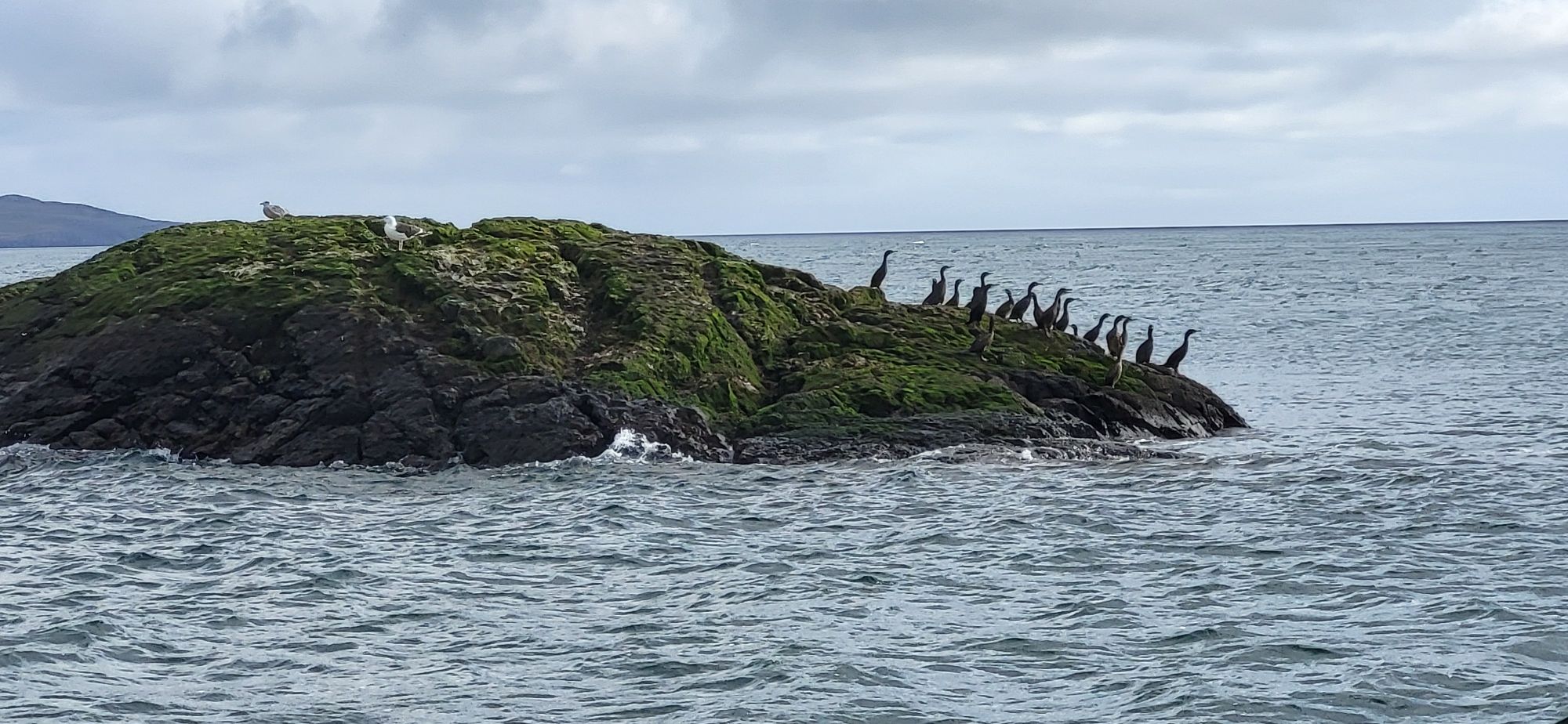
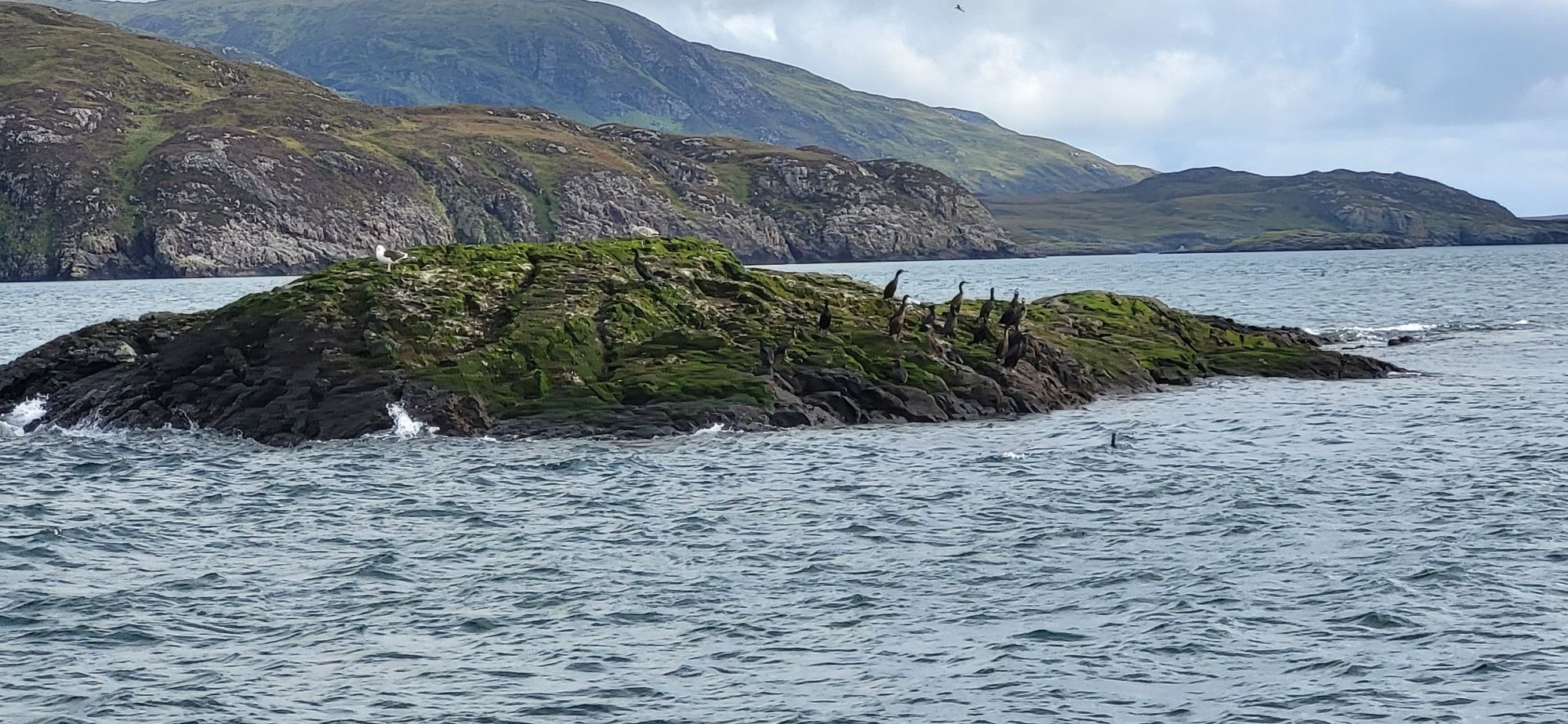
The only other signs of life at this god-forsaken hour are the ever present, very cute, but incredibly shy guillemots. They resolutely refuse to be photographed and swim away underwater with a technique that looks just like flying.
The rain eases, but the temperature stays firmly well in single figures as the headlands pass in silhouette. Hot coffee helps…
With absolutely no wind at all we use “the old iron tops’l”, as old sailors probably never said, and we get to the start of the Pentland Race exactly at slack water and to the minute of the pilot guide….smug or what…
…just a fishing boat rounding the head towards Scrabster…
As Duncansby Head and the iske of Stroma fall astern, and Muckle Skerry with its very lonely light slides past to starboard…
…we fix our eyes on South Ronaldsay and Swona. The westerly stream is now doing its best to suck us towards the race, and we are steering around 40 degrees east just to make good our course.
Gradually we draw a beam of Swona, and, now protected by South Ronaldsay, we are through the worst and still with no wind, motoring freely towards Scapa Flow.
We see it coming….a squall from dead ahead bringing winds on the nose, heavy rain, and very little visibility. Our plan is to head up Hoxa Sound and then across Scapa Flow, but a message on the radio adds to our joy as it warns of a big tanker leaving to transit down the Sound in the opposite direction.
We decide to use discretion (much underrated) and instead plot a passage to shimmy between the island of Hoy and the small islands of Switha, Flotta and Cava.
As the visibility improves slightly, we catch a glimpse of the tanker, thankfully to be nowhere near…
The change of course turns out to be delightful, as the weather changes as rapidly as it came, and we find ourselves in bright sun (albeit with wind on the nose….obviously).
The last few miles past Graemsay and in to Stromness are brilliant and there is a real sense of almost a homecoming.
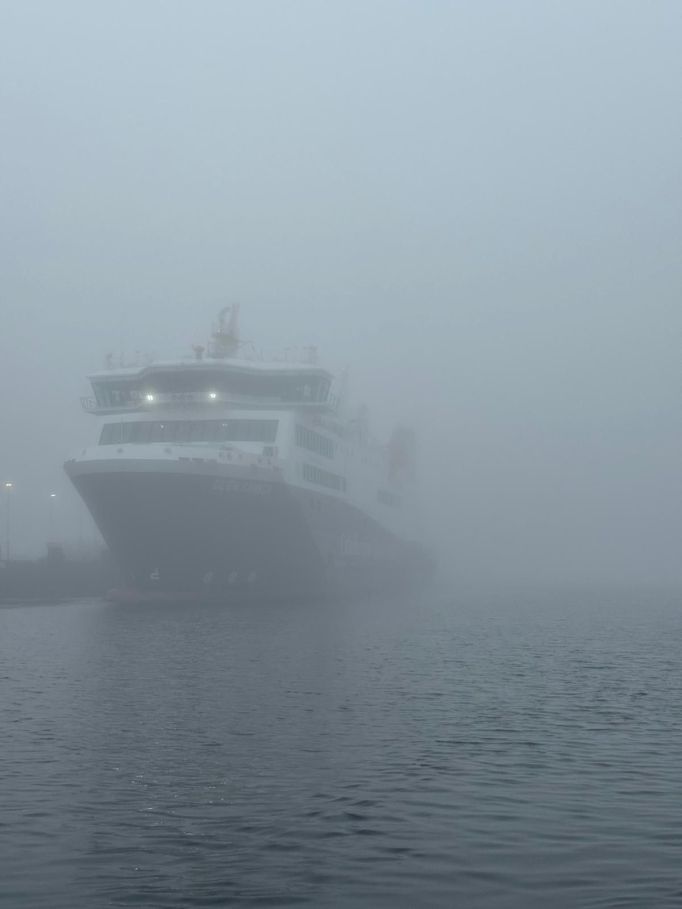
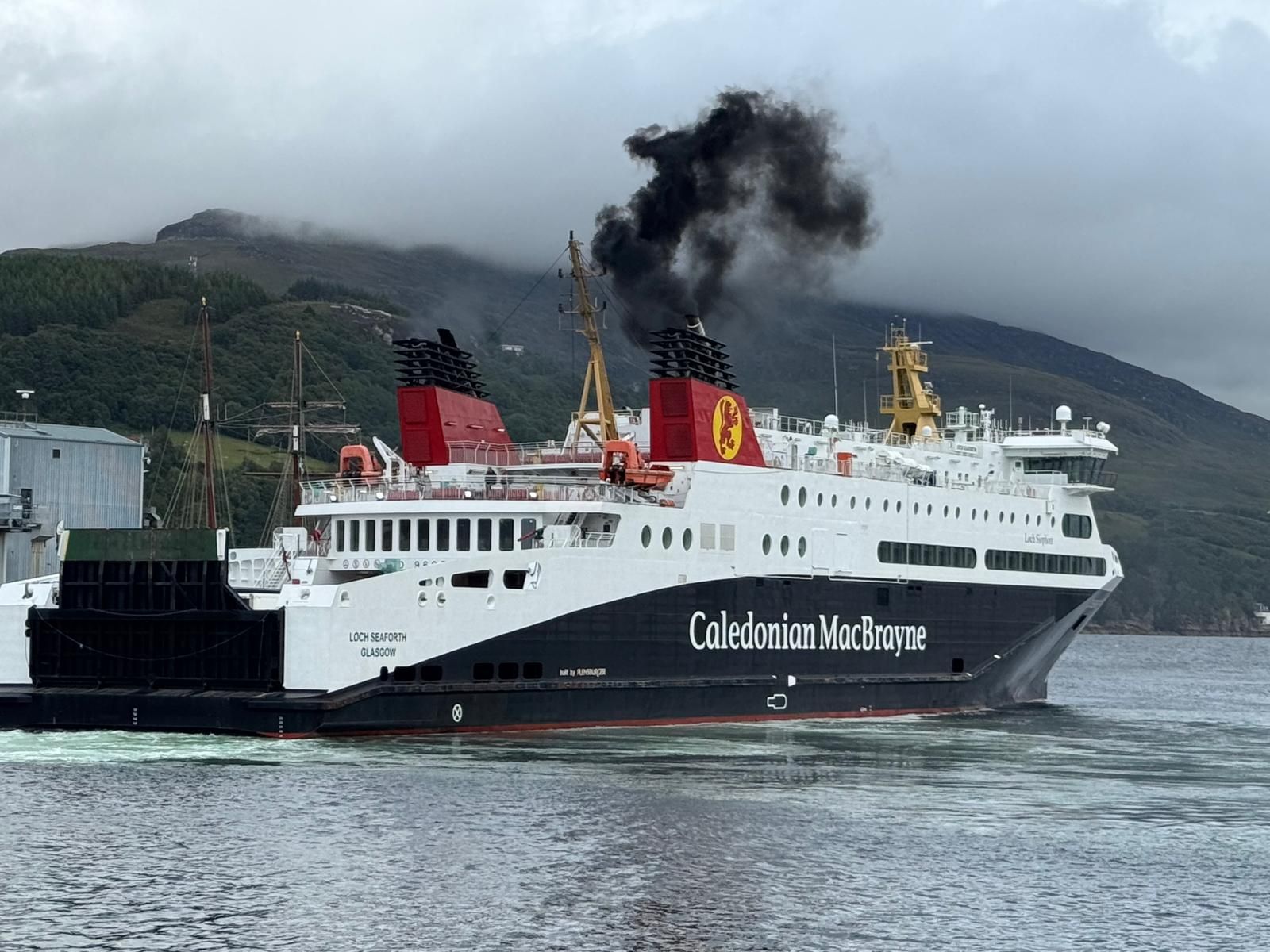
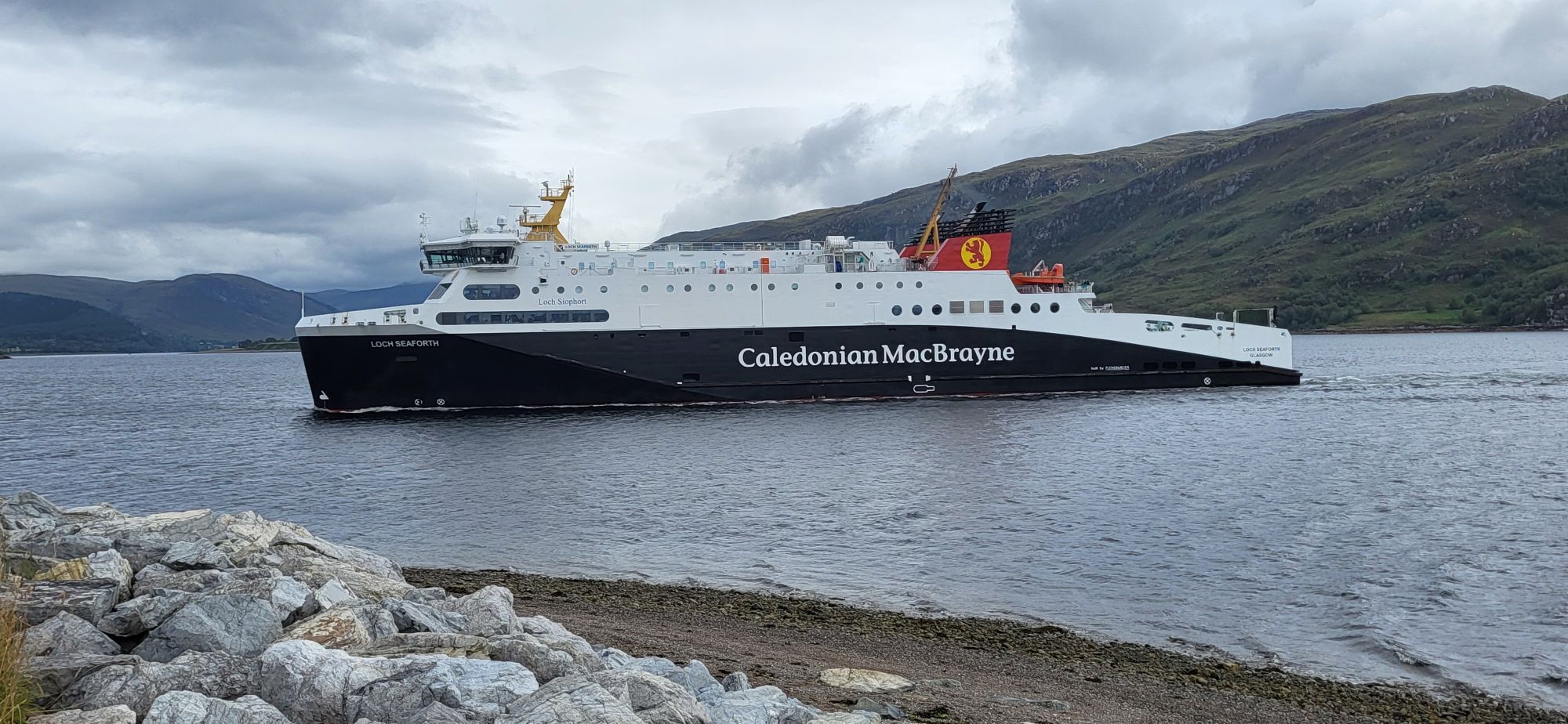
The ferry runs in ahead of us …
and by the time we have tied up ourselves, it is already loading for the return trip.
We feel like we’ve done a day’s work already…it’s only 10.45am, but fried eggs and more coffee make up ….what? Breakfast? Brunch?…..before a really welcome snooze. It’s great to be back.
Pre-departure planning the previous evening presented a bit of a navigational debate. The Admiralty Tidal Atlas and our two trusted apps, Navionics and Savvy Navvy, appeared to have attended entirely different courses on hydrography. The apps suggested a relaxed, “leave whenever you fancy” approach, while the Admiralty, in its authoritative manner, was insisting on considerably stronger tidal streams and a correspondingly later departure.
A night’s sleep resolved nothing, but the forecast offered a helpful nudge… headwinds were due to arrive late afternoon, which concentrated the mind. Departure was set for around noon, a decision that felt decisive.
Easedale came to life in the morning sunshine as we attended to brunch, and set about preparing ourselves and Heydays (The Old Girl), for what promised to be an “exciting” trip in F3 to 5 conditions.
Passing through the narrow entrance, we noted with that we were the last vessel to depart, leaving behind a now-deserted anchorage….
Years of sailing Heydays have taught us that she respoinds reall well to conservative sail management. A reef or two in the main, a few rolls in the genoa, and she is transformed. Speed is maintained, whilst comfort, controllability, and the boat’s general wellbeing improve considerably. This approach was validated repeatedly throughout the morning, as the surrounding hills and mountains generated the occasional sharp squall.
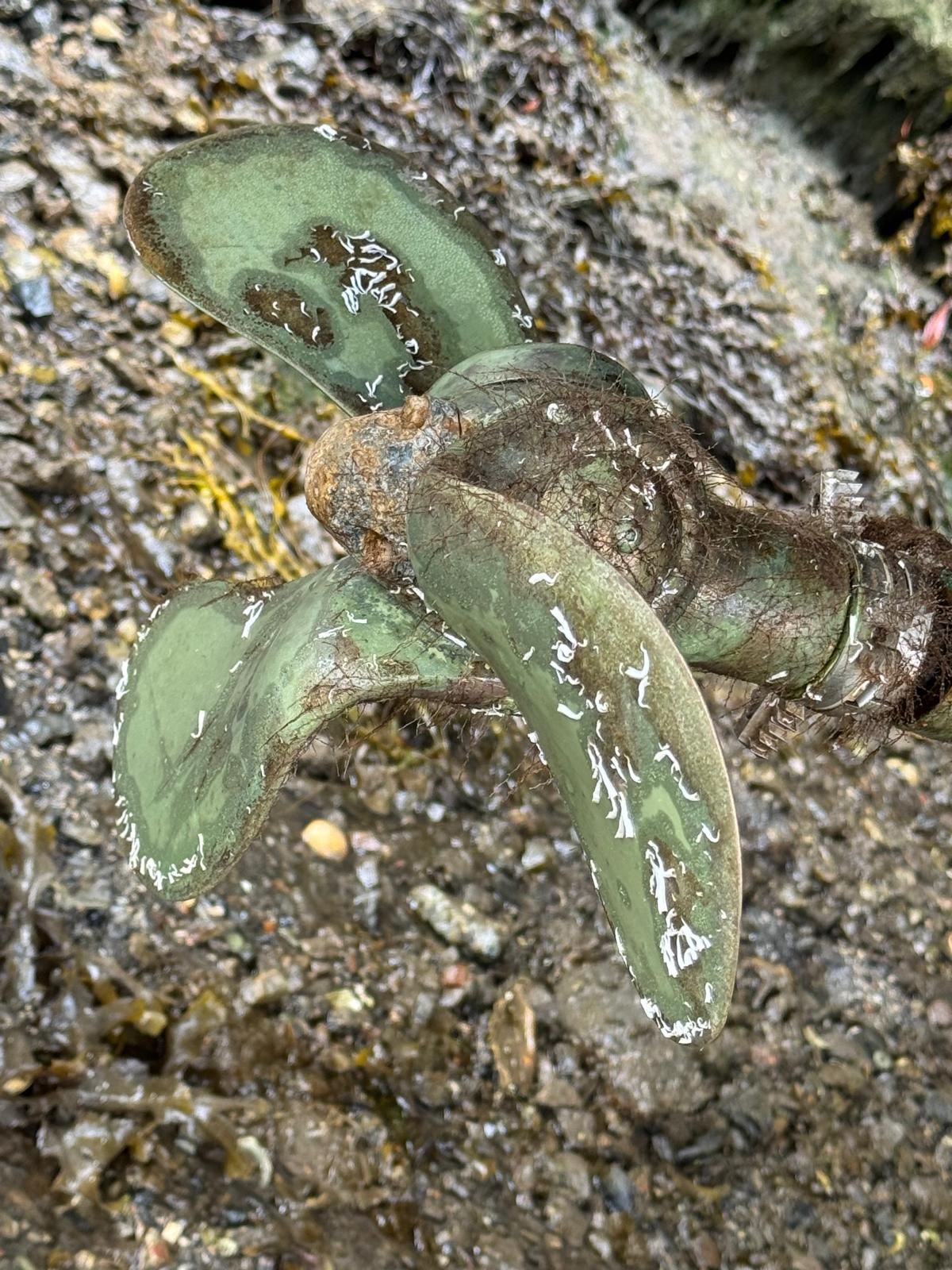
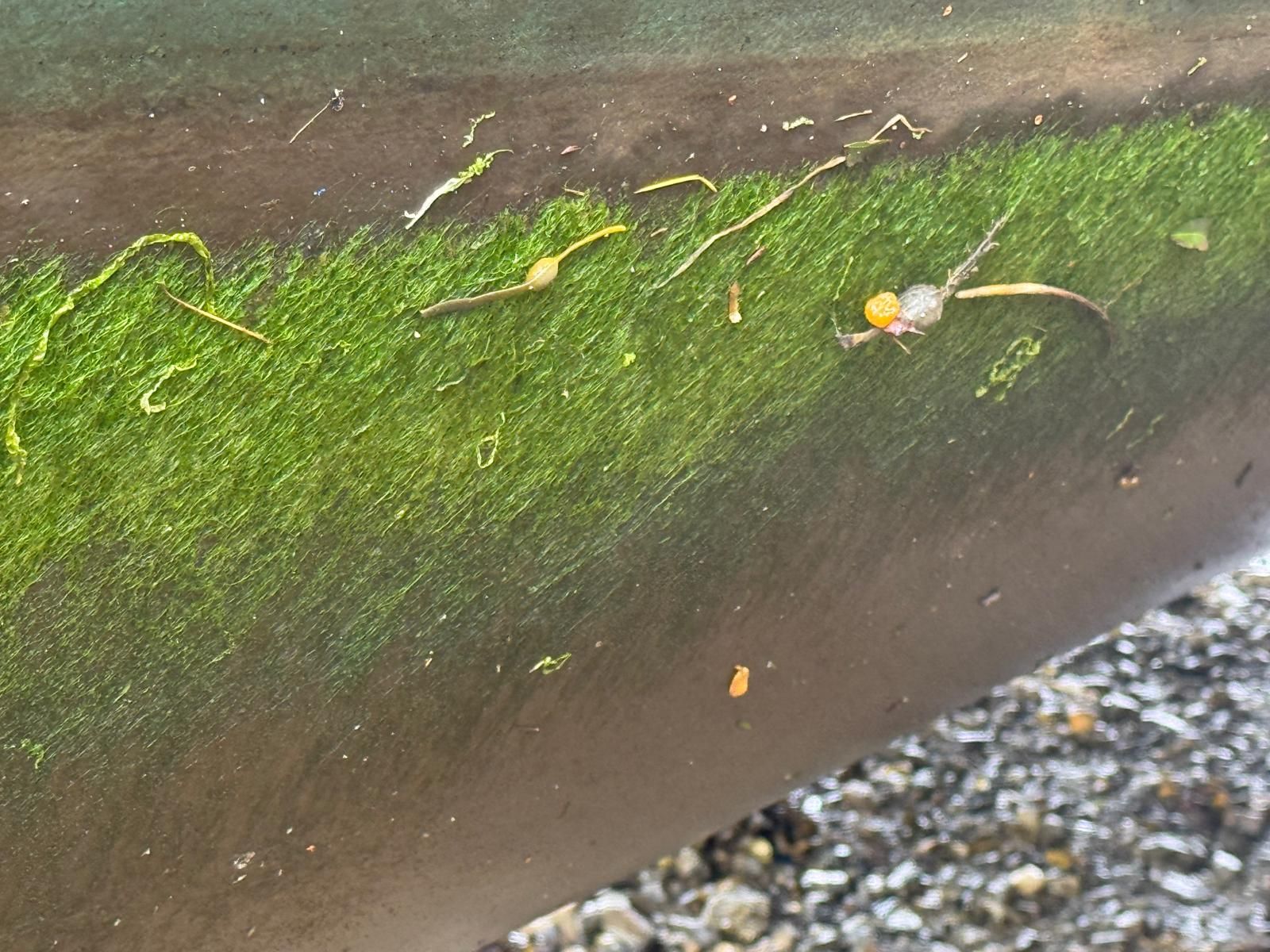
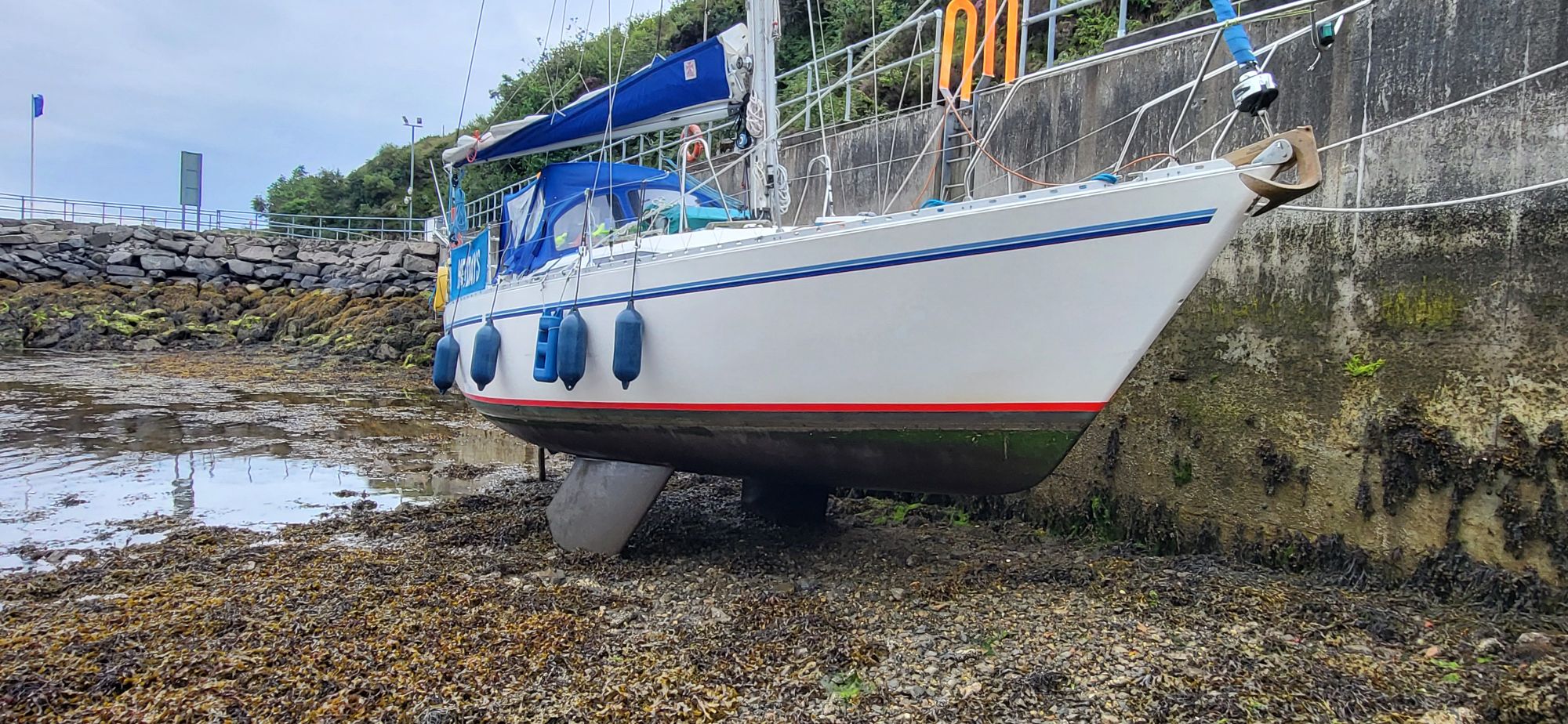
With approximately a knot of tide in opposition, Heydays was still getting a respectable 5 knots over the ground, a performance we attribute with considerable satisfaction to her Coppercoated bottom, which continues to prove its worth.
The scenery was extraordinary. Ben Nevis and the Cairngorms loomed over the horizon with a magnificence which was quite inspiring.
Running downwind with a building sea demanded a lot of concentration at the helm. Occasionally, and with exhilaration,Heydays approached 10 knots, surfing down the faces of waves as we charged up the Firth of Lorne. Crinan and Oban slipped astern, and we looked forward to a late lunch in the relative civility of the Sound of Mull as we passed Blacks Memorial Tower and later, the imposing Dewart Castle…
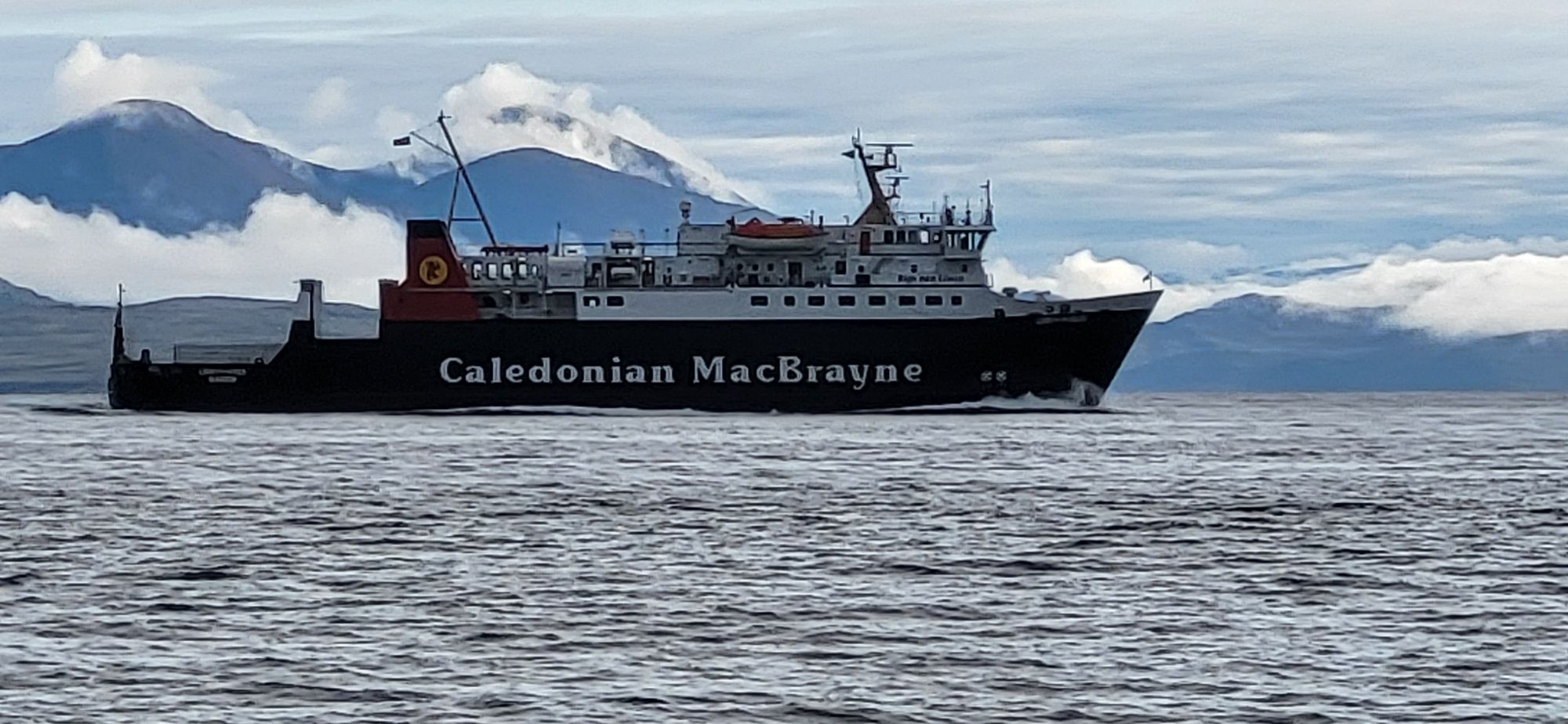
These waters are altogether much busier than the quieter passages around Jura and Islay. CalMac ferries, coasters, and workboats went purposefully about their business in all directions.
The gusts strengthened as the afternoon progressed, but with the tide now generously in our favour, Heydays was eating up the remaining miles to Tobermory with considerable enthusiasm.
A passing CalMac ferry acquired a Coastguard helicopter, which shadowed it for the better part of half an hour. Clearly a training exercise, the aircraft hovered mere feet above the ferry’s stern, producing a spectacular downdraft.
Tobermory materialised around the headland right on cue, and with gusts still making their presence felt, we dropped the sails and aimed hopefully for a walk-ashore pontoon berth rather than the more athletic alternative of a mooring buoy. Luck was with us and we secured what appeared to be the final available berth. With Heydays safely tucked in and a rain shower providing the atmosphere, gin and tonics were poured, and a brilliant passage was complete.
Postscript: The Admiralty Tidal Atlas, it transpired, had a rather firmer grasp on reality than our apps. Some institutions, it seems, have earned their authority…
Final thought…for those of you kind enoughh to actually read these ramblings, I write most days if there is signal and would love to hear from you if you wish to comment or indeed subscribe.
The wind has shifted, and there is a little chop across the bay, and the boat just rocks gently on the mooring in the early morning sun.
The only snag with picking up buoys or anchoring, is that getting ashore can be a bit damp in a small rubber dinghy.
We get togged up and set off across to the little jetty, where we get un-togged, and ready for a day mooching.
Having visited the little community shop, the decent thing to do is to actually go for a walk before being drawn back to the distillery…
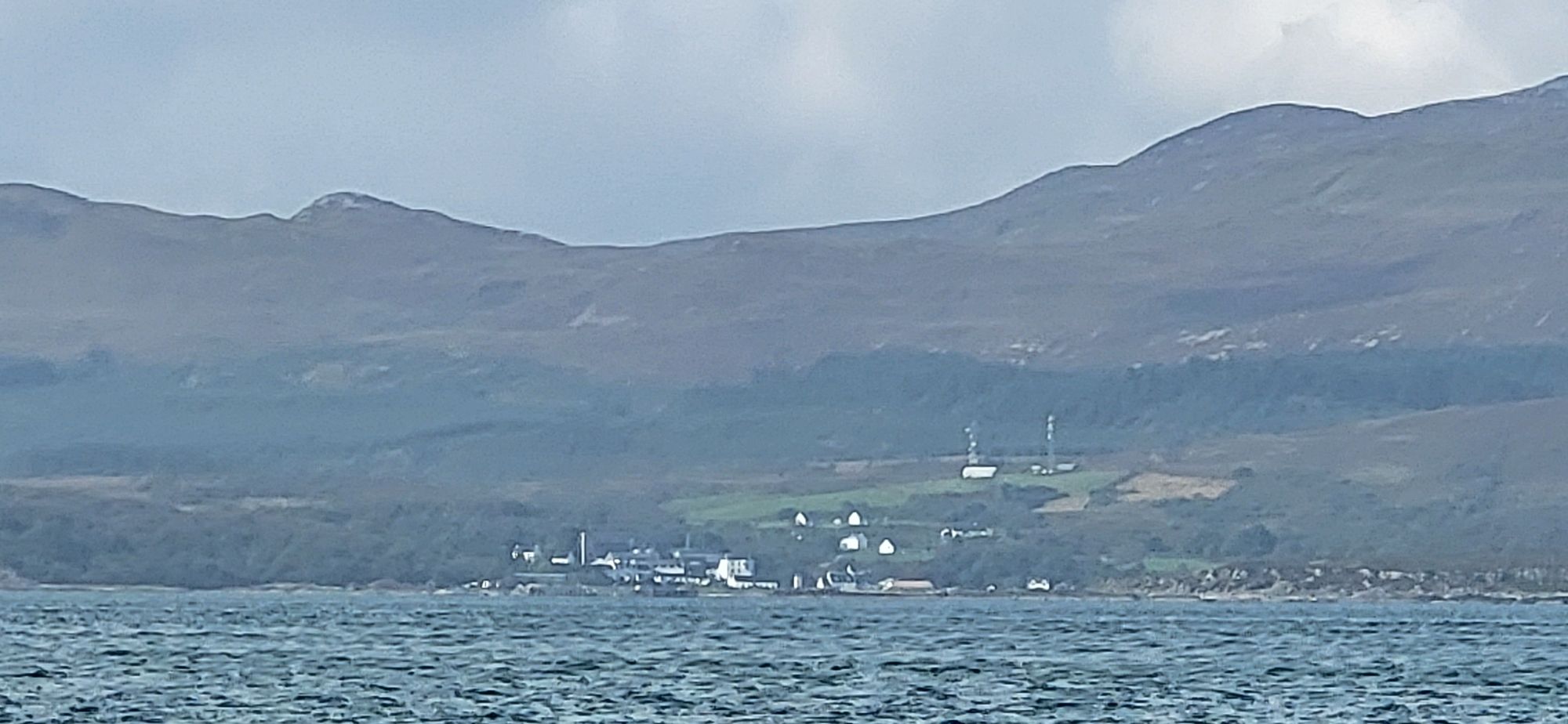
The day is glorious and the views across to the mainland are stunning…
It all starts out really well, but then the track peters out…
It’s a good job our navigation at sea seems to be better than on land…
…but it’s all worth it for the views, and Heydays swinging gently out in the bay…
“…we are where, precisely?”
…and then whisky beckons…
The whisky is very different from those on Islay…not peaty for a start, and all of it is used for Jura bottles, unlike Caol Isla for example, where 70% of their output goes to Johnnie Walker.
We have our first Cullen skink of the trip in the hotel, and then head off around the bay to the cemetery with its Campbell mausoleum.
There is a small and very old church, with an upstairs room full of old photos of Jura life. Its a fascinating insight into what was quite a harsh existence, especially for ordinary crofters and fishermen. No wonder that many just upped and left.
The population is stable at the moment at around 250, and there are some incentives for people to re-establish the old croft. Walking back to the boat, past stunning beaches, we wonder about the contradictions of island life…right up to the end of the 20th century, there is no doubt that, despite the beauty and the abundance of space, places like Jura were still quite isolated, with few incentives for young people or families to stay.
But even in towns and cities in 20’s Britain, so many self isolate behind their screens and technology. Could technology and remote working be the eventual saviour of places like this?
Just one final thought though…for us grandparents, the remoteness from the physical presence of our grandchildren would probably be too much, unless they move here as well…
Our lives, inevitably, are dominated by the weather. The forecast for today is to start off with some nice Sou’westerlies, going round to the east then back to SW. That will do us nicely as by the time the SW comes back we should be headed NW and on a nice beam reach for the River Yealm. The only cloud on the horizon (literally) is that solid rain is due around 3 or 3.30pm. We make the decision to stem some foul tide for a while in order to be snug and hopefully dry up the river by this afternoon.
So a 6 am alarm comes as no surprise and we have our first cup of coffee with some lovely sunshine. A light breakfast and we slide out of the marina just as some early fishing boats leave and a couple return home with the night’s catch.
The wind is lighter than forecast as we round Berry Head …
…and set out west once more. So we top it up with some diesel in an effort to keep up our speed over the ground and make the Yealm before the rain sets in. A few boats are heading in to Dartmouth, but somehow we prefer Brixham with its slightly rougher, workaday edge than the most definitely yachtie destination of Dartmouth.
The day turns rather hazy and the wind becomes ever more fickle as the rather beautiful Devon coast slips by, with its red striated rocks and fields clinging to the cliffs. A bit of sun would have shown its true glory…
There is quite a swell running, presumably left over from previous strong winds out in jus asternthe Atlantic and as we get closer to the Skerries bank just off Start point the sea build and becomes quite confused. Coupled with little wind, we are tossed around a bit, until with Salcombe fading behind we are back to some idea of calm. Of the promised easterlies there is no sign and while we keep the main up to reduce the roll, the genoa is rolled away, then let out again, then rolled away….
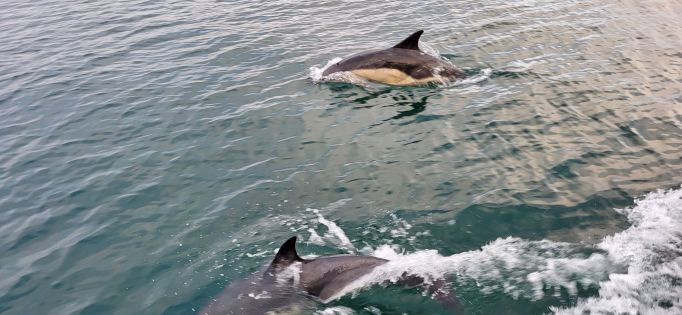
A seal lazily rolls out of our way looking very contented, presumably having had its fill of fish for breakfast. The sun disappears and we keep looking nervously for the rain clouds….all OK so far, and then all of a sudden we find ourselves disturbing a pod of dolphins. Sadly they are not interested in playing with us, finding their shoal of fish a more attractive proposition. A glimpse of some white bellies and a dorsal fin, and they are gone.
We are now bearing away just in time to make use of the promised SW winds. Like dolphins, the wind just teases and still the diesel keeps purring.
We approach the entrance to the river Yealm as we feel the first few tentative drops of rain. Newly ‘togged up’ in our finest wet weather gear, we lose the redundant sails and make our way round the sand bar within a biscuit’s toss of the rocky shore.
We find a visitors buoy just as the rain begins and we pick up the line, make it fast then dash back to get the cockpit tent up all in the space of around 60seconds. Inside and largely dry, the heavens open and we congratulate ourselves on a plan coming together.
Postscript. The very wet harbour master comes alongside in his launch for his fees and cheerily tells us that the rain is set in ‘til Sunday, but ‘scorcio’ after that!