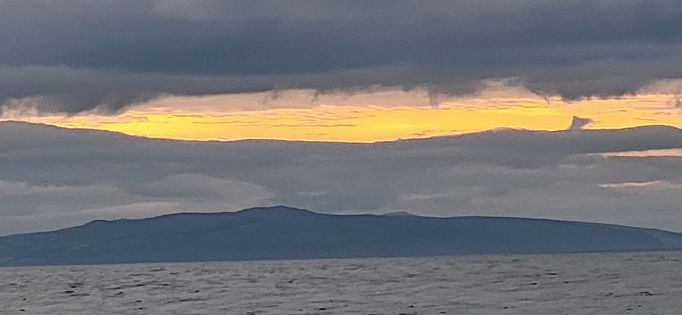
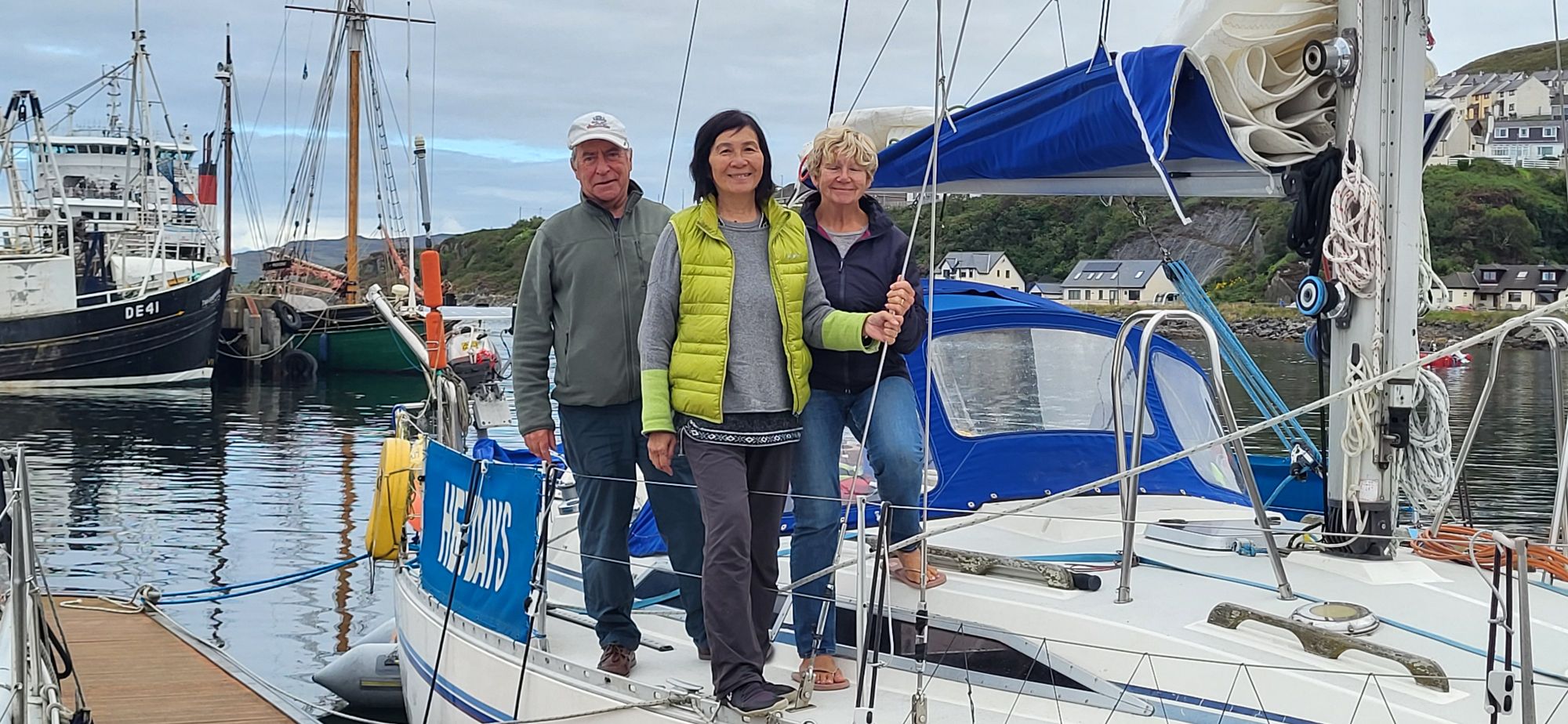
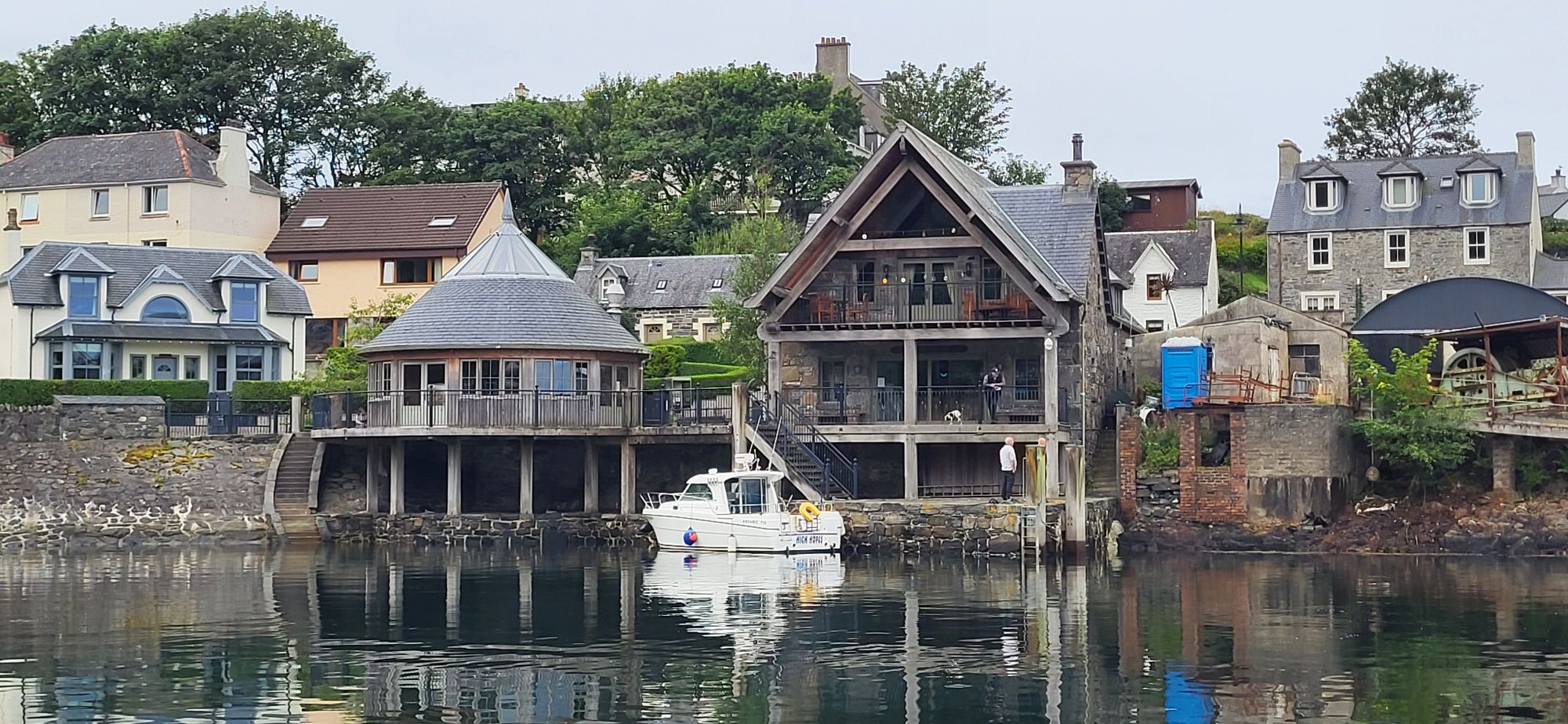
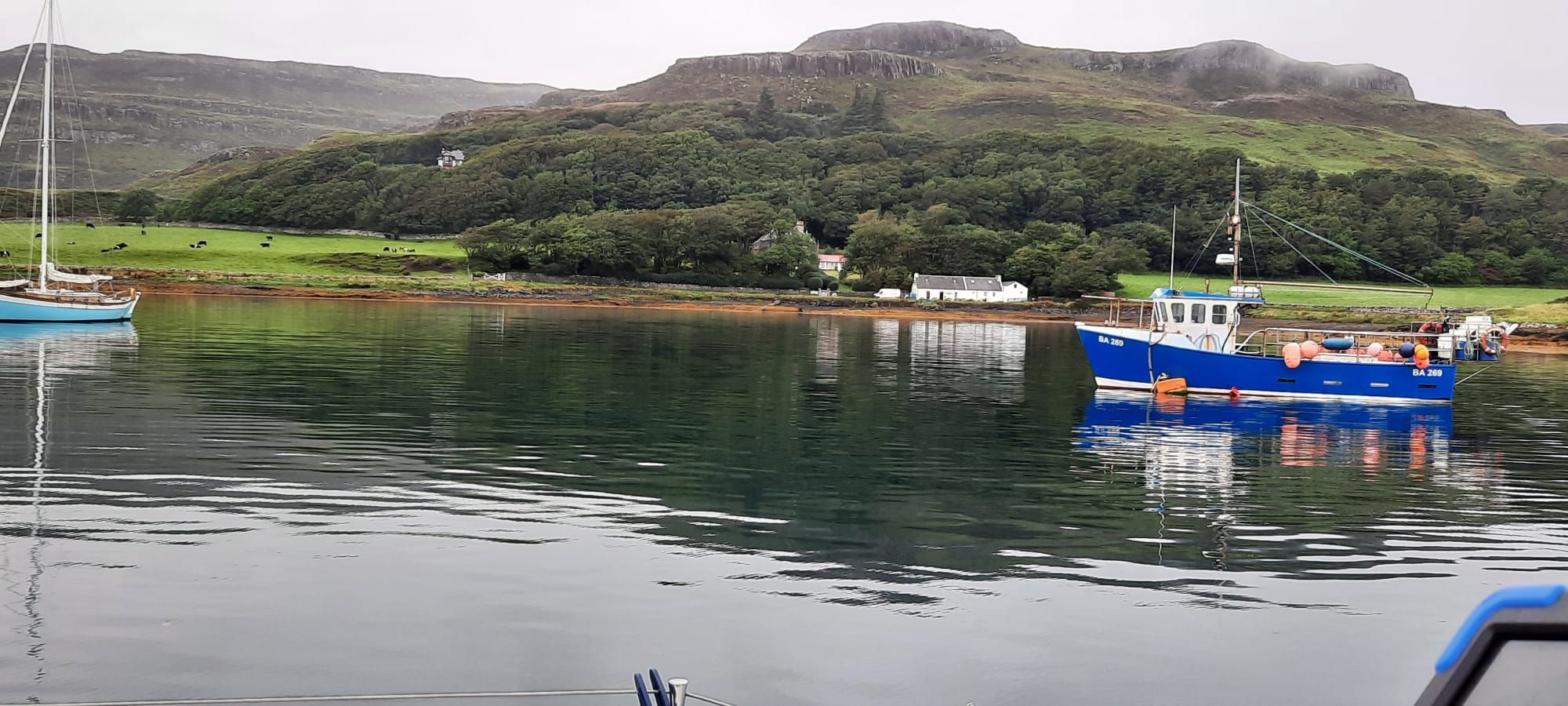
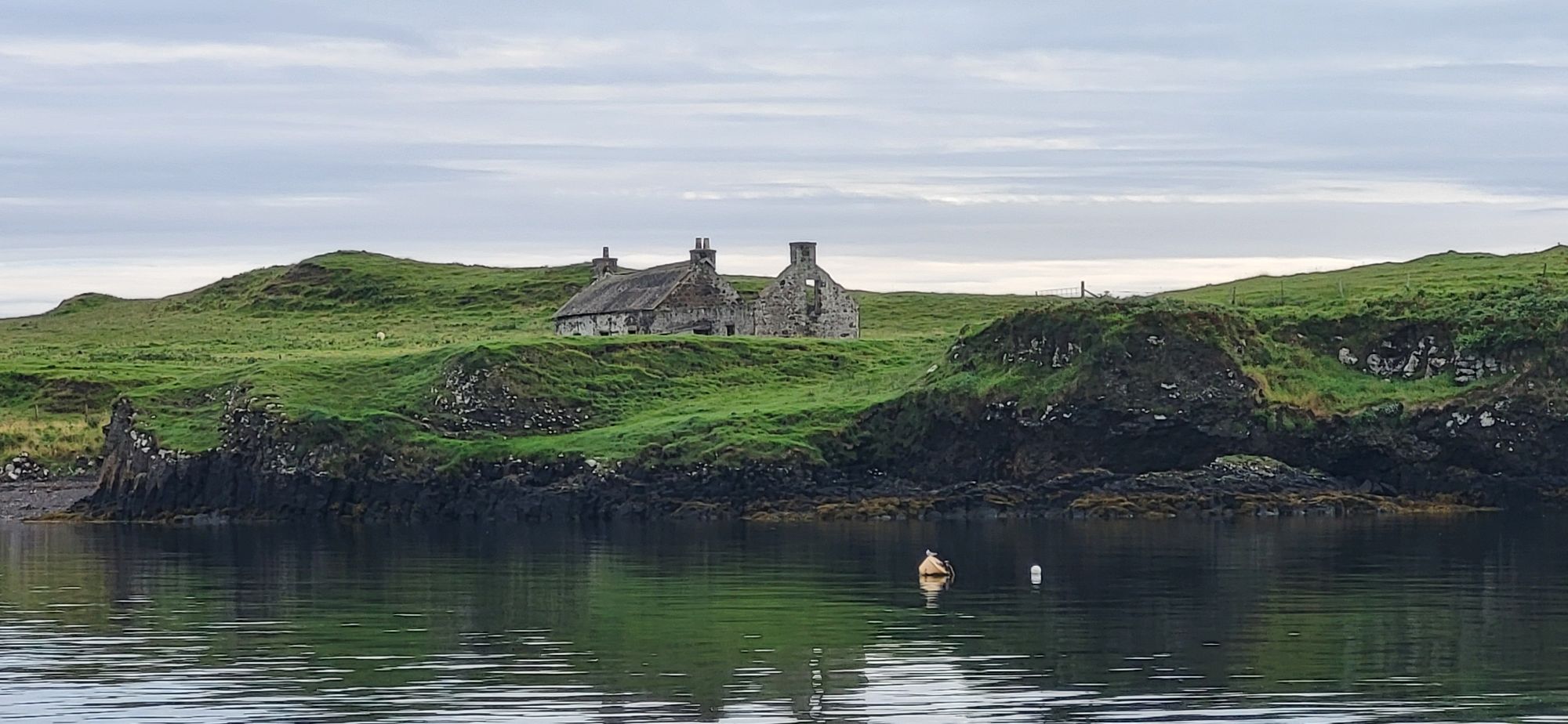
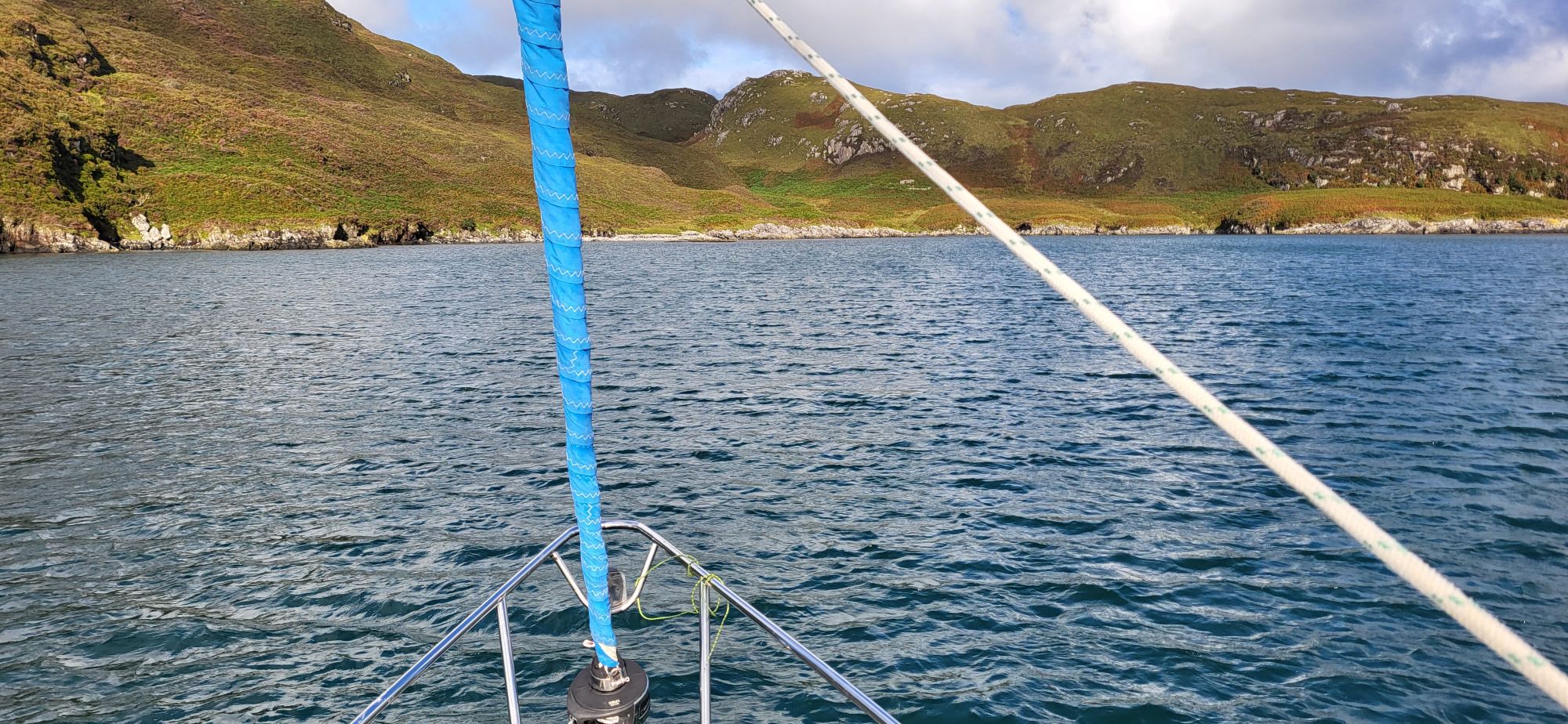
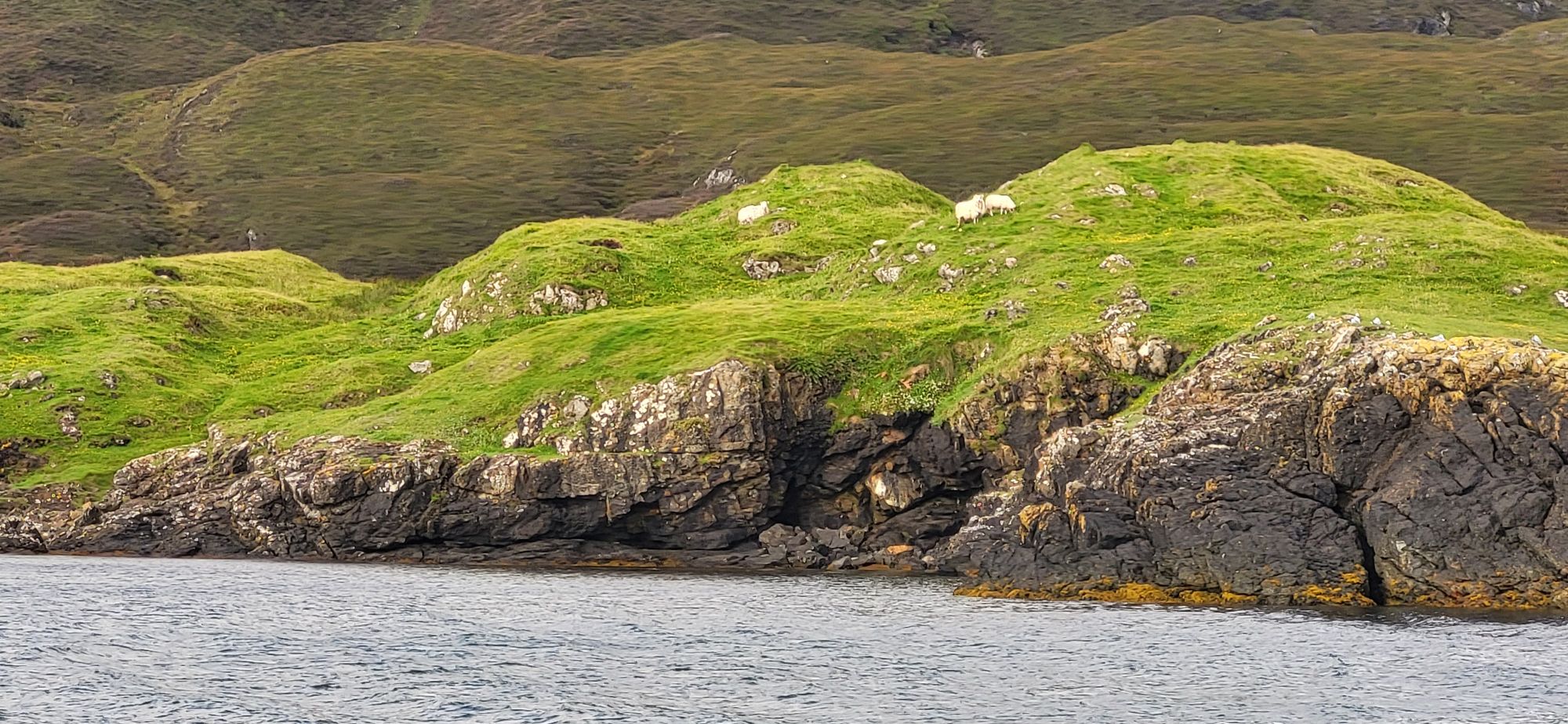
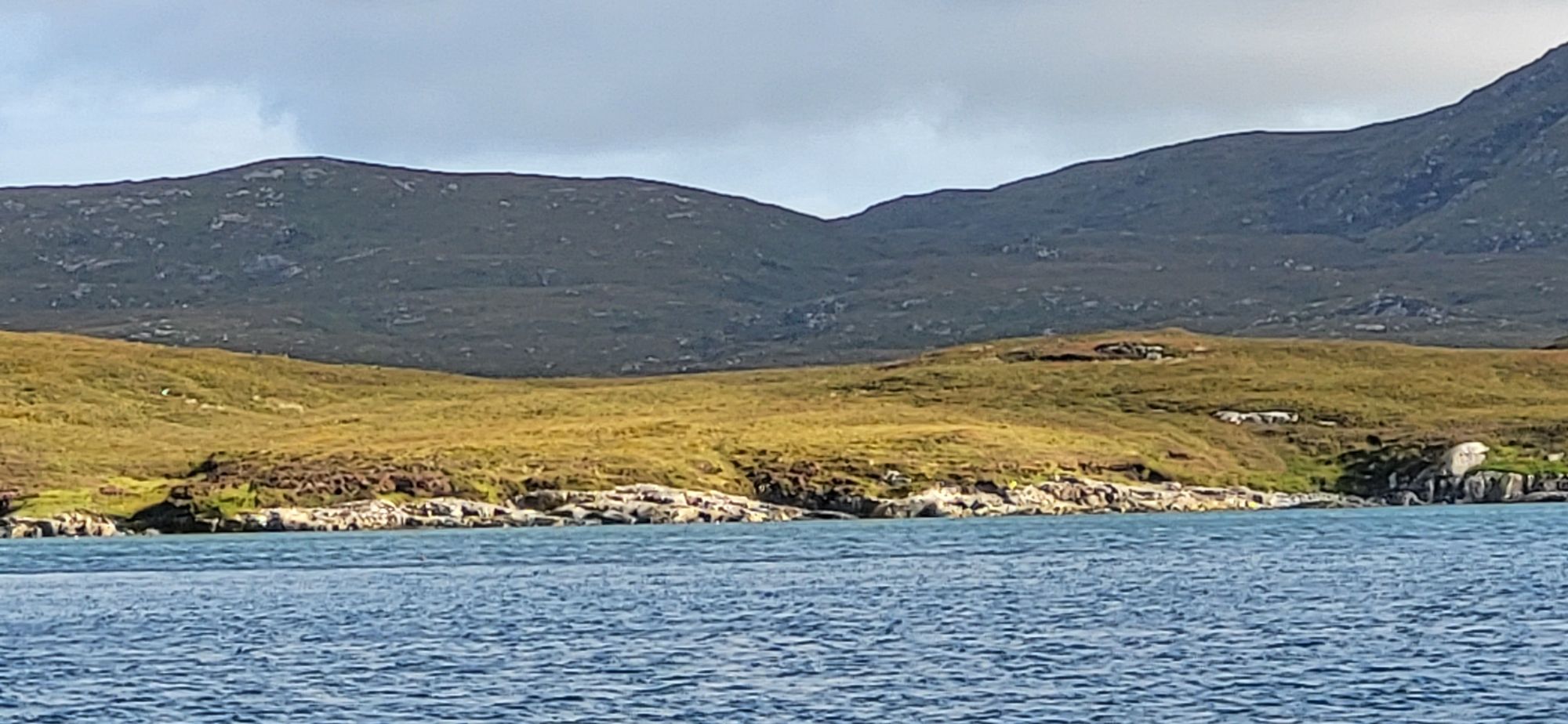
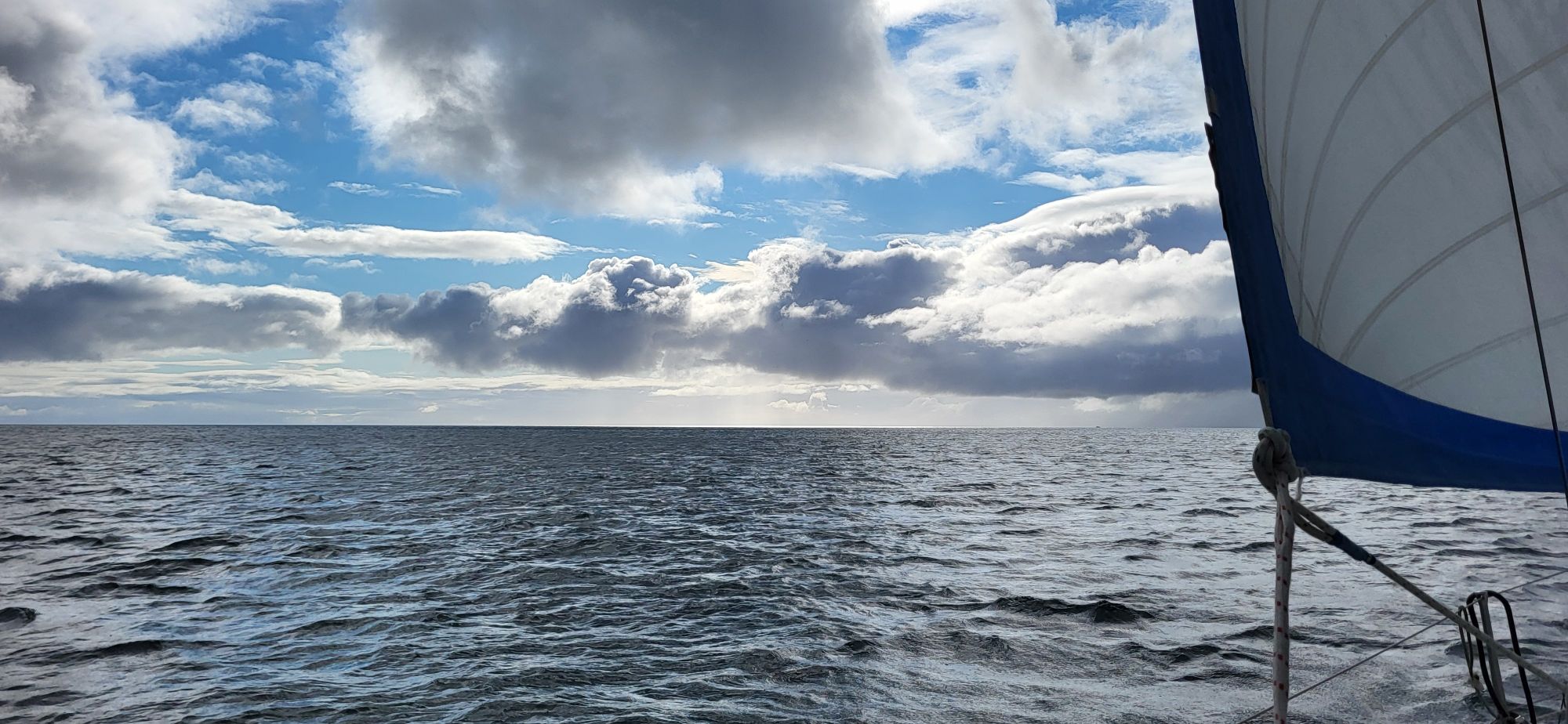
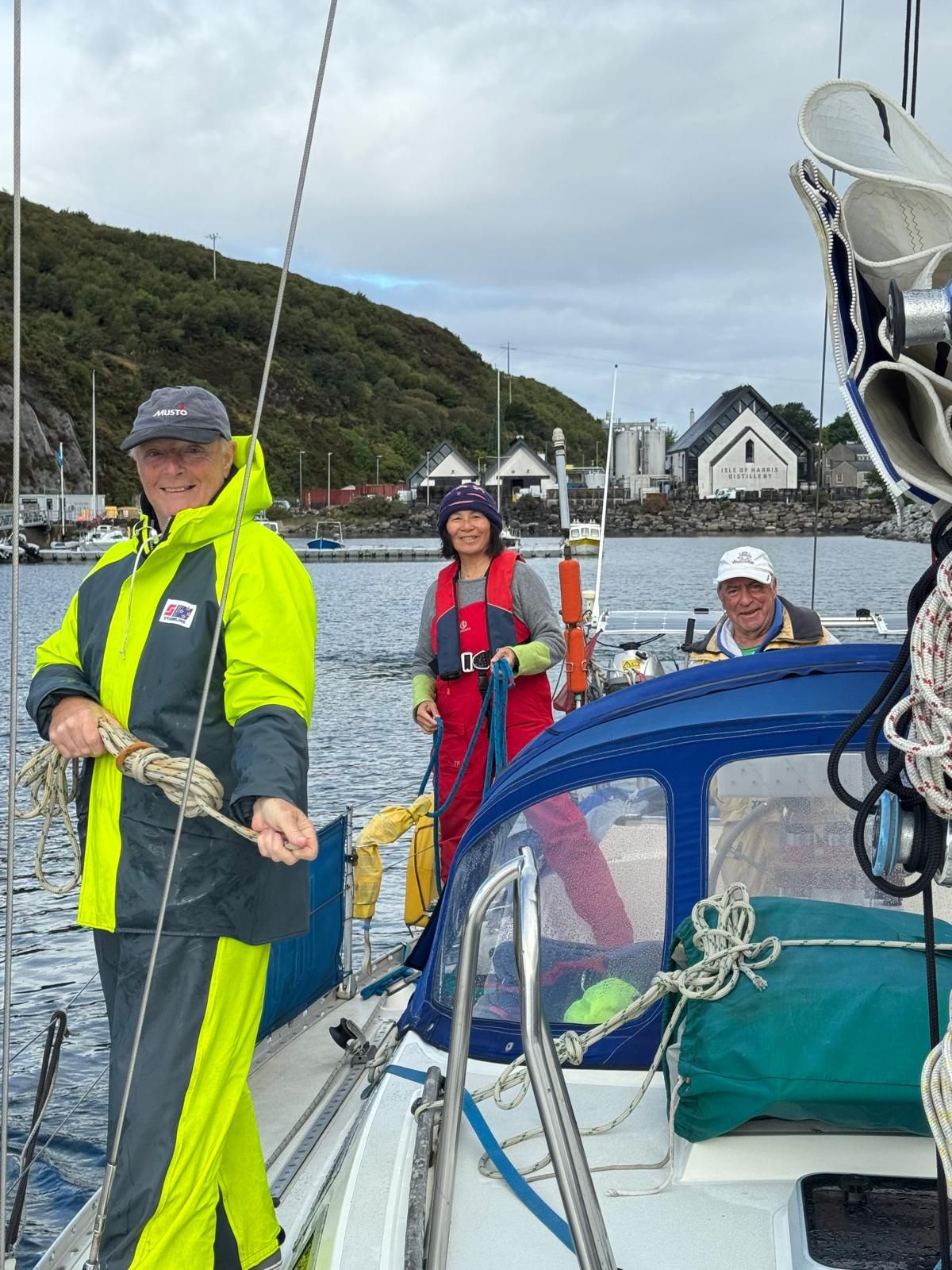
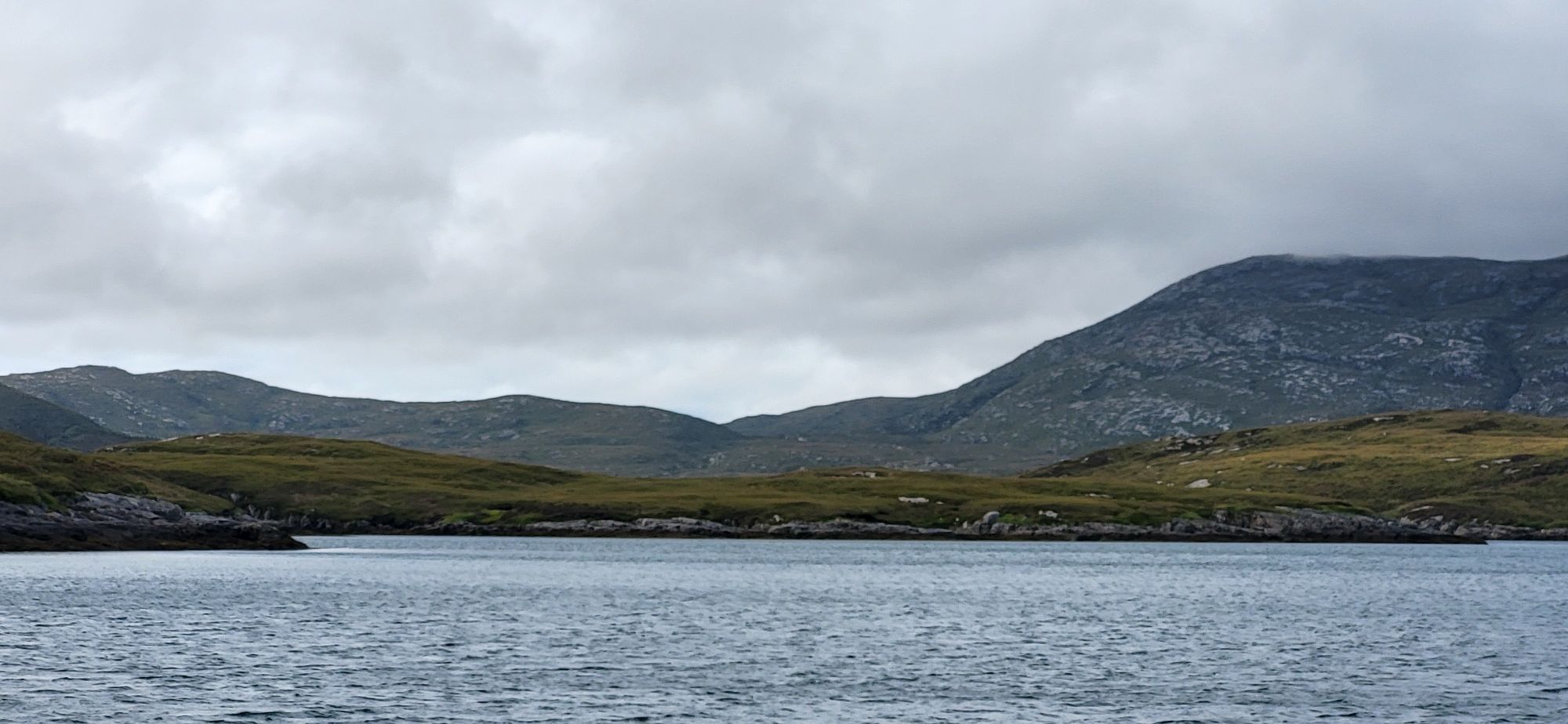
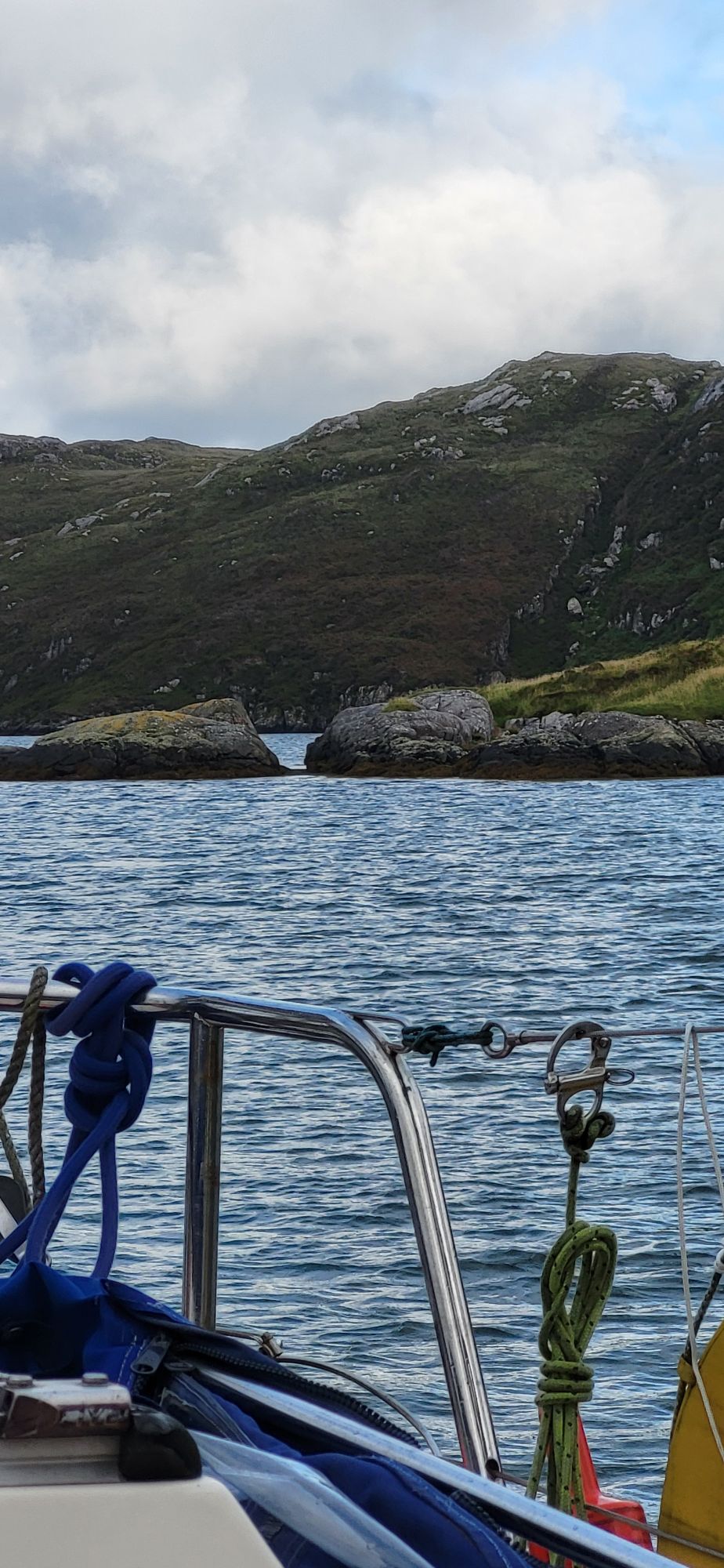
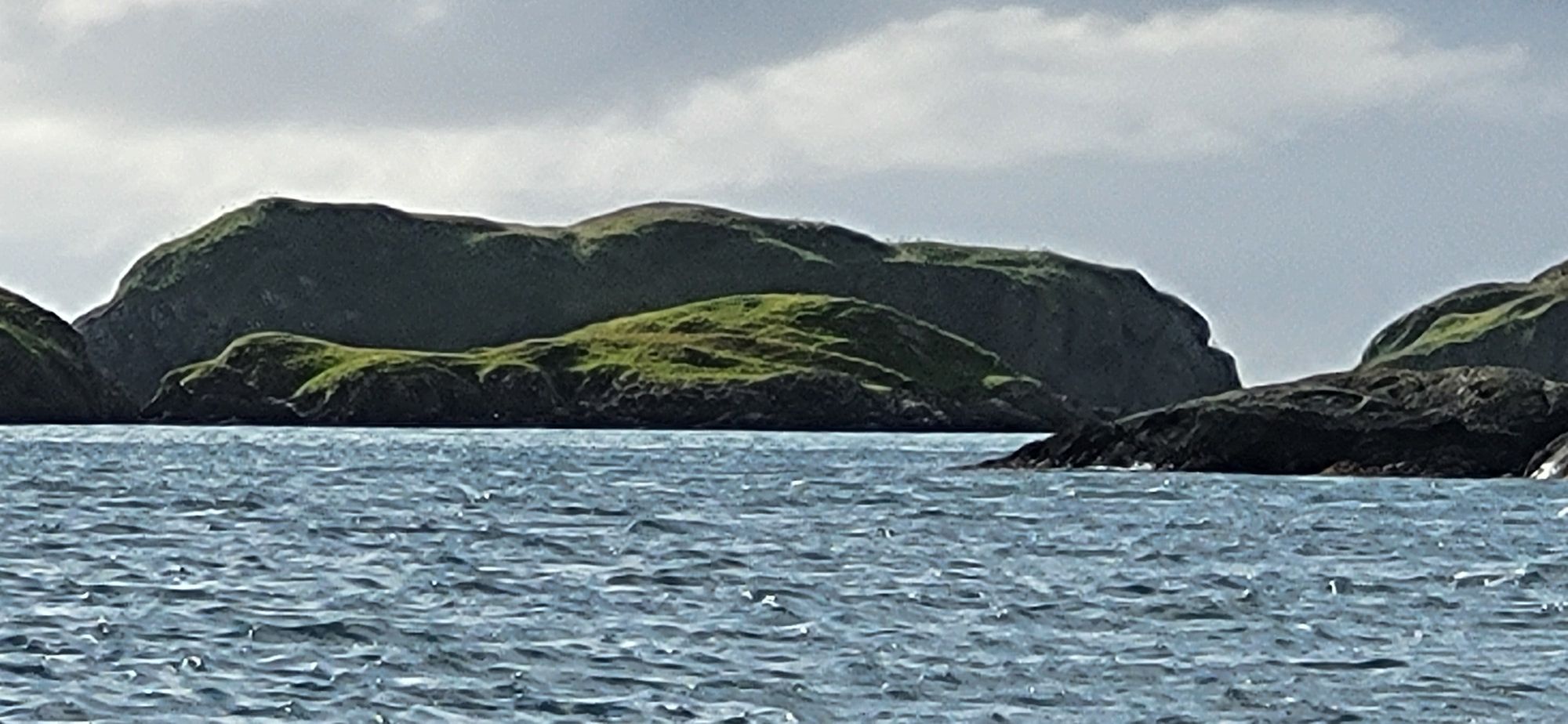
Welcome to Heydays’ blog which hopefully will take us on adventures as we expand our sailing horizons. We will try to share the highs and lows and hope that friends will share some of them with us.
If you want to read some of the stories from our first year (before the genesis of this blog) we’ll write stuff as it occurs to us in the FIRST YEAR WITH HEYDAYS pages…
We’ve posted mostly about the sailing and the places we’ve visited on our travels, but the pattern of life on a small yacht has a certain rhythm…When we first decided to buy a boat together (two couples), there were a few key matters to consider…the usual stuff about hull configuration, sail plan, sailing characteristics, sea-worthiness etc, but also as important was the accommodation plan. Can two couples actually live together for weeks on end without falling out? Can we each have our own space? Delicate matters of toilet arrangements (the Heads) and how do we manage with two dedicated carnivores, a vegetarian who eats seafood, and an egg, mayo and butter phobic? This is the first of an occasional series of posts about making it work without actually resorting to violence. About shopping, cooking, eating and just living together. In some ways, the sailing is the easy part. We plan and check routes, tides, weather and reach, mostly, the same conclusions. We agree mostly about when to reef, when to boost our sails with the motor, how to dock and general boat handling.Walking round the supermarket though, throws into sharper relief the cultural differences across backgrounds as diverse as Hong Kong, Canada, Plymouth and working class South London, all overlaid by a collective 280 years of lived and divergent experience.
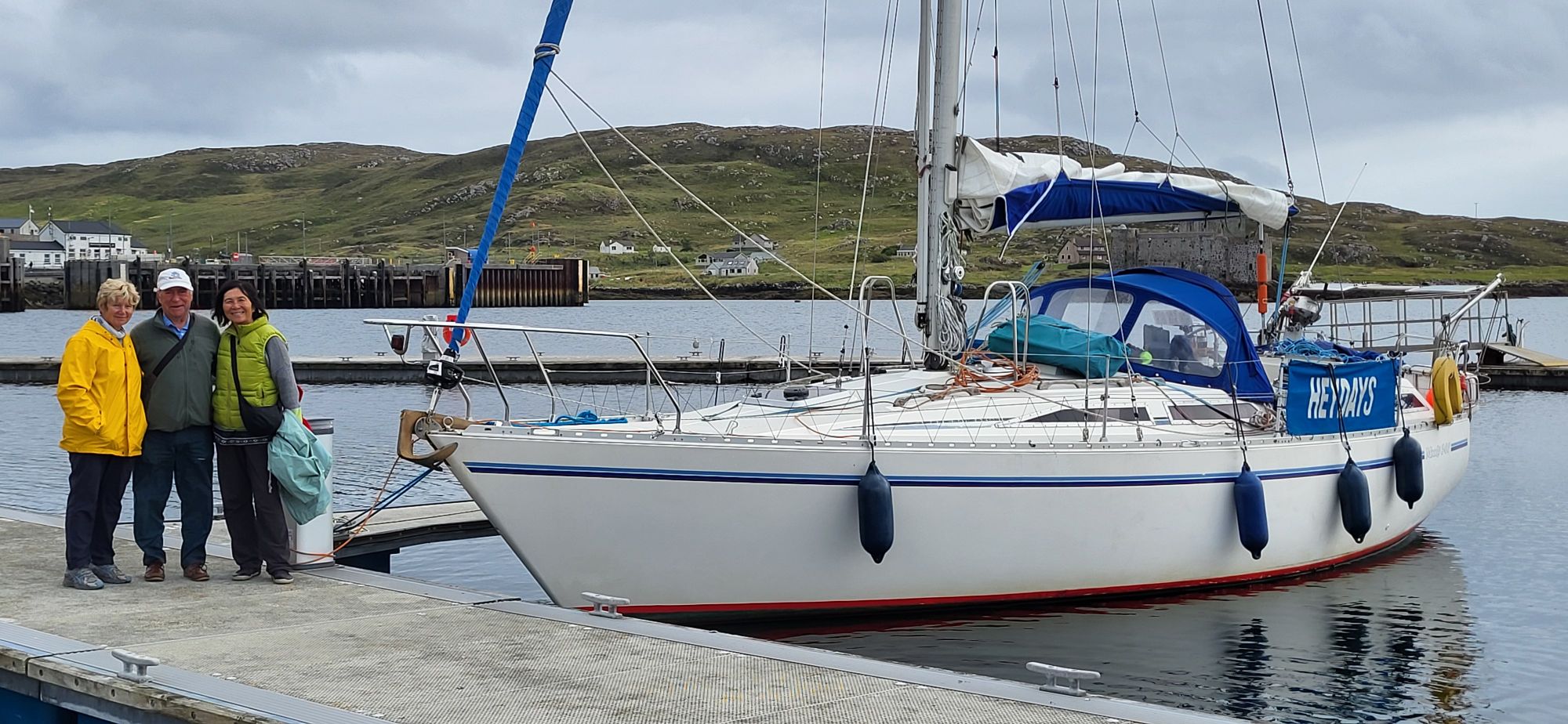
Heydays is a Moody 346 built in 1989 and still carries that particular style of british boats of that era, which nods back to the golden age of ‘proper’ wooden boats with their heavy wood panelling and swinging oil lanterns. None of the minimalist whites and light greys of the modern french and german boats…
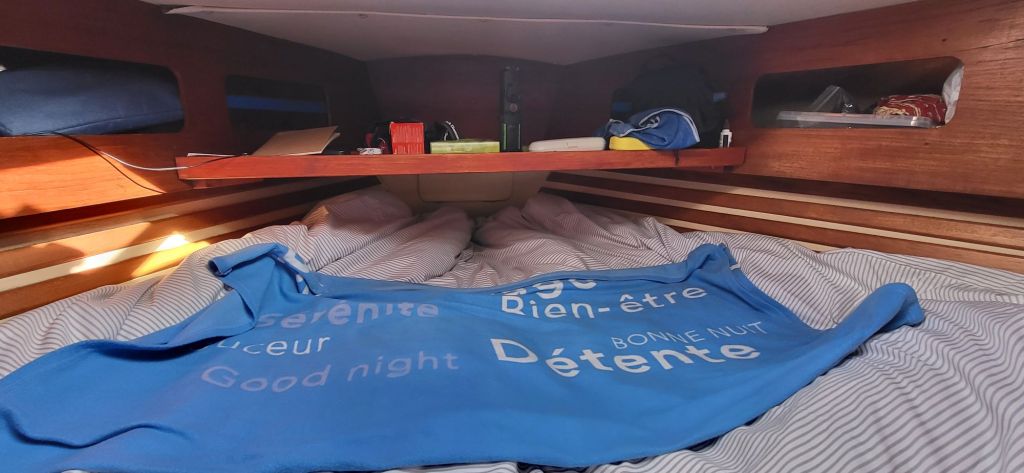
She has a fore cabin with standing headroom (just) as we felt it important for two couples to have their own clear space, although storage is at a premium.
And a rear master cabin…
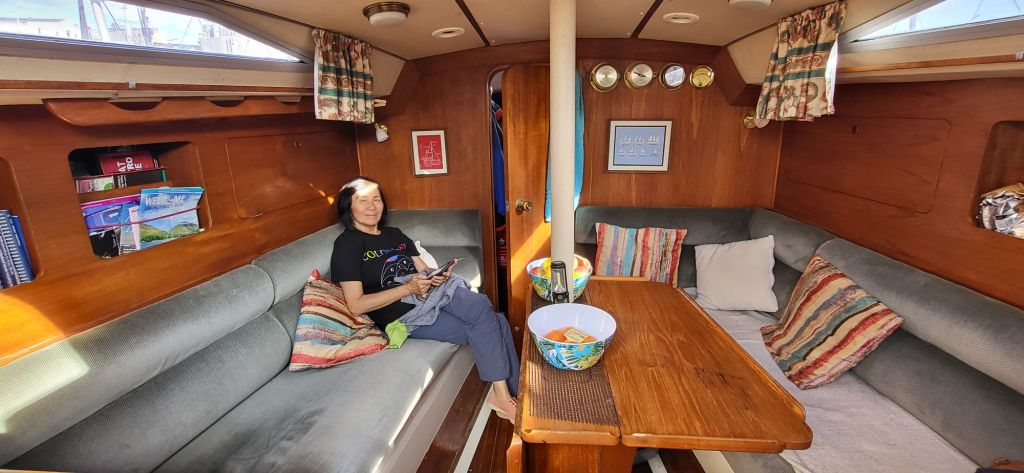
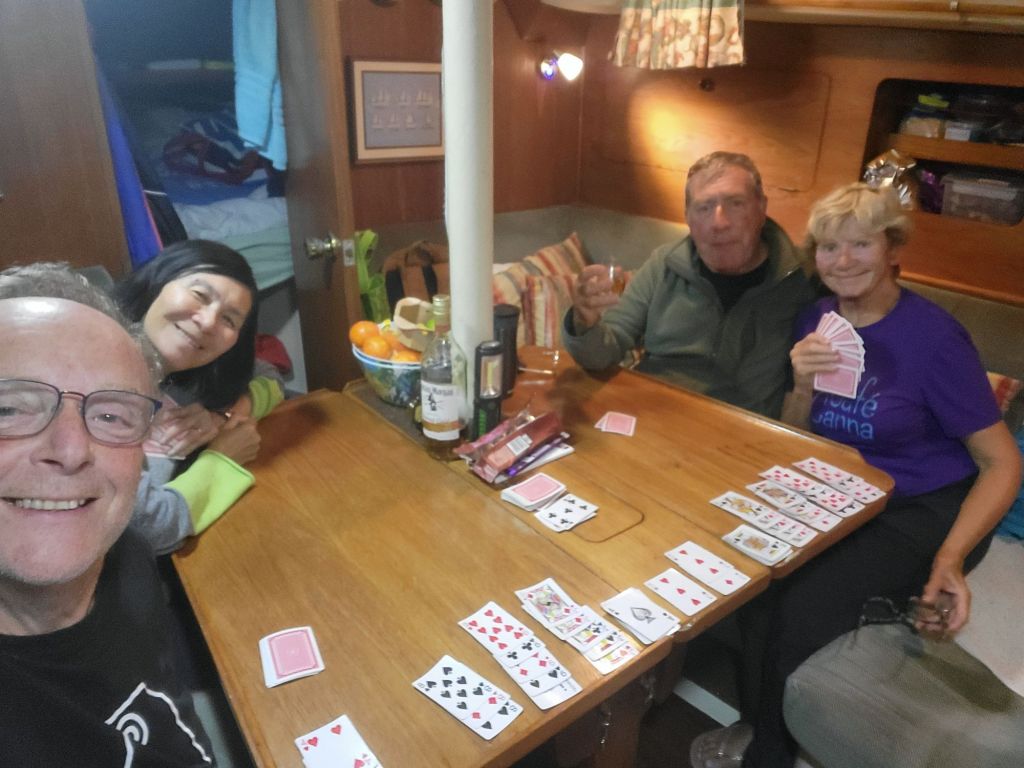
The main saloon can seat 6 easily around the table, but is spacious for 4 as a general living/eating area..
….and for the regular canasta school…
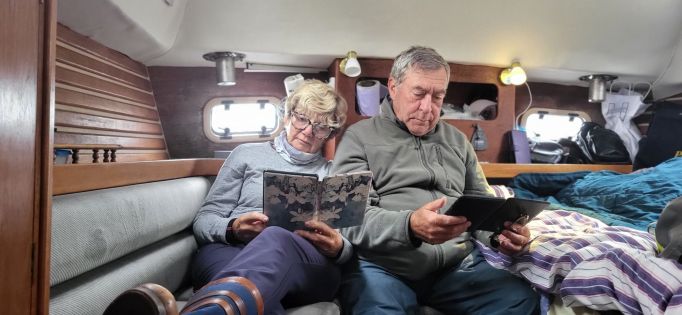
In fact many evenings have been spent in cosy company, playing cards, reading, and of course all helped down with the odd rum or whisky or chocolate. We rarely find that we are on top of each other.
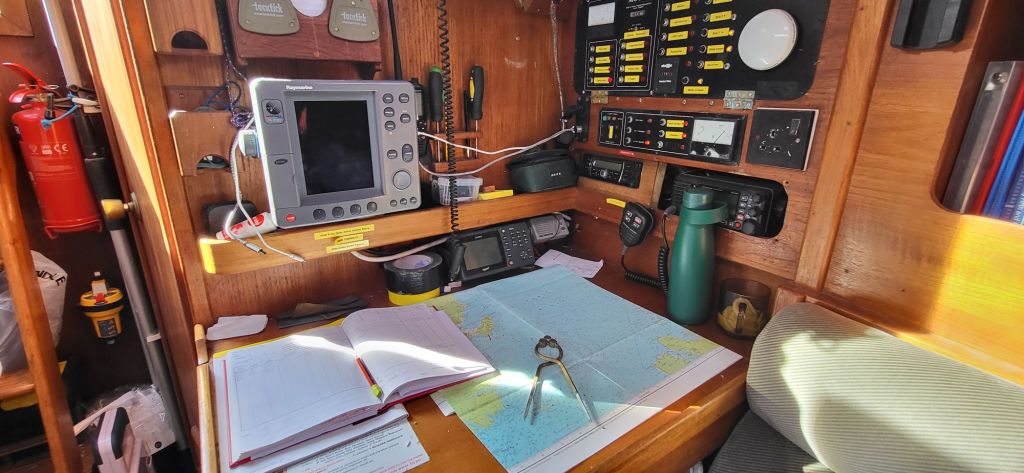
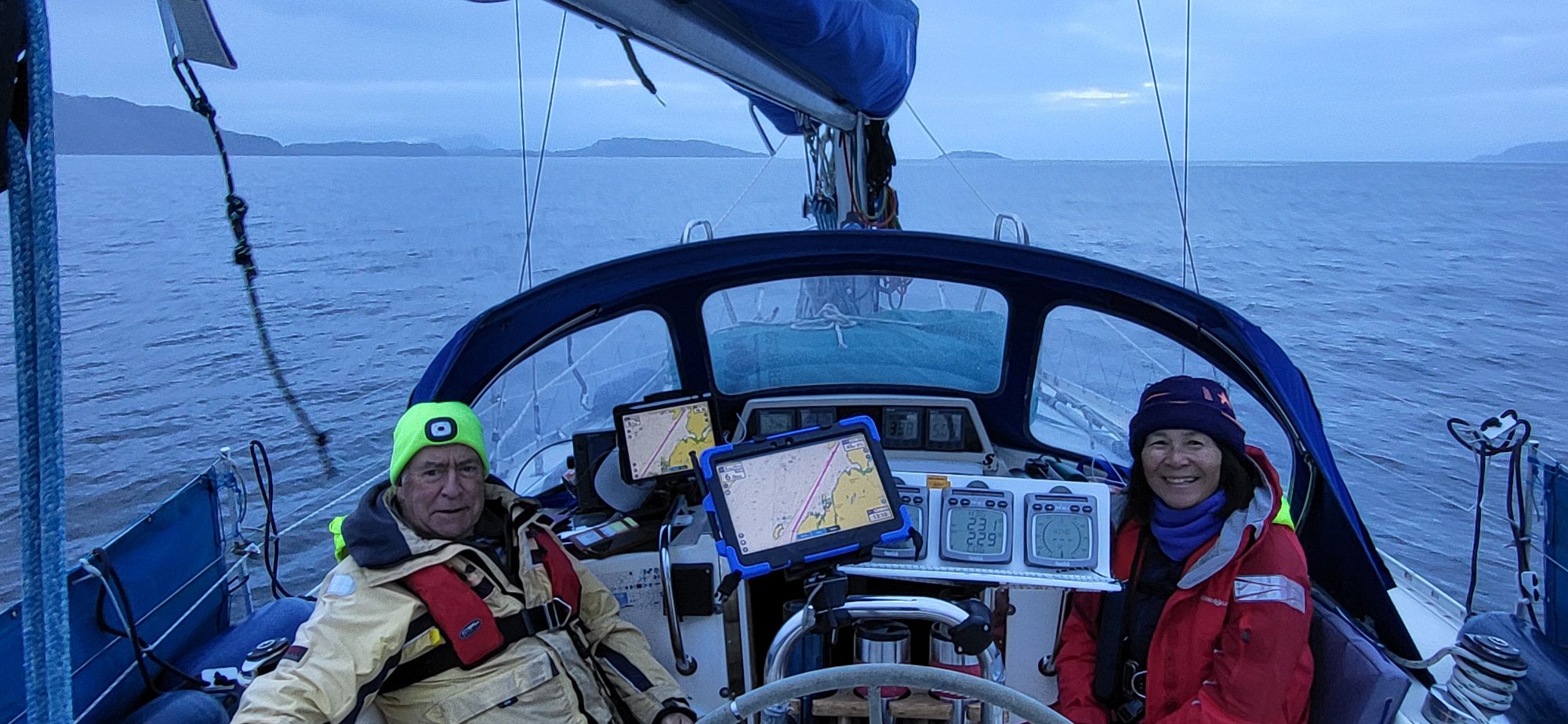
The chart table and navigation area is more than adequate for offshore cruising…secure in lumpy weather, and with everything to hand…
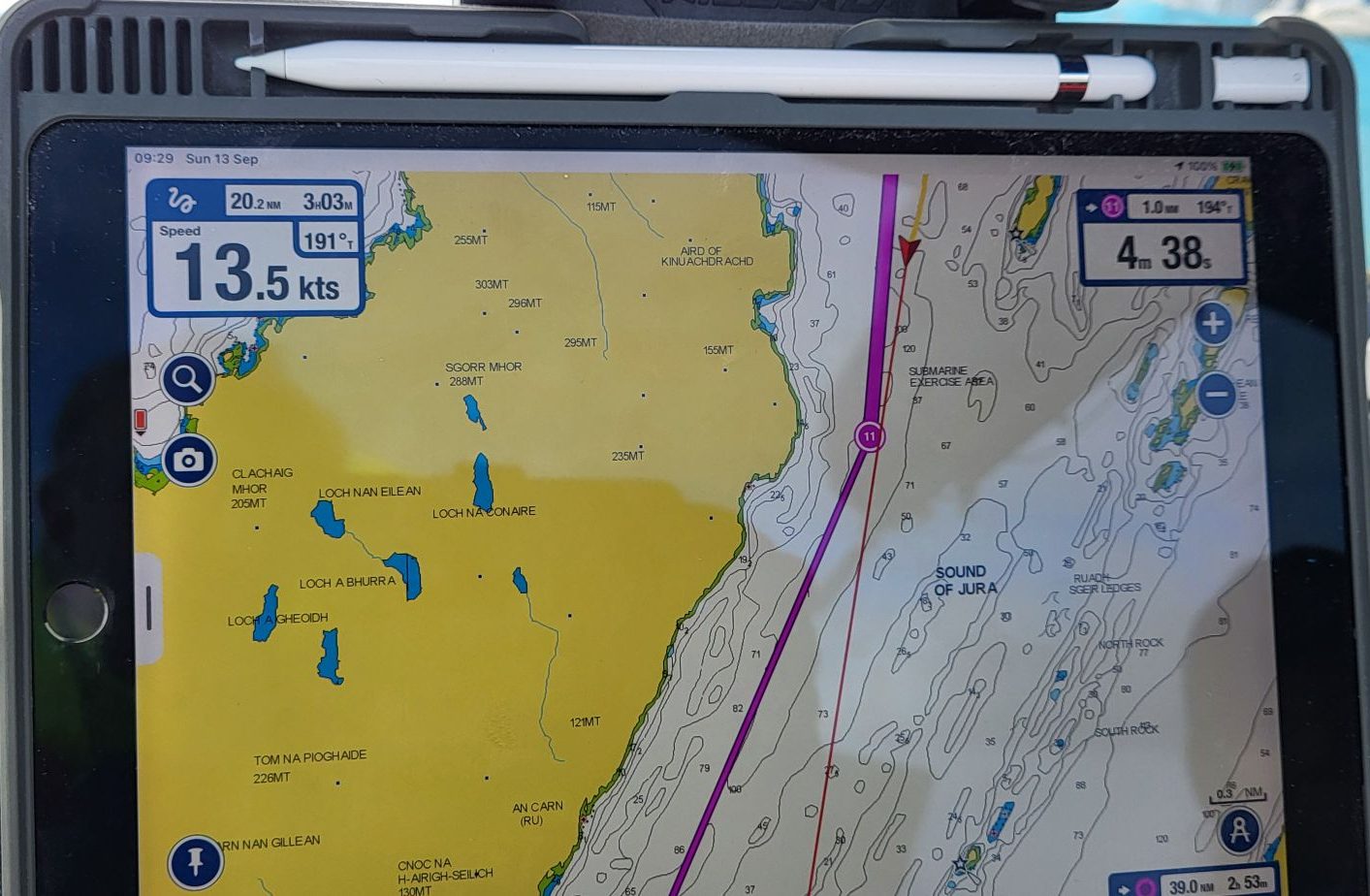
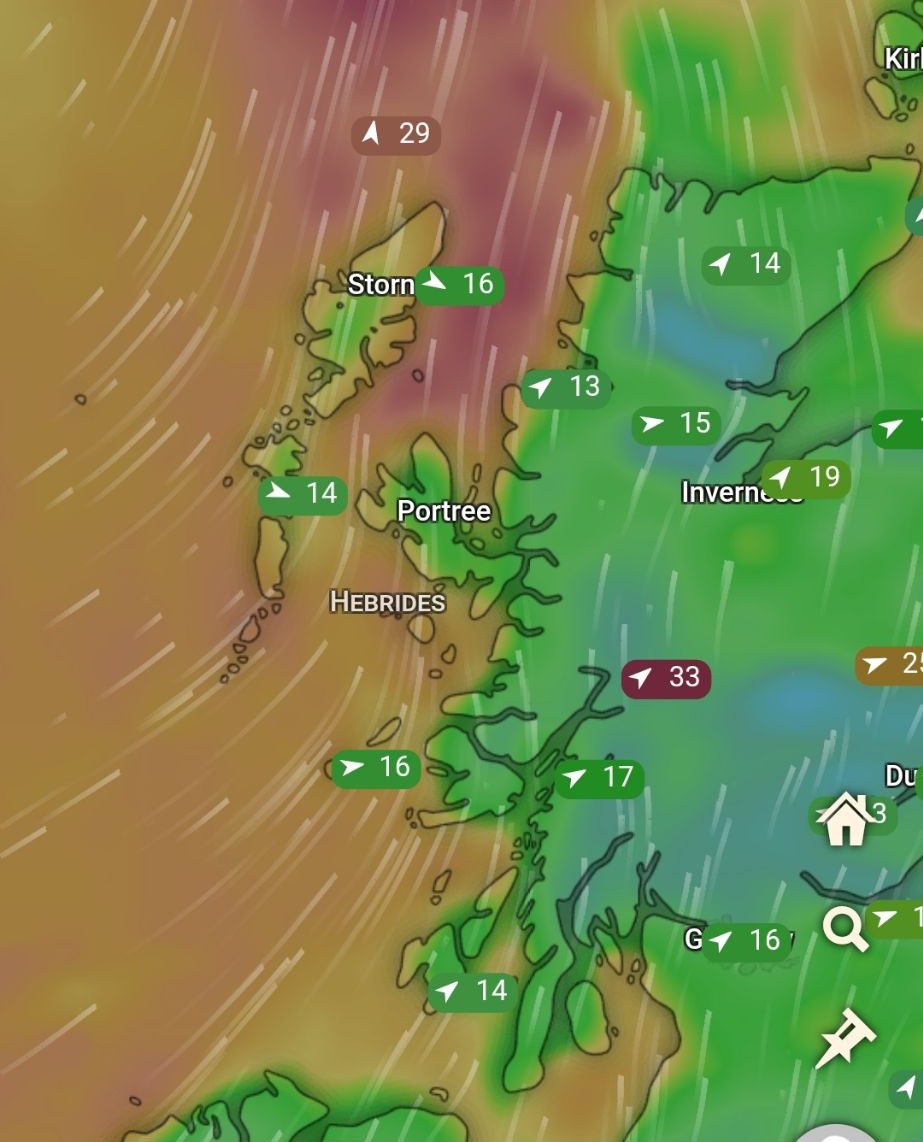
These days, like most other cruising boats, we use a variety of electronic aids and apps for our positioning and plotting. We’ve tried several down the years, but navionics (Garmin) seems pretty bomb proof for planning and live plotting. Windy for wind and Predictwind for both wind and currents seems like a good combination,
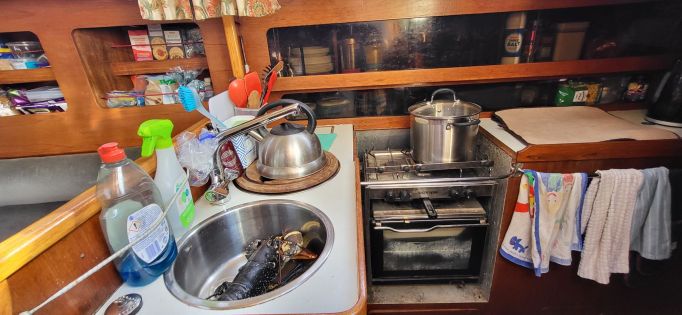
The galley, meanwhile, has quietly done more for Anglo-Canadian-Cantonese relations than most diplomats manage in a career. It has produced soup on passages too lumpy for anything more ambitious, fresh crab and lobster when the pots have been kind, squid, and an alarming number of bakes…
A few final reflections…
Before we move on to lighter matters, such as who ate the last of the chocolate, a few thoughts on how this arrangement came about…
The original logic was straightforward enough, even if it took two couples and several bottles of something to arrive at it. Neither of us could quite justify a boat of this size alone, and neither of us, if we are honest, would have used her often enough to make the sums add up. Buying together let us scale up without anyone needing to remortgage anything, and that, on paper, was the whole of the plan.
What the plan did not anticipate was how much sailing together we would actually end up doing. The original scheme, sketched out with naive optimism, involved each couple claiming first refusal on certain dates and otherwise pottering about independently. This has, indeed, happened, on the shorter trips. But for the longer ones we discovered, somewhat to our surprise, that we could be considerably bolder taking Heydays further and for longer with all four of us aboard than either couple would have dared alone. John and James, when it comes to the actual business of sailing her, trust one another absolutely, which turns out to be a rarer and more valuable commodity than any amount of chart-plotting software.
Sharing costs has also proved a quiet blessing for a boat of a certain age. Major items have failed, as they do, and been replaced without the sharp intake of breath that such moments usually invite when one is footing the bill alone.
And then there is the small matter of getting older, which none of us arranged for and all of us are nevertheless dealing with. Bad backs, uncertain balance, joints that make their presence felt at inconvenient moments on a heaving foredeck… these have all made their appearance in turn. We have managed, mostly, by being patient with one another, and by quietly taking up the slack when someone else’s back, knee, or general constitution has decided not to co-operate. It is not, perhaps, the stuff of adventure sailing magazines, but it has kept four of us afloat, together, rather longer than any of us originally planned. #
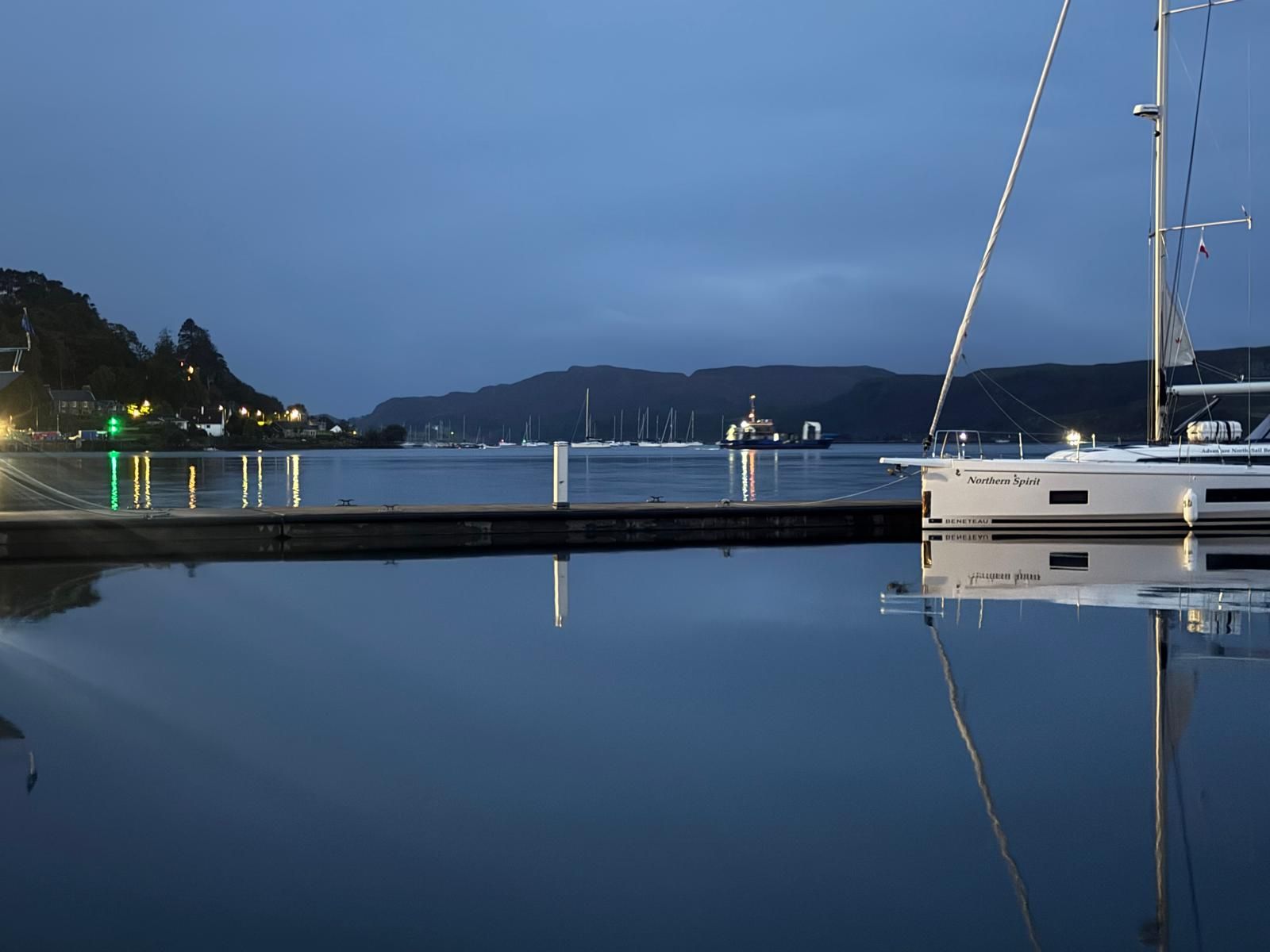
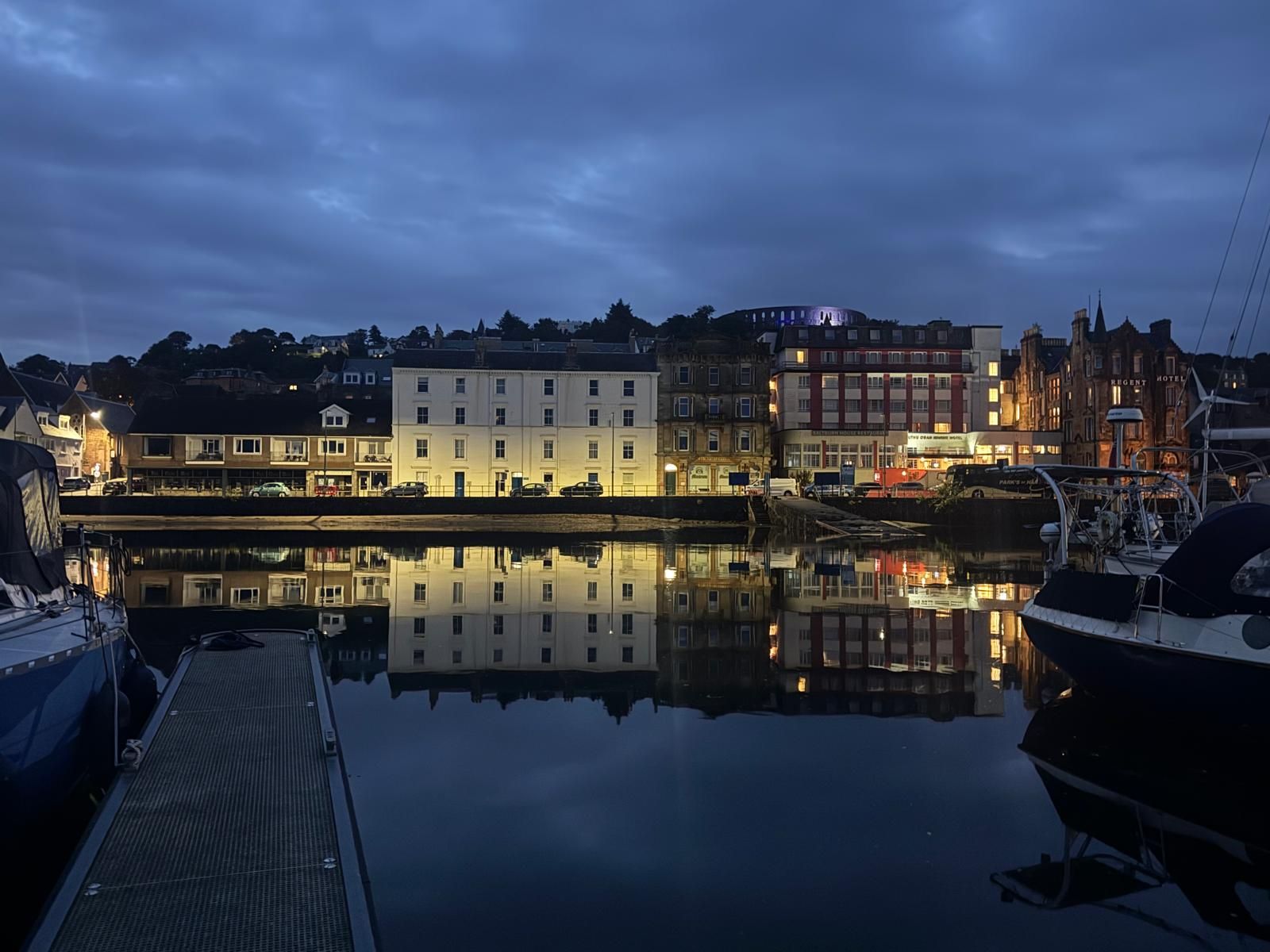
The alarm went at 5.30. We slipped the mooring at 6.32, which, in the interests of accuracy, we should record as a full two minutes shy of the hour we had actually intended. We must try harder. The first hint of light over Oban found us motoring out into next to nothing wind, engine ticking over, coffee not yet forgiven for its earliness.
The plan, as ever with these things, was elastic. Wind, tide, our own attitude and whatever stamina remained to us would decide between Craighouse on Jura, Port Ellen on Islay, or, if the day was kind, Ballycastle in Northern Ireland. The forecast for the week ahead was unhelpful in the extreme: nothing useful heading west from Monday through to the following weekend. Given that, our working plan quietly reclassified itself as a delivery trip, the aim now was simply to get as far south as the weather would allow…
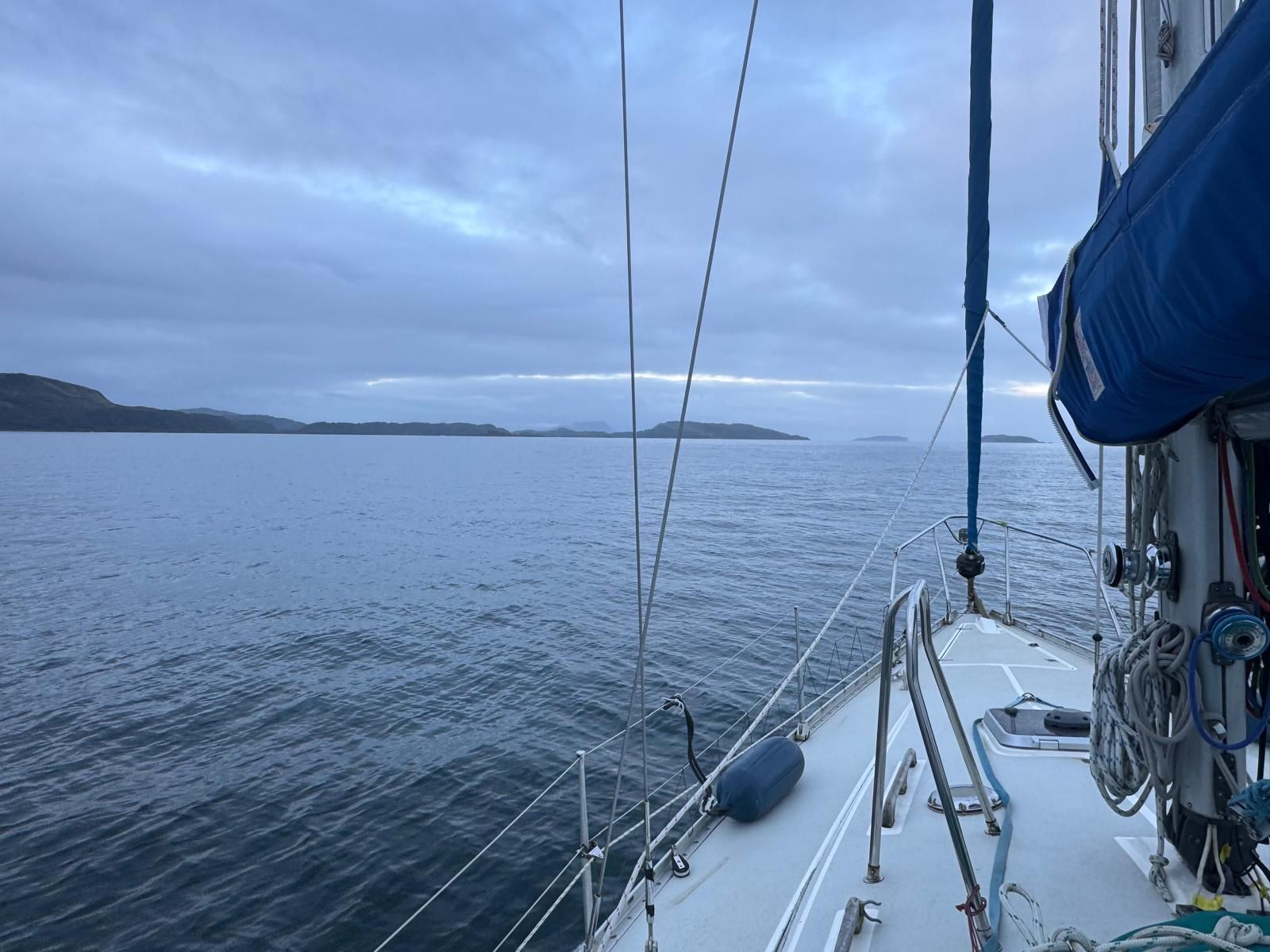
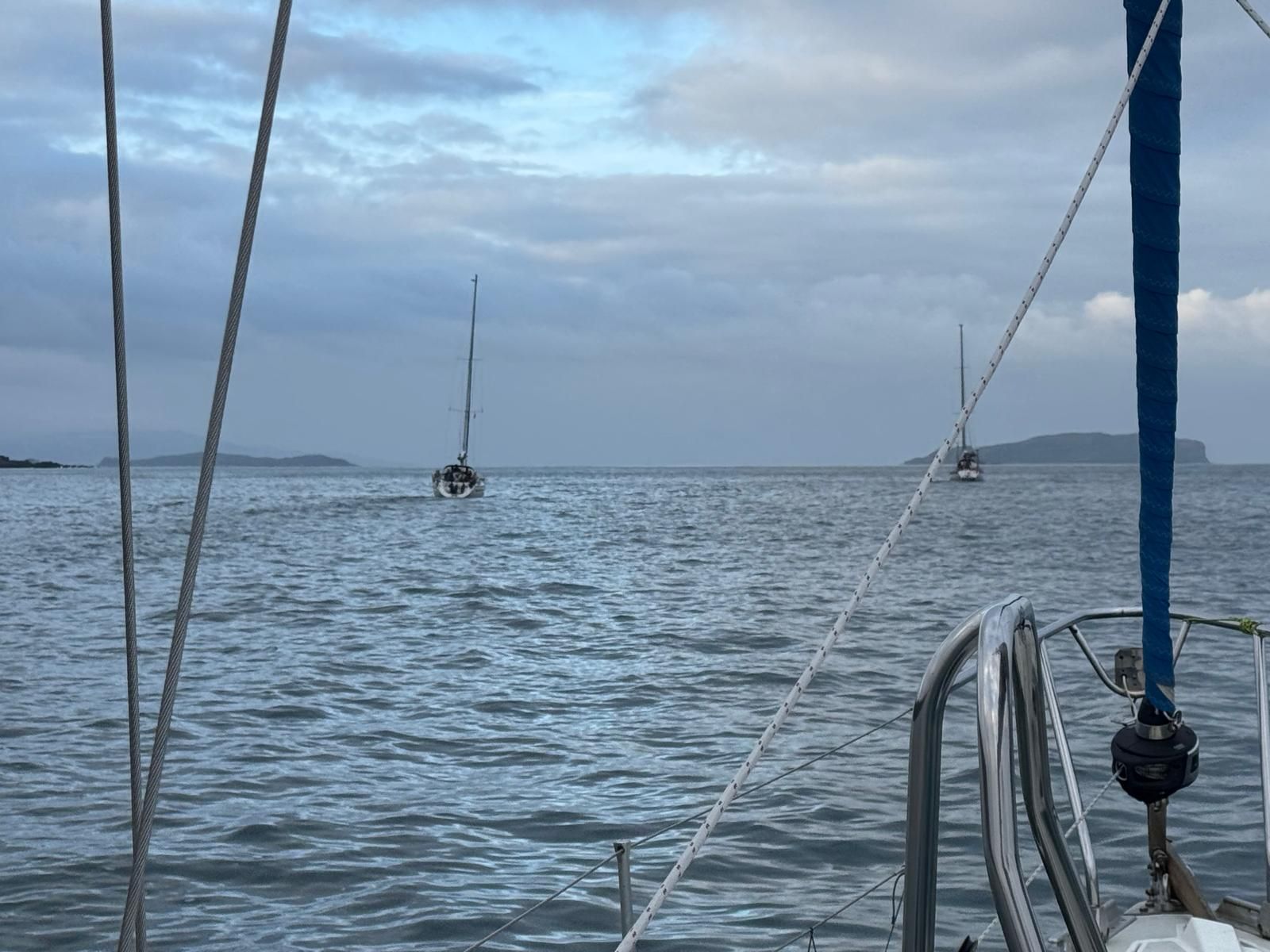
We said our goodbyes to that stretch of Scotland in lovely early light, and were shortly joined by a couple of other yachts also motoring south under power. We overhauled them steadily. Not racing, of course. Never racing.
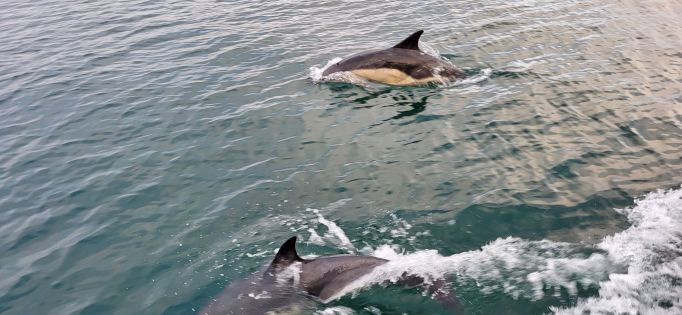
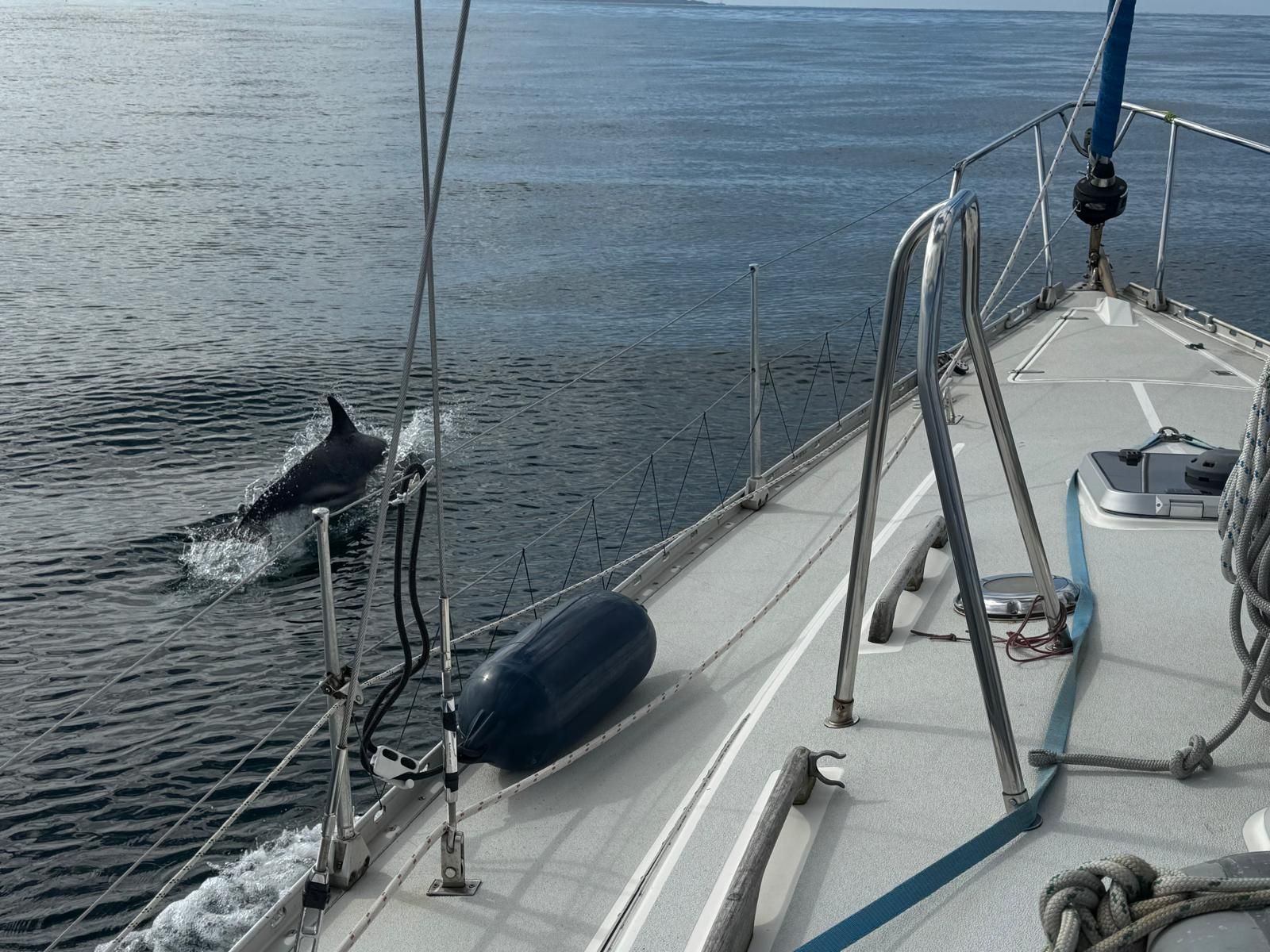
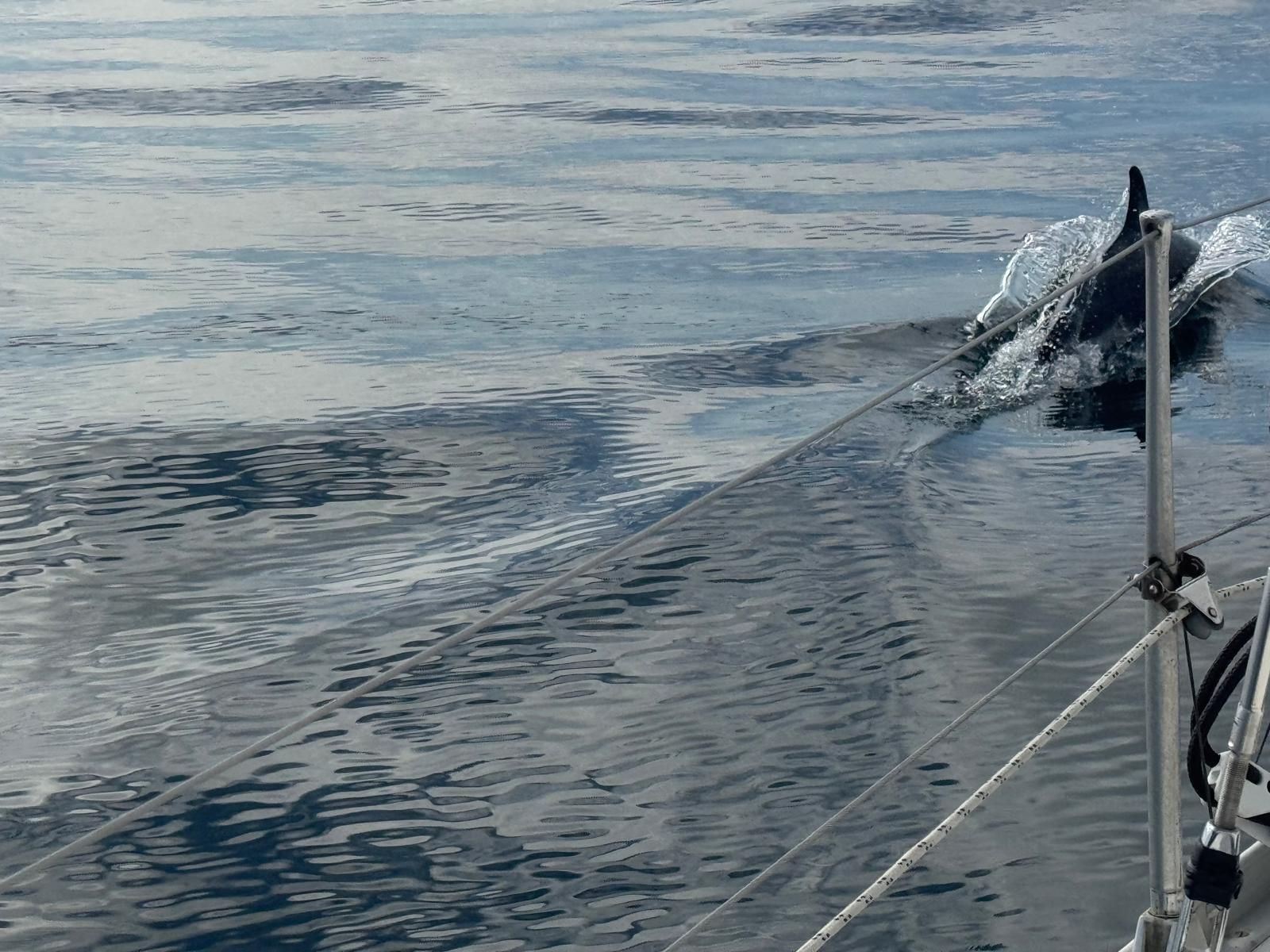
A pod of dolphins arrived to keep us company, a mother and her youngster among them, riding the bow wave with the sort of unhurried delight that never quite stops being extraordinary, however many times you have seen it.
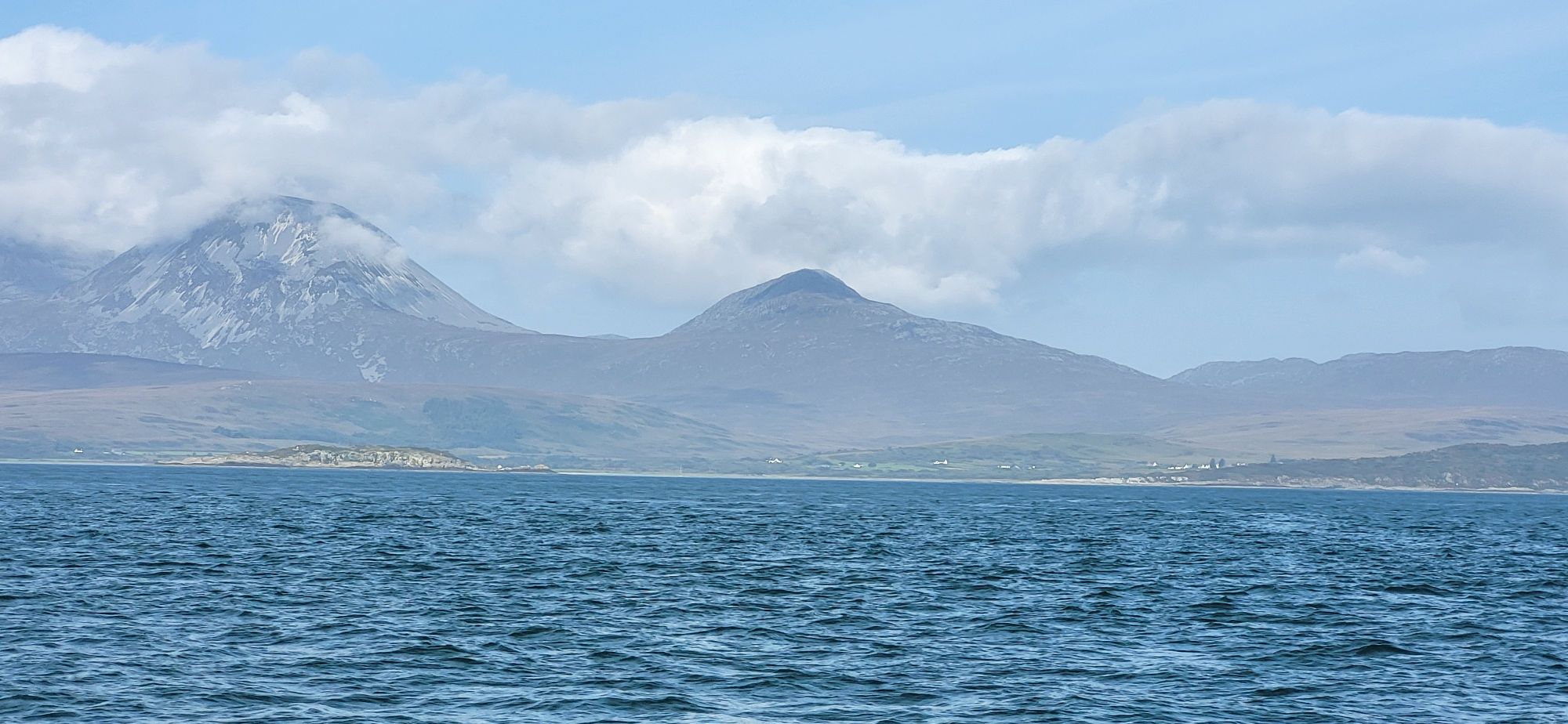
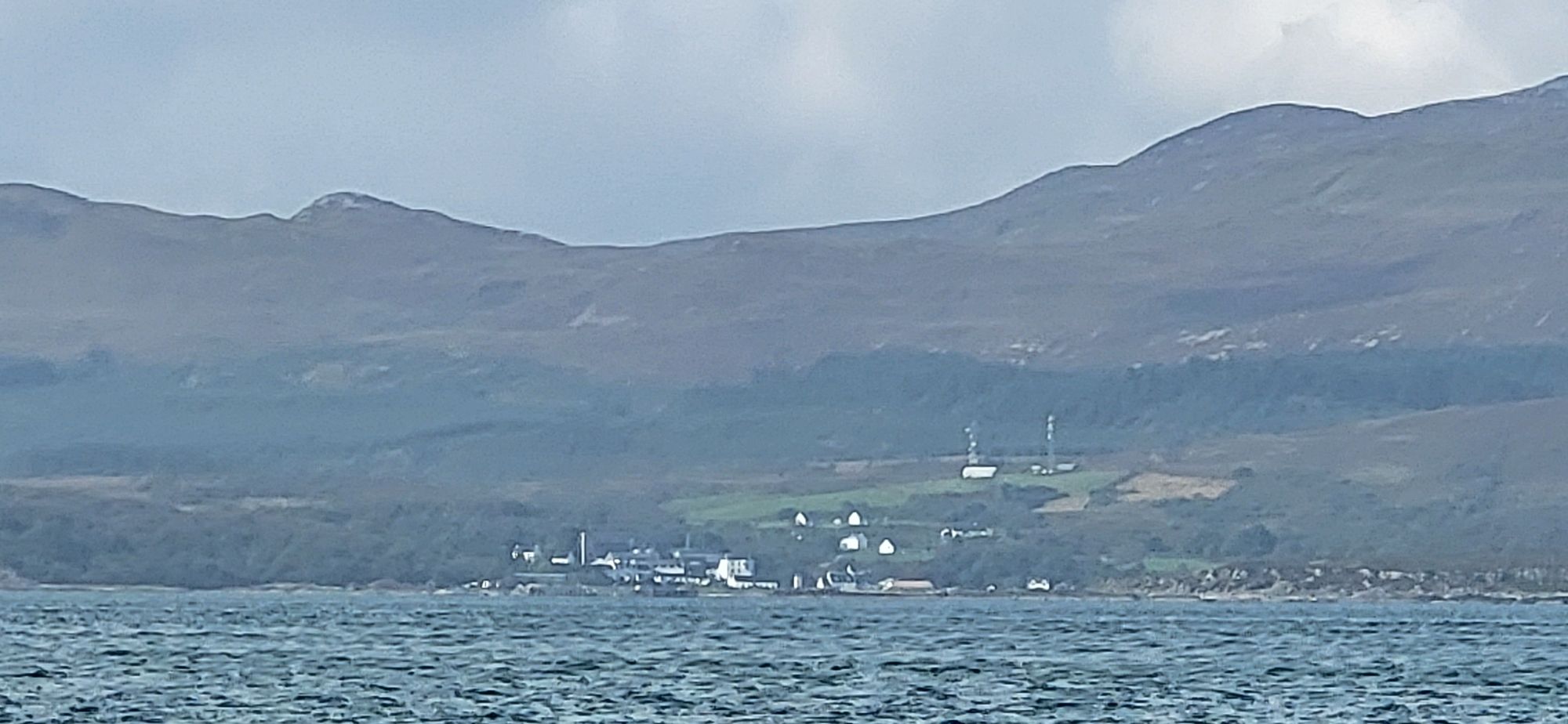
The tidal stream picked us up as we approached the Corryvrekan, and our speed built through its eddies and whirlpools until we were making 14 knots over the ground as Scarba slid past in something close to a blur. There is a particular moment in that passage, timed correctly against the tide, when turning back stops being a meaningful option and committing becomes the only sensible course. We had timed it correctly.
The wind, true to forecast, sat stubbornly on the nose, though mercifully light, no more than 5 knots. We were off Craighouse by 11.30, with Port Ellen only a few hours further on, and began, cautiously, to entertain the idea of Northern Ireland before dark. The wind freed a little through the afternoon and Heydays settled into a rhythm over a deepening swell, the last signature of the winds that had held us in Oban. Not only did we believe that we could make NI itself, but that the river Bann itself could be a possibility….the fall back could always be Port Rush…
The midday forecast confirmed it. South-easterlies were due before the south-westerlies arrived, hopefully not before midnight, with four or five days of unbroken strong westerlies to follow after that. As Islay dropped astern and Rathlin came up on the horizon, we edged a few degrees further west with the freeing wind, toward the entrance of the River Bann and the passage up to Coleraine, where Heydays would spend the winter. Whether we would arrive before the light went was, for a while, genuinely in the balance.
Yee Tak had prepared supper in advance, and in the calmer water under the lee of the land we worked through bowls of pasta in a sauce of indeterminate but agreeable origin, improved by a tin of mackerel. Fed, and reasonably confident, we felt ready for whatever the entrance had in store.
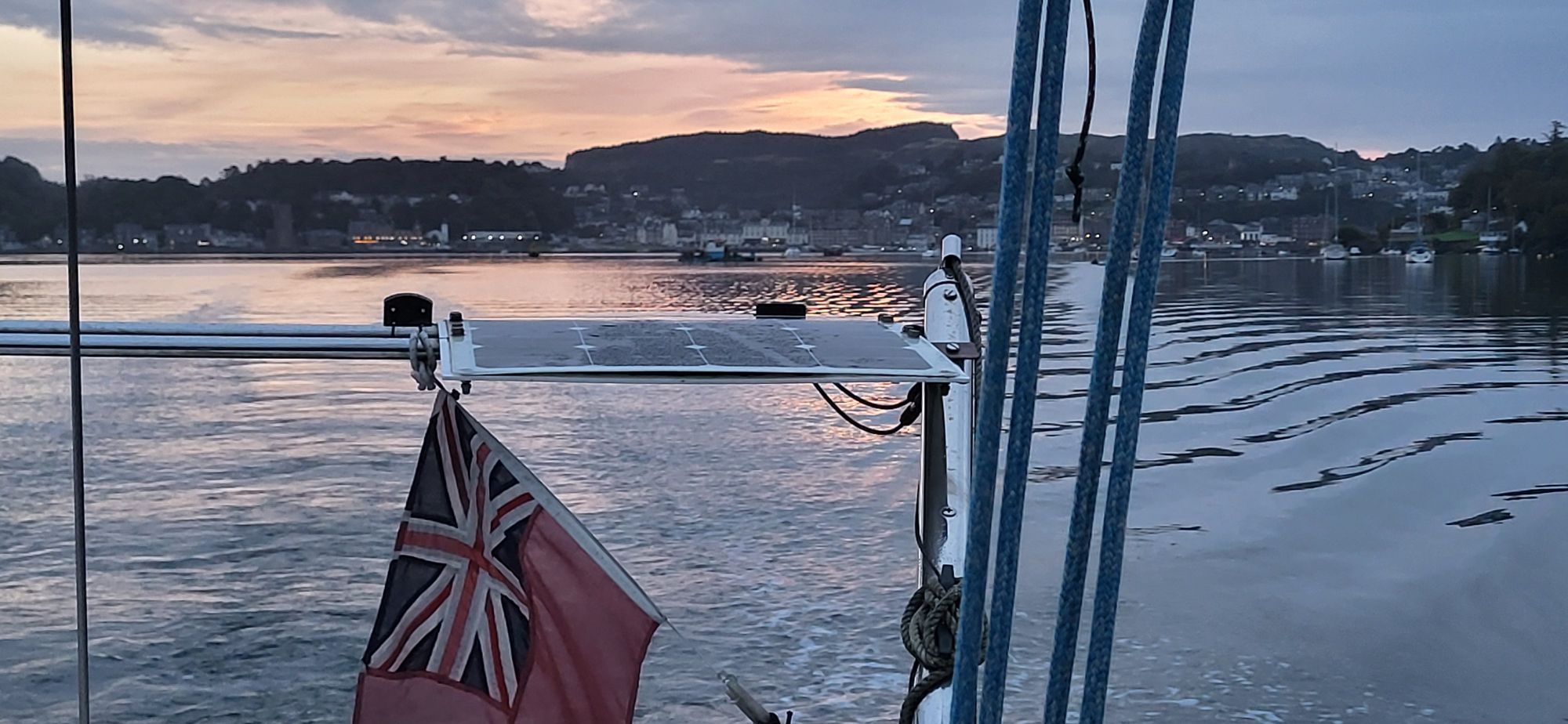
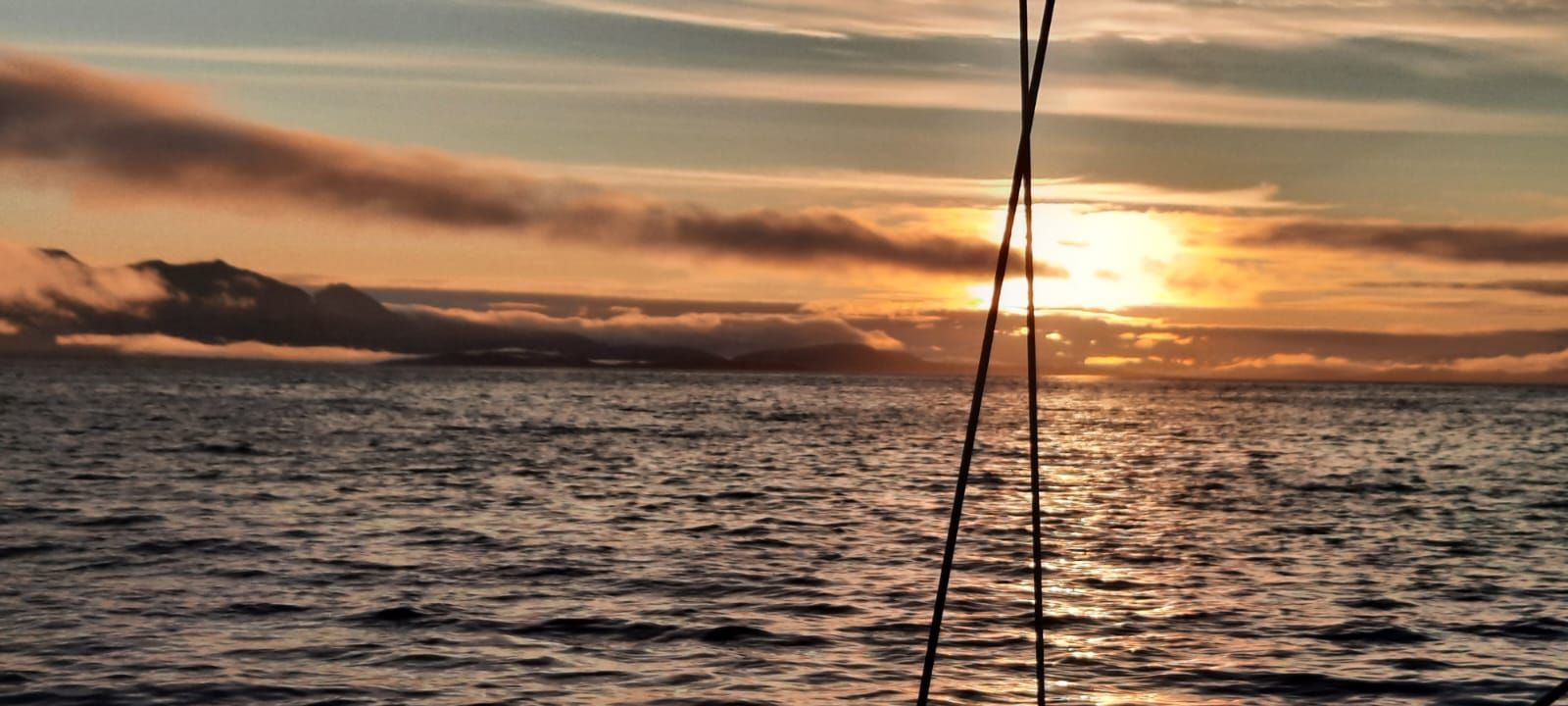
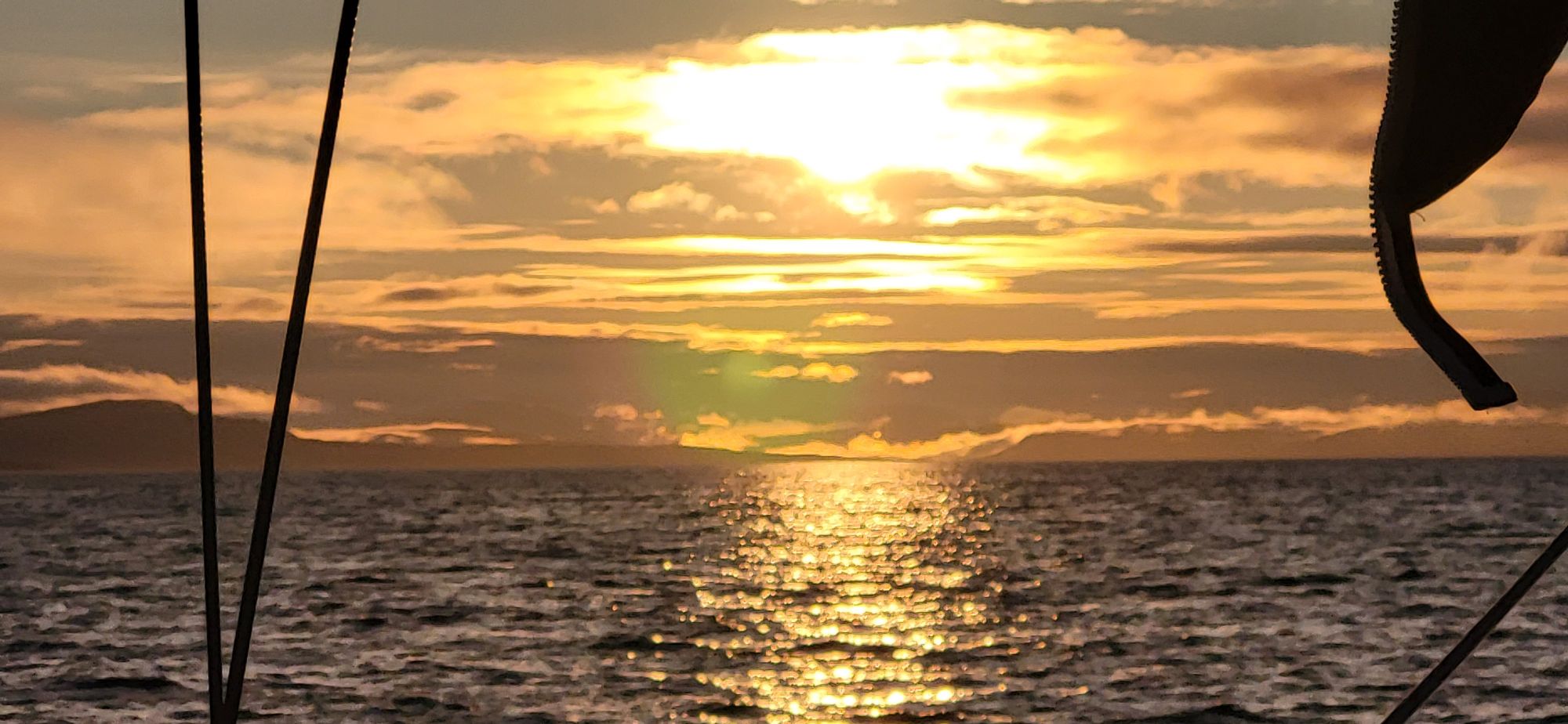
The evening sun slid down behind the hills of Donegal…
… and ahead we picked out headlights on the Portrush road and the flashing lights of a small funfair on the front. A year ago, almost to the week, this same stretch of water had produced an enormous pod of dolphins putting on a display none of us has quite stopped talking about since. This time there was no welcoming party, just one dolphin cruising past in the opposite direction, possibly asleep, in the way dolphins apparently manage, with only half a brain at a time. We did not ask her opinion of our navigation.
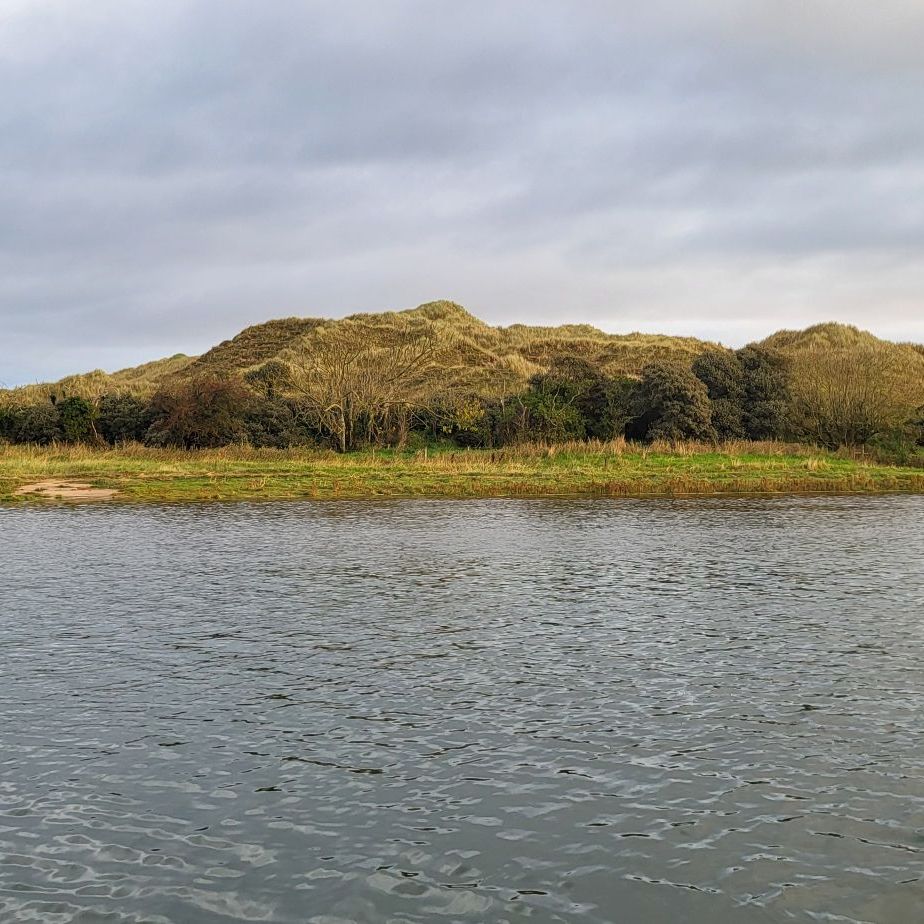
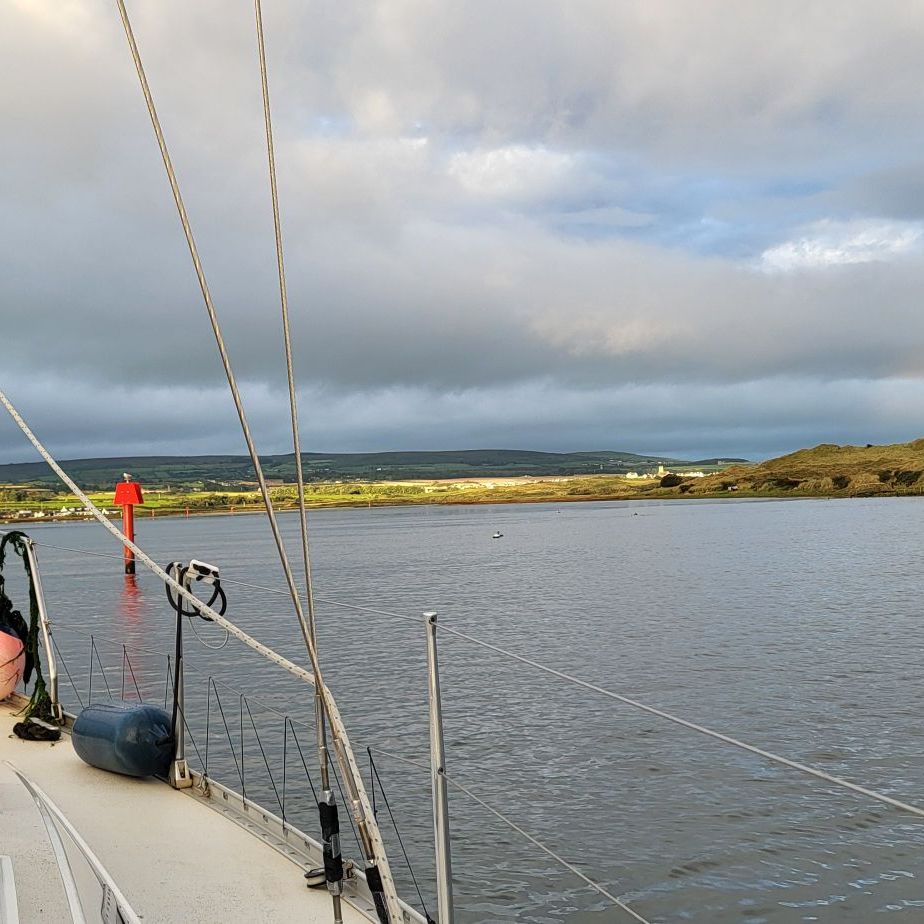
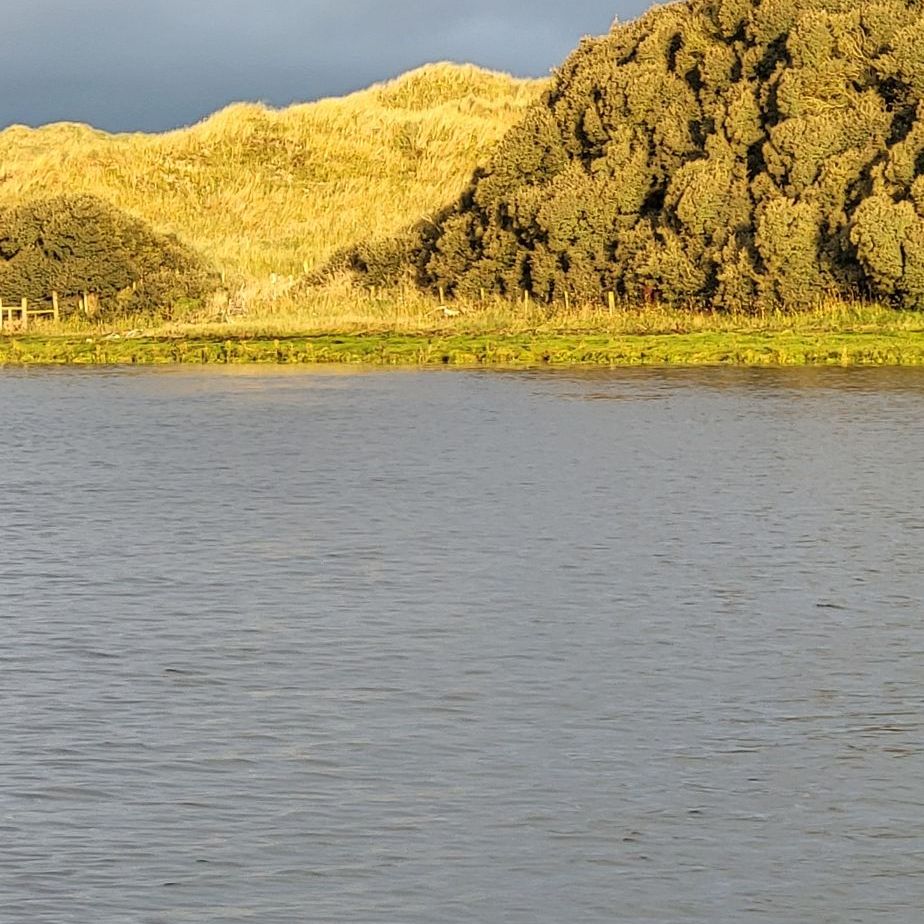
The breakwaters and leading lights of the Barmouth came up out of the dusk, the entrance to the Bann, with breaking water visible where the river meets the sea. It was high water, no breakers showing across the bar itself, and we had heard enough stories over the years about standing waves and white water here to take the state of the tide seriously. We went in. What we actually encountered was a very slight swell, a thoroughly welcome anti-climax, and we waved at some evening anglers as Heydays made her stately way up a darkening river.
…move along, nothing to see…
A mile upstream we picked up a mooring buoy, cut the engine, and let the evening take over: just the gentle slop of water under the bow as the tide began its long fall back to the Atlantic. Not far short of fourteen hours underway, longer than planned, but the sort of day that rewards using the weather, wind and tide you are actually given rather than the ones you had hoped for.
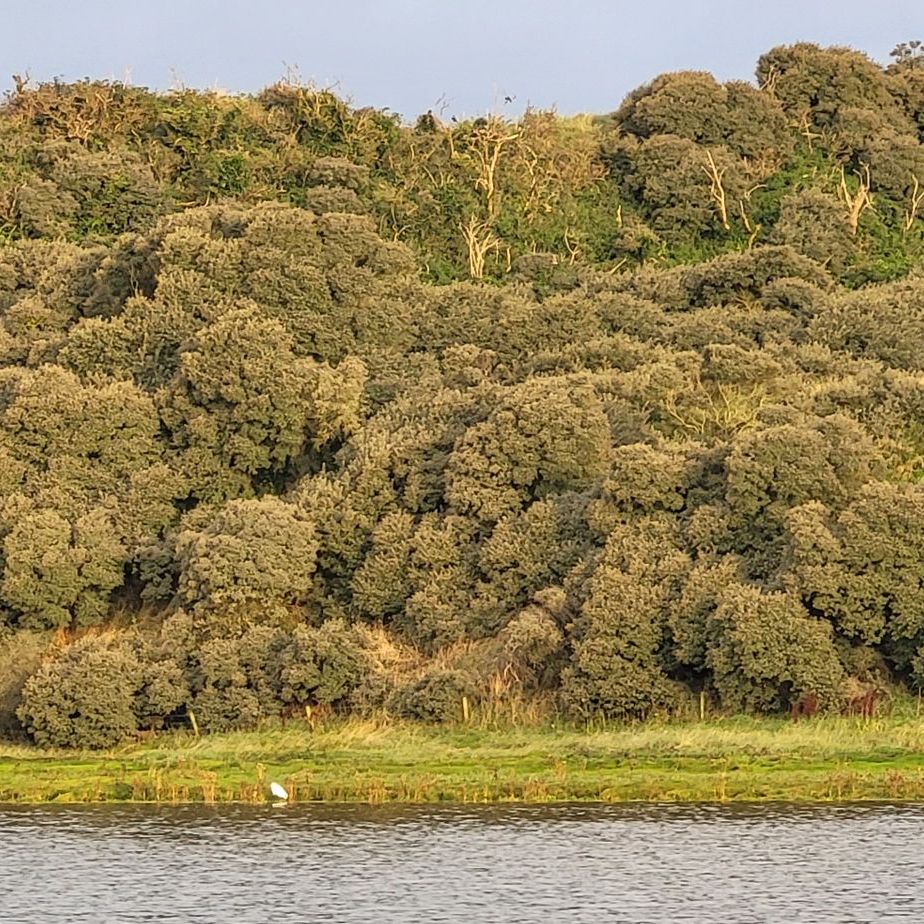
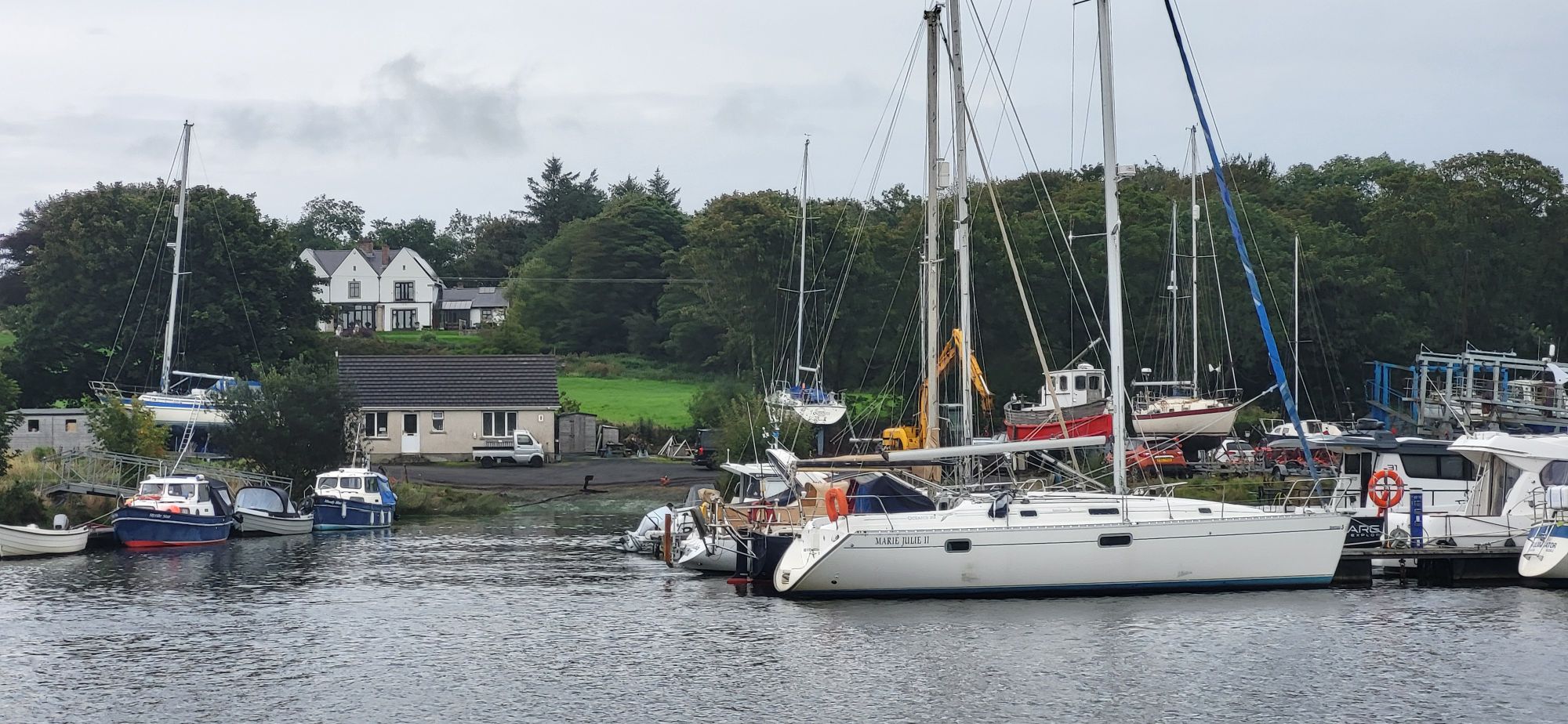
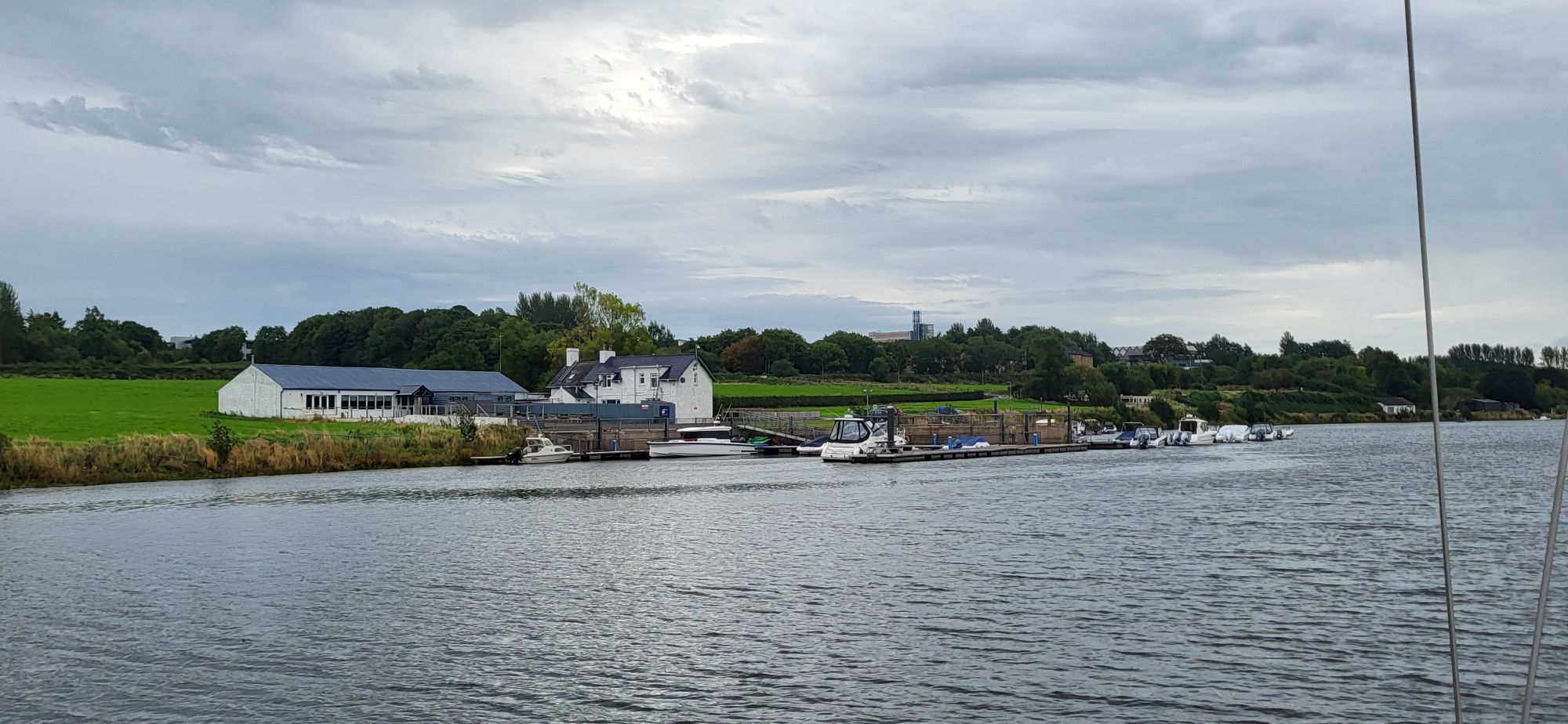
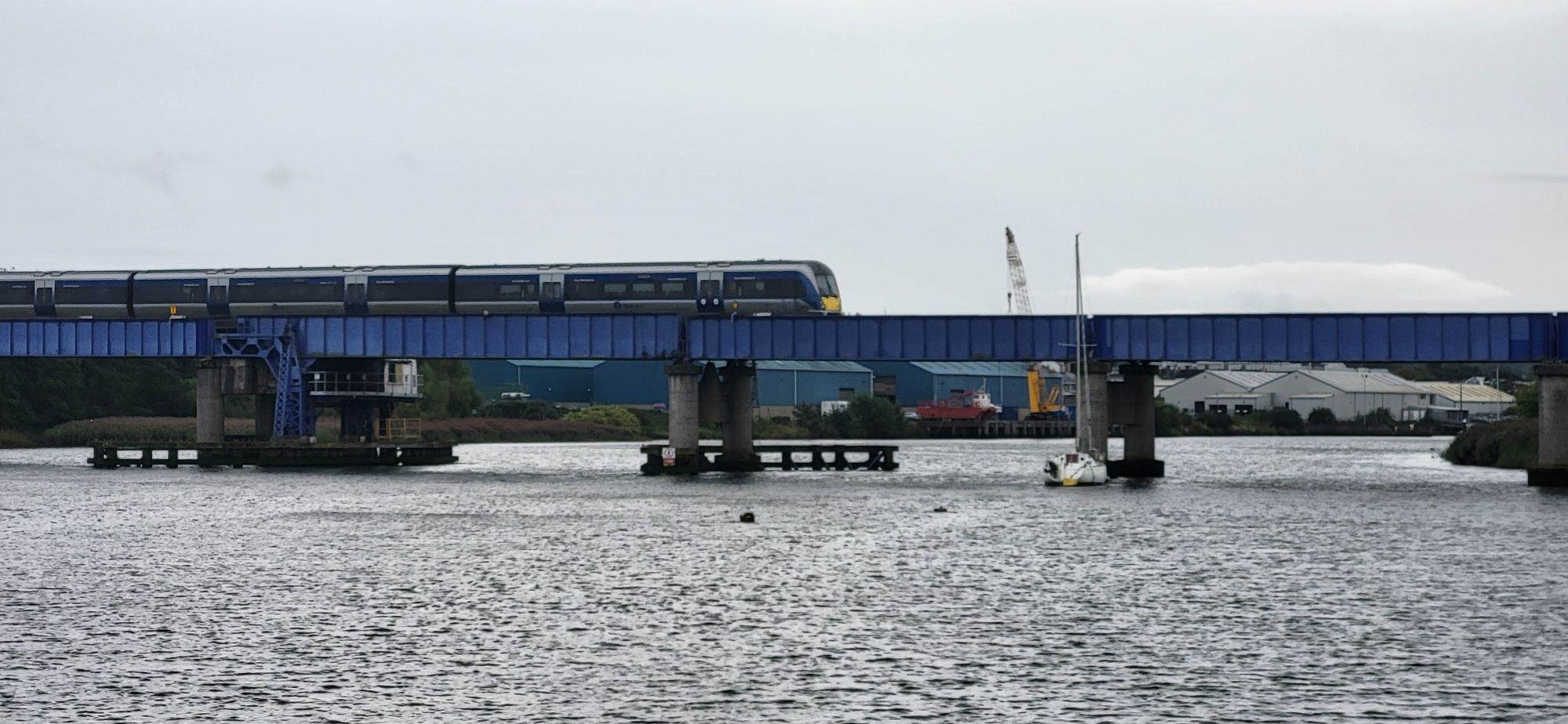
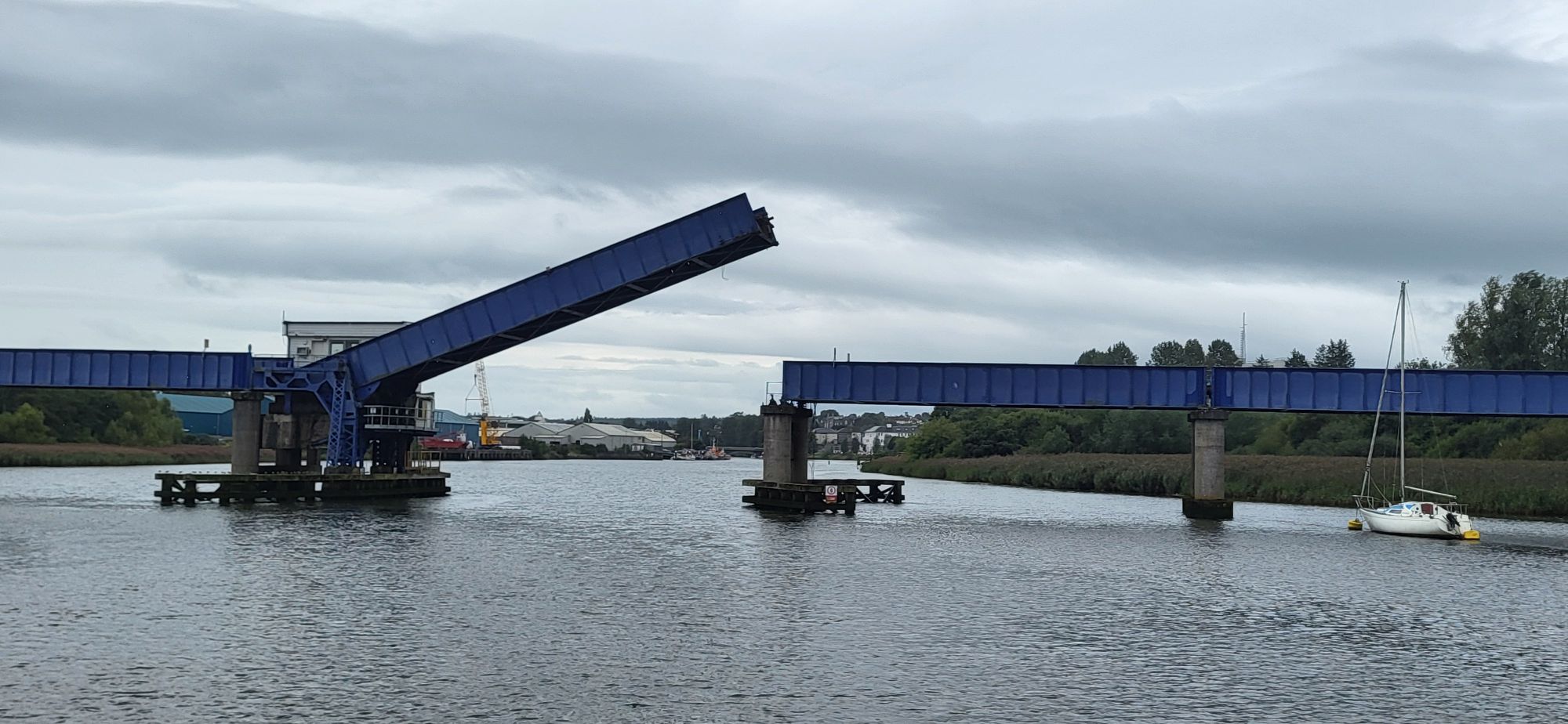
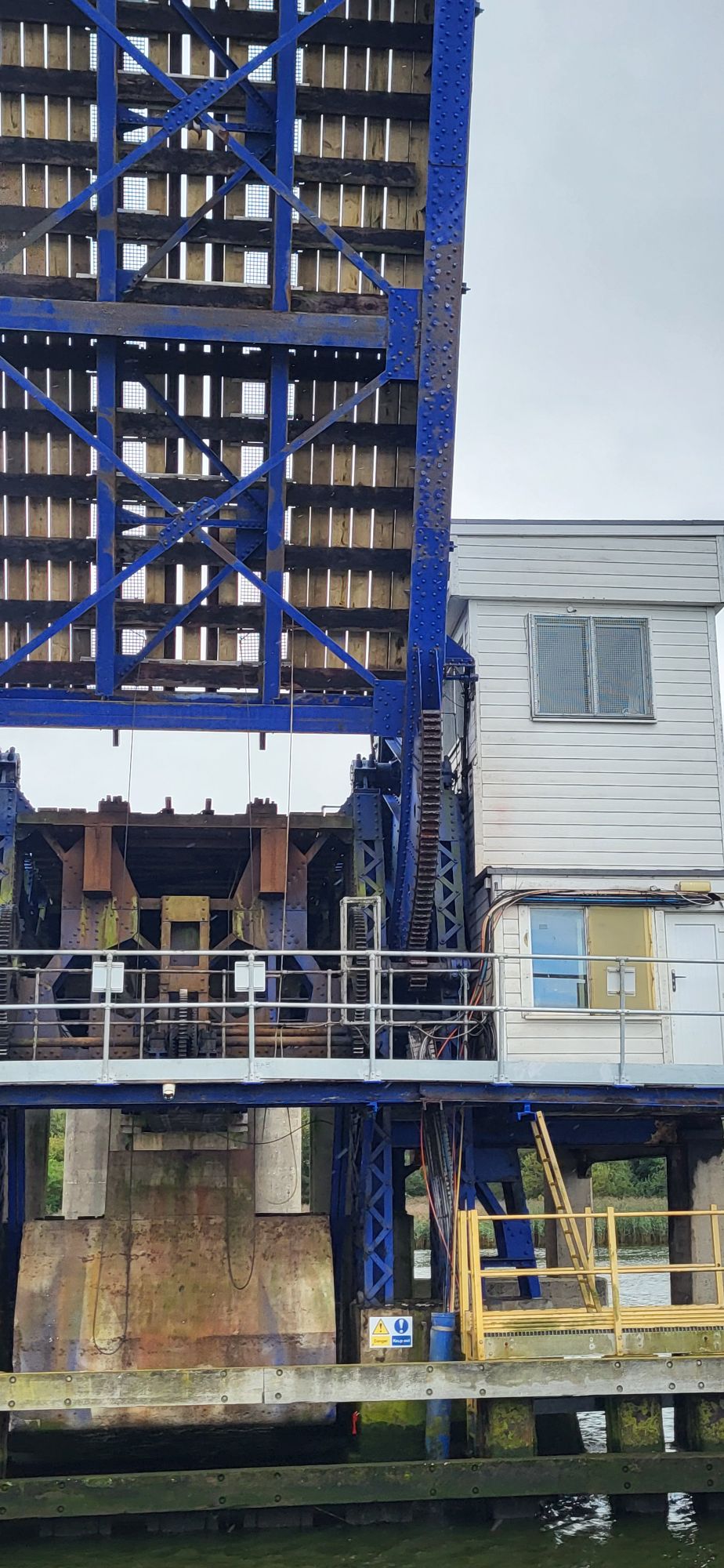
We woke to a quiet river, curlews and early waders doing the talking, and rose slowly to arrange the lifting of the railway bridge and take Heydays up to her resting place for the winter.
An unhurried rise and breakfast this morning for a change and we head up stream and through the railway bridge…
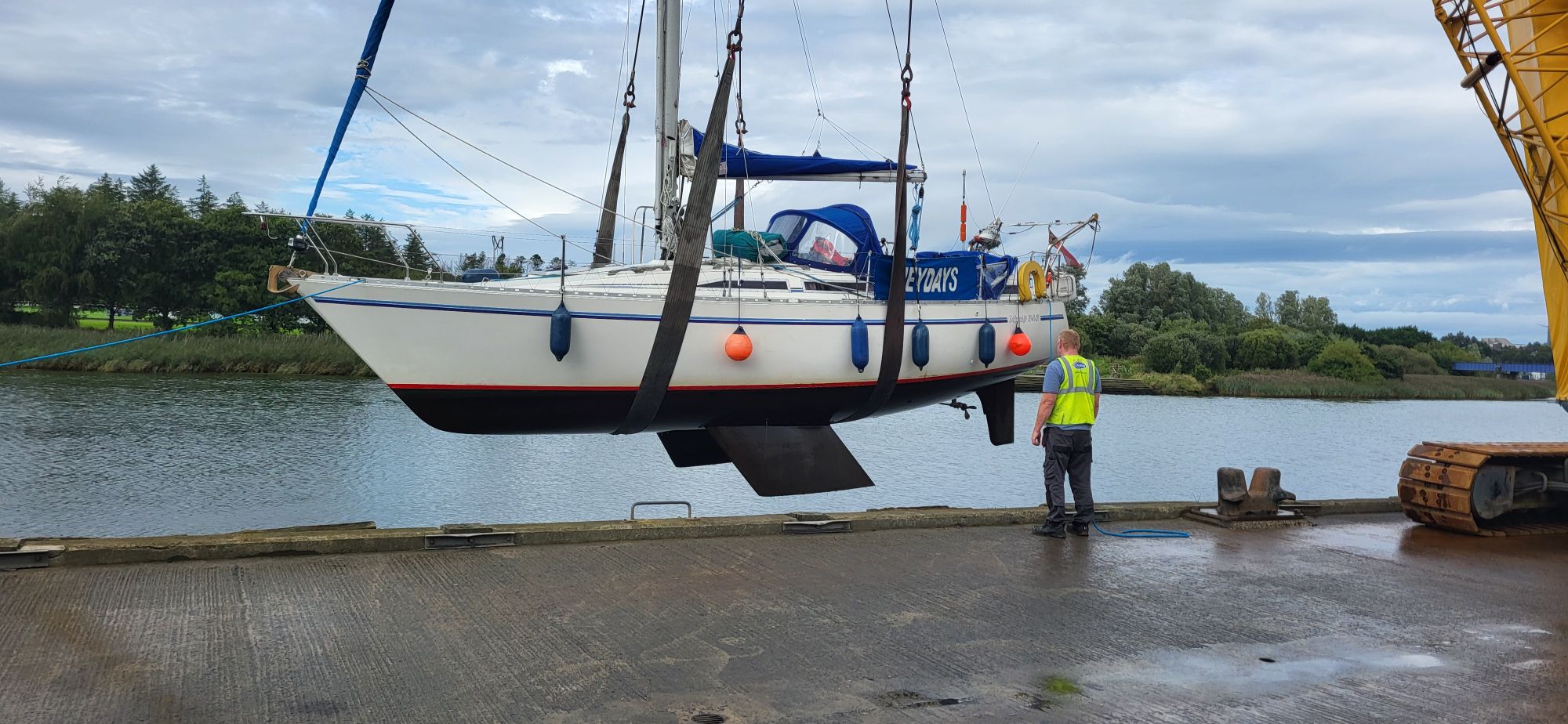
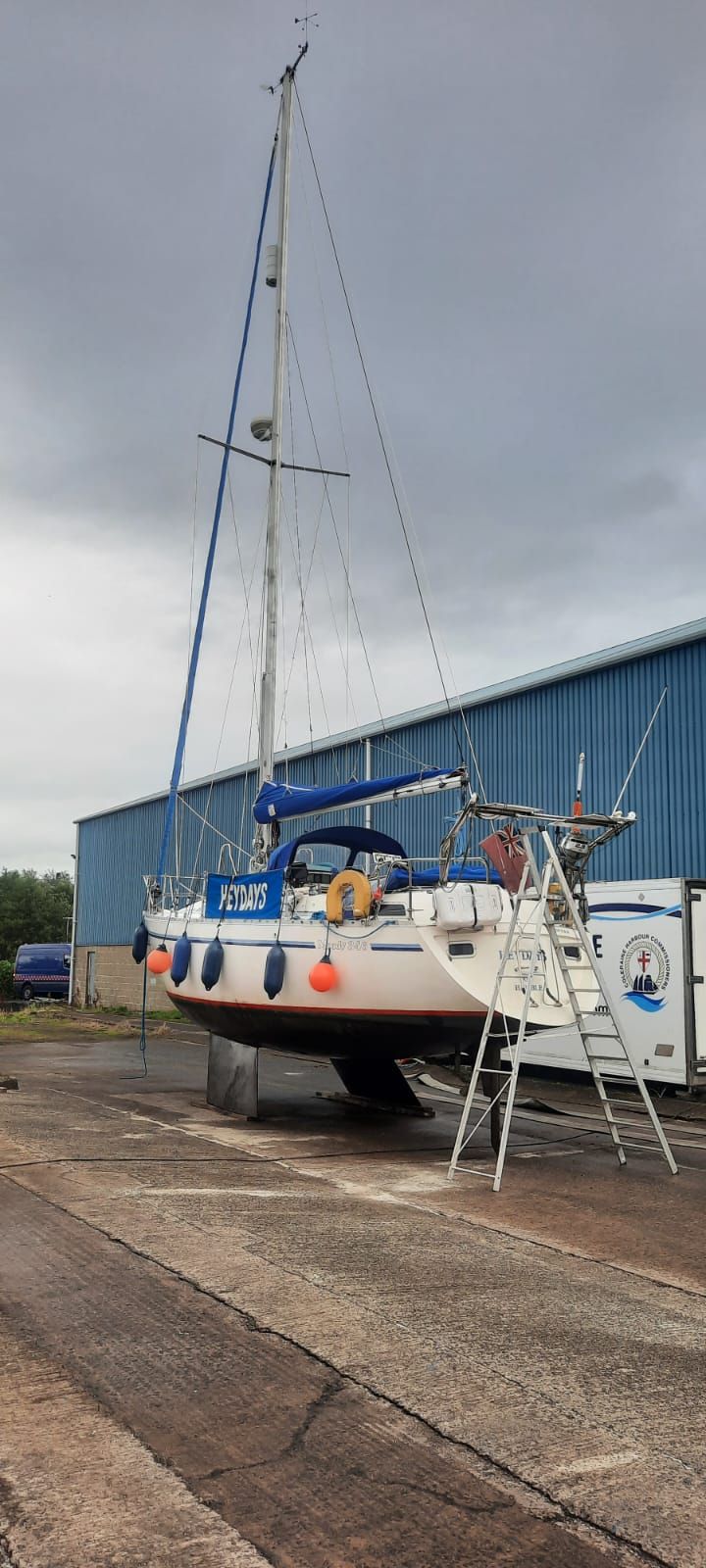
There is always, as ever, a short list of minor jobs waiting: this year the rudder seals need replacing and the transducers re-seating, so she will come ashore for a month or so while that is done. The harbour staff, as warm and as generously unbothered as always, offered the sort of remark that only makes sense in hindsight, delivered as the rain swept through: lucky you came over the Barmouth yesterday, if you hadn’t you’d be stuck outside for a week. Lucky indeed, we agreed, allowing ourselves a small, private satisfaction that it had, in fact, been plan C all along.
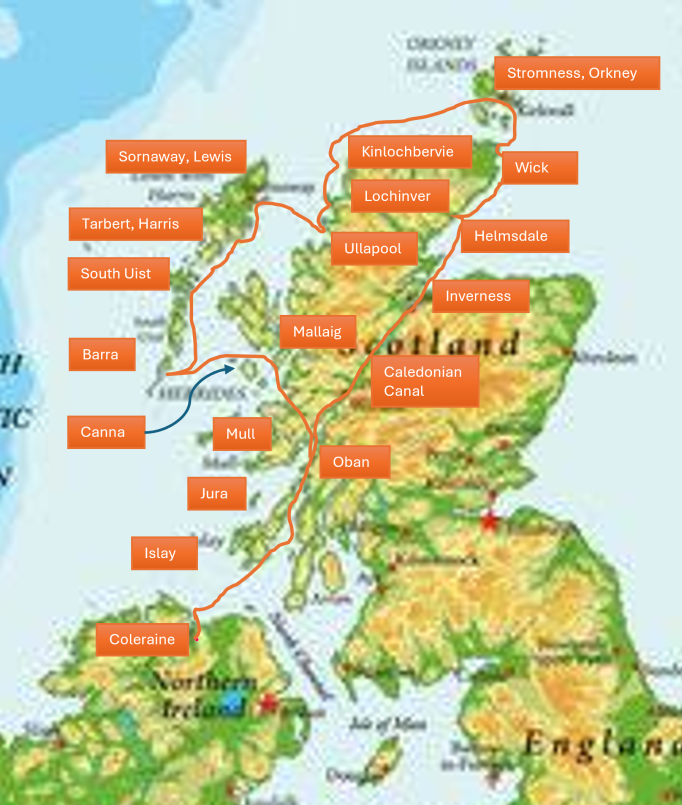
And here we leave Heydays and this blog until the spring, when we hope to pick up the voyage home by way of the parts of Ireland we missed last year, with a little more time allowed for the Scillies. Looking back over the whole run, the Highlands, Orkney, the Outer Hebrides, it has felt less like a cruise and more like a slow and occasionally humbling education in island life. The weather up there has not so much interrupted our plans as utterly changed them, making our careful routing into a work of fancy, until we stopped thinking of the changes of course as setbacks and started recognising them as simply how things are done up here. It is a lesson the islanders themselves seem to have learned generations ago, and one we were only ever passing through long enough to half learn.
Very final PS…..several friends have asked what it is like living with another couple on a smallish boat for weeks on end….we may have some thoughts in an occasional later post!!
Well, this is a genuine conundrum. Following the various dramas with trains and ignition switches, and a successful reunion with Yee Tak in Oban, our attention had turned to what we had planned as a gentle-ish cruise south, through the Crinan Canal, a nose around Arran, and on across to our winter berth in Coleraine. The weather, however, has other ideas, as it invariably does, and at the time of writing we remain holed up in Oban, looking for some combination of wind and current willing to carry us south and, ideally, a little west, towards Jura and Islay.
The wind, having sat up around Force 7 overnight and into this morning, has now backed round to the northwest, which would suit us handsomely, if still rather on the brisk side of comfortable. The trouble is that the wind god and the tide god have evidently fallen out. The wind is more or less agreeable; the tide is emphatically not. Both the Sound of Jura and the west side of the island run strong tidal streams, and wind-against-tide in those waters is the kind of combination that pilot books warn about in bold type, for good reason: a stiff northwesterly meeting a south-going stream can turn a perfectly civil stretch of water into something considerably steeper and less forgiving than the forecast alone would suggest.
The tide might turn favourable from around four this afternoon, but by the time it did we would be most unlikely to reach a decent anchorage or harbour before nightfall, and arriving after dark in unfamiliar waters thick with rocks is not an experiment we are keen to run, however confident the chartplotter looks about it. So, for the moment, the plan is to sit in the comfort of our own cockpit and watch other people attempting to moor without T-boning either their neighbours or the pontoon, the wind having come in rather stronger than advertised. There but for the grace of God, as the saying goes, and we say it with real feeling, having been on the receiving end of exactly that manoeuvre more than once ourselves.
The actual plan, such as it is, involves leaving at first light tomorrow to catch the first six hours of the tide, which, despite some light winds early on, should carry us well on our way towards Jura. Our difficulty after that is less easily solved: there appear to be remarkably few opportunities to make progress southwest towards Coleraine, with a fairly settled run of strong southwesterlies forecast for the next five or six days, which is precisely the direction we need to be going in and precisely the wind we would prefer not to be doing it into. More news, as they say, when there is any.
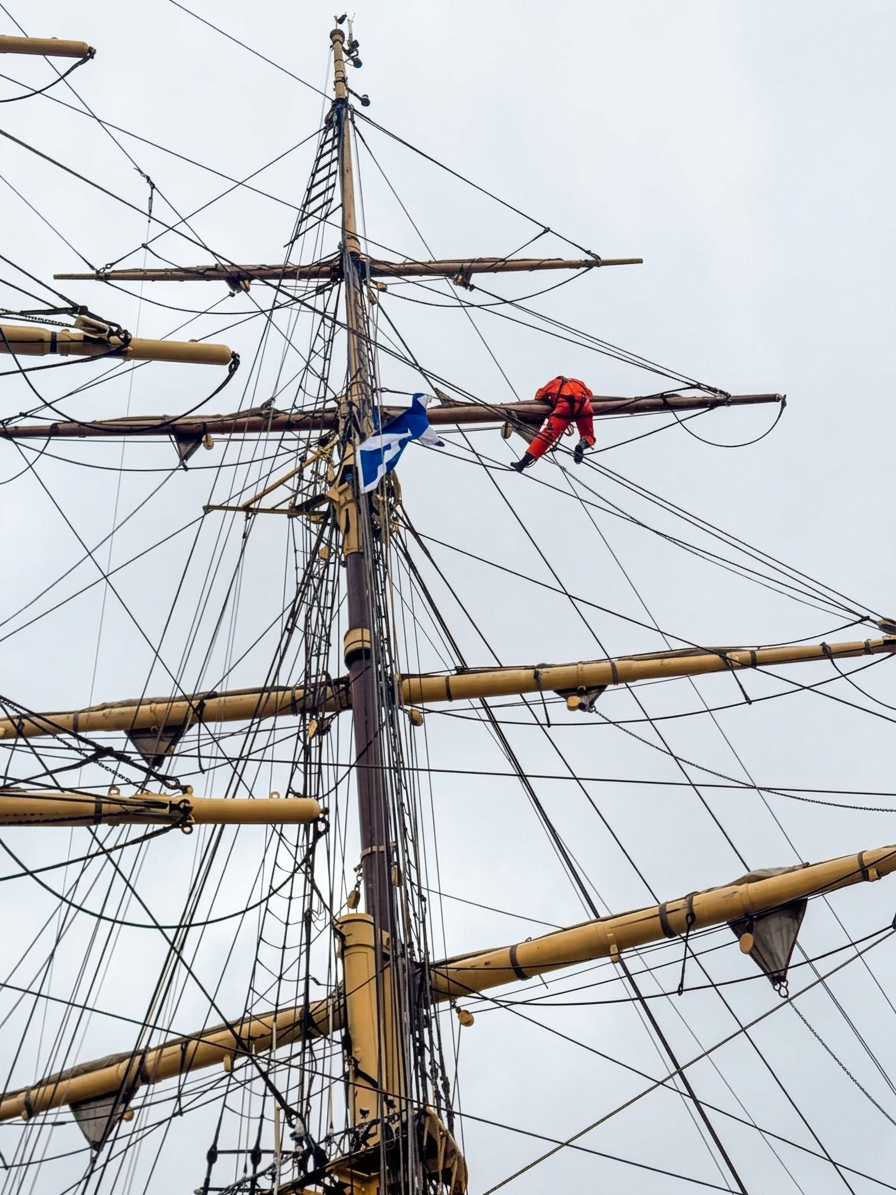
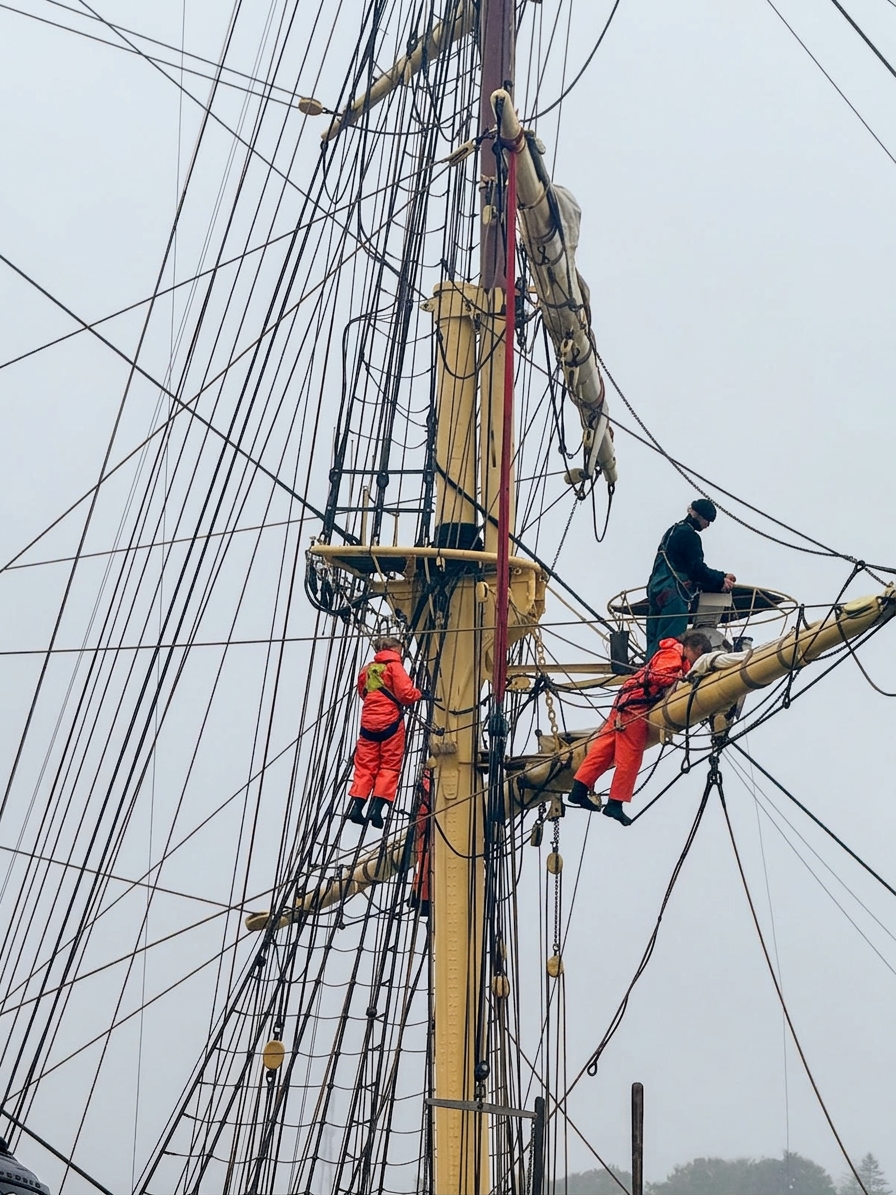
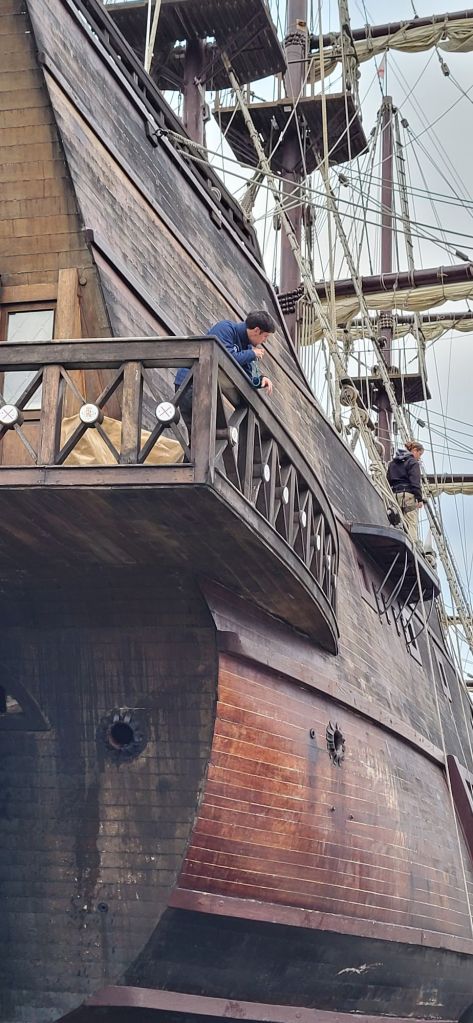
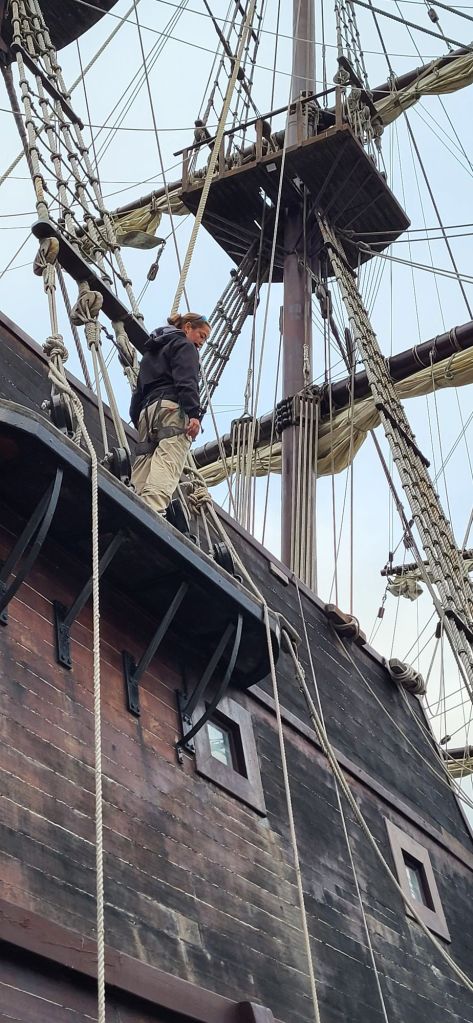
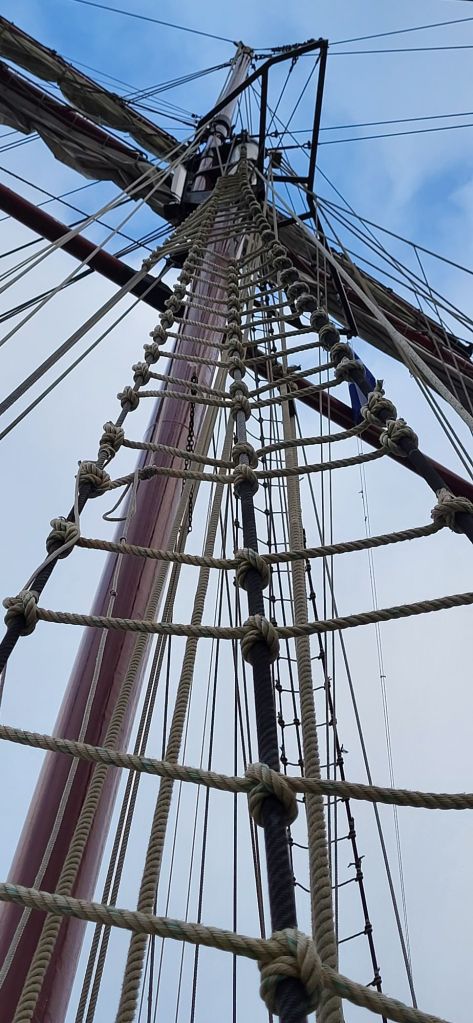
On a more cheerful note, the sail training square rigger in harbour today turned out to be Danish, and we spent a happy quarter of an hour watching some of her young crew going aloft, safely clipped on but still, by any reasonable measure, a bottom-clenching way to spend an afternoon. We watched from the comfortable and considerably lower vantage point of our own cockpit, and felt no particular urge to trade places.
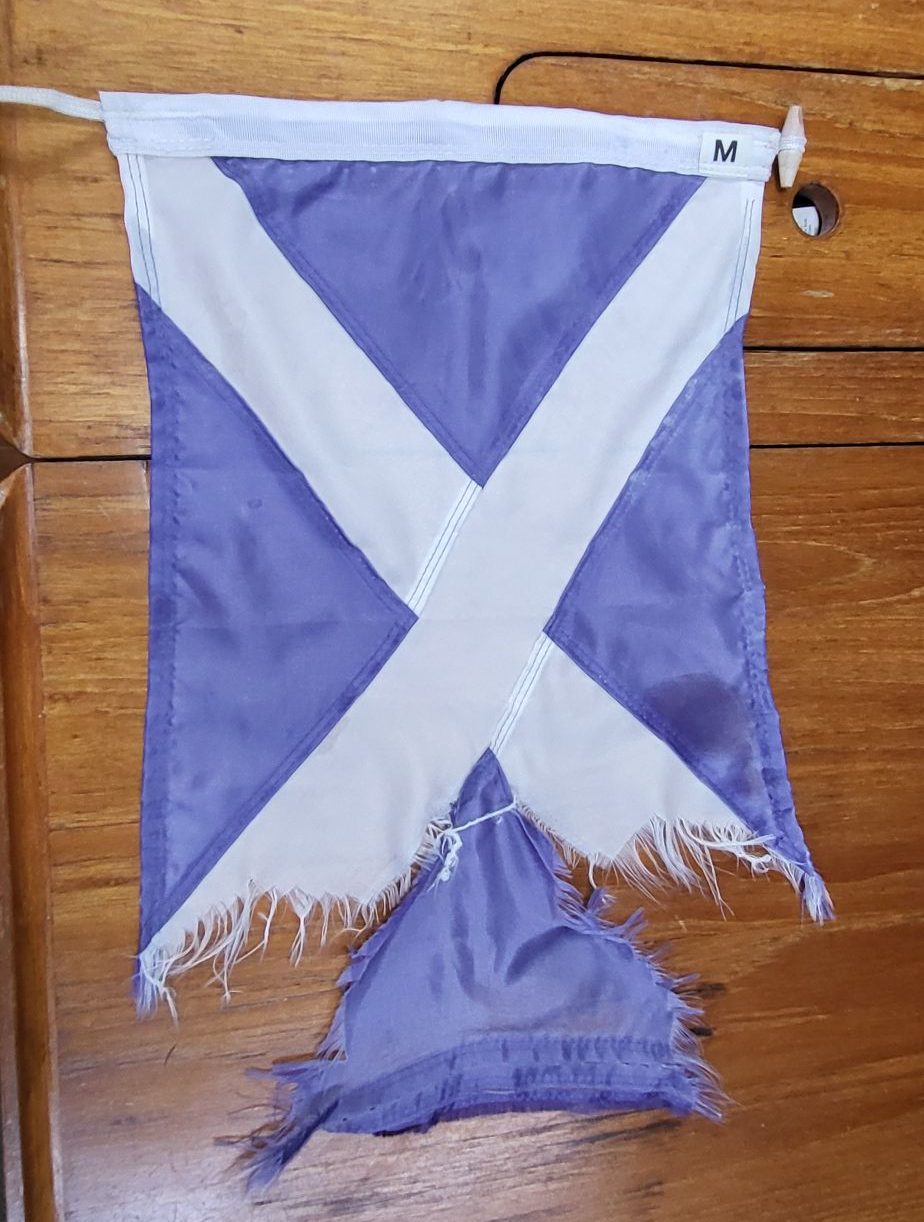
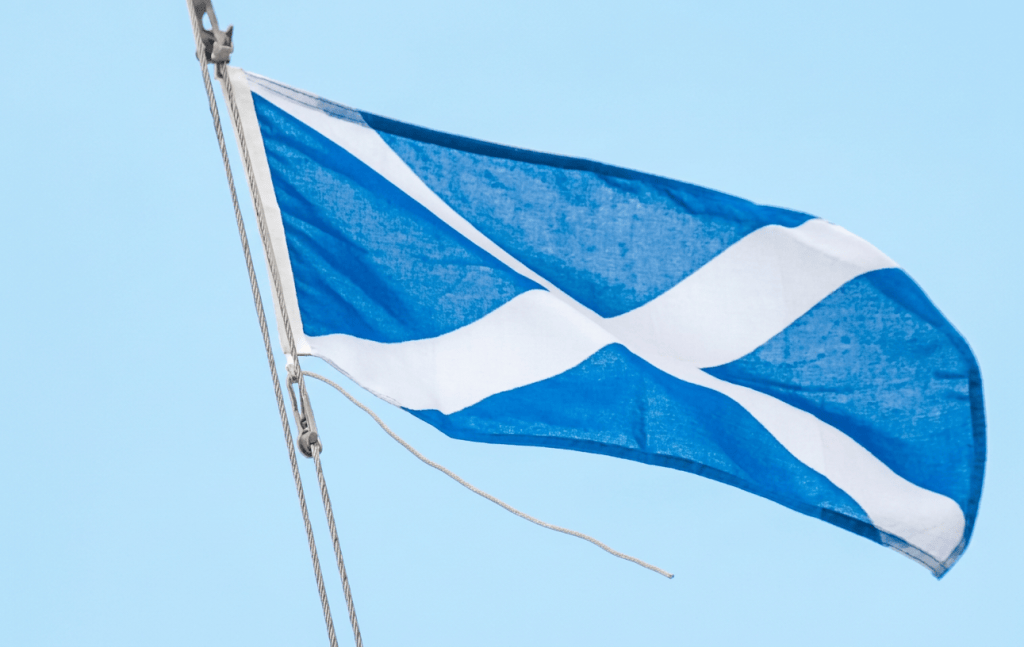
One further small piece of trivia from a windy day in harbour: we finally retired the much-used, tattered, and thoroughly weather-beaten Scottish courtesy flag in favour of a new one. A belated show of respect from us Sassenachs, and rather overdue.
The plan was to sail from Tobermory to Oban today, meet Yee Tak off the train and then get to the Crinan Canal before the generally unpleasant weather on Saturday.
The wind was forecast to be SE, i.e. on our nose for half the distance down the Sound of Mull, before it was due to veer and us to slide off to Port, resulting in a fine beam reach across to Oban. The winds were due to be no more than 10 or 11 kts against us….a bit uncomfortable, but nothing worse.
Problem one arrived in the form of a key broken off in the ignition switch. After an hour of fruitless gentle persuasion and then rather more aggressive persuasion, we tried the old trick of a screwdriver down the hole. Fortunately the remnants of the key played ball and we could at least start the engine.
Problem two was Yee Tak’s second leg of her 4 leg journey. A delayed train to Birmingham meant a missed connection, there, and then a final missed connection in Glasgow, leaving her with the last train to Oban…a minor if frustrating inconvenience (initially…)
Godly irritation number 3…we dropped the mooring lines about an hour later than the plan, and Heydays nosed out into the Sound, to be met with a much bigger wave chop than the apps suggested, and almost double the predicted wind speed. After 45 minutes of slog, we were making less than 3 kts over the ground…and that was with 1kt of tide. Now that we had lost an hour, and that the wind app was considerably in error, we looked at each other….do we carry on with the possibility of getting down to a headway of about 1kt when the tide turns,and hope for an earlier wind change, or turn back. In the end, the old adage which says that if you are considering turning back it is the right time to turn back, made sense, and we arrived back in Tobermory inside 10 minutes, having spent 50 slogging the other way…
Final note: Had Yee Tak’s train been on time, she would have been able to catch a ferry over to be with us. In the event, she had to find a (very expensive) bed for the night.
Back in Tobermory, we managed to source a new ignition switch….in Oban. Oh well, we’ll just have to hope that the old screwdriver trick works tomorrow when the winds will be much more favourable.
What to do in Tobermory on a ‘free’ day?
… possibly the odd beer or whisky….
The winds look set fair for Friday morning, so once we heard from Yee Tak that she was safely tucked up in the hotel, we had an early night.
Alarms when it is still dark are rarely welcome, but as always we fall into an unspoken routine around a bit of personal hygiene and getting the old girl ready. The ignition switch took a lot more ‘persuasion’ with the screwdriver this time, but with the trusty diesel finally bursting into life, we slid away from Tobermory for what we hope will be the final time on this trip.
Nosing out into the Sound of Mull, the sea is smooth, but the predicted wind is not to be found. In fact, as we head into the misty murk, the sails don’t do much at all…
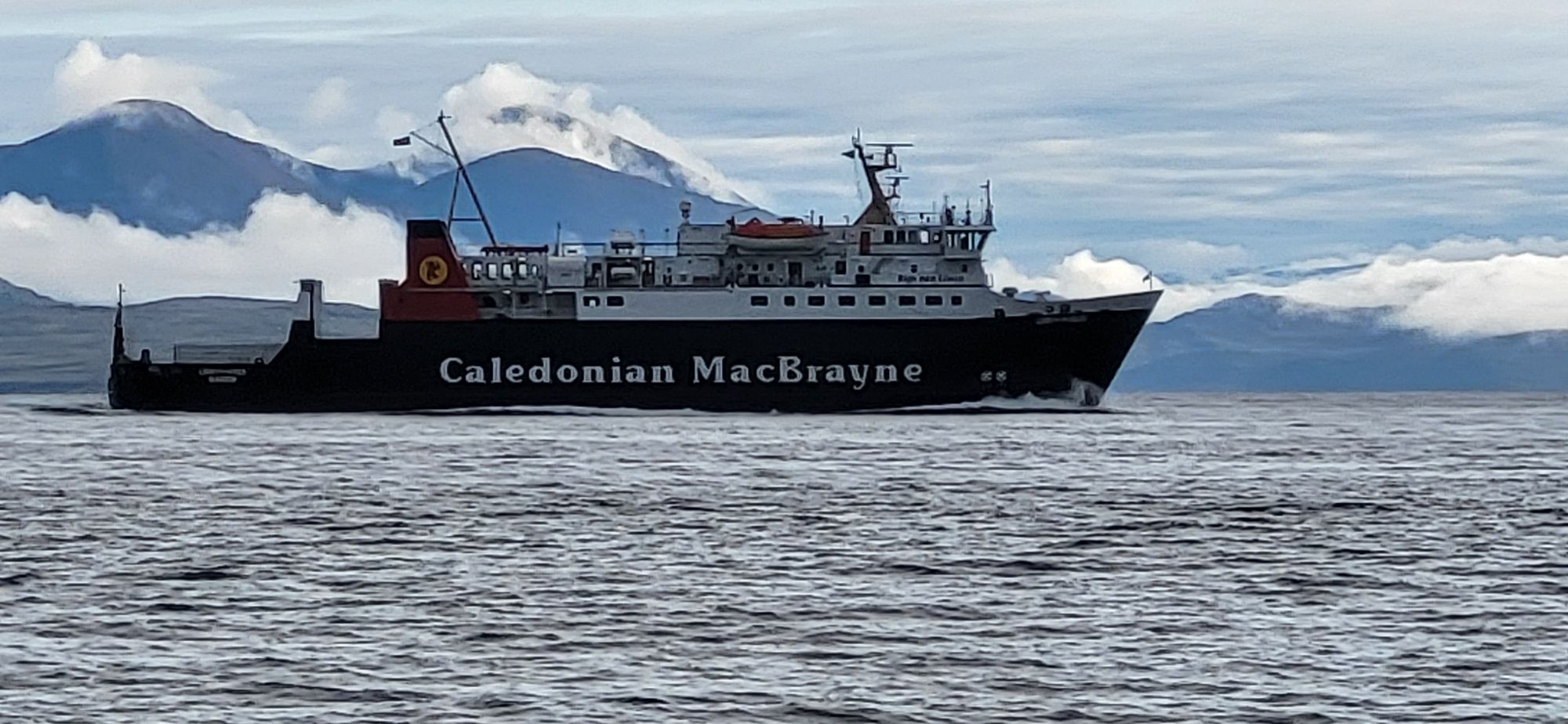
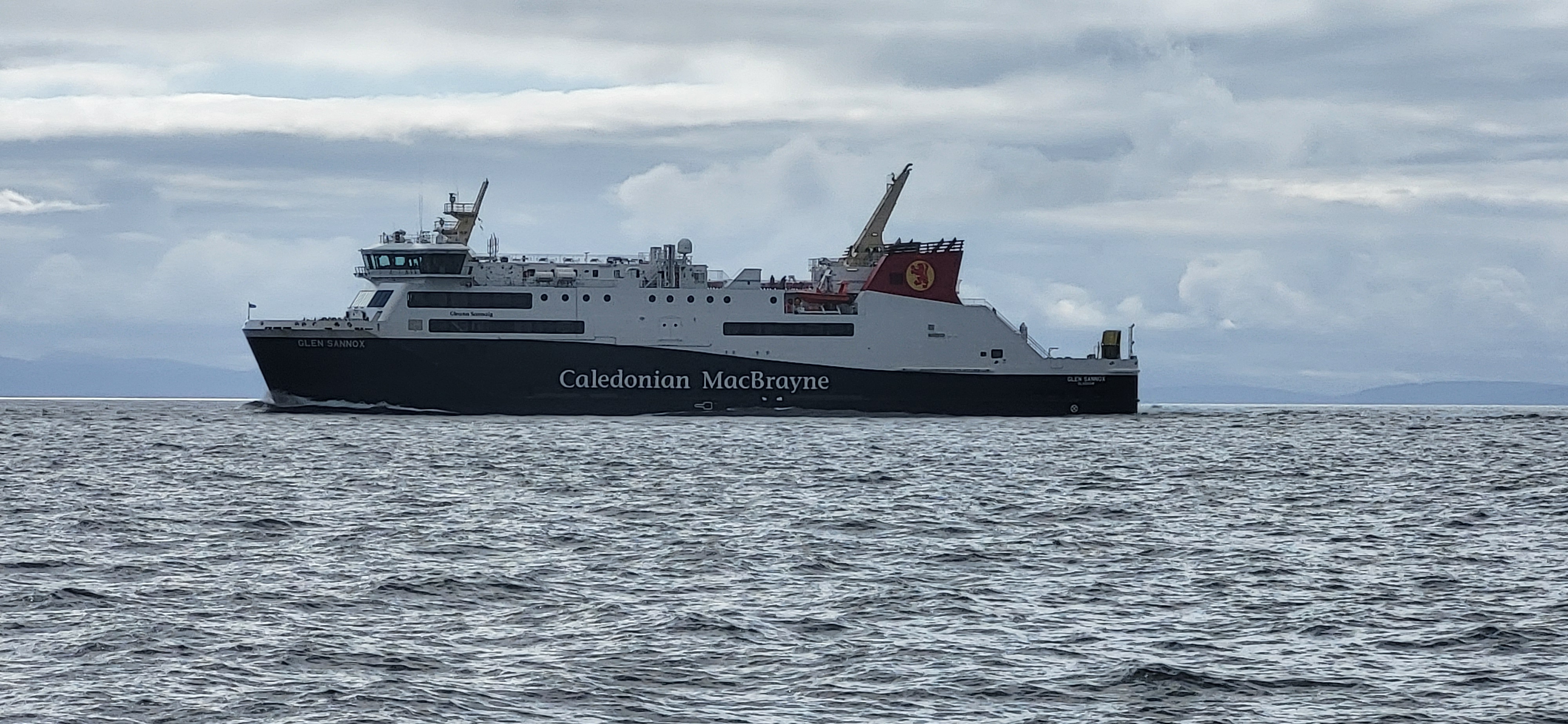
The usual CalMacs ply up and down, and also the ever more frequent cruise ships.
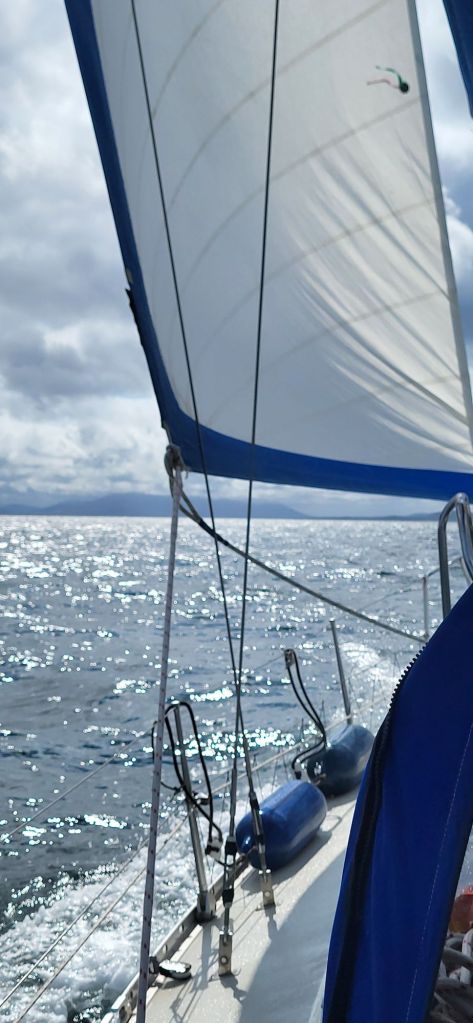
The sun tries to make an appearance and for a while we can fill both sails in the early morning light…
But by the time we pass Duart Castle on the Eastern tip of Mull, we have furled the genny, and rely once again on the engine.
We get tossed lightly around in the overfalls and mini whirlpools between Lissmore light and Lady’s Rock,
…and then finally Oban becomes visible….
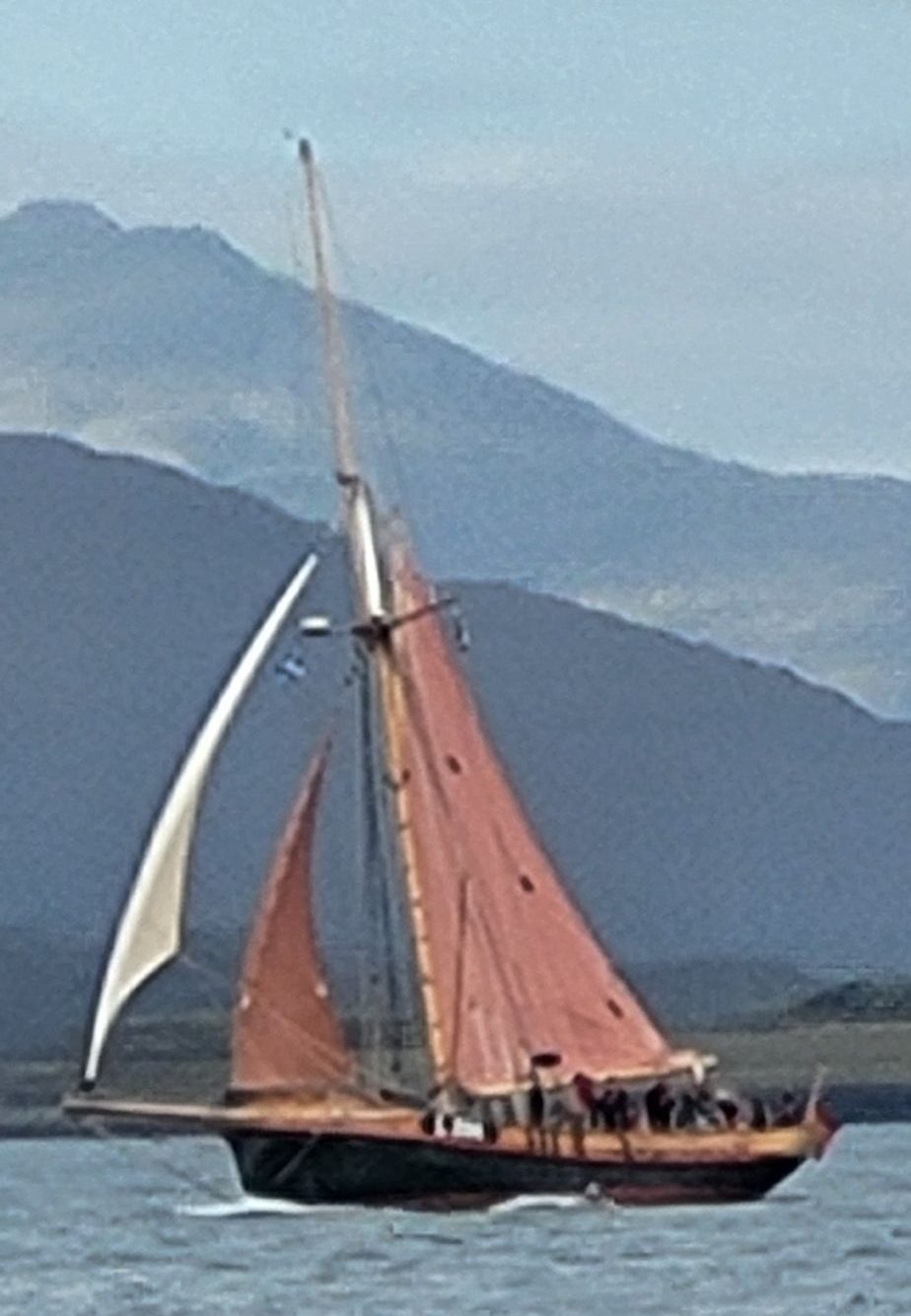
With Yee Tak on the harbour wall we have a rare chance to get pictures of our own boat at sea, although sadly not under full glorious sail.
We have a choice of pontoons and with Heydays snugged down we set off to pick up the new ignition switches (yes, Heydays has a spare…with spare keys!!). After a leisurely lunch we get the new switches installed, and attend to a few other chores in the late afternoon sun, while watching several other boats make various attempts at mooring.
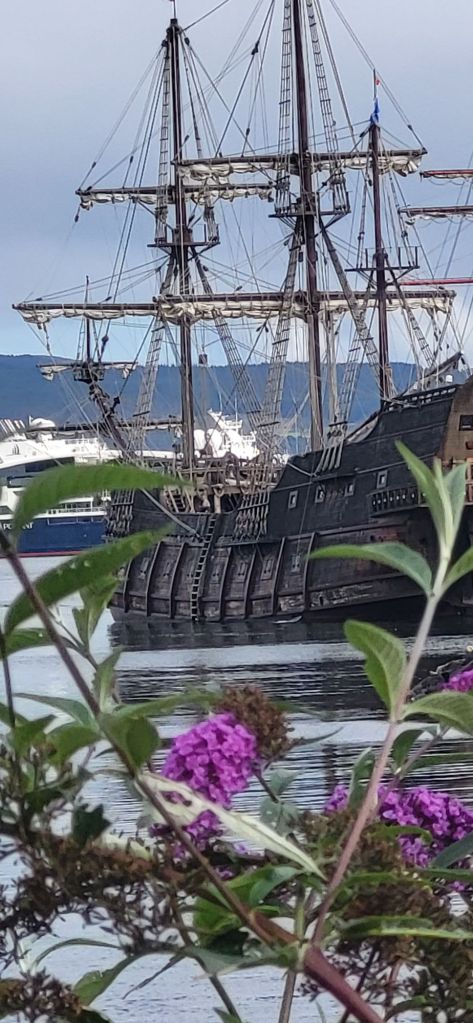
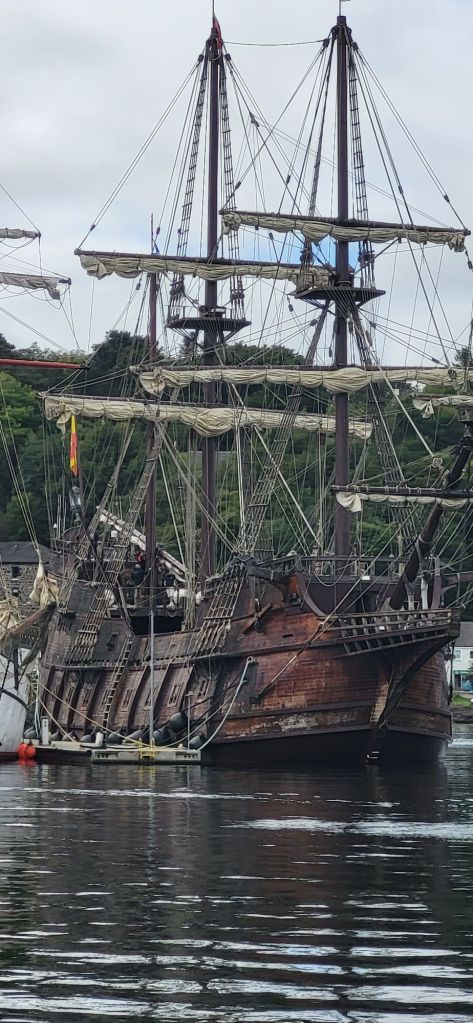
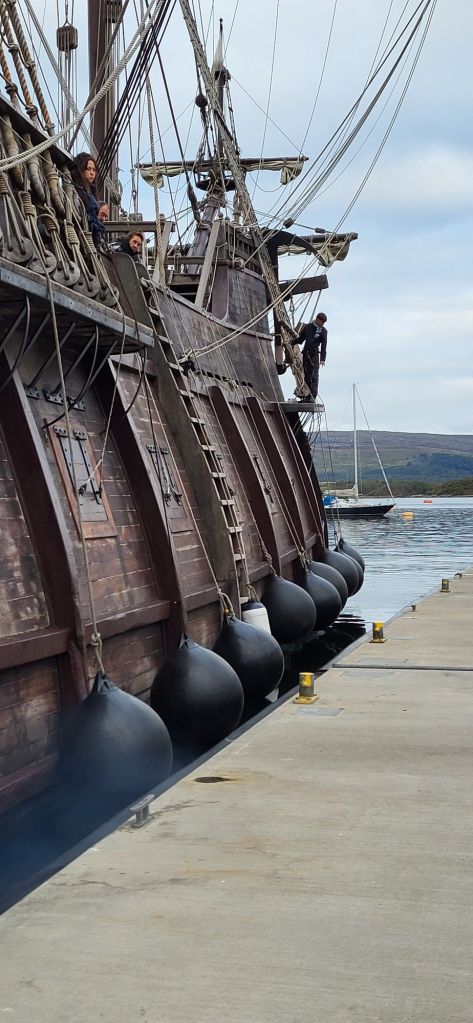
The harbour it seems, is home to several square riggers, and as always we wonder at the bravery of the poor 18th century souls (many of them pressed men) who had to go aloft in terrible conditions, without modern niceties of hard hats or safety lines.
We’ve been watching the forecasts very closely for sign of weather windows to get us south and west to Coleraine. Friday night and Saturday morning looks a bit grim, but Saturday afternoon…???
More precisely, this was Dorset and Hampshire to Mallaig, and then Tobermory. Having spent a fortnight in the bosom of our families, we were heading back to Heydays for the final cruise of the season. Leaving her in Mallaig had seemed a good idea at the time, but “well connected” is not really a phrase that applies to Mallaig, despite its having a railway. The drive home had taken around thirteen hours; the journey back saw us arrive nearly seventeen hours after boarding the first train, which rather puts the thirteen into perspective.
At half past eleven we finally got ourselves togged up for a rubber dinghy trip out to the old girl, moored in the harbour. Paddling a spongy rubber tub is not among life’s more satisfying exercises, but by half past twelve we were back on board, beds made, and a rum poured. Life, on reflection, is not really so bad.
The debate on the way up had been about weather windows for the cruise back to Coleraine, and where and when to go. Family reasons are keeping Chris at home, and Yee Tak will join us in a couple of days in Oban, assuming we can get round Ardnamurchan Point before the next low pressure sweeps through. Before we left, the harbourmaster, with whom we had shared our broad plans, offered a dire warning about the Point and the equinoctial gales that keep boats laid up in harbour for weeks on end. “Don’t leave it too late,” he warned darkly. Ideally we would have left around six, but a gruelling day on the trains, a late night, and the need to fit a new gas hose to the cooker, without which there is neither hot drink nor lunch, meant we settled for a potentially bumpy crossing to Tobermory later in the day instead.
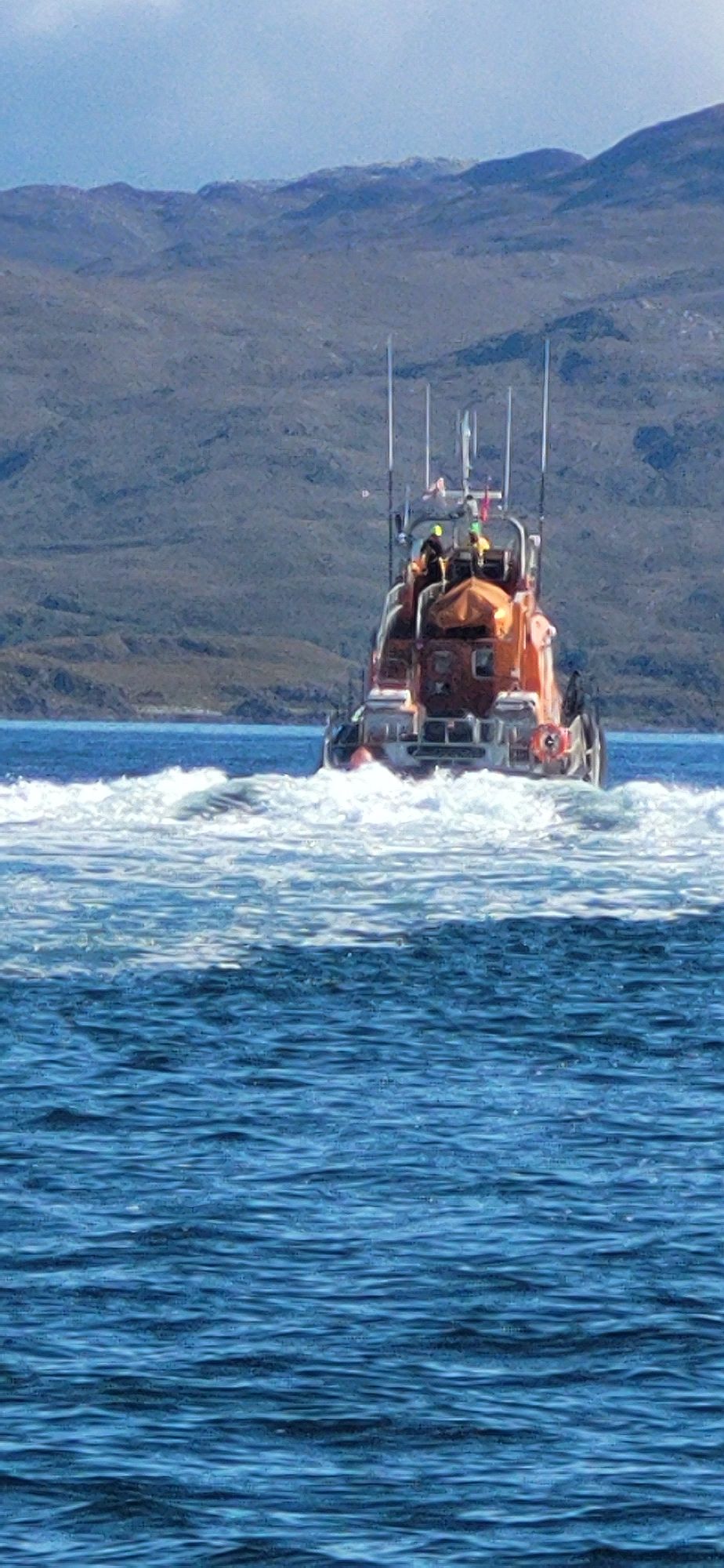
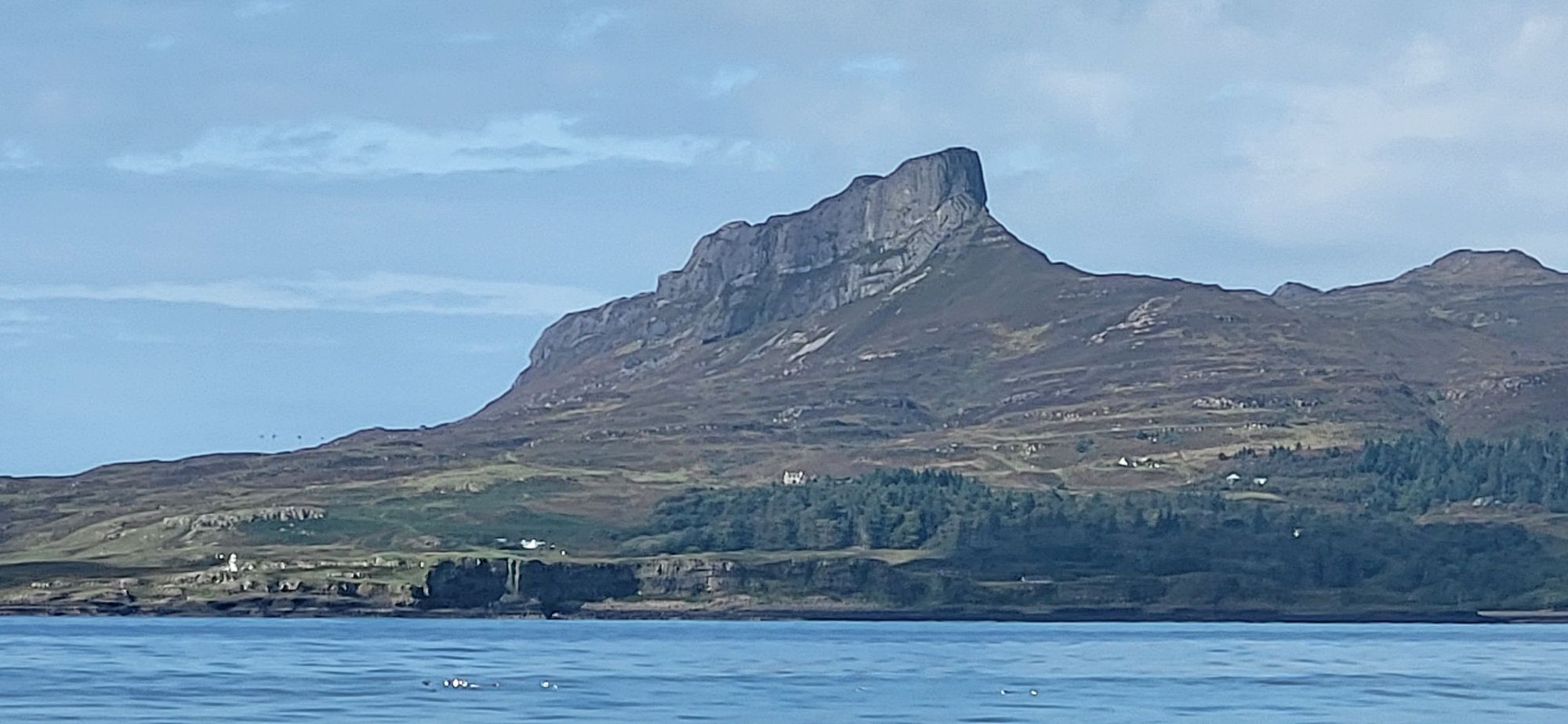
With the cooker functional and the boat newly victualled, we surprised ourselves by being ready to cast off just after ten. We slid out of Mallaig behind the lifeboat and pushed out towards the point in very light and variable winds, Eigg and Muck slipping astern as we tried various sail arrangements, motor running, to get the old girl into Tobermory before the promised stronger winds arrived.
It is a fine thing to be back on board, and while the wind, such as it was, remained fresh, the sun sparkled across the water and raised spirits considerably.
Those spirits rose further still as several pods of dolphins made their way north, one or two coming alongside to ride the bow wave.
The point itself was soon abeam, Mull opening out behind it…
The wind held in the south-southwest, and as we bore away down the Sound of Mull we had a glorious beam reach for the last couple of hours, the tide by then rather less obliging than the wind.
Tobermory felt entirely familiar, and we were soon tucked up with our choice of berths, most sensible sailors having already decided that the coming gales were something to be avoided.
The sail across, in the event, was utterly delightful. The promised headwind never really materialised, and while statistics and speed are not the essence of life aboard Heydays, it was satisfying to note we had covered the thirty-five miles in a touch over five hours, not bad going for the old girl, and enough to leave us reasonably well placed to meet Yee Tak off the train in Oban tomorrow evening.
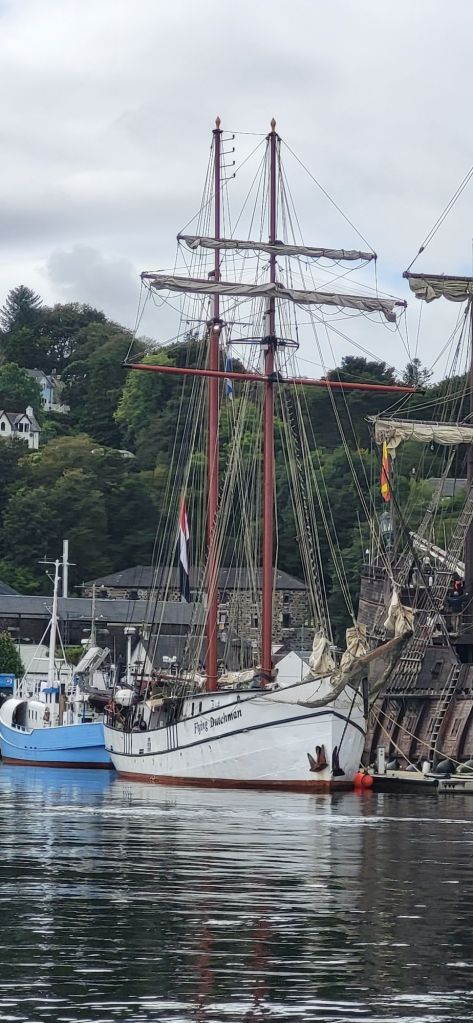
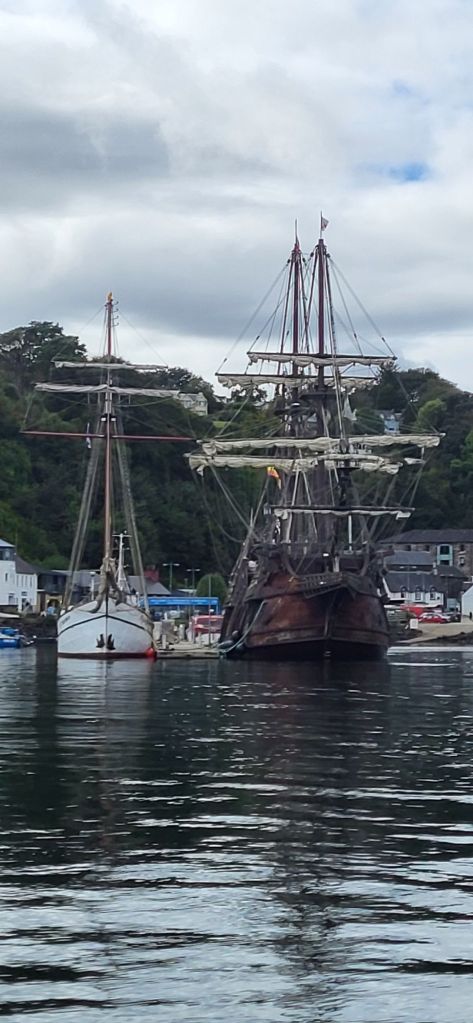
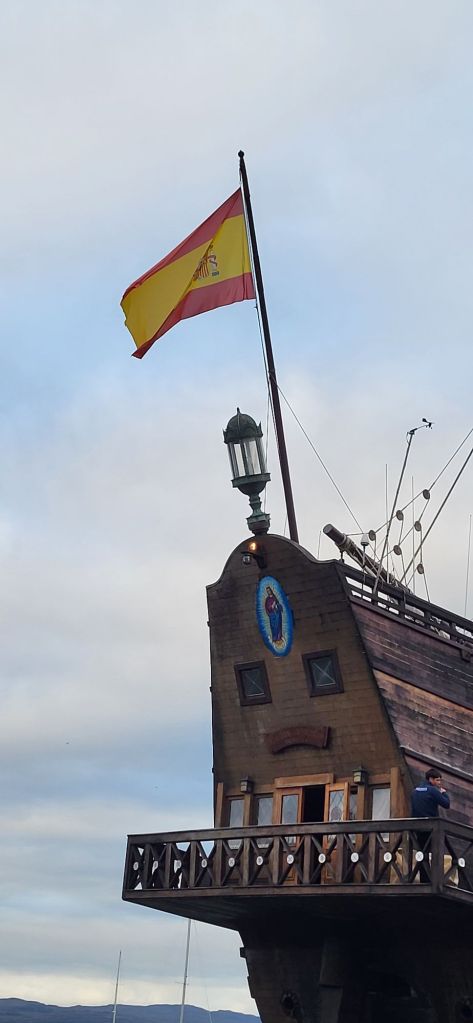
A footnote to the sailing: there were a couple of square riggers moored in the harbour, one Dutch, one Spanish, beautiful to look at, though we remain grateful we are not the ones required to go shinning up the ratlines to manage their sails.
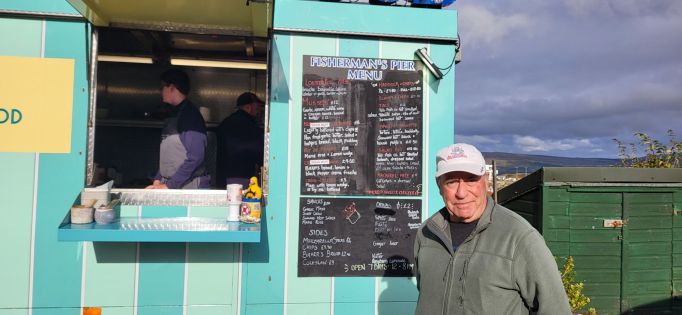
Dinner was mussels, followed by fish and chips from the brilliant caravan parked on the fish quay… taken in the cockpit in the last of the evening sun.
A poem by Ashley, inspired by conversations, pictures and tales in the blog…
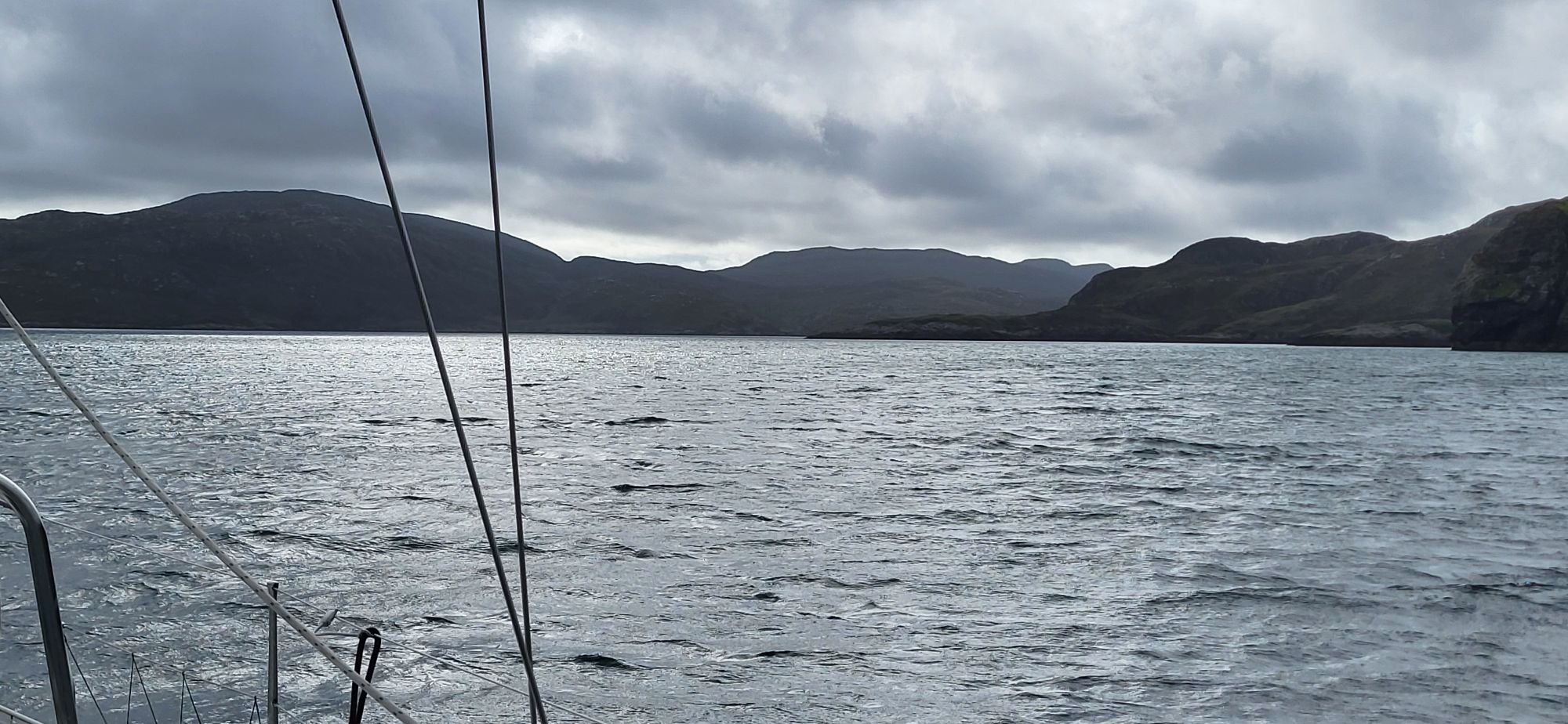
Out on the northern edge of things, where Scotland breaks into scattered stone and the sea forgets to be gentle, your boat moves with a stubborn kind of grace. the wind doesn’t ask permission— it just takes what it wants, pulling at the rigging, slapping salt against the face like an old friend with rough humour. The sail, whether gentle or fraught always seems mellowed by good company and, of course, the promise of good food, and, naturally, fortified by the occasional malt. For you this is at the heart of being alive, whether tucked up like a kitten below or proudly astride the foredeck, where no chore or task is undeserving, In pursuit of the goal, and the care of your beloved boat. Scotland drifts by in silhouettes— cliffs like broken teeth, islands that appear only when the fog feels generous, villages tucked into the land as if hiding from the wind’s temper. In that long horizon, where land seems far away, sea and blood are fused in you you shed your selkie skin and belong.
An apology first to the loyal reader. These posts have all landed today, the 20th, the moment we found halfway decent wifi, or indeed any wifi at all, and no loos or other pressing matters getting in the way.
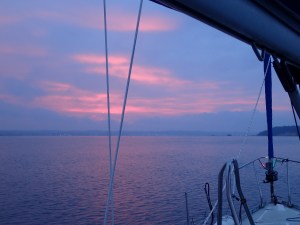
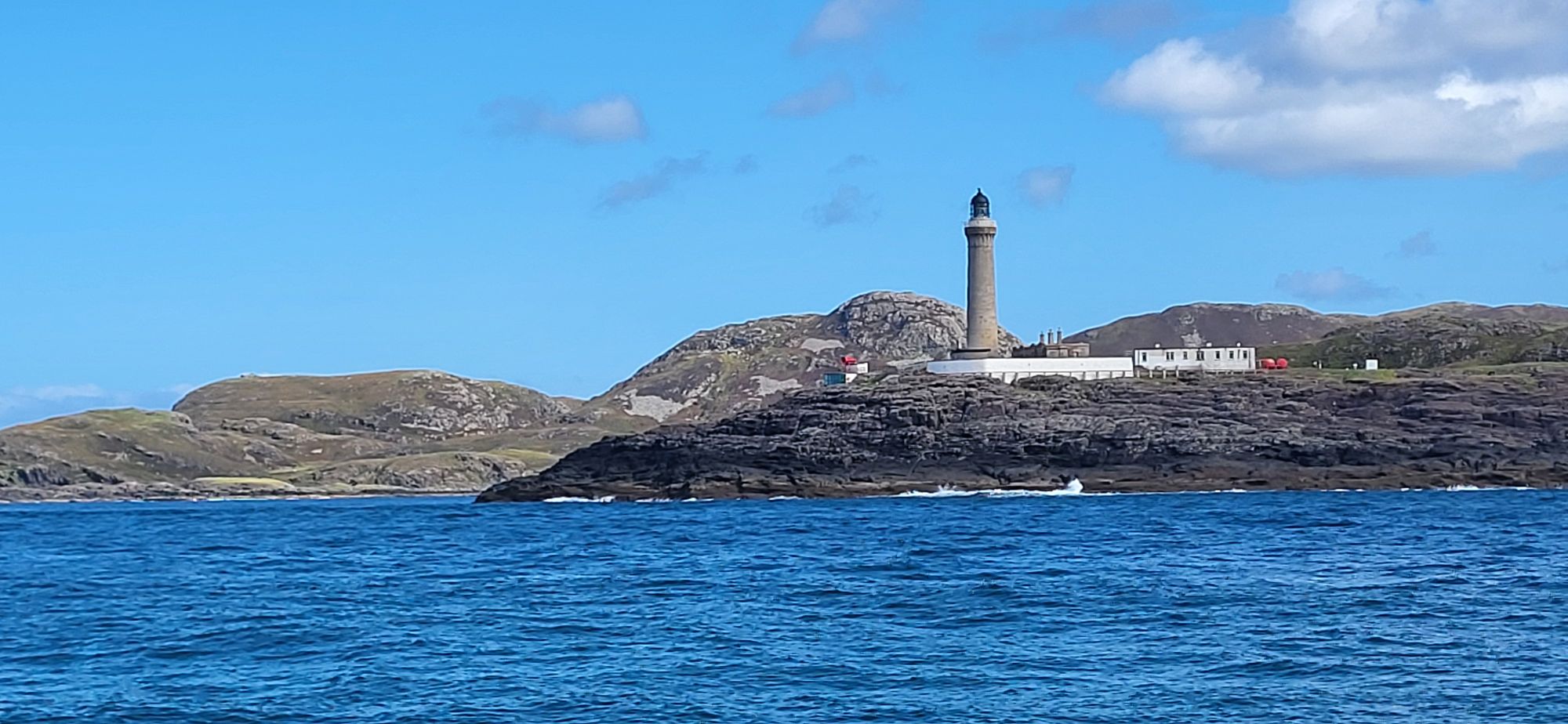
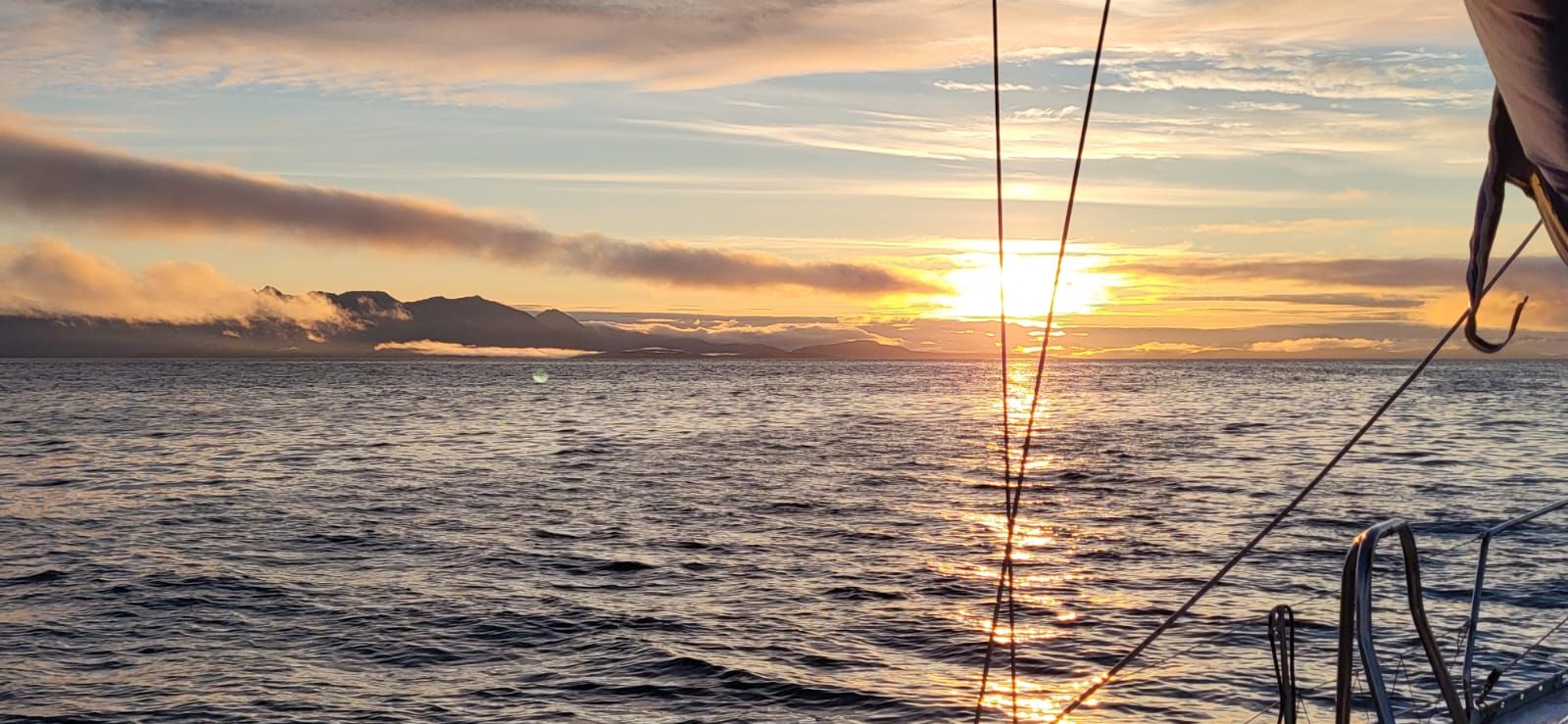
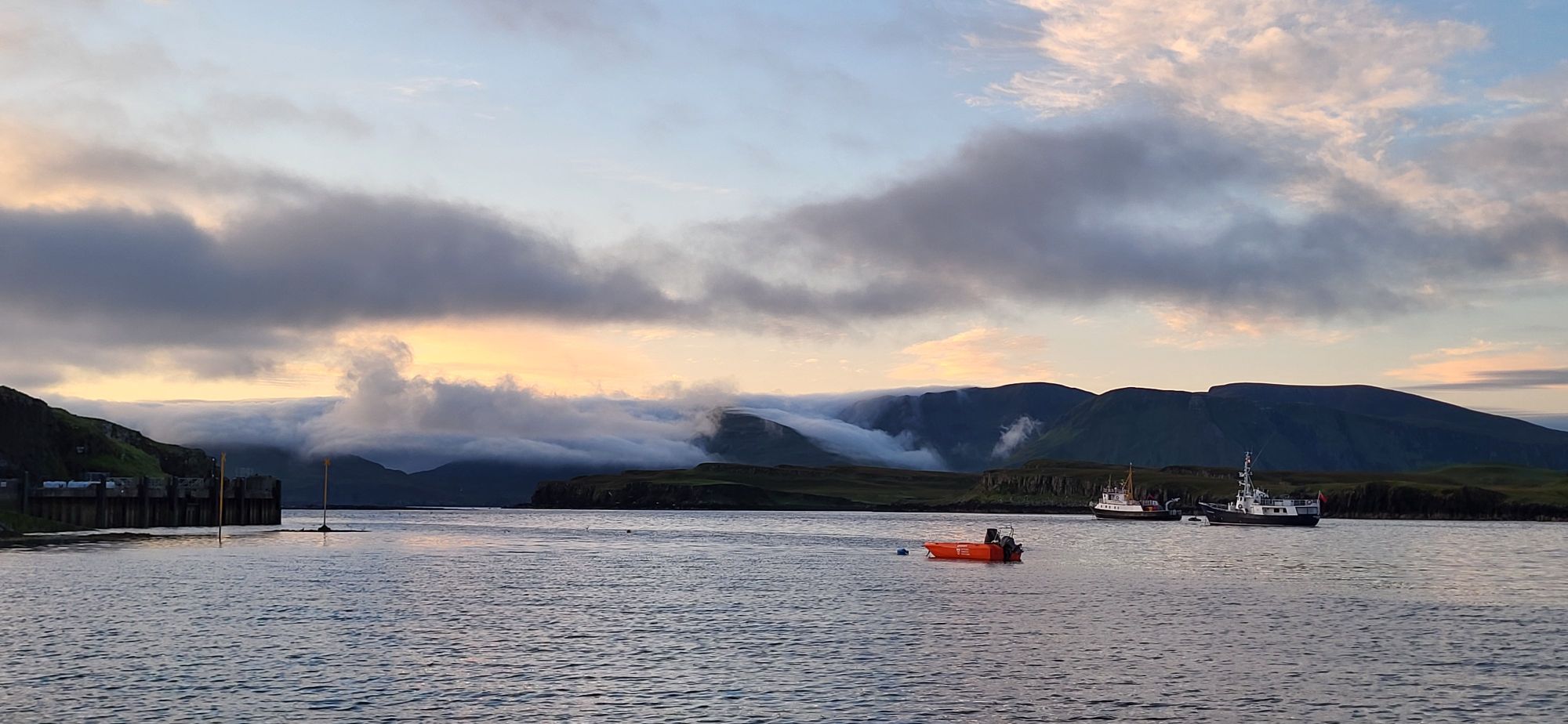
Monday dawned bright over Canna and once again demanded an early start. We’d called ahead to the marina at Mallaig to check we could leave Heydays there for a few weeks, and were told to arrive before lunchtime if we wanted a pontoon berth for the day, useful for unloading. No matter, we’re well used to early starts by now, and there is something particular about that early morning light…
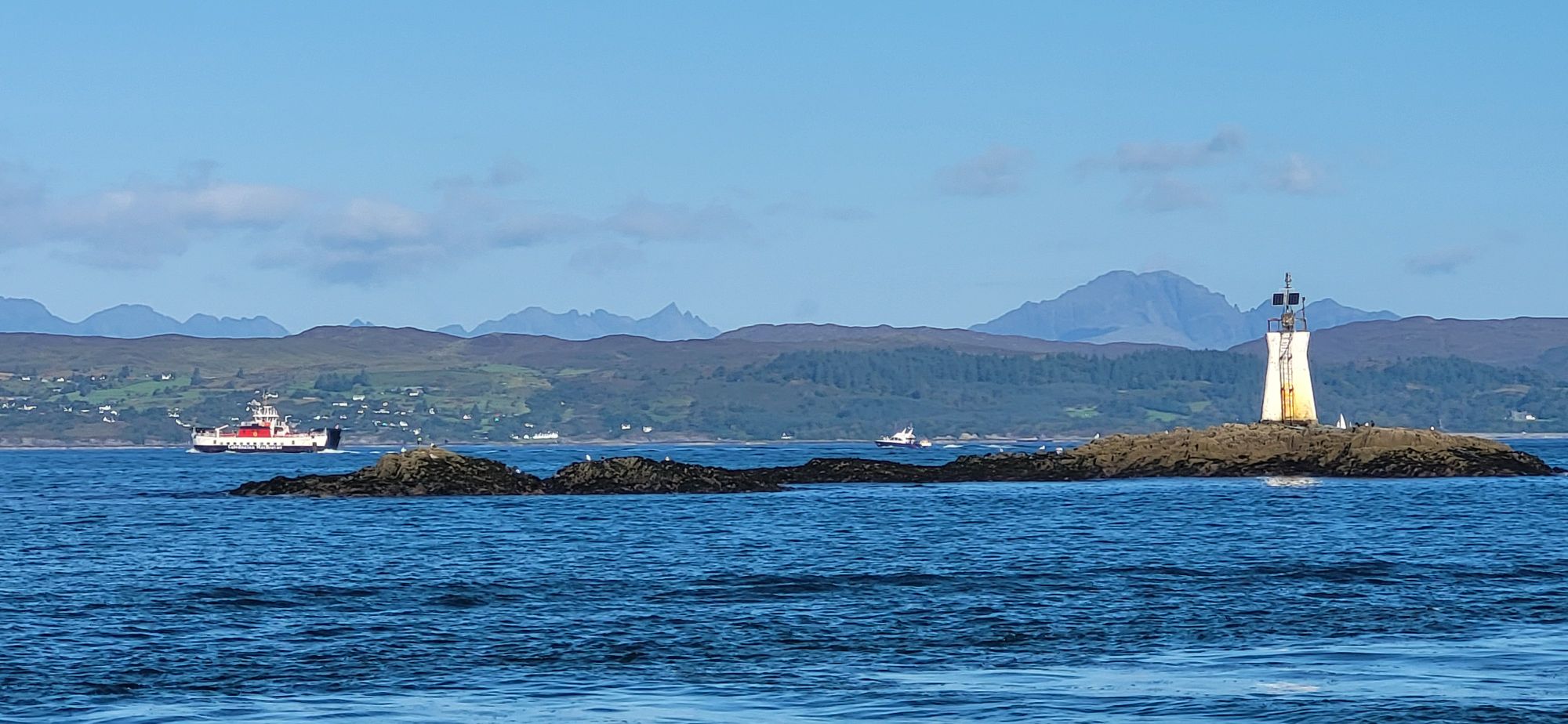
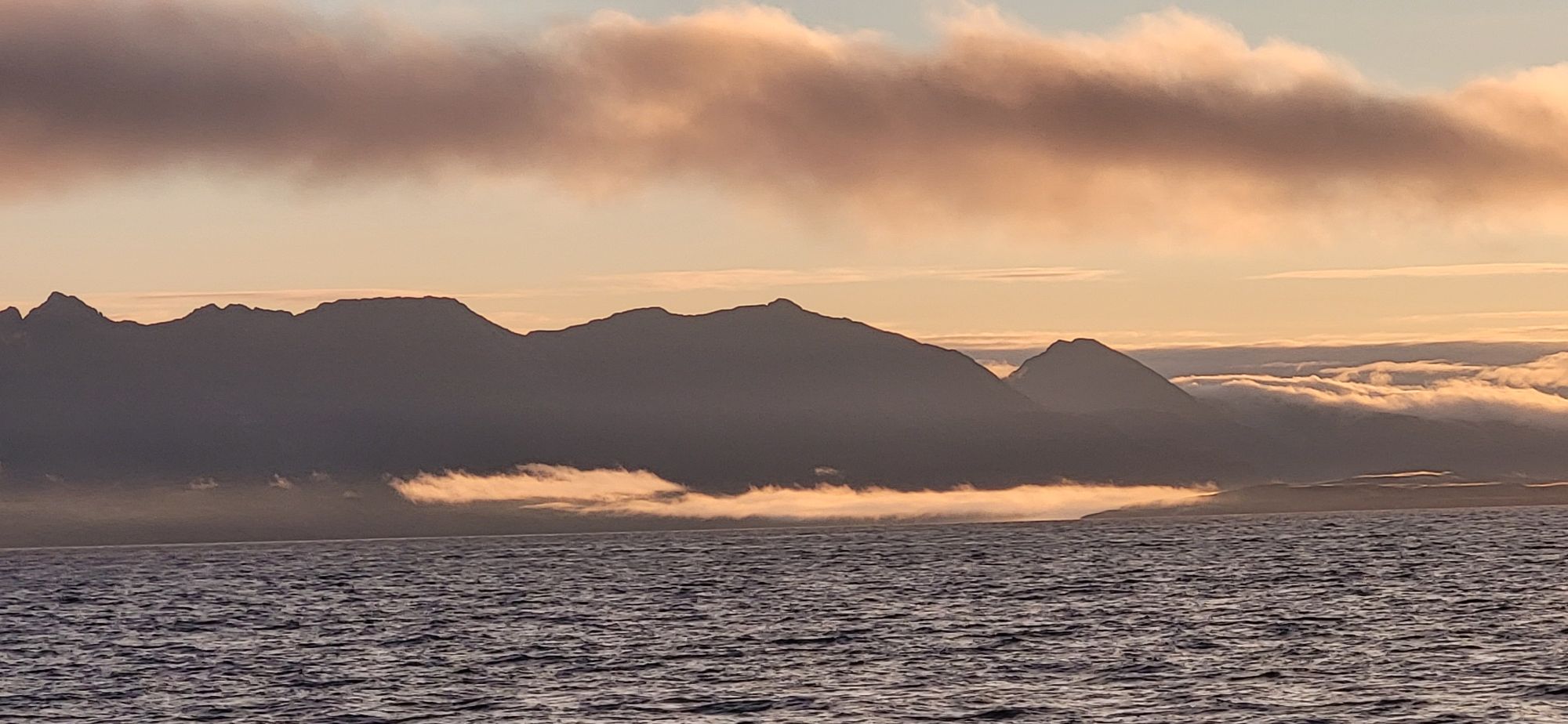
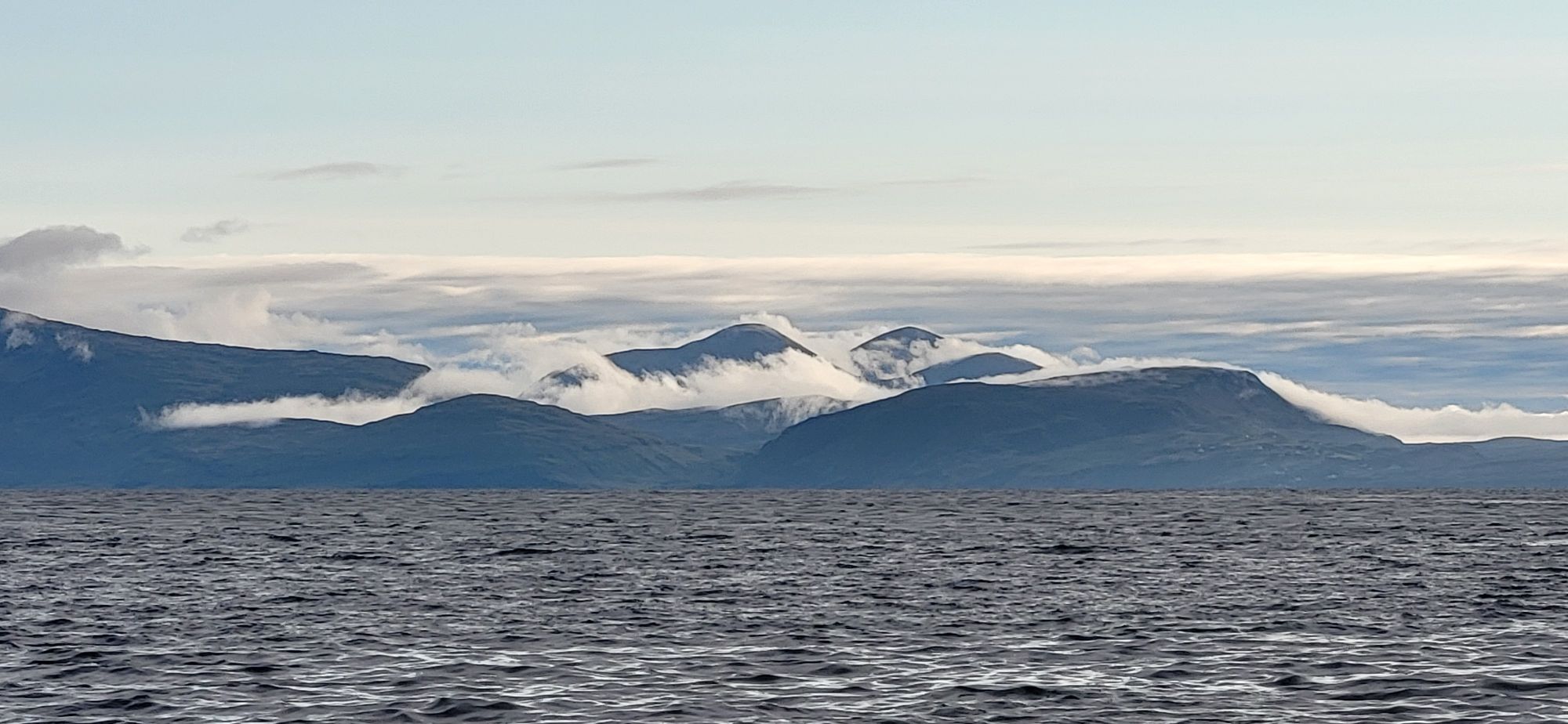
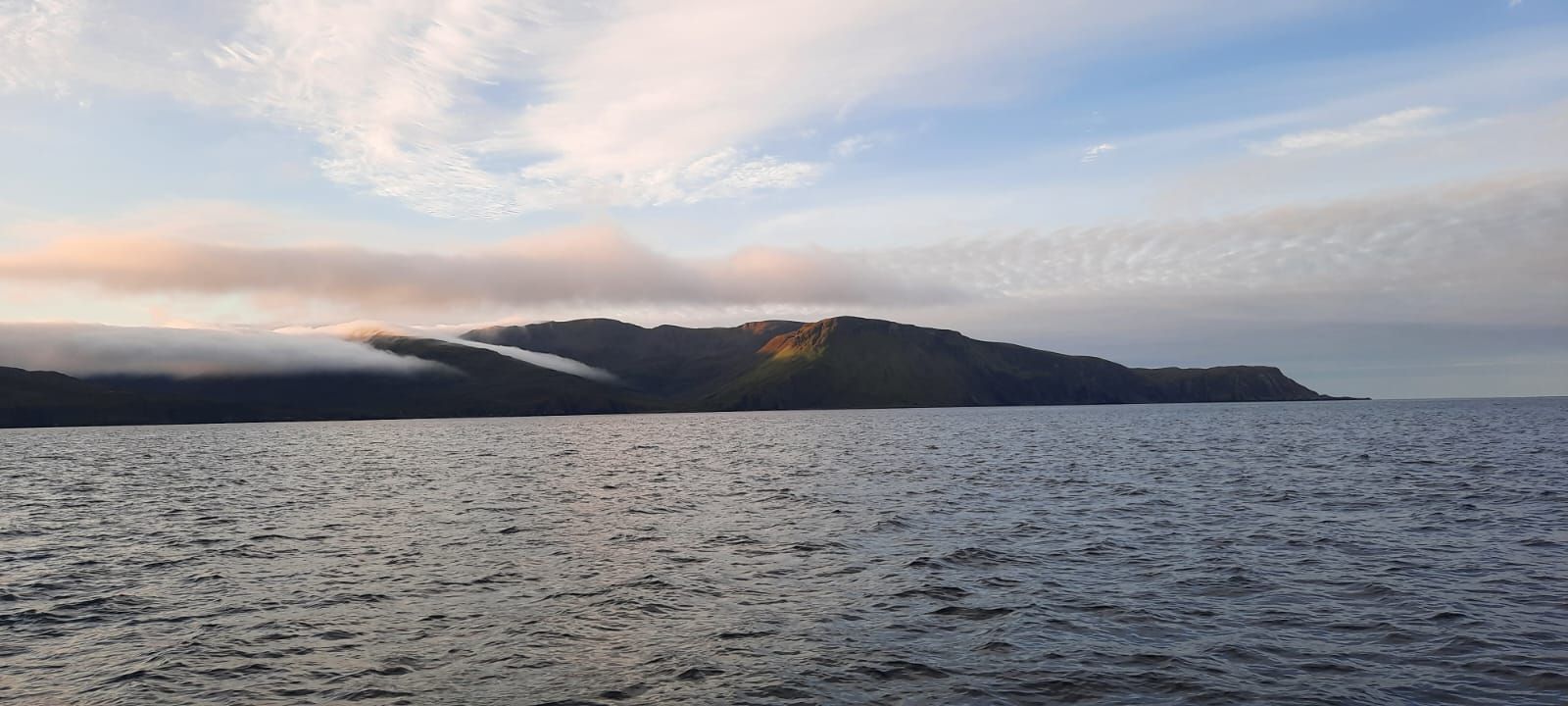
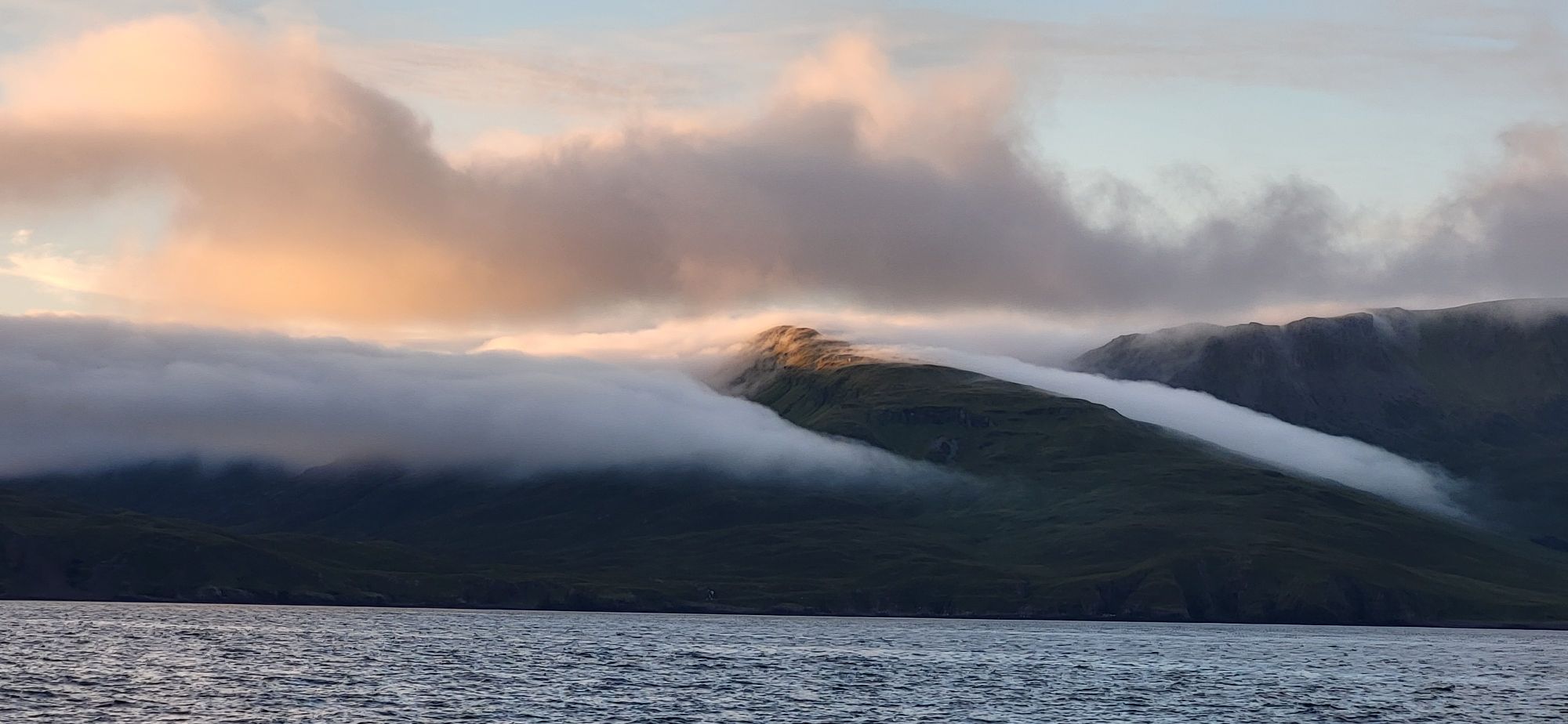
…the mist still lying in patterns over Rum and the Cuillins of Skye before the sun got round to burning it off, provided a stunning and everchinging backdrop to our last day on the water…
The wind had all but given up, so the old girl went back to being a motor boat for the four hours or so to journey’s end, for now. A small pod of what looked like juvenile dolphins crossed our bow, but breakfast held rather more appeal for them than we did, and they carried on about their business. Rounding the Point of Sleat at the southern tip of Skye, a minke whale put in a brief appearance, ambling northward, evidently already fed and entirely unhurried, beautiful and faintly magical even for the few seconds we had it.
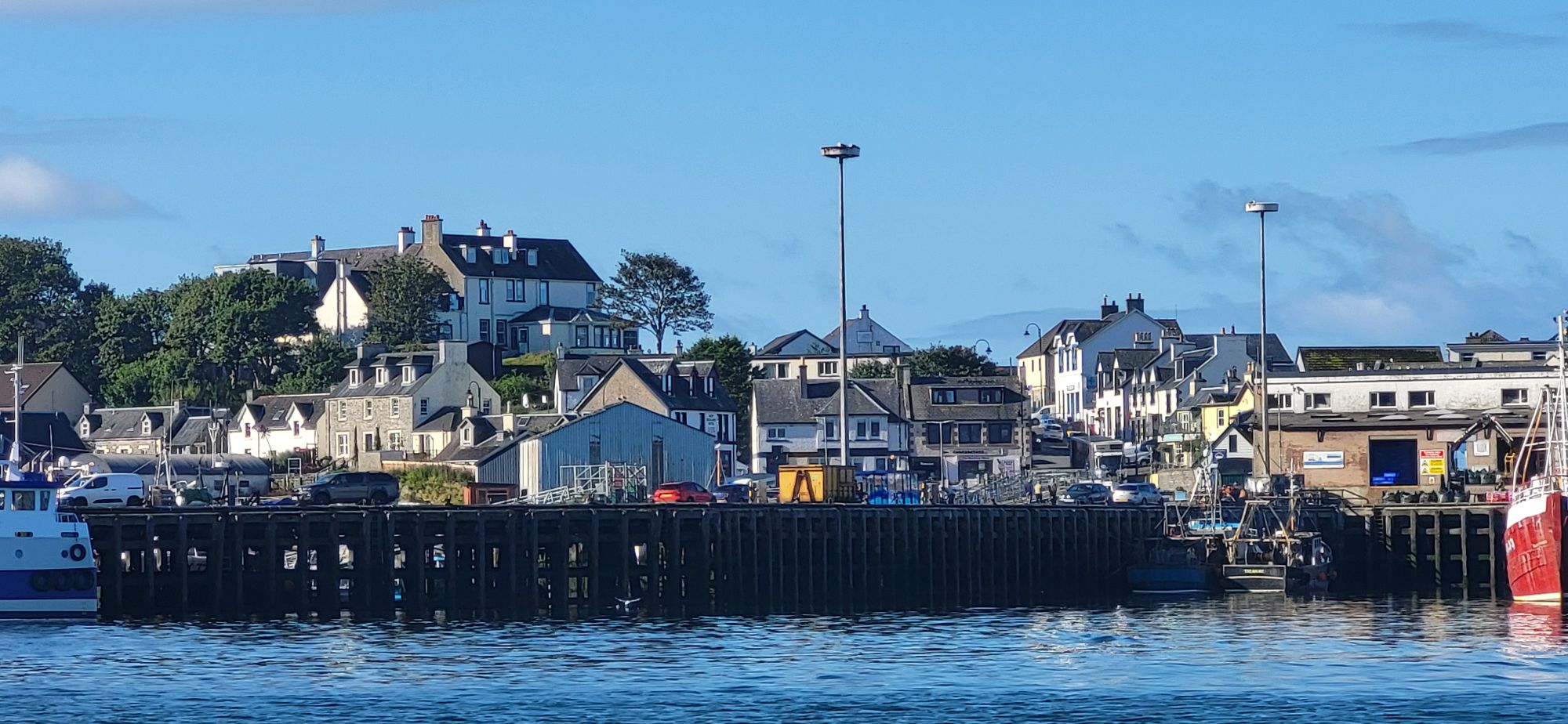
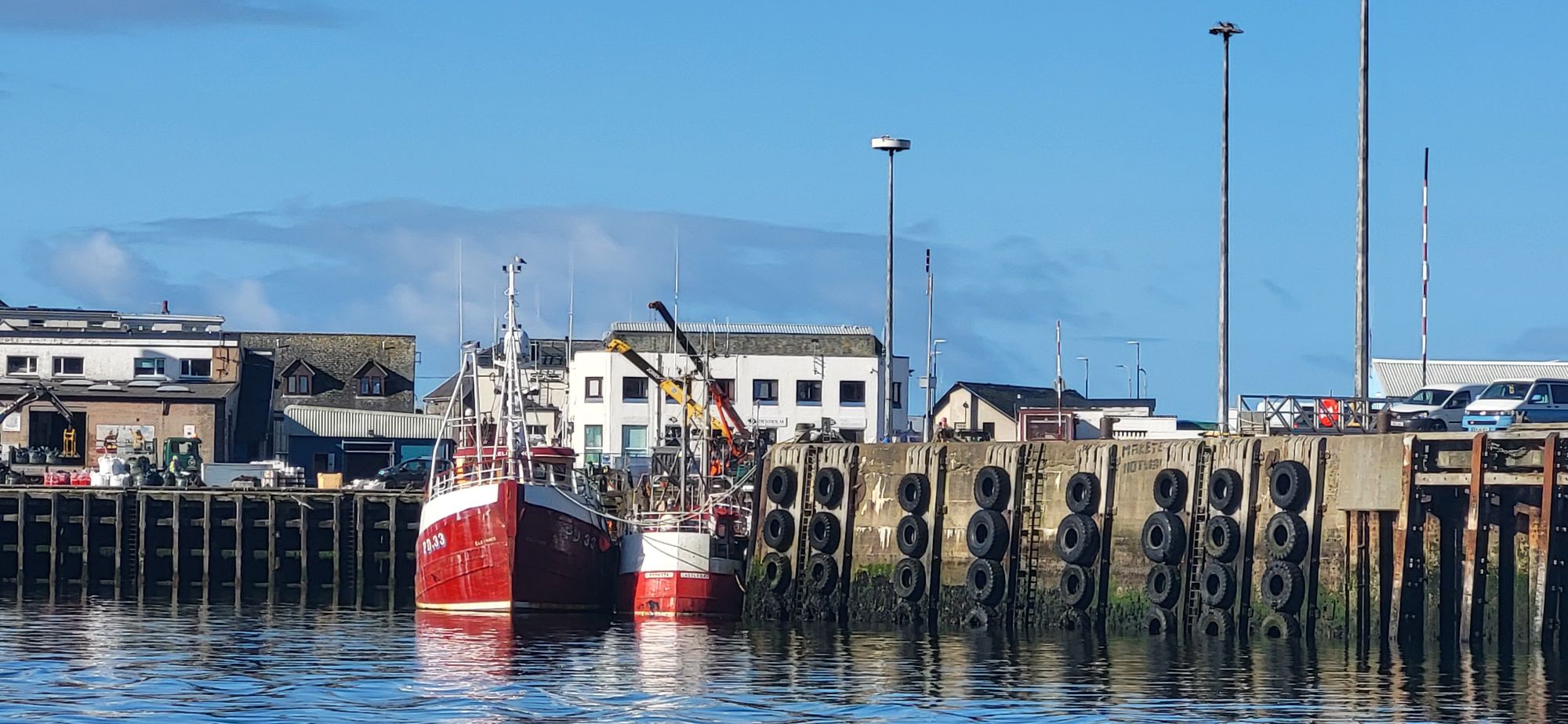
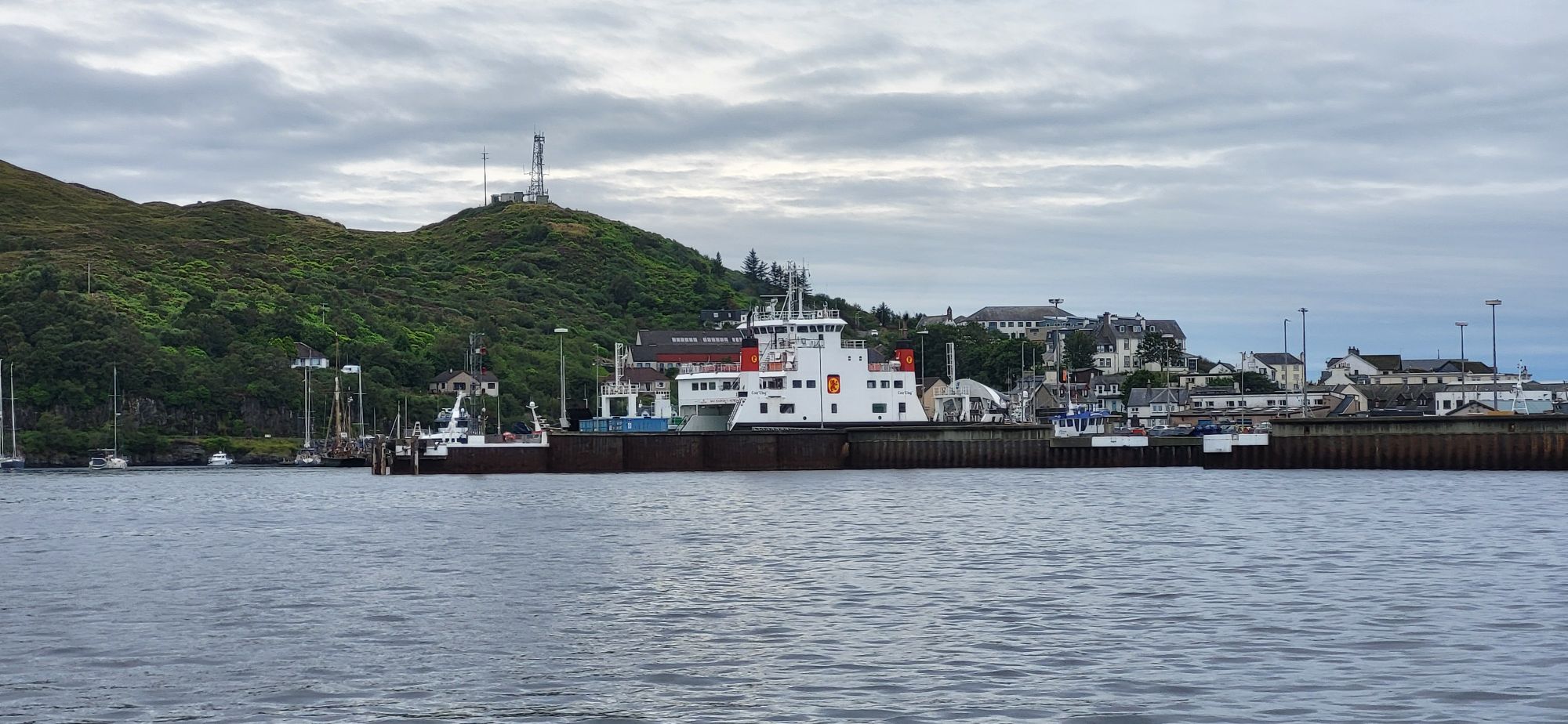
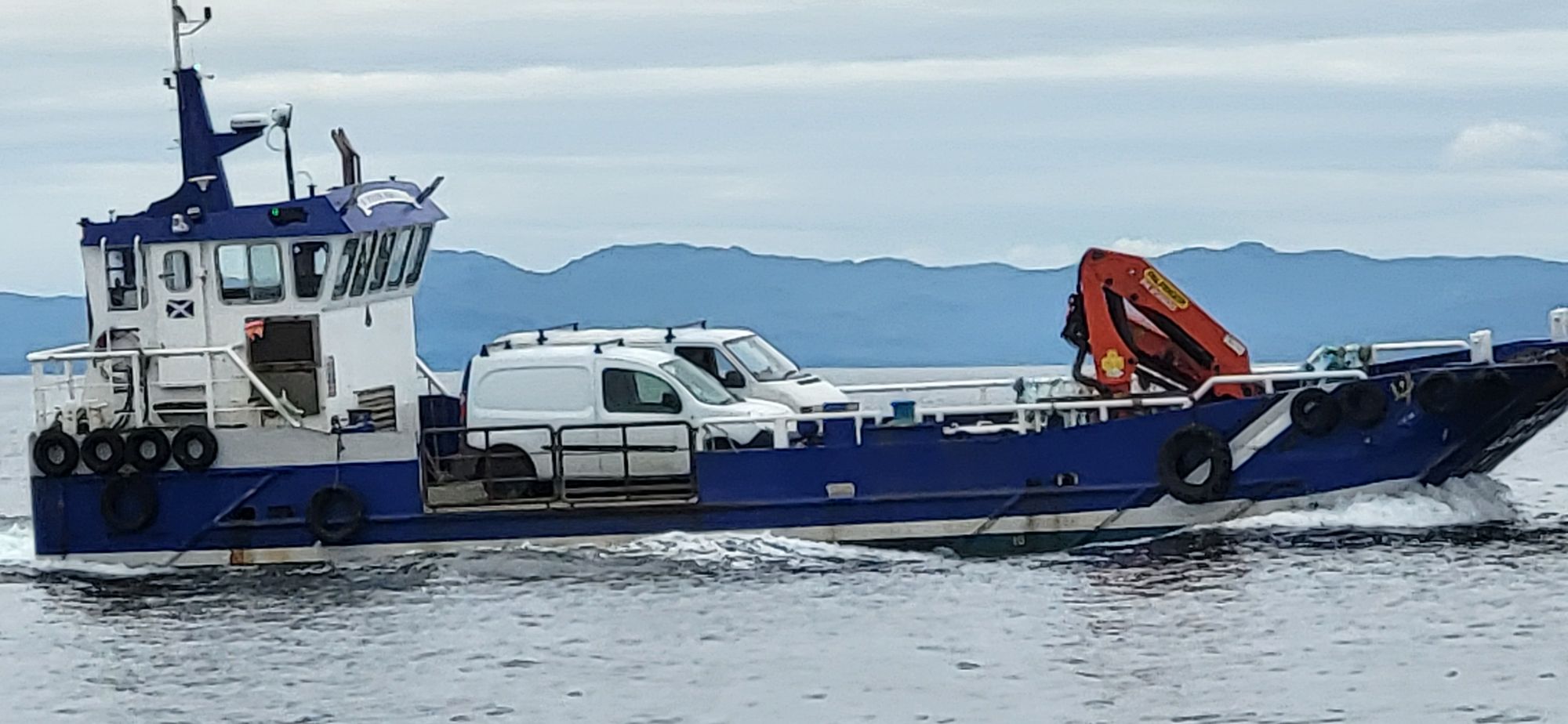
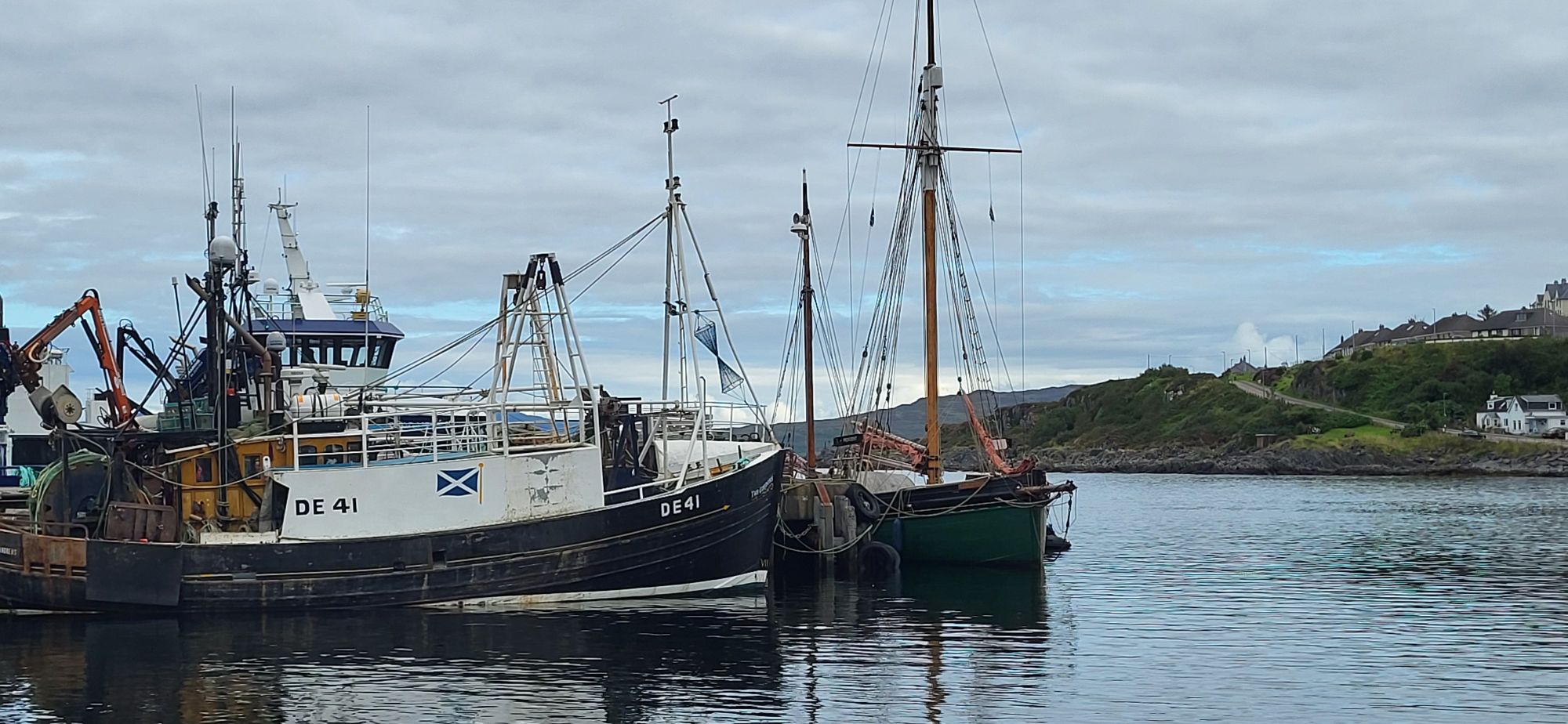
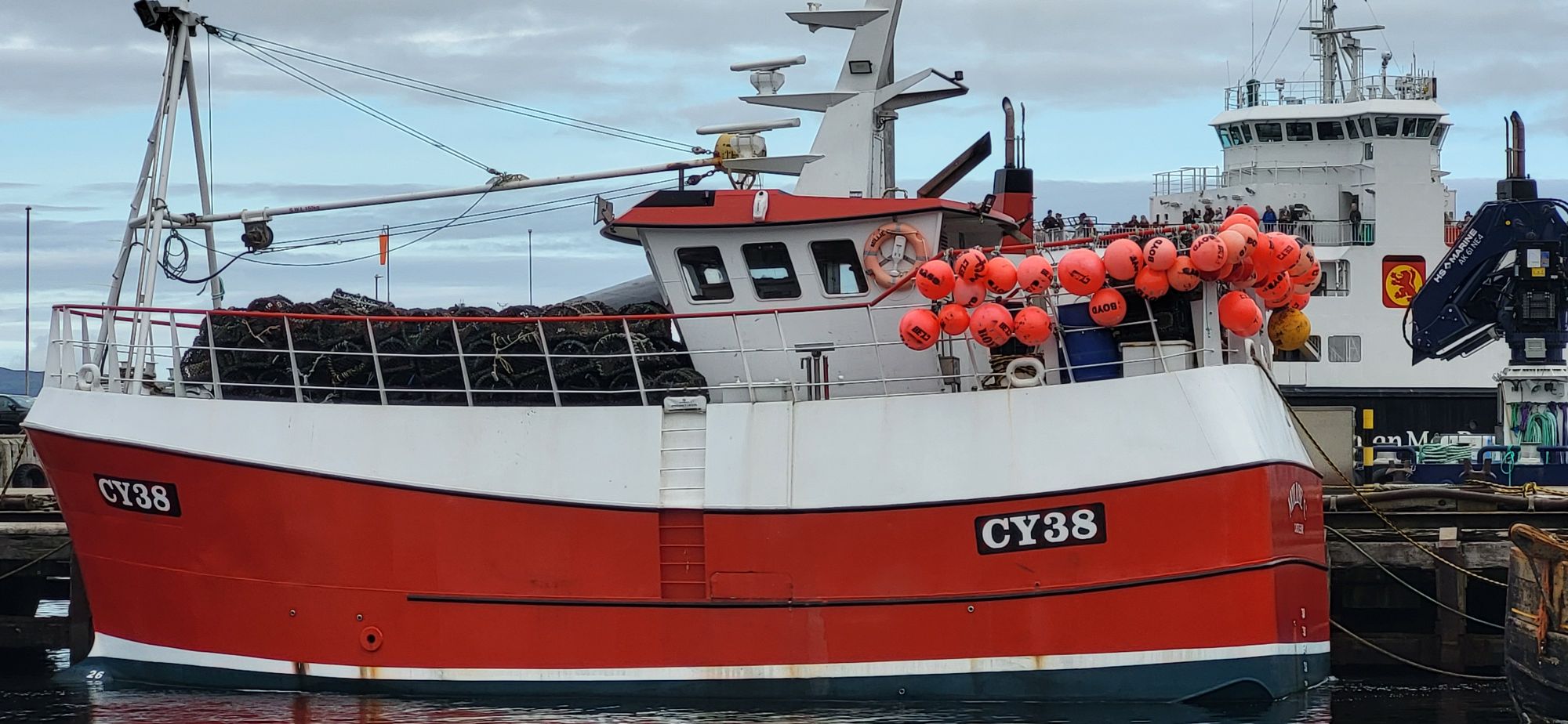
Mallaig is busy with ferries and small workboats busying themselves, let alone the fishing boats and tourist sightseeing trips…
A radio call for permission to enter, and by elevenses we were moored and beginning to unwind before the business of tidying and packing took over.
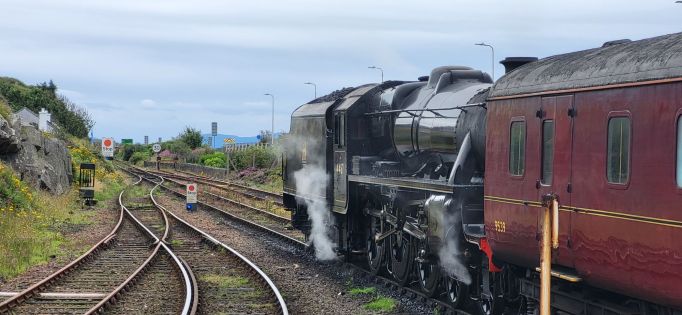
Mallaig is well served with restaurants, and we tracked down a bowl of Cullen Skink without much difficulty. The waitress advised us to be seated before 12.30, as that’s when the steam train comes in. We took the interval to hunt down soil pipe for the heads, and came away with the last 7.5 metres in the shop. At 12.30 we were the only souls in the restaurant, complete with an incongruous coil of pipe under the table. By 12.31 it was full, with a queue out the door. It turns out the train’s fame rests on its run across the Glenfinnan Viaduct into Mallaig, as any of the thousands of visiting Harry Potter enthusiasts could have told us. The town, we now realise, runs to a respectable trade in witch, wizard, and broomstick paraphernalia.
Some final notes and thoughts. The end came rather more rushed than planned, but we count ourselves fortunate to have cruised the Hebrides and Canna at all. The enforced stops in Stornoway and Tarbert, forced on us by weather rather than choice, gave us the chance to get properly into Lewis and Harris in a way we’d never have managed moving on every day or two. Tomorrow, two of us head up to Ullapool to collect the car, while the boat is readied for the thirteen hour drive back to Hampshire and Dorset. As the crow flies, Mallaig to Ullapool is nothing much, by car it’s three and a half hours, and the fastest public transport option has you leaving Mallaig at 8am and arriving at 16.30. The lochs are beautiful, but a considerable nuisance if you’re not travelling by water.
We’ll be back in early to mid September, before the equinoctial gales if we’ve timed it right, to cruise south via Oban and the islands to our winter berth, once again in Coleraine.
A final, final footnote. A Moody a couple of feet shorter than Heydays came in and moored a little further up the pontoon. Some time later, a knock on the cabin. Word had evidently got round about our toilet troubles, the coil of pipe rather gave the game away, and it turned out they had exactly the same problem. We traded plumbing anecdotes and remedies over the guardrail, and having bought up the last of the pipe for miles in any direction, handed over what we could spare, keeping back only what we urgently needed ourselves. Somewhere up the pontoon, there is now another fully functioning Moody heads.
The plan was lunch on Canna, then onward to Rum or Eigg for the night. An early start to catch the best of the tide had us through the usual boat and human morning rituals…and ended with a firmly blocked toilet. We’d only just replaced the valves, so those were the first suspects; a thorough investigation cleared them of all suspicion, which was not the outcome we were hoping for.
We looked at each other. Two days’ sail and a night at anchor or a mooring buoy ahead. Could we manage on the old bucket and chuck it system? The female contingent on board received this suggestion with something considerably short of enthusiasm, which meant we needed to get to the actual bottom of the problem. Pun very much intended.
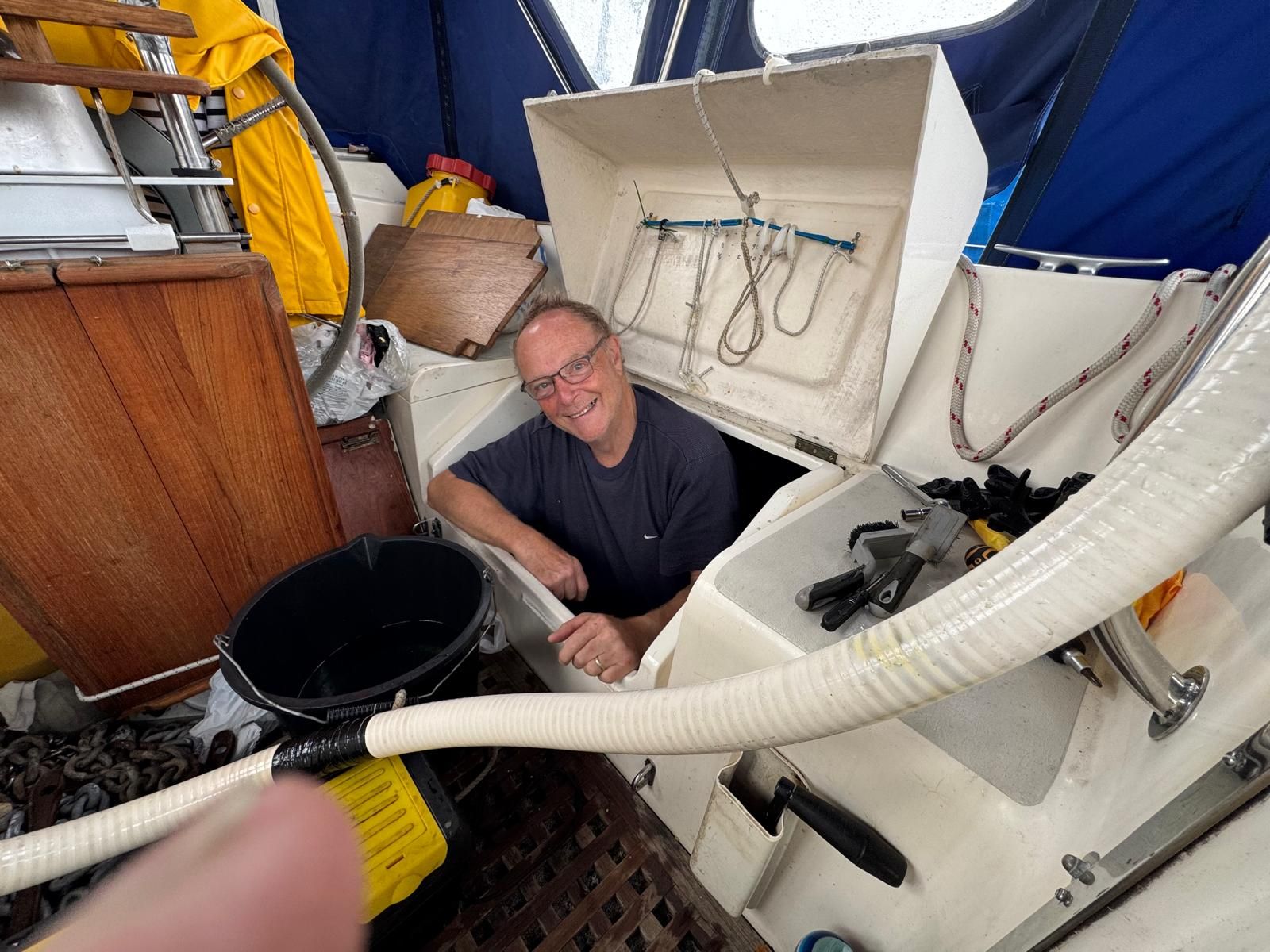
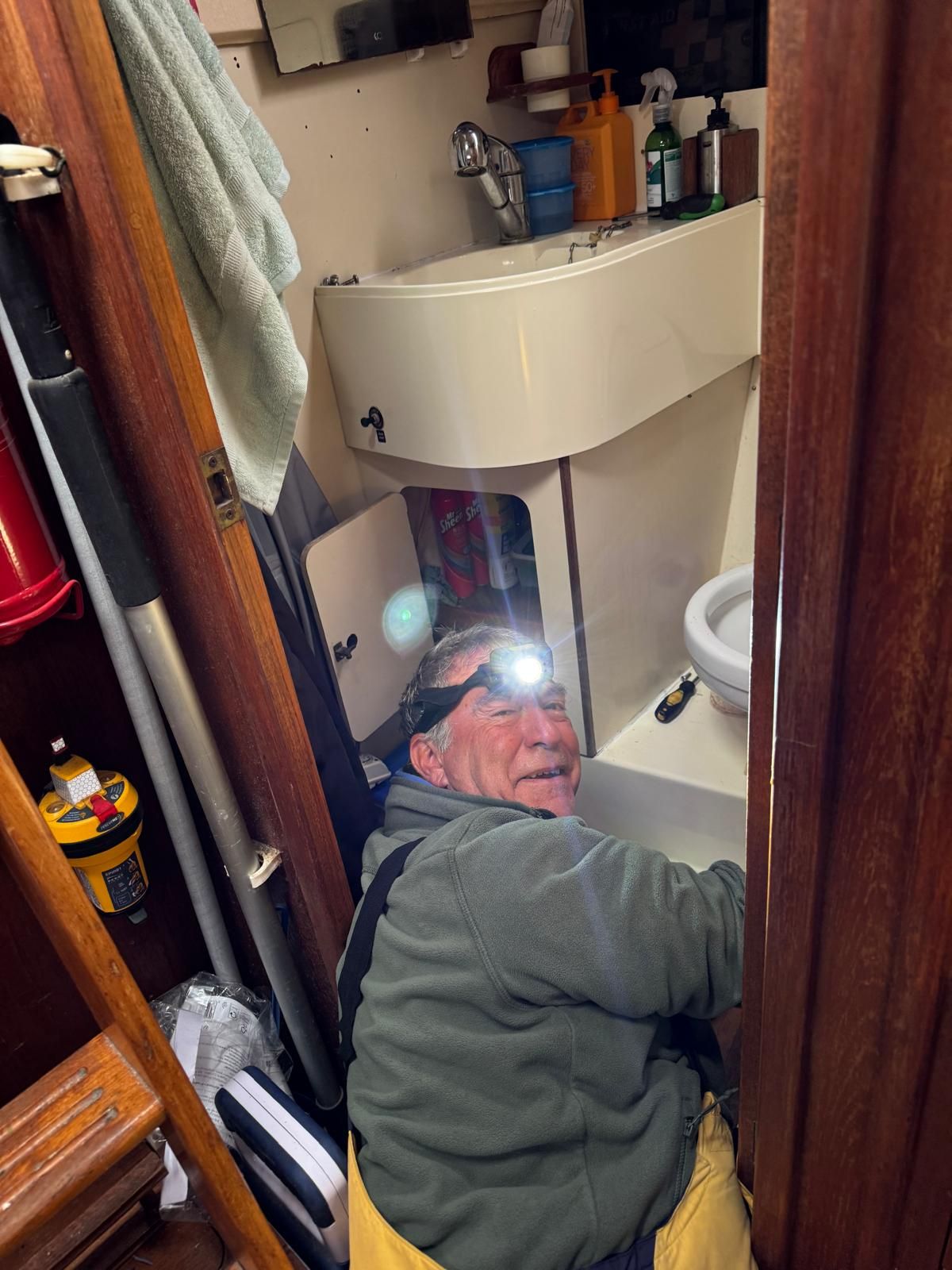
Without dwelling on the gorier details, this involved extracting two metres of soil pipe from the bowels of the boat and attempting to clear it dockside. We were grateful that Sunday morning finds most sensible Barra residents still firmly in bed, and thus spared the spectacle. Suffice to say, a deep shower was required afterwards, our clothes went straight into a sealed bag, and it’s now clear the full run of pipework will need replacing at the next opportunity. For the moment, though, we have a fully functioning heads, which counts as a considerable win.
…sailing is all about the glamour…apparently…
By around noon we finally slipped back out into the bay, bound for Canna. We were fighting the tide the whole way, exactly the wrong side of it for this leg, but Canna is the right jumping off point for Mallaig tomorrow, so it had to be endured. The wind, at least, was in a more generous mood, a south easterly giving us a glorious beam reach almost the whole way across, making up for what the tide was taking off us.
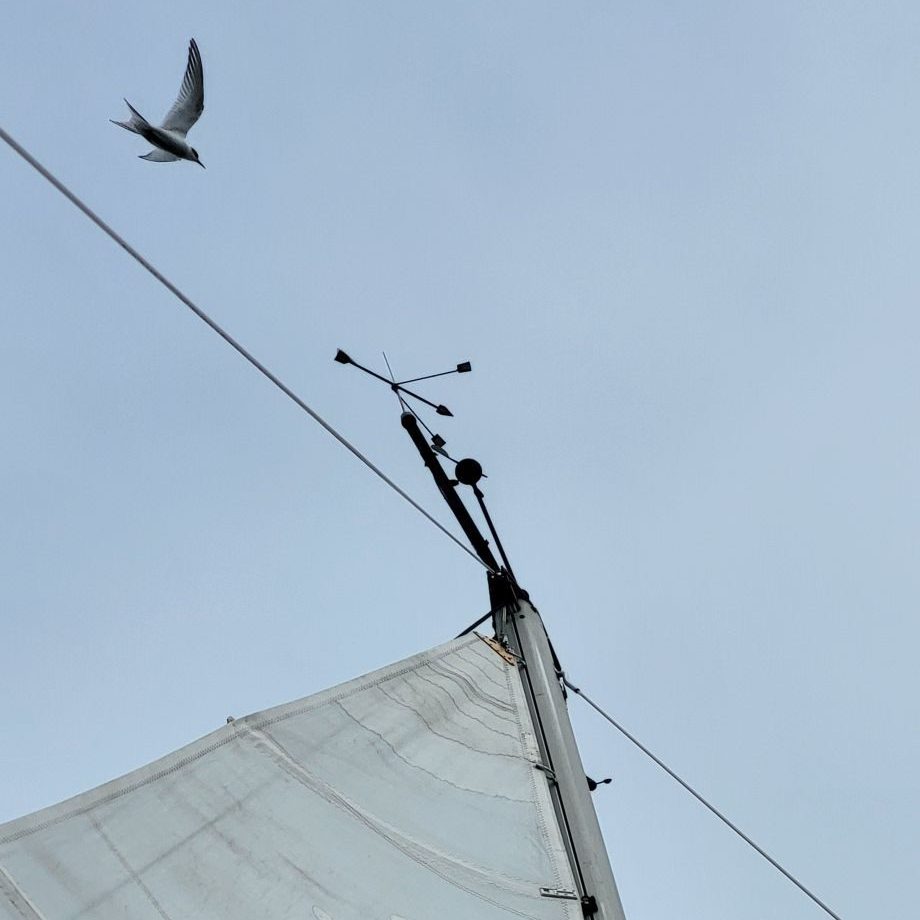
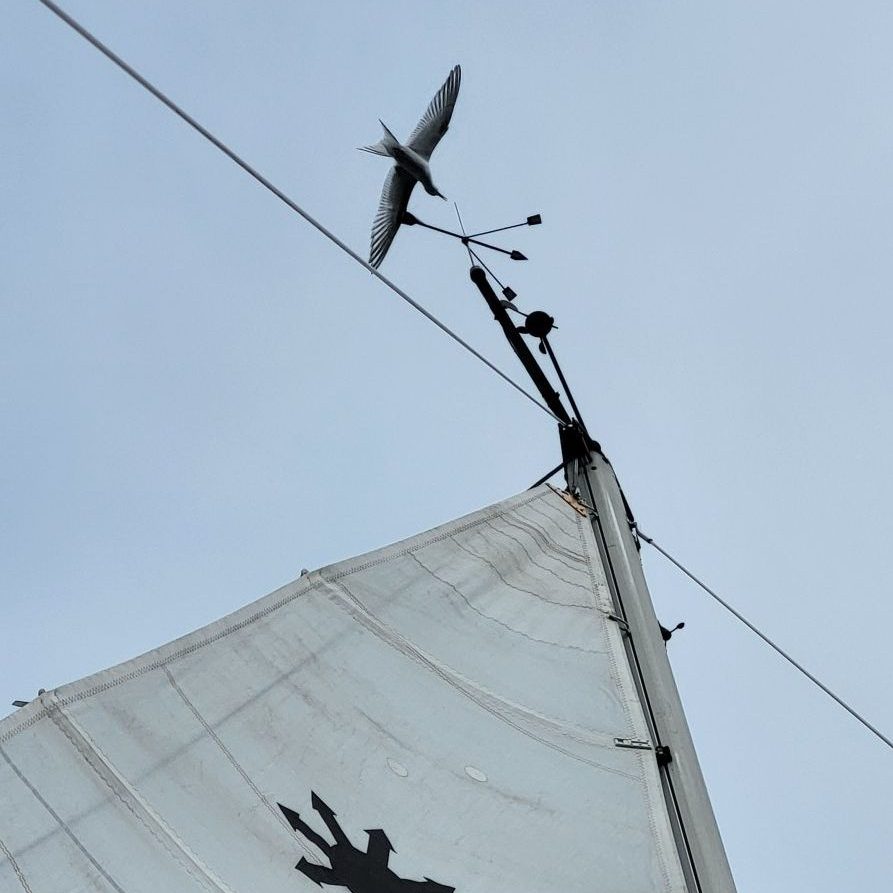
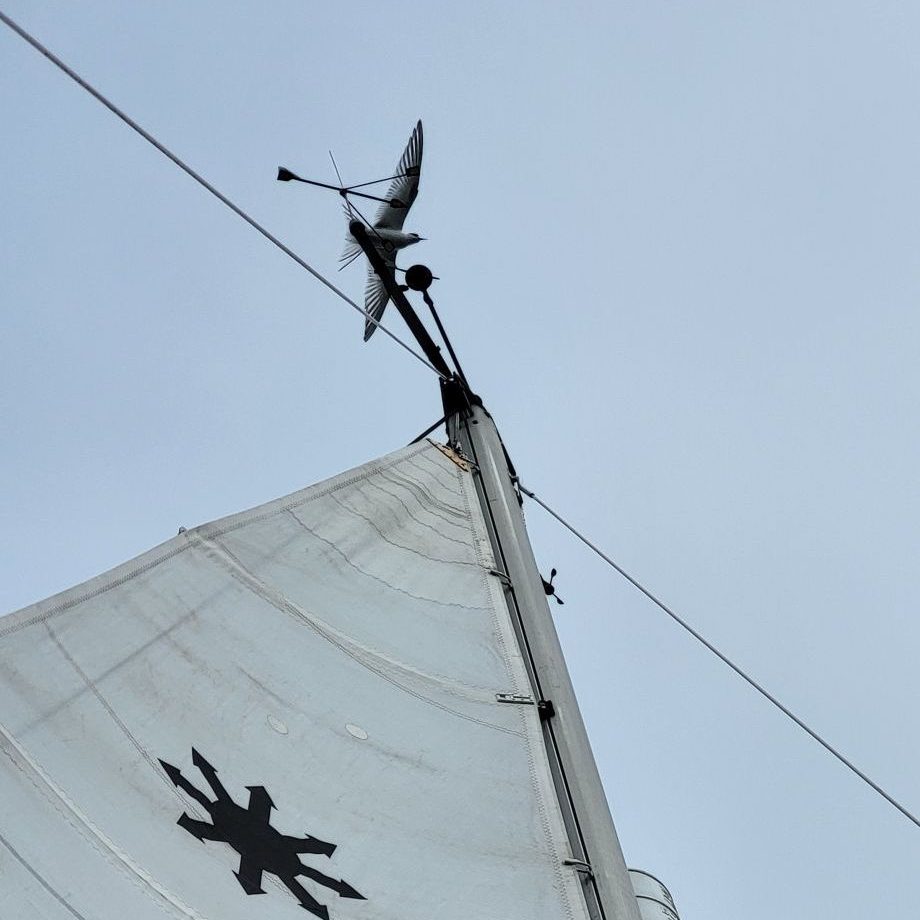
A few dolphins passed by en route, entirely uninterested in ourcompany, and were gone before anyone found a camera. A solitary tern made a half-hearted attempt at the masthead, and the usual scattered rafts of guillemots dived nervously out of our path as we came through.
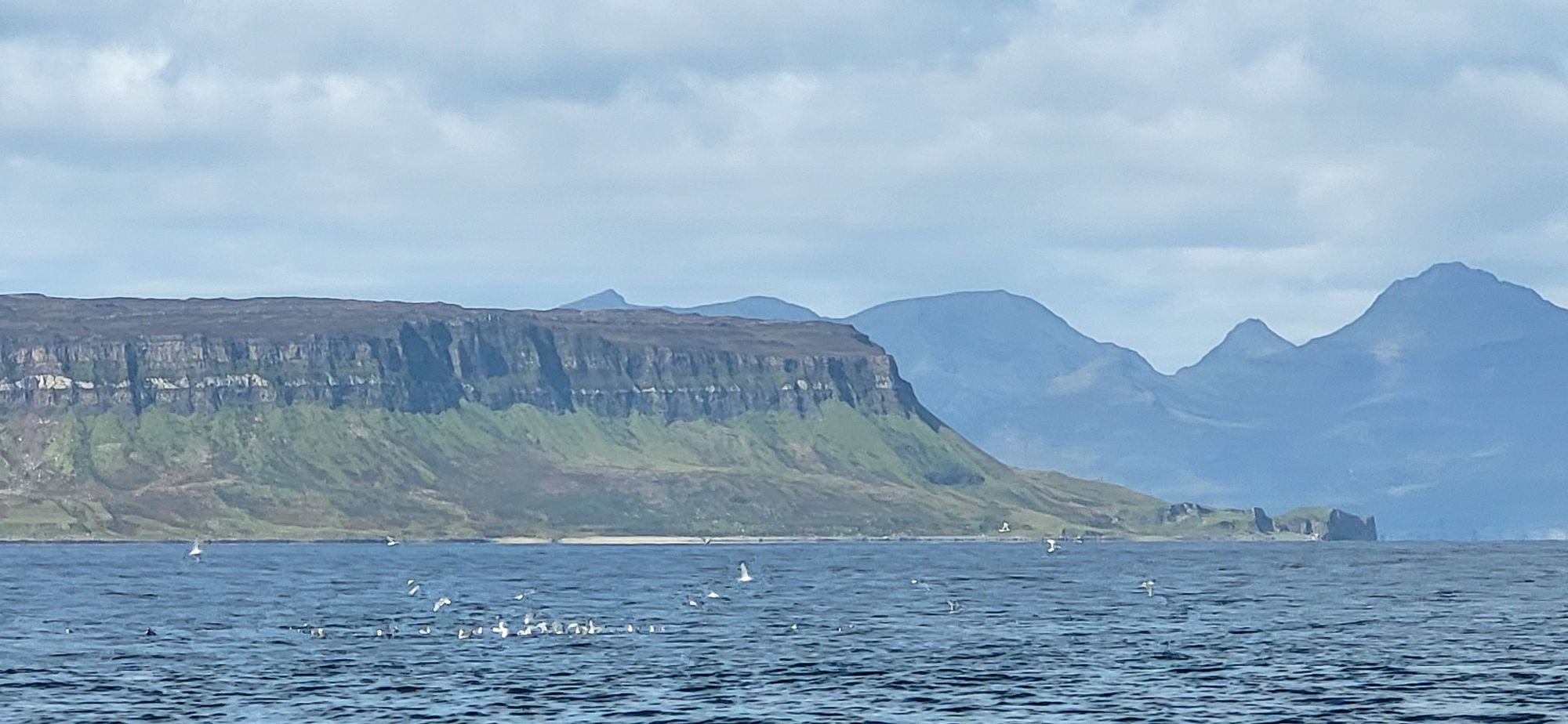
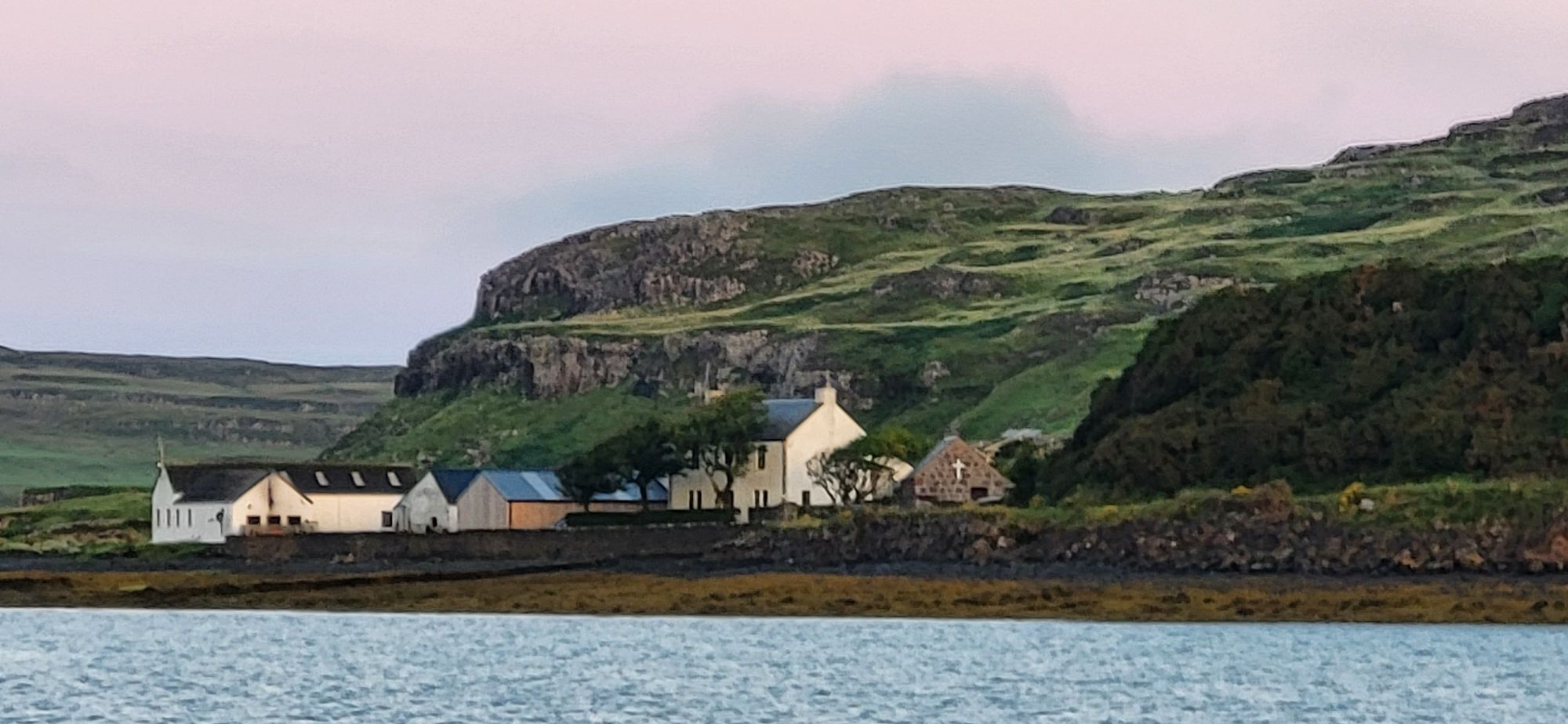
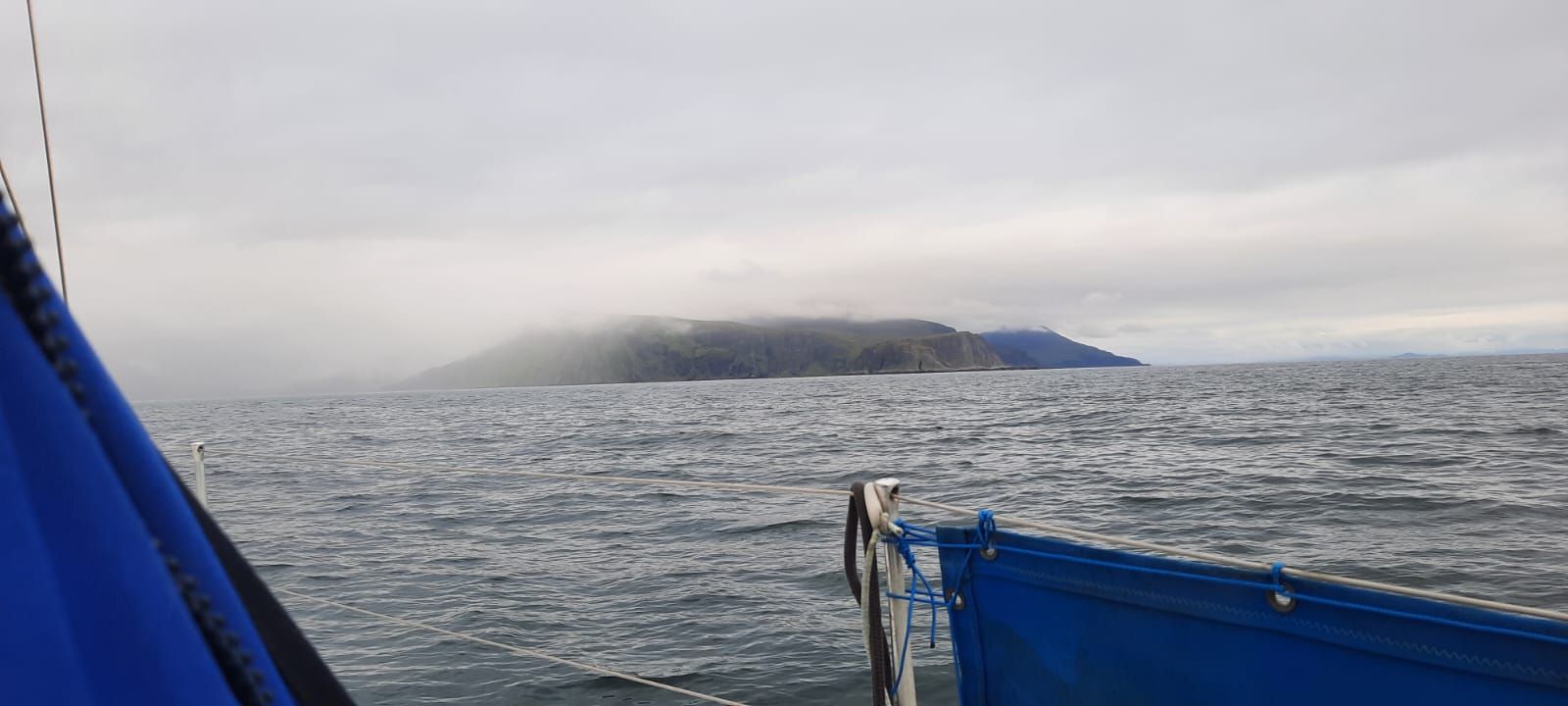
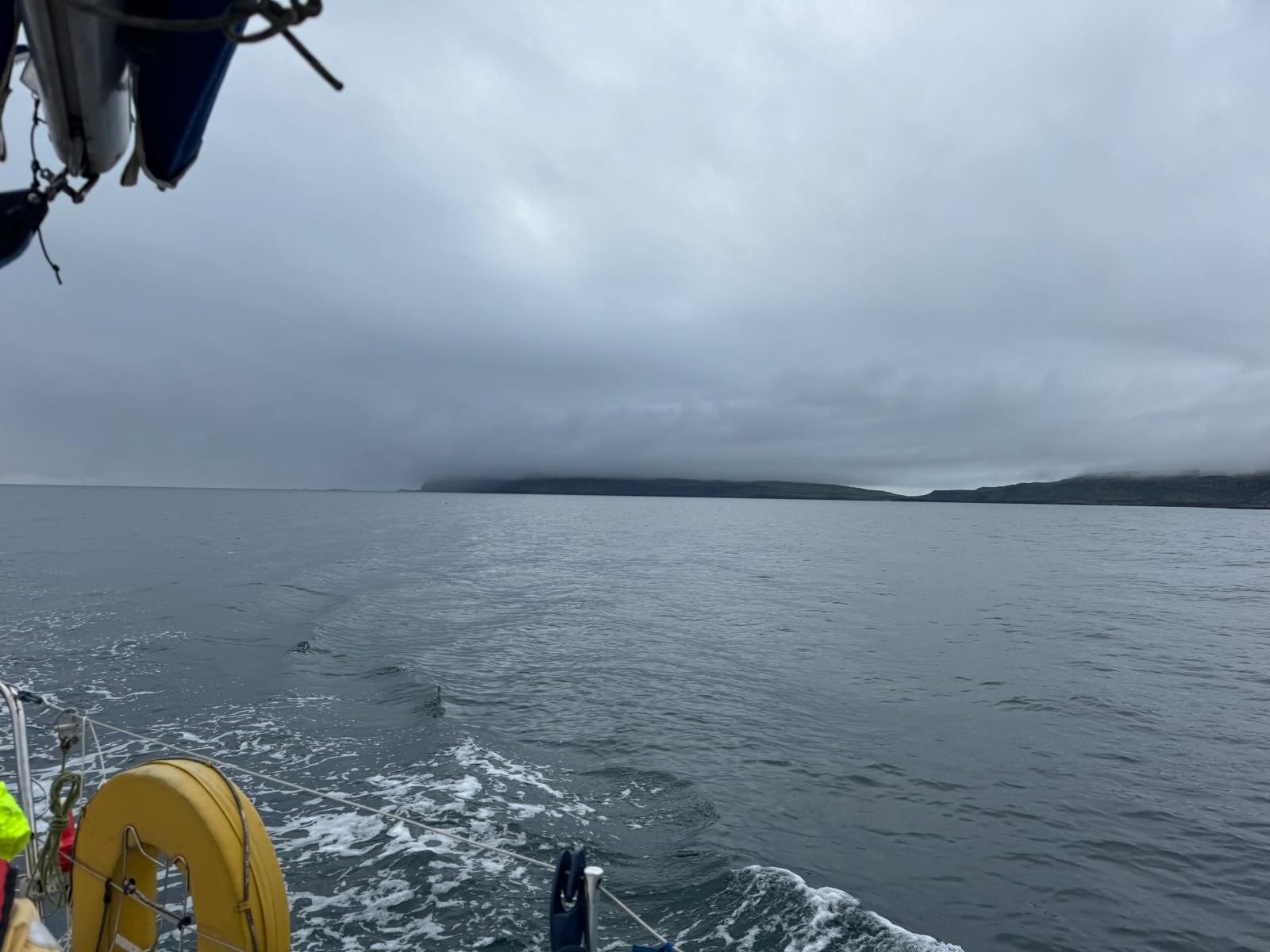
Canna slipped in and out of the mist for a while, and behind us the Hebrides stood in fine silhouette before finally sinking below the horizon, our last sight of them for this stretch. Ahead, Rum and Canna loomed as the sky cleared,…
… and we readied Heydays to work her way into the little harbour… threading in with care before picking up a mooring buoy for the night.
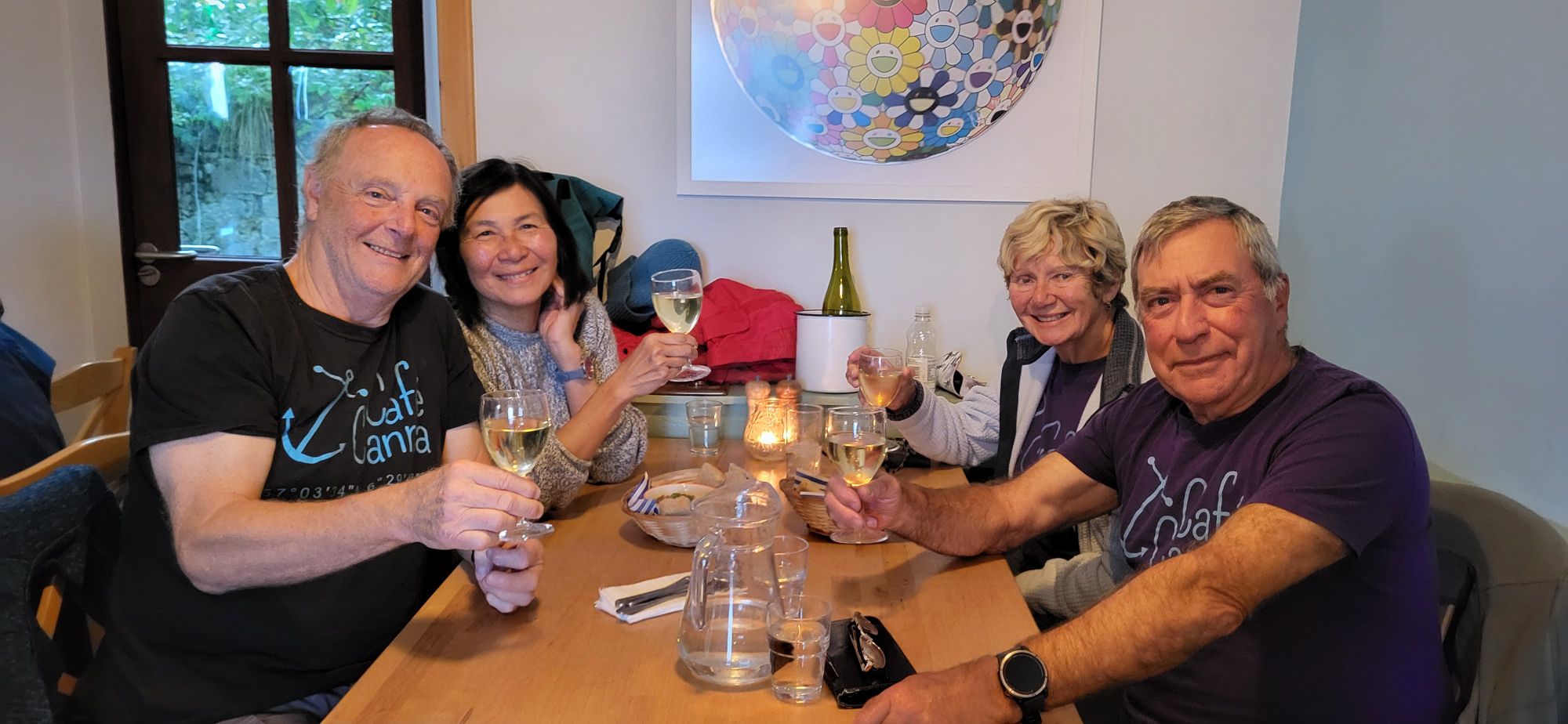
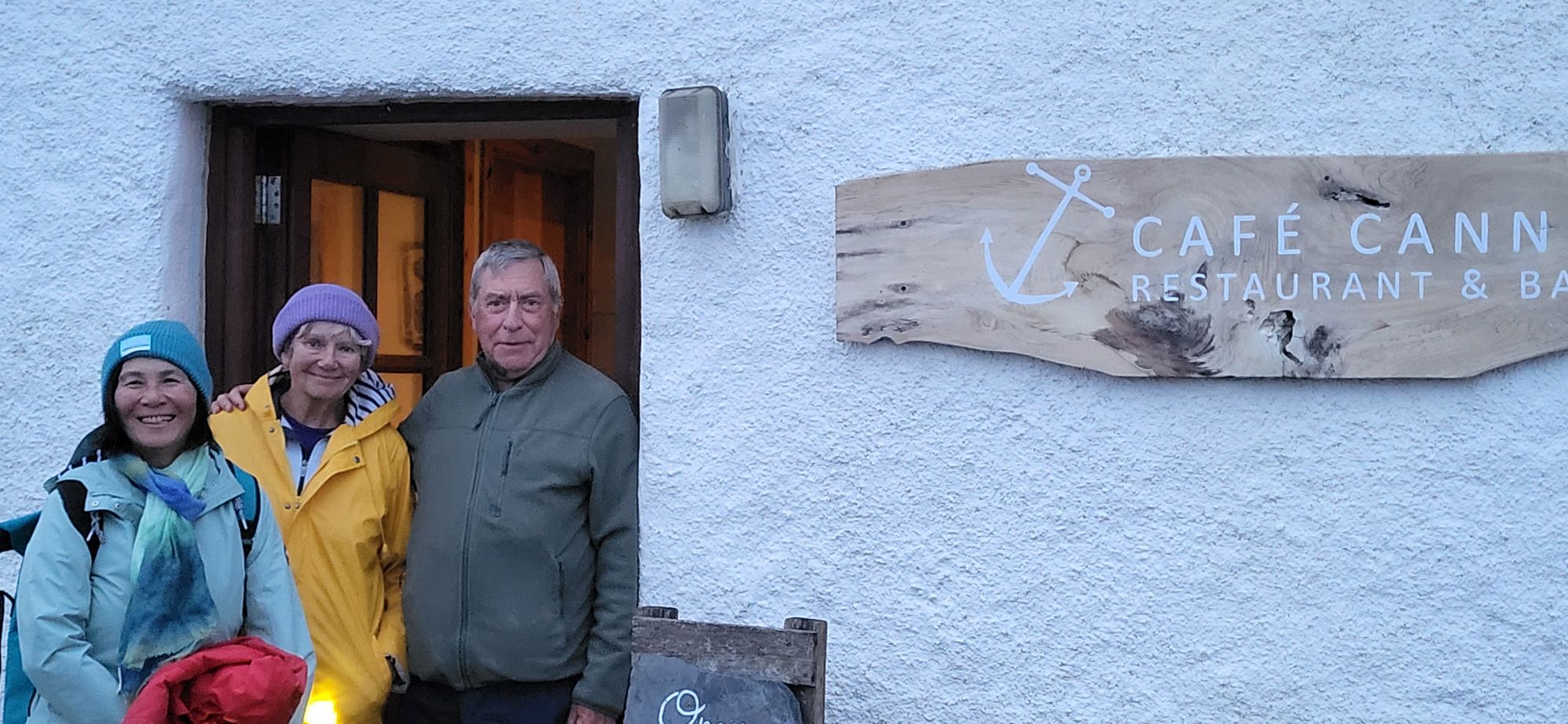
Snug on the buoy, we headed ashore to the café, which was packed. We’d been to Canna nine years ago and still have the t-shirts to prove it. The little café is open on Sundays, a small miracle up here, and we talked our way into a 7.30 booking, just enough time to get in, get changed, inflate the tender, and putter ashore. Four of us turning up in nine year old t-shirts hardly amounts to loyal custom, but they seemed genuinely pleased we’d made the effort. We got talking to the waitress about life on the island, just twenty one permanent residents, she said, and around half of them young. She’d come out originally as a nanny, then met the love of her life, as the bump rather gave away, and simply stayed. It’s a good thing to see, not just a handful of old timers holding the fort, but real life still finding its way to these islands.
The middle-of-the-night alarm is one of those unwelcome but necessary disciplines of anchoring somewhere remote …up to check the transits still line up and that Heydays hasn’t decided to go for a wander of her own. As it turned out, our concern was entirely wasted…she sat rock solid all night, unmoved and unmoving, while we lost sleep on her behalf.
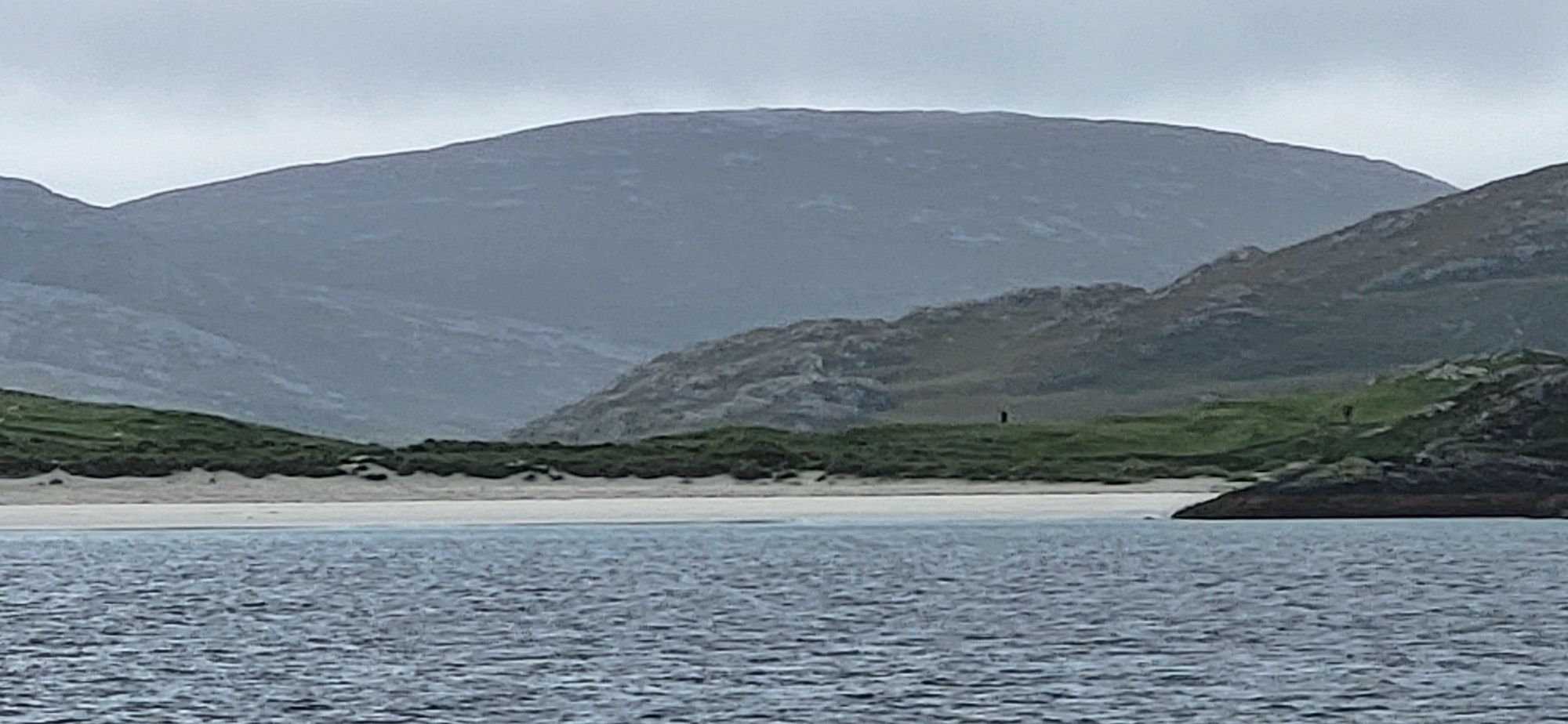
Morning brought glorious compensation, a loch entirely deserted but for us, lit up in early sunshine. There is something properly magical about that kind of isolation, not another soul in sight, and it seemed almost a small betrayal to be thinking about leaving. But time was pressing, and Barra, one of the southernmost islands of the Hebrides, was calling, so coffee was made in mugs, breakfast promised for underway, and Heydays readied for the day. We weighed anchor in the early light, hauling up a good quantity of South Uist mud in the process, almost certainly the only part of the island we will actually touch, which seems a shame.
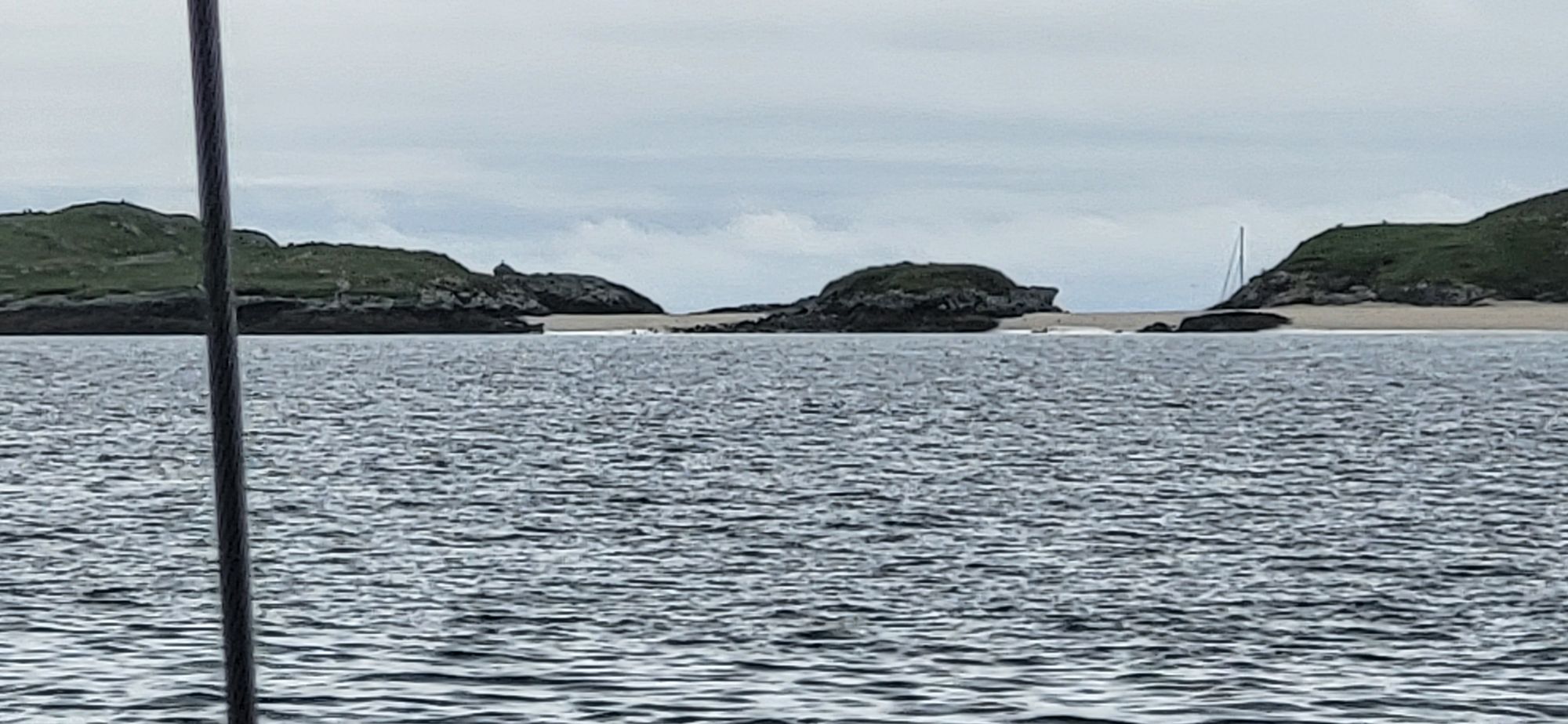
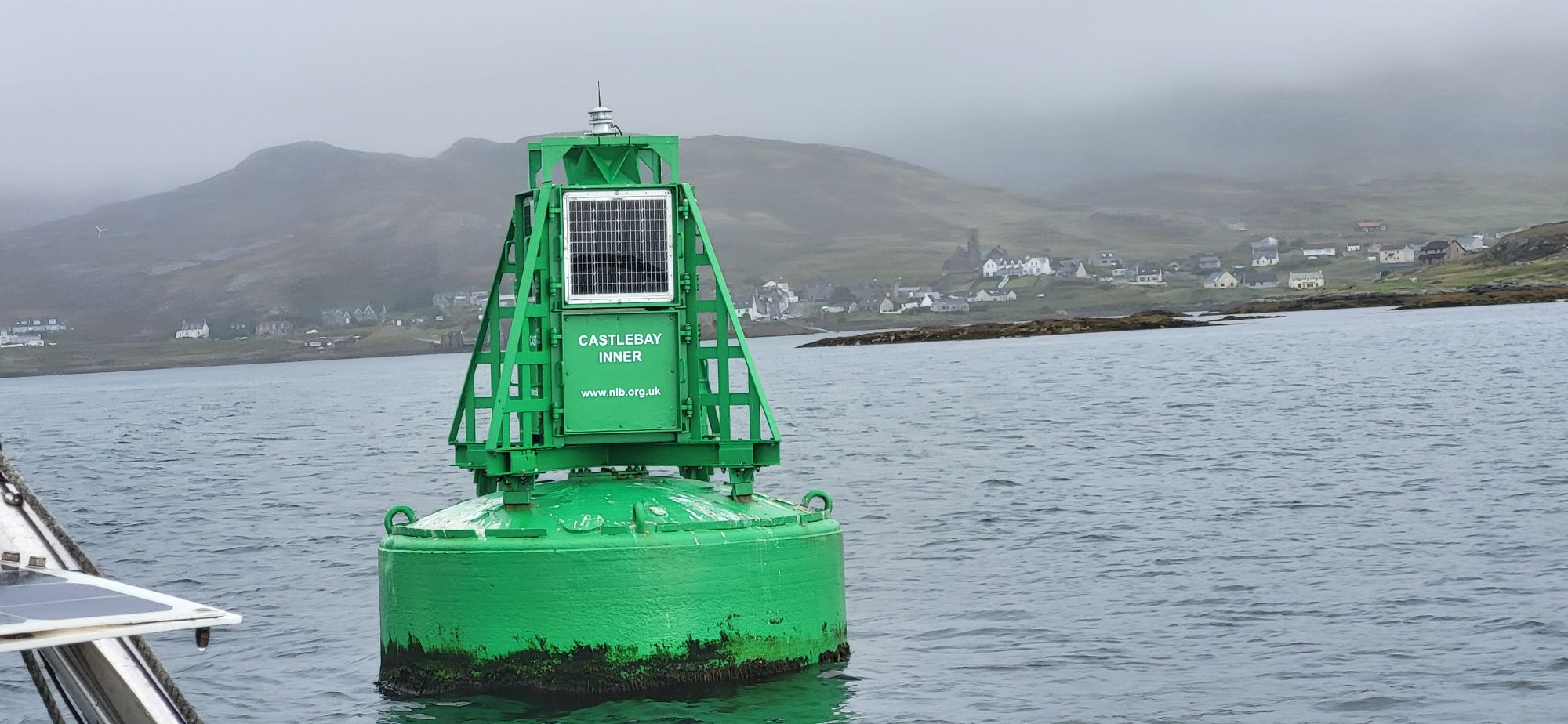
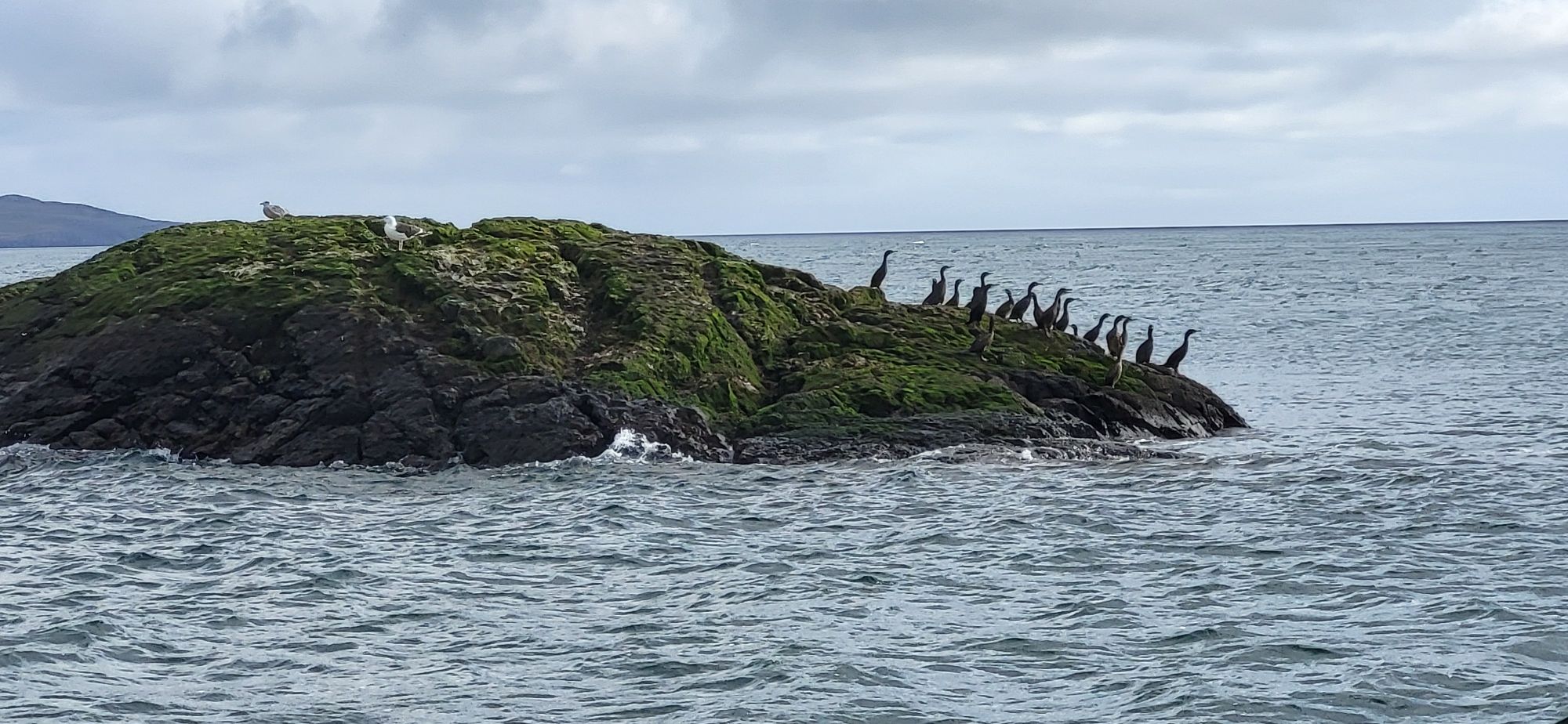
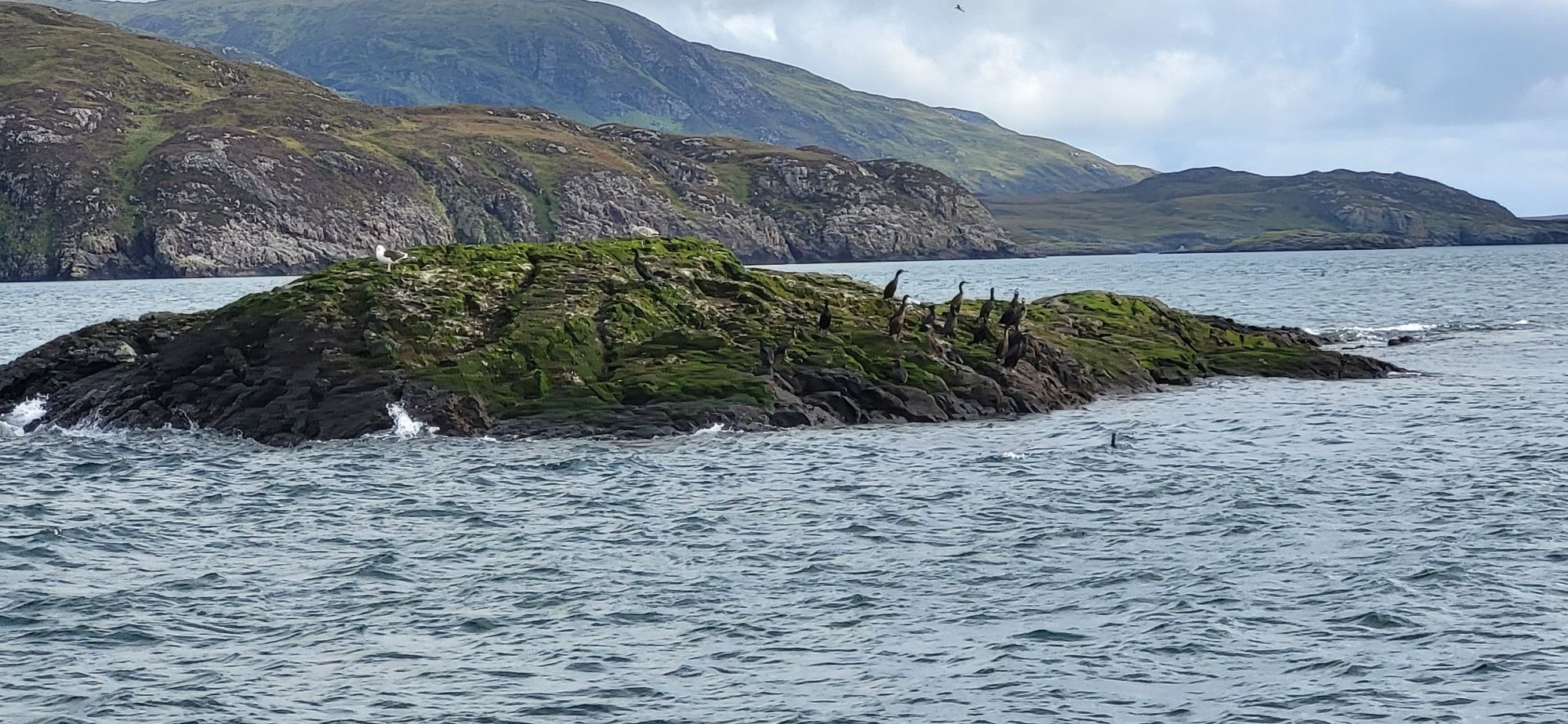
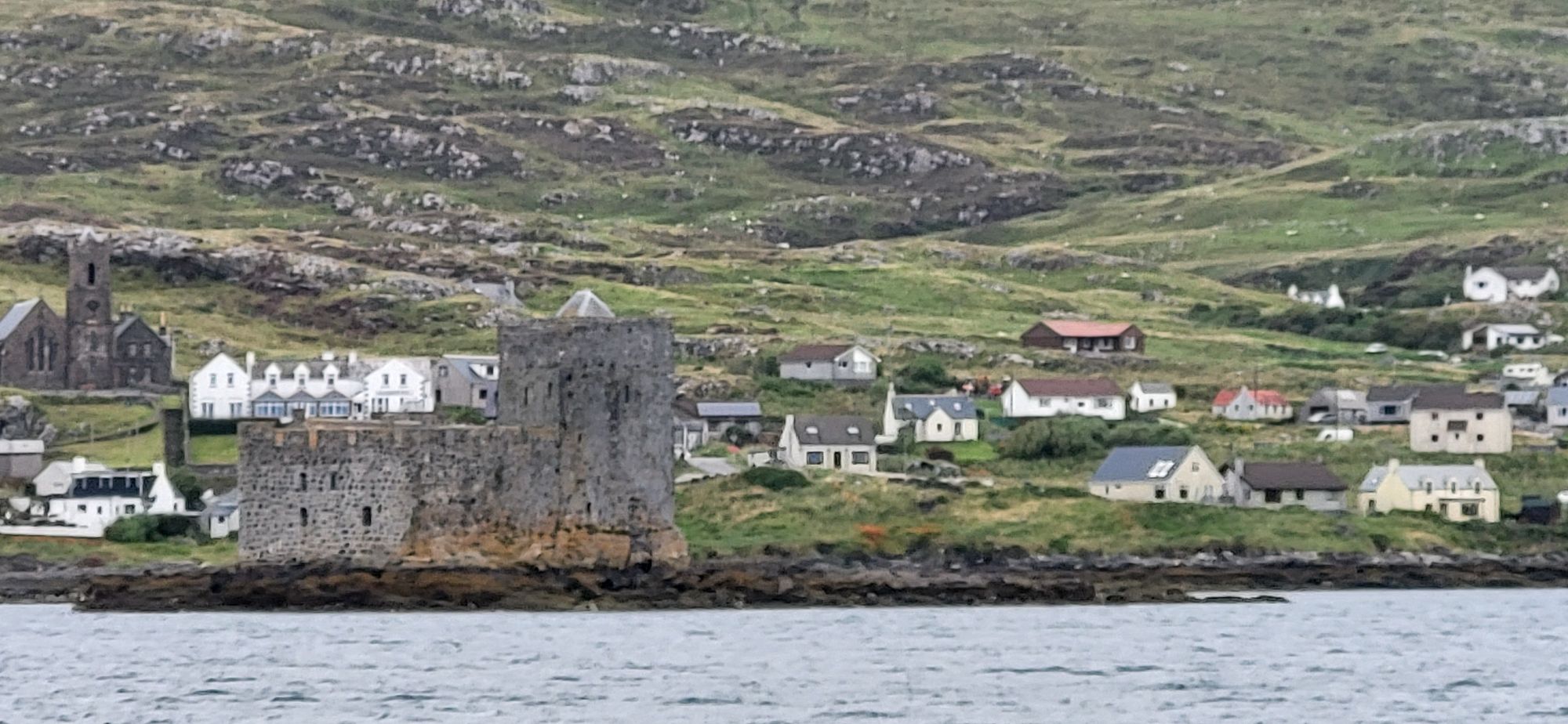
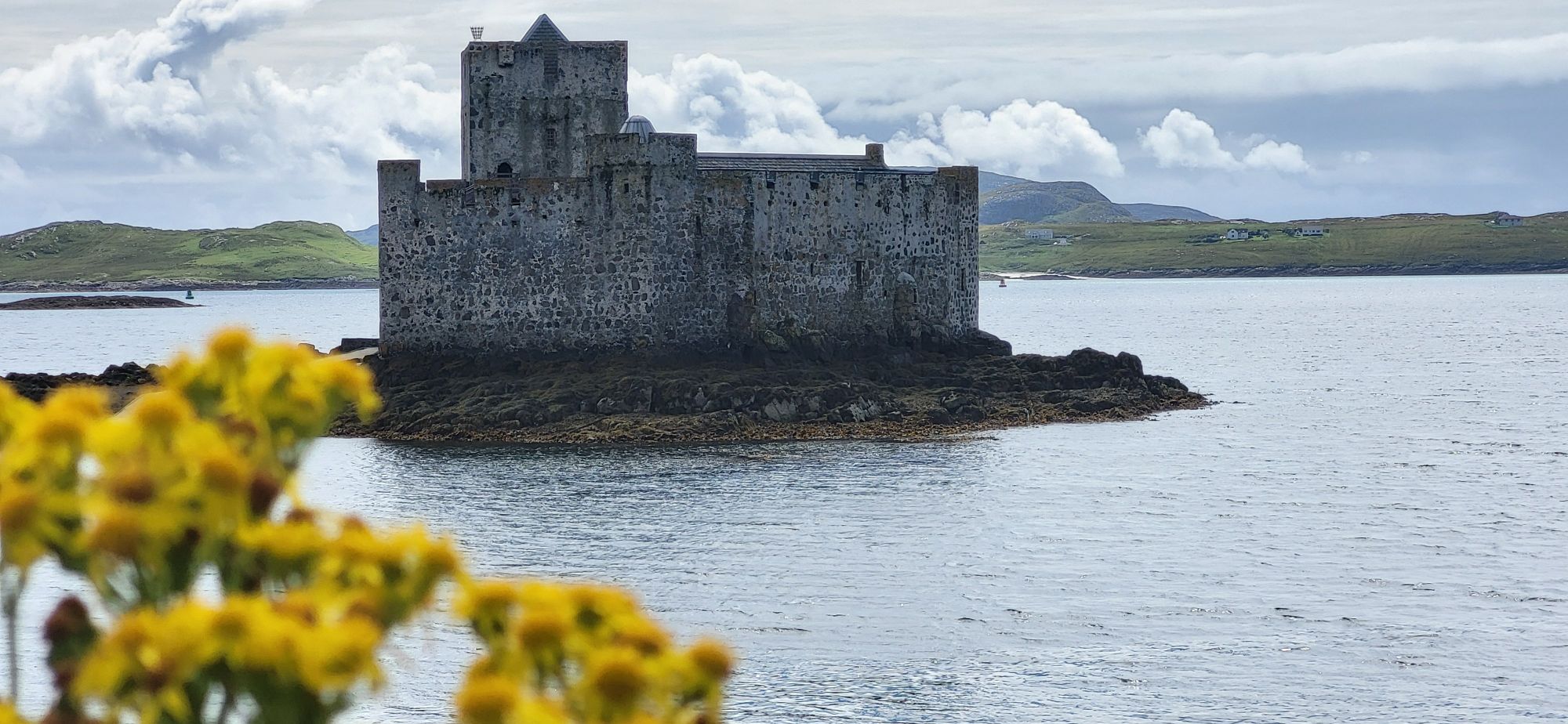
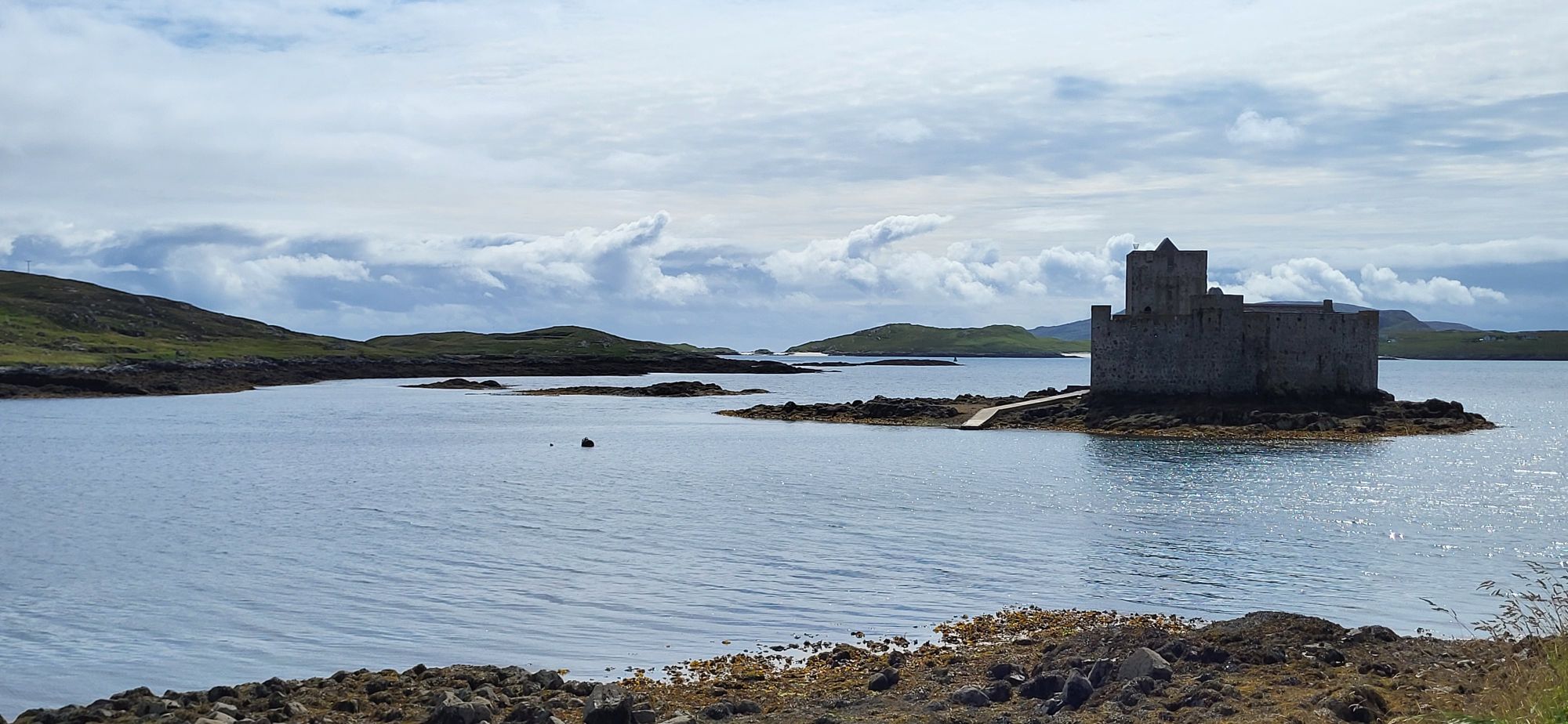
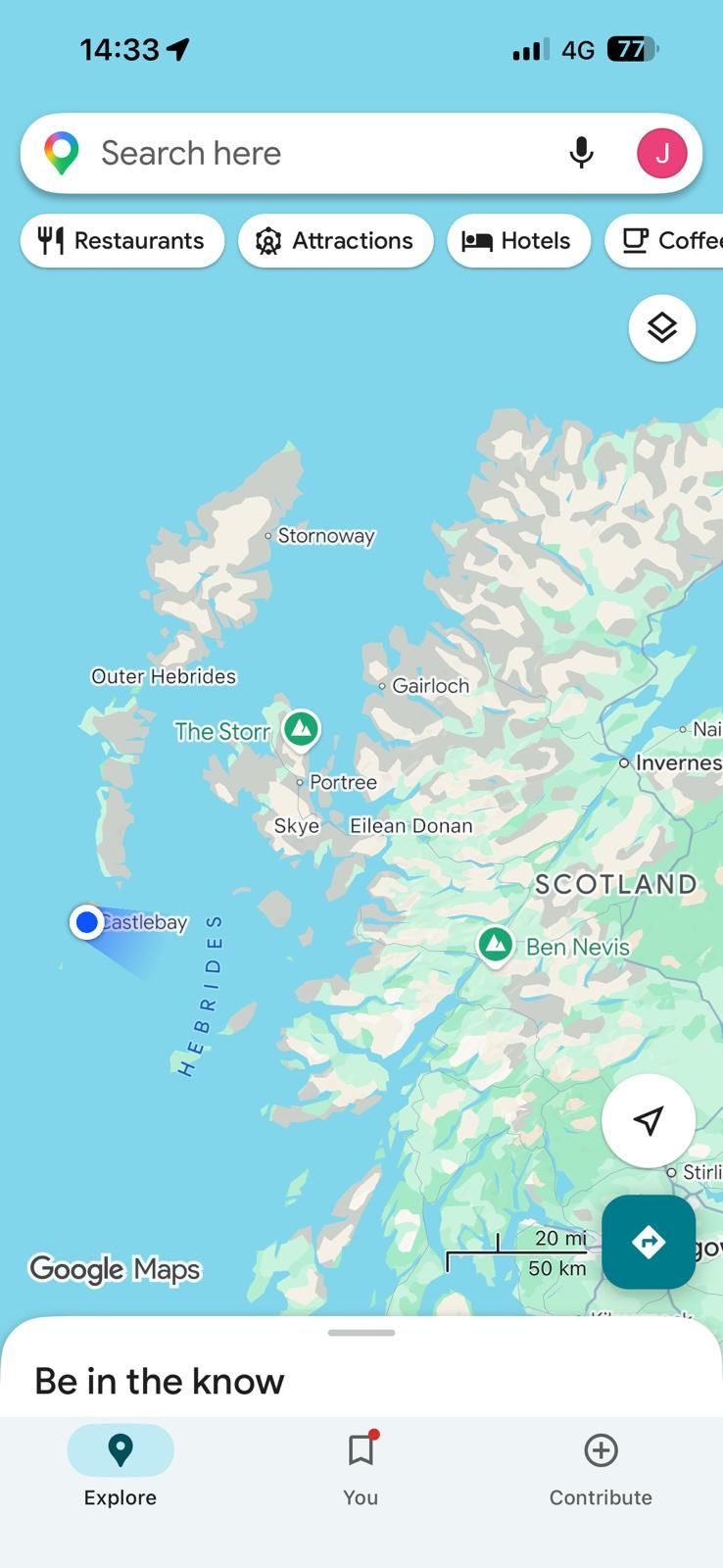
Out of the loch and past an island of disgruntled cormorants, we turn south. The wind is kind enough to stay in the west and give us a fine sail past South Uist and Benbecula. Then, at last, Barra itself, and the business of finding the entrance to Castlebay, a channel with enough rocks scattered about it to concentrate the mind. The name, it turns out, is not merely decorative…there is indeed a castle sitting right in the middle of the bay. Kisimul Castle (we learn later!) is Norse in origin, the MacNeils’ seat for several centuries, and a reminder that these waters were Norwegian long before they were Scottish.
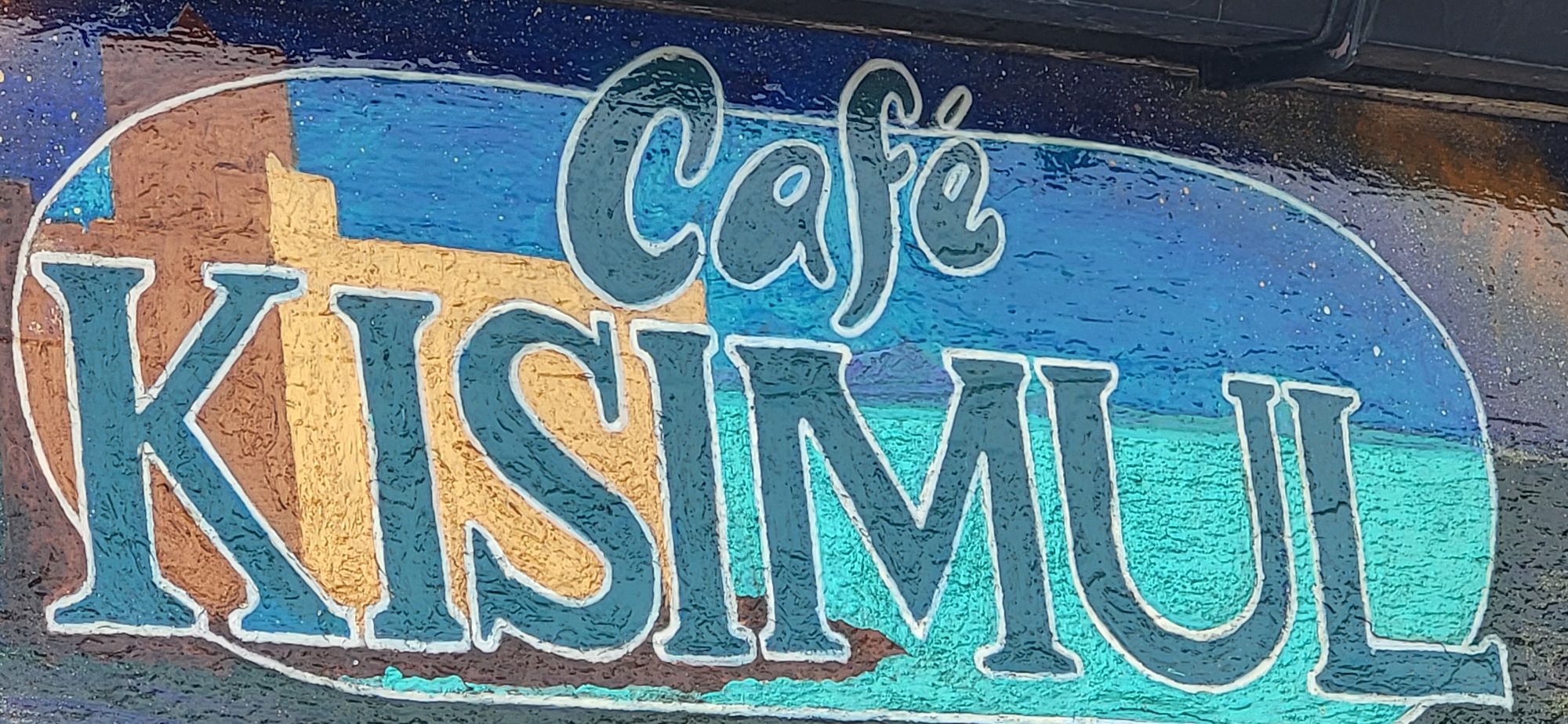
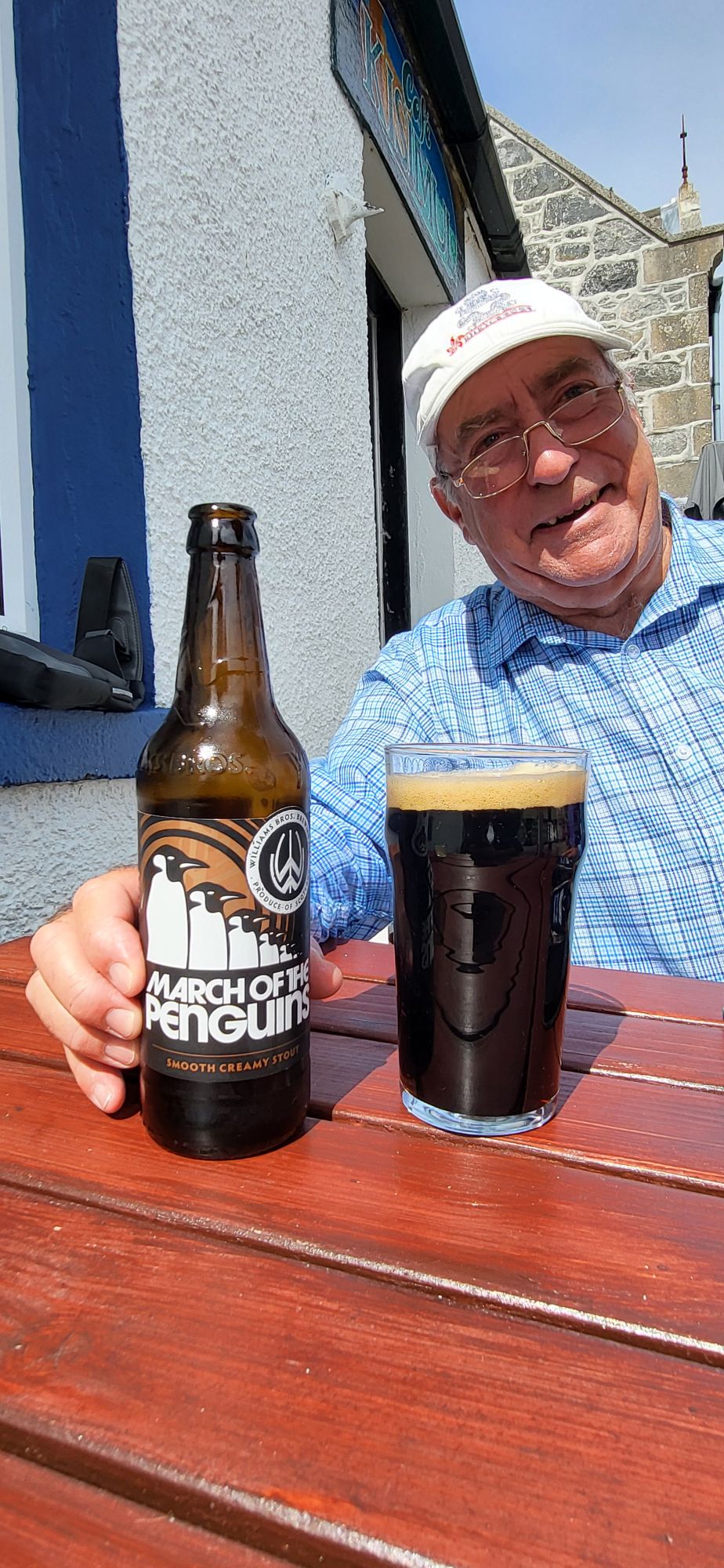
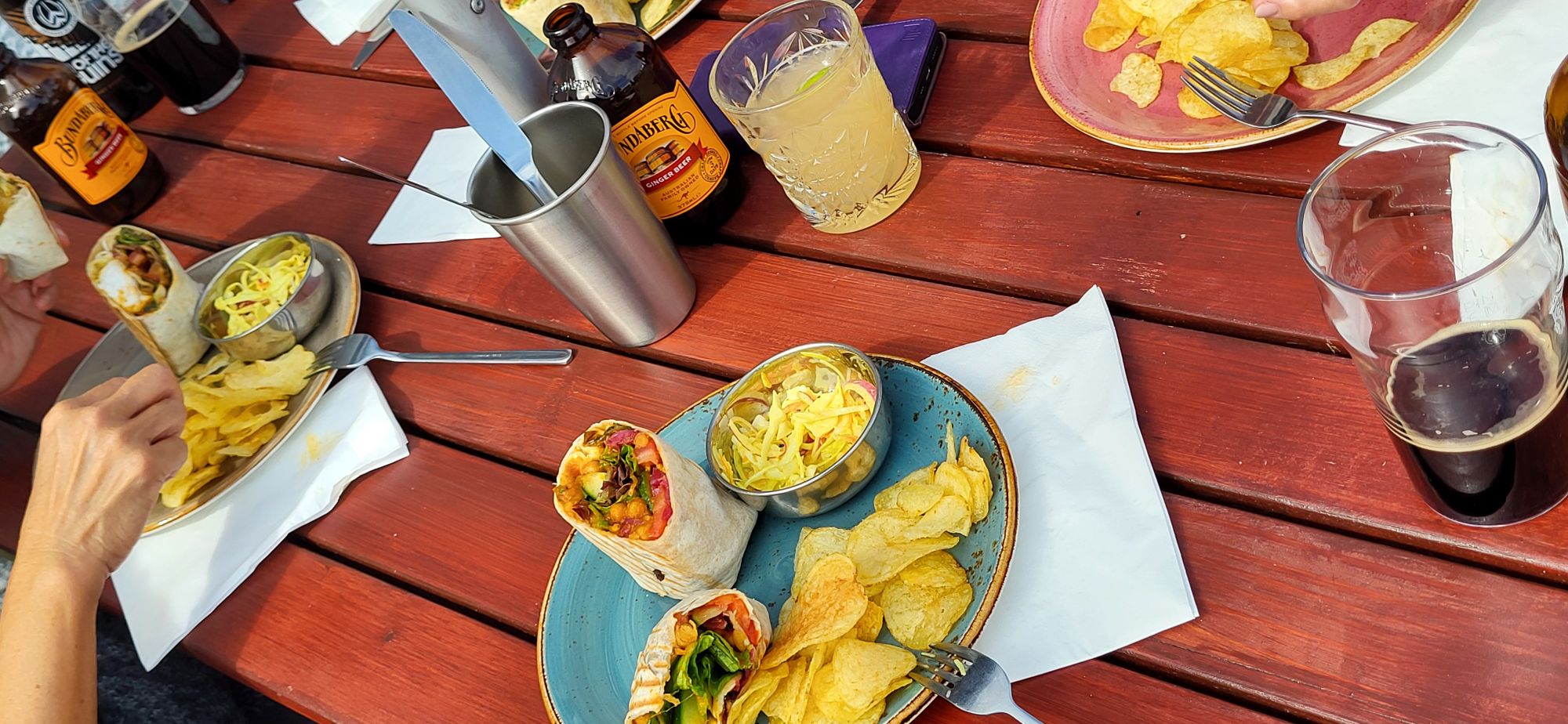
The marina is tiny, community-run, and home to only a couple of other visiting boats. We wandered up into the bustling metropolis of Castlebay itself…bustling being a relative term here…to discover we had missed lunch at the hotel by a single minute. Consolation arrived in the form of the Café Kisimul down by the harbour, which turned out to be rather better than the alternative anyway…excellent Indian-themed wraps, an oddly named beer, and a sunny spot outside in one of the loveliest villages at the tip of the Hebrides. We had assumed, reasonably enough, that the café’s name was a nod to its Indian menu. We were entirely wrong — it is named, of course, for the castle in the bay.
An all too brief wander around the little town and we have a feel for life at this southerly end of the Hebrides…
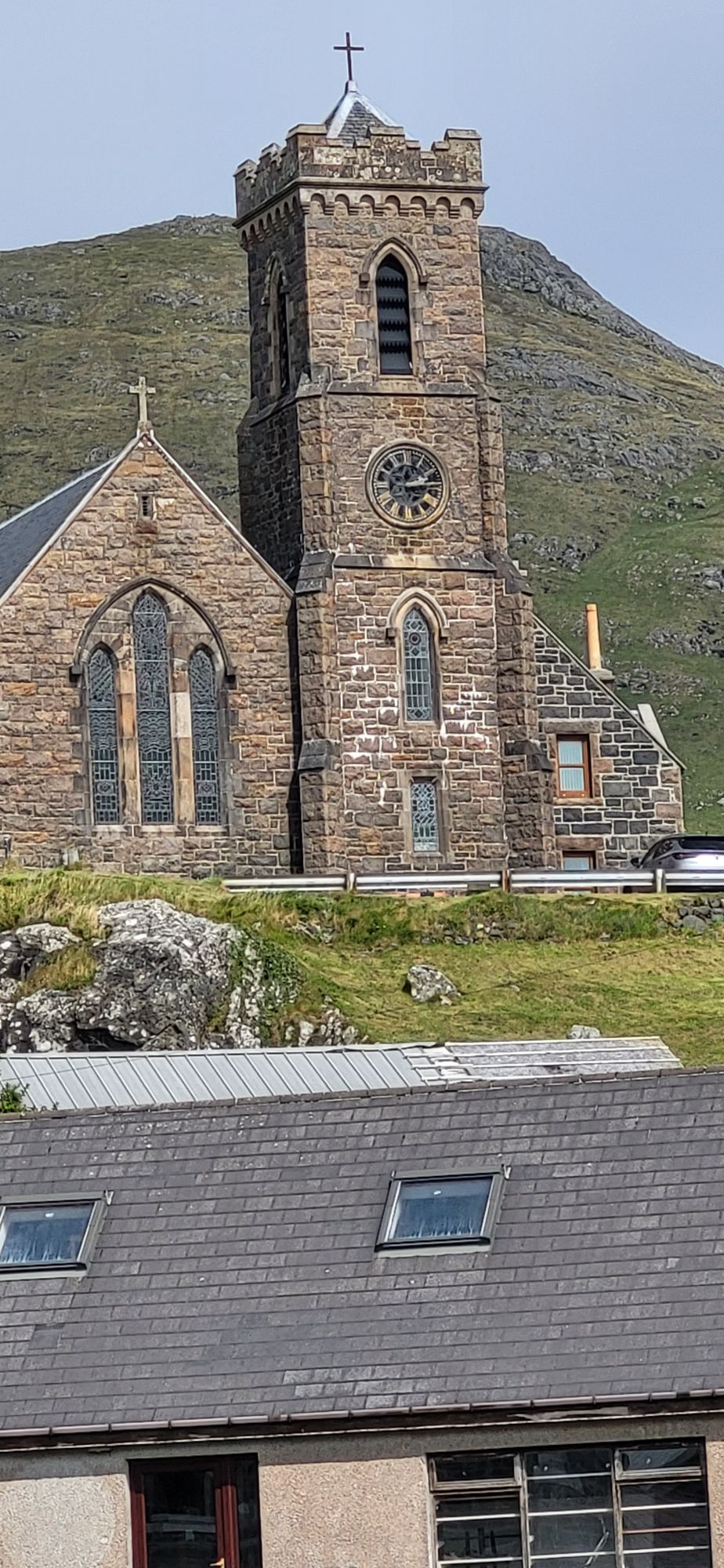
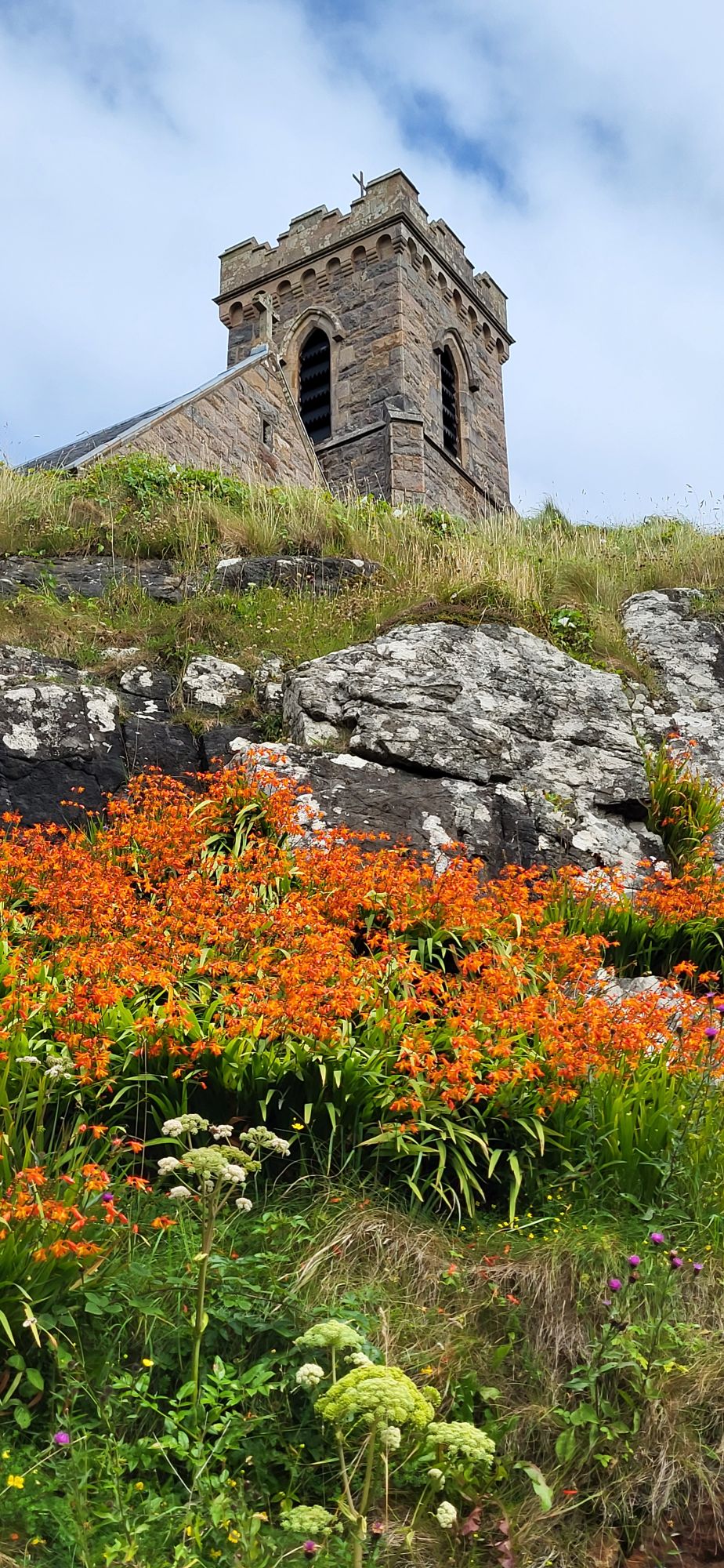
We fell to musing, as one does in places like this, on how small remote communities are obliged to pull together in ways the mainland forgets. One final observation…where the northern isles remain firmly under the Scottish Church’s Sabbath…everything shut on a Sunday… Barra feels different, and not only in temperament. It is the Catholic Church that dominates the town physically here, and, remarkably, there are places open on a Sunday.
Thursday morning, and finally back on the water. We slipped the last of the mooring lines just after 0900 to catch the tail of the south-going tide through the southerly part of the Little Minch…no great feat of pilotage, but the sort of small discipline that saves an hour of frustration later. The forecast promised southwest force 3 to 5, backing west later, which was not entirely the wind we wanted but was at least not blowing us off the water…and with the added bonus of being able to see. Our enforced layovers in Stornoway and Tarbert have left us slightly behind our own schedule, so there was a mild, self-inflicted pressure to make distance. The plan, loosely held, was Loch Carnan on South Uist by evening, with Barra to follow on Saturday if all went well.
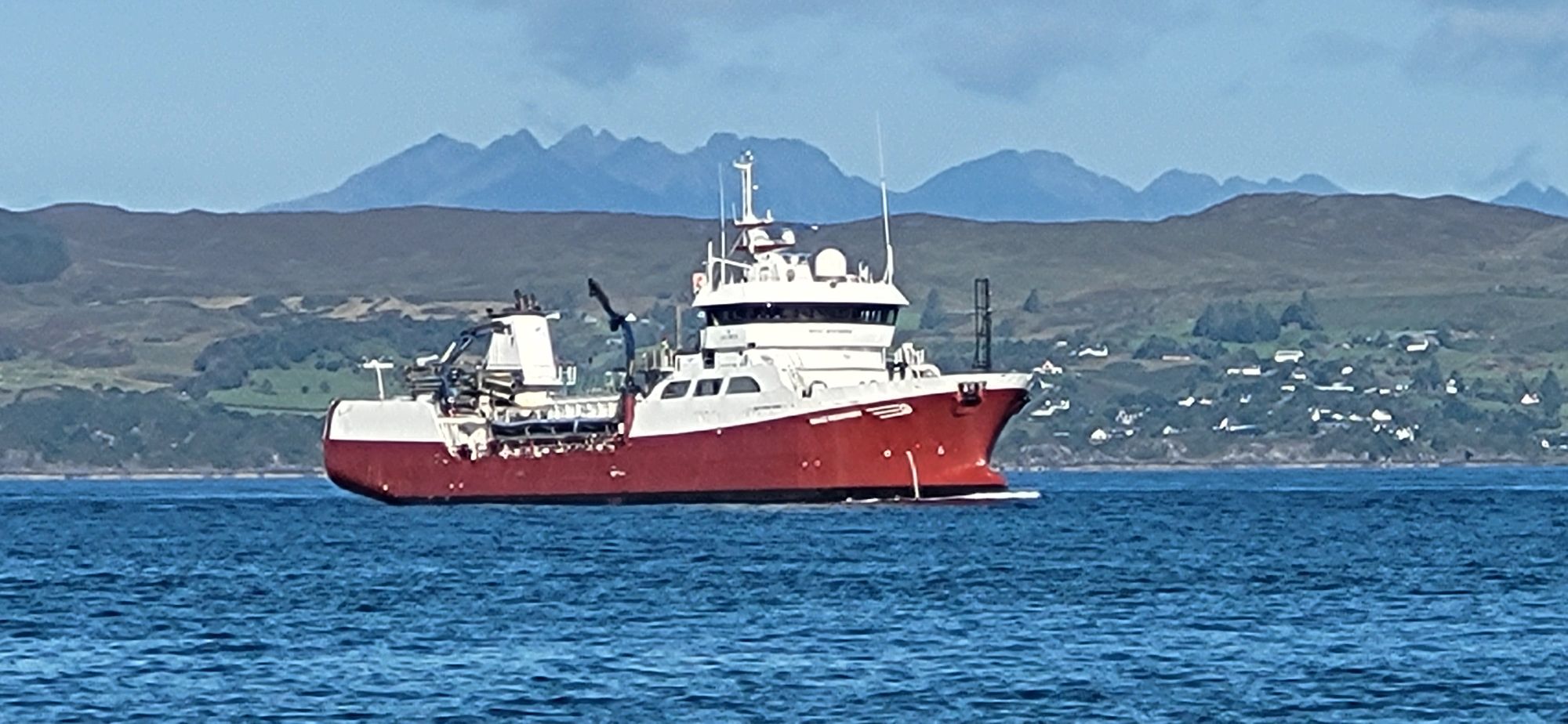
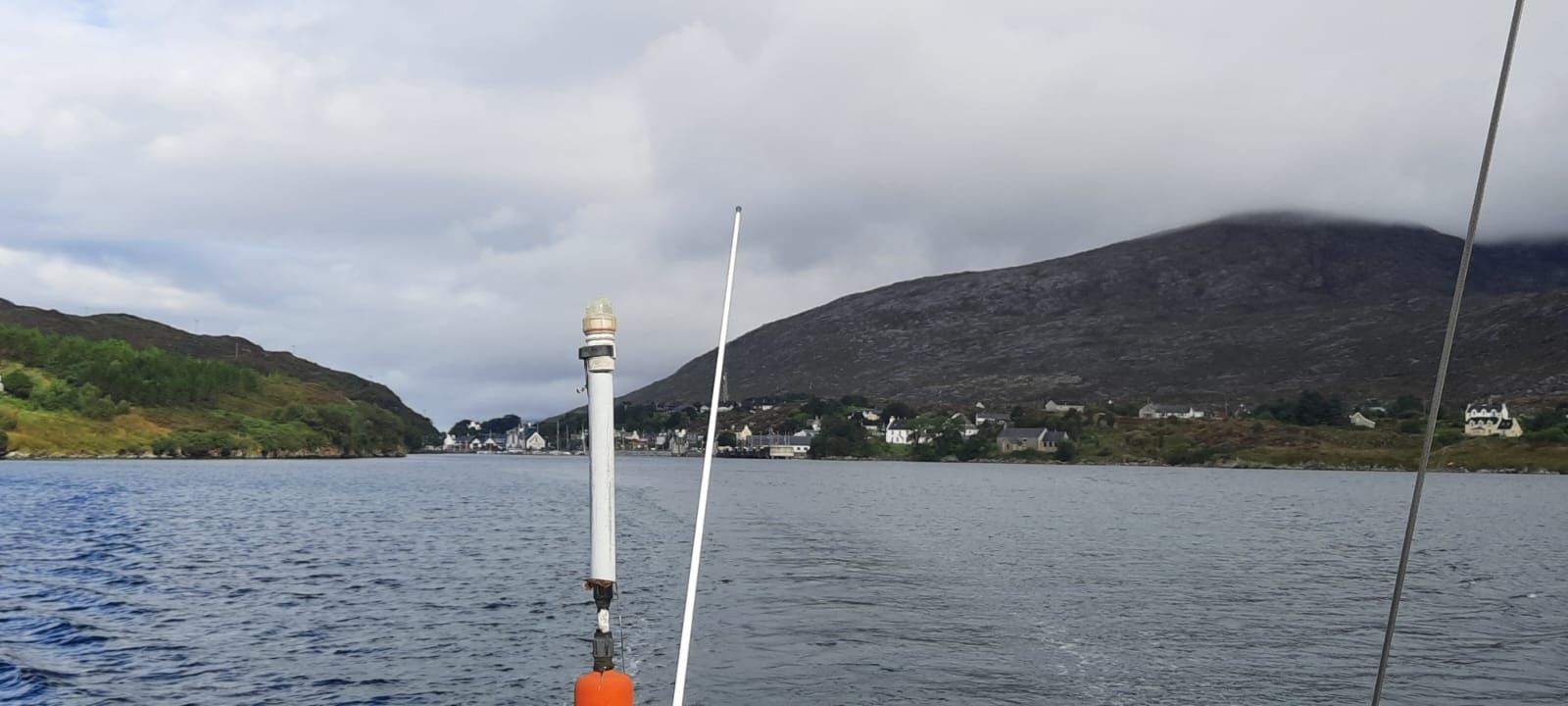
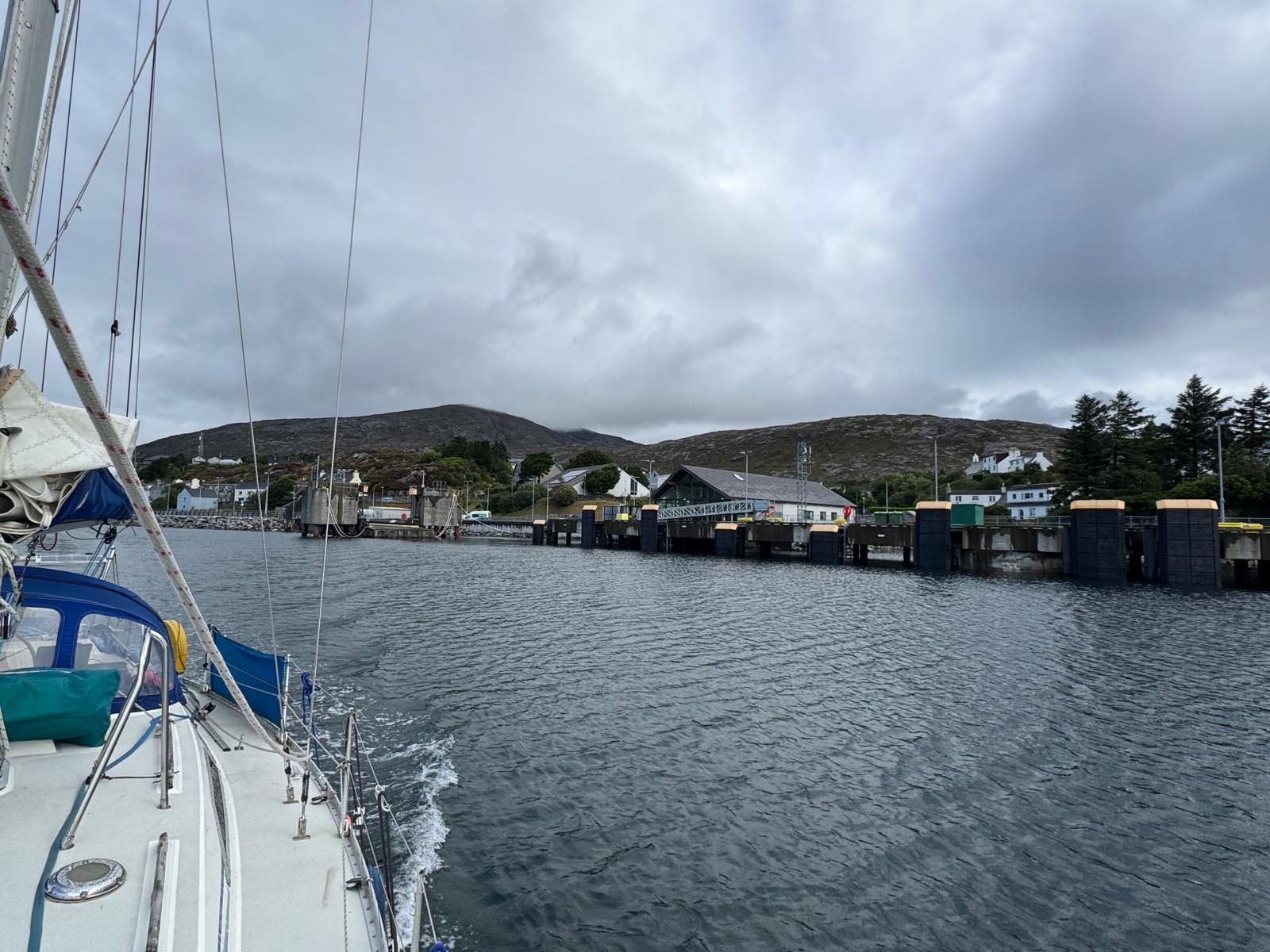
We eased out past the lock at Tarbert with the wind kindly on our stern, main up, expecting it to head us the moment we turned the corner south — which, with the reliable perversity of west coast winds, it duly did. A Norwegian-registered vessel lying in the loch turned out on inspection to be one of the work boats that service the salmon farms: a floating factory whose job is to bathe farmed fish in fresh water to strip off the sea lice that thrive in close-packed cages. We are not yet prepared to renounce salmon entirely, but the image of listless, lice-ridden fish being freshened up before market does rather take the shine off a smoked salmon sandwich.
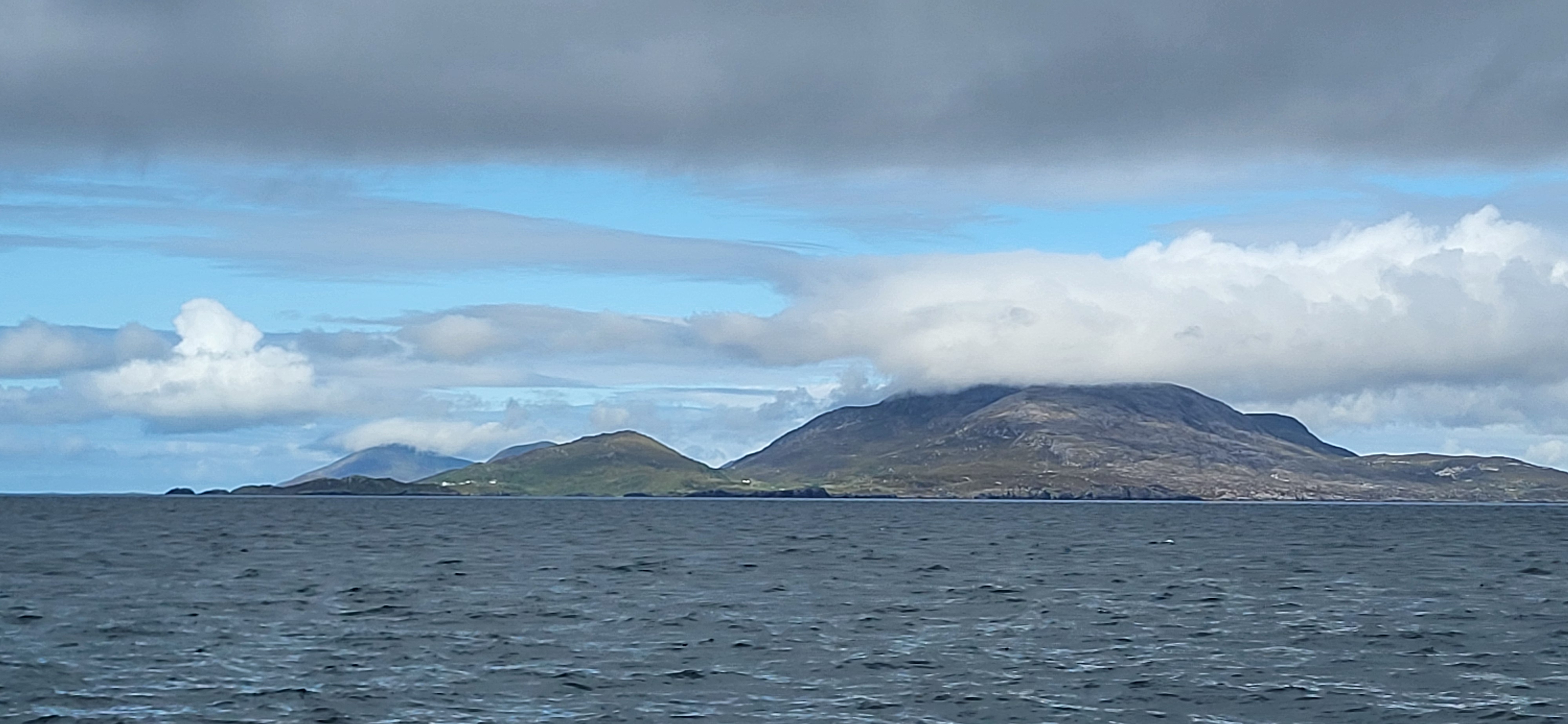
Visibility was moderate, good enough to see the mainland and Skye on the horizon, not good enough to call it anything better. We motor-sailed for a stretch with the wind stubbornly on the nose, the main earning its keep only nominally, in the manner familiar to anyone who has spent time matching a schedule against a west coast forecast. A purist might object that one should simply go where the wind allows, which today would have carried us pleasantly across to Skye a lovely island, but one we have visited before, whereas the Uists and Barra have not yet had the pleasure of our acquaintance, and it seemed a shame to let the wind make that decision for us.
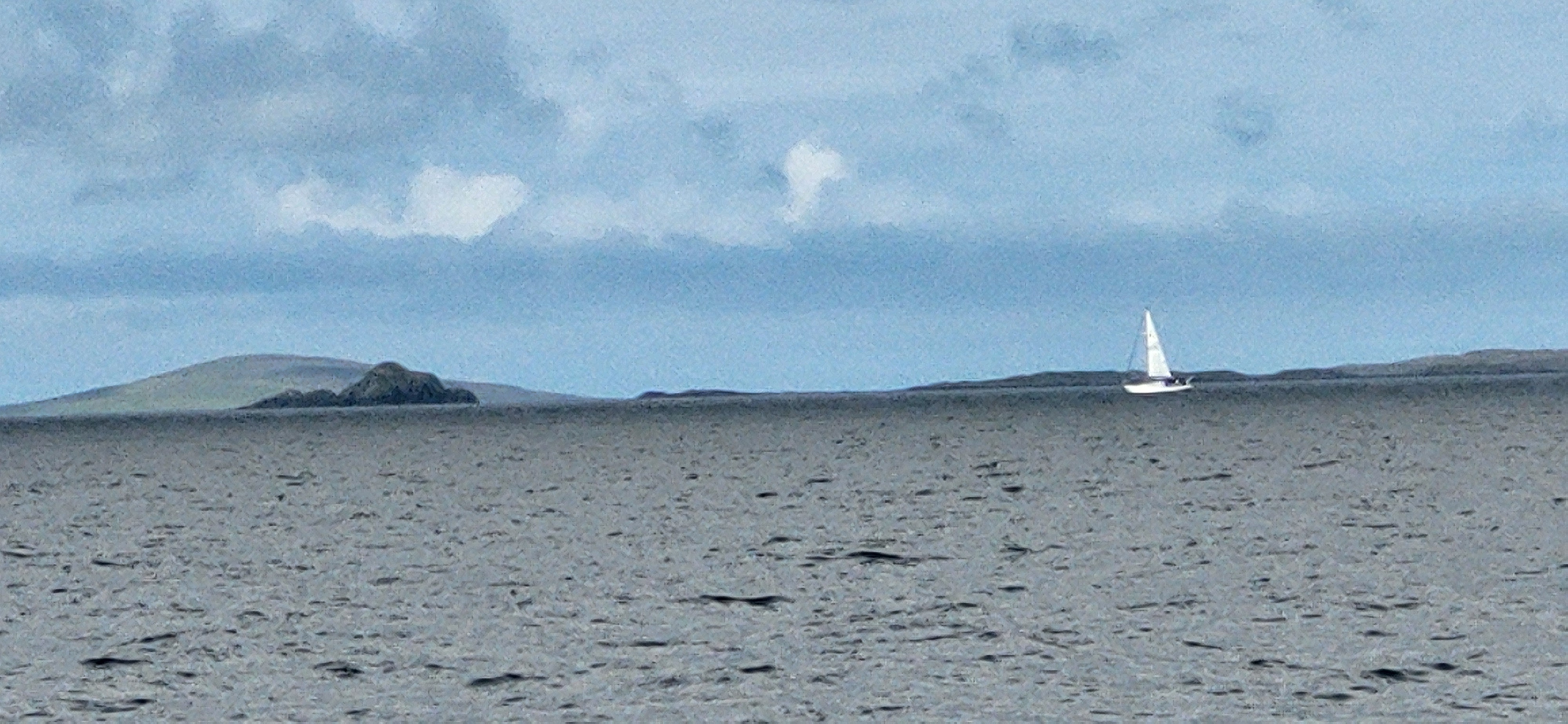
A yacht under full sail put out from an anchorage to the south and, having assessed us under motor and main, making reasonable way. Apparently they decided that being a purist was overrated, or simply that they too wanted the miles, so they rolled away their genoa and settled onto much the same as our course, mainsail up, into the same obstinate southwesterly. We shared their impatience for the forecast’s promised backing to the west.
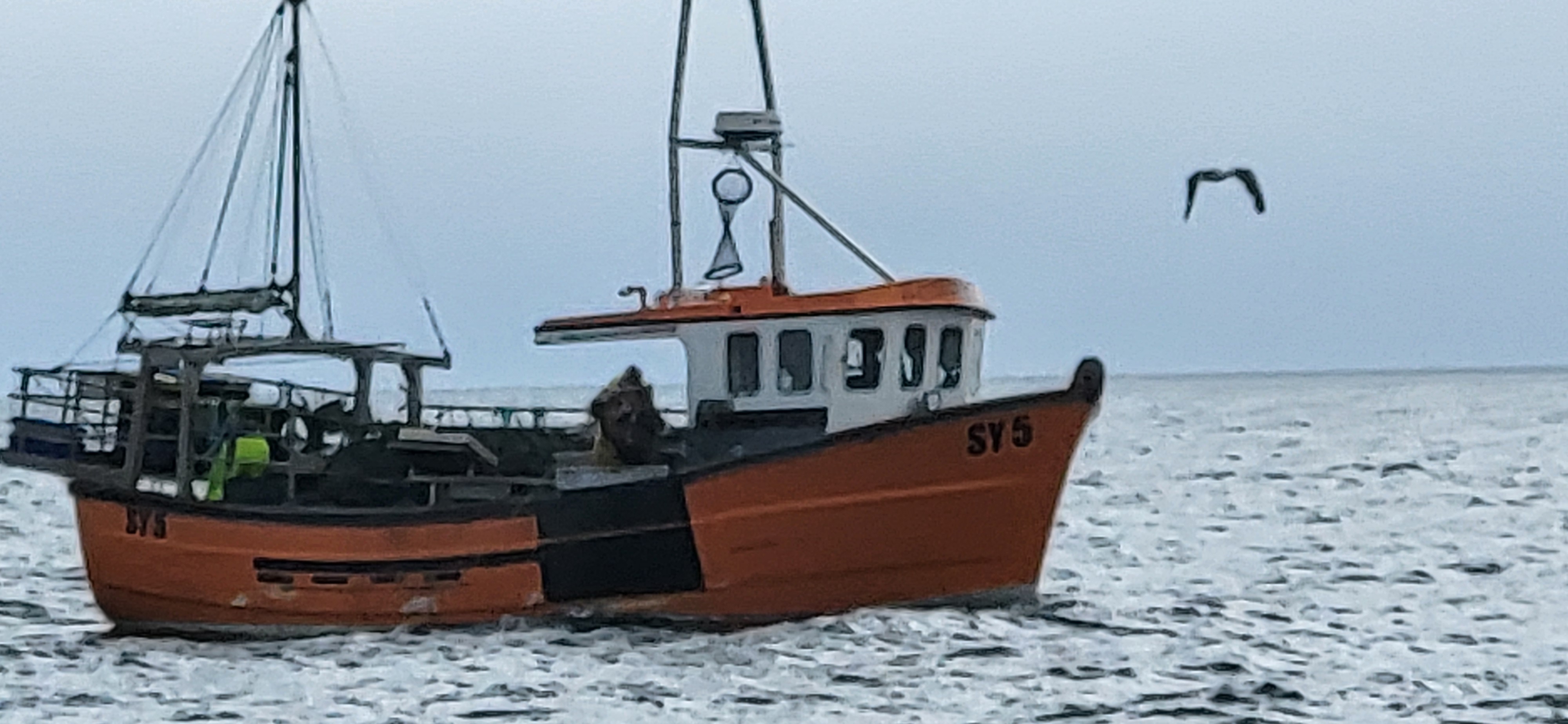
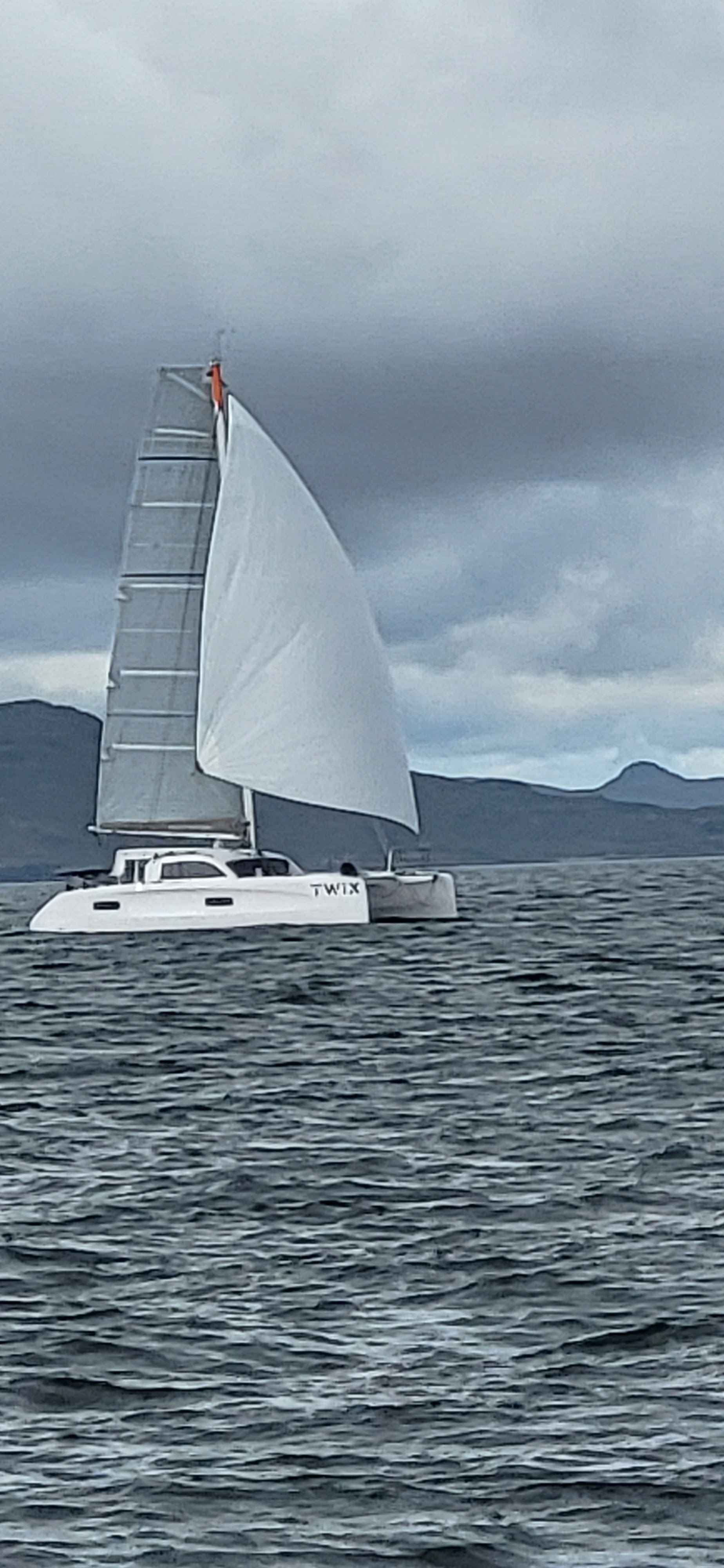
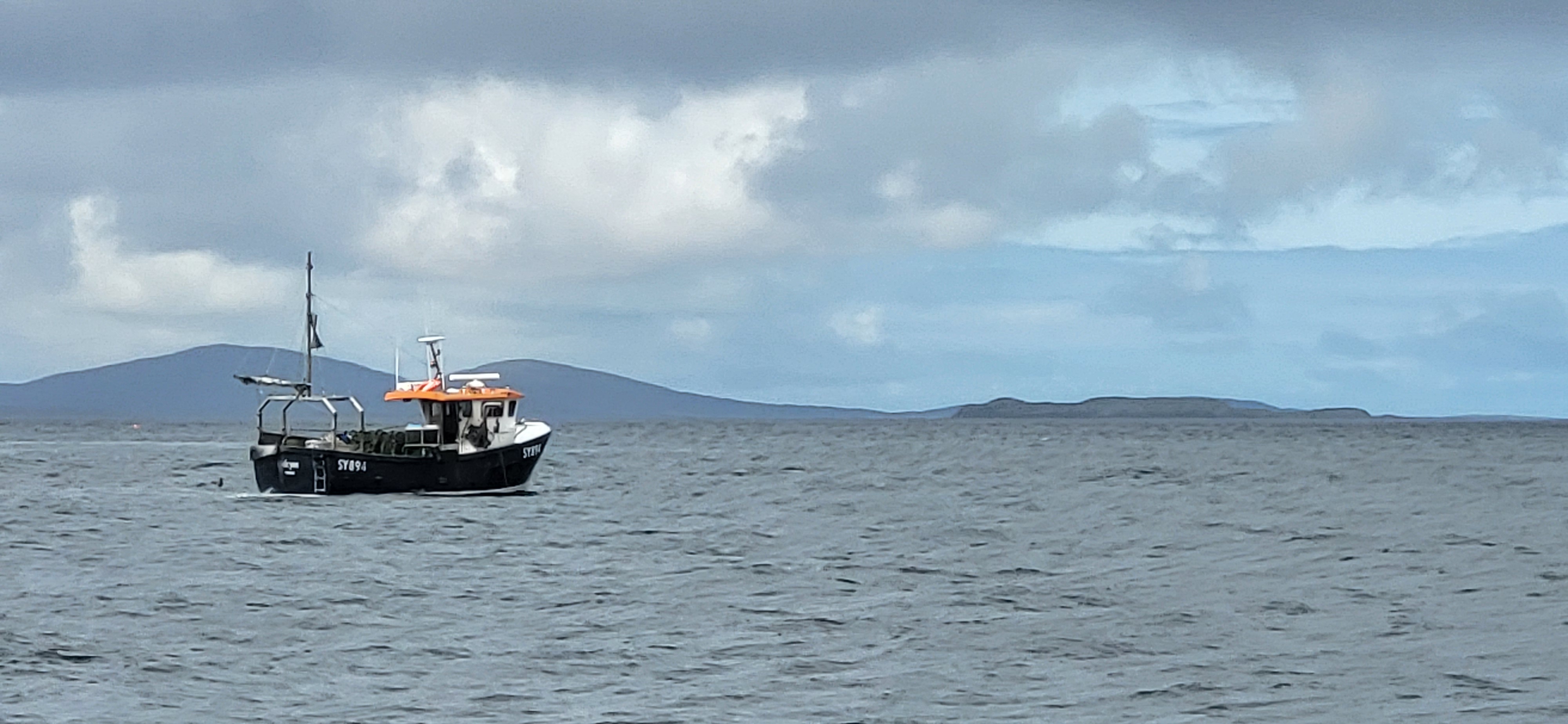
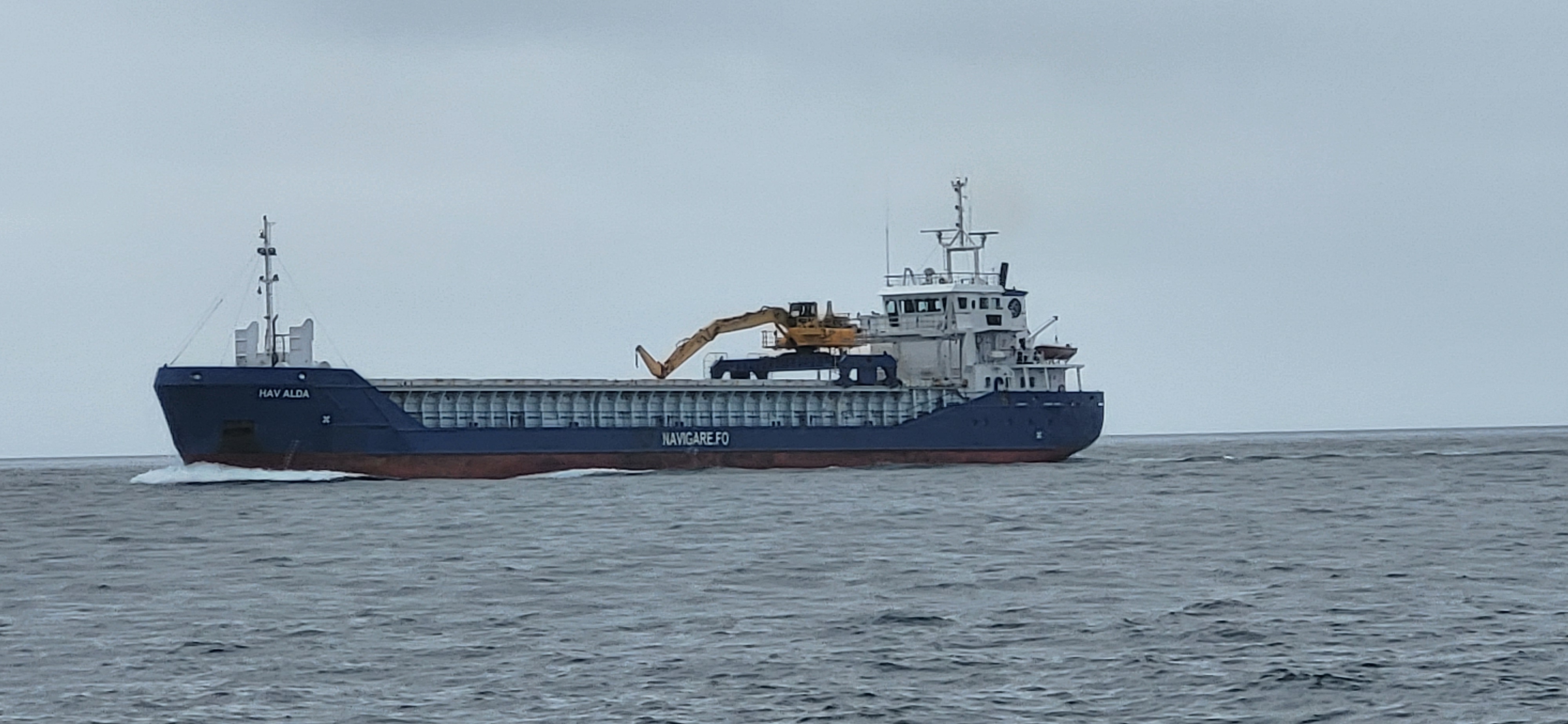
Traffic on the water was more varied than usual: the CalMac ferry pushing north on schedule, a couple of coasters, creel boats tending their lobster and crab pots, and a catamaran running north with the wind comfortably behind her — the easy option, and not remotely available to us.
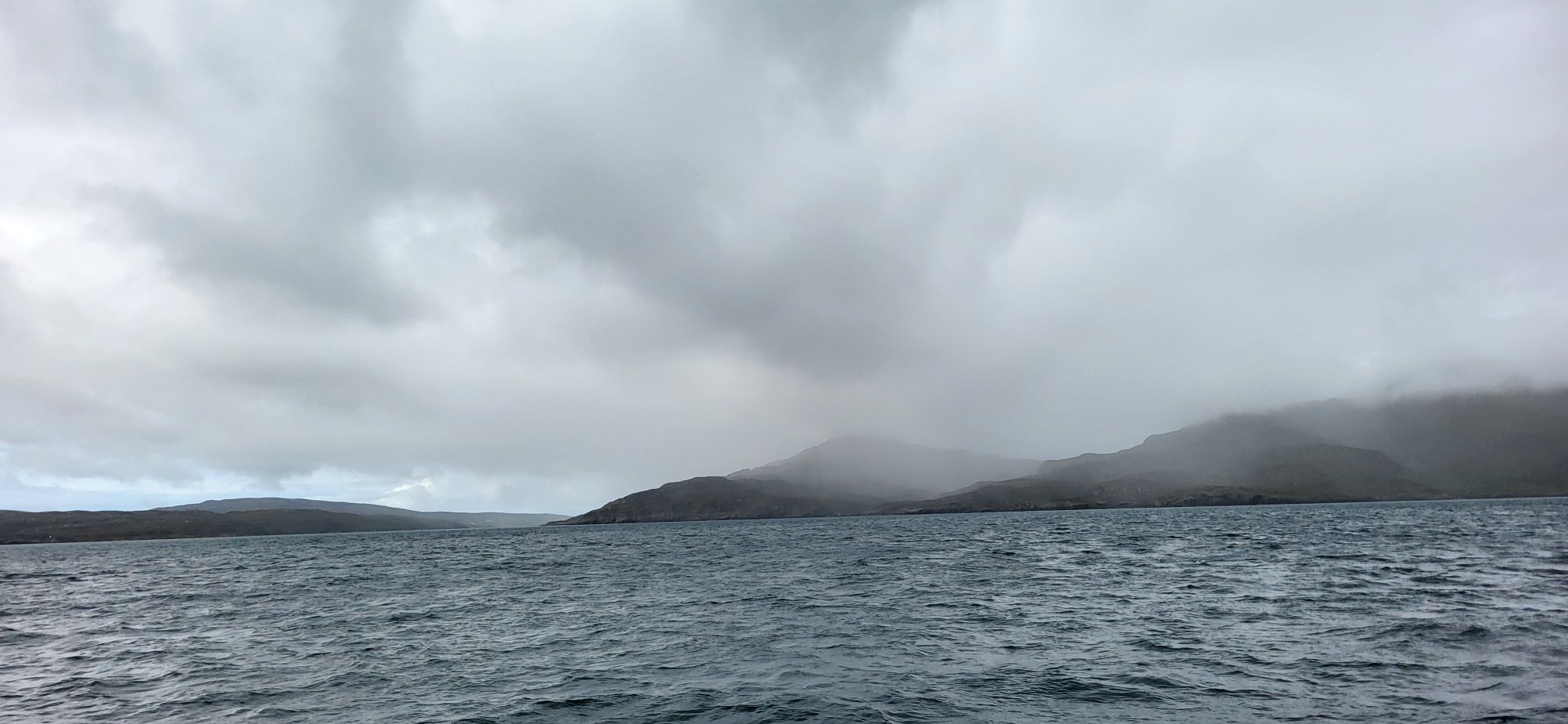
Early afternoon brought the promised veer to the west, and Heydays finally settled into proper sailing, alternating between glorious weak sunshine and squalls that reduced visibility to something approaching nothing, the coastline appearing and disappearing in turn.
A change of plan, and the Uists
With a helpful tide now under us, we were making good progress, and about an hour short of Loch Carnan, our nominal destination, we decided the conditions merited pressing on. The chart showed an anchorage in Loch Eynort a couple of hours further south, which would leave us within five hours’ sailing of Barra and slightly ahead of ourselves for once.
South Uist, whose coast we were now working down, was not an island we knew anything much about before this trip, a gap in our education we made some effort to remedy over the course of the afternoon. It turns out to be famous, among other things, as the birthplace of Flora MacDonald, who in 1745 rowed Bonnie Prince Charlie away from these shores disguised as her Irish maid, Betty Burke, a story we vaguely recognised from school history, and a very incomplete set of lyrics to ‘speed bonnie boat…’ without ever quite placing it here. It is a slightly improbable thing to learn while sailing past the very coastline in question…
We found Loch Eynort entirely empty of other boats, and set about identifying the best shelter from the westerly still blowing down its length. The shoreline here shelves quickly and is thoroughly unforgiving of complacency; our preferred anchoring depth of around 10 metres brought us in closer to the rocks than we would normally choose, and the alternative, anchoring in deeper water with a length of warp bent onto the chain, we set aside in favour of a first attempt on chain alone, motoring around the loch to assess the holding before committing.
In 10 metres we let go the anchor and watched Heydays settle back onto her chain until it came bar taut, always the reassuring moment, the point at which a length of galvanised steel chain either proves its worth or doesn’t. We had veered enough chain to allow for a further two metres of tidal rise, putting us at a scope of something over four to one, comfortably beyond the minimum and enough to sleep on without excessive vigilance. We checked the chart again for the state of the rocks at low water, satisfied ourselves that we had room to swing, and settled in for an evening with no other sign of human presence anywhere in view, not even, remarkably for these parts, a sheep.
There is a particular joy to anchoring somewhere entirely alone. It is not that we object to company; simply that such places are increasingly rare in our crowded corner of the world, and worth noting when they present themselves. We set anchor alarms nonetheless, and woke a couple of times through the night to check that all remained as we had left it, a small price on an otherwise undisturbed peace.