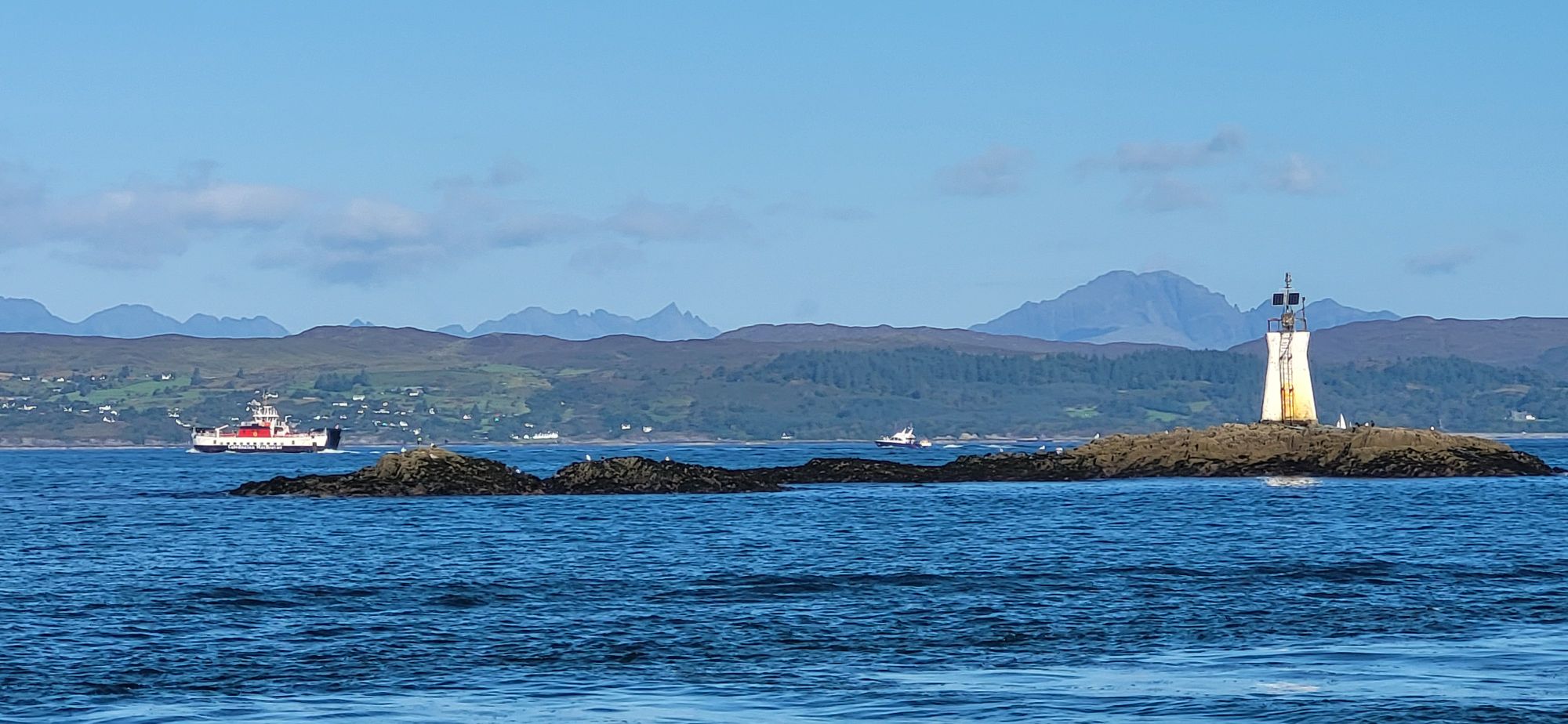
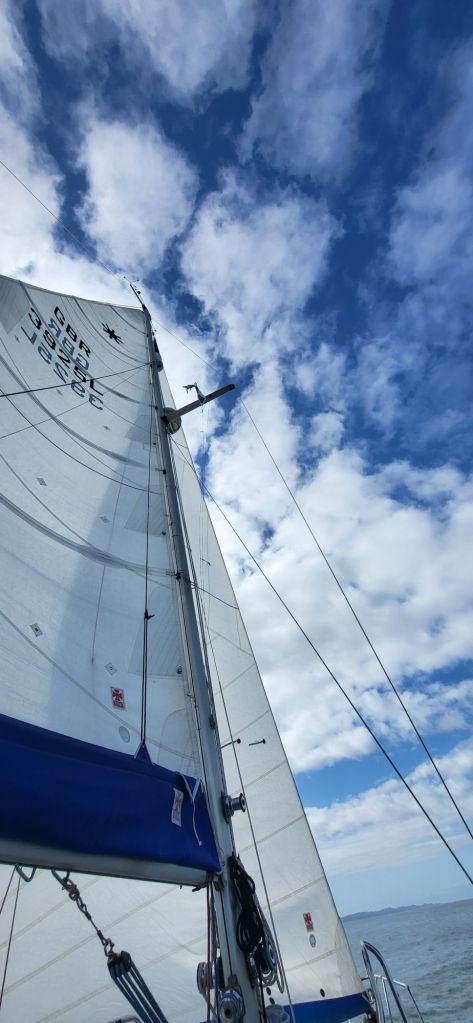
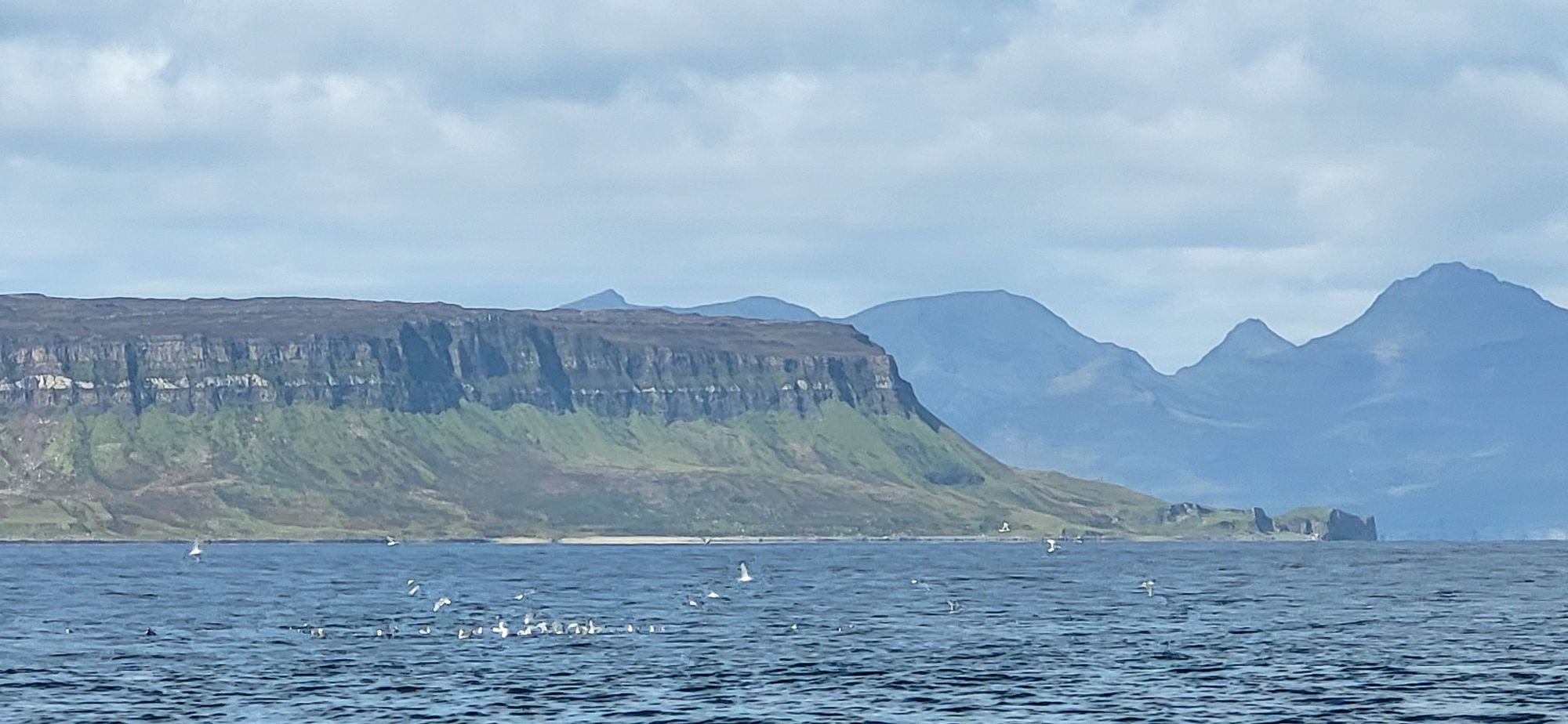
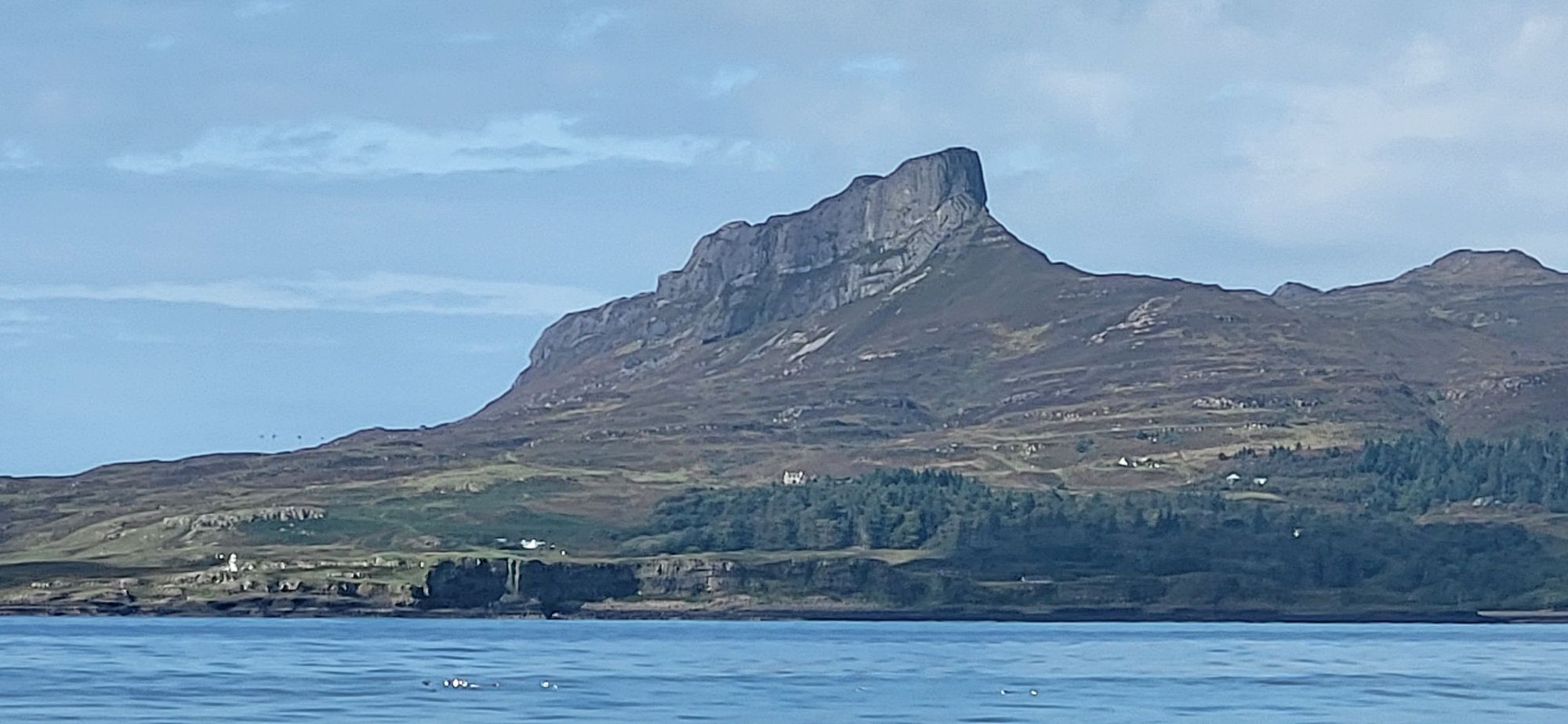
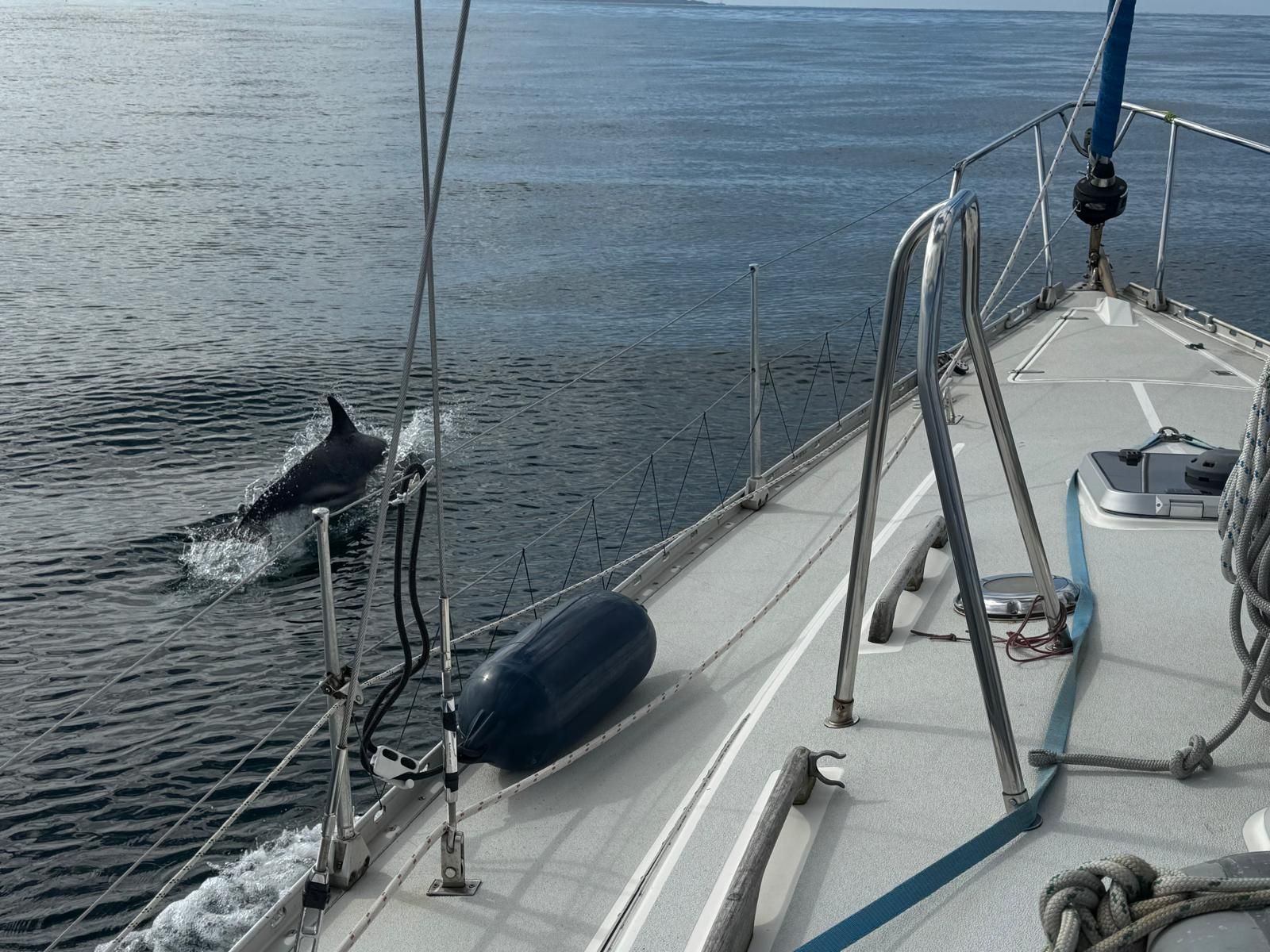
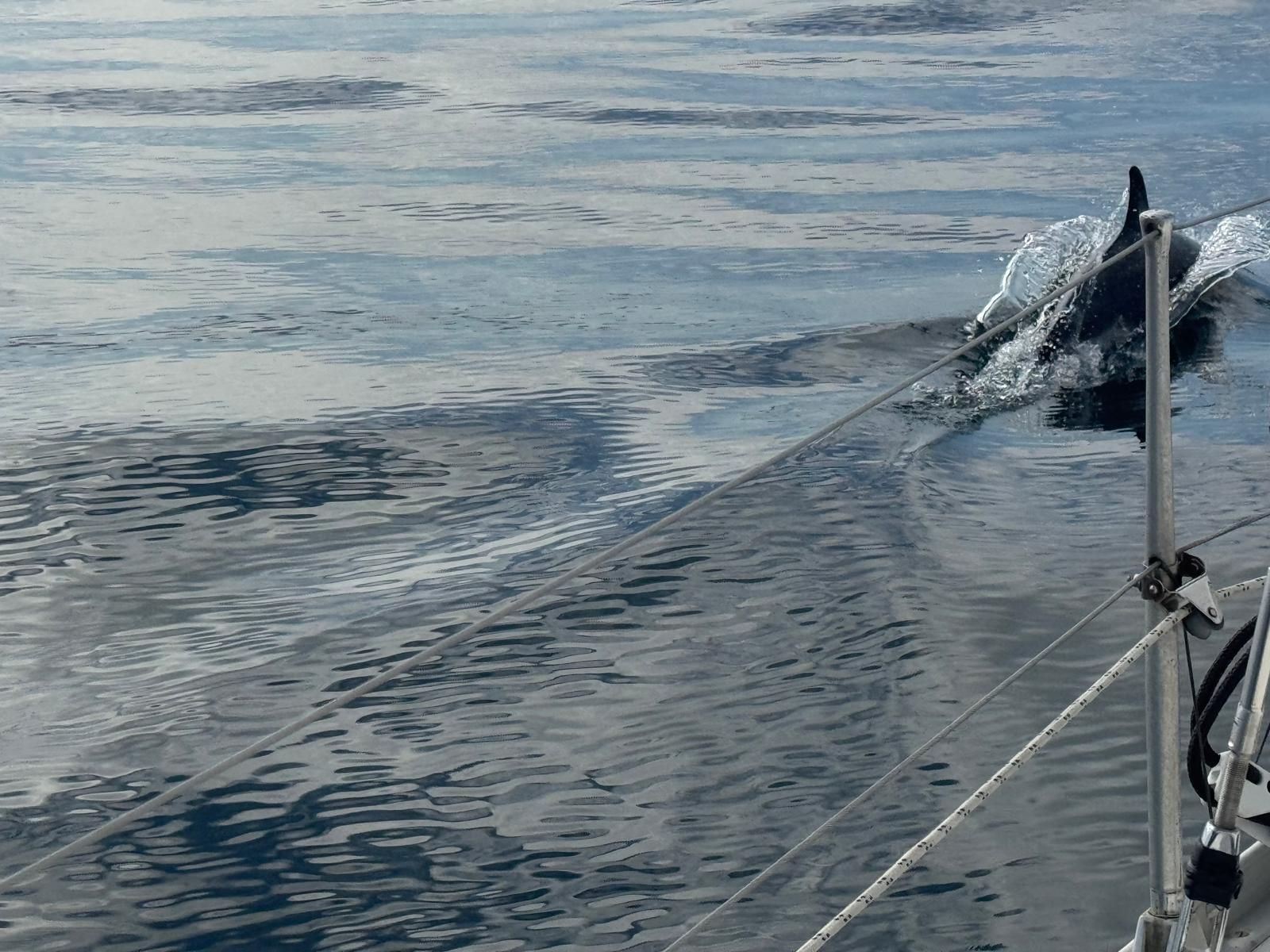
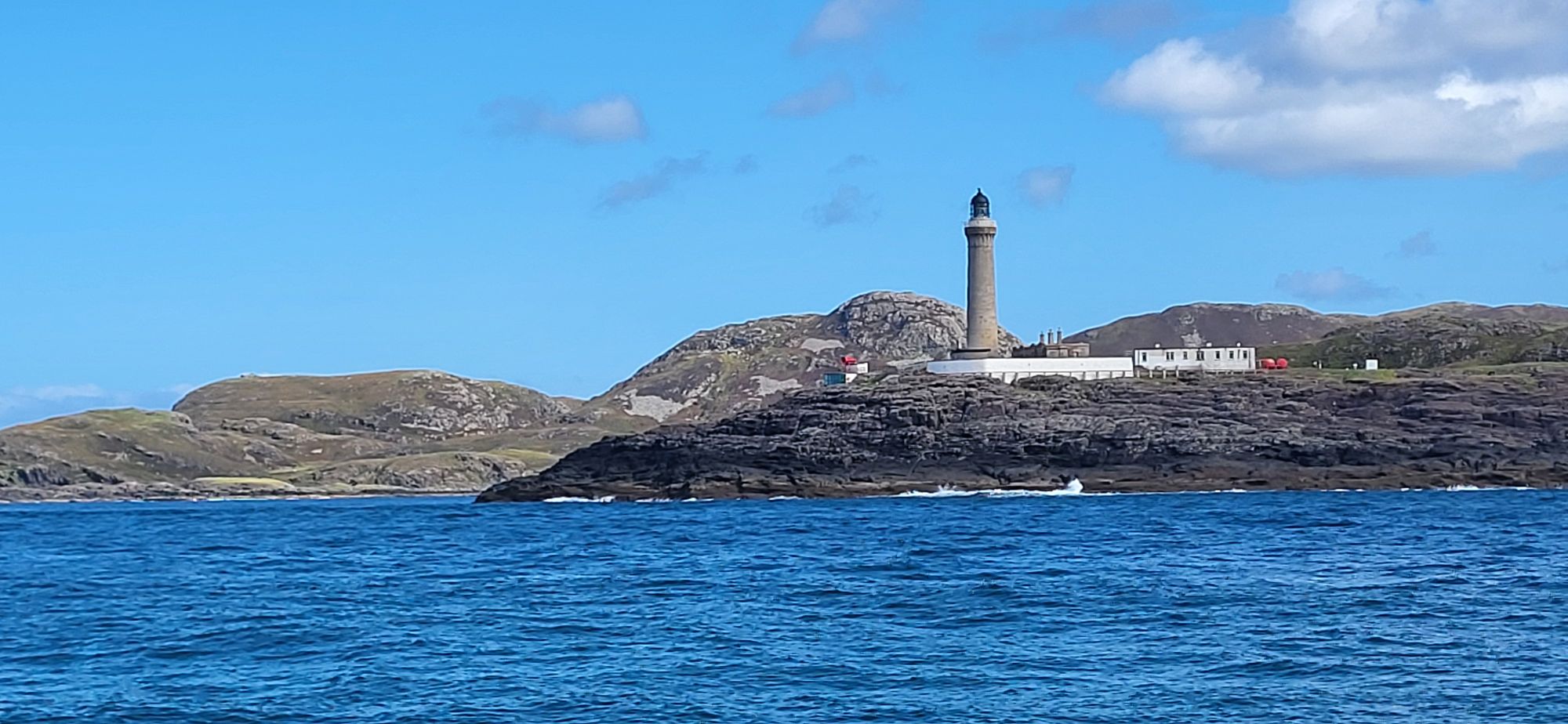
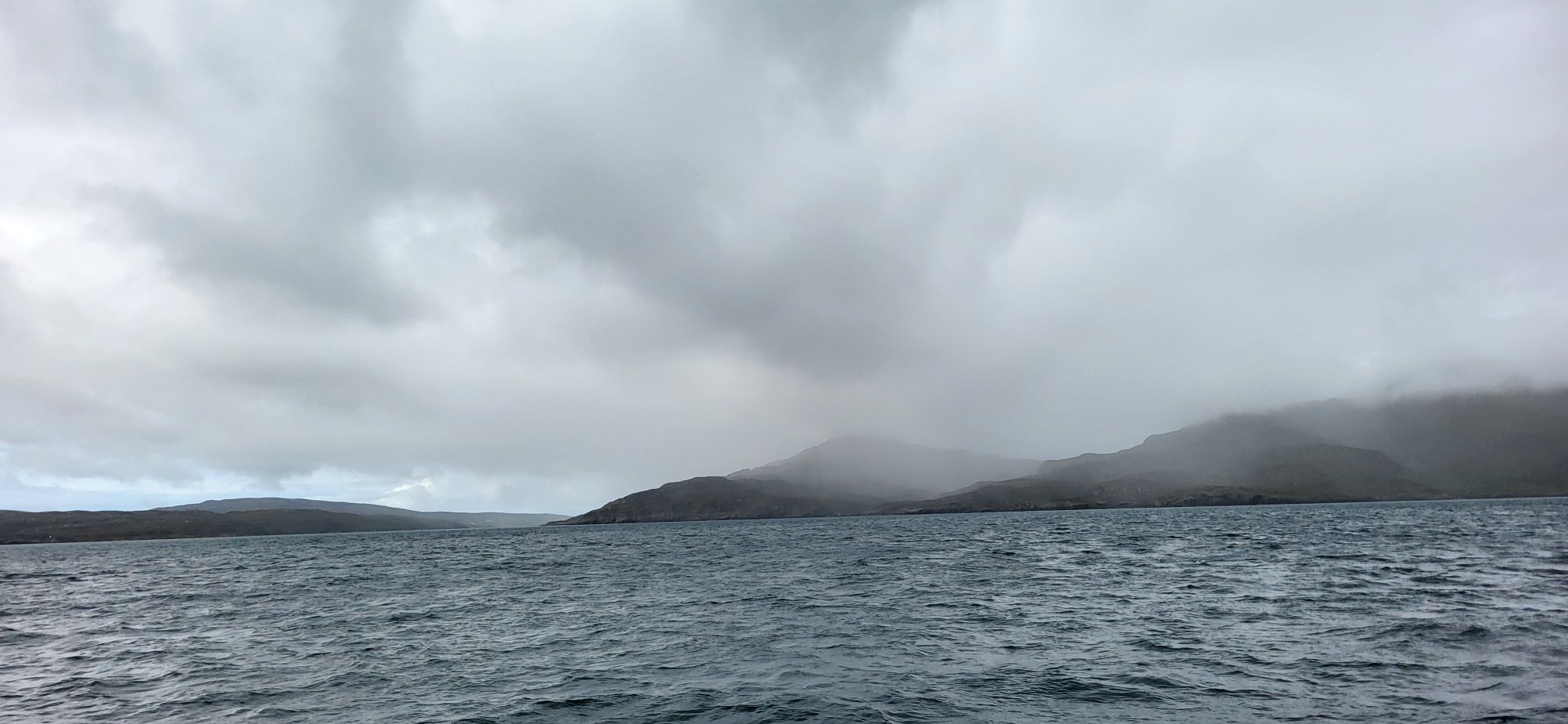
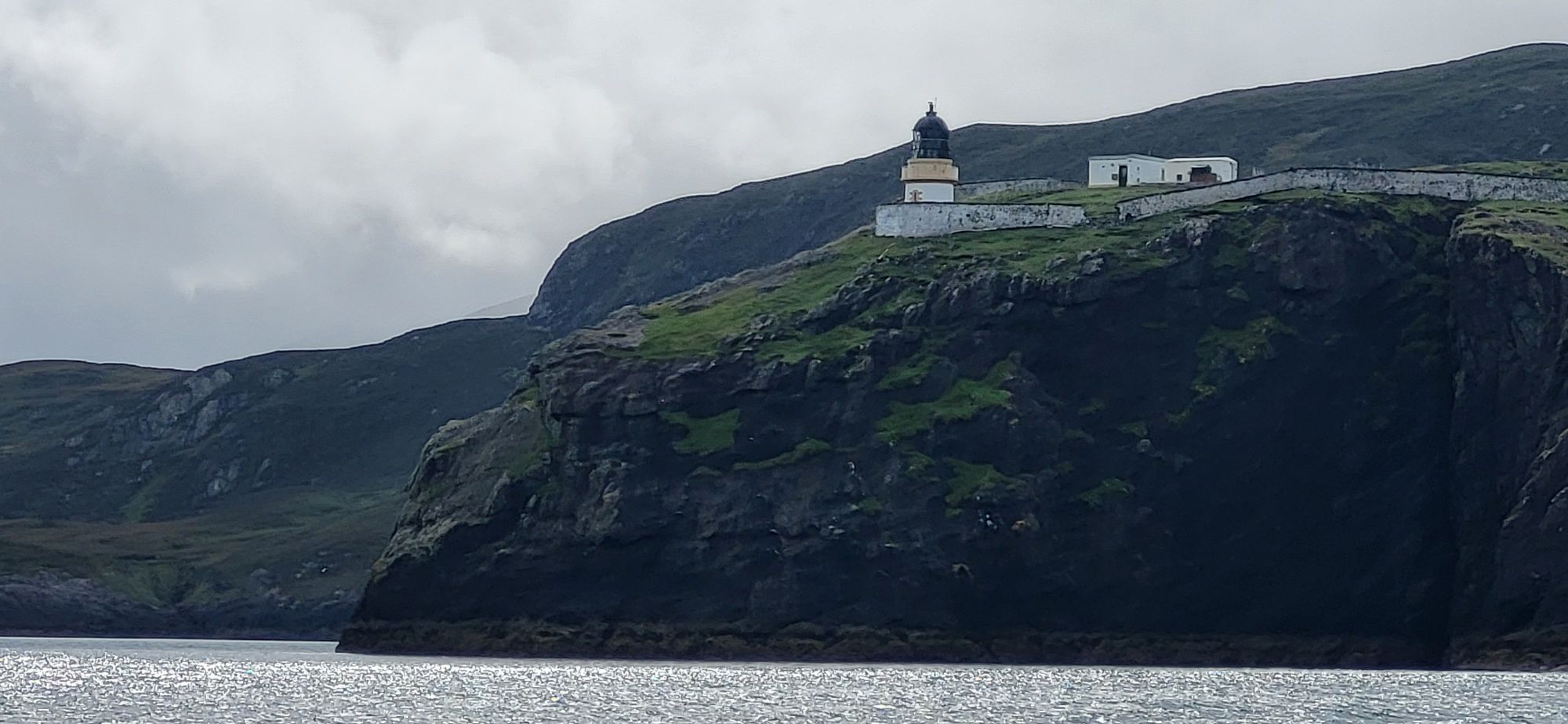
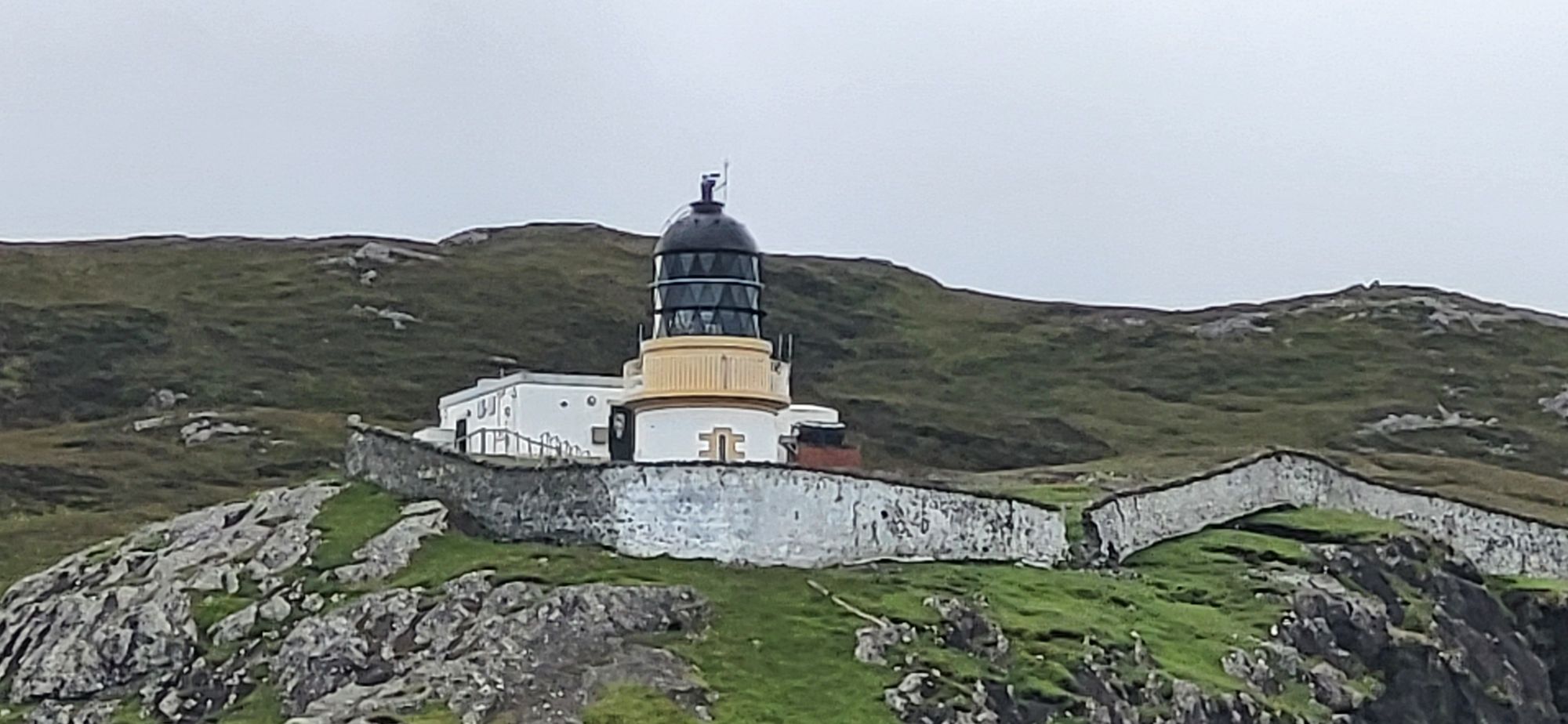
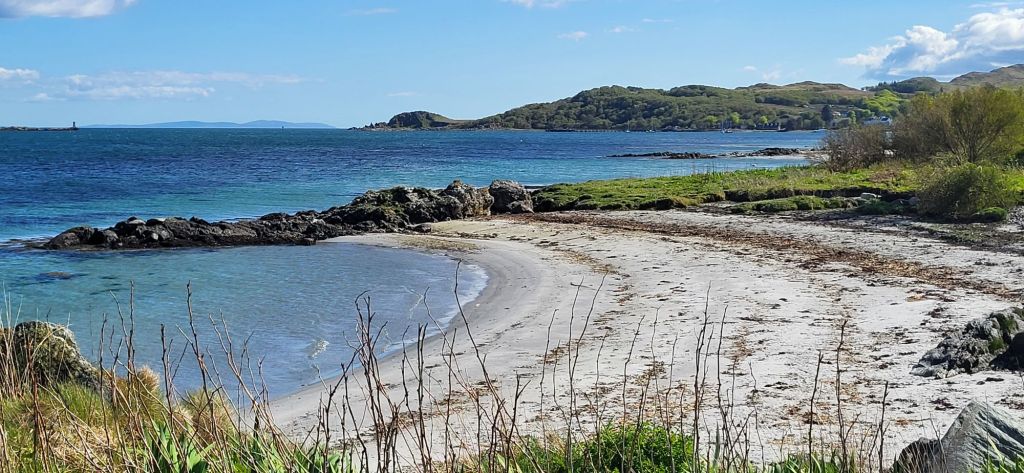
The middle-of-the-night alarm is one of those unwelcome but necessary disciplines of anchoring somewhere remote …up to check the transits still line up and that Heydays hasn’t decided to go for a wander of her own. As it turned out, our concern was entirely wasted…she sat rock solid all night, unmoved and unmoving, while we lost sleep on her behalf.
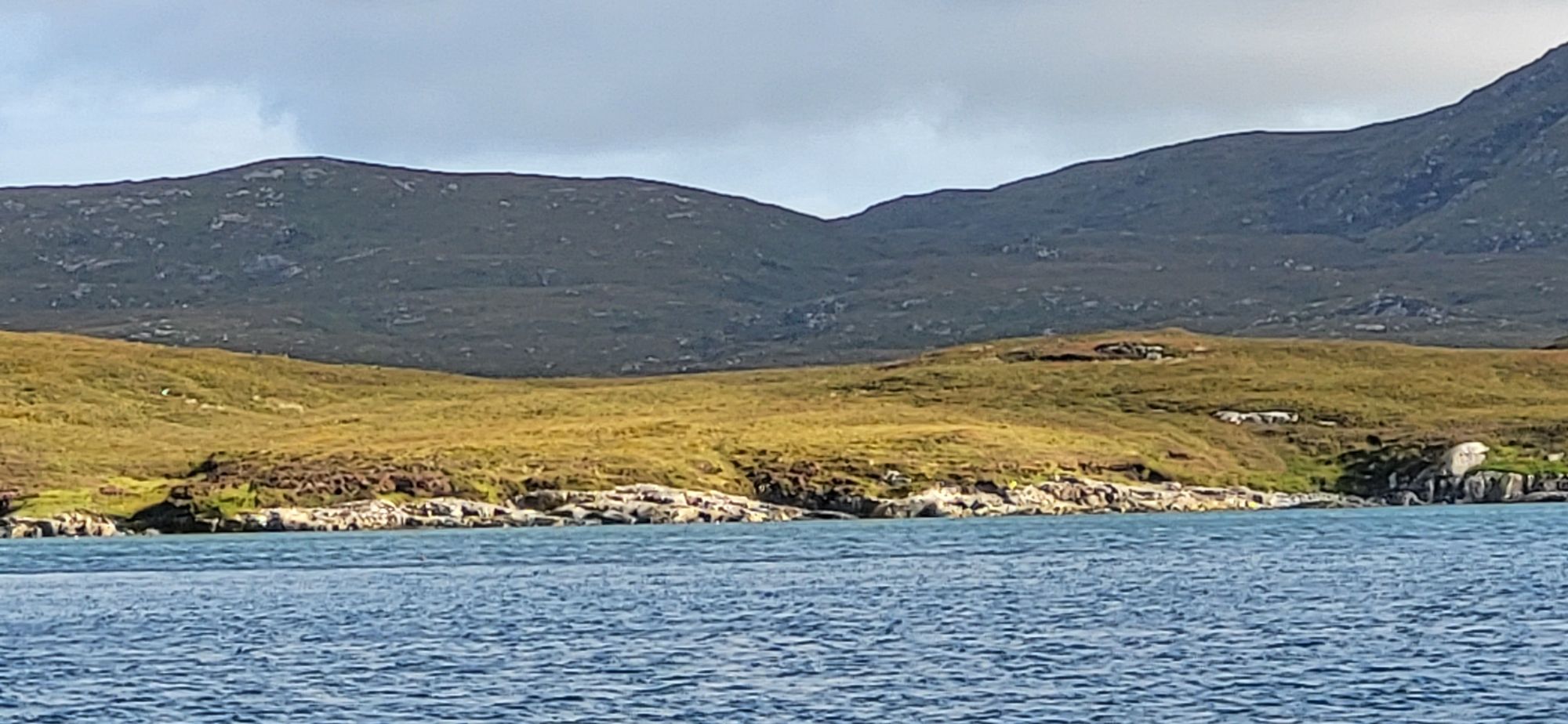
Morning brought glorious compensation, a loch entirely deserted but for us, lit up in early sunshine. There is something properly magical about that kind of isolation, not another soul in sight, and it seemed almost a small betrayal to be thinking about leaving. But time was pressing, and Barra, one of the southernmost islands of the Hebrides, was calling, so coffee was made in mugs, breakfast promised for underway, and Heydays readied for the day. We weighed anchor in the early light, hauling up a good quantity of South Uist mud in the process, almost certainly the only part of the island we will actually touch, which seems a shame.
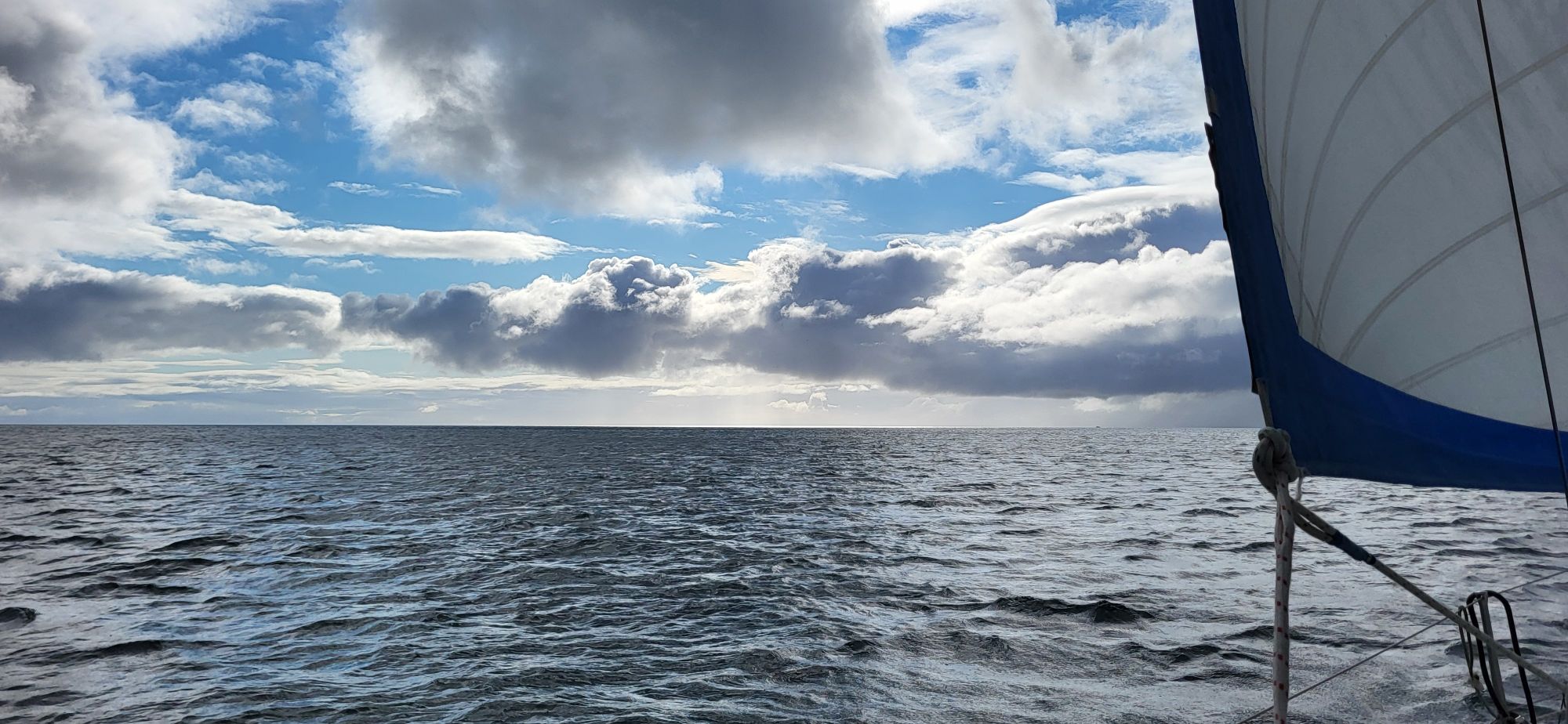
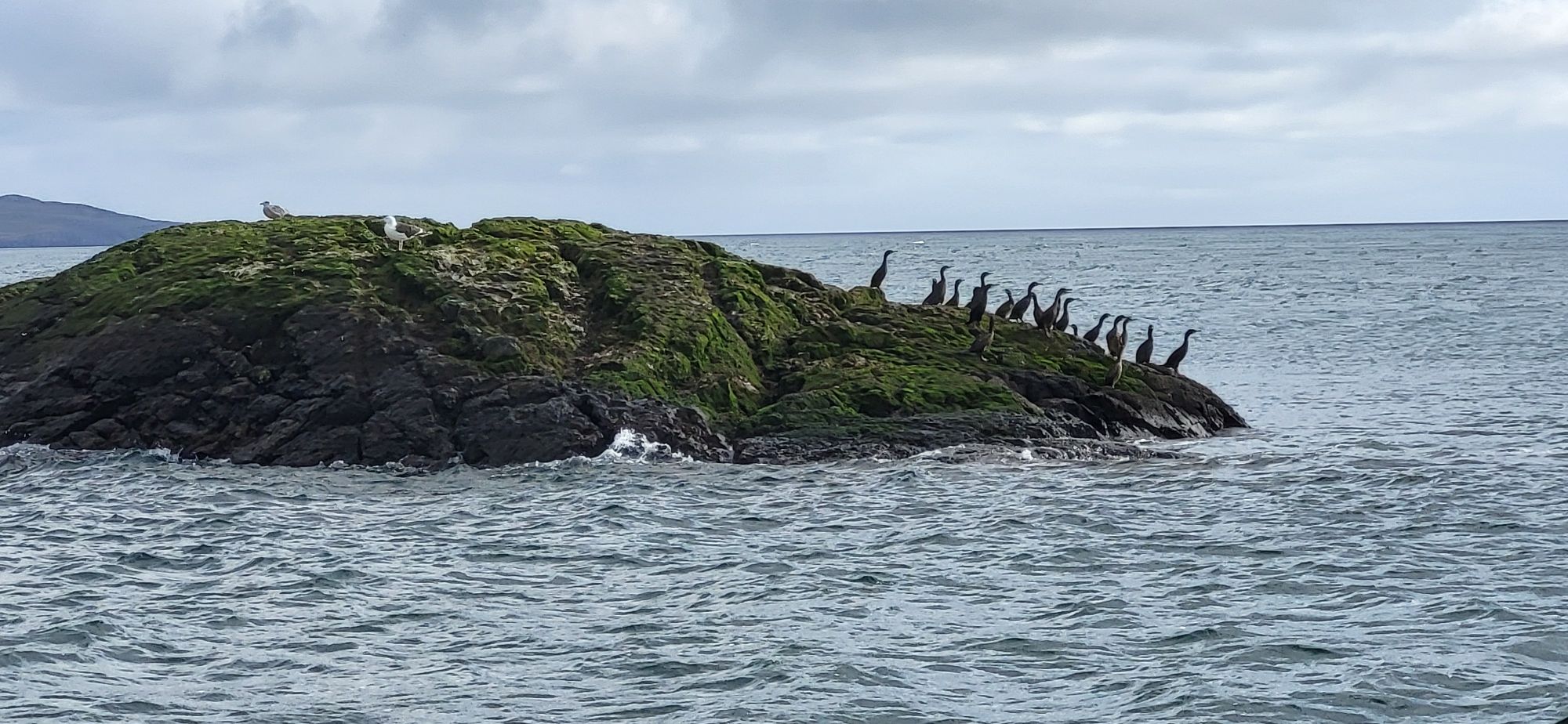
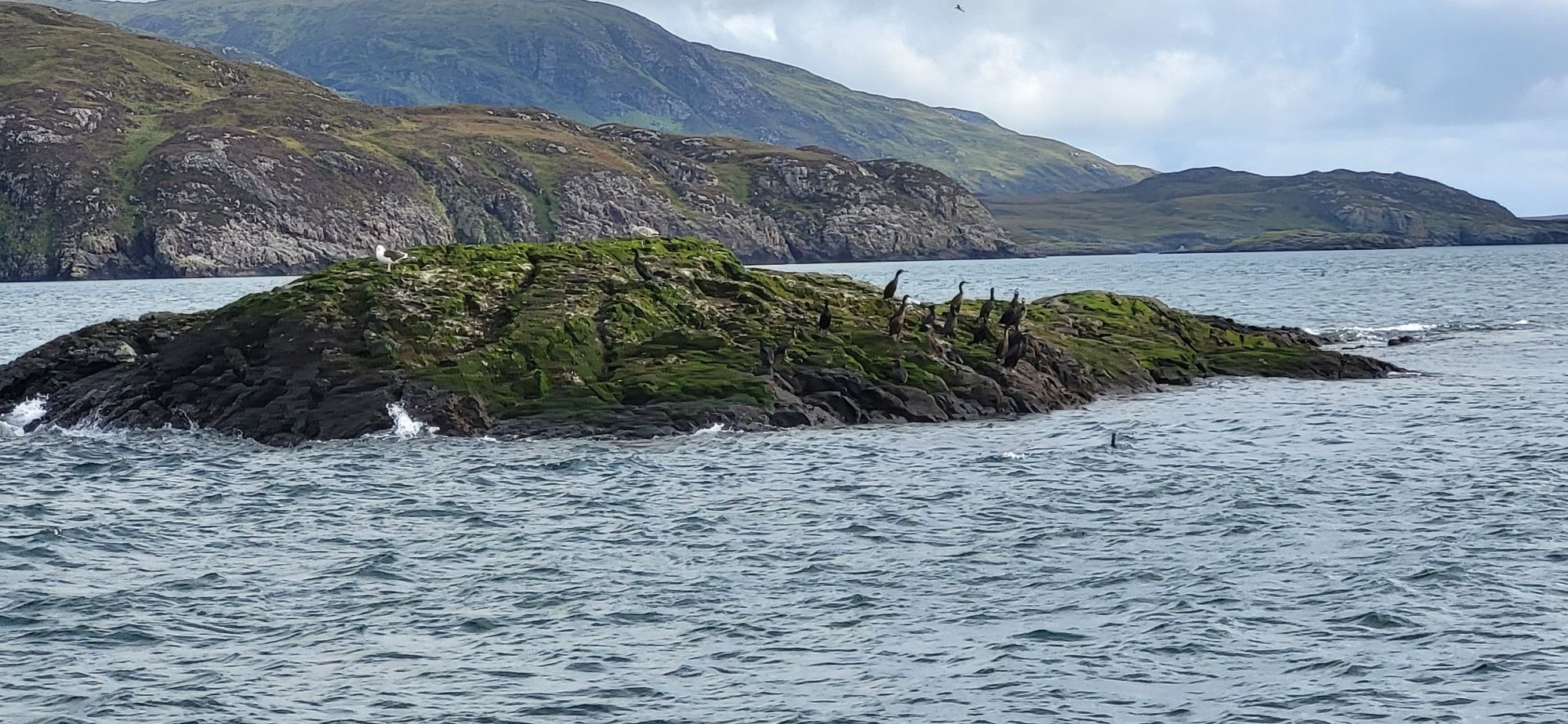
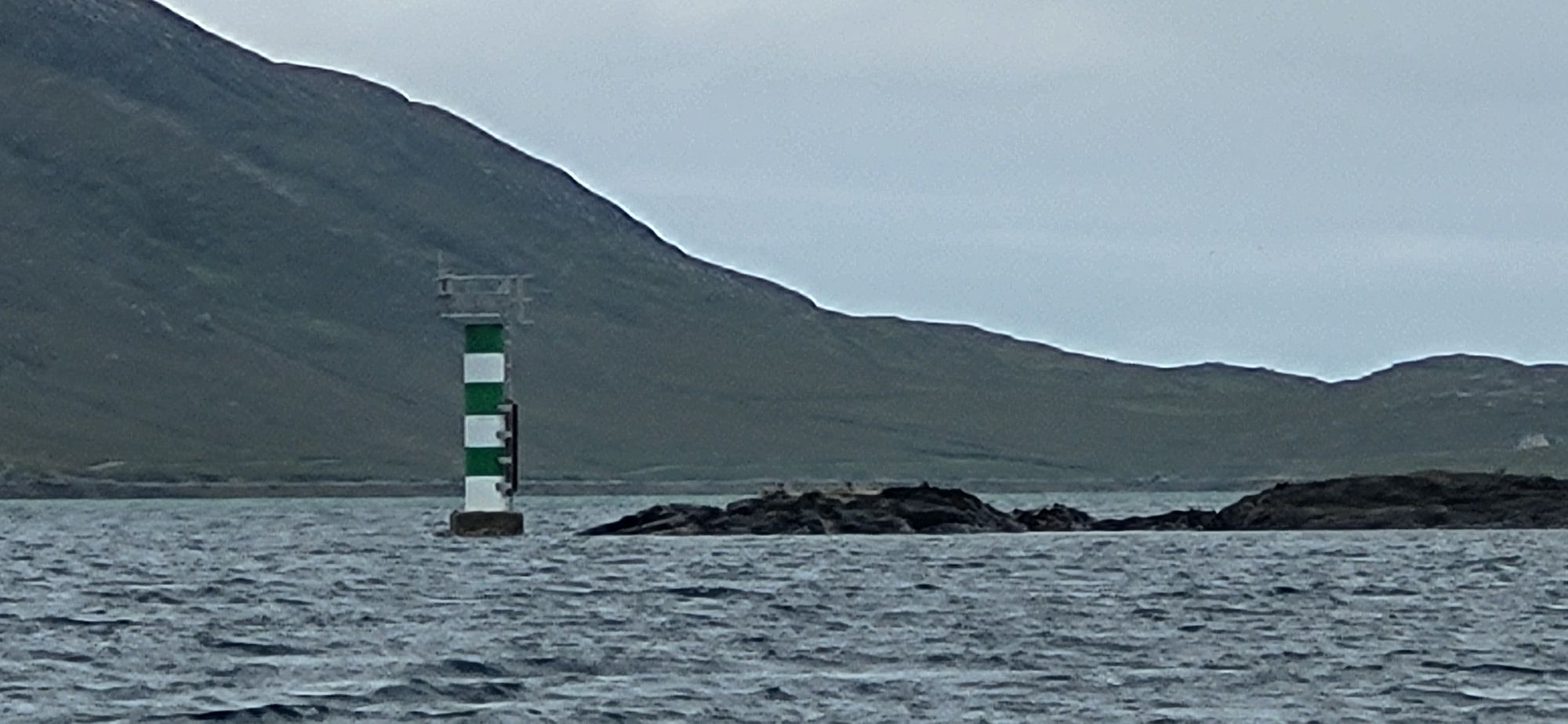
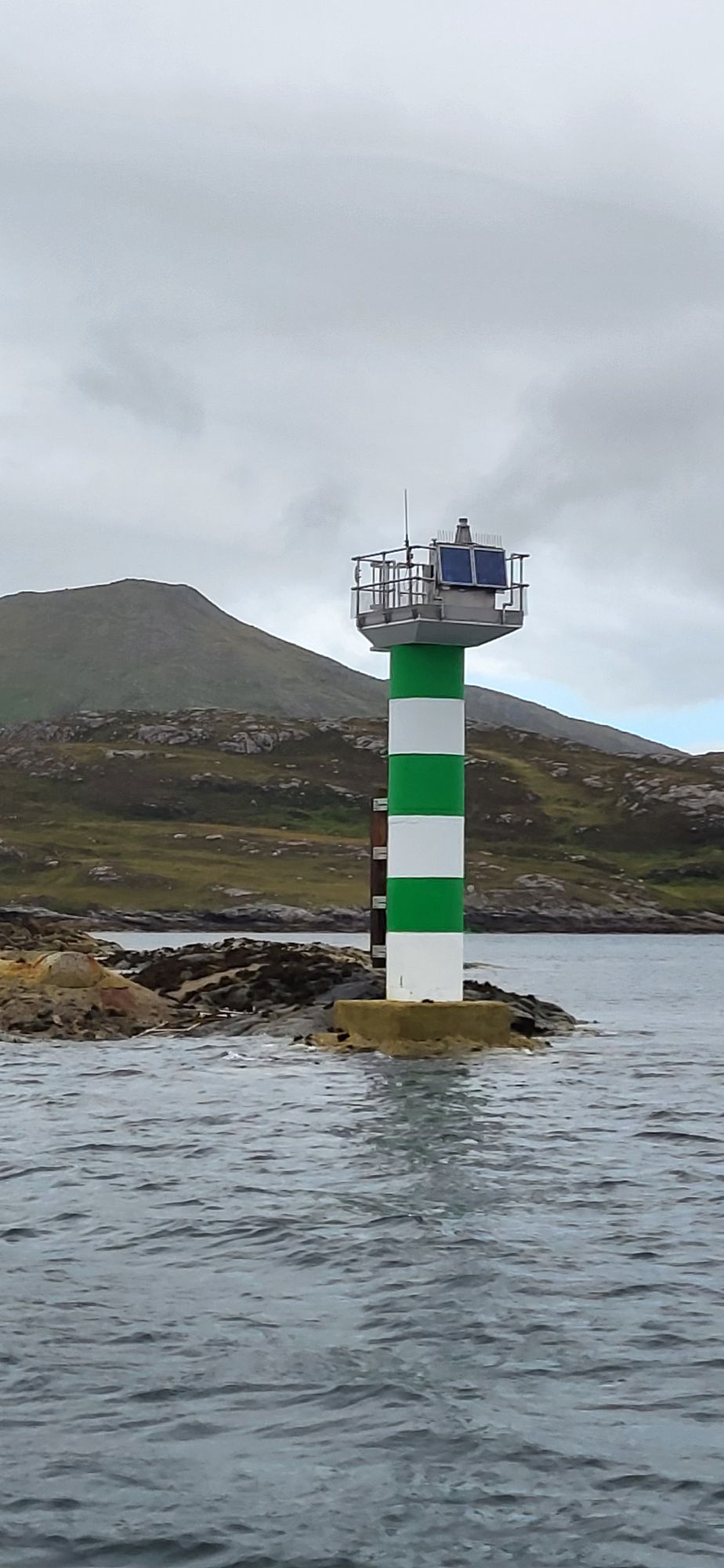
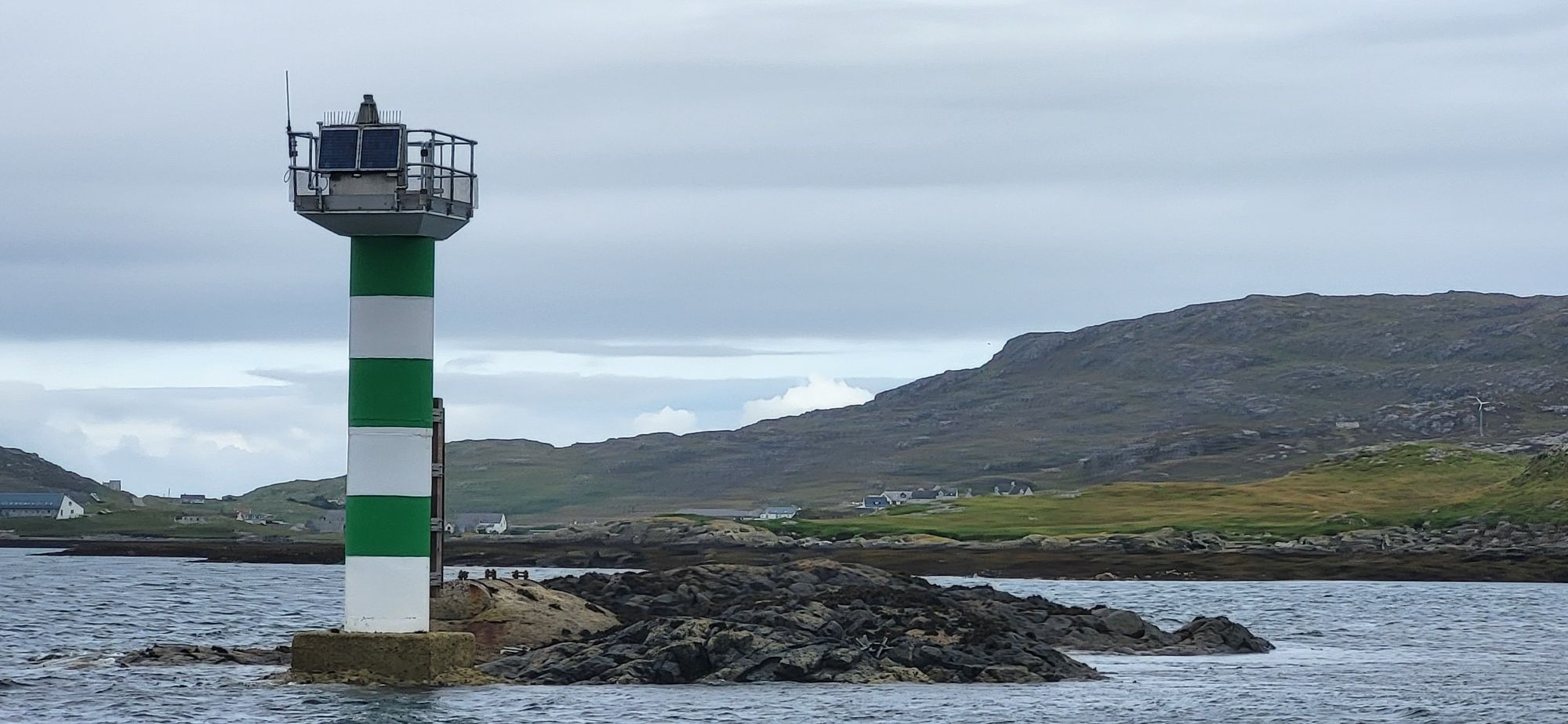
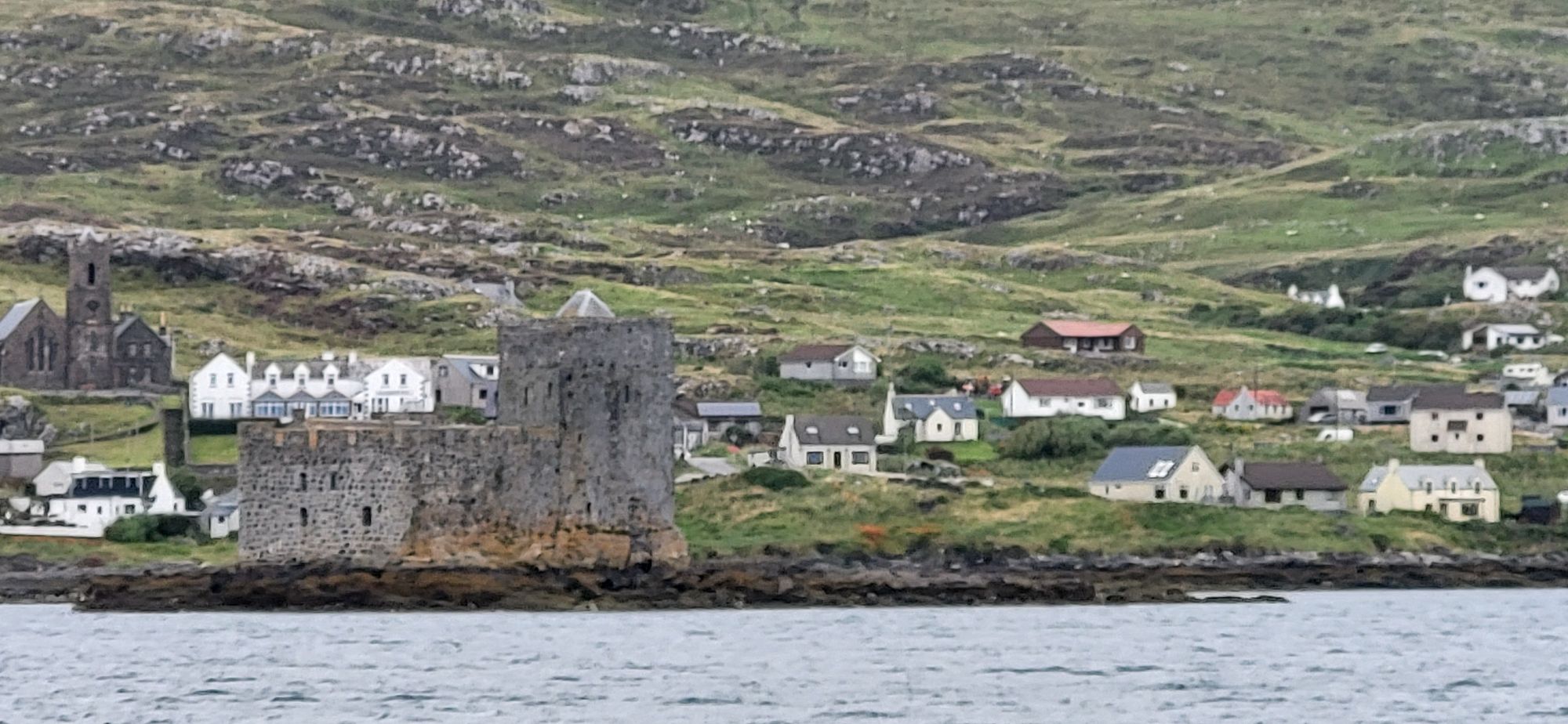
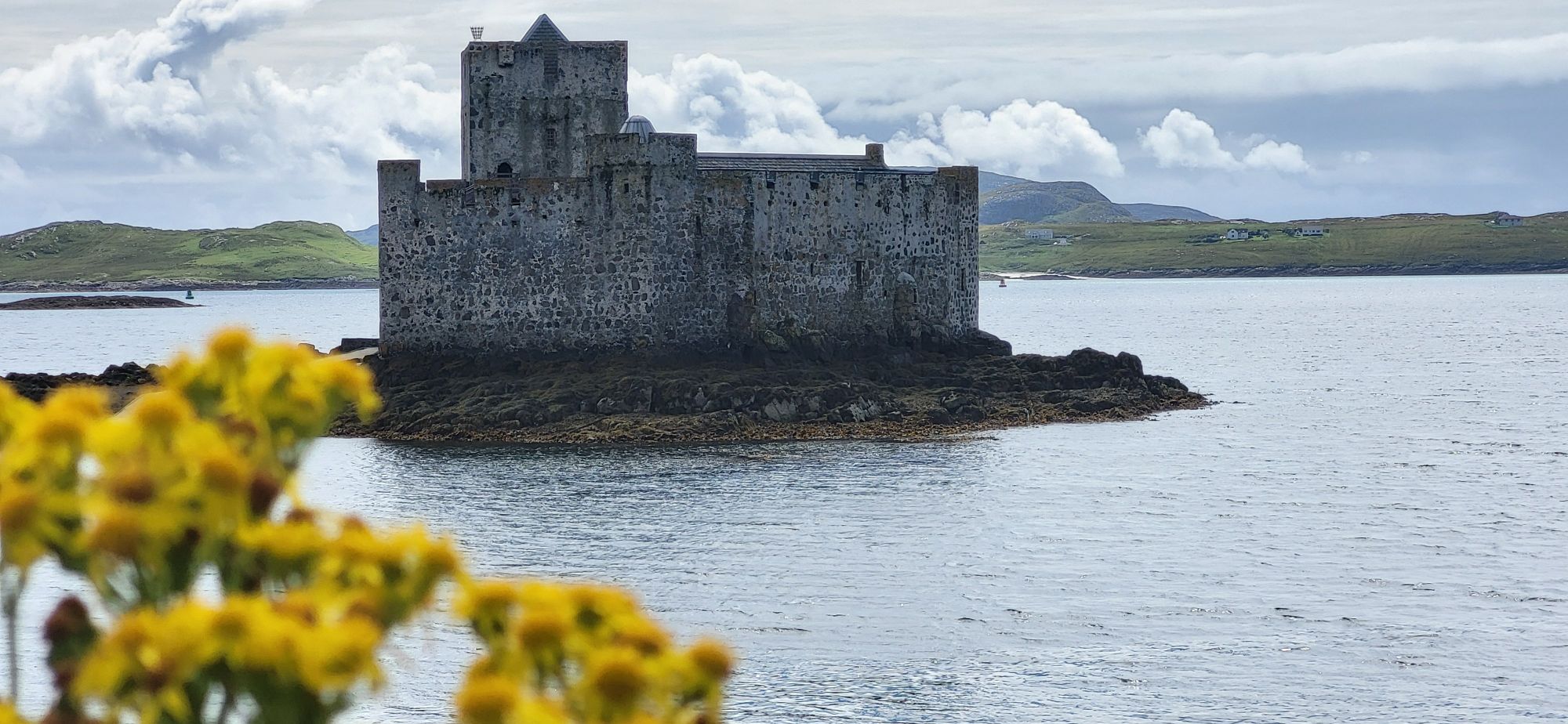
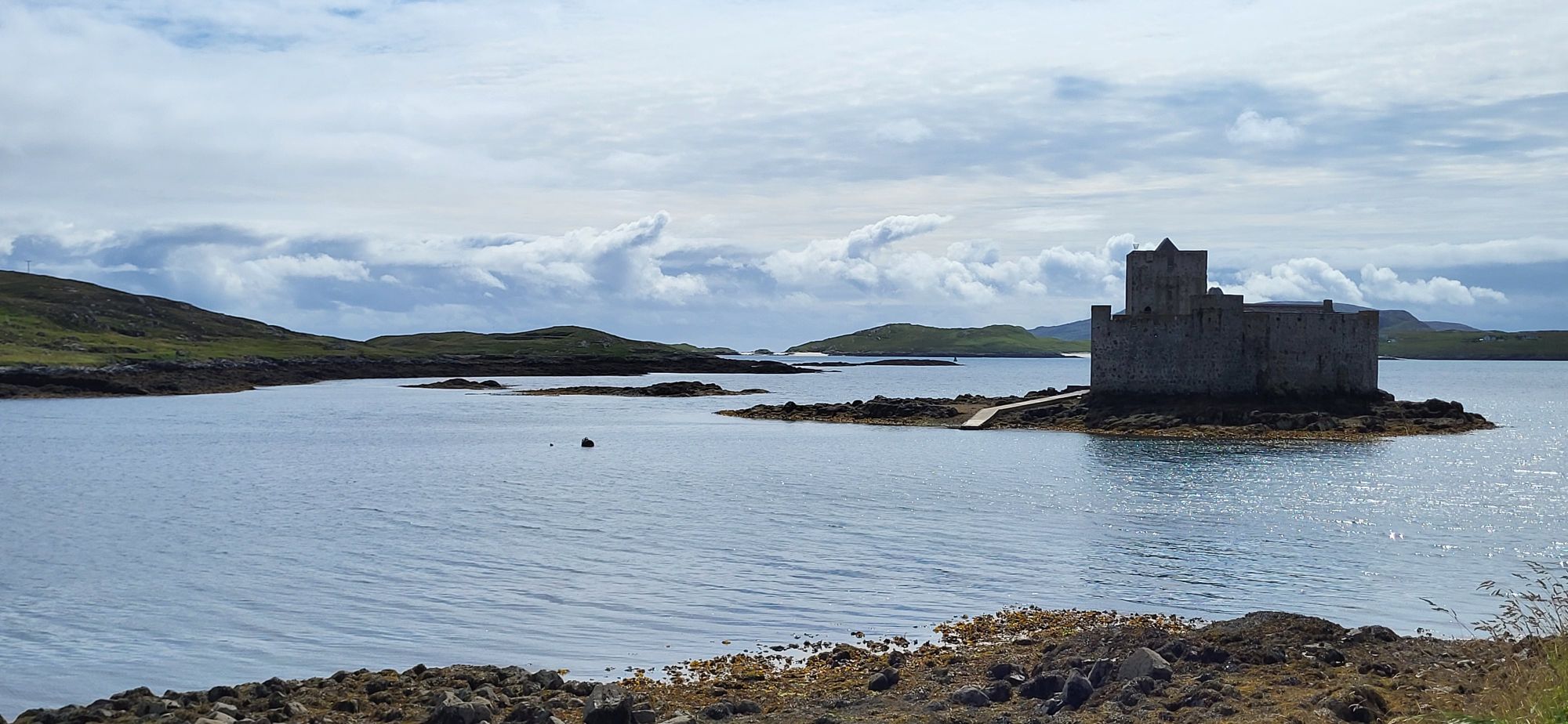
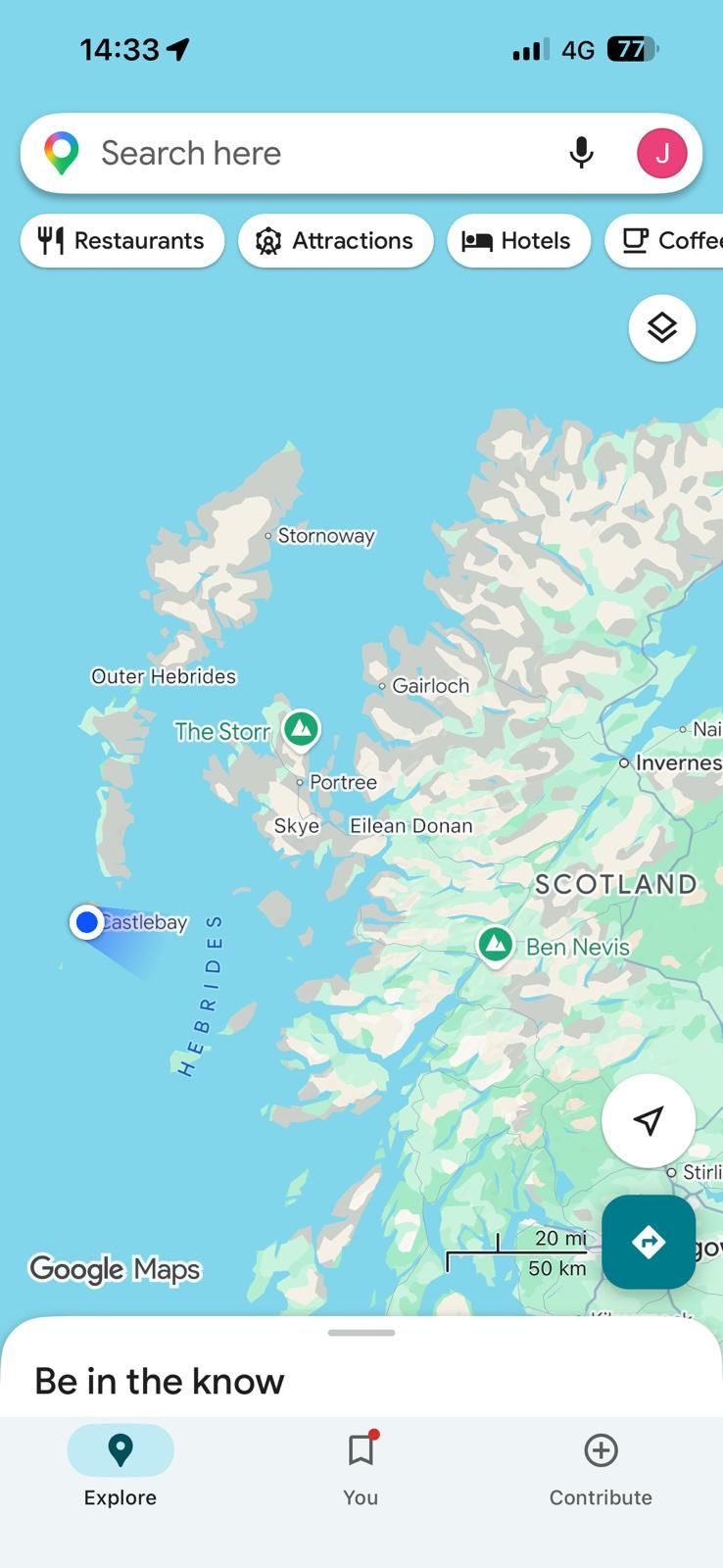
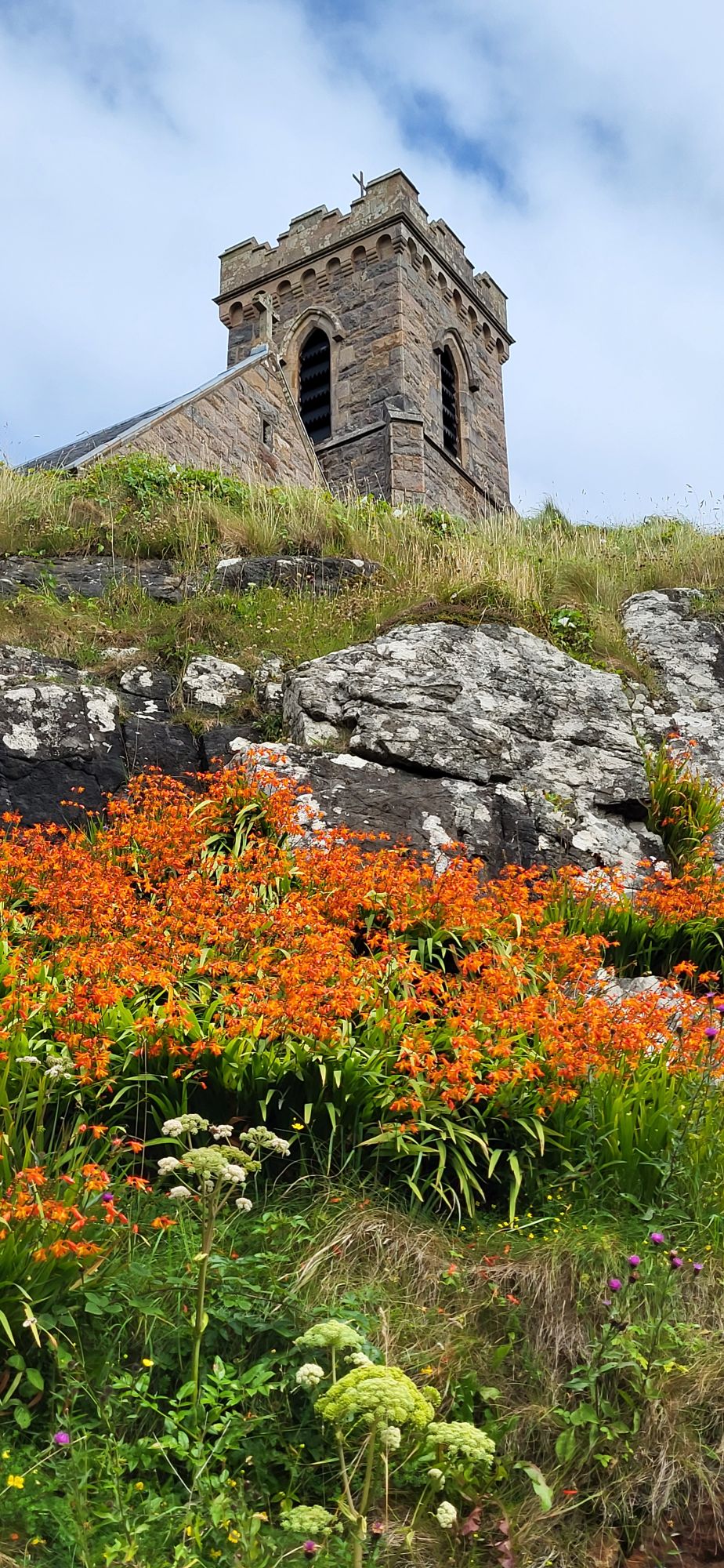
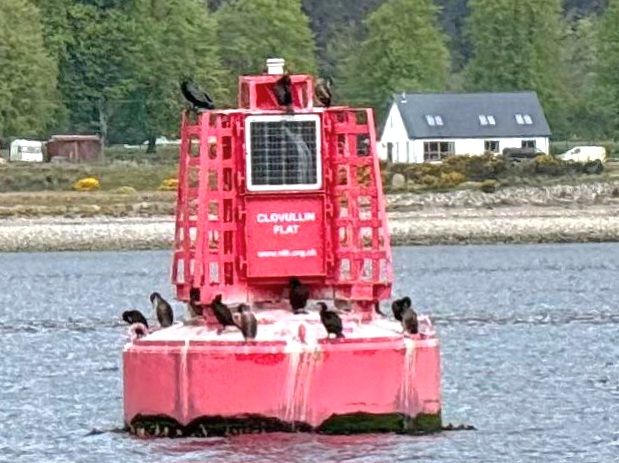
Out of the loch and past an island of disgruntled cormorants, we turn south. The wind is kind enough to stay in the west and give us a fine sail past South Uist and Benbecula. Then, at last, Barra itself, and the business of finding the entrance to Castlebay, a channel with enough rocks scattered about it to concentrate the mind. The name, it turns out, is not merely decorative…there is indeed a castle sitting right in the middle of the bay. Kisimul Castle (we learn later!) is Norse in origin, the MacNeils’ seat for several centuries, and a reminder that these waters were Norwegian long before they were Scottish.
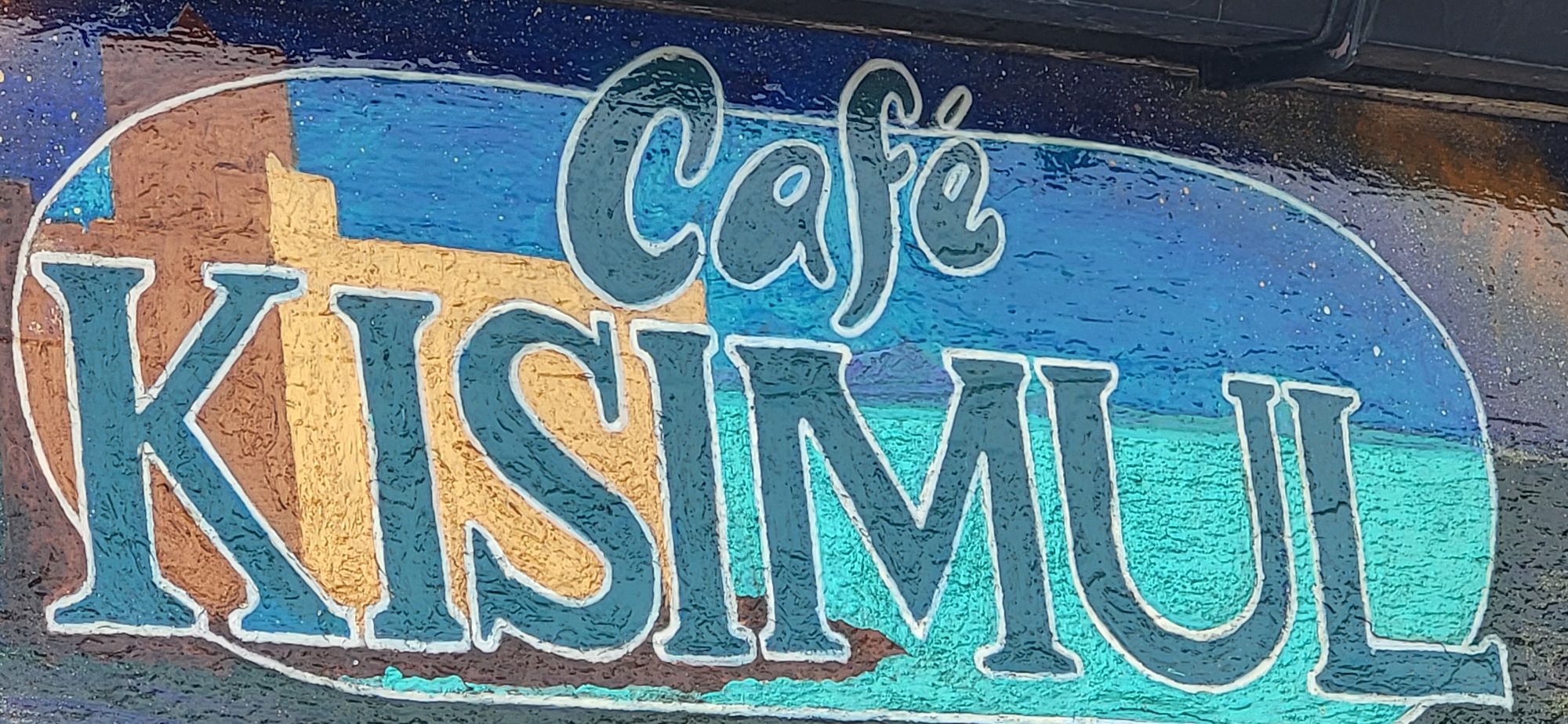
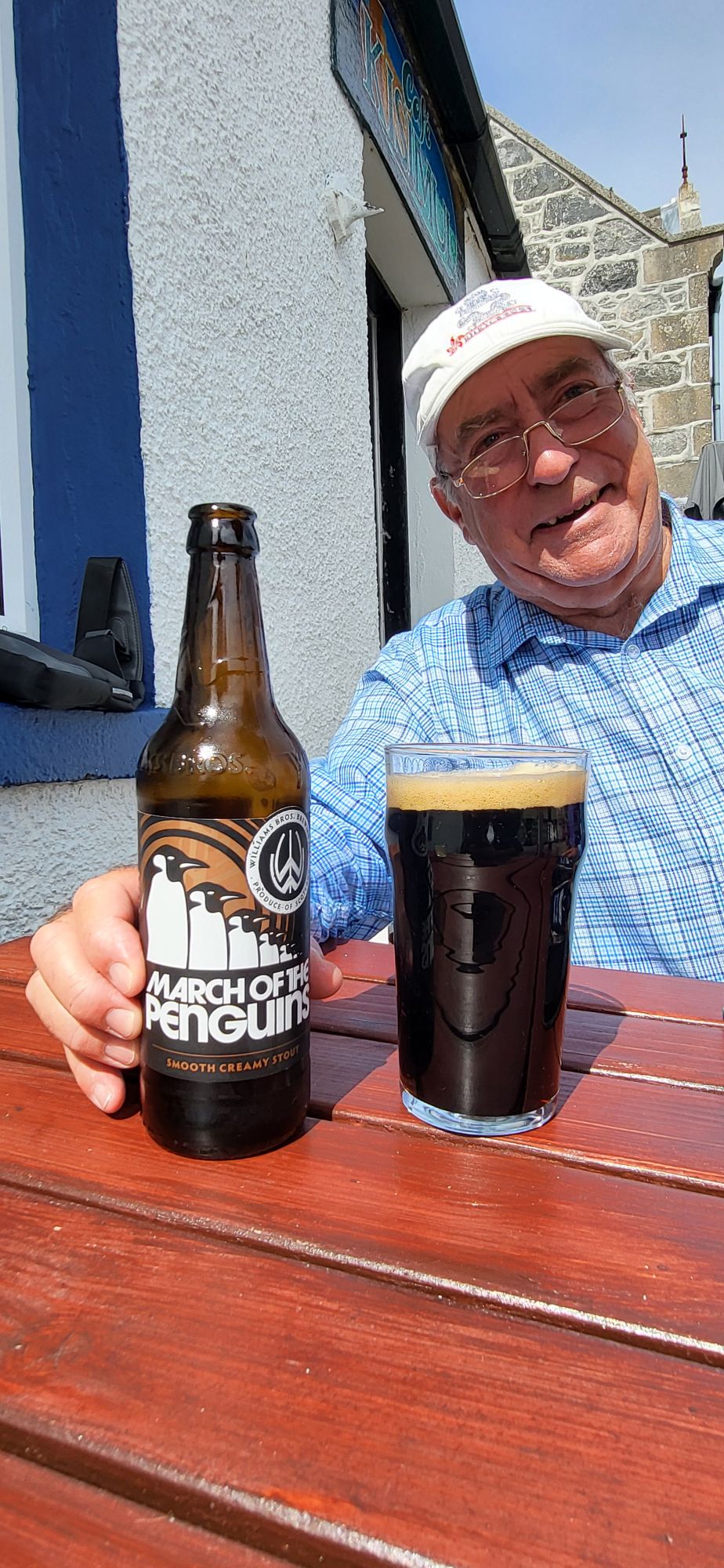
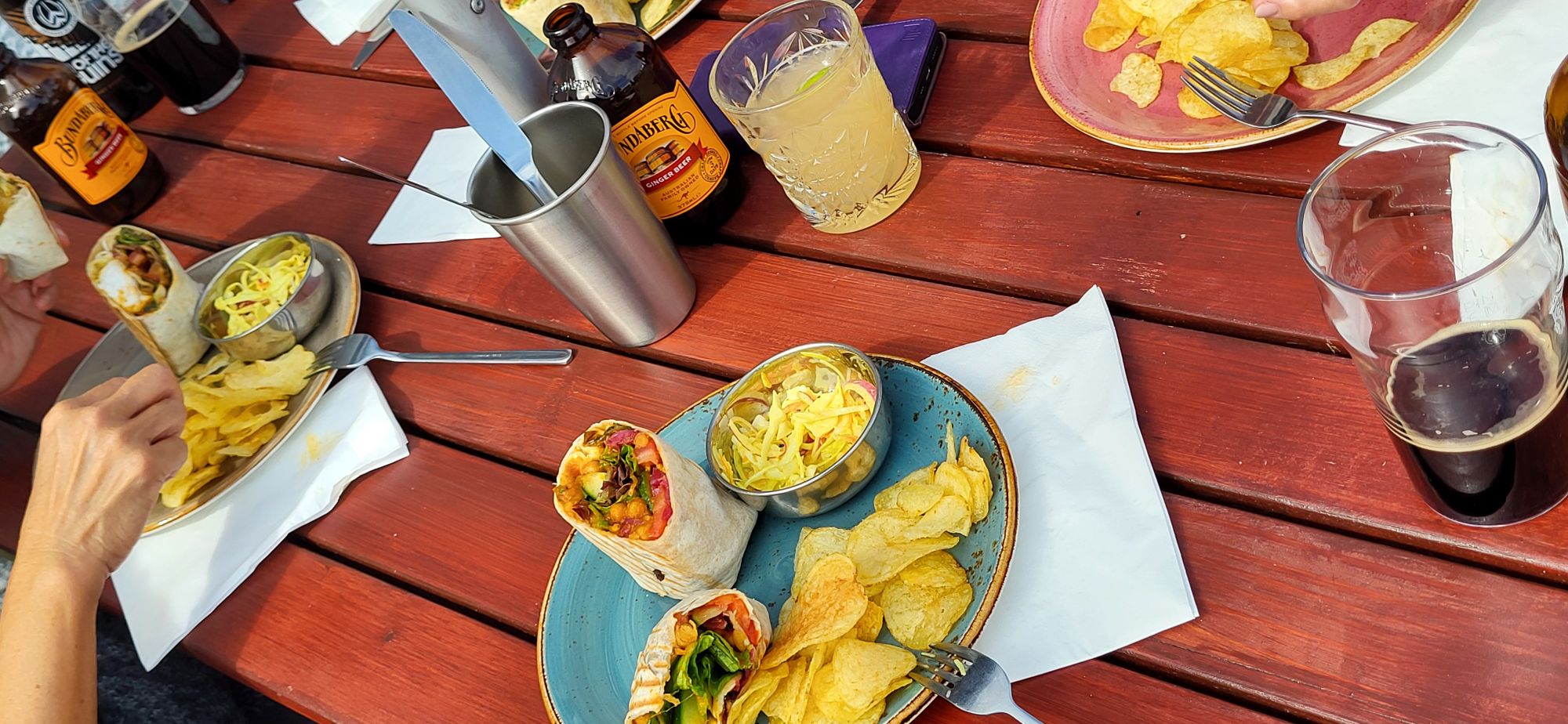
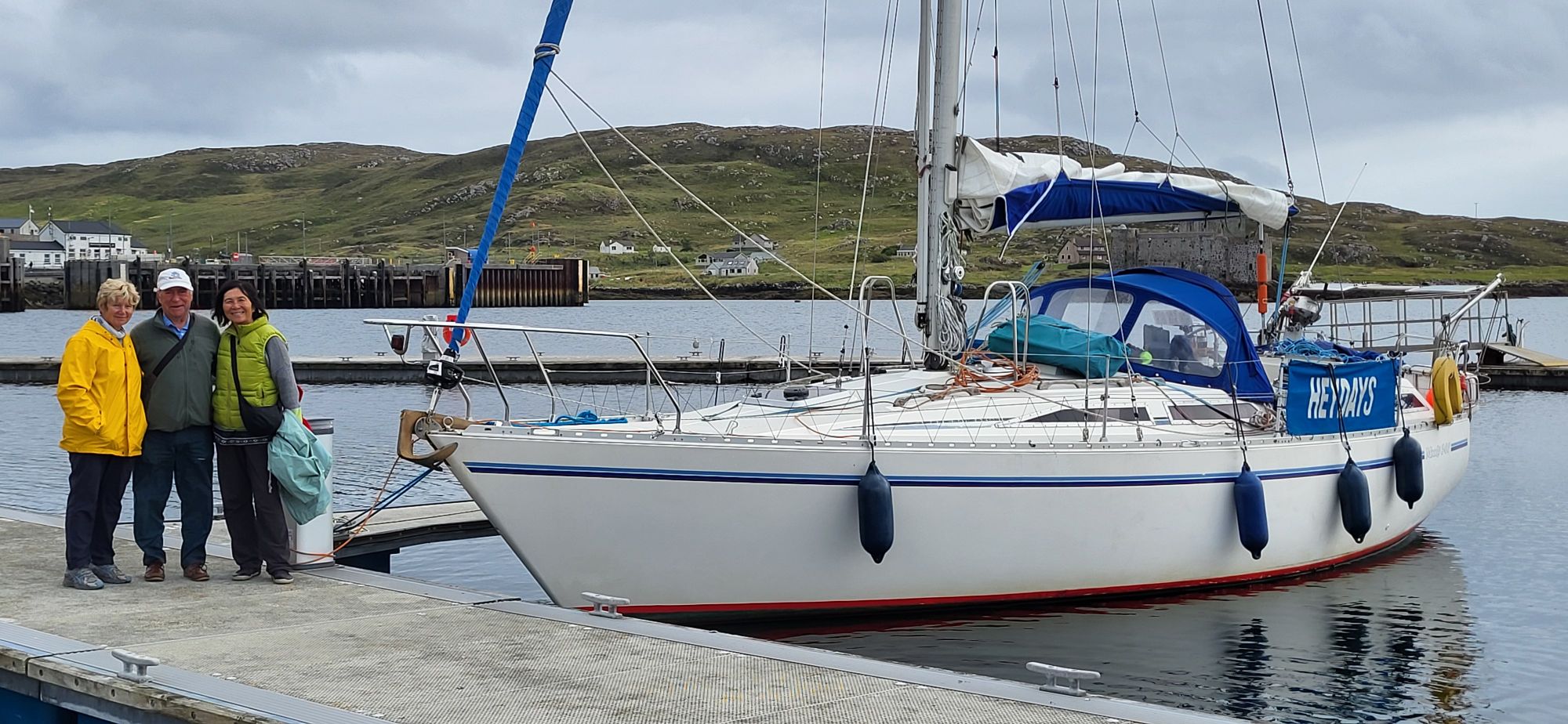
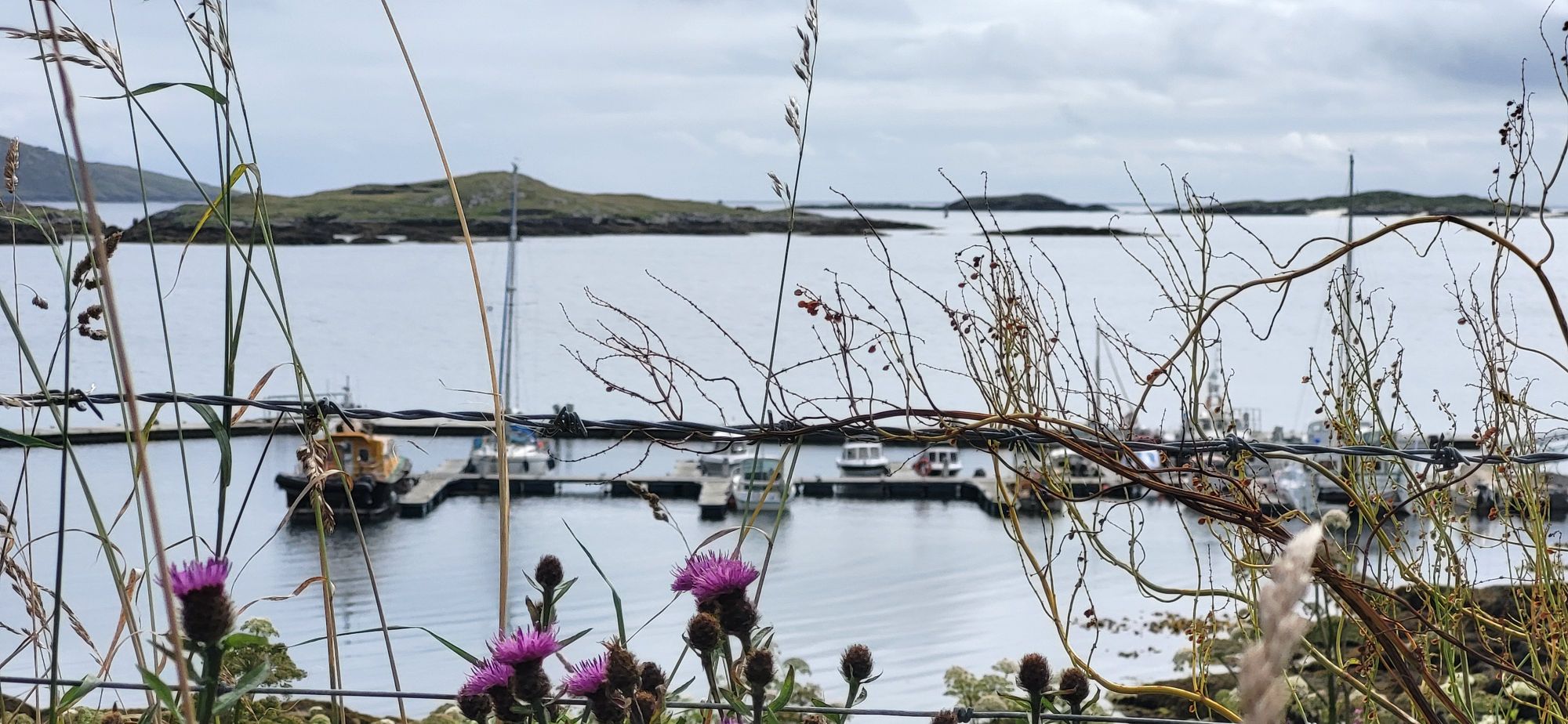
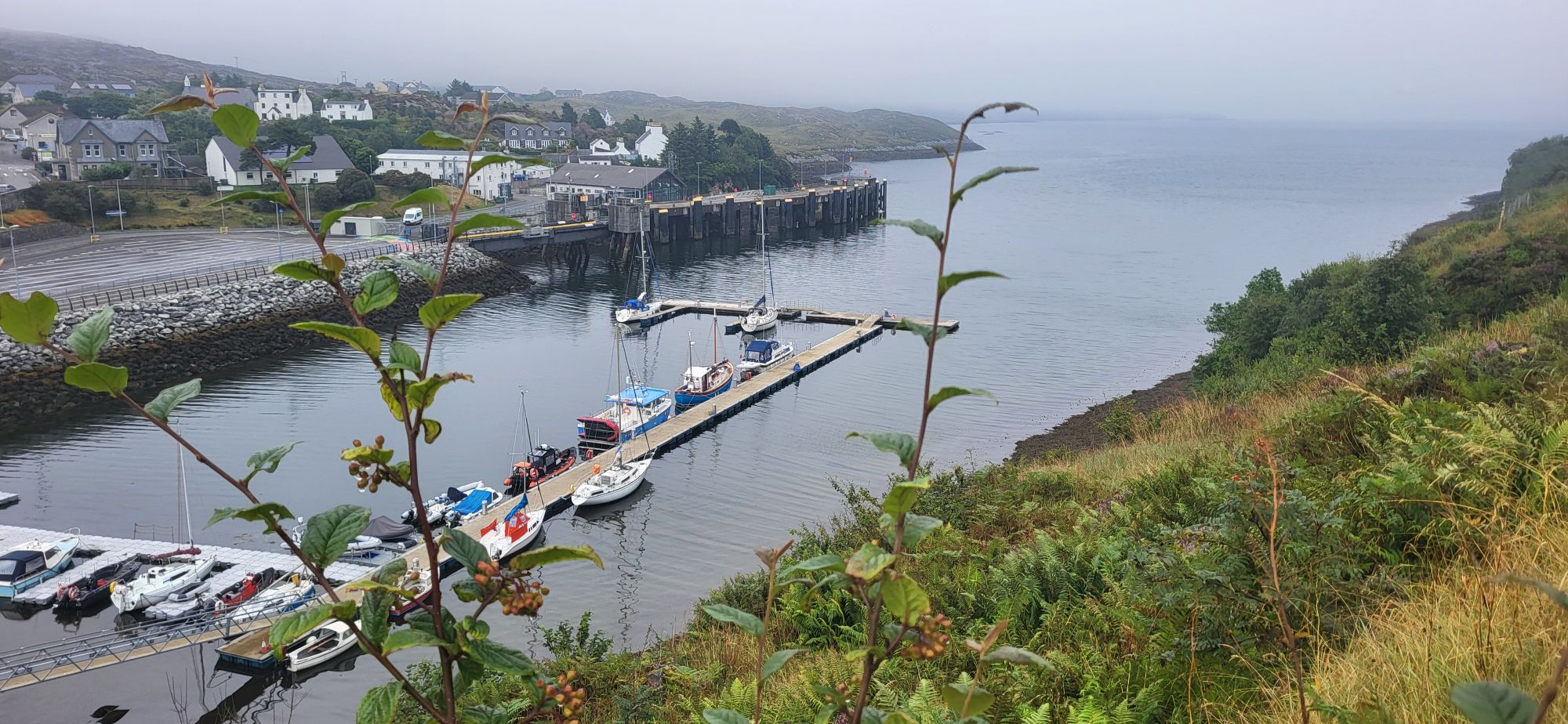
The marina is tiny, community-run, and home to only a couple of other visiting boats. We wandered up into the bustling metropolis of Castlebay itself…bustling being a relative term here…to discover we had missed lunch at the hotel by a single minute. Consolation arrived in the form of the Café Kisimul down by the harbour, which turned out to be rather better than the alternative anyway…excellent Indian-themed wraps, an oddly named beer, and a sunny spot outside in one of the loveliest villages at the tip of the Hebrides. We had assumed, reasonably enough, that the café’s name was a nod to its Indian menu. We were entirely wrong — it is named, of course, for the castle in the bay.
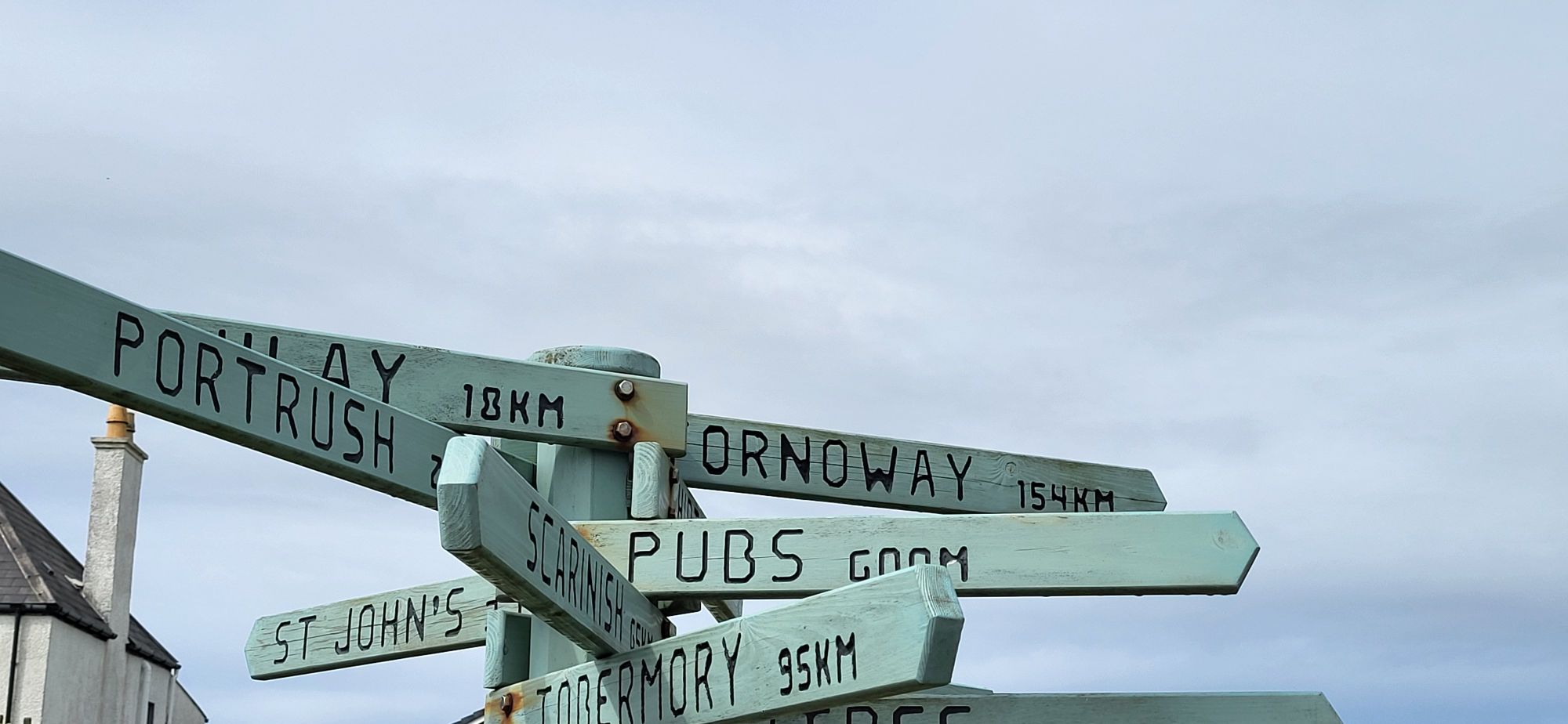
An all too brief wander around the little town and we have a feel for life at this southerly end of the Hebrides…
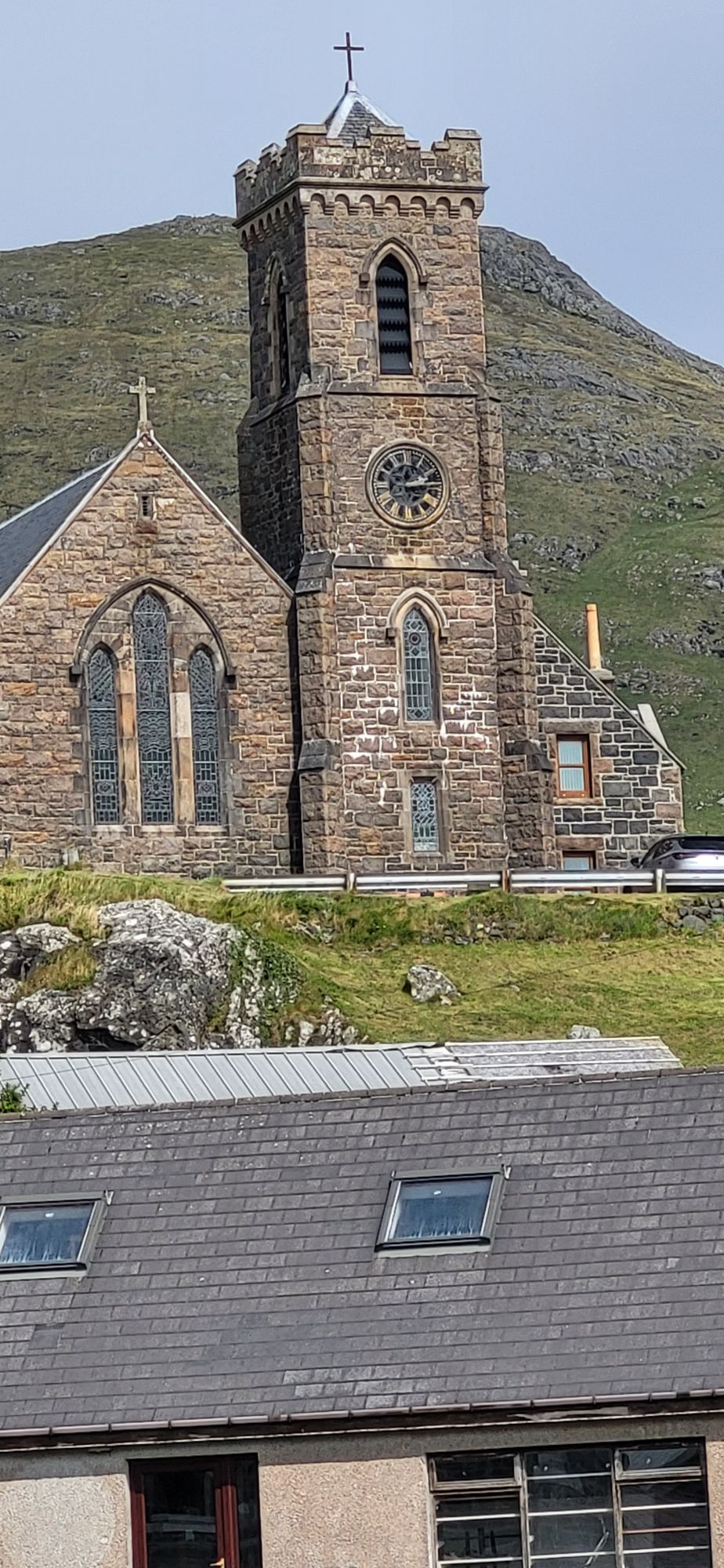
We fell to musing, as one does in places like this, on how small remote communities are obliged to pull together in ways the mainland forgets. One final observation…where the northern isles remain firmly under the Scottish Church’s Sabbath…everything shut on a Sunday… Barra feels different, and not only in temperament. It is the Catholic Church that dominates the town physically here, and, remarkably, there are places open on a Sunday.
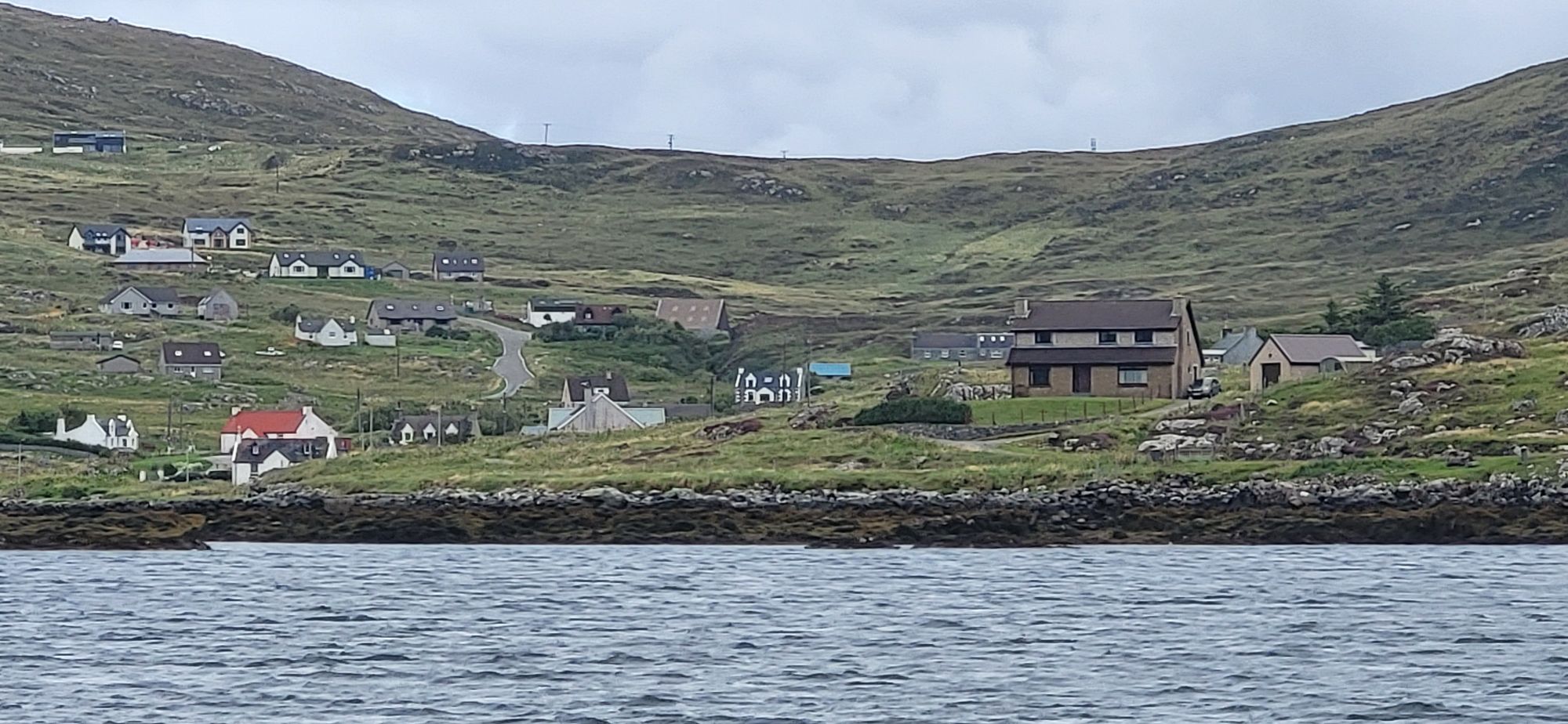
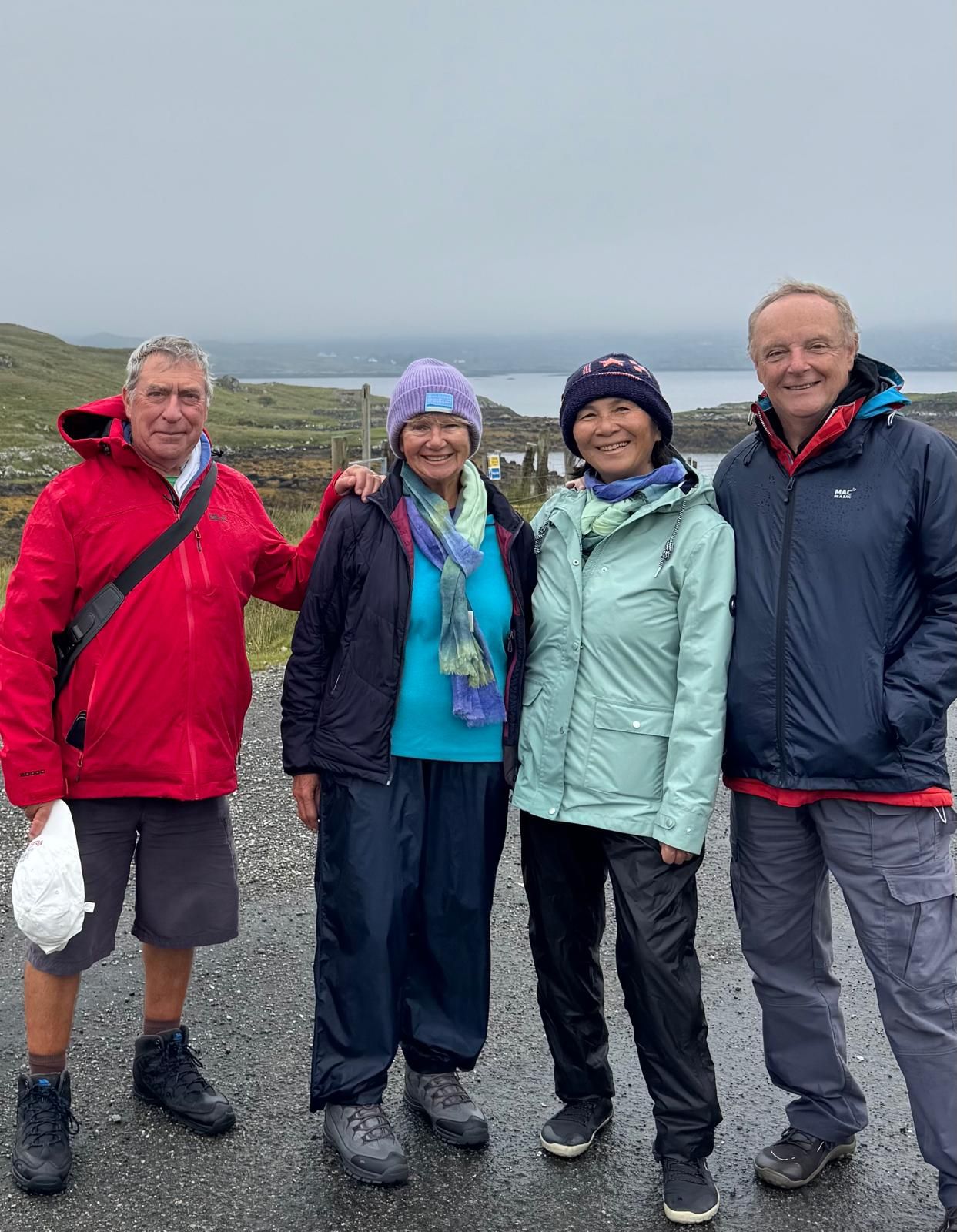
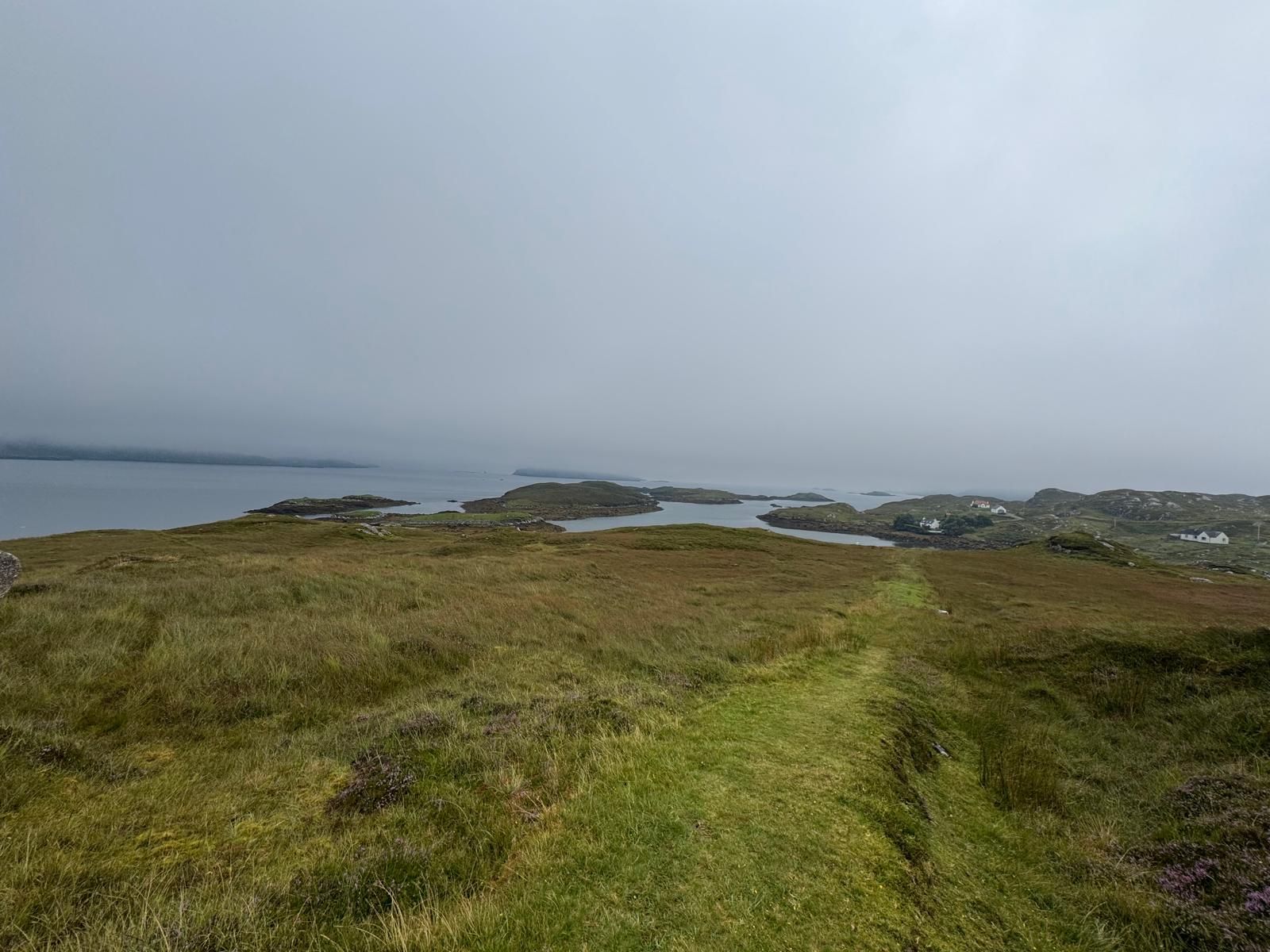
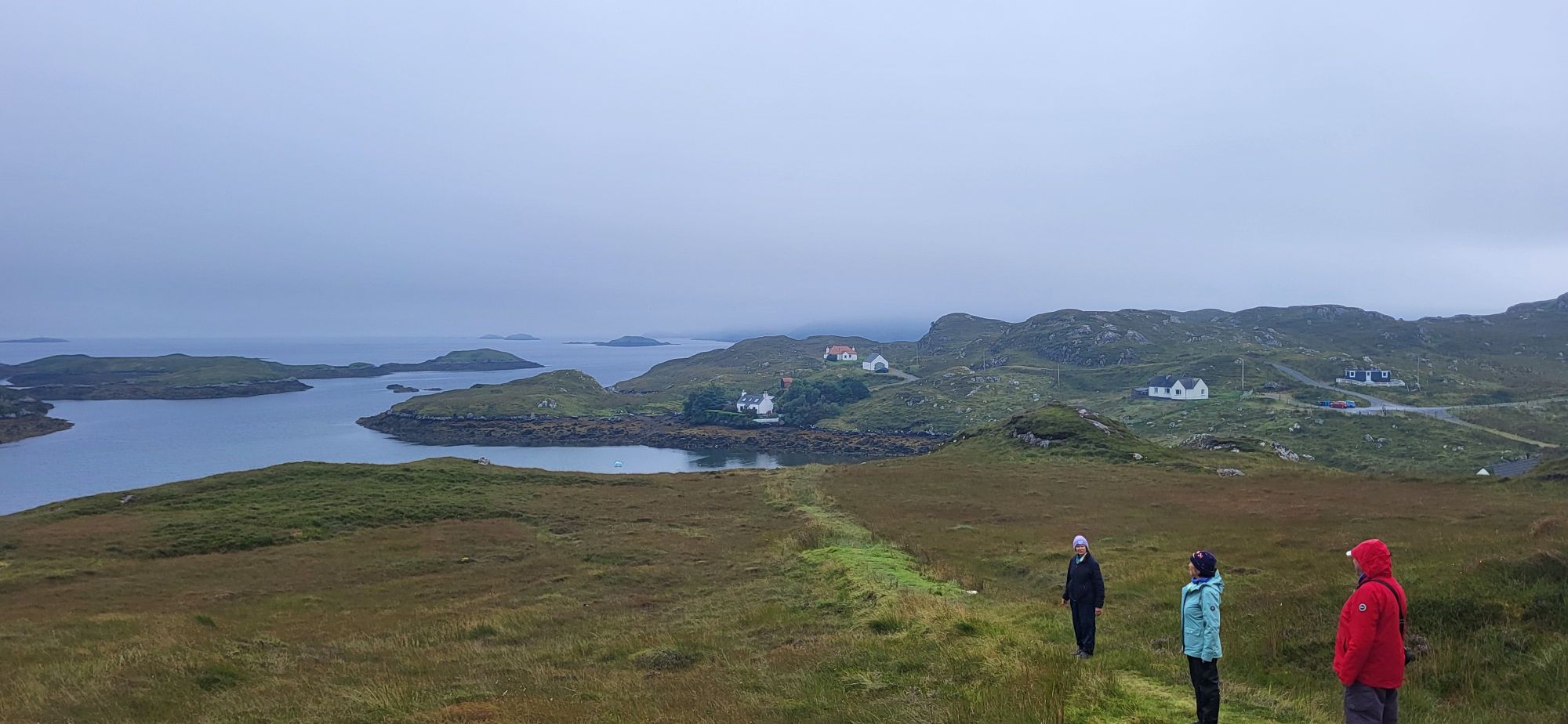
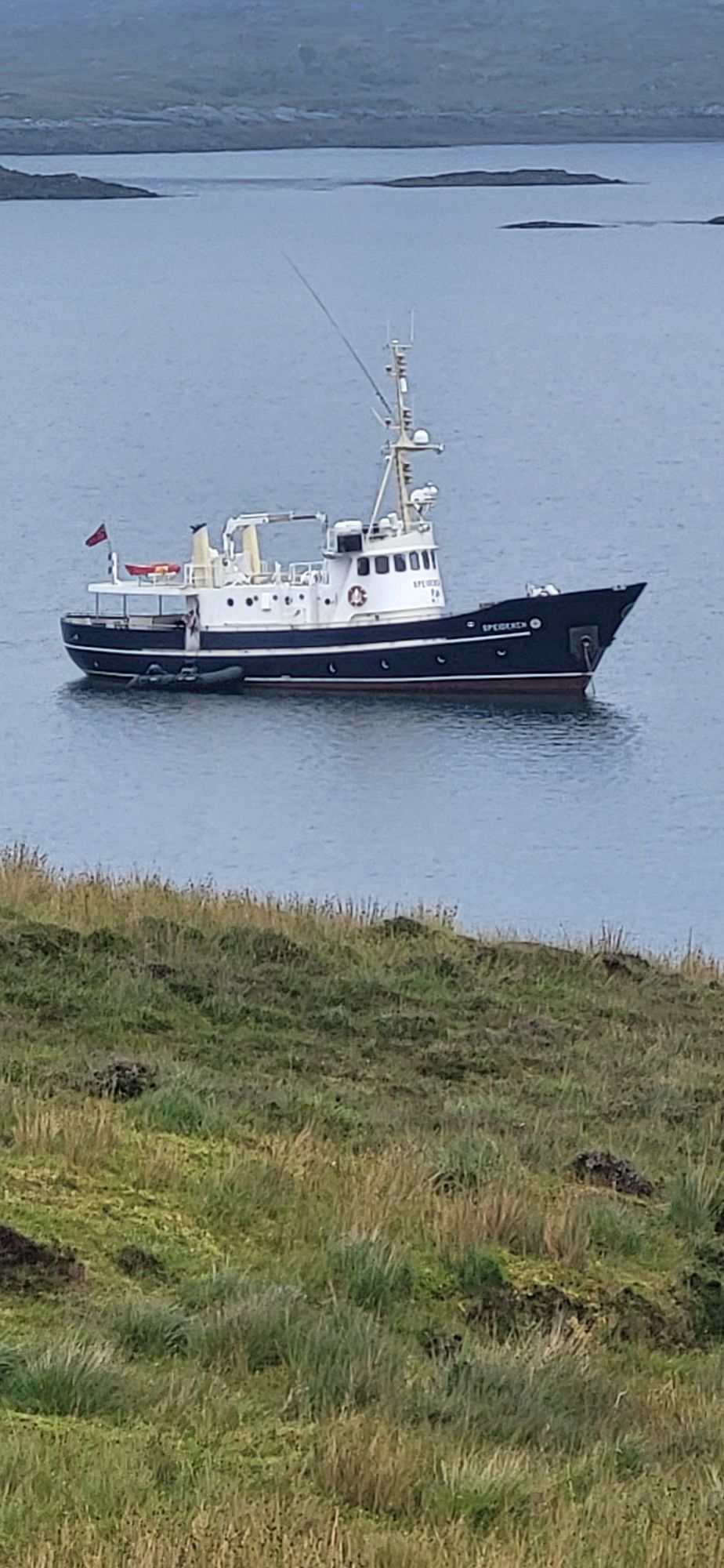
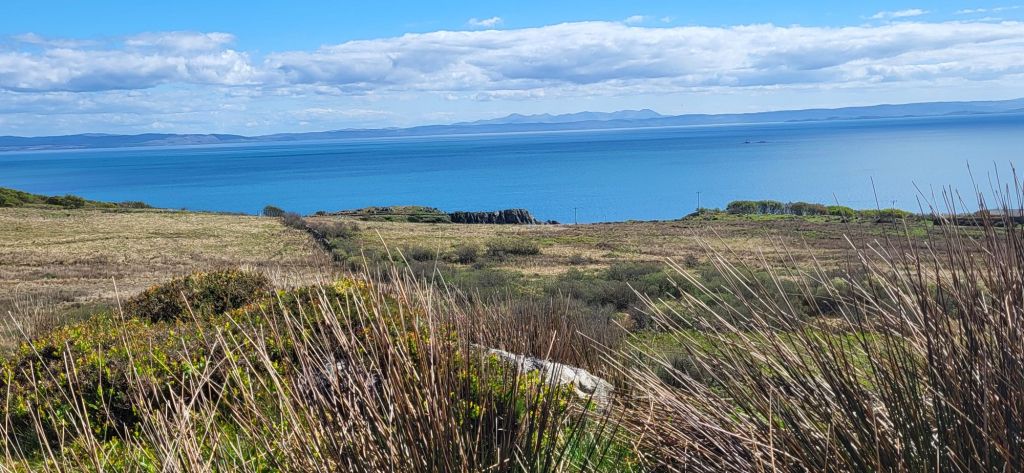
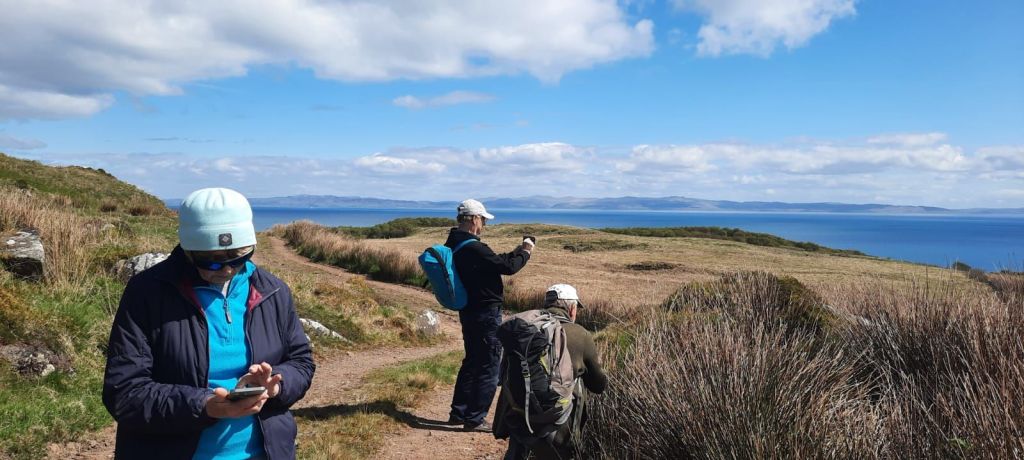
It is an ill wind, they say, which has kept us in harbour a further day. After a lazy start, we made the best of it with a walk up to a small headland above the loch and Heydays, from where the views were stunning. We passed a scatter of houses which the harbourmaster assured us were probably still crofts in the old sense, smallholdings rather than museum pieces, still worked in whatever hours their owners can spare from the rest of life.
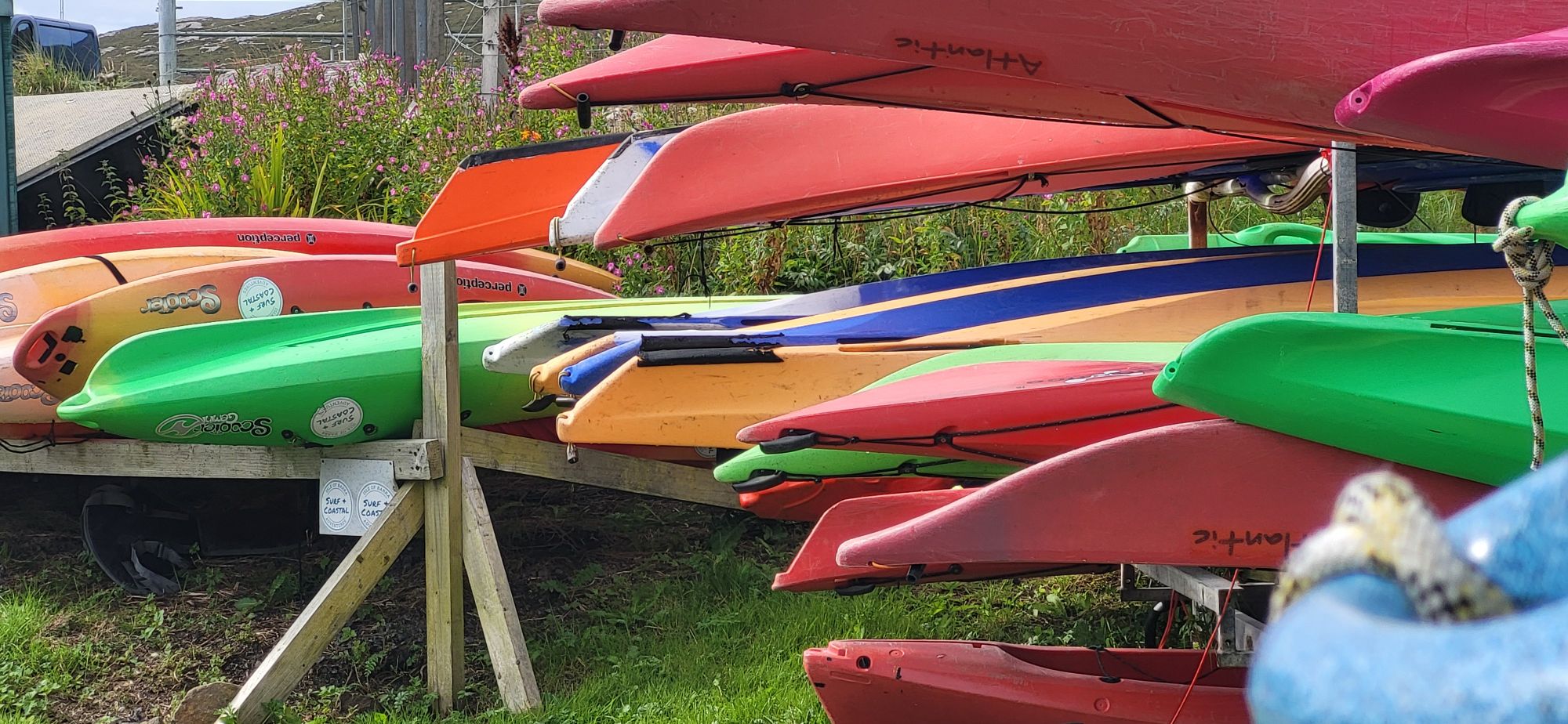
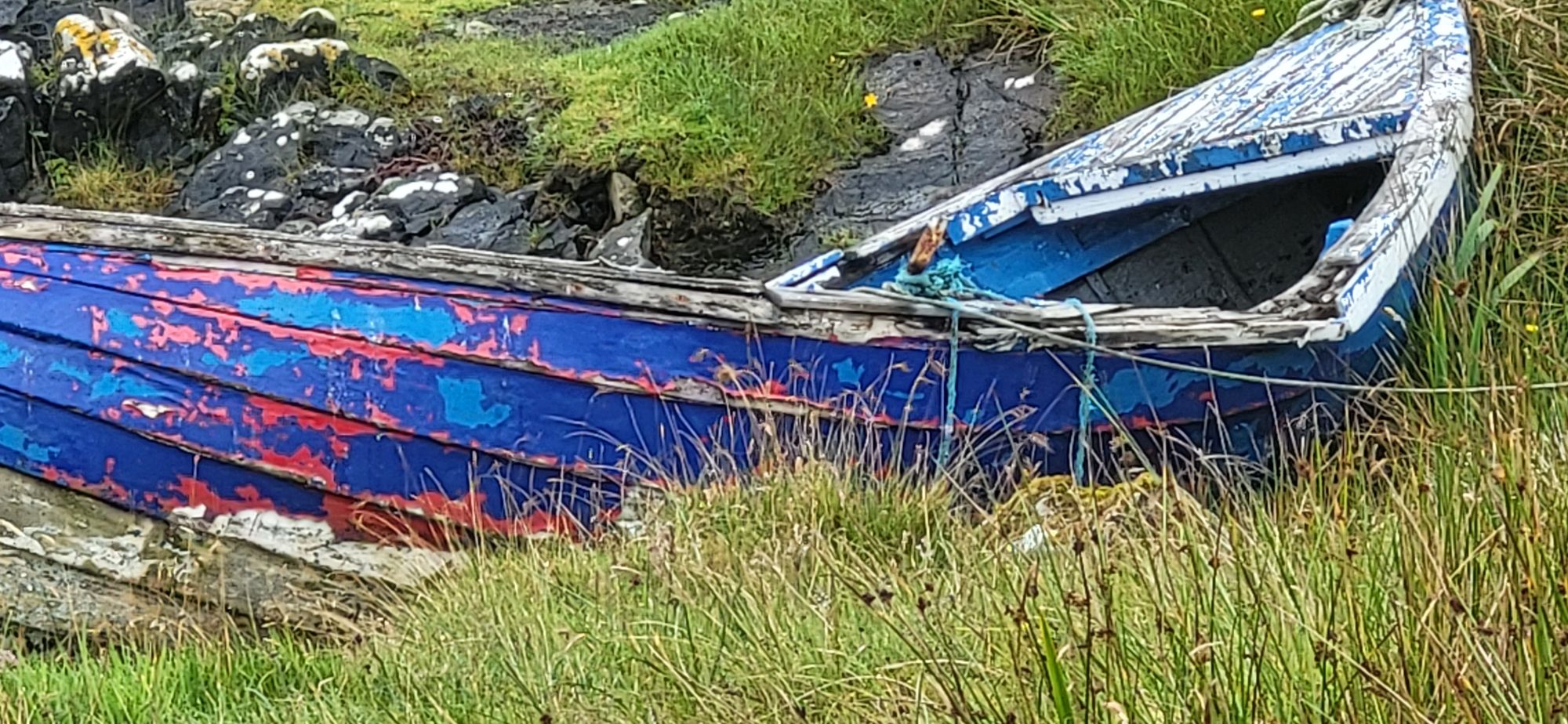
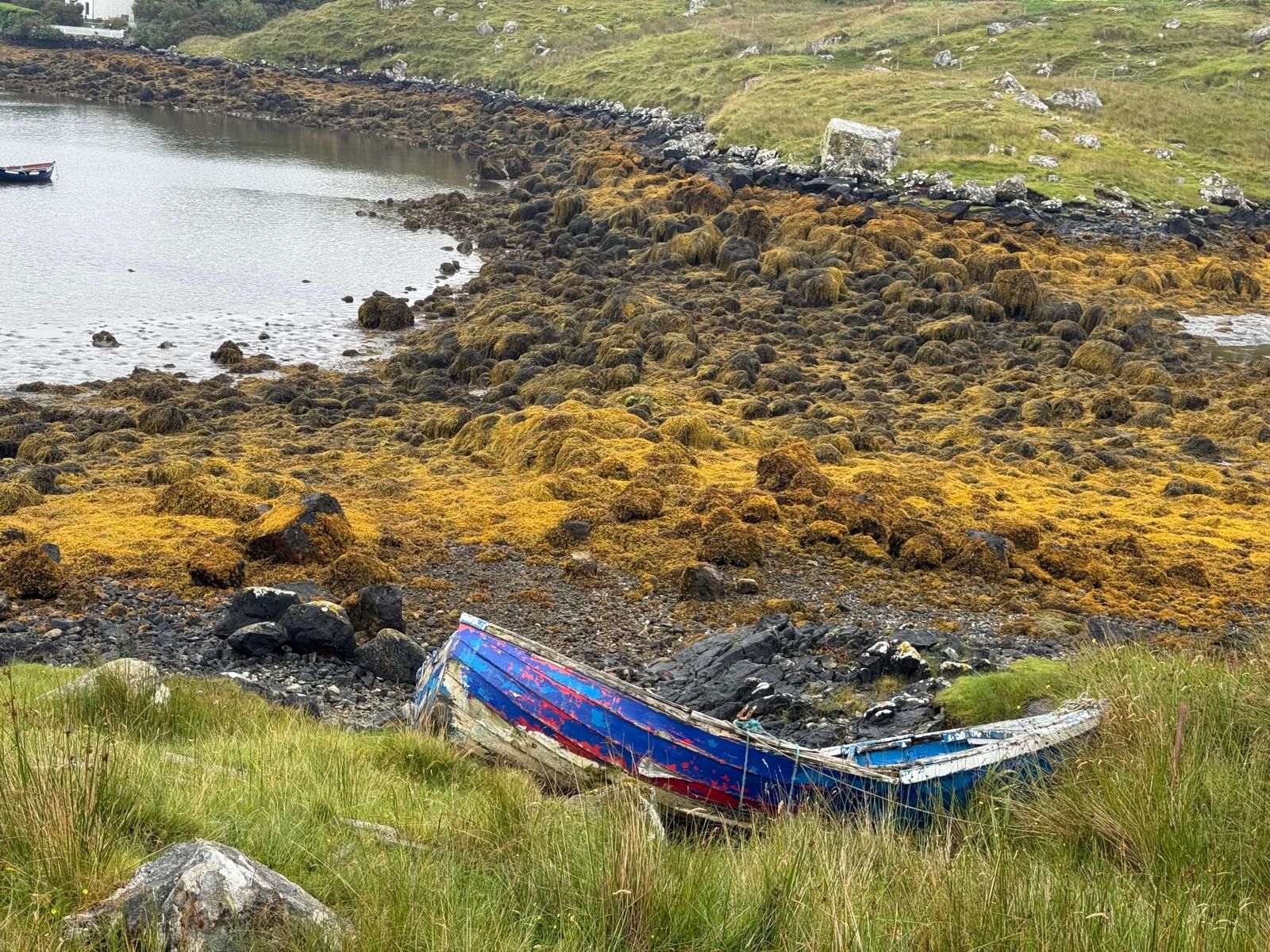
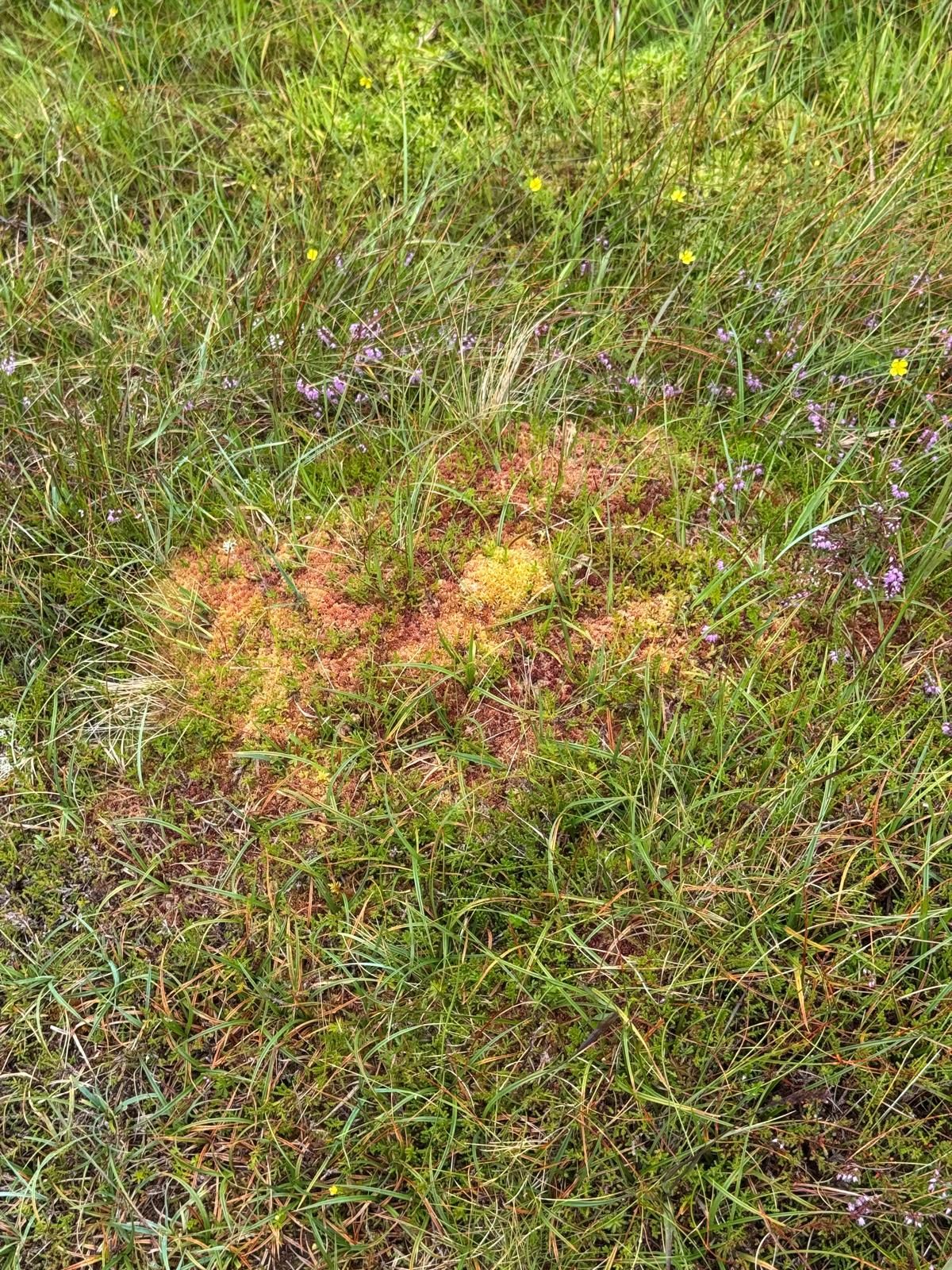
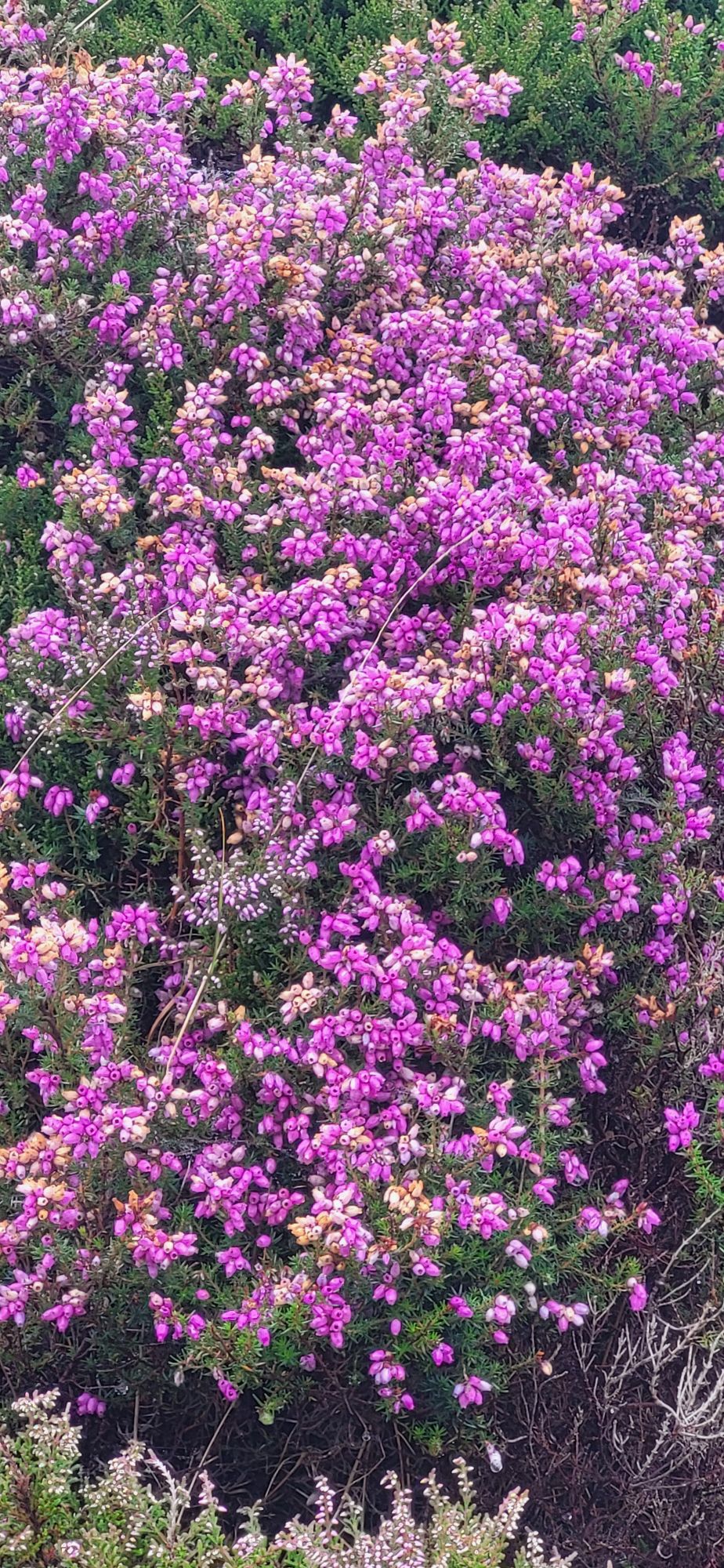
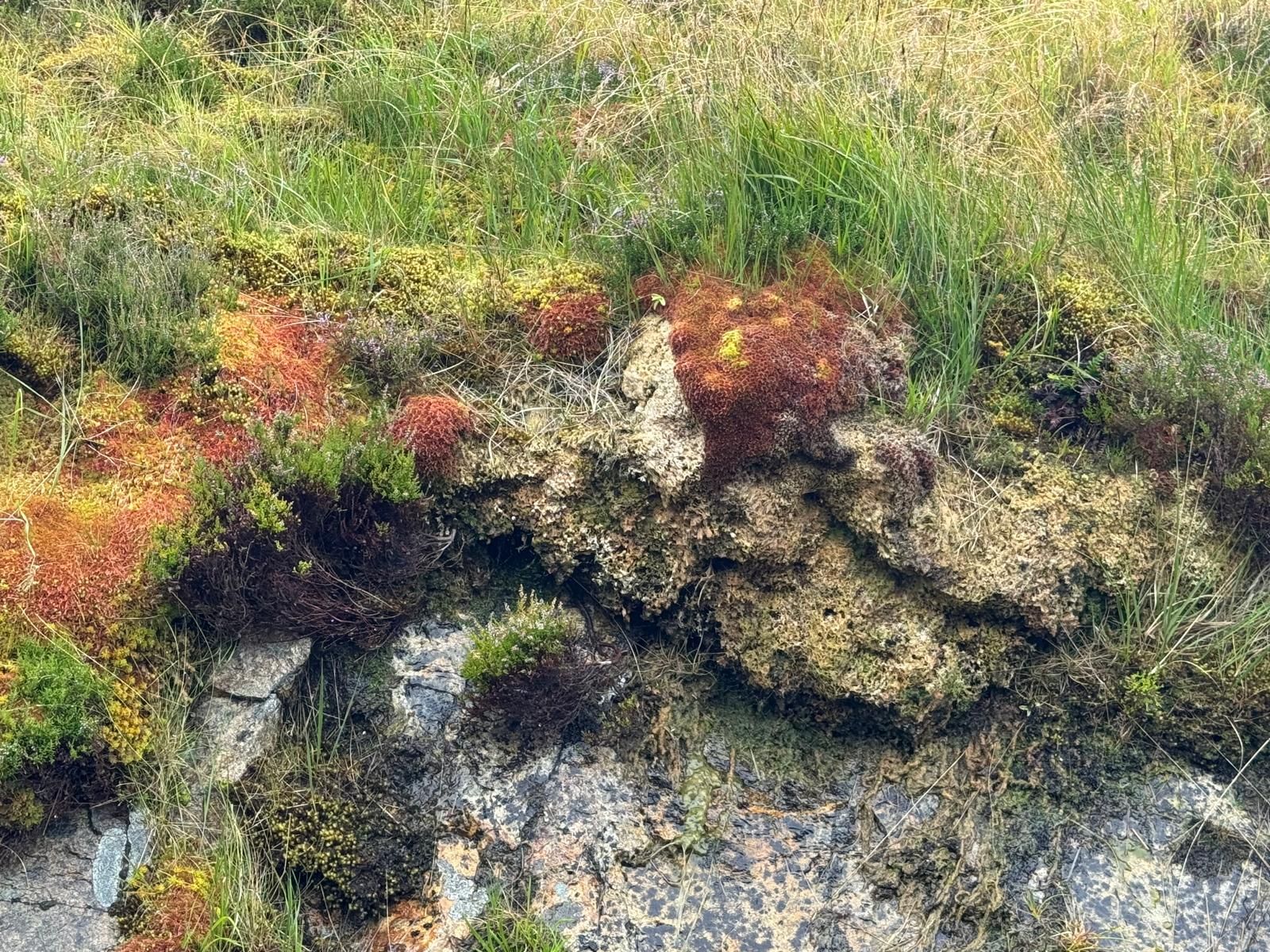
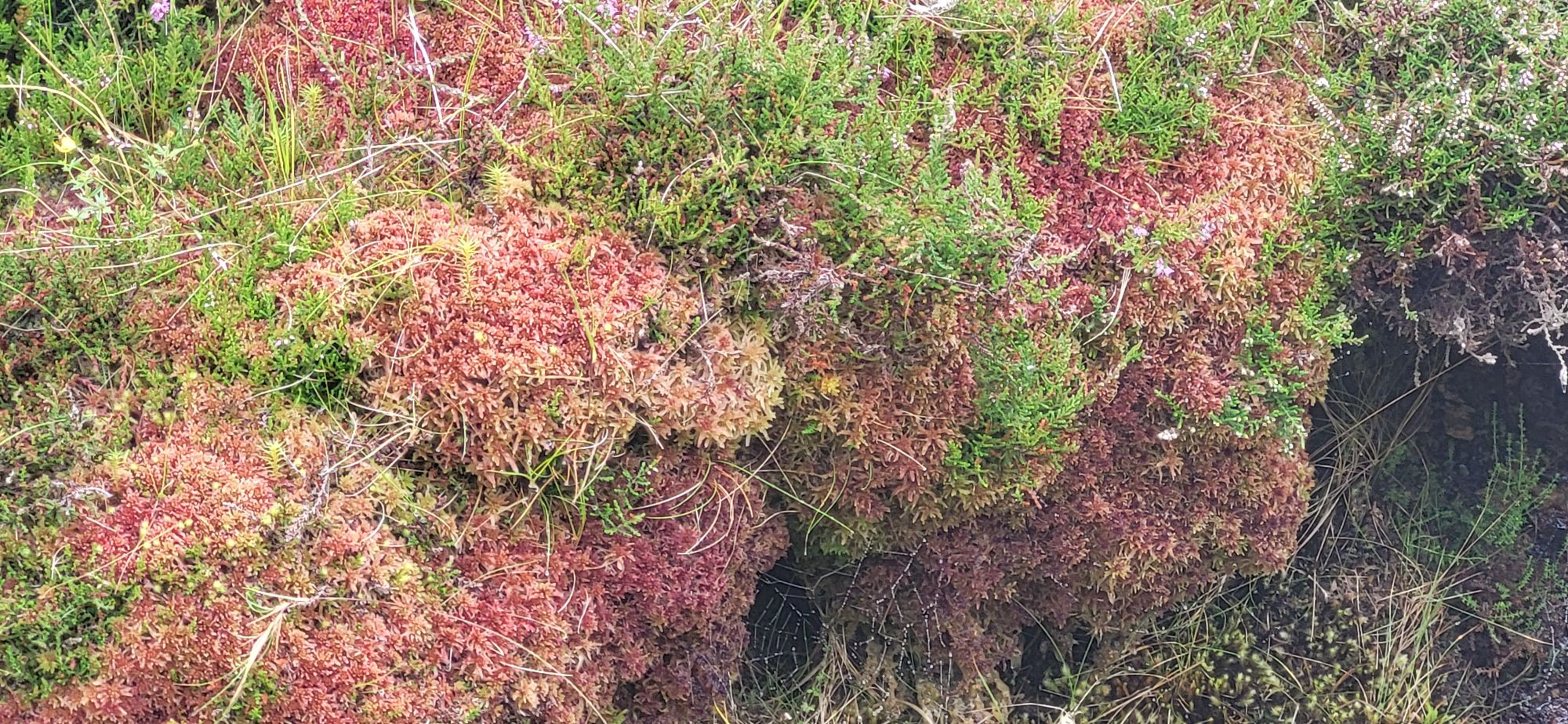
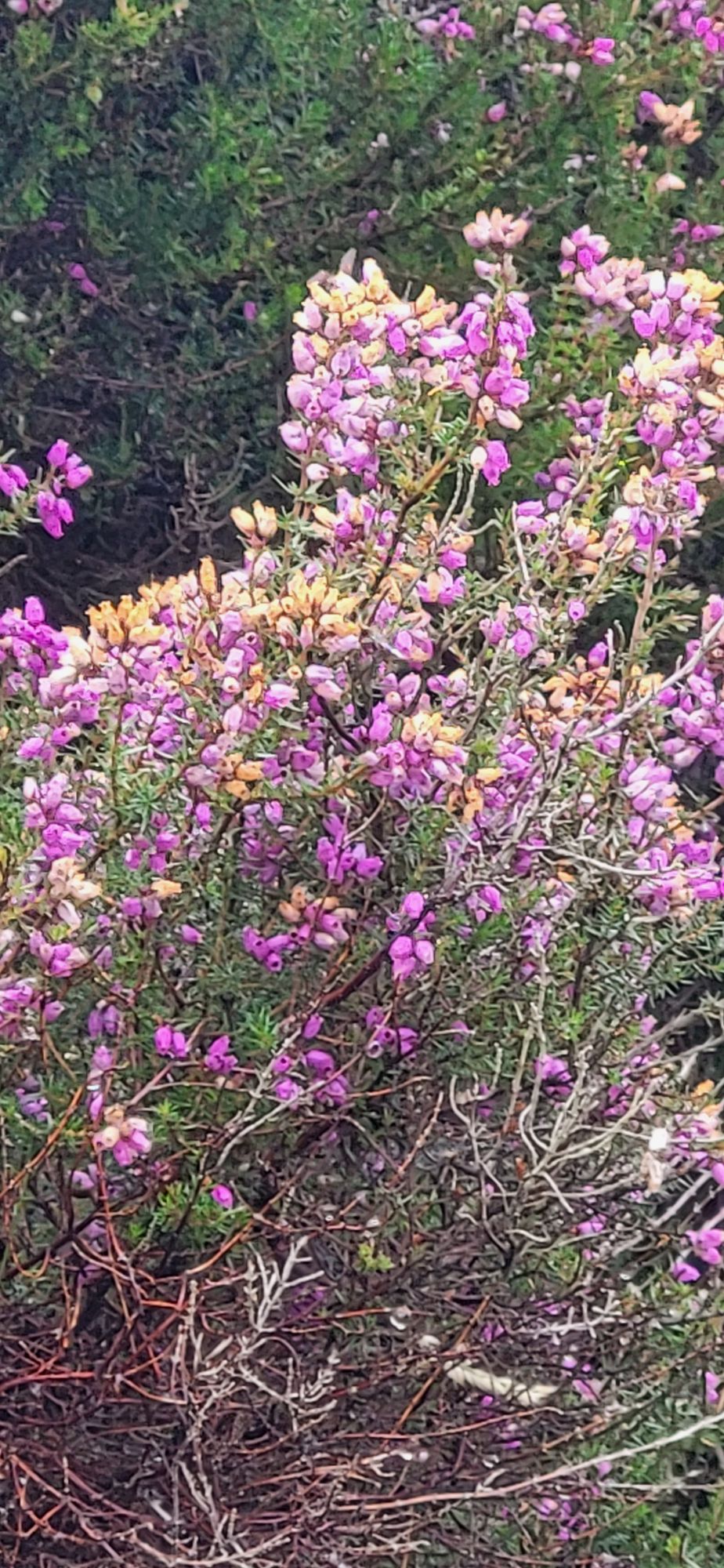
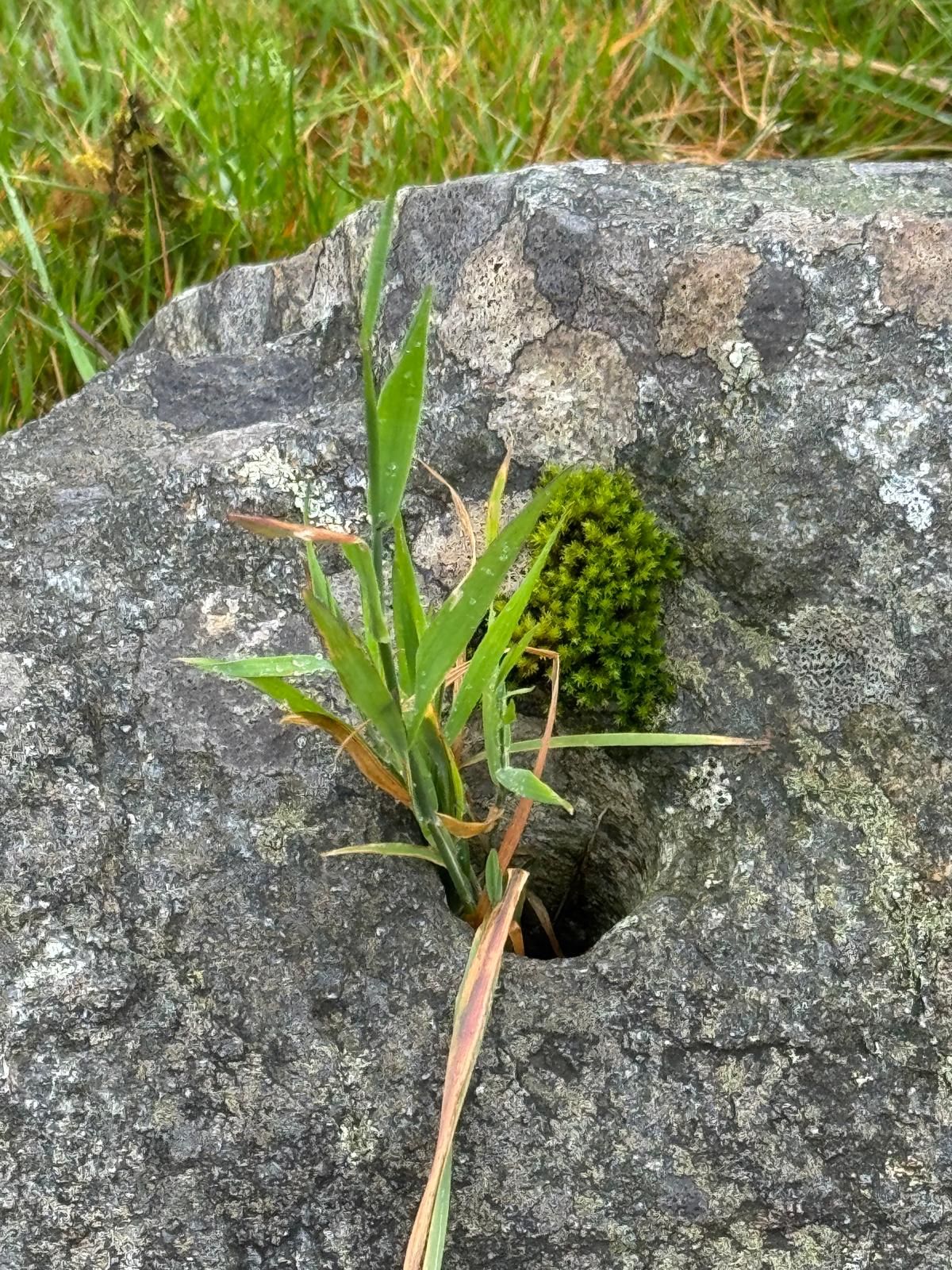
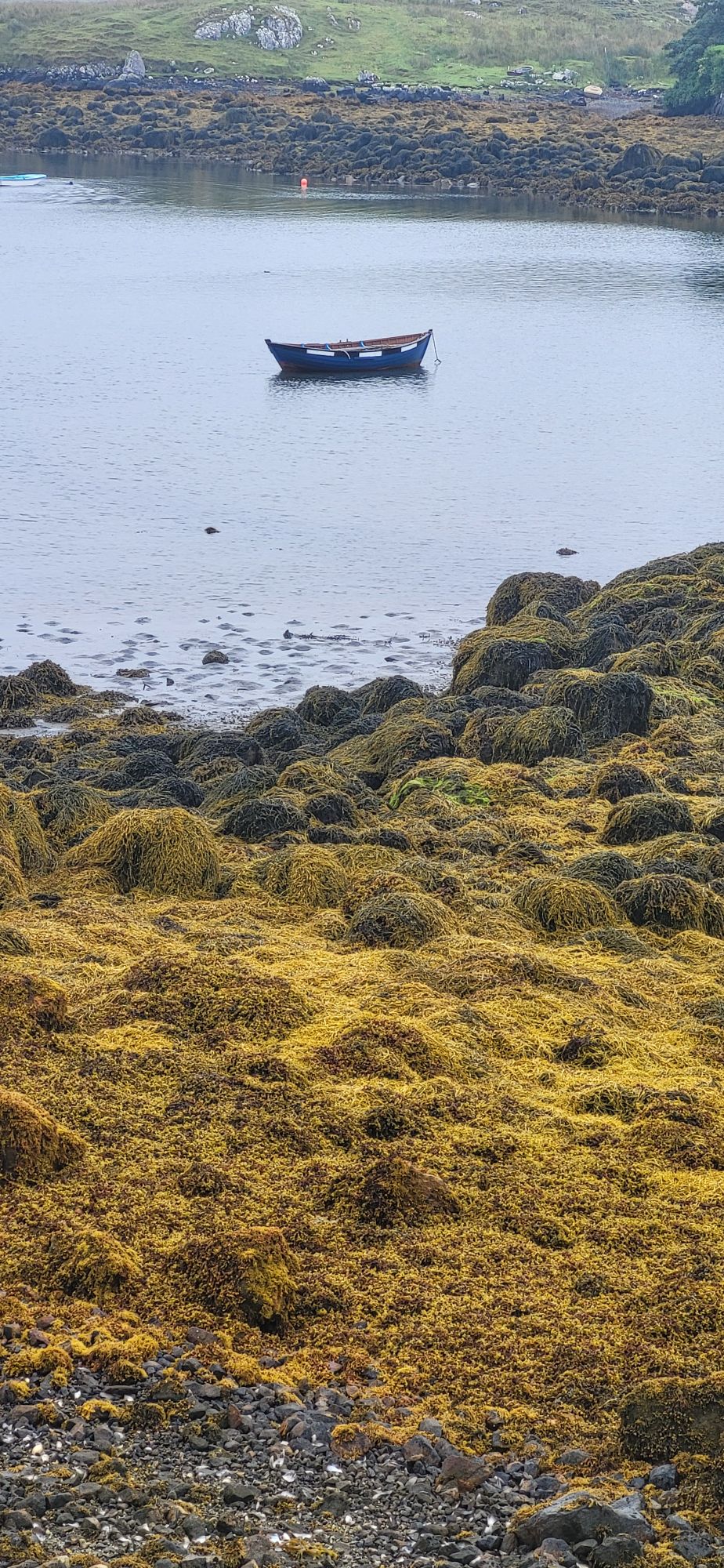
Against the general greyness of the day, the heather, lichen, seaweed, and even some old boats, took on an amazing vividness, each competing for the most inspiring colour in a Hebridean palette that otherwise runs to fifty shades of granite…
Two hours of walking left us feeling pleased with ourselves in the particular way that only mildly strenuous exercise in bad weather can produce. Back on board we occupied ourselves with the small maintenance tasks that expand to fill the time available, then sat down to an early dinner of pies and fishcakes from the local deli, preceded by what seemed at the time a excellent idea, namely mojitos, and undone by the discovery that the Bacardi had reduced itself to a single, unhelpful dribble. A dash to the shop before closing followed. Some things are not negotiable, and pre-dinner cocktails are among them.
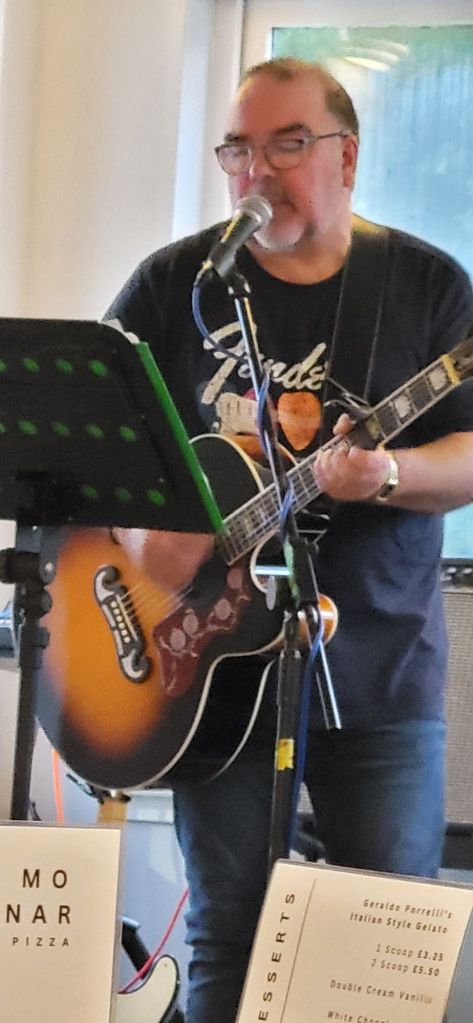
The evening brought the promise of live music at the pub, which proved sufficient cause for Chris and Yee Tak to abandon sailing togs in favour of something resembling respectability. The guitarist, backed by the sort of electronic box that has replaced entire rhythm sections in small venues the world over, worked his way through the usual soft-rock repertoire, but came alive properly when he turned to folk material and a couple of songs in Gaelic. We rather wished he’d done more of the latter, though the room, mostly holidaymakers like ourselves, responded more readily to the covers. Gaelic speakers were evidently thin on the ground that night…
July has been spent “down south,” as they probably don’t say here in Ullapool, re-acquainting ourselves with friends, family, grandchildren, and the various small trials that come with each.
The south of England, meanwhile, treated us to its third proper heatwave of the summer, temperatures loitering in the low thirties and sleep reduced to a nightly fight over which side of the pillow might, briefly, pretend to be cool. Be careful what you wish for, as someone once said.
Tuesday the 4th duly arrived, waking us bleary in the near-dark for the thirteen-hour haul north via Milford on Sea. We had, of course, been watching the forecasts, and knew perfectly well that the north-west of Scotland had not been sharing in the south’s toasting. What we hadn’t quite bargained for was the precision of it: roughly a degree lost for every hundred miles, so that by the border we were down to sixteen and hunting for a jumper. The waterproofs came out not long after. The landscape, it must be said, was doing rather better than Dorset’s uniform brown, lush and green in a way that had an obvious explanation, which duly arrived in the form of driving rain and wipers struggling to keep pace. This, apparently, is what we had wished for.
By Ullapool the deluge had eased to something merely damp, and after a few unsuccessful circuits in search of anywhere still serving food, we settled for the Essence of India, unprepossessing from the outside but generous with both flavour and value, and a great welcome home.
The harbourmaster ran us out to Heydays through the gathering gloom, and we were soon aboard, unpacking in a very cursory way at the end of a long day, fortified by a couple of nips of rum. Sleep came quickly after that, with no fan whirring in pursuit of nonexistent cool air, and, for once, no need to sleep on top of the covers rather than under them.
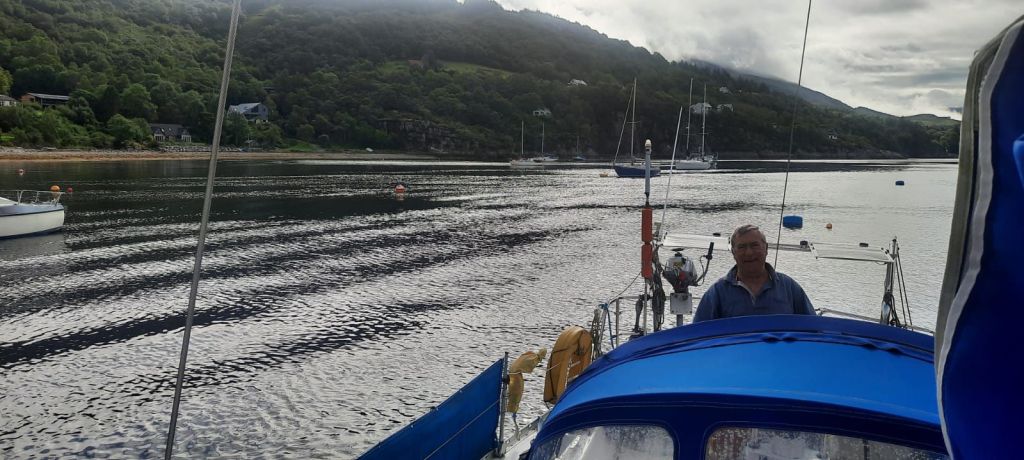
Heydays had been on a mooring in the loch for the last few weeks, but we decided for convenience to bring her into a pontoon for a day. Despite a rather grey morning, it was great just to get water flowing past her keels again, even if it was just for a few hundred metres and in the company of the morning ferry from Stornaway…
The day’s plan is the usual mix: an aging old girl requiring her now-customary quota of small repairs and general fussing to keep her in fine form, and a Tesco run for the essentials, namely coffee, wine, bread, milk, eggs, and wine.
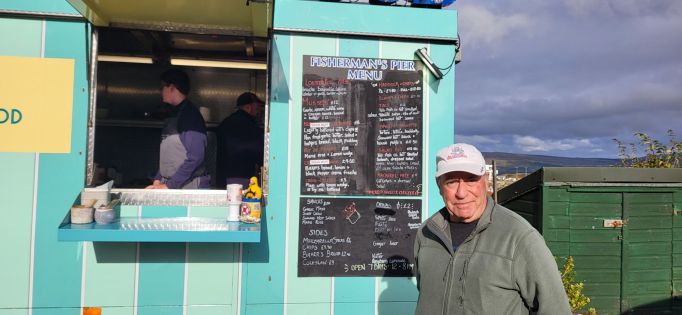
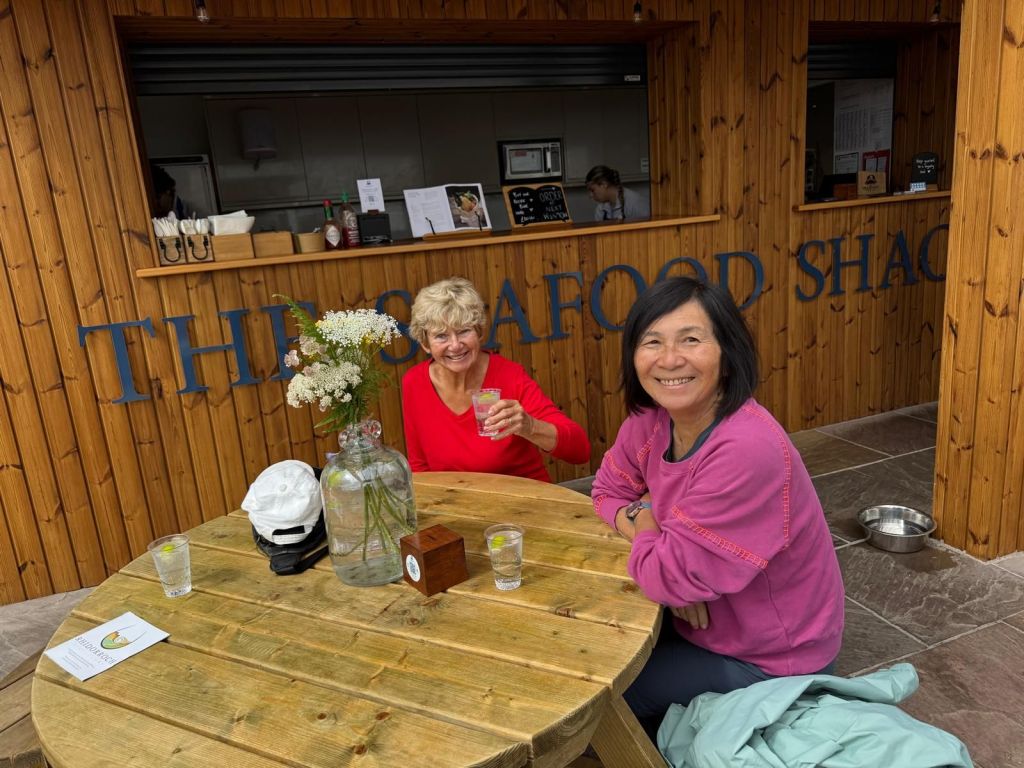
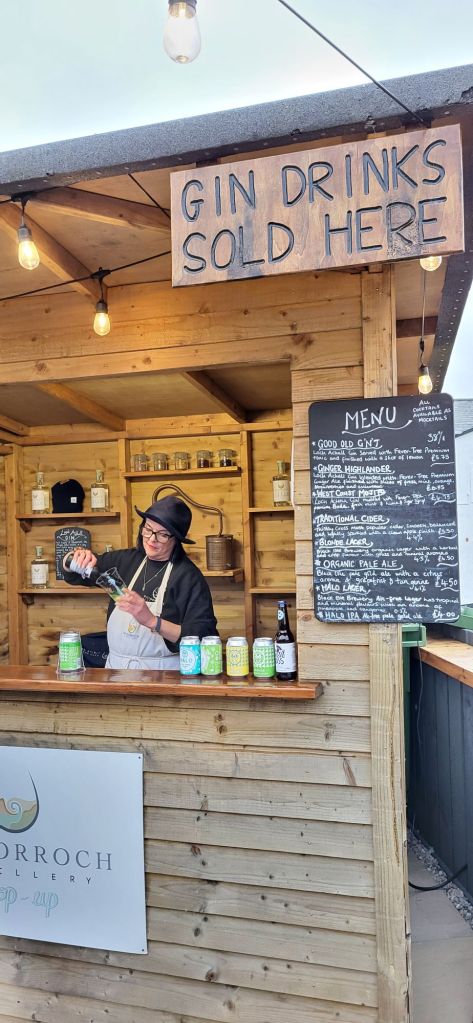
With rain forecast we set off with the loose intention of shopping first and finding lunch second, though a hint of sunshine rearranged our priorities, and noon found us at The Seafood Shack, a real favourite from last time. It has the considerable advantage of a gin bar next door, which by five past twelve was already close enough to the first drink of the evening.
A thoroughly glorious place, made more so by harbour staff kind enough to let us park the car for a few weeks in what I gather is the harbourmaster’s mother’s own space.
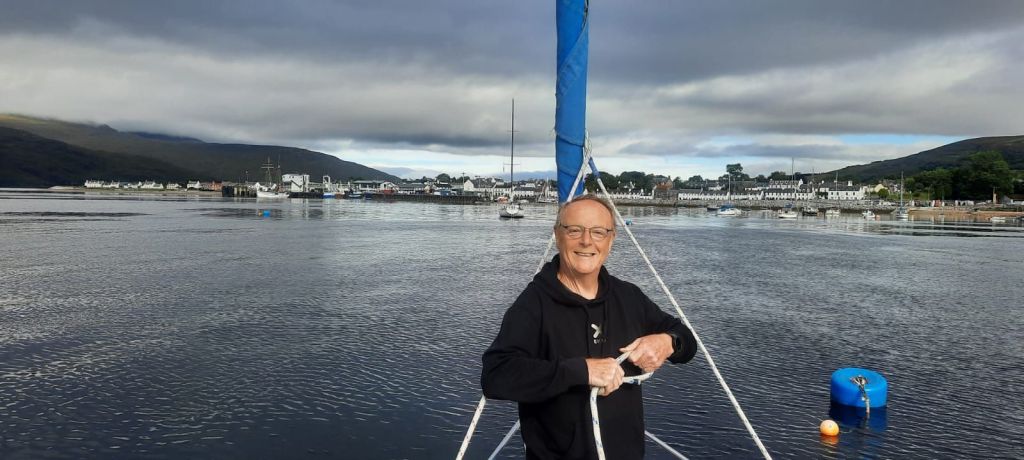
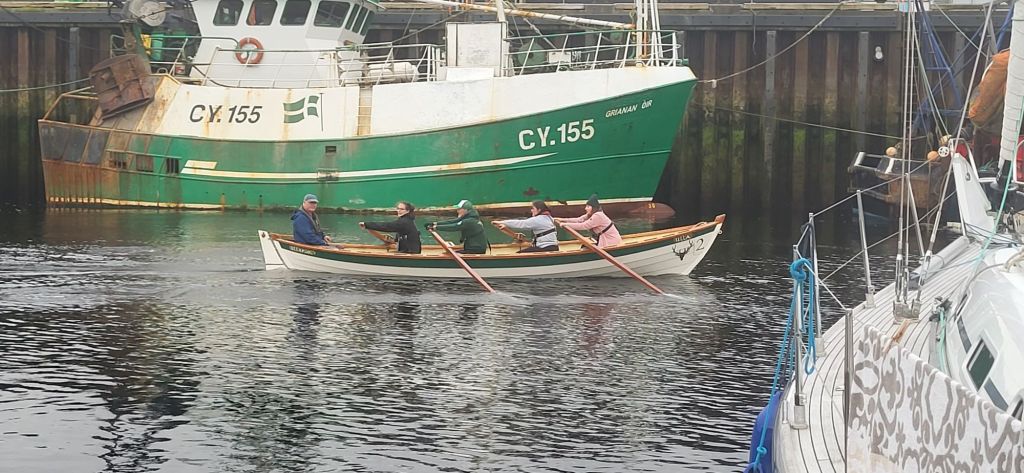
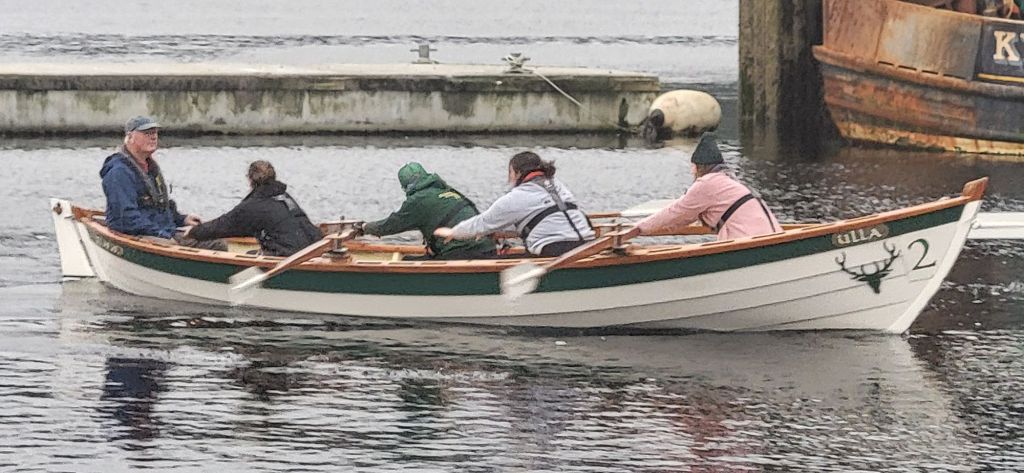
Ullapool is a funny mix of the charm of a fishing village, complete with local gig rowers….
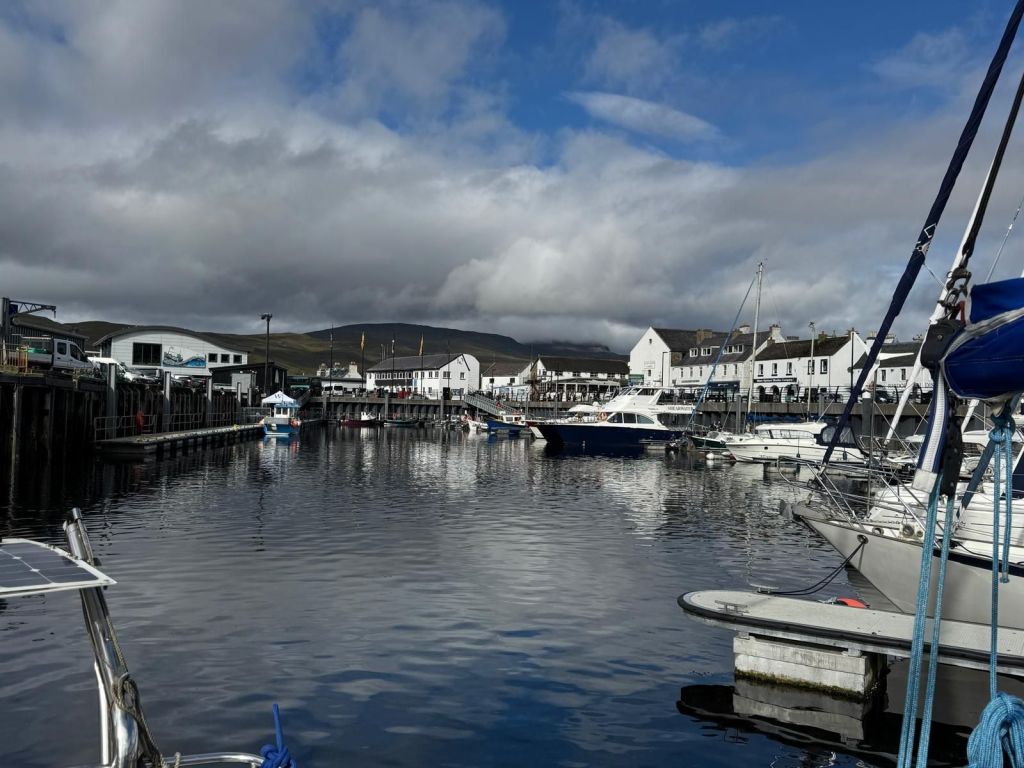
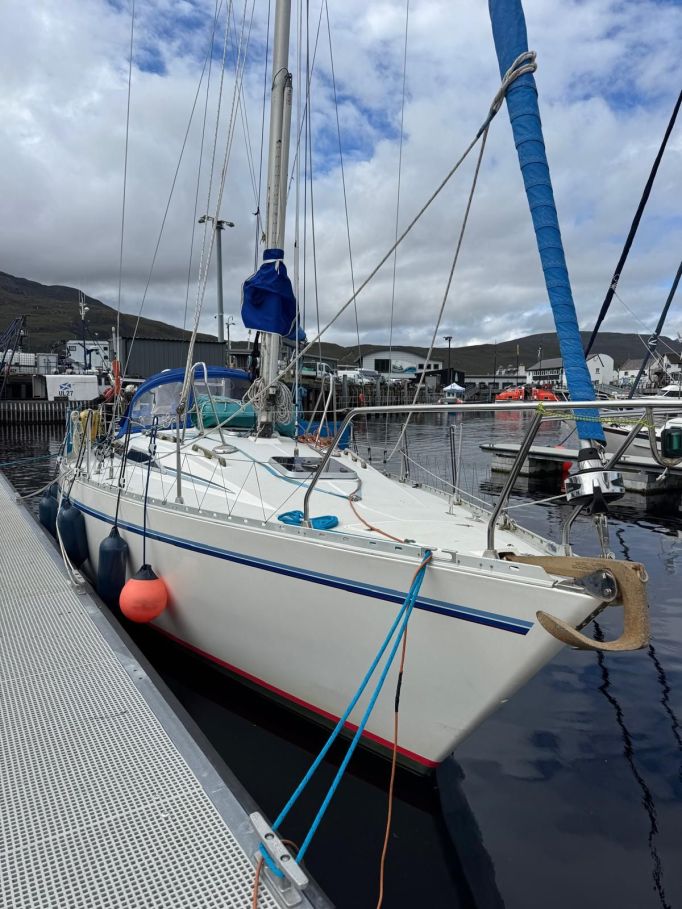
…and of course a small marina for the likes of us…
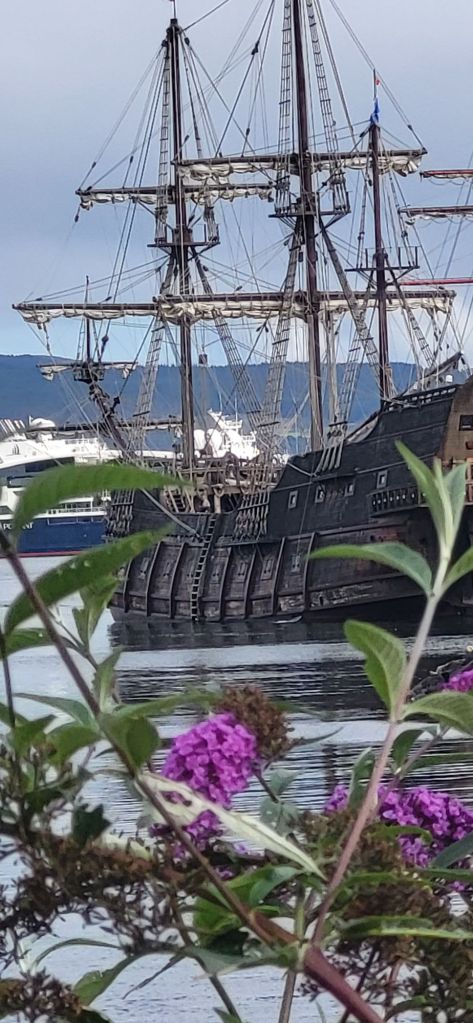
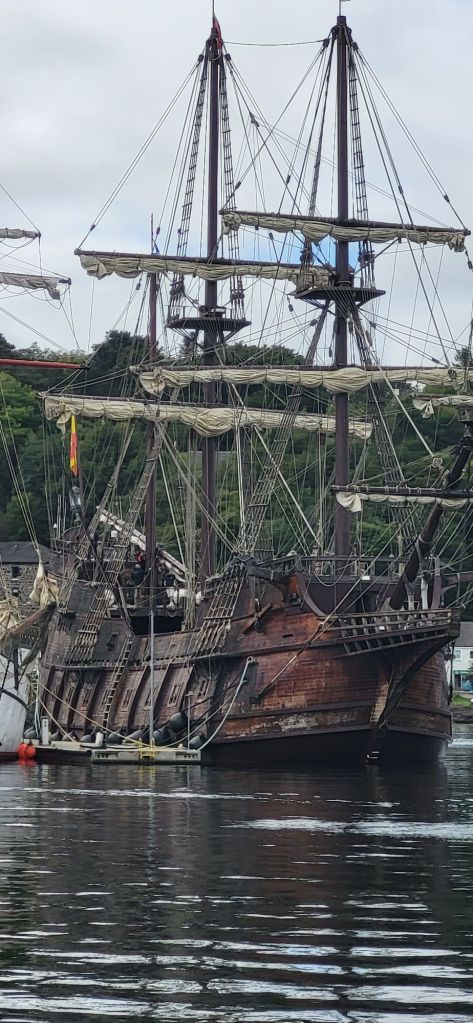
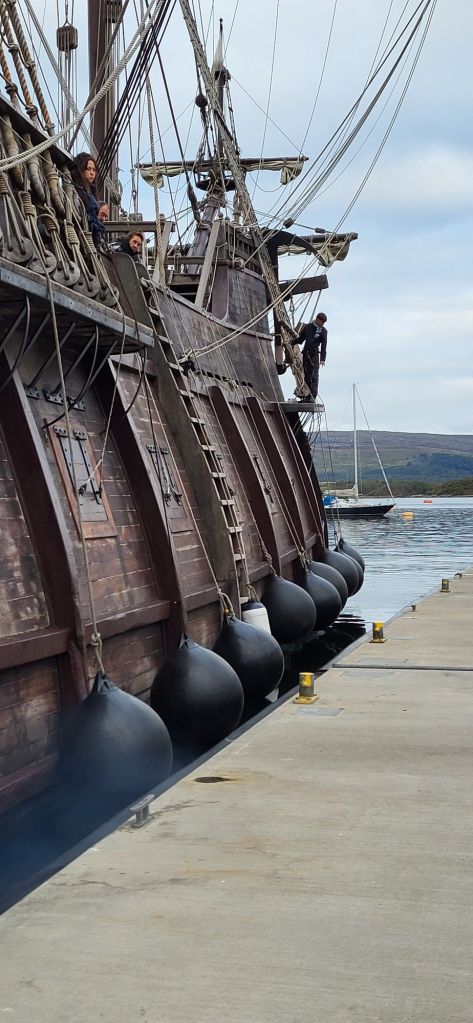
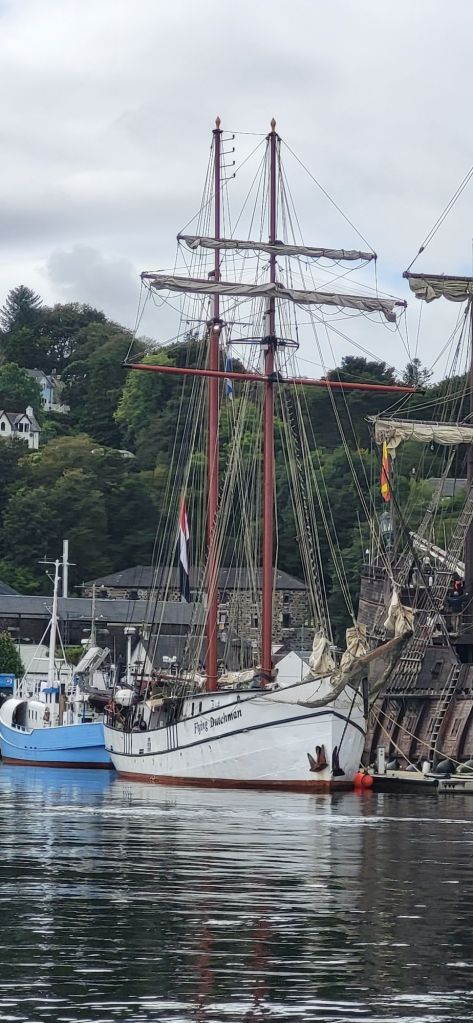
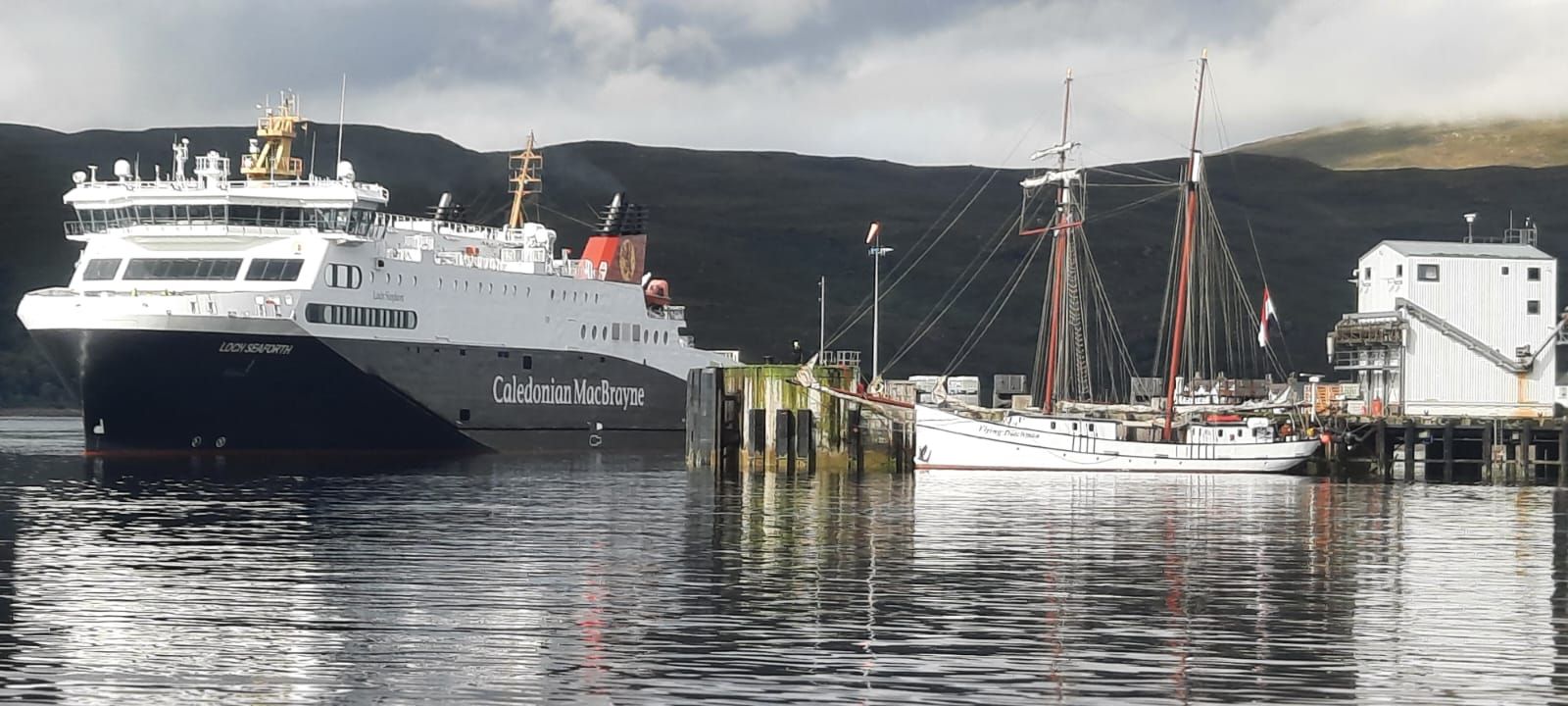
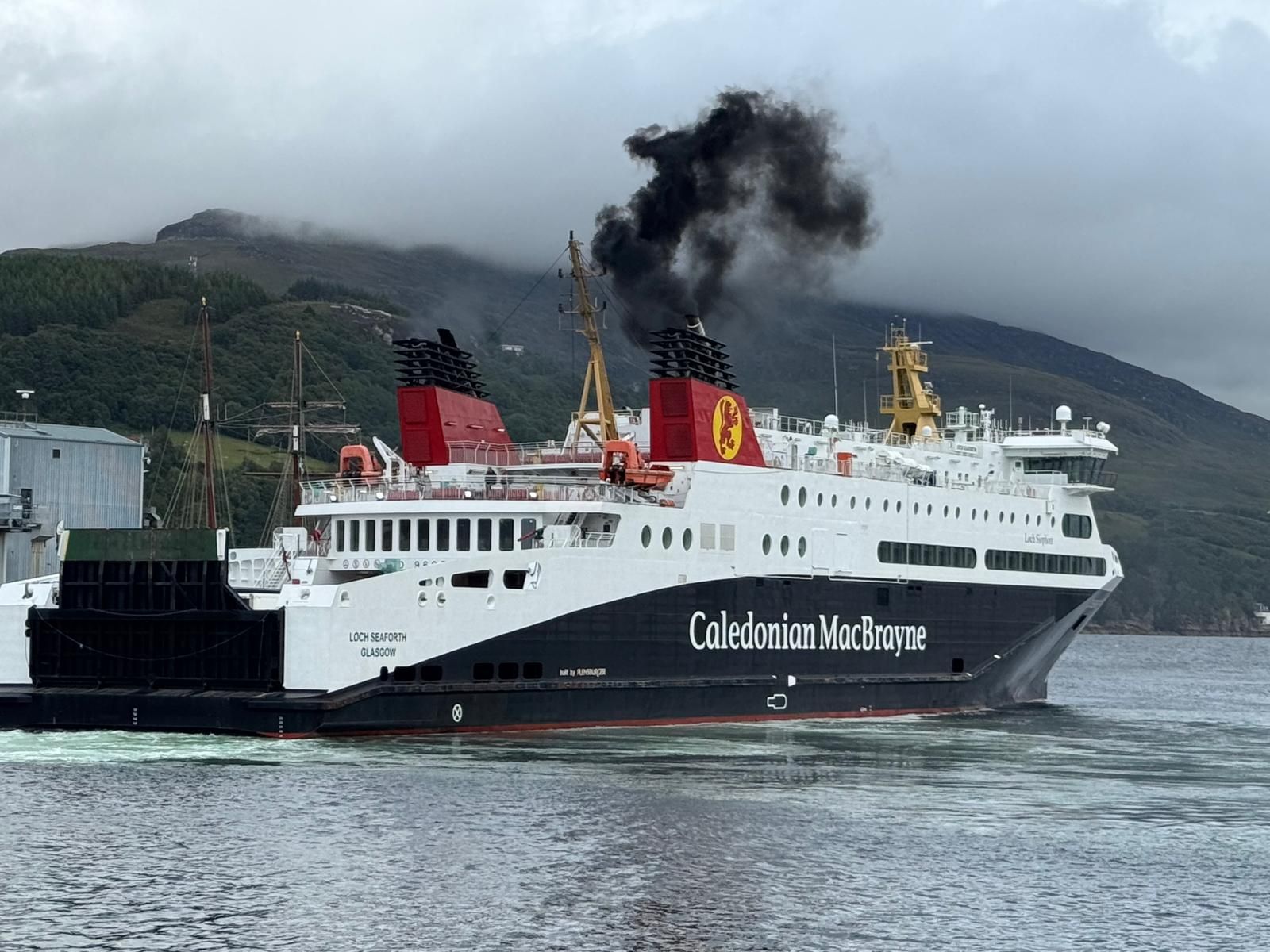
…set against the major ferry terminal serving the Outer Hebrides, providing a stark juxtaposition of the old dutch topsail schooner, against the rather less than environmentally friendly modern ferry…
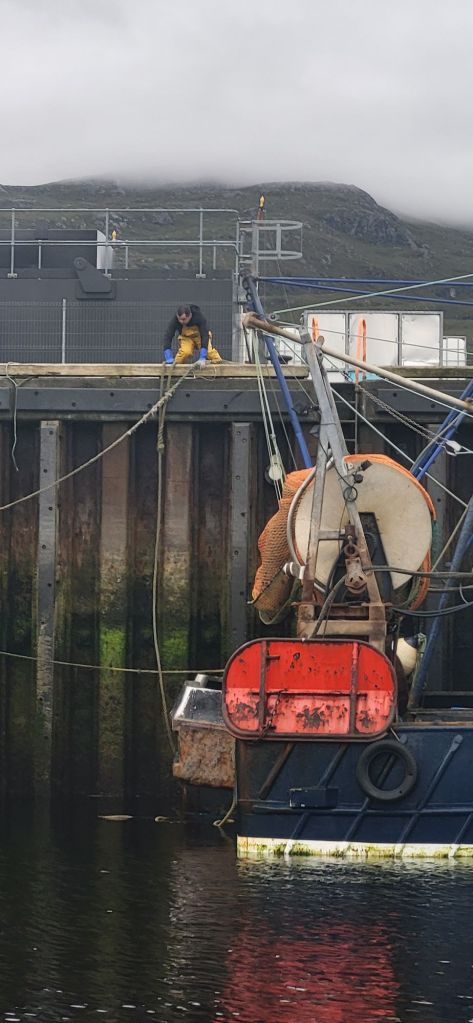
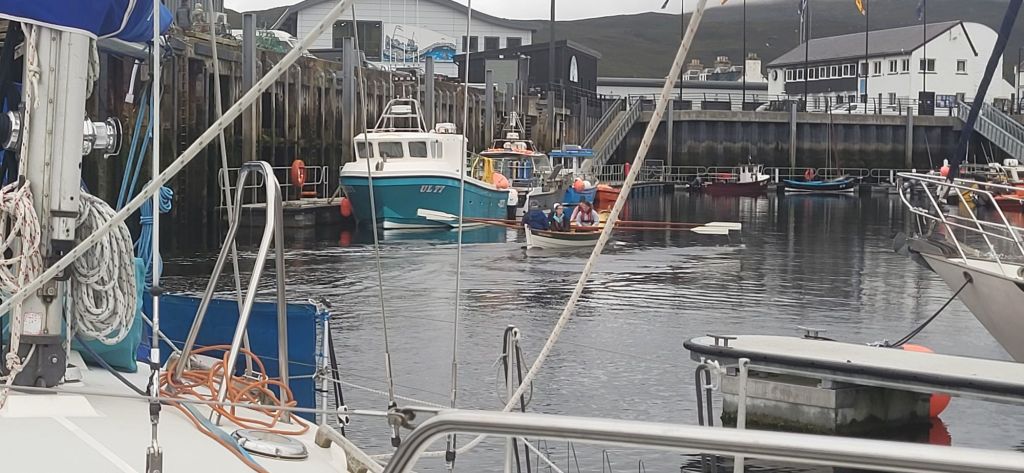
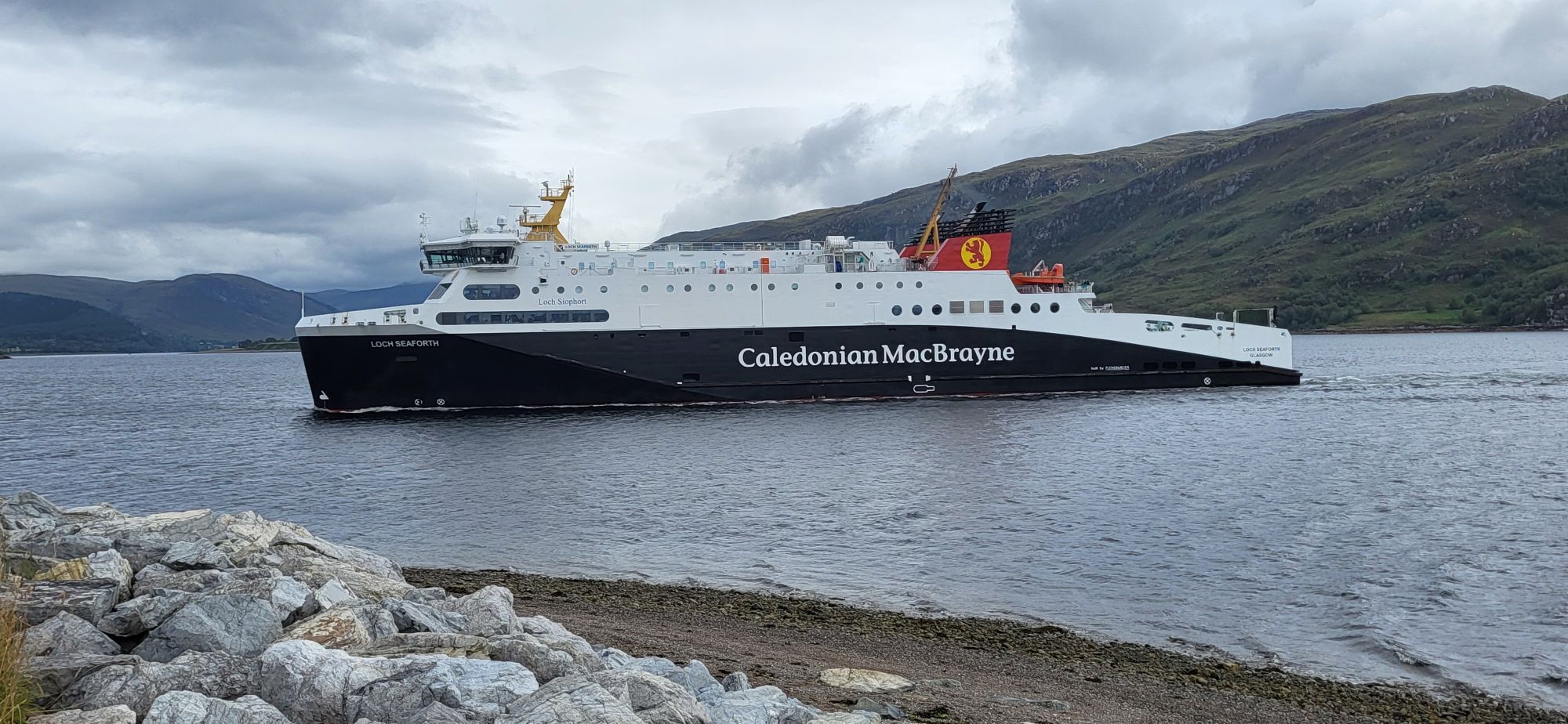
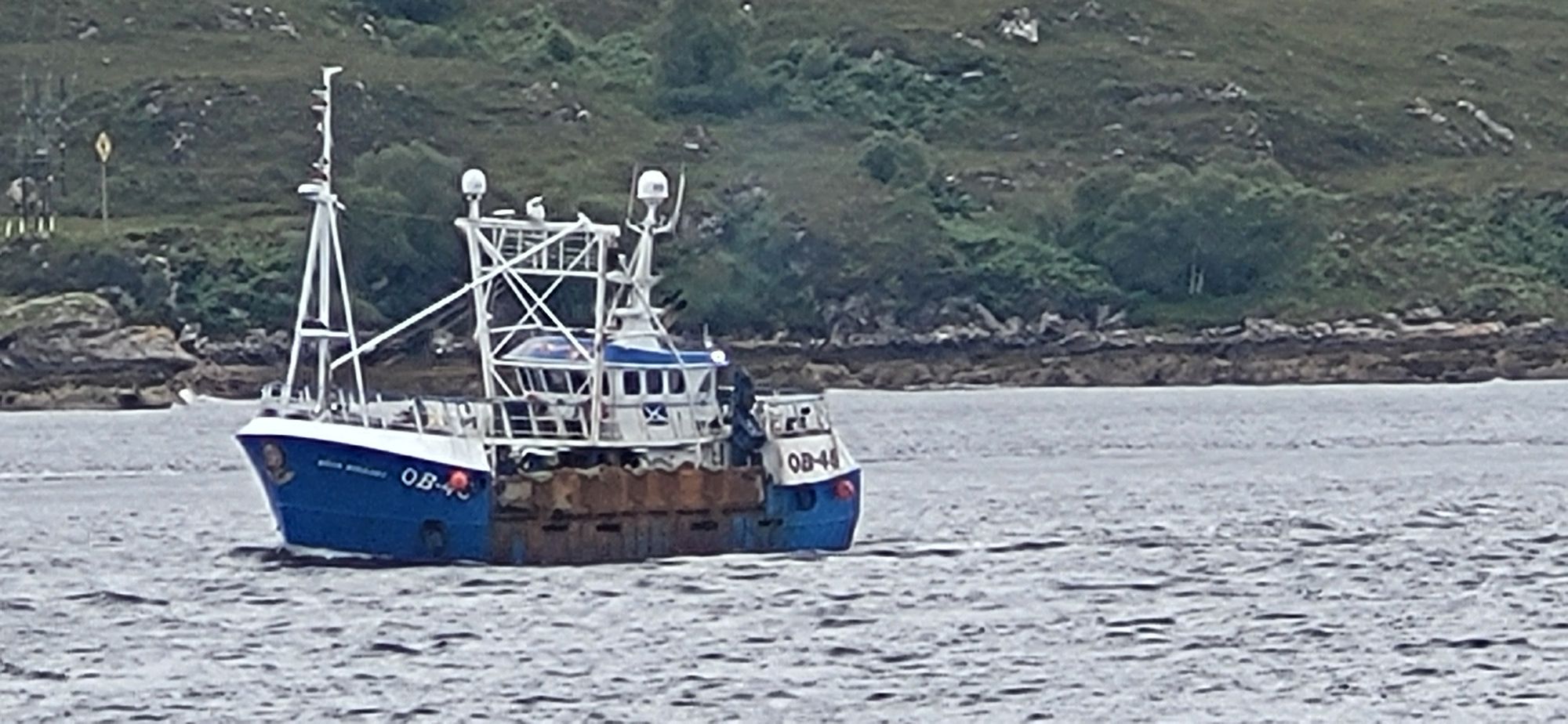
With the rain still politely holding off, we managed a feeble gesture towards exercise, a stroll along the loch to watch the CalMac arrive in from Stornoway with a small fishing boat trailing dutifully behind.
We rounded the day off with a trip back to the pop-up gin bar and seafood shack and some very local music. Its funny how live music in context becomes entrancing, even if it is not something we would naturally be drawn to …
Tomorrow we follow the CalMac ferry back the way it came, wind permitting, with plans to take our time down through Lewis, Harris, the Uists, and Barra, before swinging back to Oban via the small isles, Canna, Rum, Eigg and the rest. That, at least, is the plan…this part of the world has a habit of making fools of the best laid plans.
Footnote: We hope not to follow the ferry in any literal sense…it reminded us of a very early trip acxross the chanel from Poole to Cherbourg (possibly even our first). This was in the days before decent GPS and when radio direction finding was considered state of the art (OK…so we’re old!). The fog came down, we were uncertain of our position, and then a ferry loomed out of the gloom and we followed it, hoping that it was the Cherbourg ferry and not the one bound for St Malo! It did go to Cherbourg, we did get there in one piece and we never fully trusted RDF again!
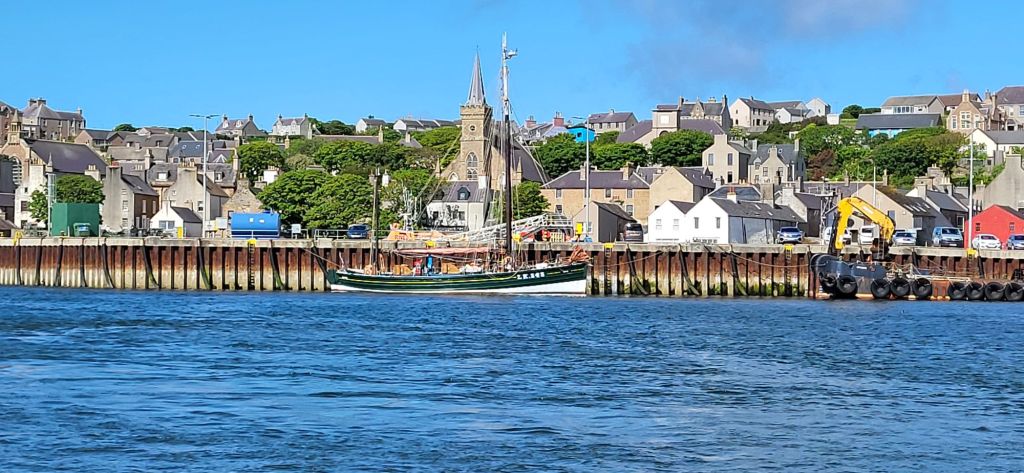
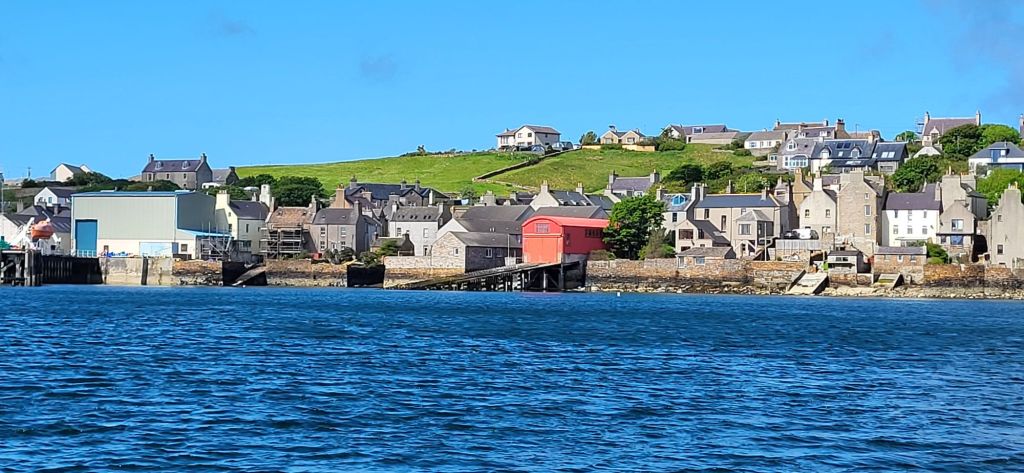
Revisiting places full of happy memories can sometimes be a bit of a fool’s errand. The food will be worse, the weather will be worse, and we will be older. Nevertheless, here we are in Stromness, nine years on, and we are delighted to report that the pessimists are, on this occasion, entirely wrong.
But we are getting ahead of ourselves.
Two consecutive pre-dawn starts had left us in a condition politely described as knackered. Wick offered the prospect of rest and recuperation, and we embraced it wholeheartedly, until we discovered that Sunday public transport in this corner of Scotland amounts to one train and a rail replacement bus, both timed specifically to be of no use whatsoever. Old Pulteney distillery, which might otherwise have provided a perfectly reasonable programme for the day, was shut. Clearly, some activity was going to be required.
We compromised. We took a taxi.
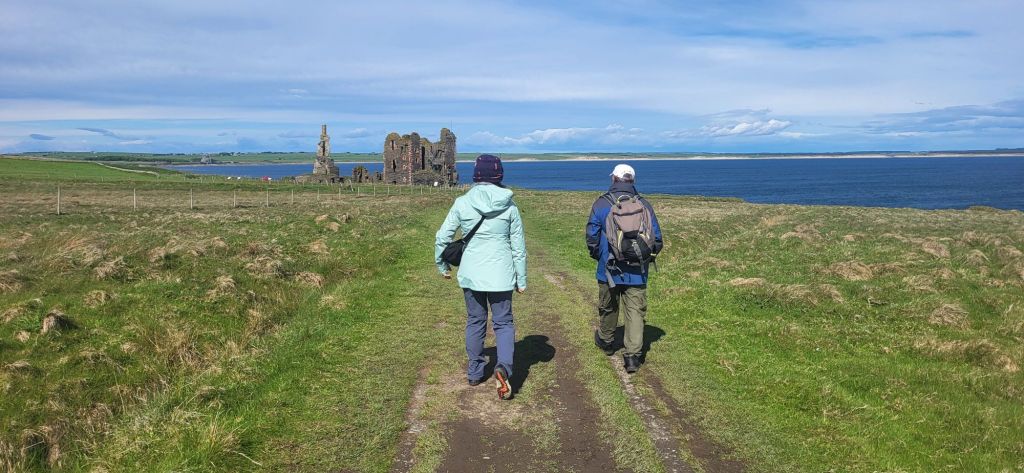
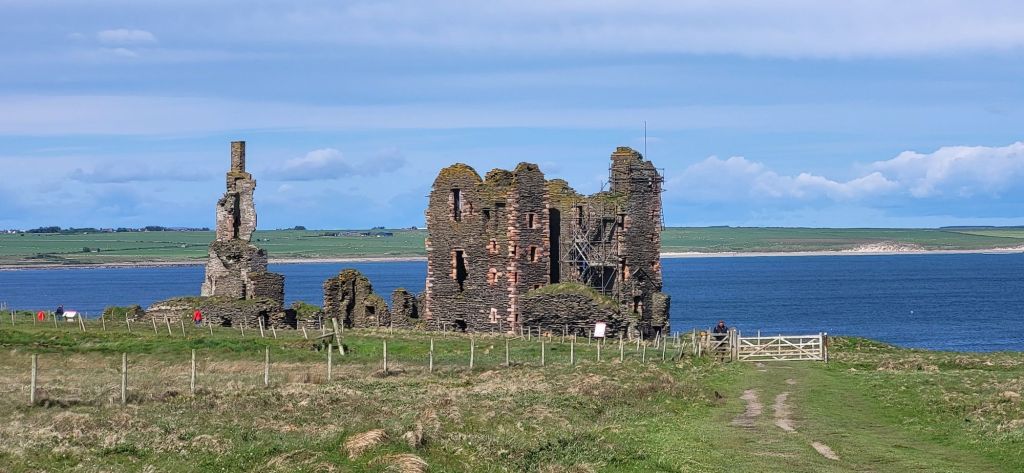
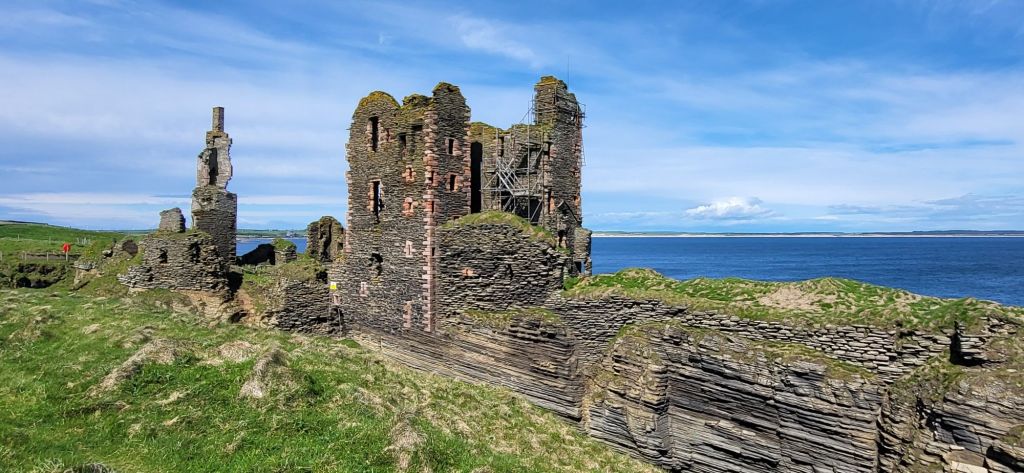
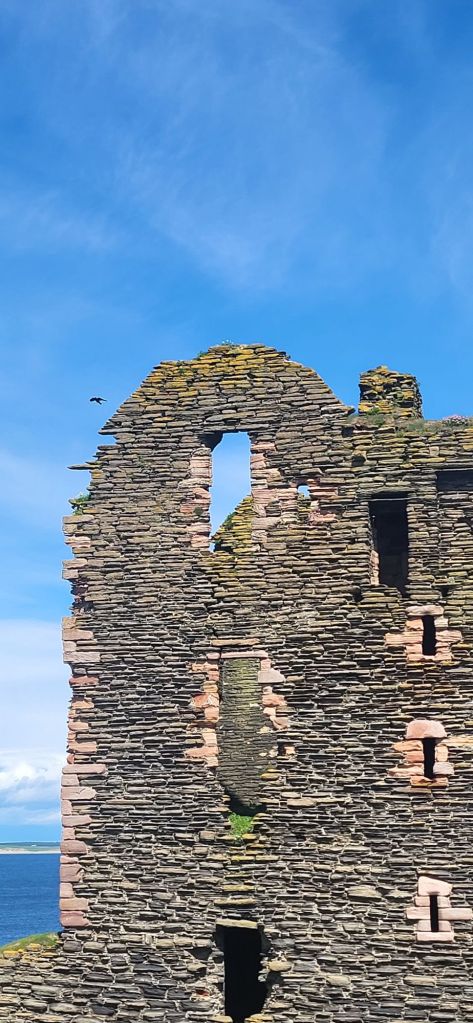
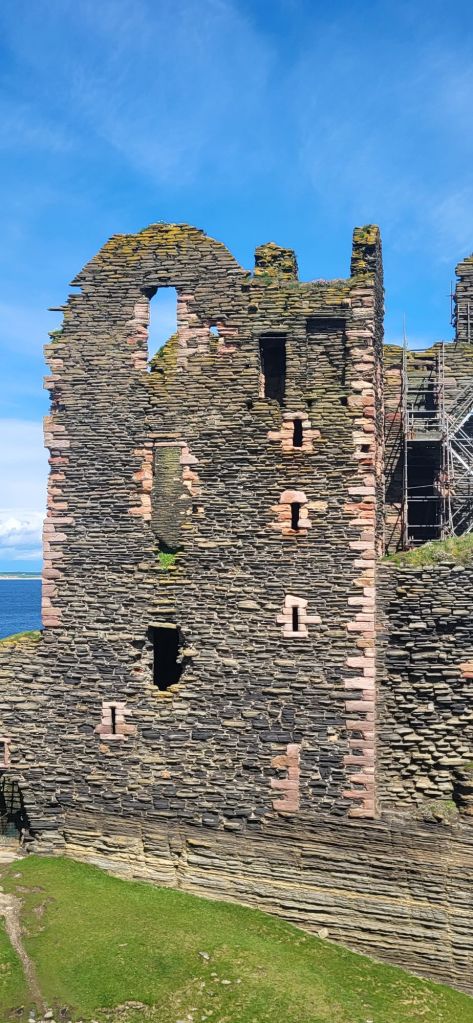
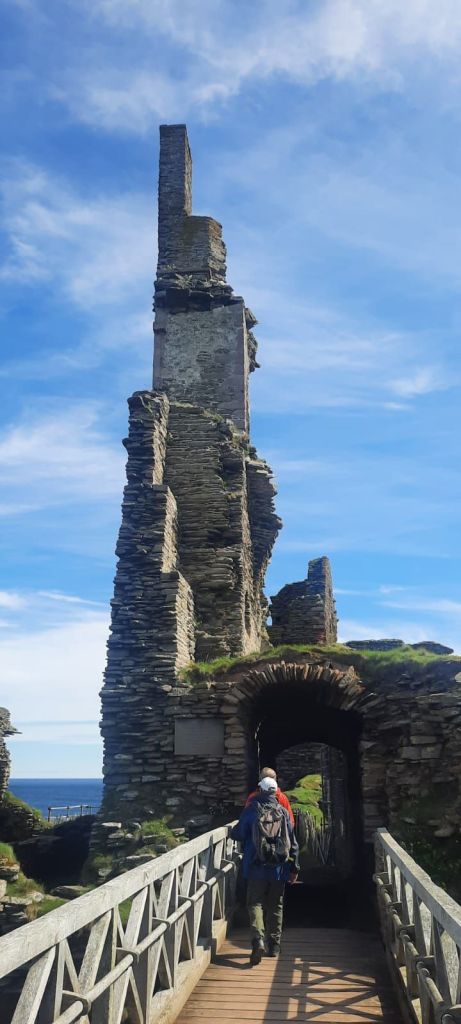
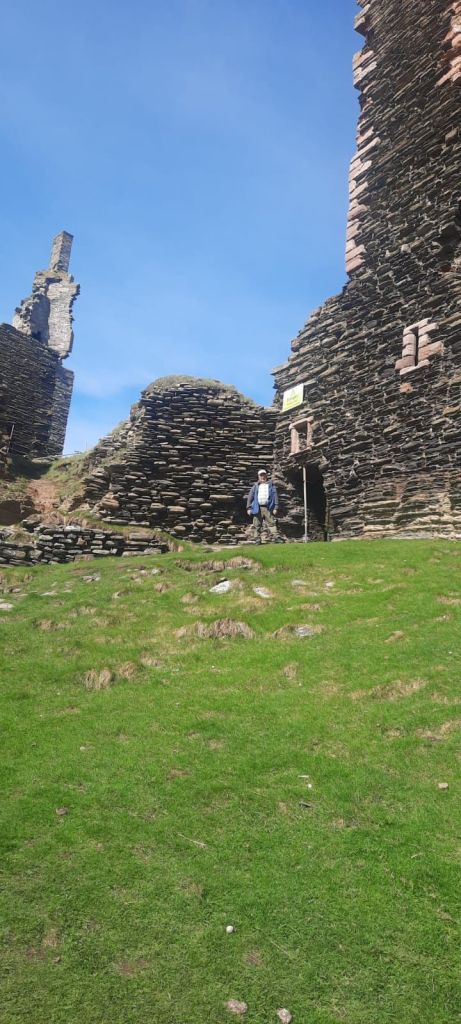
Castle Sinclair Girnigoe turned out to be entirely worth the journey. Perched on sheer cliffs in a manner that would have any modern planning department reaching in fits, it is both magnificent and deeply alarming. Its history is, if anything, even more dramatic than its location. One clan chief, apparently not bothered by the norms of fatherhood, imprisoned his own son within its walls and sustained him exclusively on salt beef until the poor man died of thirst. We don’t think he would have done well in the current era of parenting.
Cromwell passed through briefly, and thereafter the castle got on with the business of falling into ruin.
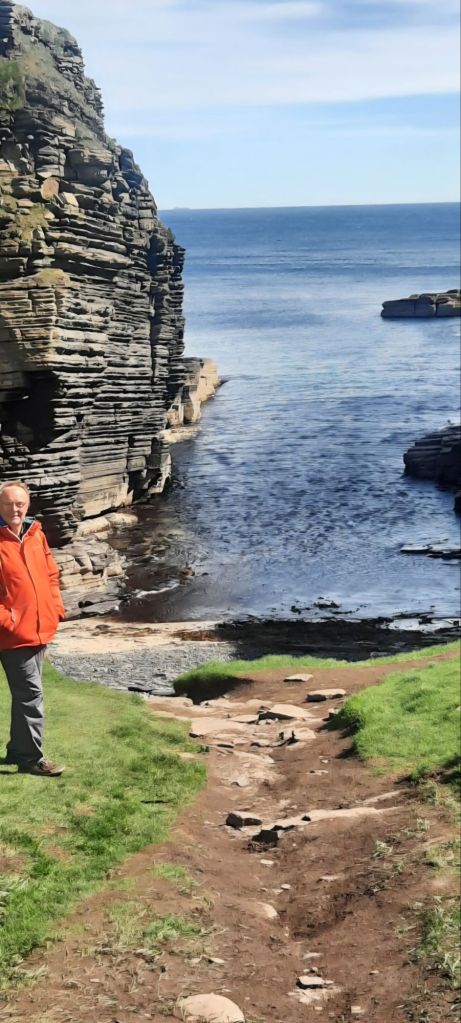
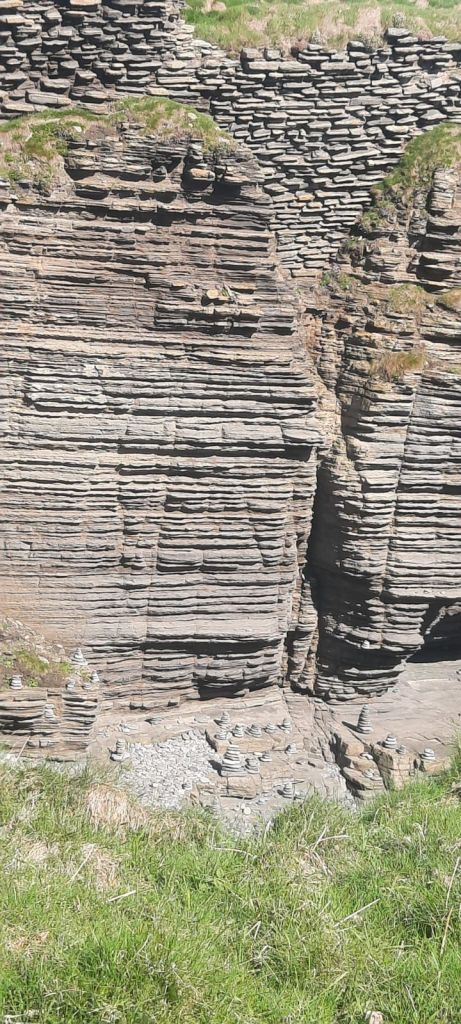
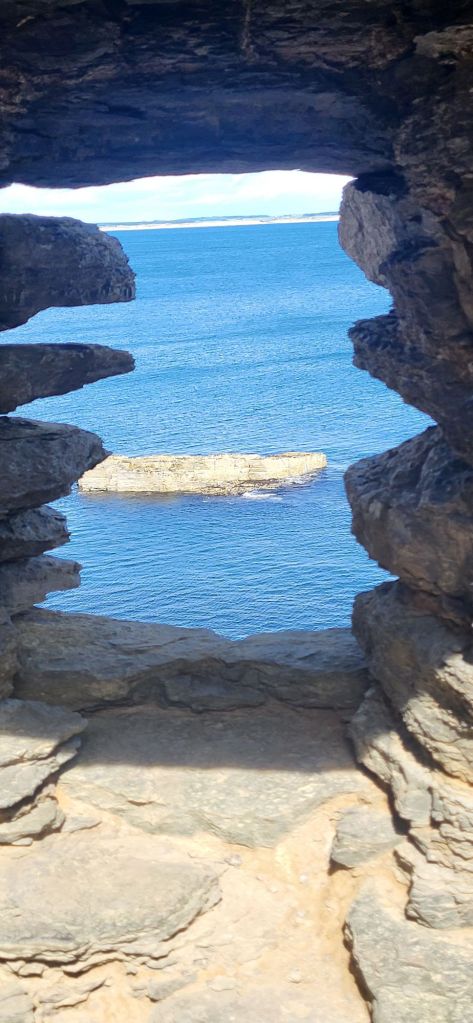
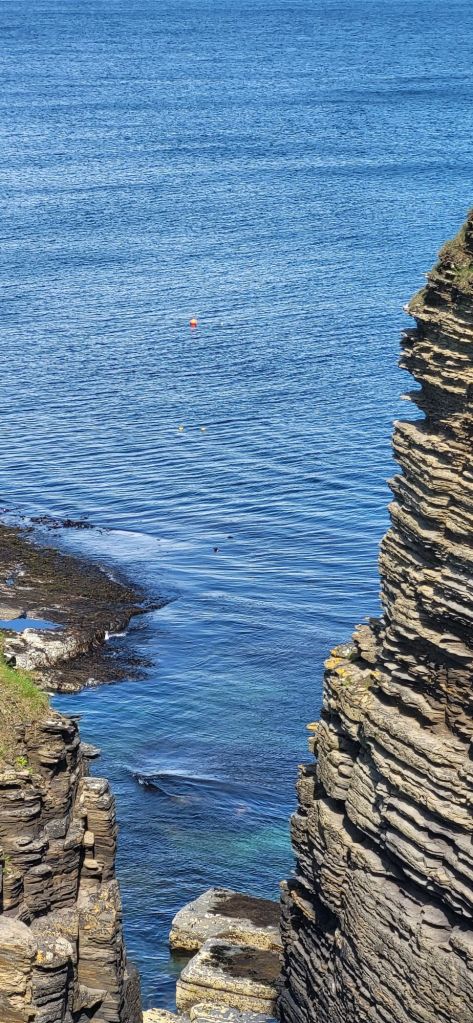
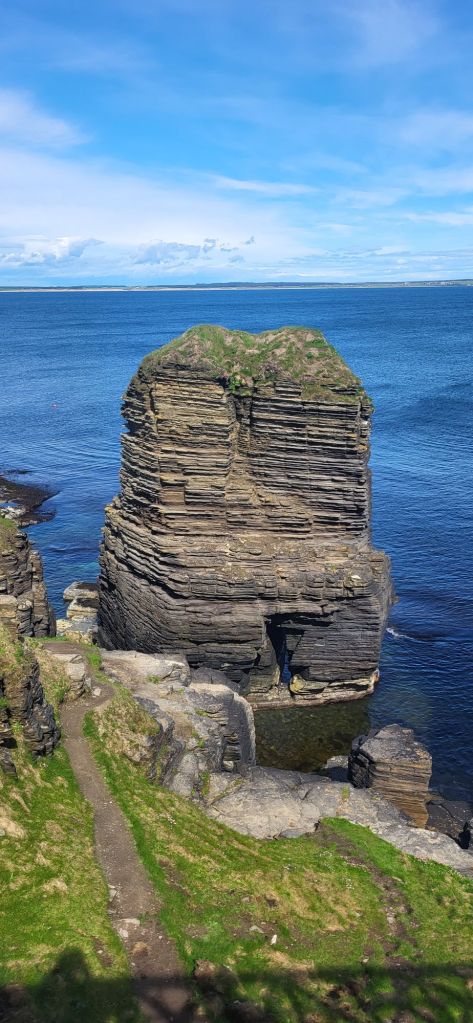
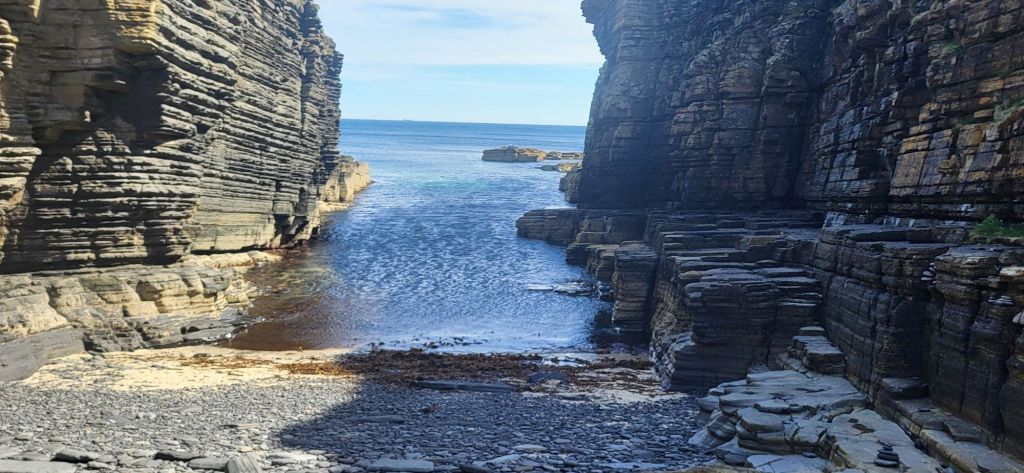
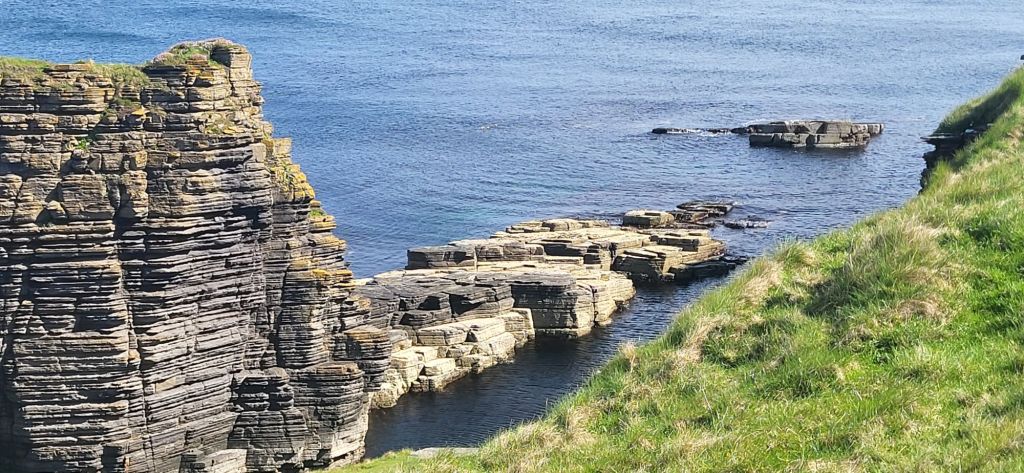
The coast here is very craggy and we understand why you would build a castle here if you distrust some of the locals, even if it seems completely precarious…
The Noss Head lighthouse nearby has acquired a coffee caravan, which was doing brisk business. The baked goods on offer were extensive, and we concluded that the walk back to Wick would require more calories than strictly needed for nutrition. The cliff-top path being very boggy, we took the road instead, which proved longer but considerably drier, and passed through countryside that once formed part of the Coastal Command network, intercepting signals from German ships and occupied Norway and sending them south to Bletchley for decryption.
Back aboard Heydays, we turned our attention to Orkney. The weather forecast, as is normal round here, is everchanging making life or passages hard to plan. We wanted to reach some of the smaller islands missed on the previous visit, but after some debate, we settled on Stromness as the obvious first port of call, well-placed, well-sheltered, and an entirely acceptable place to be pinned down by the weather for several days should that prove necessary. Up here, this is what is known as a plan.
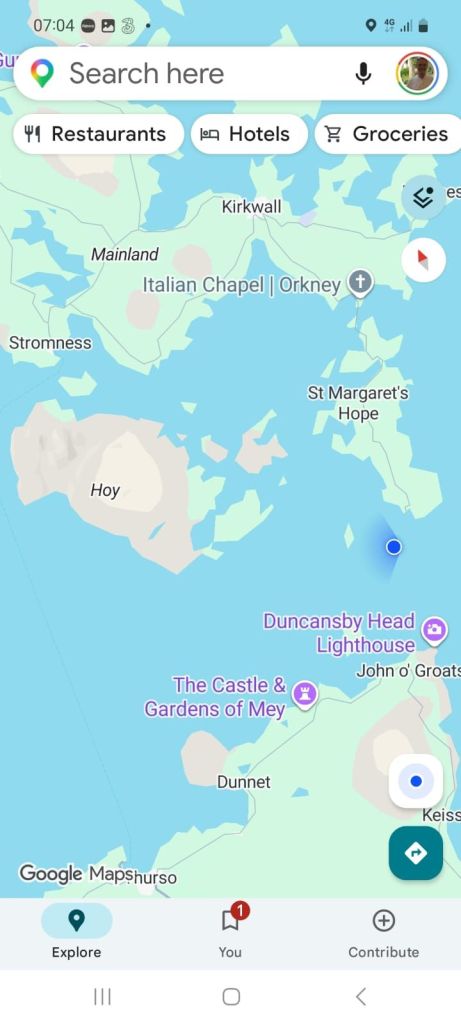
The Pentland Firth demanded its usual degree of respect. The tidal streams through here are not merely strong, they are the stuff that features in accident reports. The standing waves known as the Merry Men of Mey are named, one can only assume, by someone with a very odd sense of humour, as there is nothing remotely merry about them. Vessels considerably larger and more robust than Heydays have come to grief in them. The pilotage is precise, two miles east of Duncansby Head, one hour and fifteen minutes after high water Dover, at the exact moment of slack water as the tide turns north-west. We needed to be there at 0615. Wick is two and a half hours away under engine. The arithmetic is straightforward and deeply unwelcome: alarm at 0245, slip mooring at 0330.
The one concession the far north makes at this time of year is that darkness barely registers. We went to bed at eight o’clock in broad daylight, which is a peculiar experience, and lay there with the rain doing its best to keep us awake.
Sleep came, eventually, but was not entirely restful…
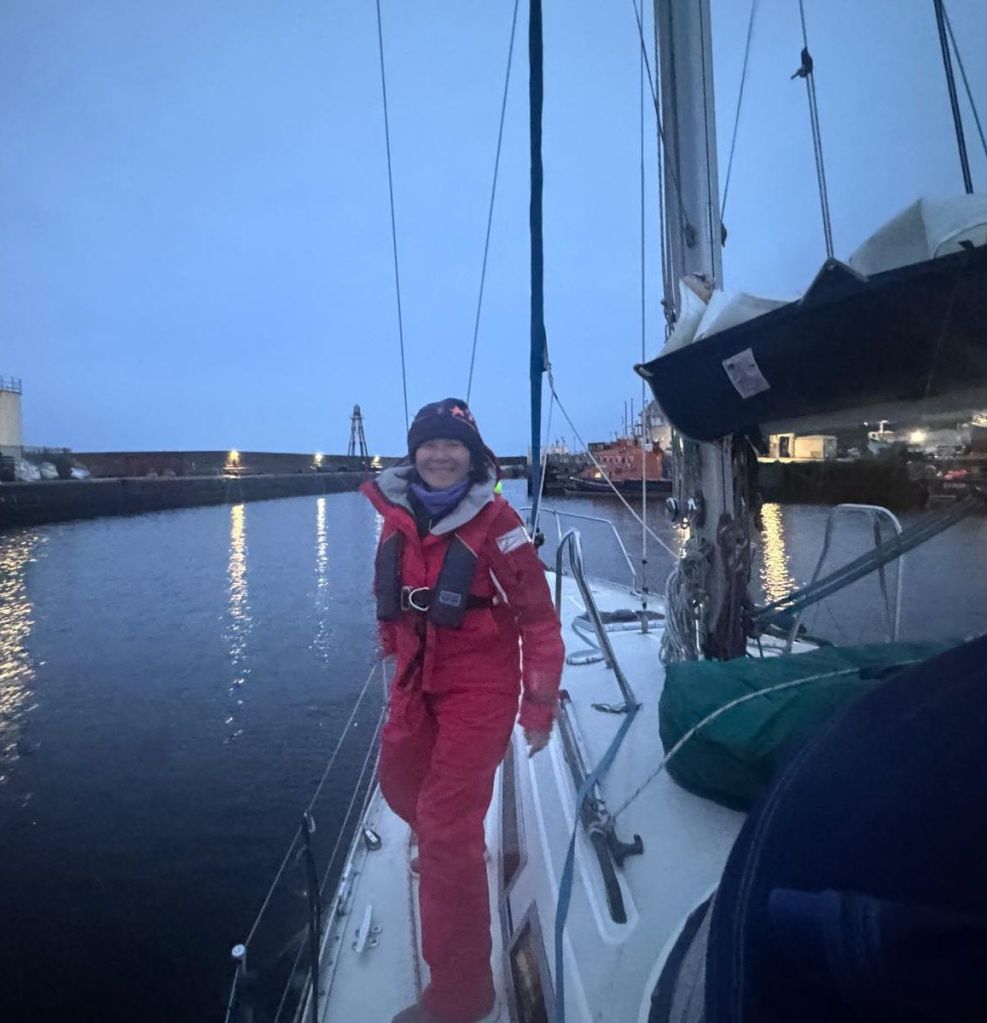
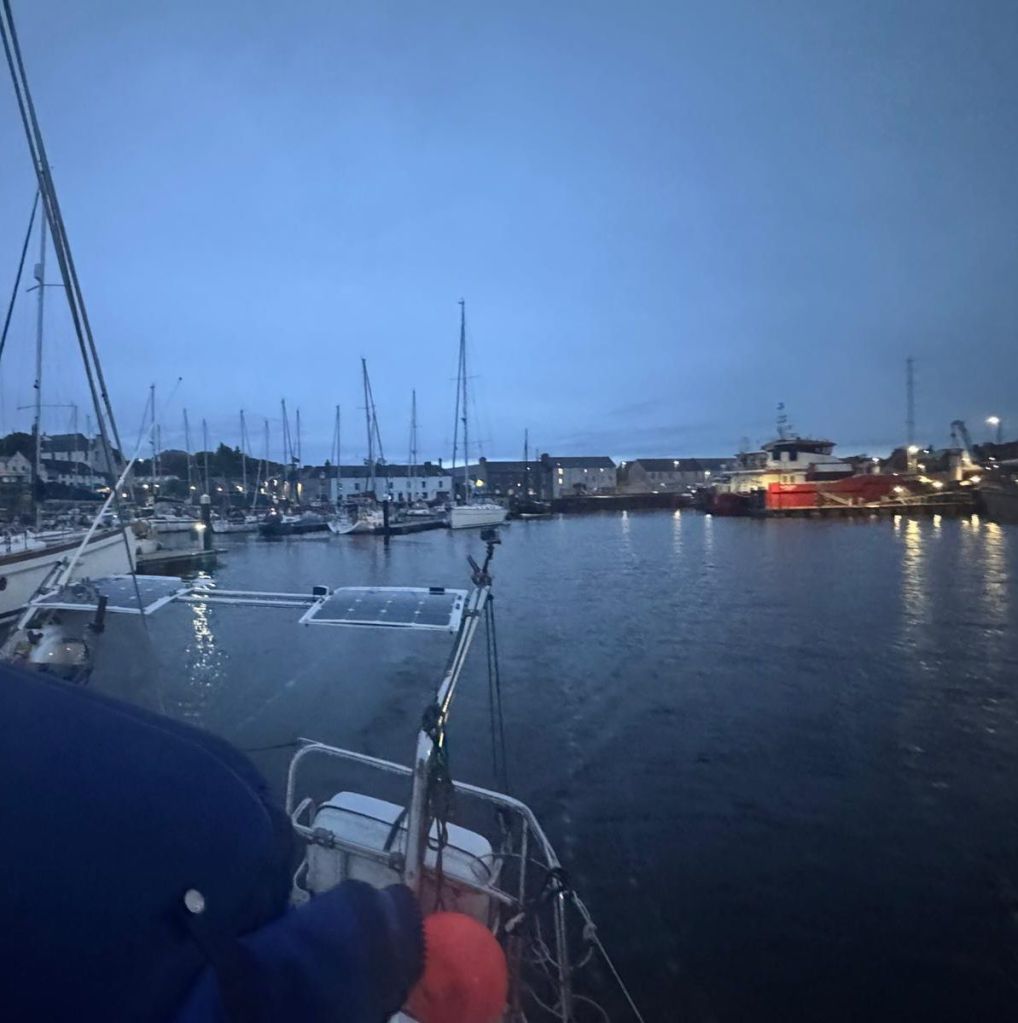
At 0245, the alarm achieved what rain, daylight, and general anxiety had failed to do and woke us up. We got ourselves into full wet weather gear and sufficient warm layers to stifle all mobility, and by 0330 were sliding quietly away from the mooring with enough light to steer by…
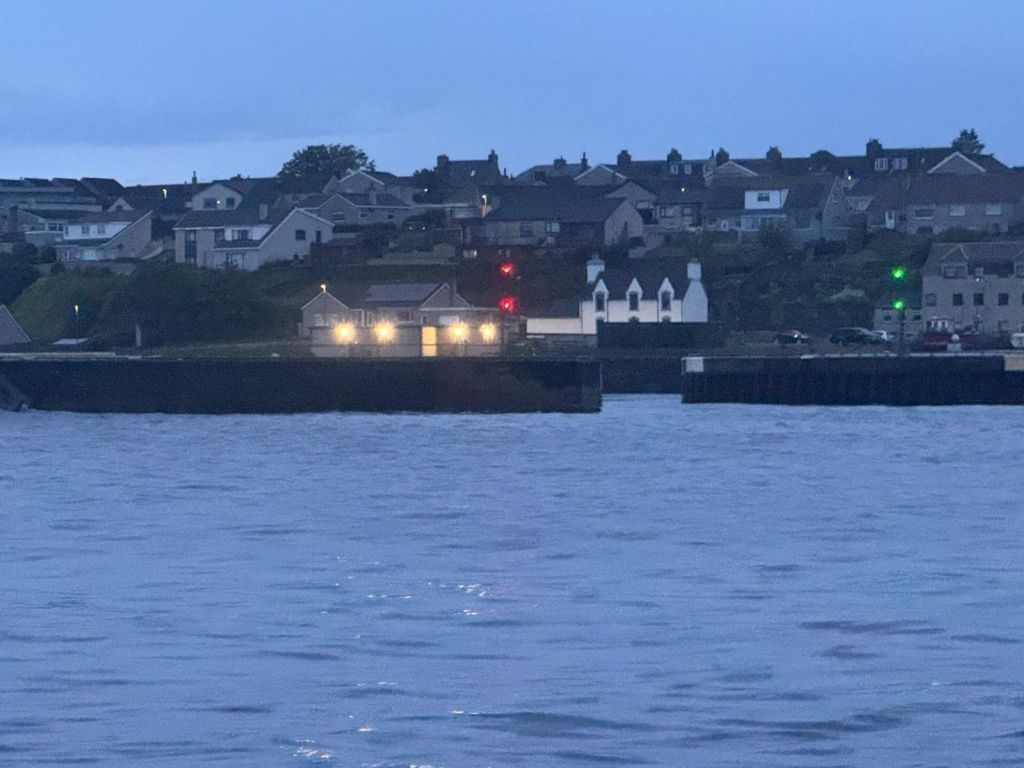
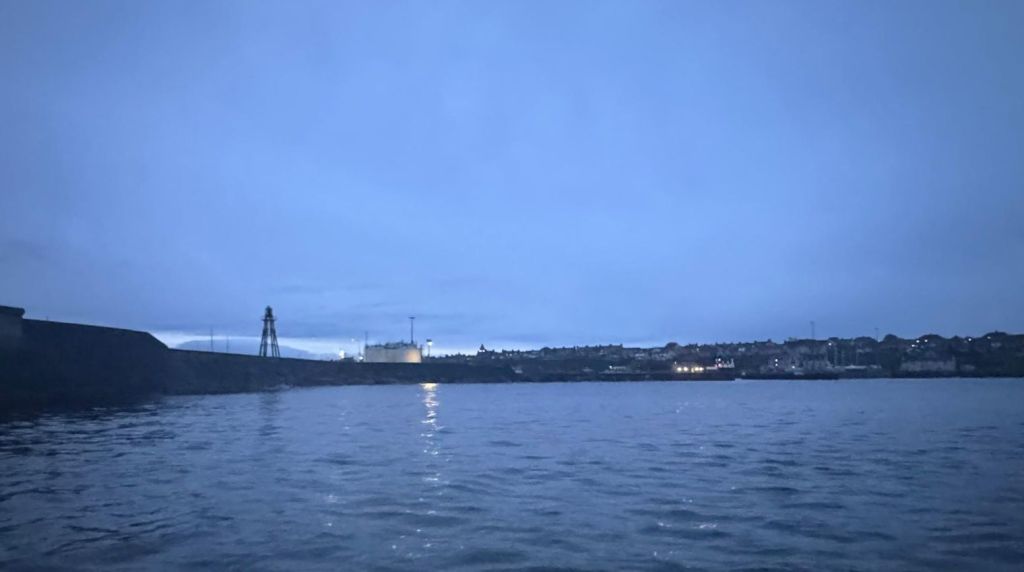
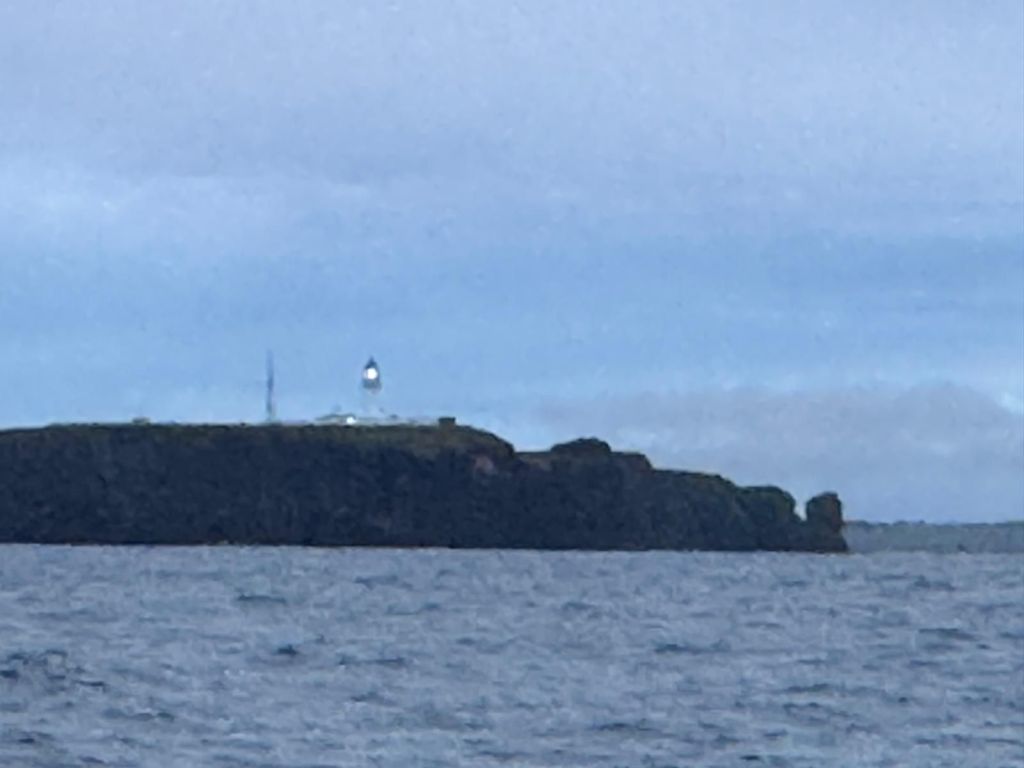
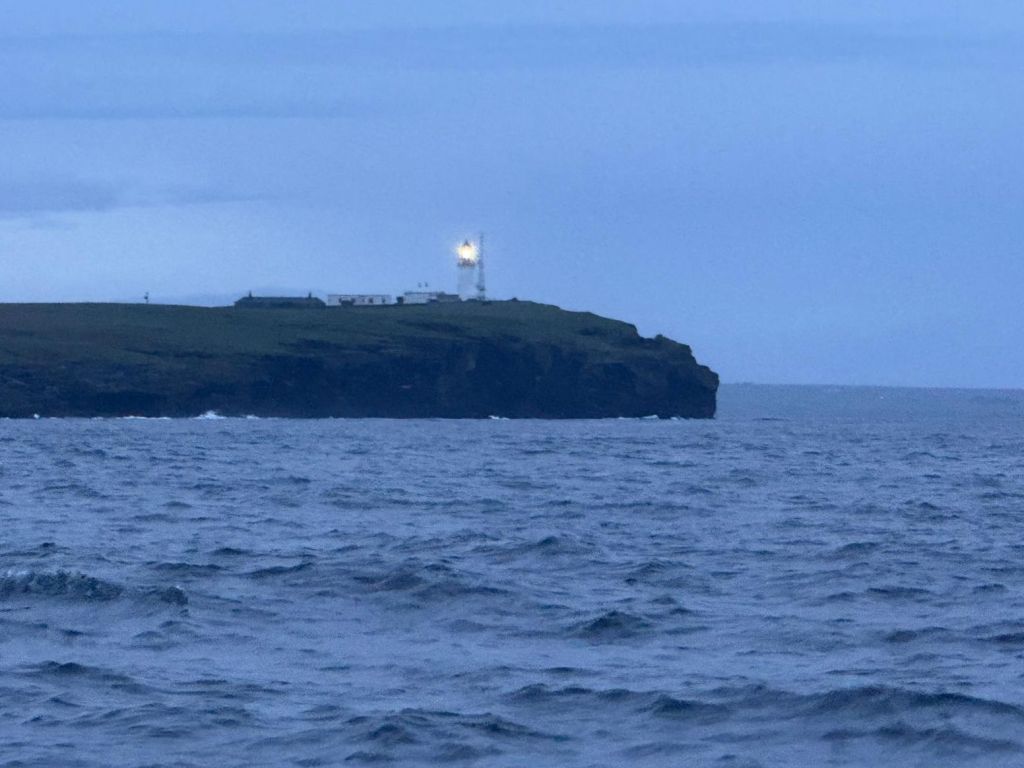
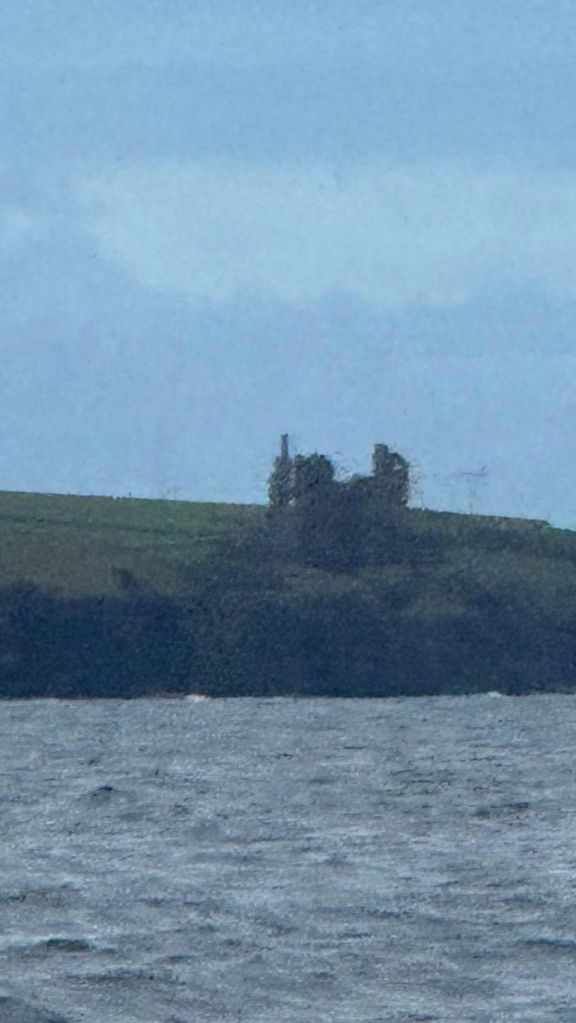
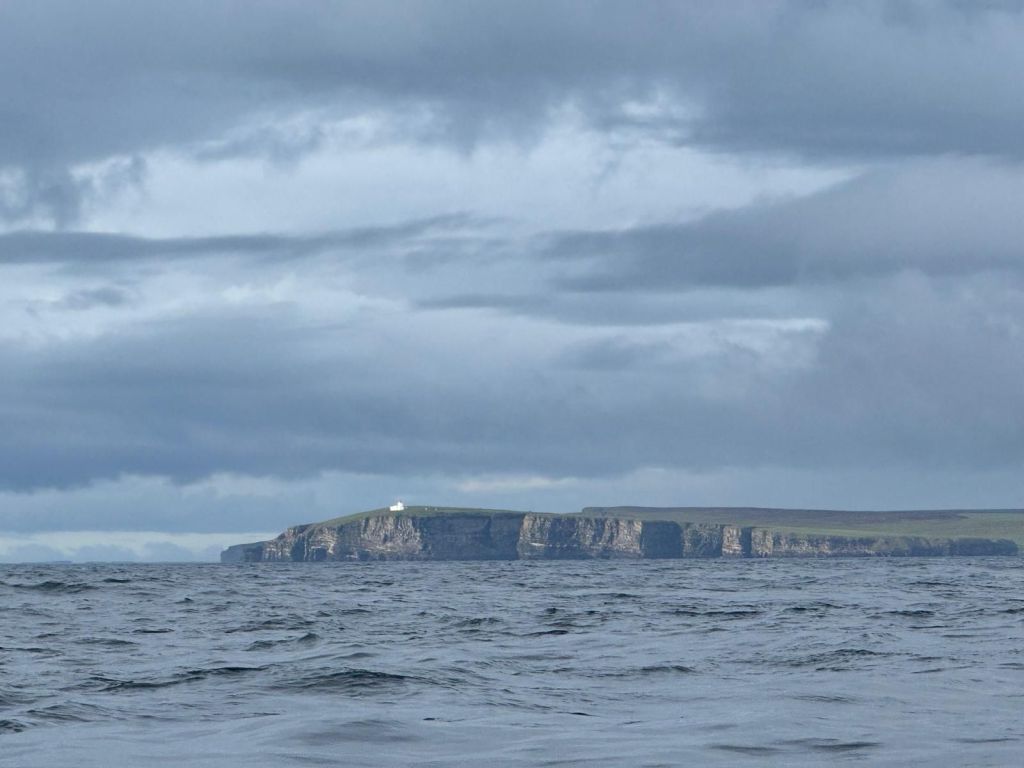
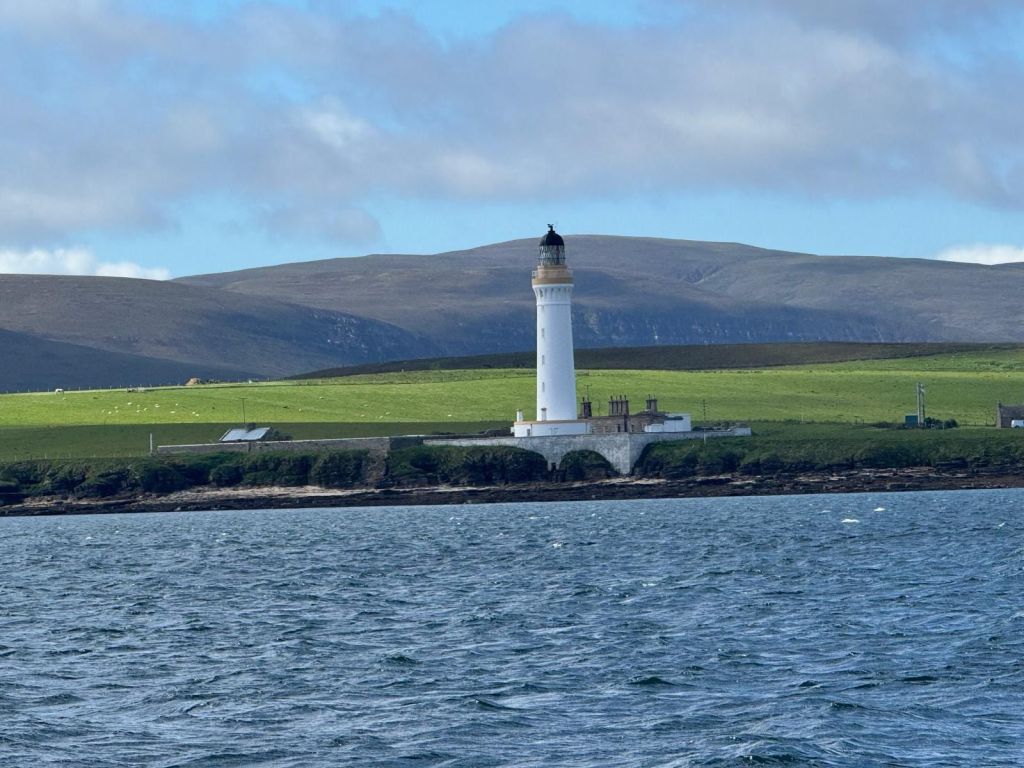
We have the lights of Noss Head and then Duncansby Head to guide us, and we slide past the now ghostly Castle Sinclair Girnigoe.
The only other signs of life at this god-forsaken hour are the ever present, very cute, but incredibly shy guillemots. They resolutely refuse to be photographed and swim away underwater with a technique that looks just like flying.
The rain eases, but the temperature stays firmly well in single figures as the headlands pass in silhouette. Hot coffee helps…
With absolutely no wind at all we use “the old iron tops’l”, as old sailors probably never said, and we get to the start of the Pentland Race exactly at slack water and to the minute of the pilot guide….smug or what…
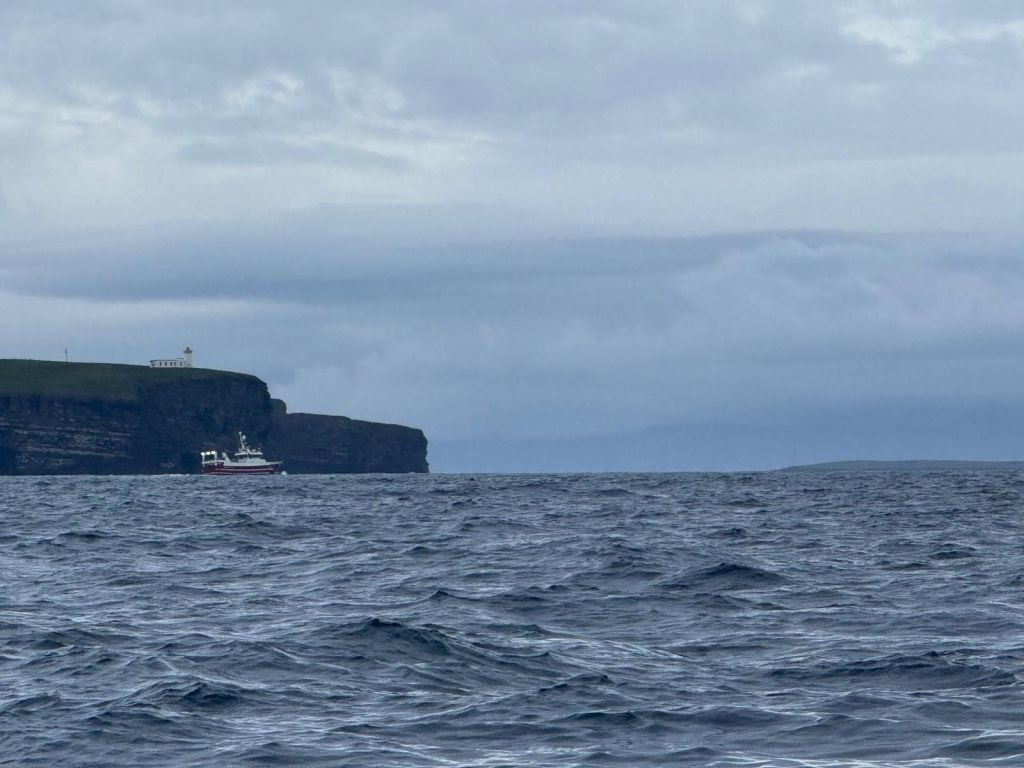
…just a fishing boat rounding the head towards Scrabster…
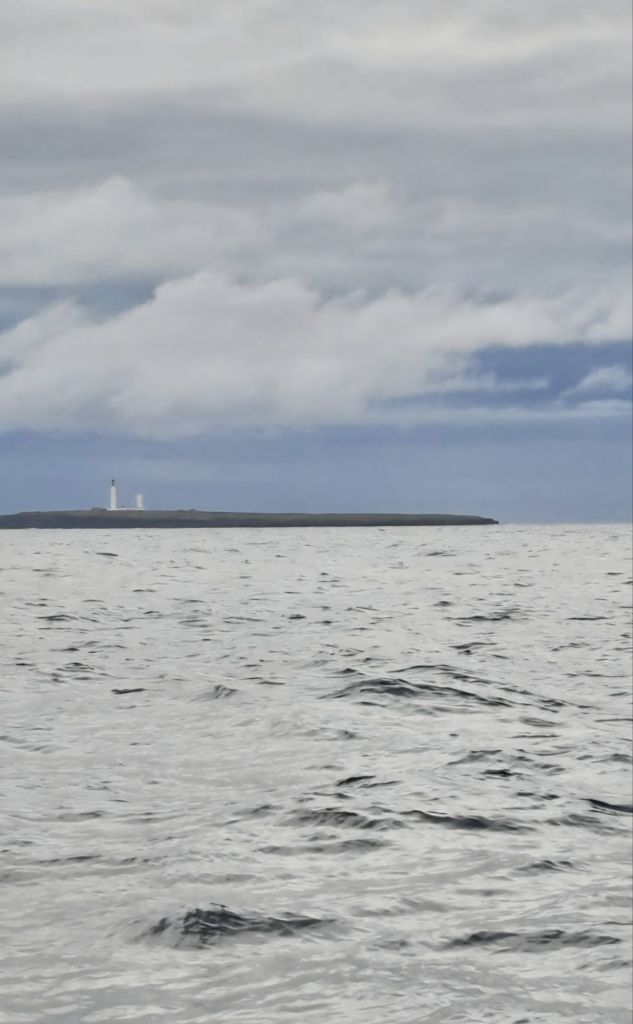
As Duncansby Head and the iske of Stroma fall astern, and Muckle Skerry with its very lonely light slides past to starboard…
…we fix our eyes on South Ronaldsay and Swona. The westerly stream is now doing its best to suck us towards the race, and we are steering around 40 degrees east just to make good our course.
Gradually we draw a beam of Swona, and, now protected by South Ronaldsay, we are through the worst and still with no wind, motoring freely towards Scapa Flow.
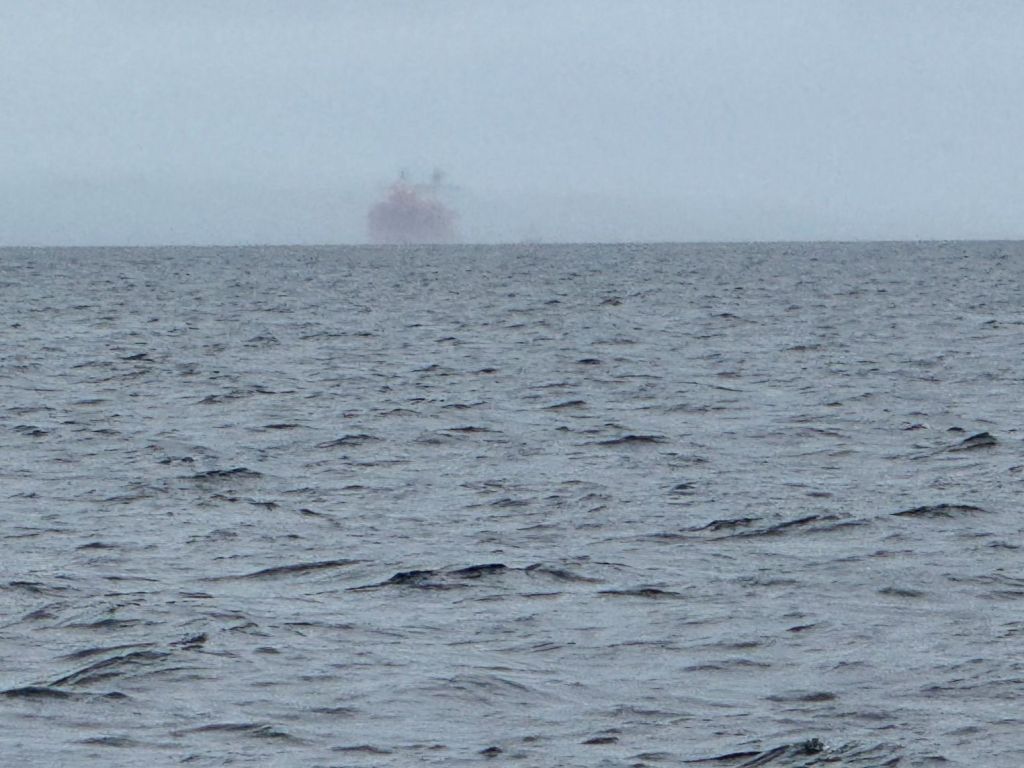
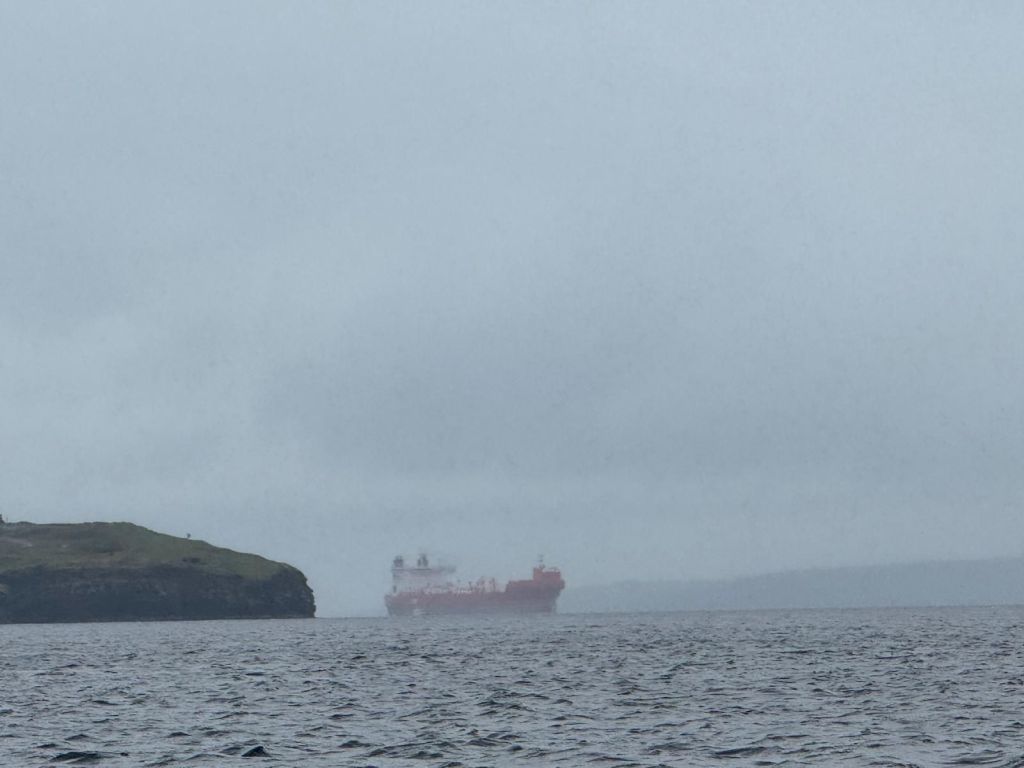
We see it coming….a squall from dead ahead bringing winds on the nose, heavy rain, and very little visibility. Our plan is to head up Hoxa Sound and then across Scapa Flow, but a message on the radio adds to our joy as it warns of a big tanker leaving to transit down the Sound in the opposite direction.
We decide to use discretion (much underrated) and instead plot a passage to shimmy between the island of Hoy and the small islands of Switha, Flotta and Cava.
As the visibility improves slightly, we catch a glimpse of the tanker, thankfully to be nowhere near…
The change of course turns out to be delightful, as the weather changes as rapidly as it came, and we find ourselves in bright sun (albeit with wind on the nose….obviously).
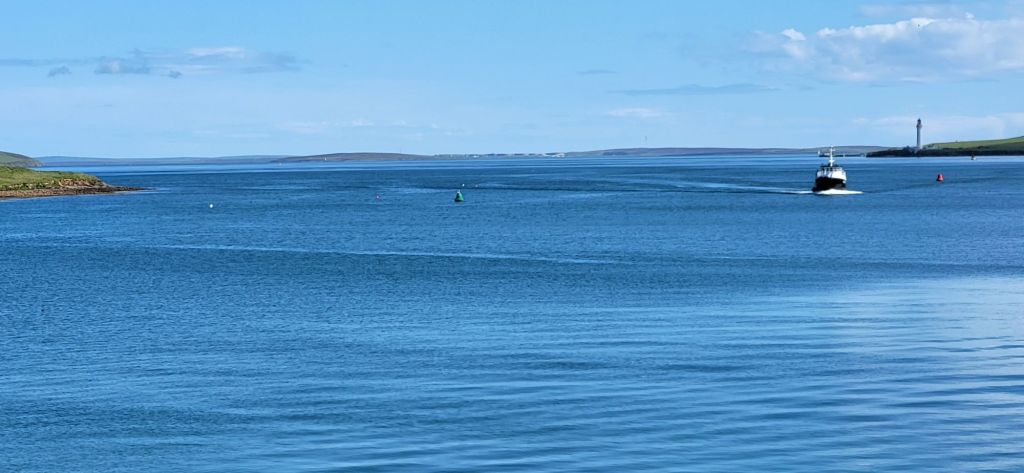
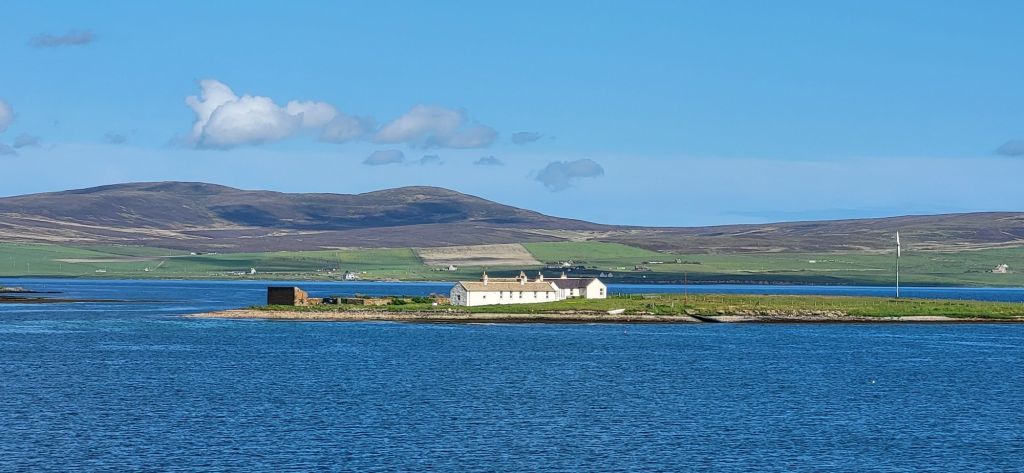
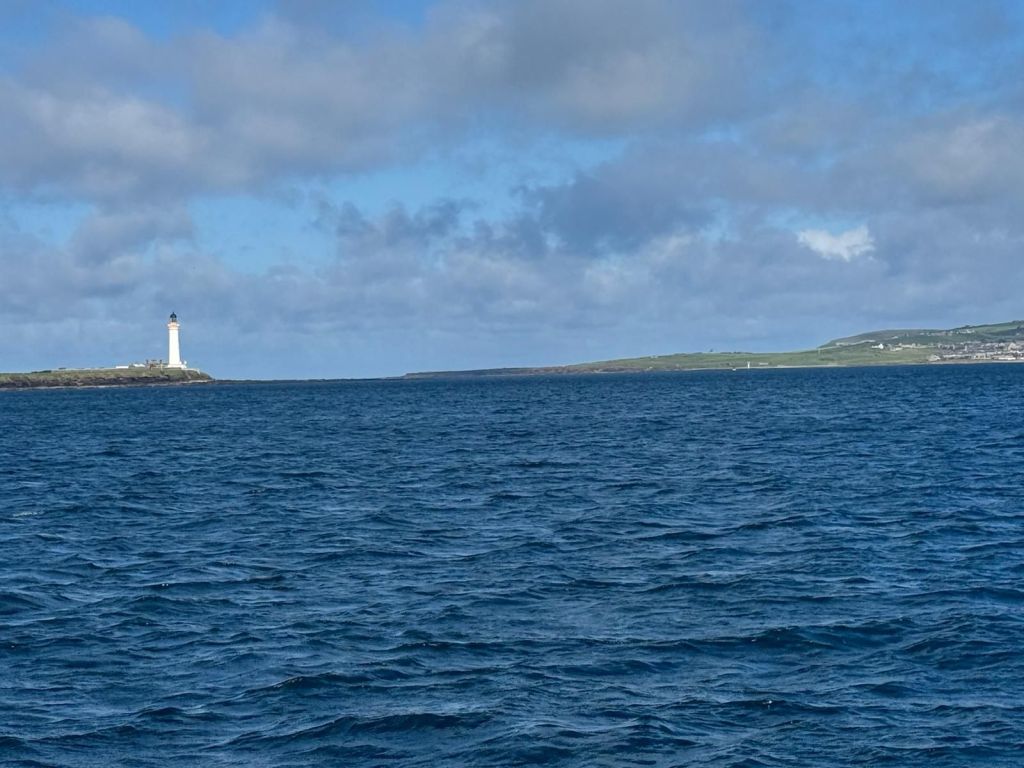
The last few miles past Graemsay and in to Stromness are brilliant and there is a real sense of almost a homecoming.
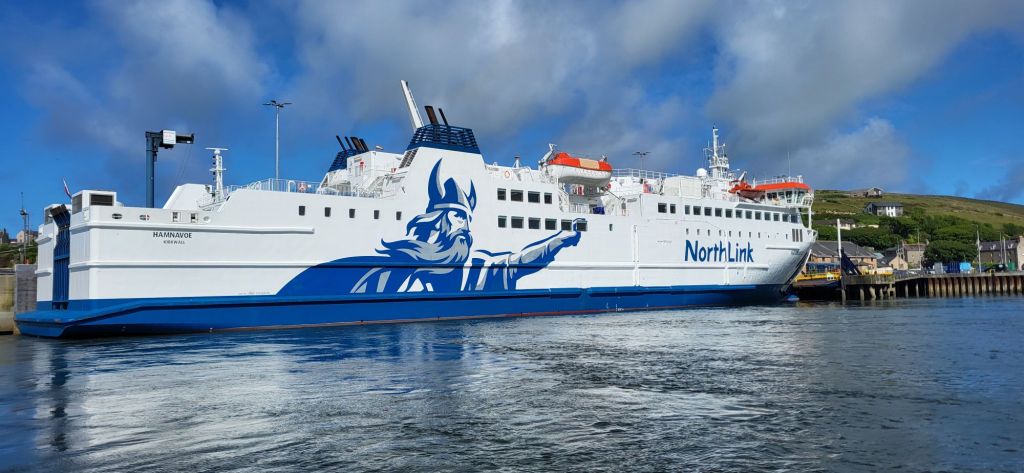
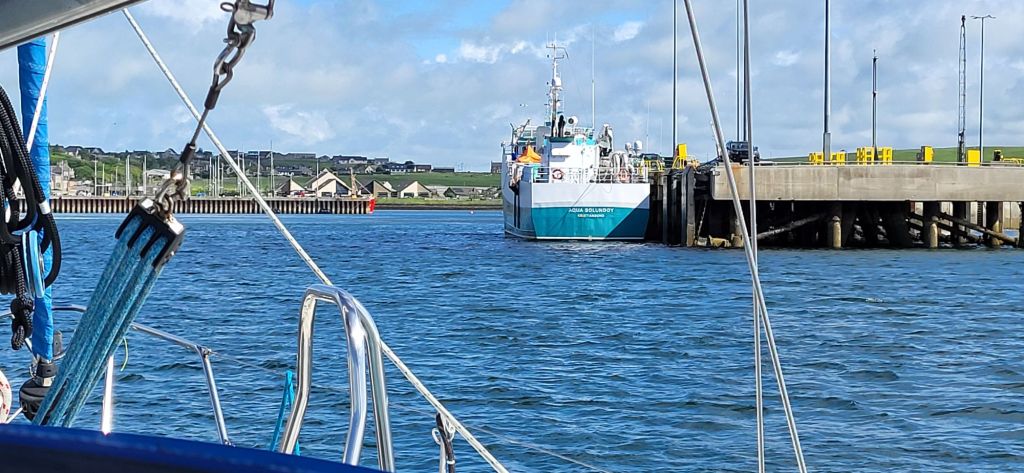
The ferry runs in ahead of us …
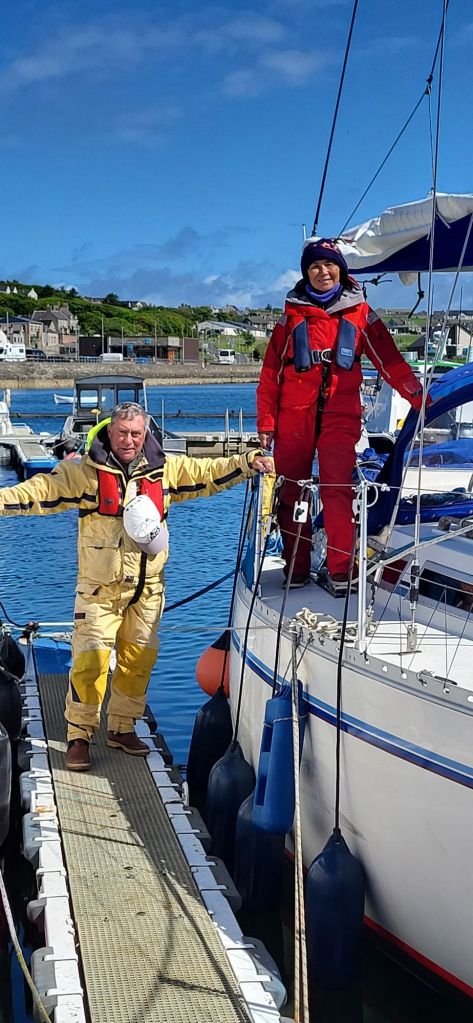
and by the time we have tied up ourselves, it is already loading for the return trip.
We feel like we’ve done a day’s work already…it’s only 10.45am, but fried eggs and more coffee make up ….what? Breakfast? Brunch?…..before a really welcome snooze. It’s great to be back.
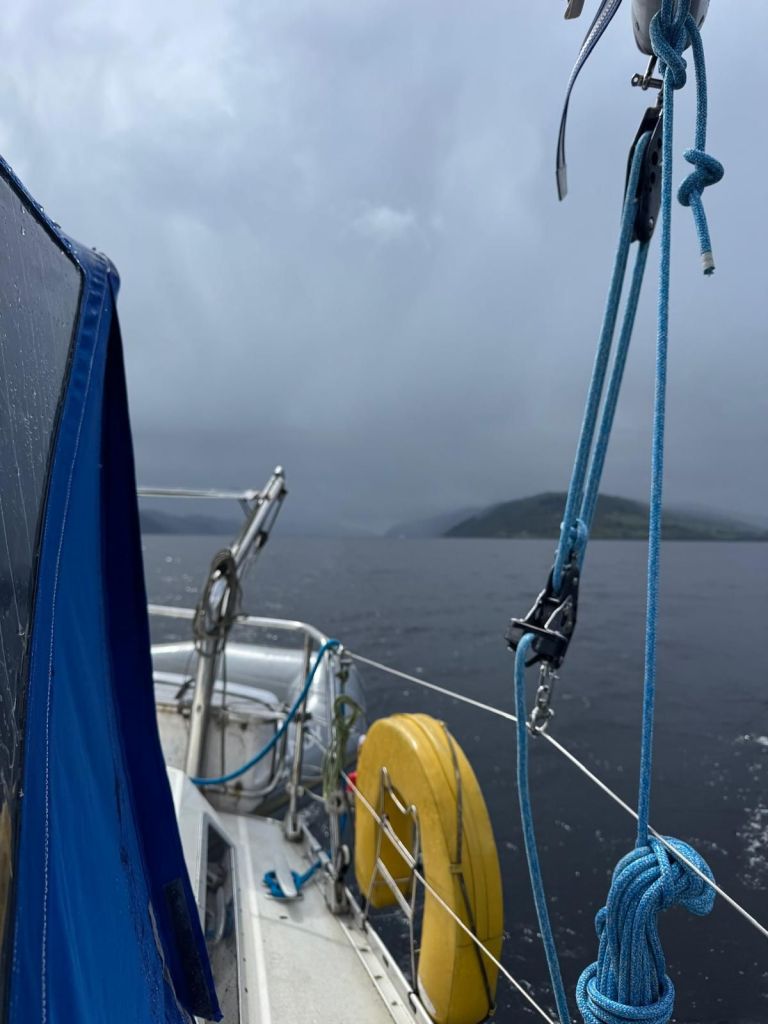
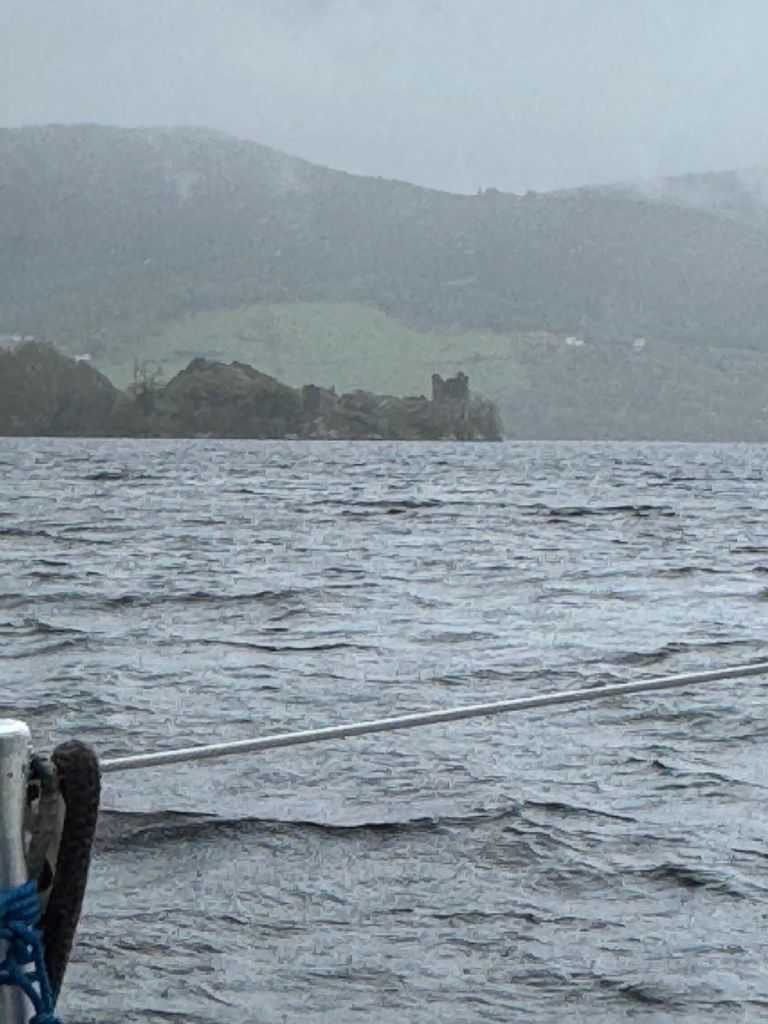
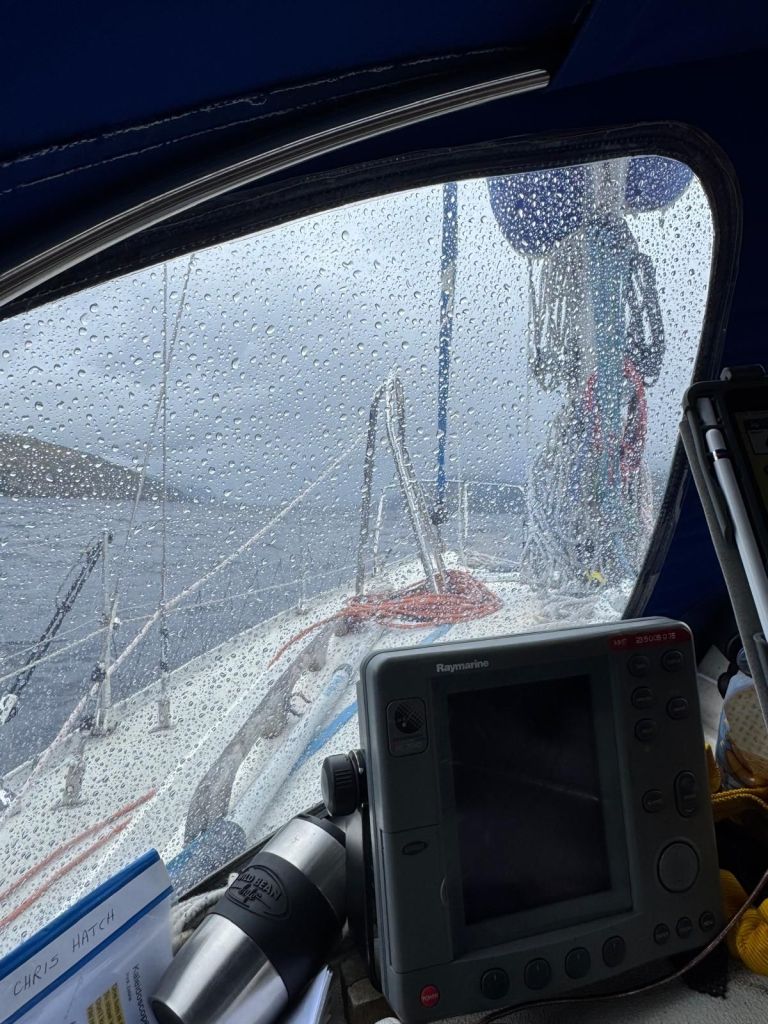
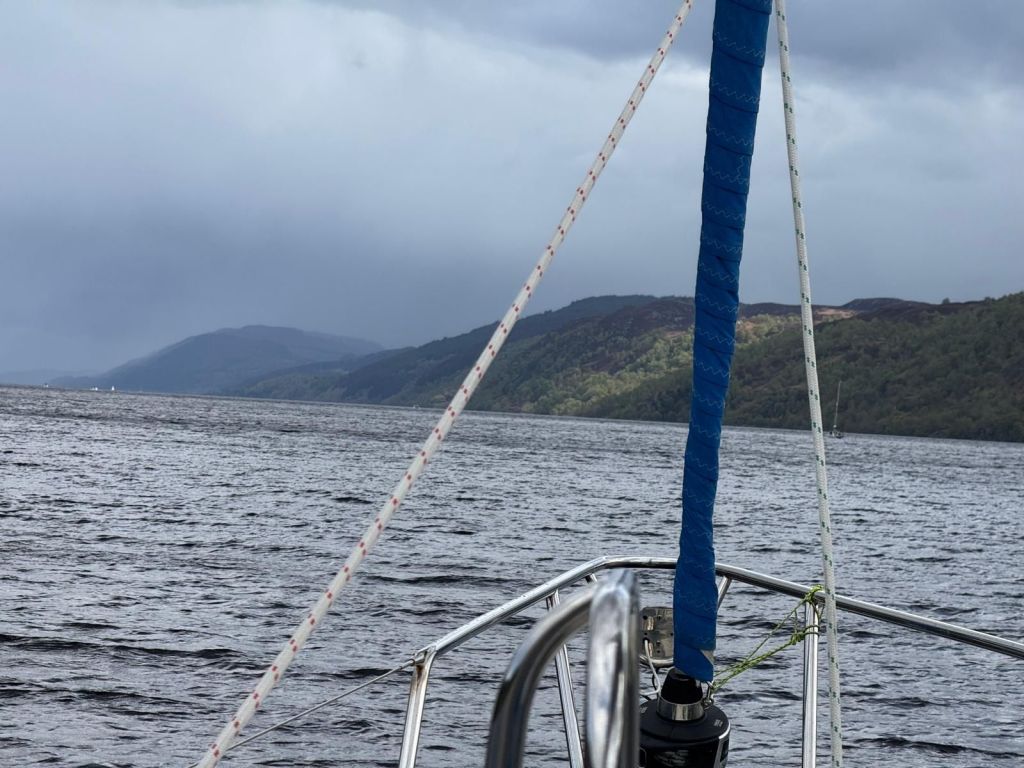
To be fair, Nessie himself (herself? Themselves?), could have given us a scaly tap on the shoulder or swum around the boat taking selfies, and we would barely have registered, through the driving rain and gloom.
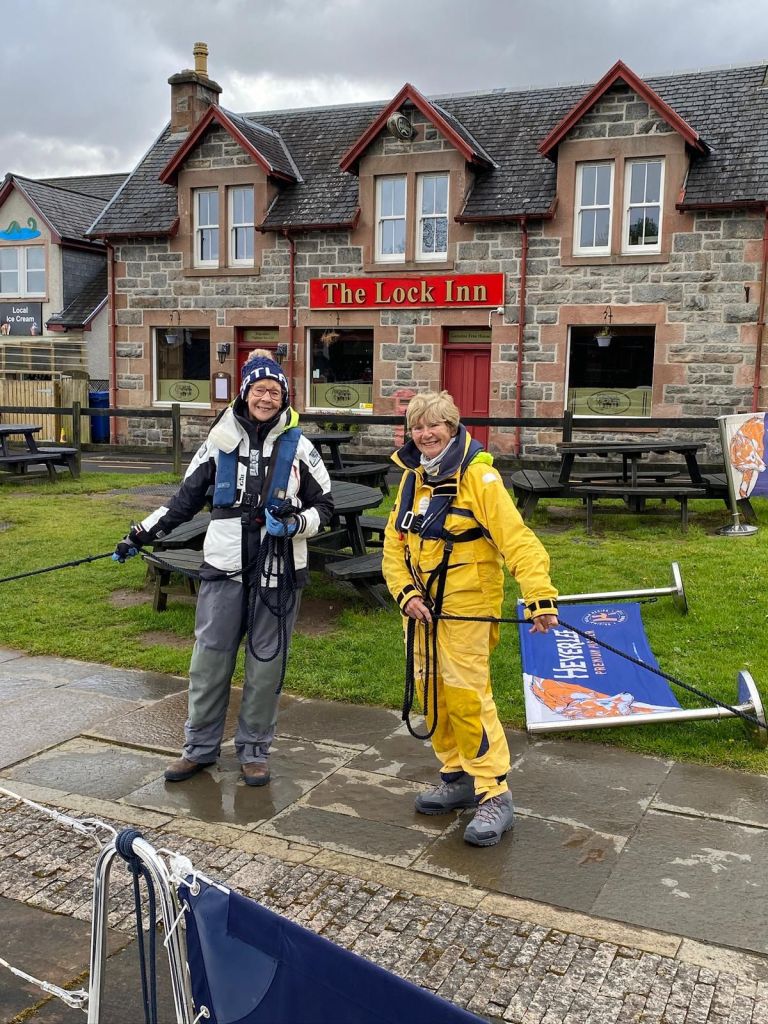
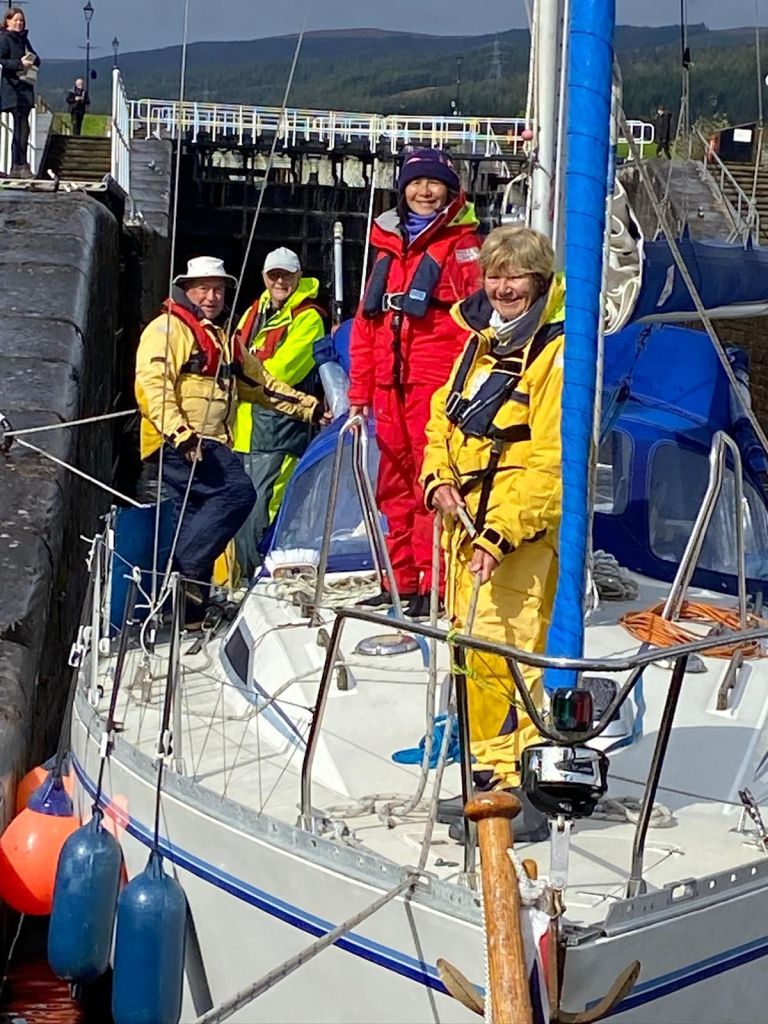
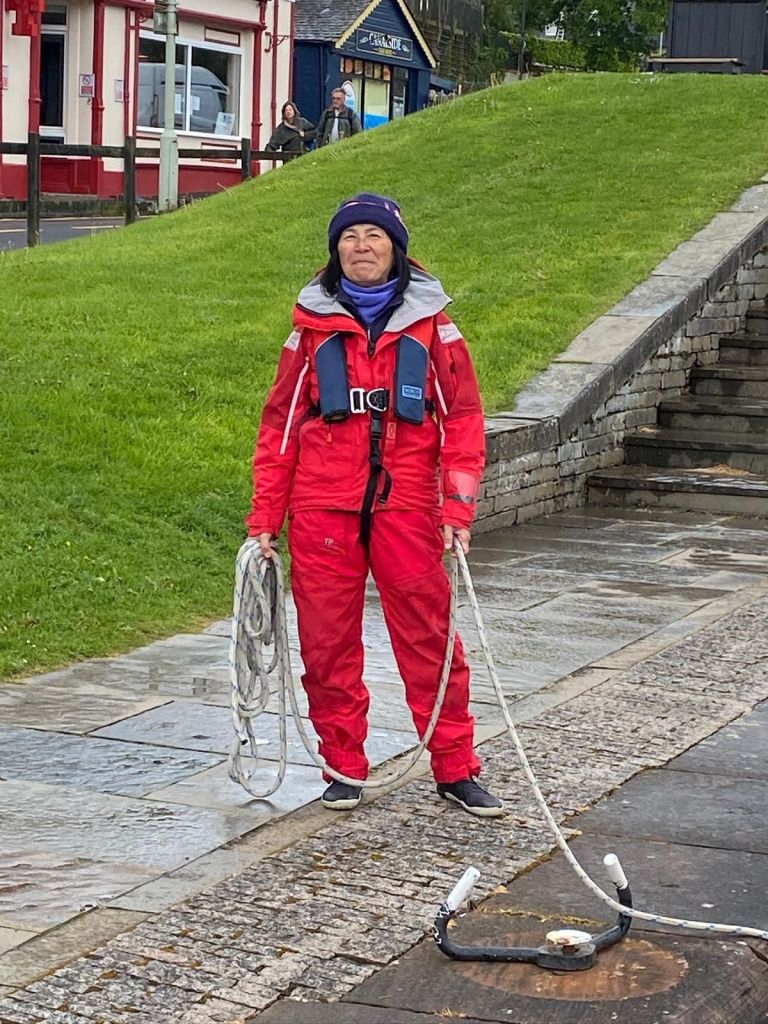
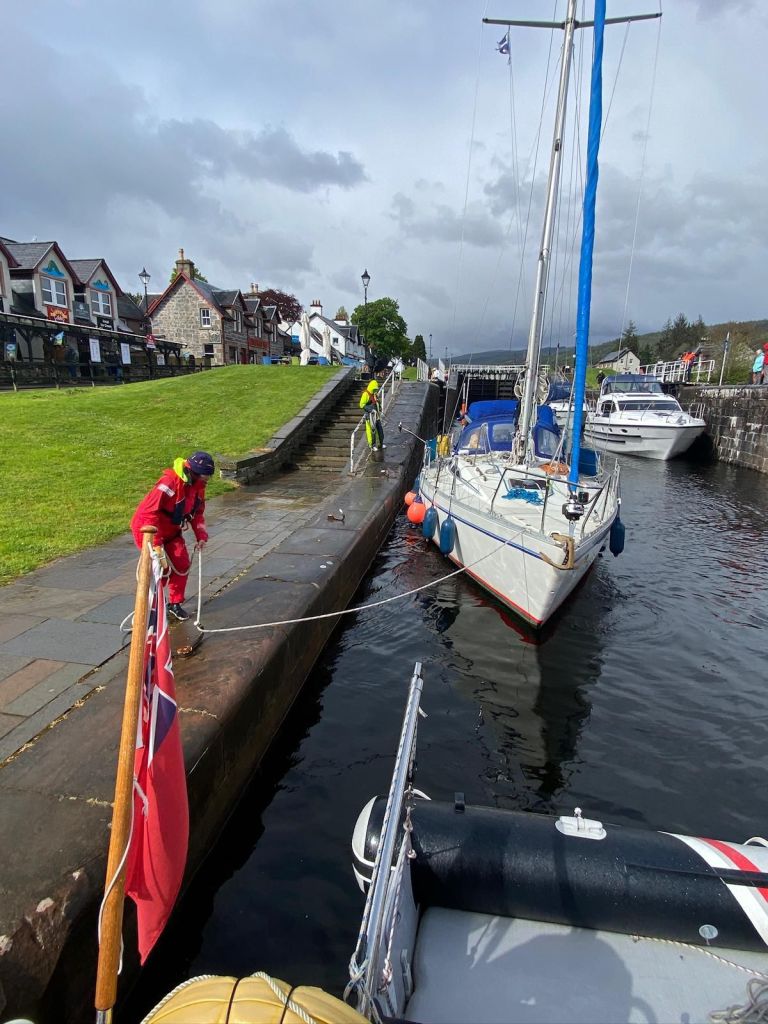
The day started a bit dampish as we slipped the lines and began the descent of the 5 lock flight to Loch Ness . Once again we were in the company of Ian and Maureen on Andiamo. As we passed the Lock Inn, three of us (OK…Ian, John and James) were reminded that the beer and whisky went down really well, and that this morning we feel slightly less than our best…we dont get much sympathy…
Through the swing bridge and Loch Ness opens out into a wide and deep stretch of straight water. The wind was directly on the nose (of course), and at times, sent sheets of water barrelling down the loch. We kept the cockpit cover up and at least kept dry through the worst of the squalls…
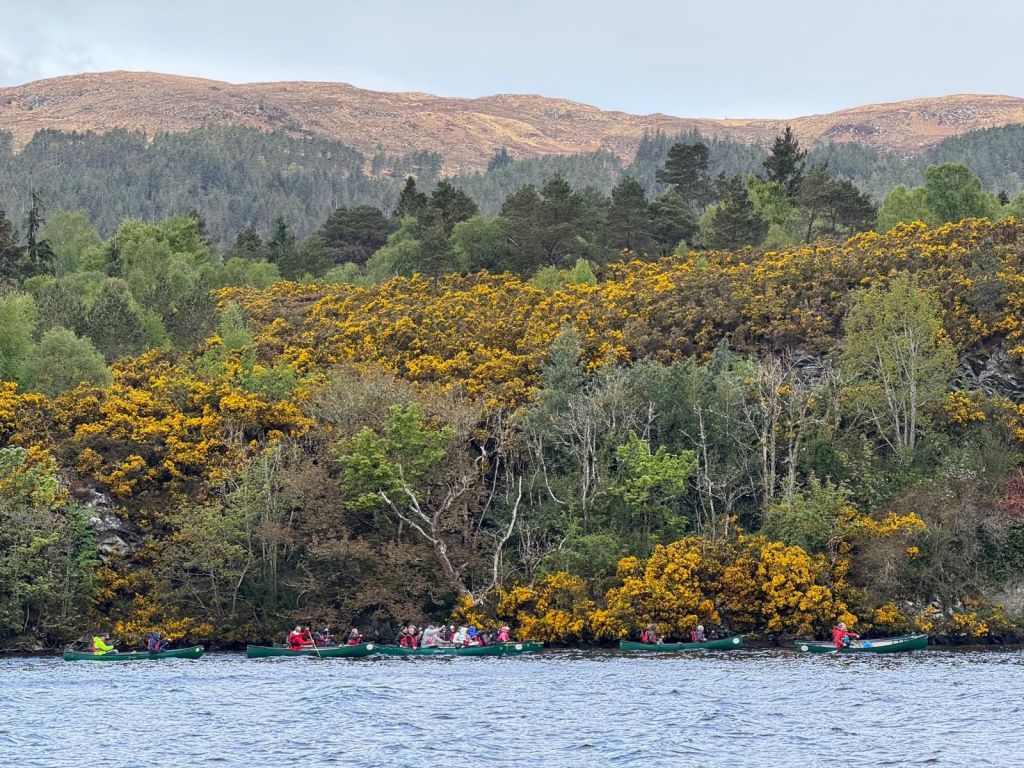
The Loch is around 20 miles long, so we settled in for a 3 to 4 hour passage. From time to time the rain stopped and the Loch teased us with glimpses of beauty and colour in the sunlight…
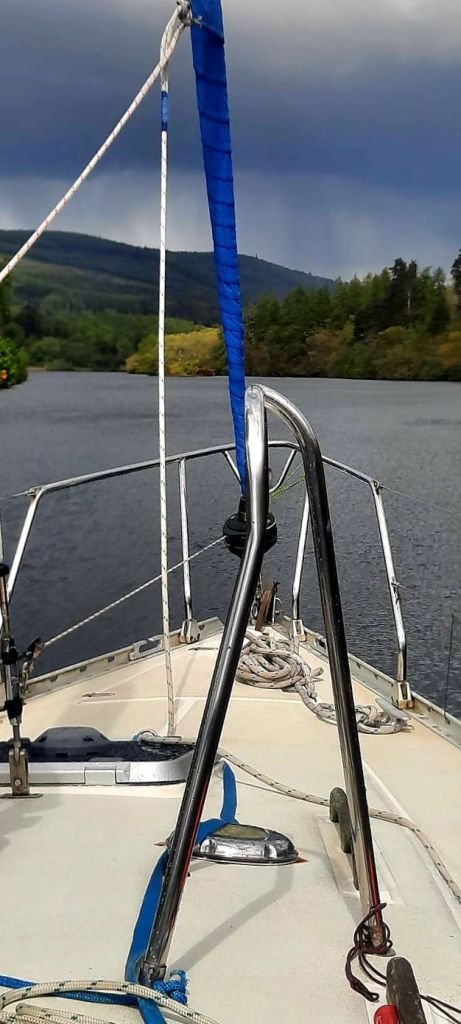
At its northern end, Loch Ness becomes narrow and changes into Loch Dochfour. Its just like cruising up a river. The wind has died, the sun toys around with us…
…and as we see more excursion boats taking trippers to see ‘Nessie’, we realise that our solitude and tranquility are slowly diminishing as we get closer to Inverness, now only a few miles away.
Dochgarroch is busy, but the two boats manage to find some berths above the lock. This is something of a tourist hotspot as the departure point for boat trips to Loch Ness. The cafe is nice, but the gift shop most definitely knows its tourist market and charges accordingly. Whisky has less of an attractuion tonight and we’re all tucked up and in bed before 10pm…so much for a rock and roll lifestyle…
By the time we made our way back across the water to the boat last night, the weather had already decided to give us a break. The gale that accompanied our arrival had eased considerably, still breezy, still a little lively in the dinghy, but nothing like the conditions of a few hours earlier. We returned aboard well fed, moderately windswept, and largely content…and went to bed without any great delay.
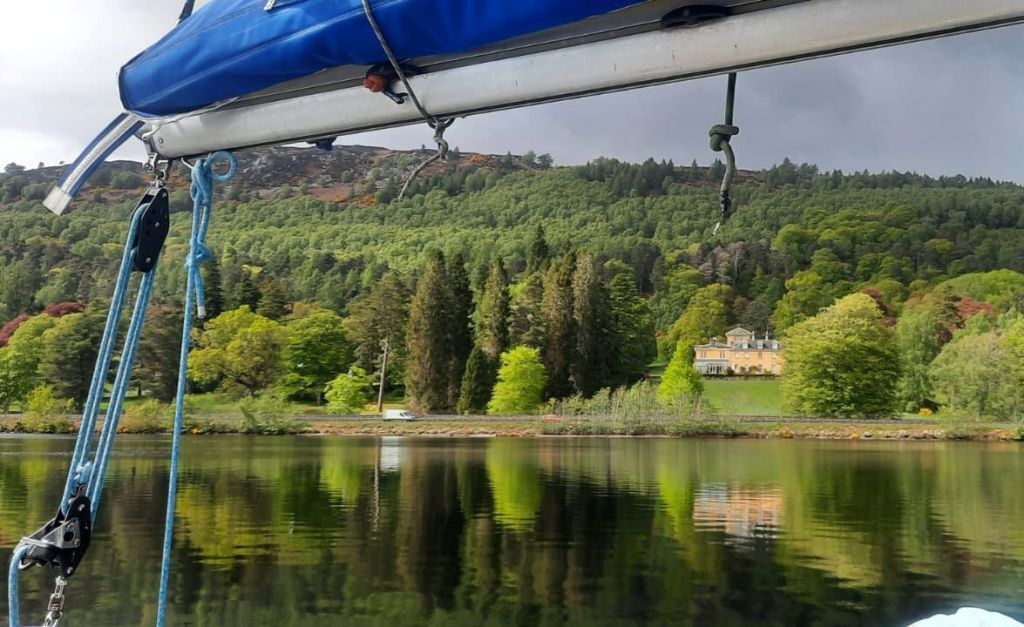
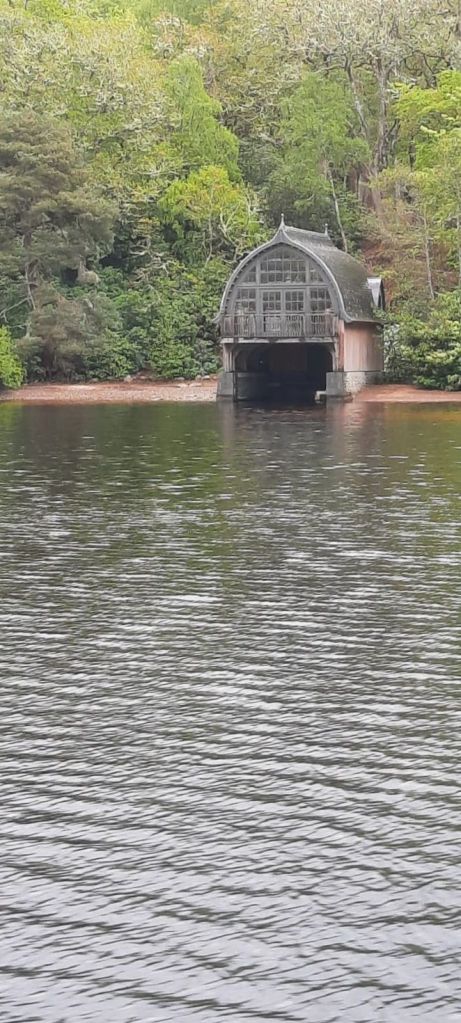
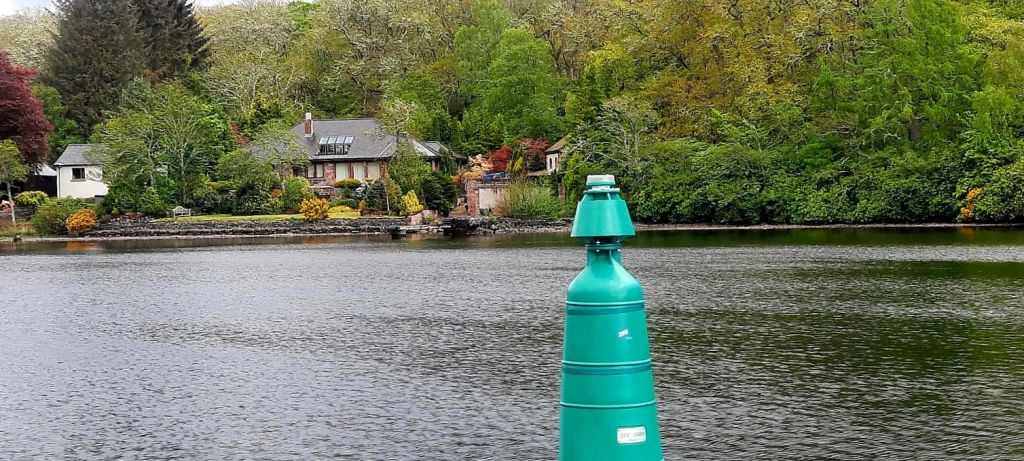
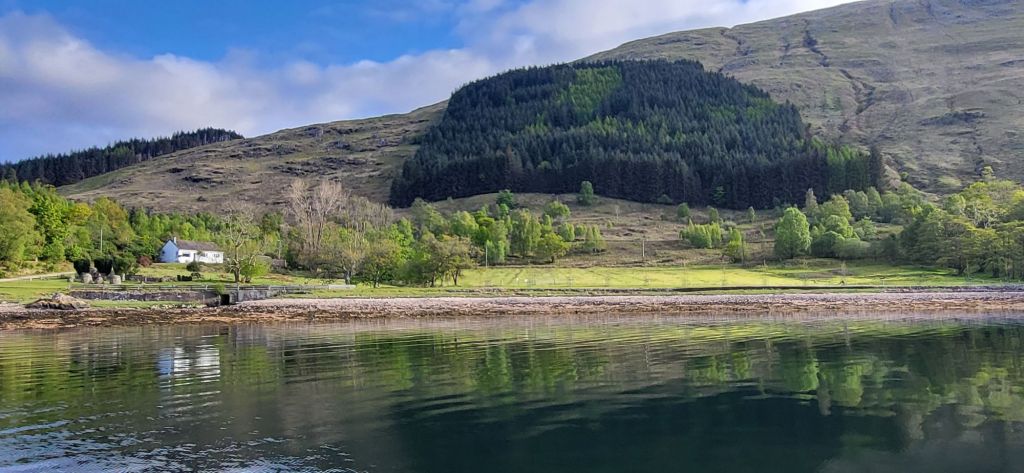
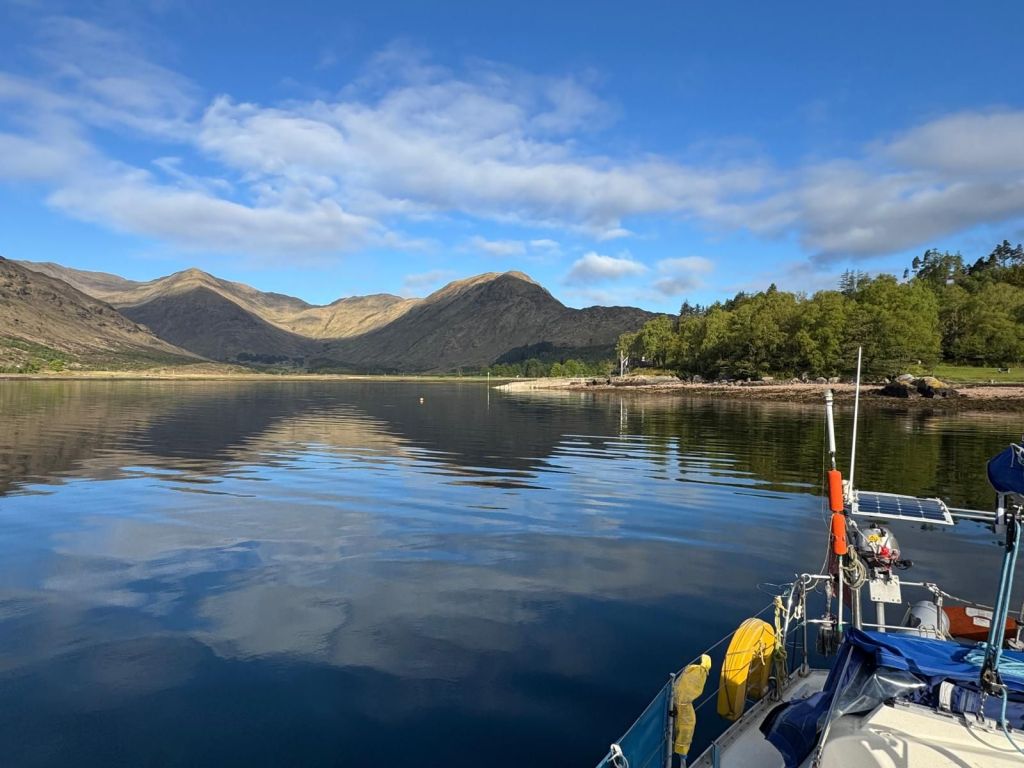
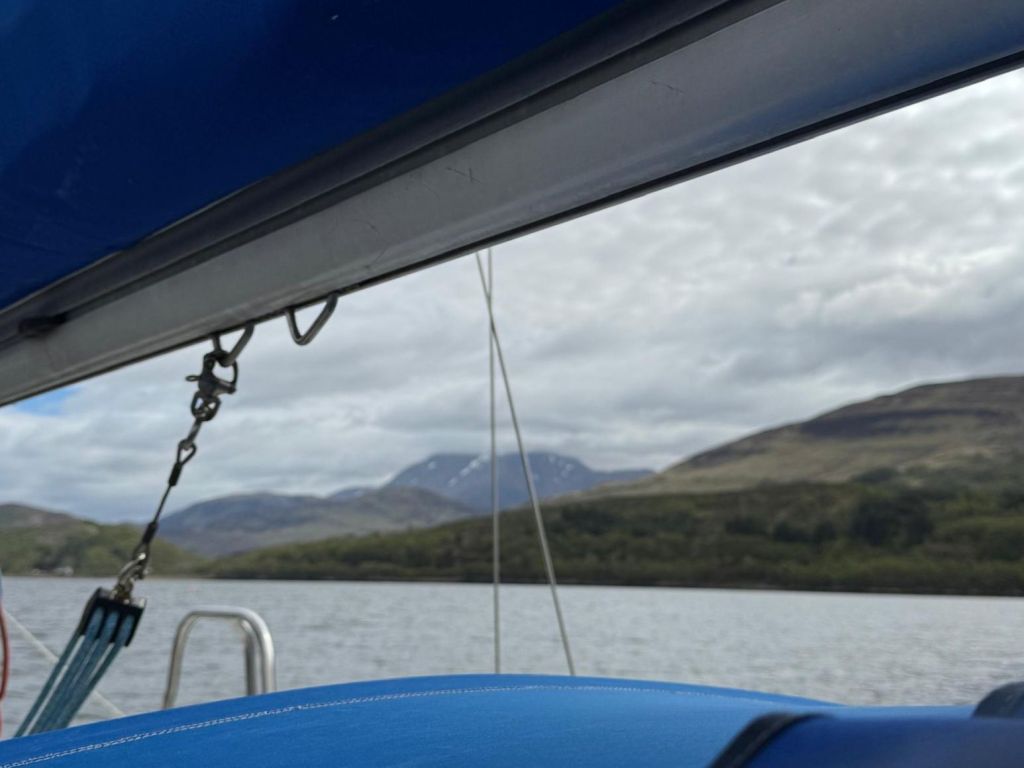
Morning brought a transformation… the loch was completely still, glassy and quiet, with perfect reflections of the mountains, the trees, and the little cottage opposite, in the waters around Heydays.
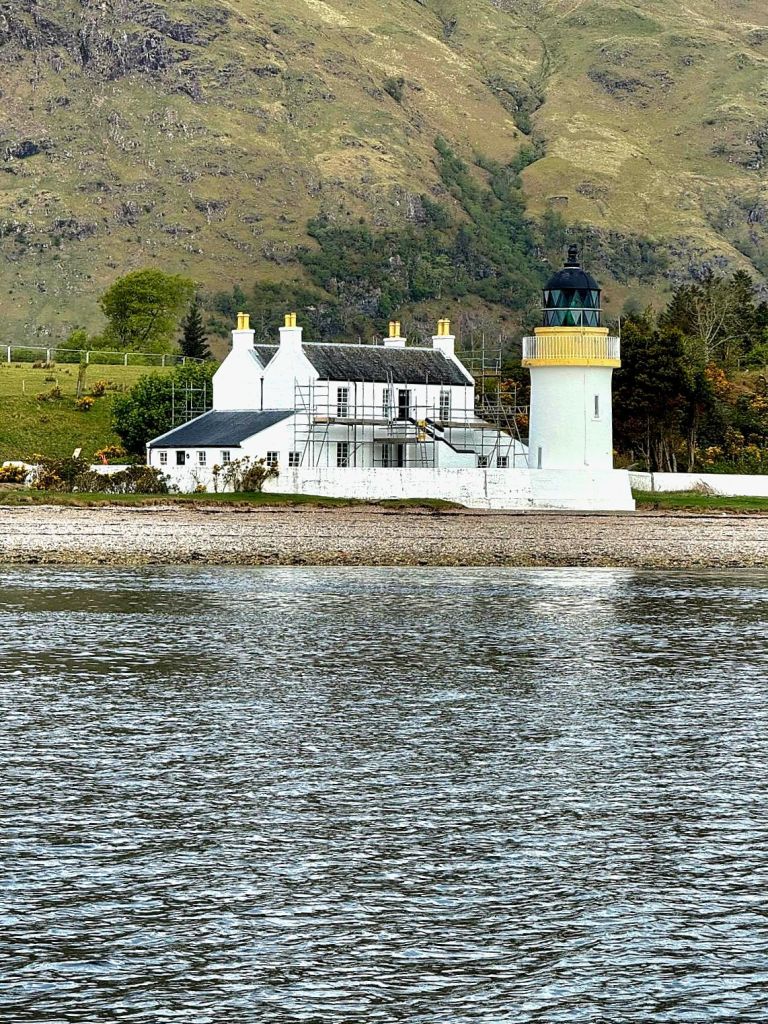
We had a schedule to keep, however. The narrows at Corran are a tidal pinch point midway up Loch Linnie, and this required us to pass through before the tide turned against us, so by eight o’clock we were underway, coffees in hand, gliding up Loch A Choire in conditions that bore absolutely no resemblance to yesterday’s arrival. We had hoped for a little wind as we turned out into Loch Linnie proper, but the loch had decided otherwise, and we motored on without complaint into what was, in fairness, a genuinely beautiful morning.
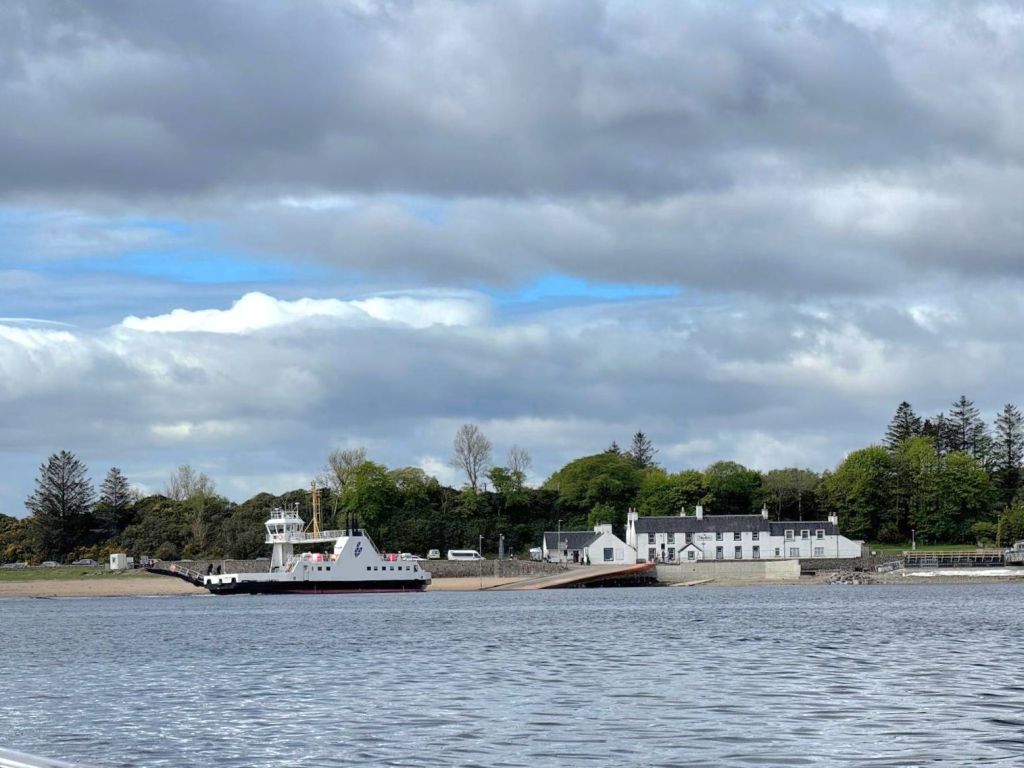
The narrows at Corran were quiet, save for a handful of motorcyclists waiting for the cable ferry on the far bank, and not much else. The Corran ferry skipper, we noted, was a more patient individual than his counterpart on the Studland crossing in Poole, where the approach with a yacht has an ambiguous quality…the ferry tending to depart at precisely the moment most inconvenient to all concerned. Here, he waited for us to pass before setting off, and we continued north with goodwill on all sides.
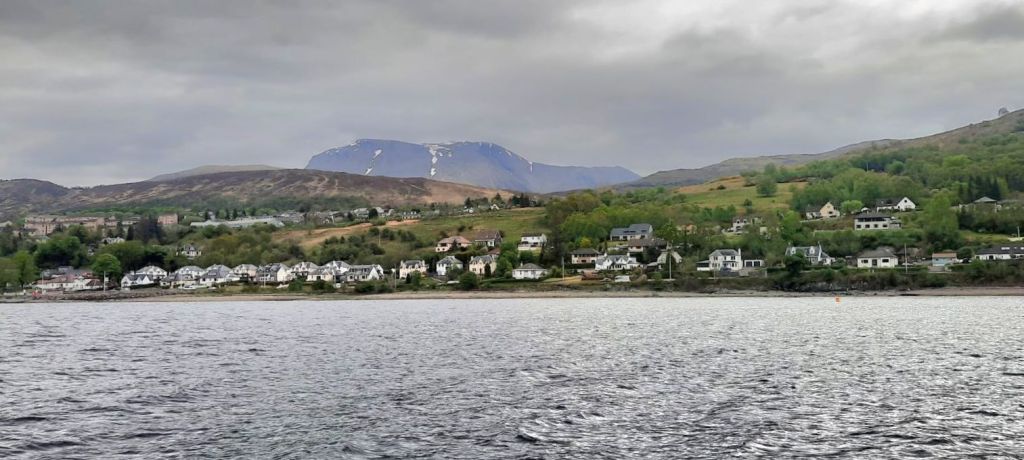
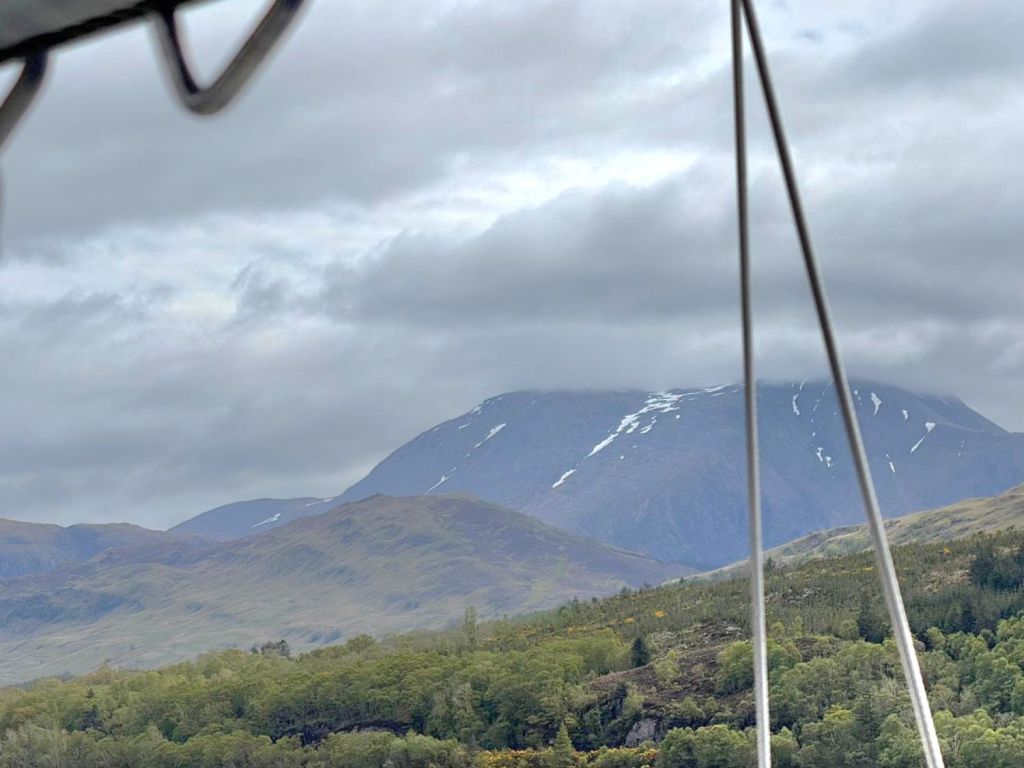
Loch Linnie narrows steadily toward its head, where Fort William sits on one shore, with Ben Nevis looming over…
…and the small town of Corpach on the other. Corpach is, in fact, the southern entrance to the Caledonian Canal, and we tied up at the community-run marina there — one of several such places in these waters, operated by local groups on something closer to goodwill and honesty boxes than the brisk commercial efficiency of larger marinas. Refreshingly so, even if refreshingly is doing some work in that sentence.
Formalities at the canal office were straightforward: forms, insurance details, facility keys, and a nine o’clock lock slot booked for the following morning. A seven-day canal pass, at £277 for the boat, gives ample time for the transit, most crews manage it in three or four days, but we intend to take our time and see something of the country on the way. Conveniently, seven days also brings us neatly to the point at which the four of us are planning to leave Heydays for a fortnight and head home, so the timing works rather well.
There is a small café beside the sea lock. We went in for coffee. This, as so often happens, evolved into fish and chips, loaded fries with haggis, and an excellent bowl of tomato soup, at which point we conceded that this constituted lunch and that, it being Sunday, a proper lunch was entirely in order.
We made our way back to the boat in the early afternoon moving, it must be said, with the slow plod of people who have eaten well. The rain arrived shortly after, and the mist settled low over the surrounding hills. The mountains are not quite the same in cloud as they are in sun, but they remain grand, and impressive, and it remains a privilege to be here, whatever the weather is doing.
The wind has shifted, and there is a little chop across the bay, and the boat just rocks gently on the mooring in the early morning sun.
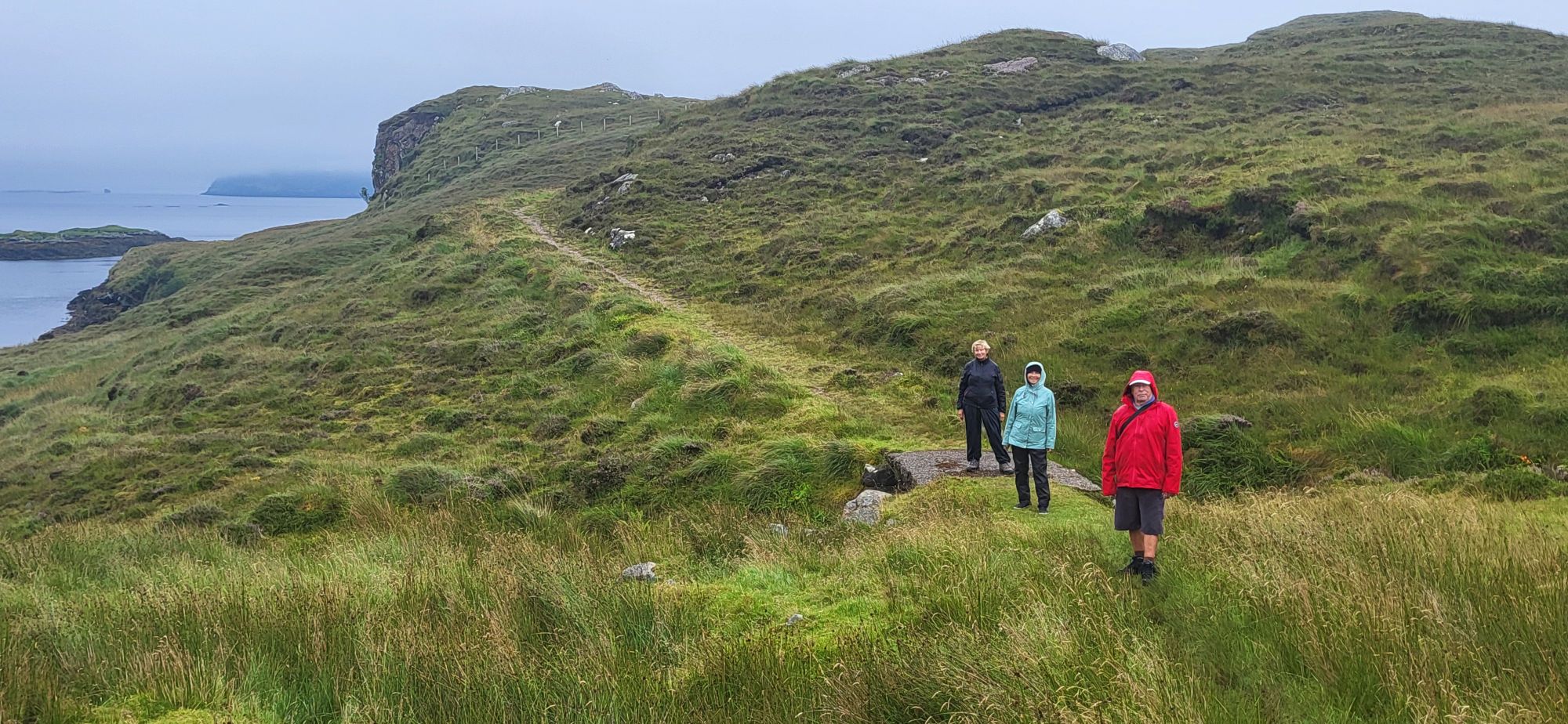
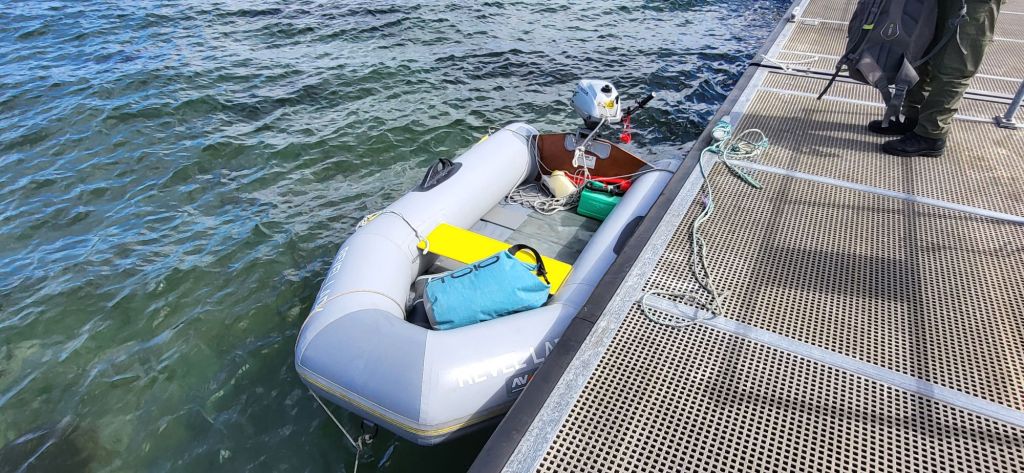
The only snag with picking up buoys or anchoring, is that getting ashore can be a bit damp in a small rubber dinghy.
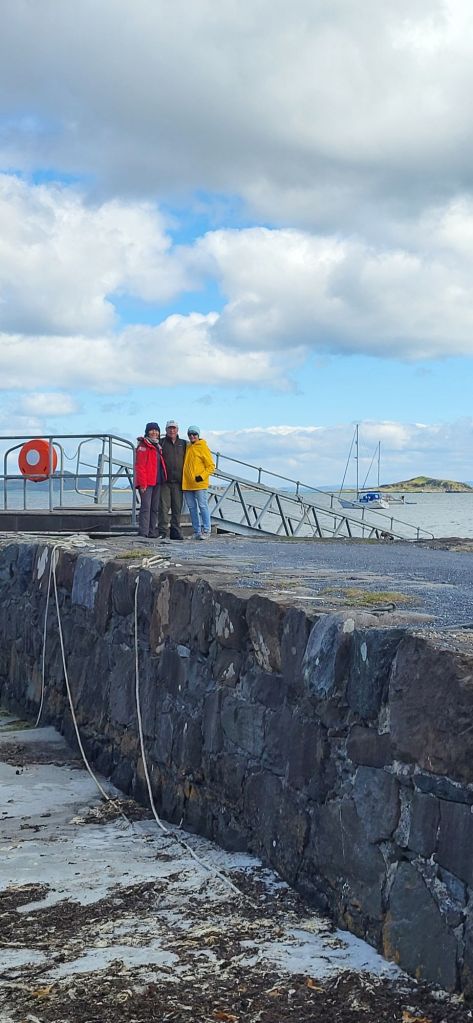
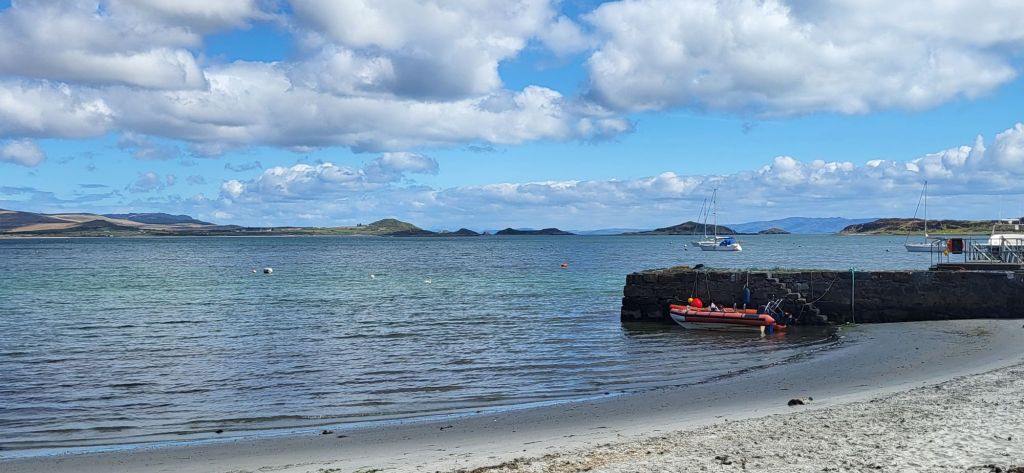
We get togged up and set off across to the little jetty, where we get un-togged, and ready for a day mooching.
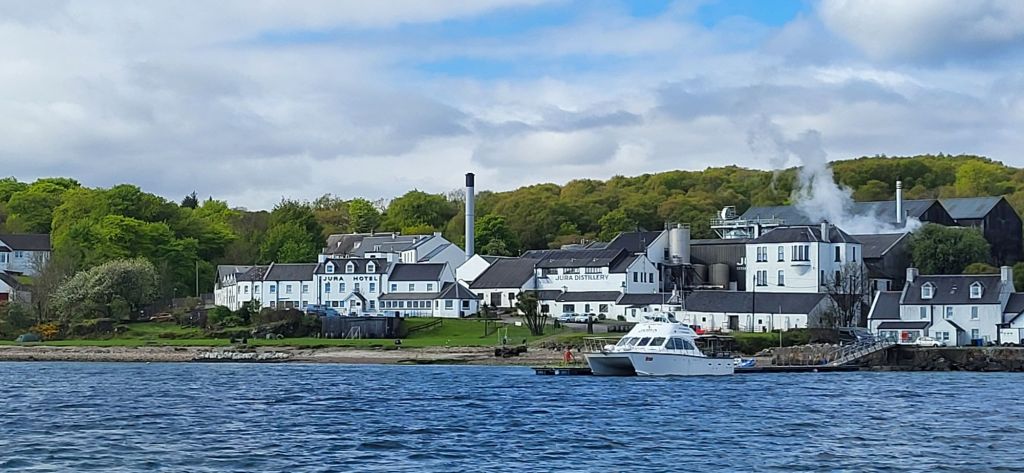
Having visited the little community shop, the decent thing to do is to actually go for a walk before being drawn back to the distillery…
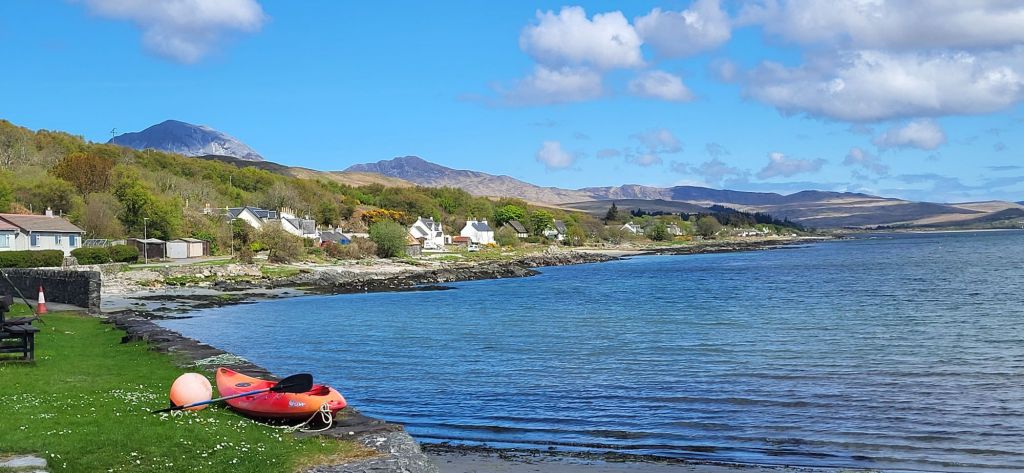
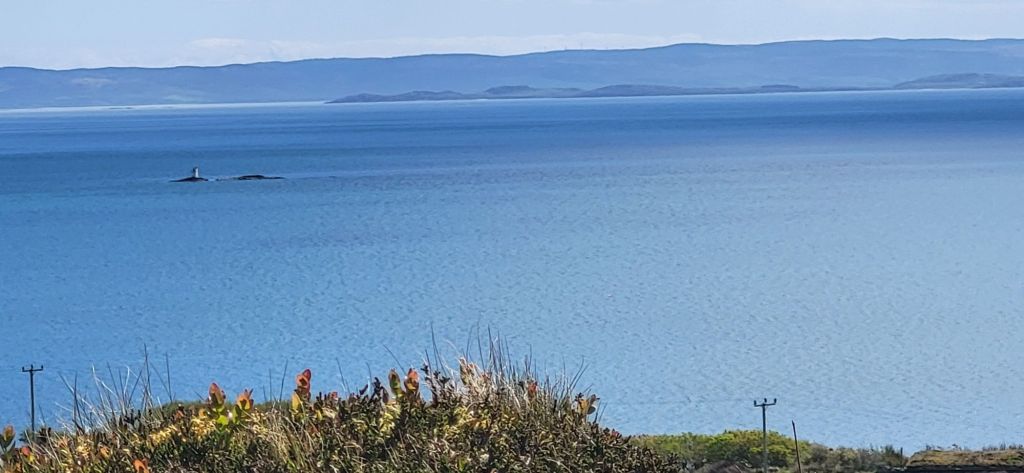
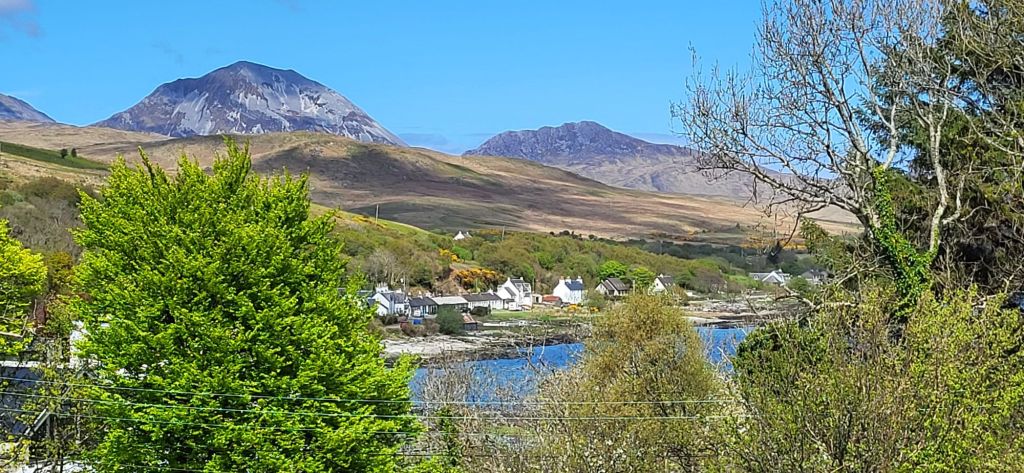
The day is glorious and the views across to the mainland are stunning…
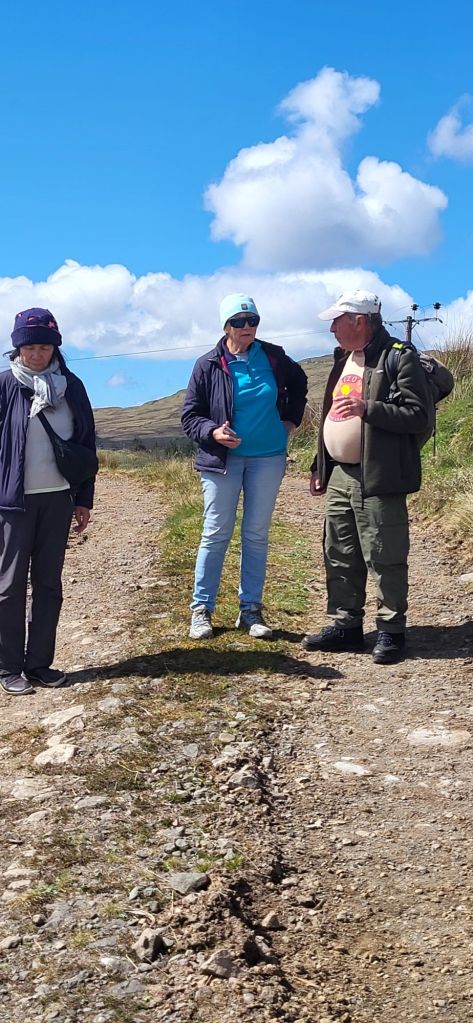
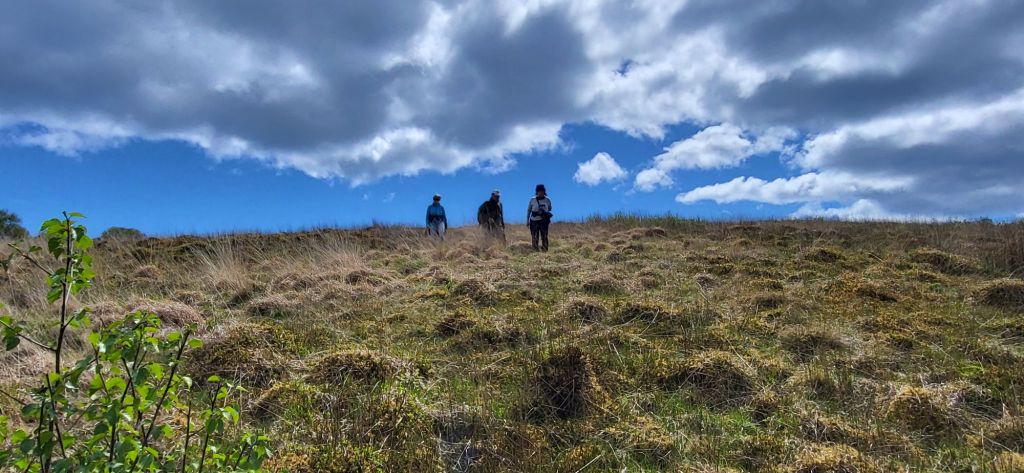
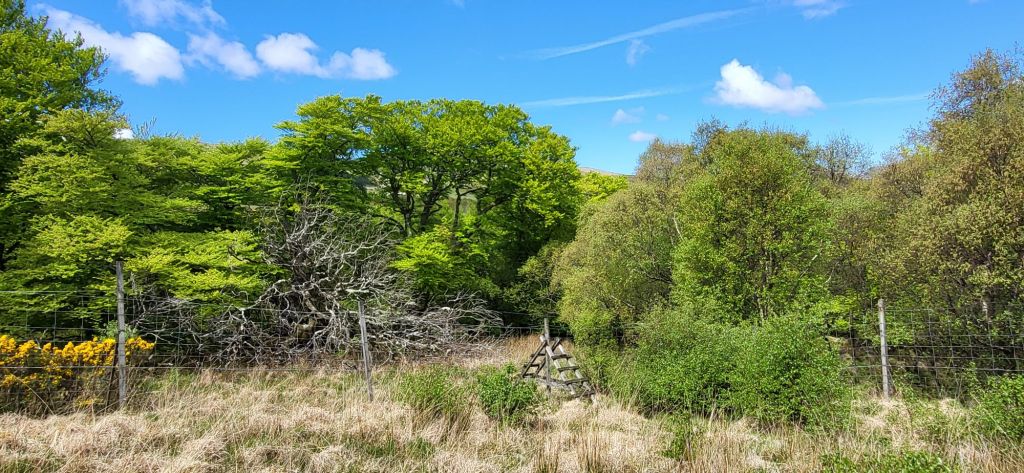
It all starts out really well, but then the track peters out…
It’s a good job our navigation at sea seems to be better than on land…
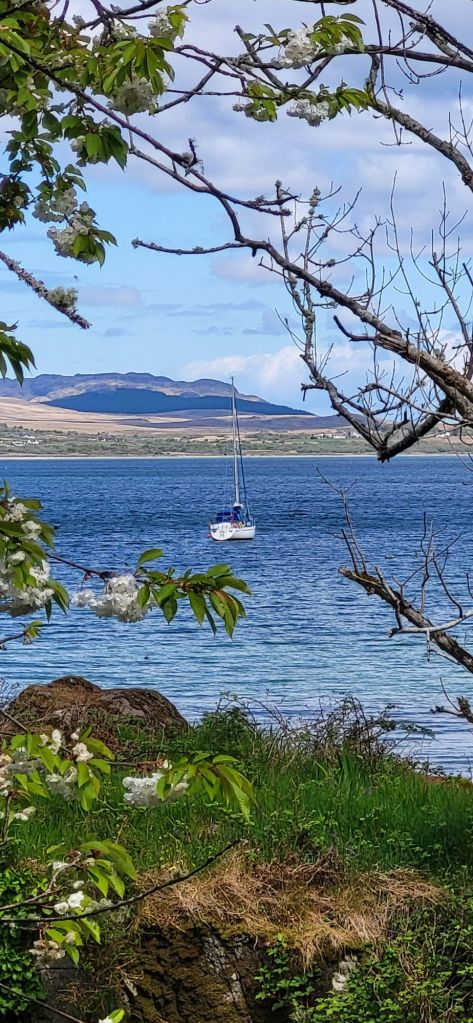
…but it’s all worth it for the views, and Heydays swinging gently out in the bay…
“…we are where, precisely?”
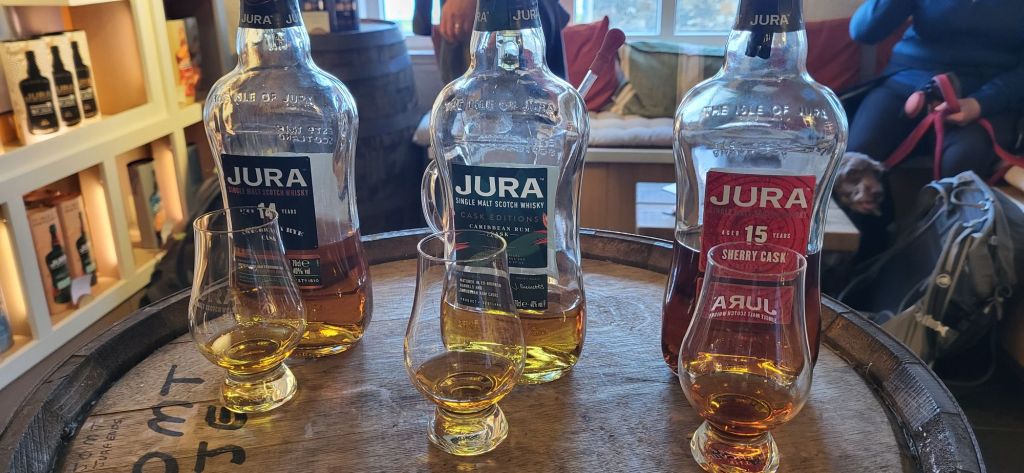
…and then whisky beckons…
The whisky is very different from those on Islay…not peaty for a start, and all of it is used for Jura bottles, unlike Caol Isla for example, where 70% of their output goes to Johnnie Walker.
We have our first Cullen skink of the trip in the hotel, and then head off around the bay to the cemetery with its Campbell mausoleum.
There is a small and very old church, with an upstairs room full of old photos of Jura life. Its a fascinating insight into what was quite a harsh existence, especially for ordinary crofters and fishermen. No wonder that many just upped and left.
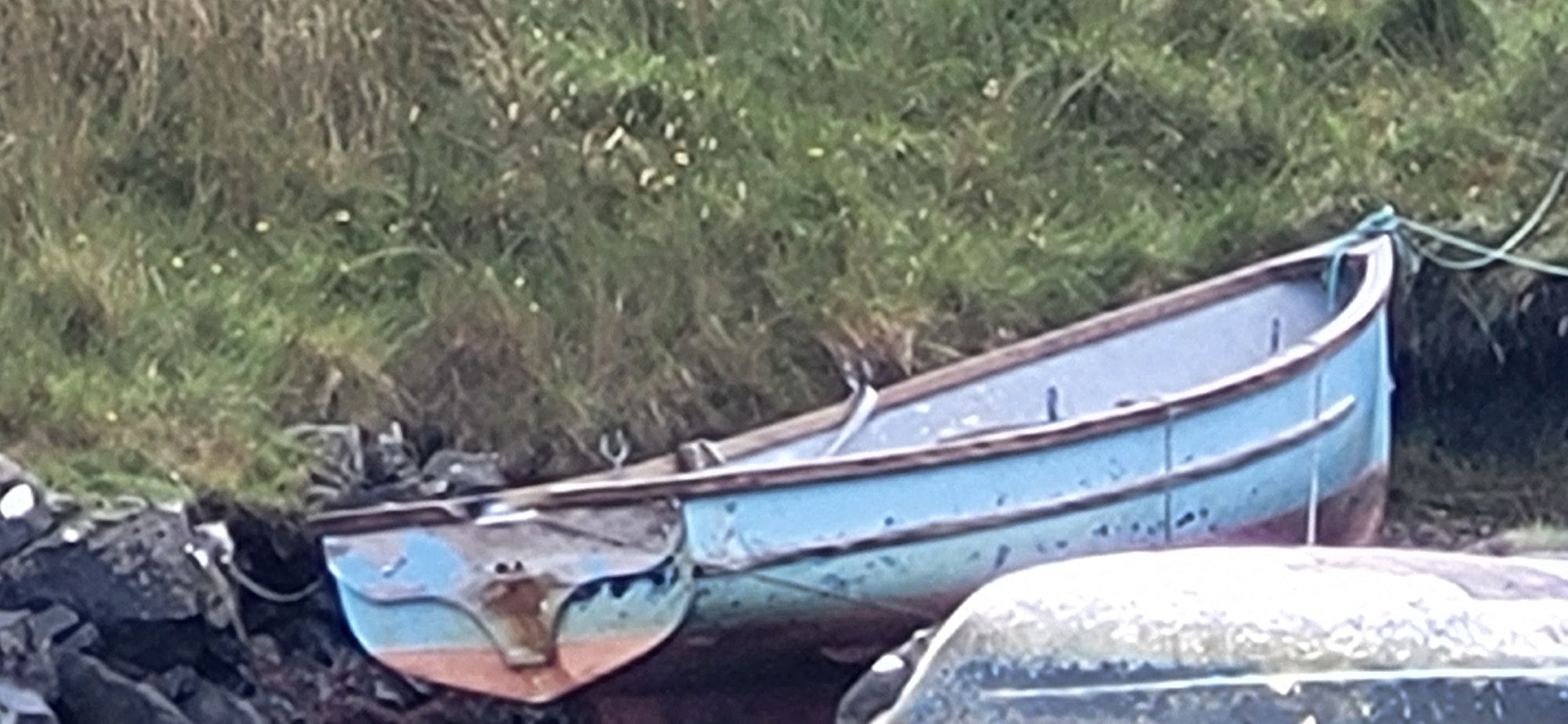
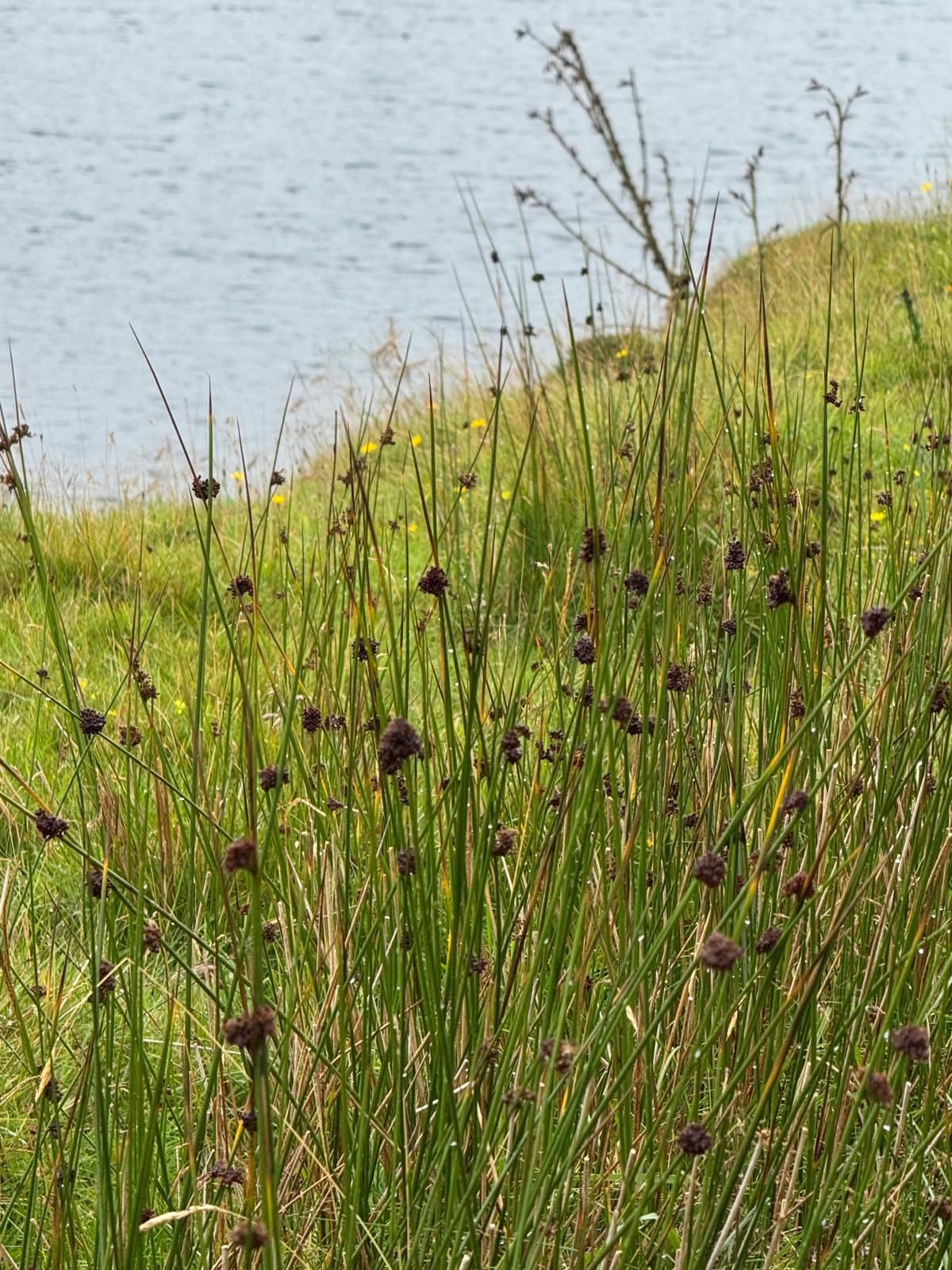
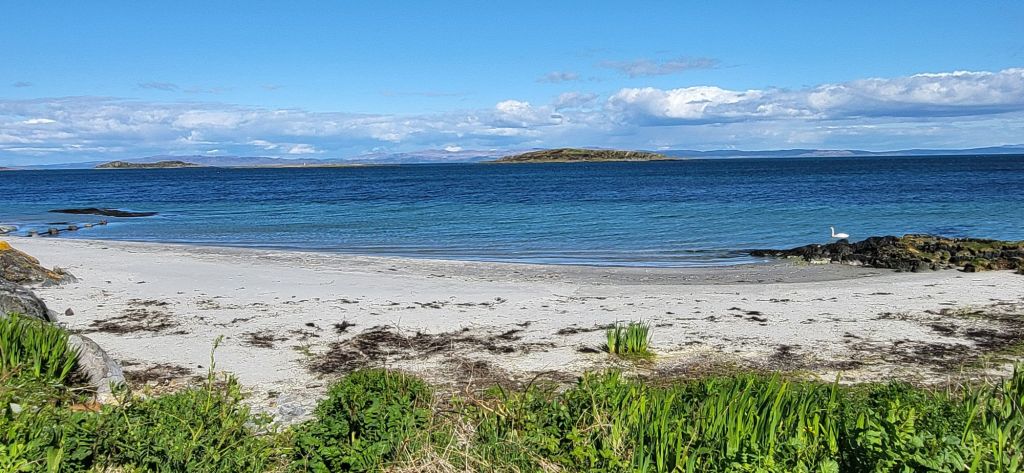
The population is stable at the moment at around 250, and there are some incentives for people to re-establish the old croft. Walking back to the boat, past stunning beaches, we wonder about the contradictions of island life…right up to the end of the 20th century, there is no doubt that, despite the beauty and the abundance of space, places like Jura were still quite isolated, with few incentives for young people or families to stay.
But even in towns and cities in 20’s Britain, so many self isolate behind their screens and technology. Could technology and remote working be the eventual saviour of places like this?
Just one final thought though…for us grandparents, the remoteness from the physical presence of our grandchildren would probably be too much, unless they move here as well…