Sailing, it has to be said, is a largely sedentary pursuit. There are bursts of real effort…fenders, lines, sails, as we leave or enter a harbour, and precious little in between. On a long passage, the most strenuous task of the day is often just nipping below to put the kettle on. Yes, a lumpy sea demands constant bracing, but nobody’s pretending that counts as cardio.
So we resolve to spend at least a day in Lochinver, with vague ambitions of a hill walk if the weather allows, and no great objection if it doesn’t.
Annoyingly, there’s a job up the mast that can’t be put off any longer. We’ve got a wireless wind instrument on the way out, and entirely in keeping with Heydays’ character, the original anemometer still up there alongside it, having served faithfully for as long as we’ve known her. Lately, though, it’s been telling us fibs…wind clearly on our left cheek, instrument insisting it’s coming from astern. A look aloft suggests it’s rotated on its spindle, very possibly the work of a passing bird with no respect for instrumentation.
We idly wondered yesterday afternoon whether now might be the moment to go up and sort it. Unhelpfully, the pontoon beside us is occupied by a couple of boats with young crews and weathered-looking skippers, exactly the audience nobody wants. Going up a mast is never dignified, and it always draws a crowd. We still carry the scar tissue from a sunny afternoon in Dartmouth, watched by several dozen ice-cream-licking spectators, all presumably hoping for a dropped spanner or an ungainly plunge. Not keen to repeat the performance, we fall back on the old principle that any properly seasoned sailor should be able to feel the wind and trim accordingly. Technology, we decide, is overrated.
With our pontoon neighbours gone and the weather looking kind, we drag ourselves up for a walk round the village and along the River Inver. The fish dock is heaving, a large trawler is landing a serious catch, and the harbourmaster tells us she belongs to the French supermarket chain Intermarché. The fish goes straight into sealed crates and onto lorries headed for France. Two big Spanish boats are expected on the same basis before long: trawling international waters, but landing in the UK because it’s cheaper to truck the catch to Europe afterwards than to sail it there.
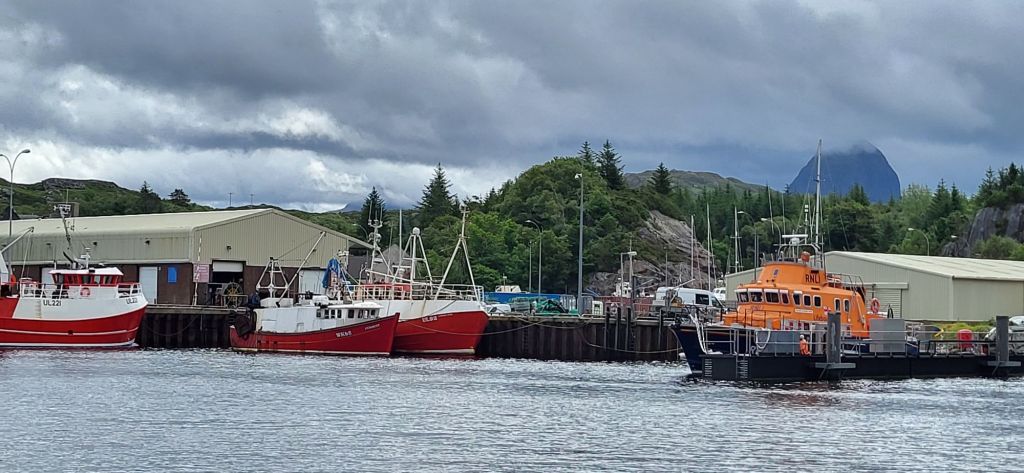
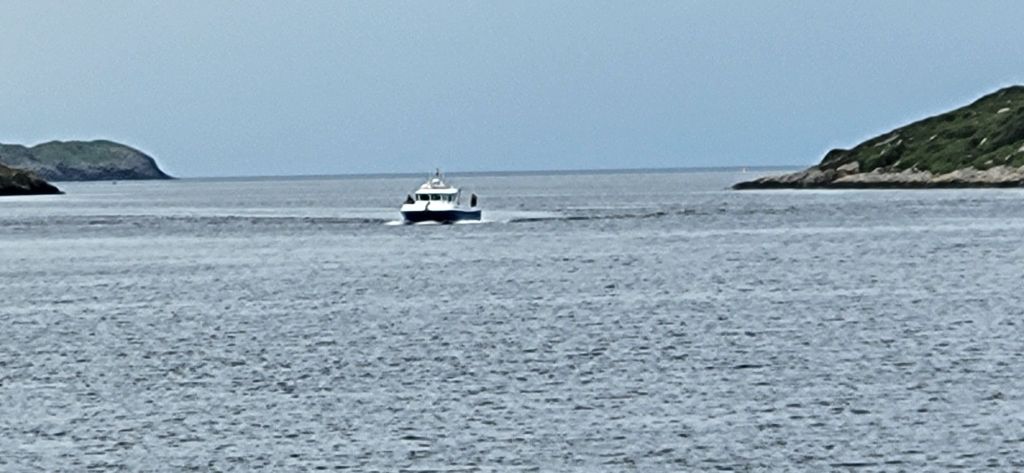
Despite the very commercial nature of the fish dock, the loch itself is very pretty and with reminders of an older style of life still around…
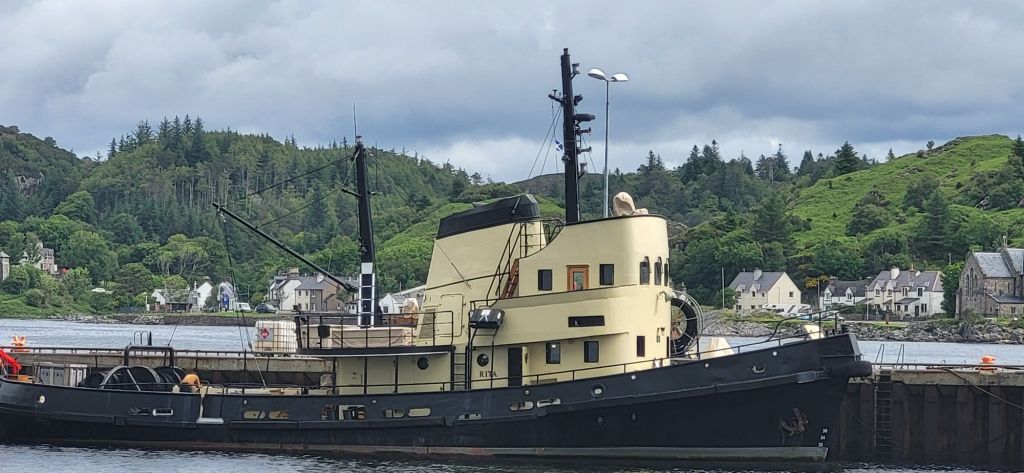
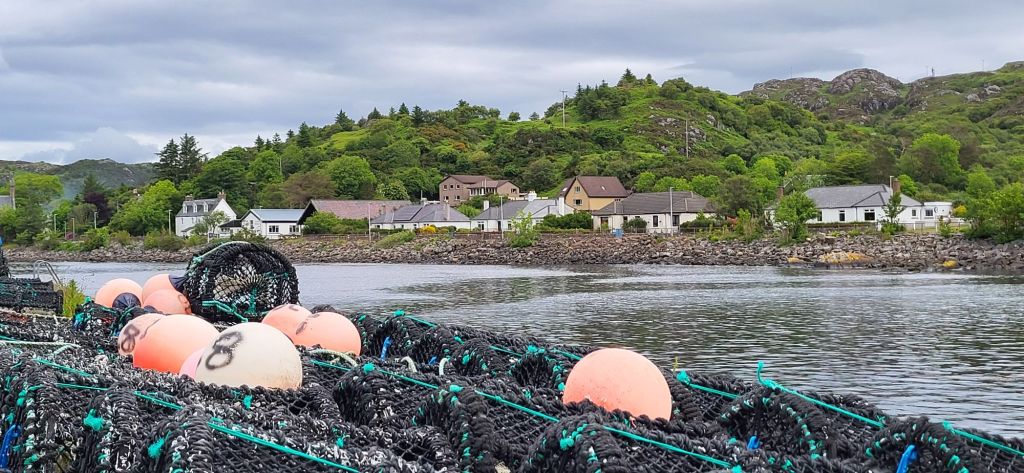
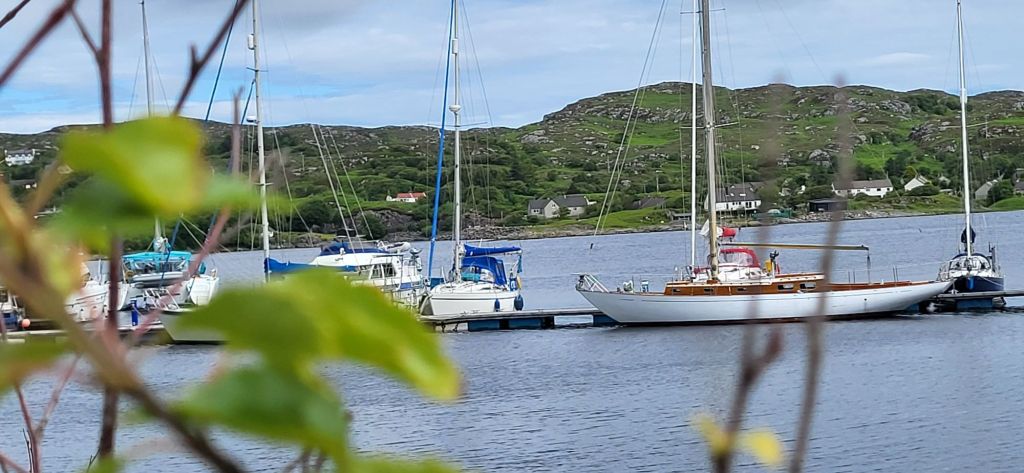
James fails entirely to steer John and Yee Tak past the butcher’s window, where a large piece of venison has clearly been waiting for them all morning. What follows is several minutes (possibly hours) of earnest deliberation over what, exactly, one does with a haunch like that. The village itself is buzzing, full of campervans and motorbikes doing the North Coast 500 circuit, and it’s obviously a lifeline for a place this size.
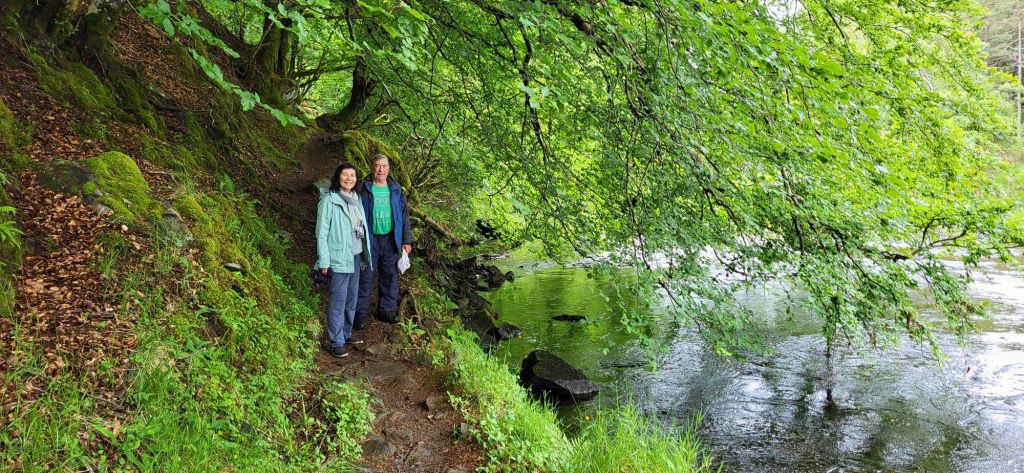
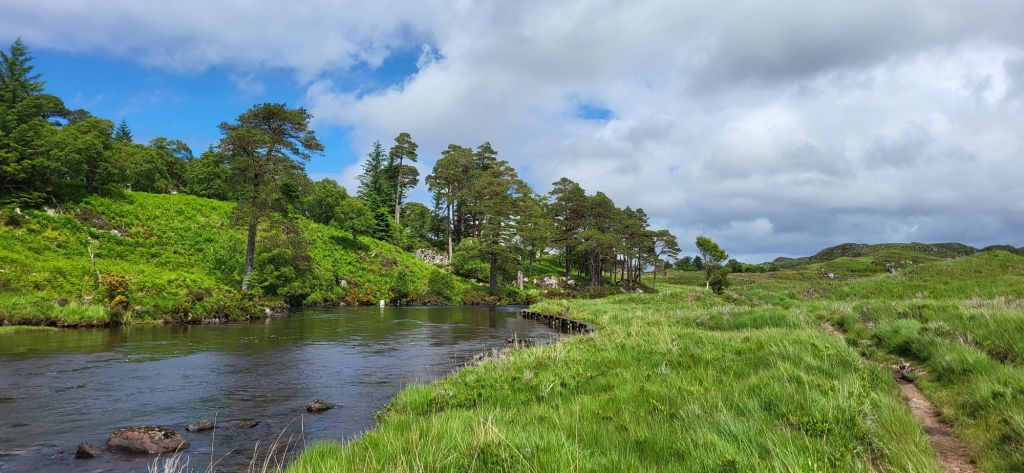
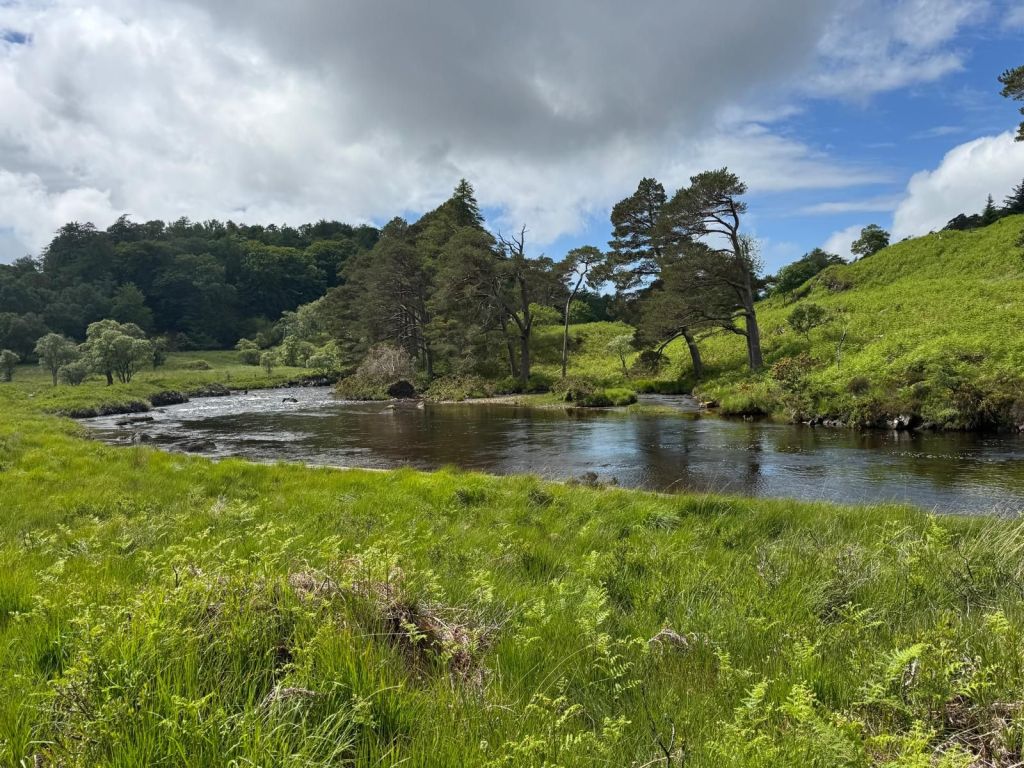
The Inver is in full spate, and we follow it upstream past roaring waterfalls, a weir, and a string of rocky pools, some of them clearly man-made, presumably for the benefit of the salmon fishing rather than the salmon.
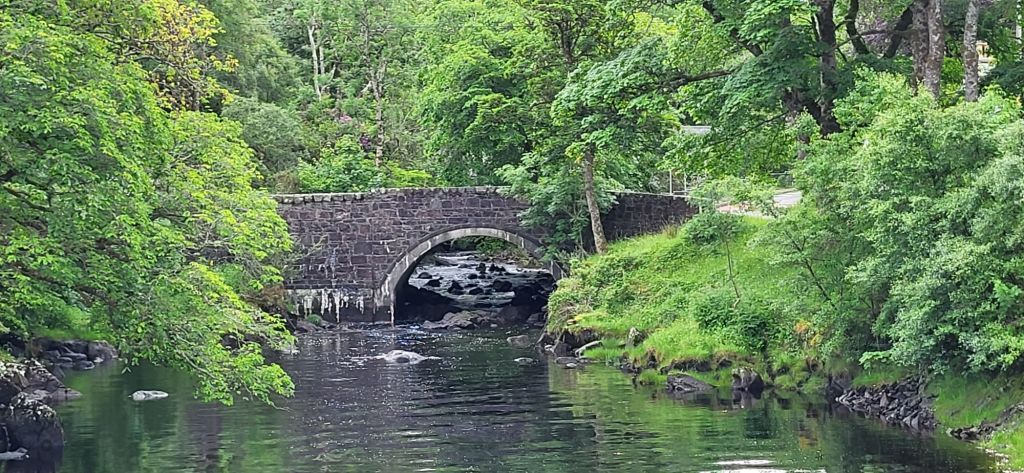
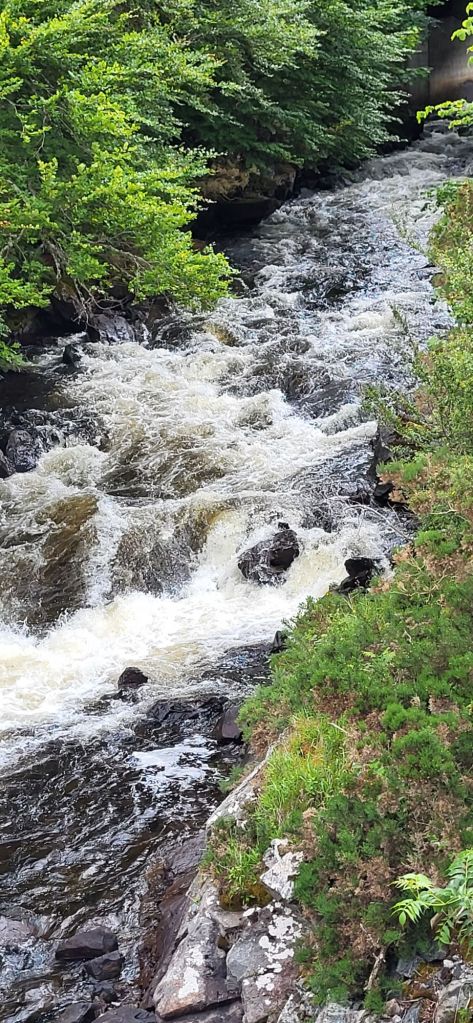
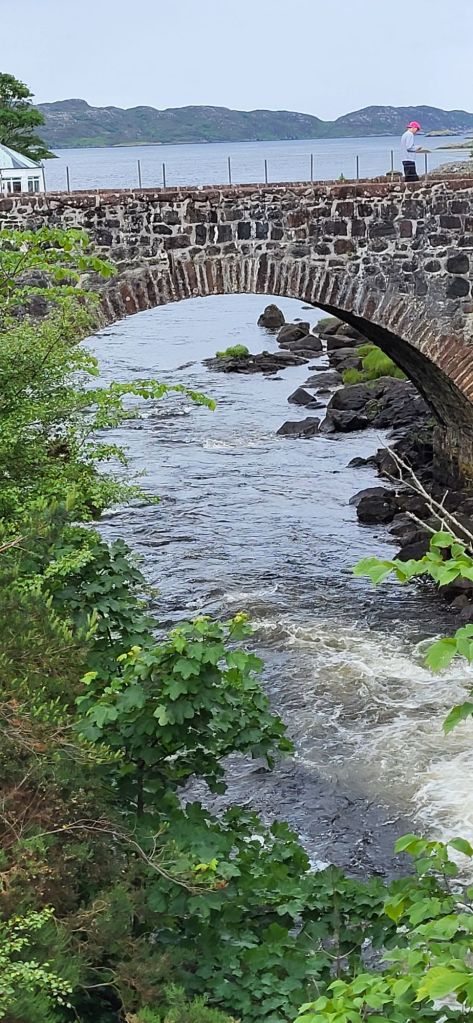
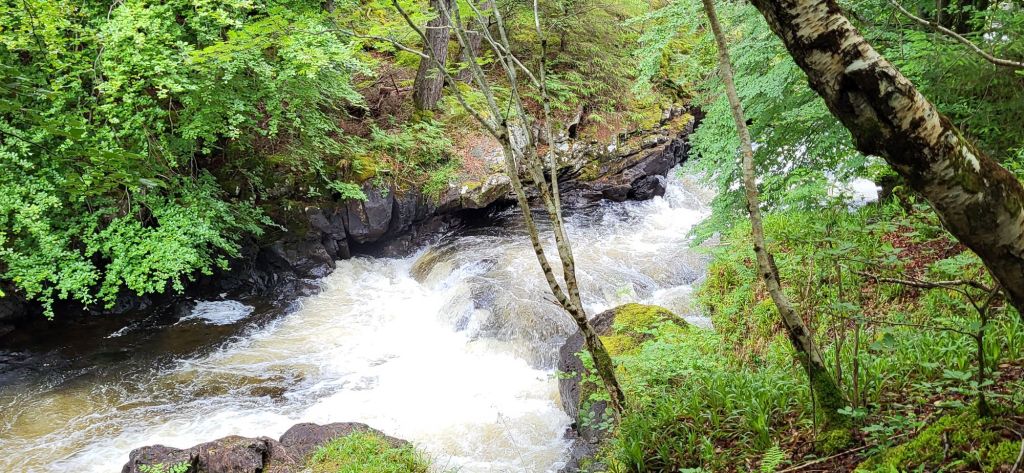
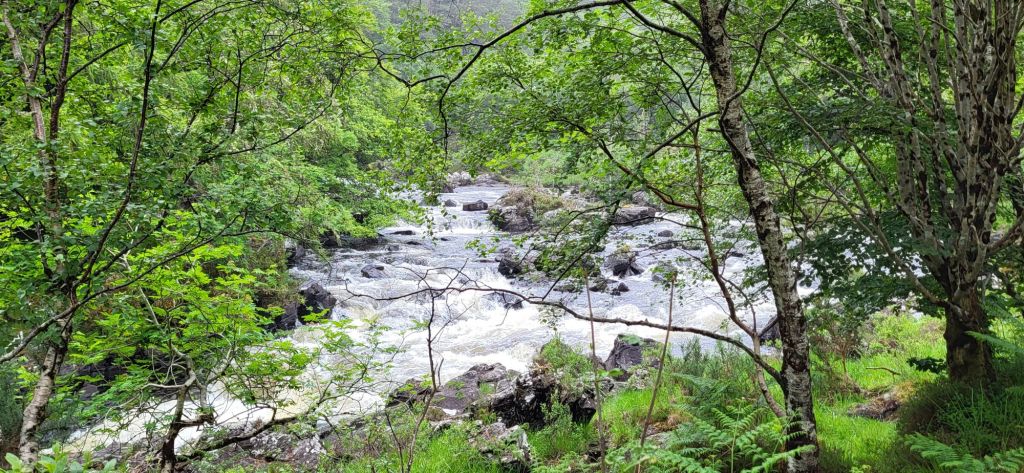
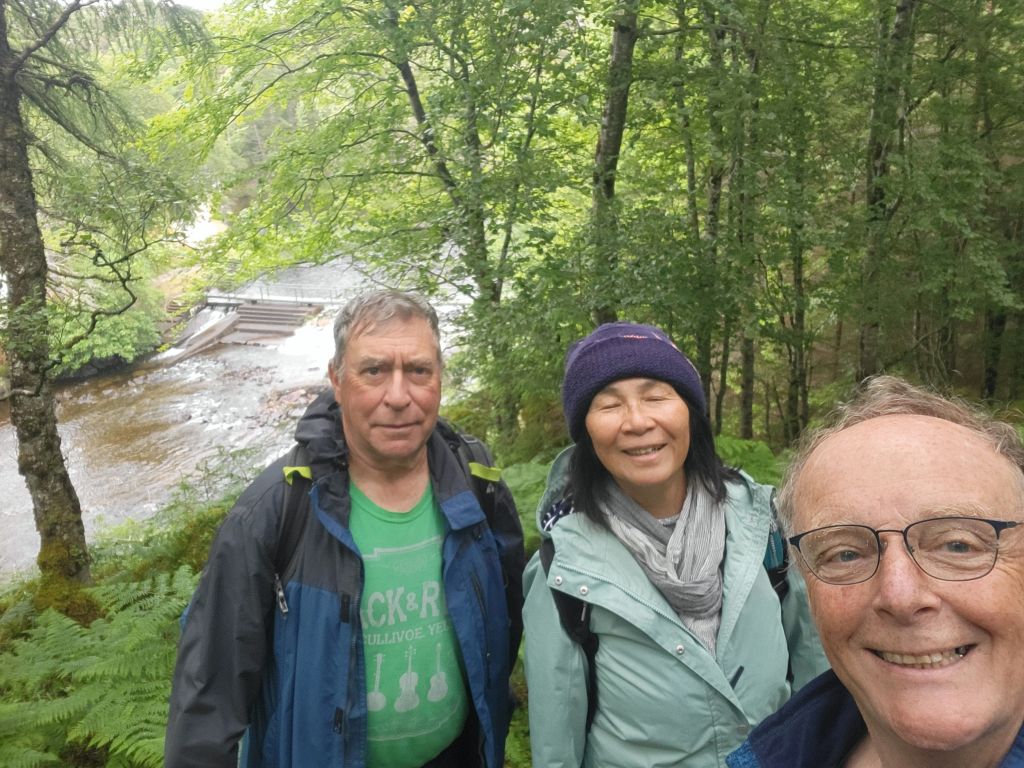
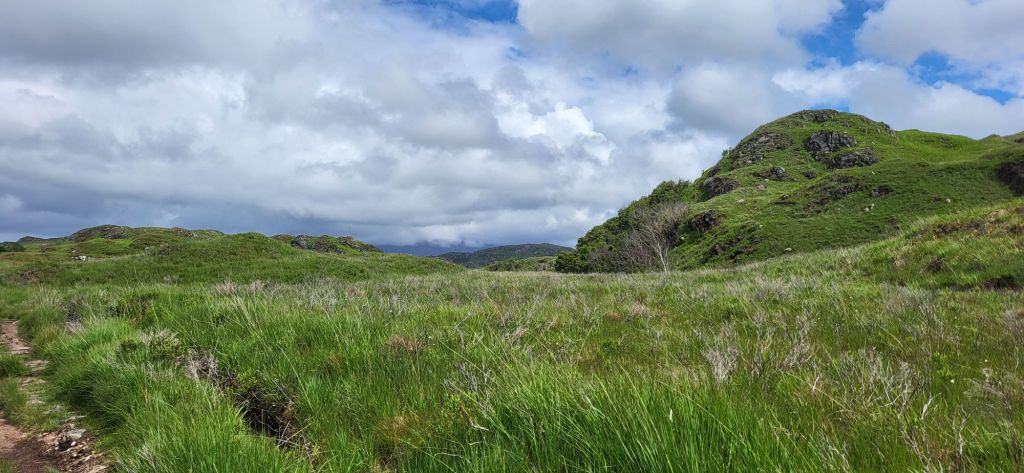
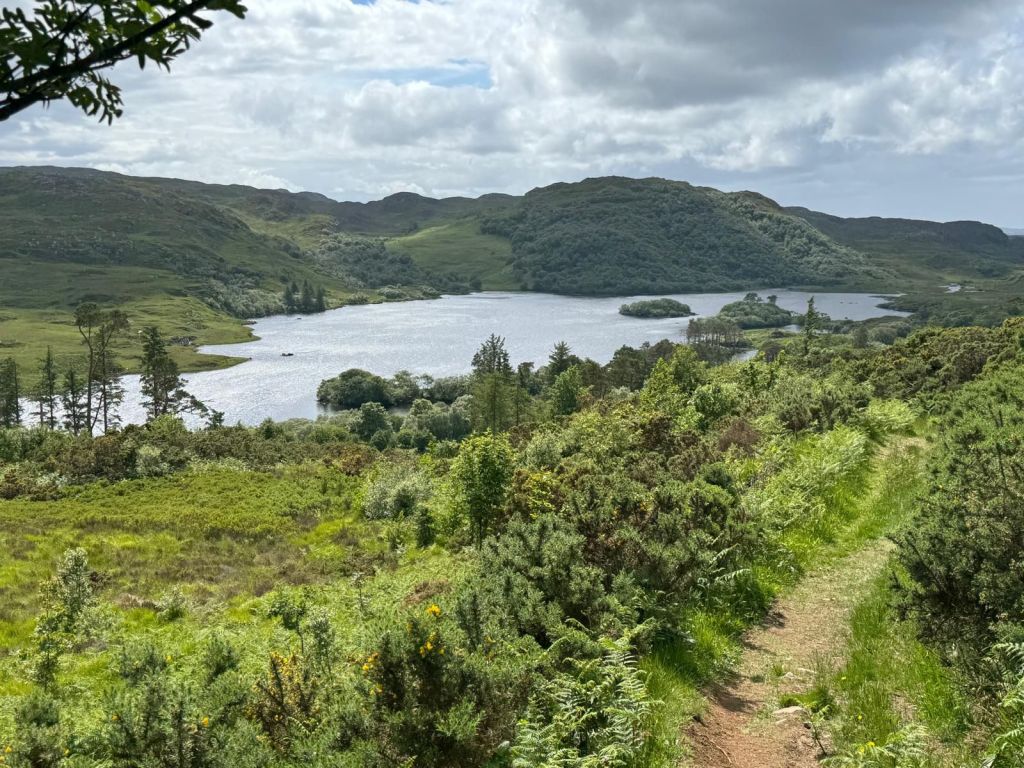
Eventually the path peels away from the river and we’re out into wild, empty hill country behind the village, nothing but deer fences for company.
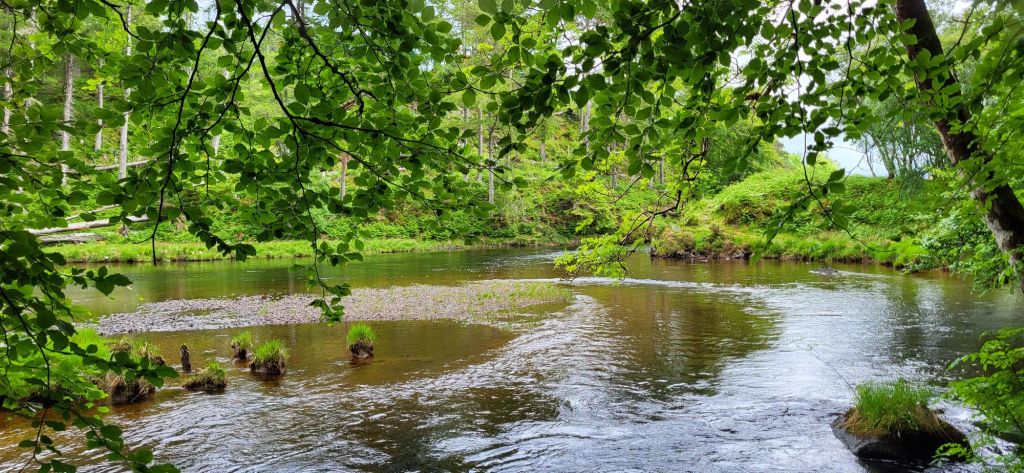
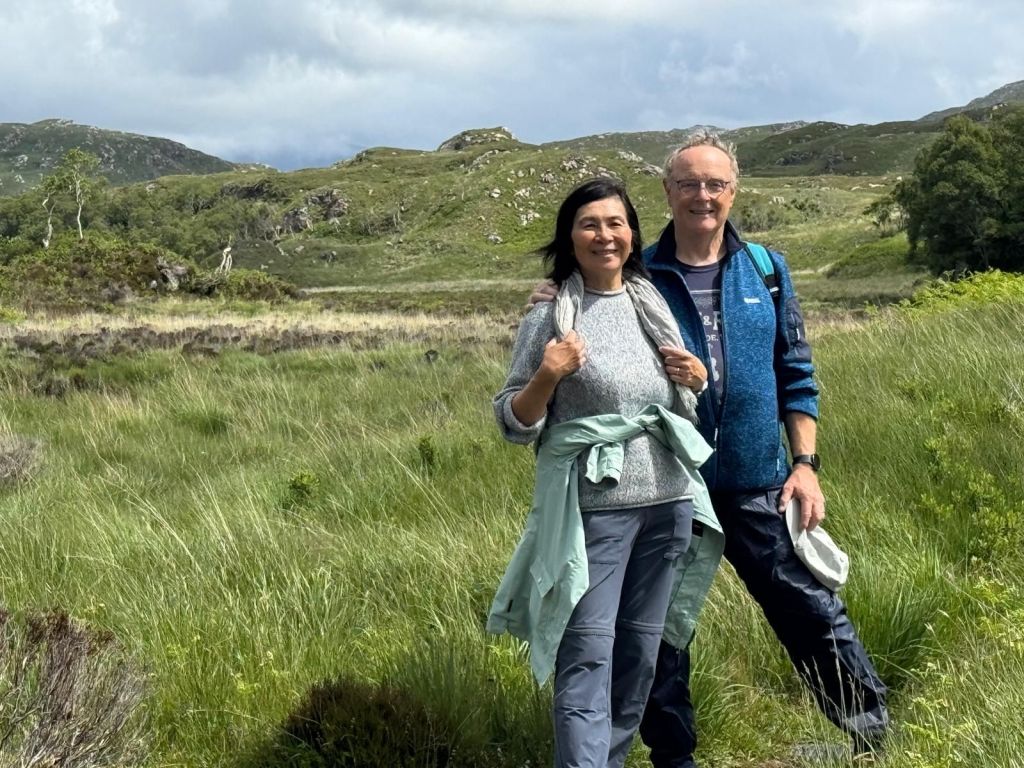
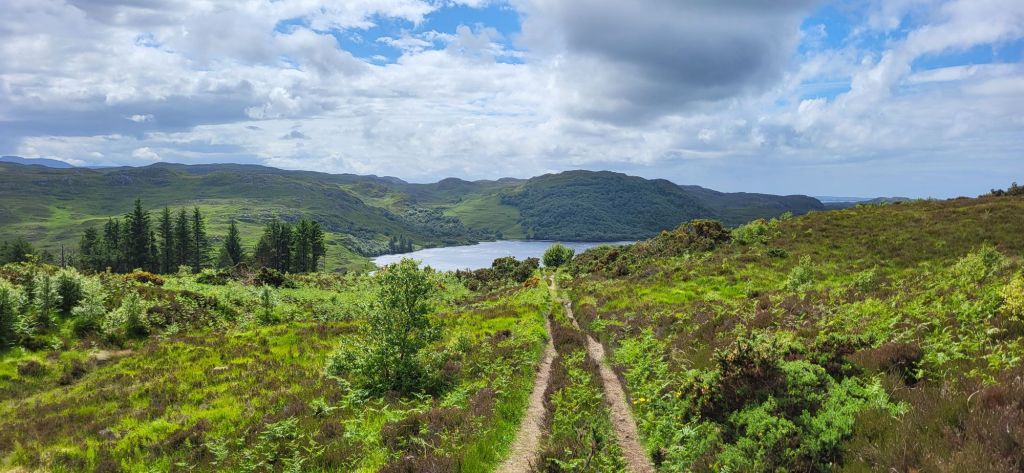
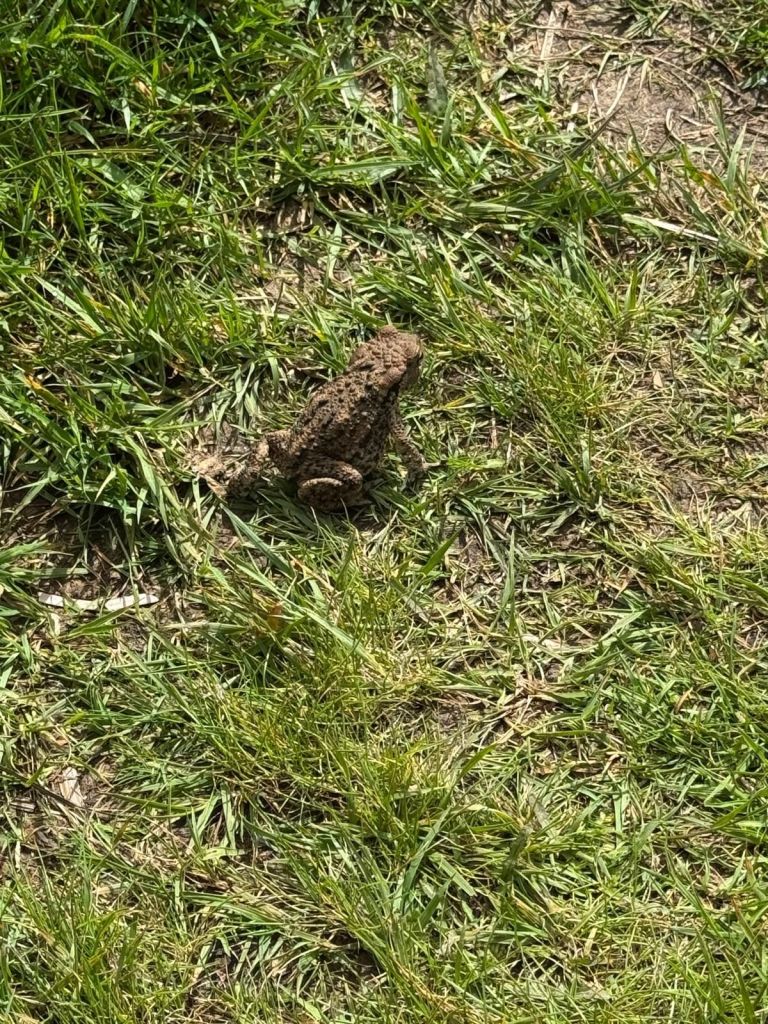
…and a very brave little toad…
The loch above the village is calm and lovely in the early afternoon sun…
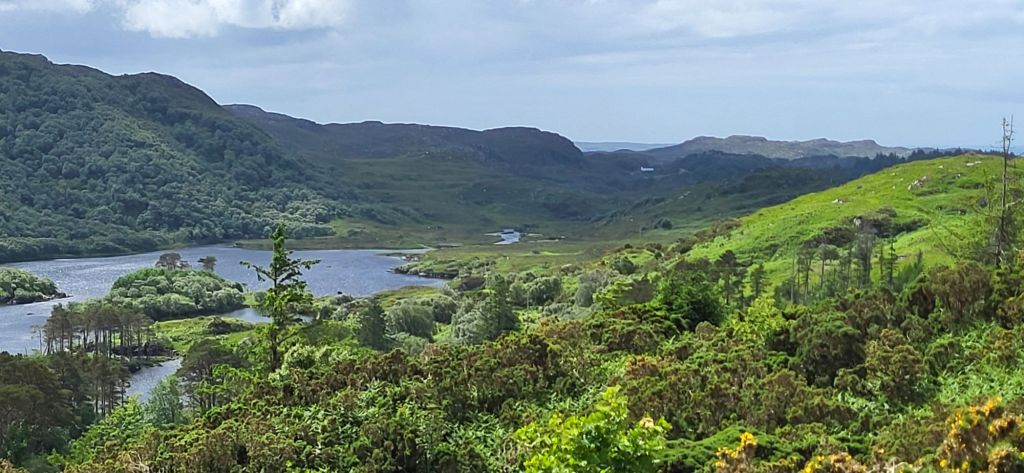
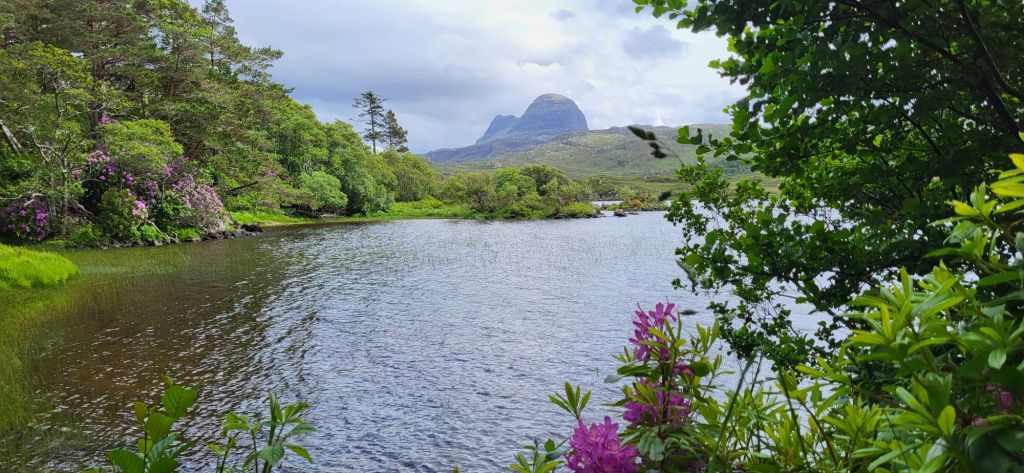
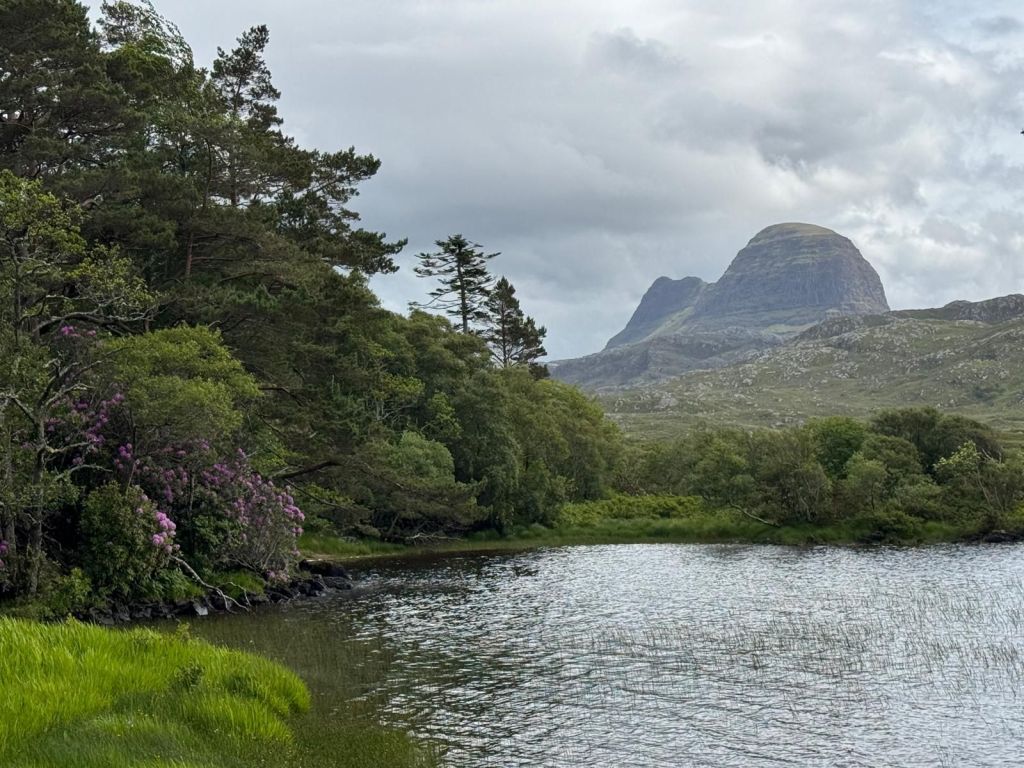
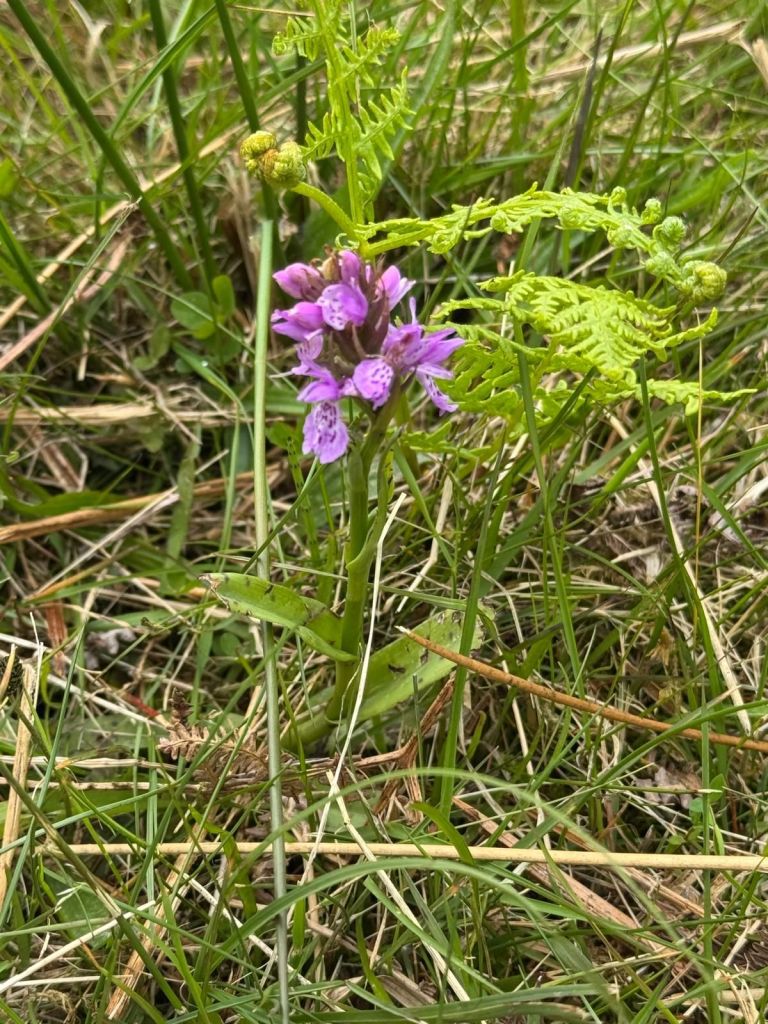
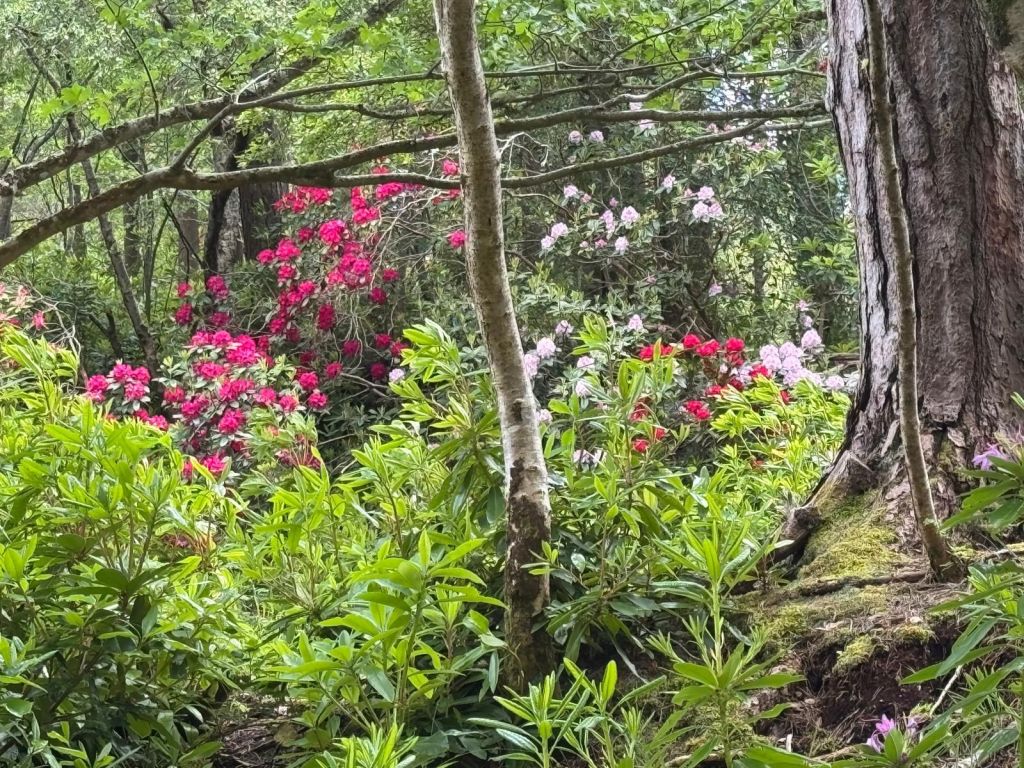
…and then we turn finally for home with a definite sense of having earned the venison waiting for 2 of us.
It’s a place that rewards you from both directions, land and sea, and we count ourselves lucky to have seen it from both. But tomorrow this should be back to a sailing blog about sailing…

