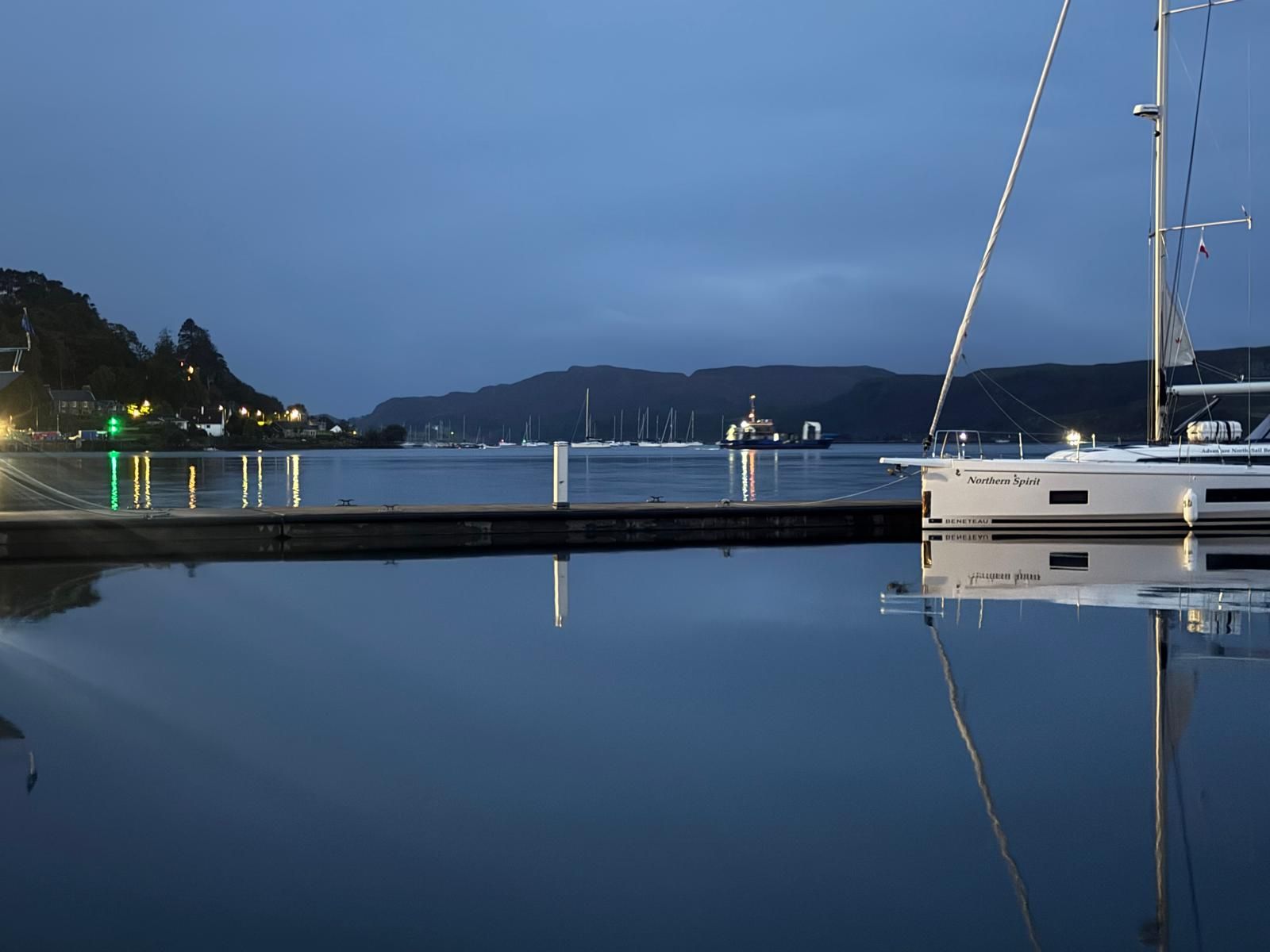
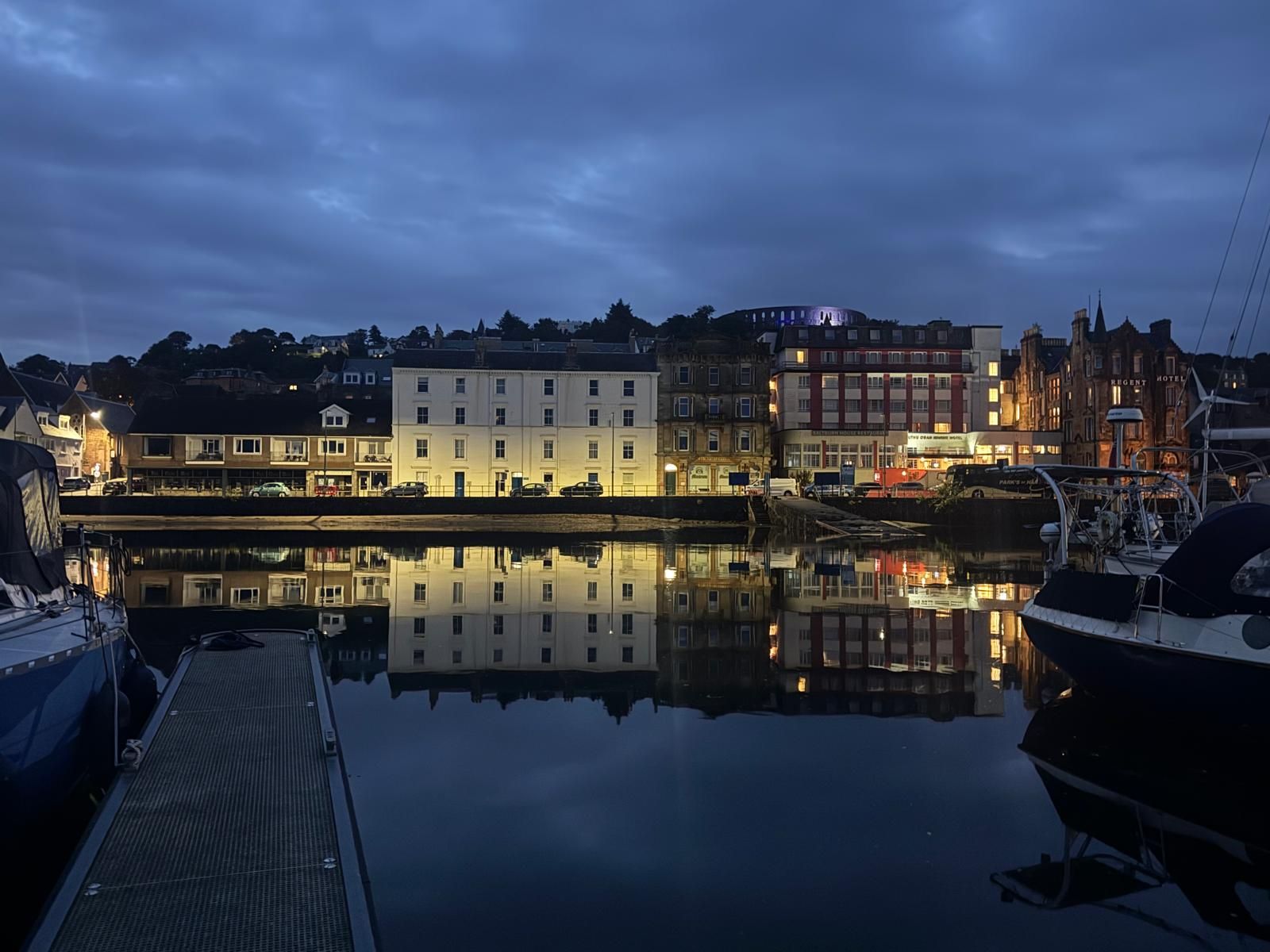
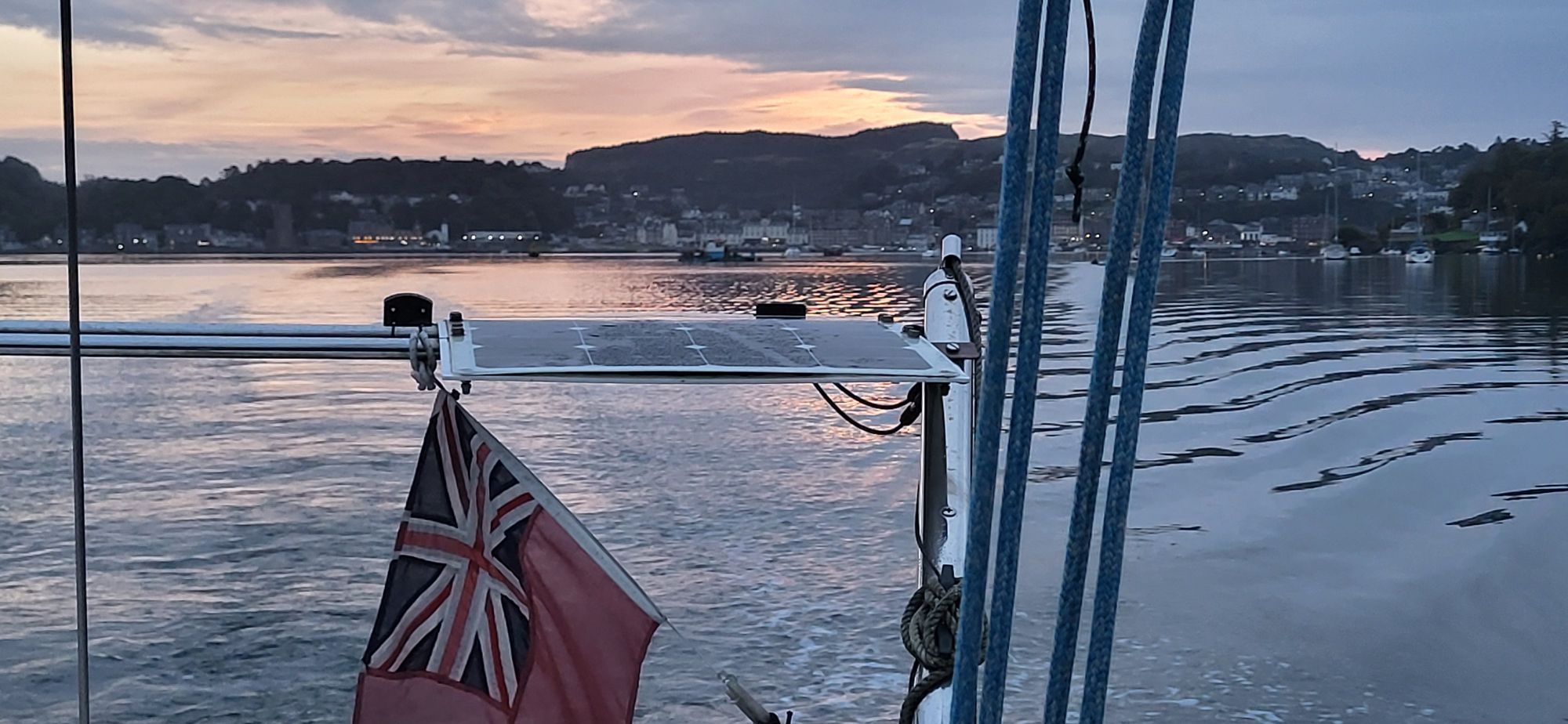
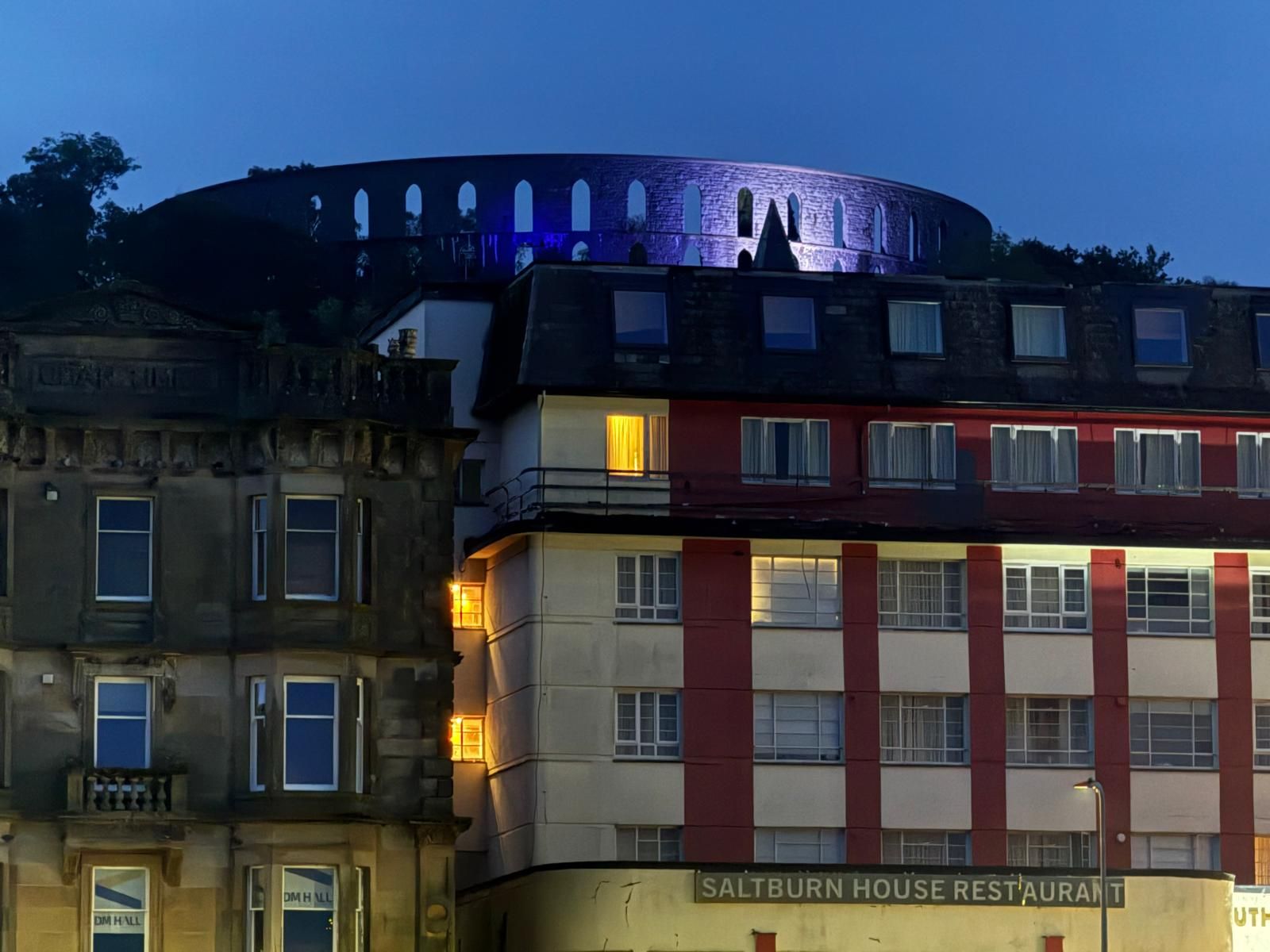
The alarm went at 5.30. We slipped the mooring at 6.32, which, in the interests of accuracy, we should record as a full two minutes shy of the hour we had actually intended. We must try harder. The first hint of light over Oban found us motoring out into next to nothing wind, engine ticking over, coffee not yet forgiven for its earliness.
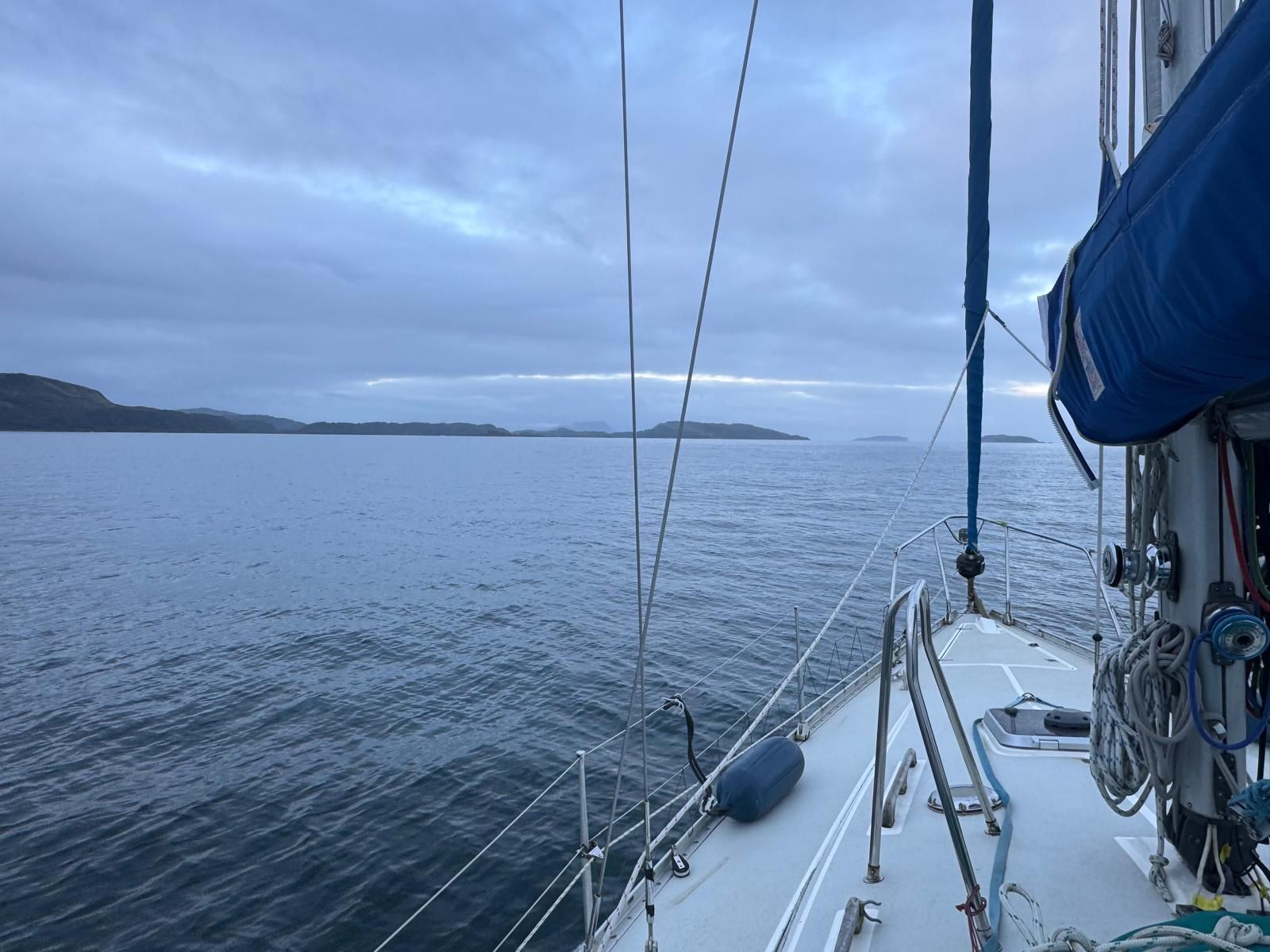
The plan, as ever with these things, was elastic. Wind, tide, our own attitude and whatever stamina remained to us would decide between Craighouse on Jura, Port Ellen on Islay, or, if the day was kind, Ballycastle in Northern Ireland. The forecast for the week ahead was unhelpful in the extreme: nothing useful heading west from Monday through to the following weekend. Given that, our working plan quietly reclassified itself as a delivery trip, the aim now was simply to get as far south as the weather would allow…
We said our goodbyes to that stretch of Scotland in lovely early light, and were shortly joined by a couple of other yachts also motoring south under power. We overhauled them steadily. Not racing, of course. Never racing.
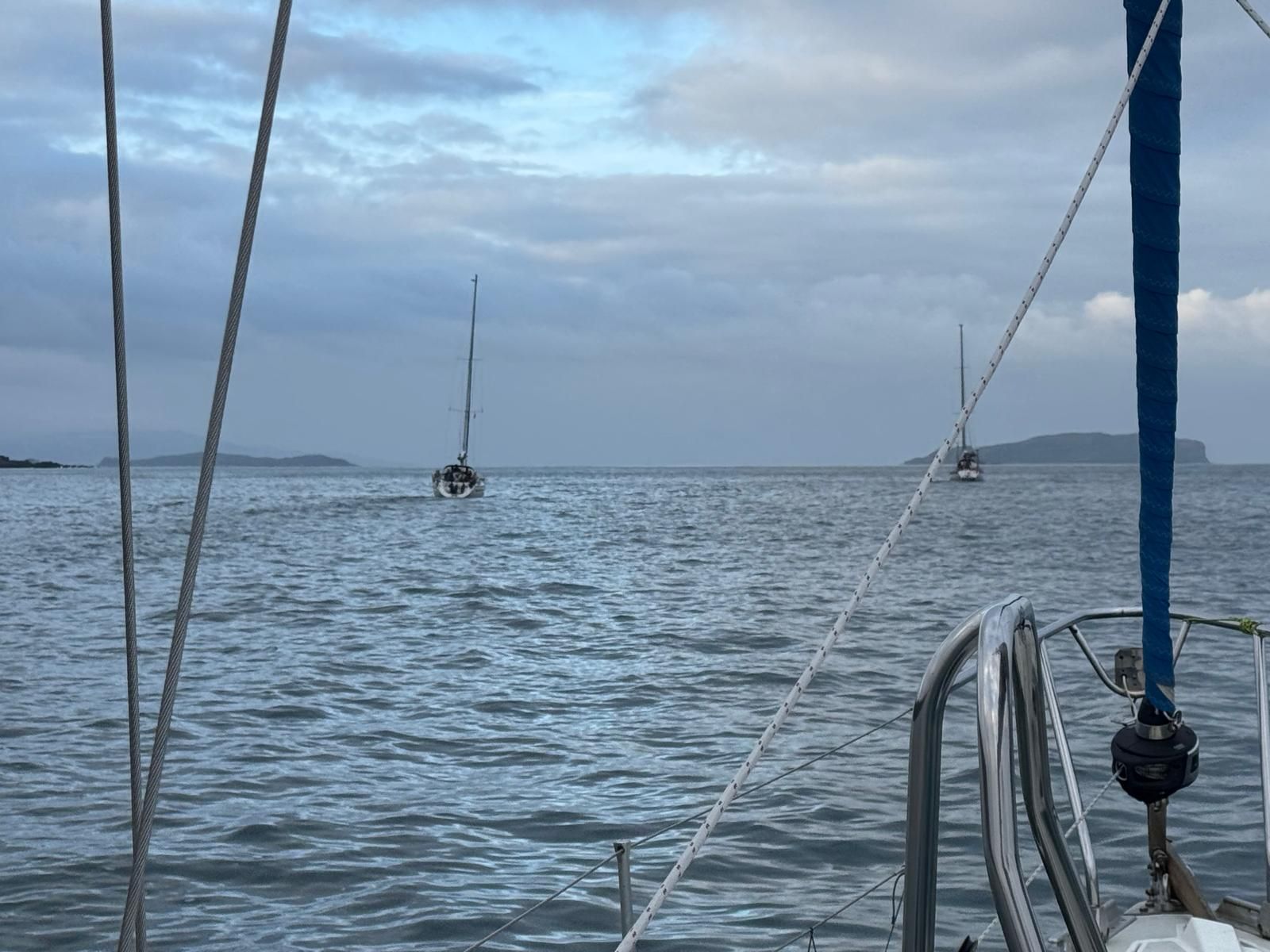
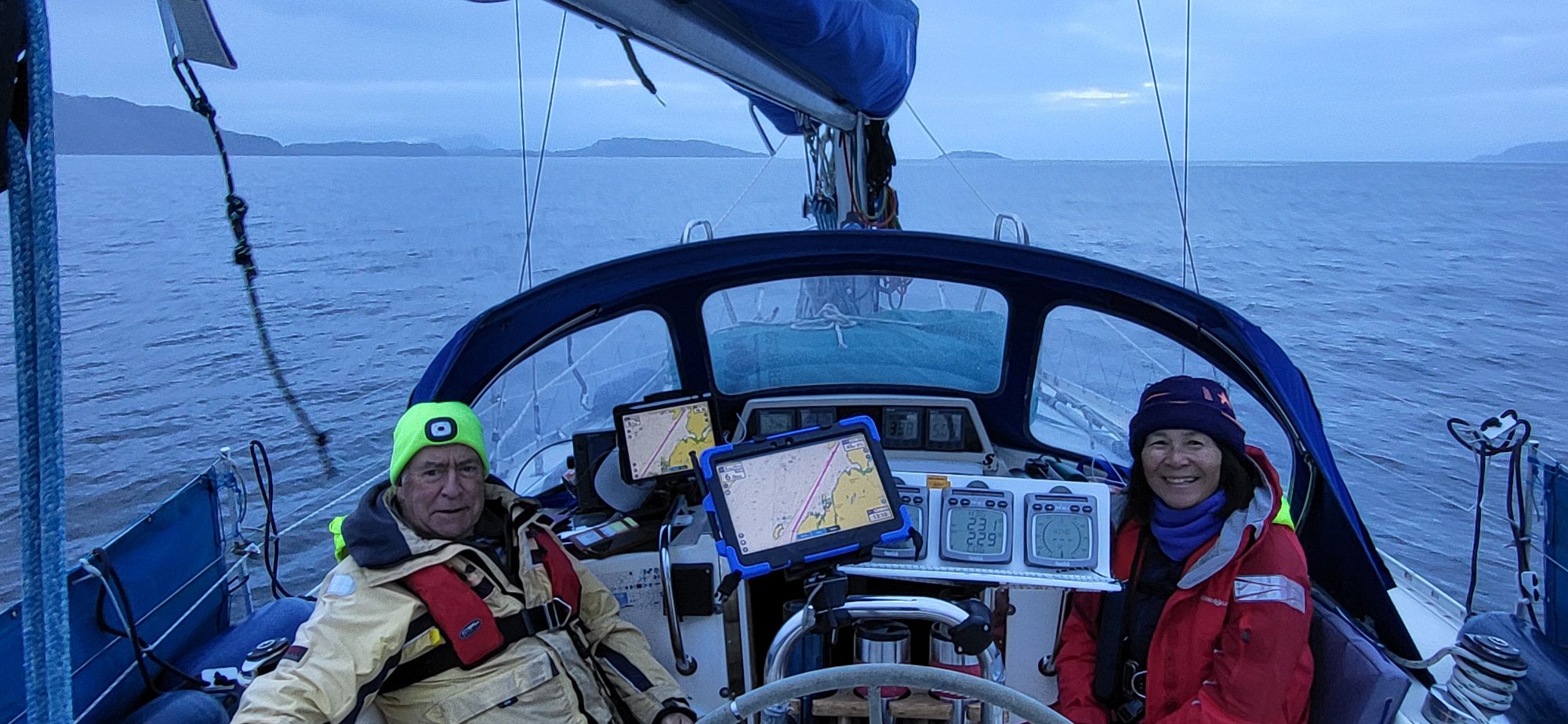
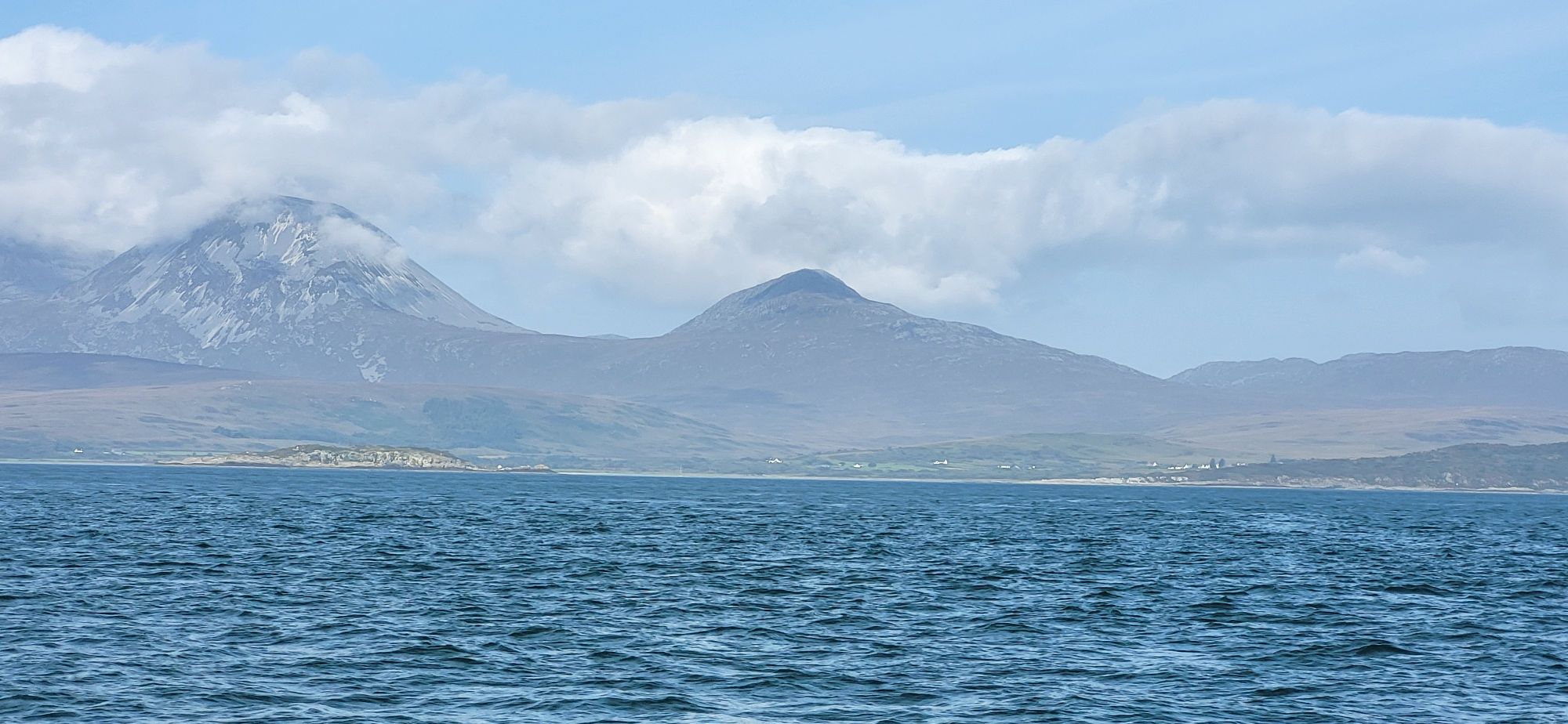
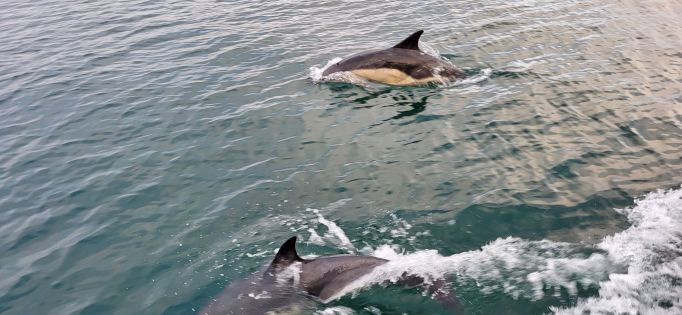
A pod of dolphins arrived to keep us company, a mother and her youngster among them, riding the bow wave with the sort of unhurried delight that never quite stops being extraordinary, however many times you have seen it.
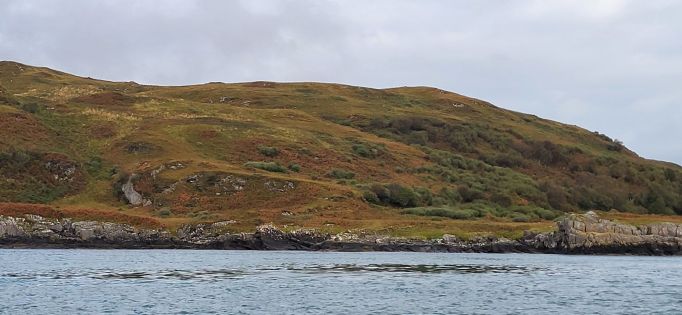
The tidal stream picked us up as we approached the Corryvrekan, and our speed built through its eddies and whirlpools until we were making 14 knots over the ground as Scarba slid past in something close to a blur. There is a particular moment in that passage, timed correctly against the tide, when turning back stops being a meaningful option and committing becomes the only sensible course. We had timed it correctly.
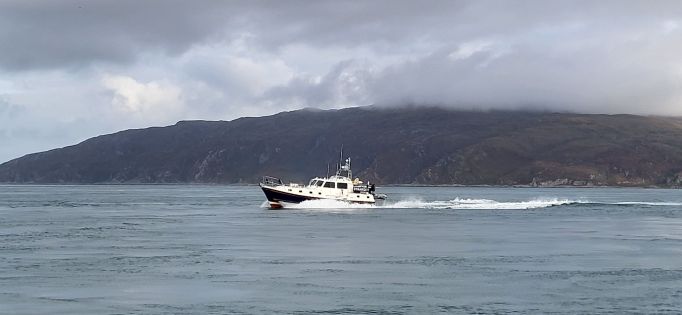
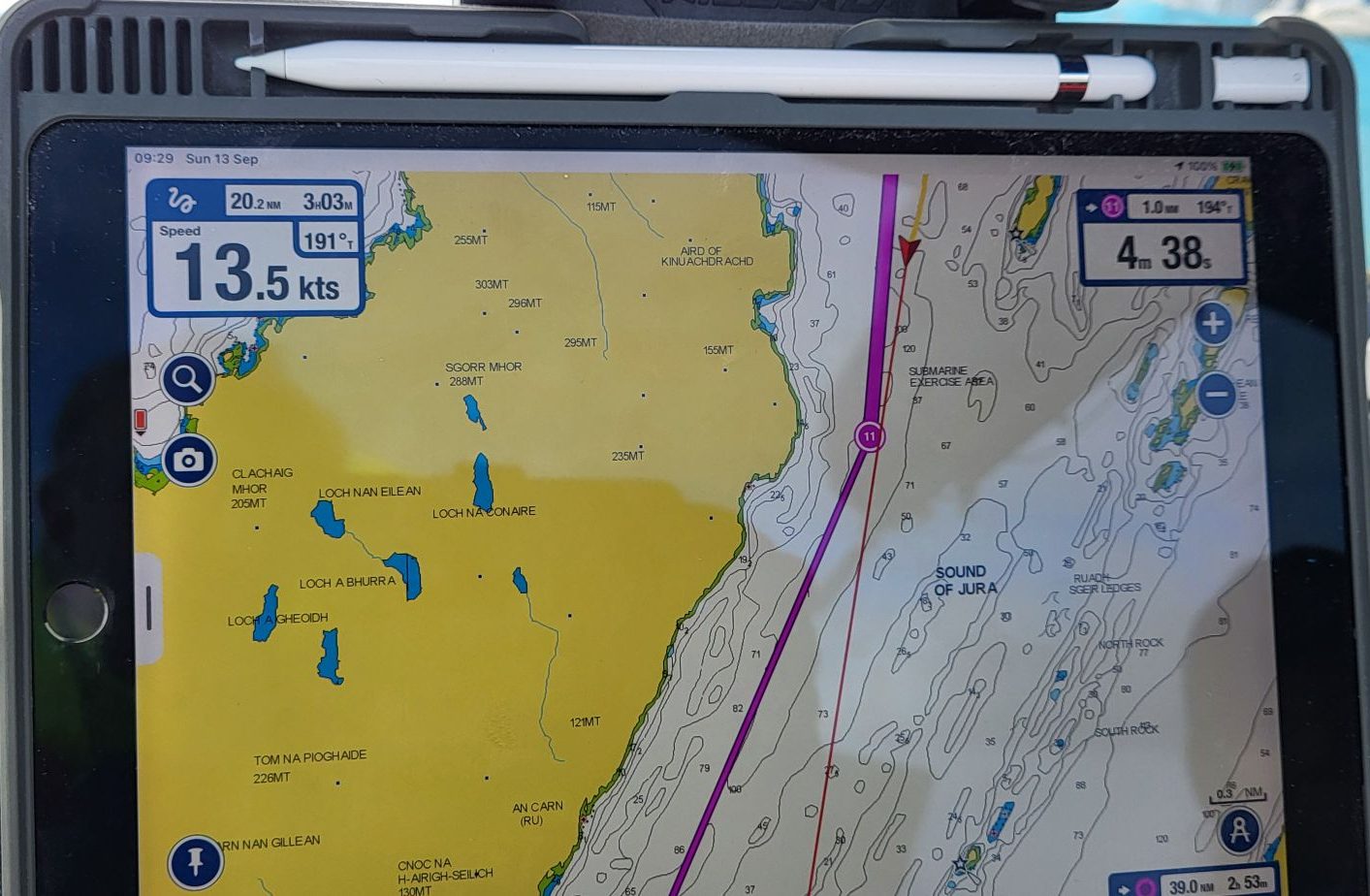
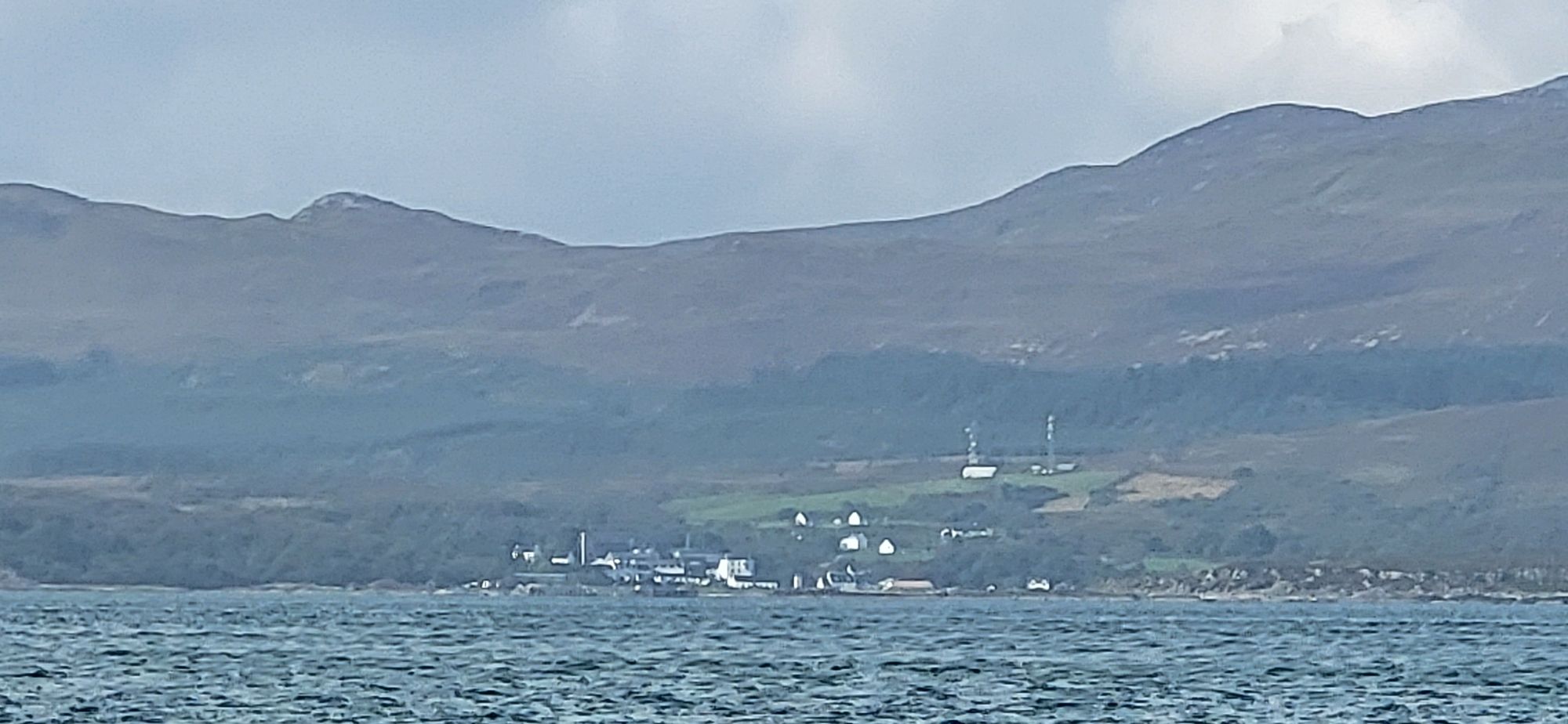
The wind, true to forecast, sat stubbornly on the nose, though mercifully light, no more than 5 knots. We were off Craighouse by 11.30, with Port Ellen only a few hours further on, and began, cautiously, to entertain the idea of Northern Ireland before dark. The wind freed a little through the afternoon and Heydays settled into a rhythm over a deepening swell, the last signature of the winds that had held us in Oban. Not only did we believe that we could make NI itself, but that the river Bann itself could be a possibility….the fall back could always be Port Rush…
The midday forecast confirmed it. South-easterlies were due before the south-westerlies arrived, hopefully not before midnight, with four or five days of unbroken strong westerlies to follow after that. As Islay dropped astern and Rathlin came up on the horizon, we edged a few degrees further west with the freeing wind, toward the entrance of the River Bann and the passage up to Coleraine, where Heydays would spend the winter. Whether we would arrive before the light went was, for a while, genuinely in the balance.
Yee Tak had prepared supper in advance, and in the calmer water under the lee of the land we worked through bowls of pasta in a sauce of indeterminate but agreeable origin, improved by a tin of mackerel. Fed, and reasonably confident, we felt ready for whatever the entrance had in store.
The evening sun slid down behind the hills of Donegal…
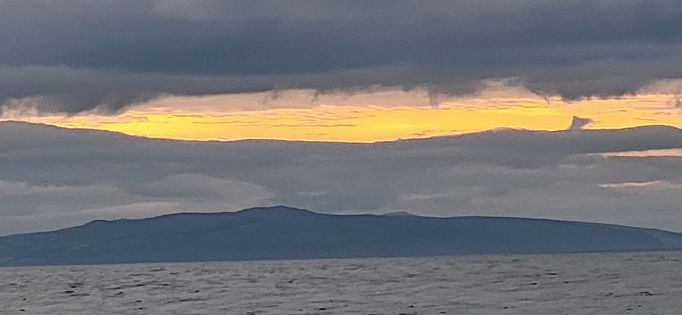
… and ahead we picked out headlights on the Portrush road and the flashing lights of a small funfair on the front. A year ago, almost to the week, this same stretch of water had produced an enormous pod of dolphins putting on a display none of us has quite stopped talking about since. This time there was no welcoming party, just one dolphin cruising past in the opposite direction, possibly asleep, in the way dolphins apparently manage, with only half a brain at a time. We did not ask her opinion of our navigation.
The breakwaters and leading lights of the Barmouth came up out of the dusk, the entrance to the Bann, with breaking water visible where the river meets the sea. It was high water, no breakers showing across the bar itself, and we had heard enough stories over the years about standing waves and white water here to take the state of the tide seriously. We went in. What we actually encountered was a very slight swell, a thoroughly welcome anti-climax, and we waved at some evening anglers as Heydays made her stately way up a darkening river.
A mile upstream we picked up a mooring buoy, cut the engine, and let the evening take over: just the gentle slop of water under the bow as the tide began its long fall back to the Atlantic. Not far short of fourteen hours underway, longer than planned, but the sort of day that rewards using the weather, wind and tide you are actually given rather than the ones you had hoped for.
We woke to a quiet river, curlews and early waders doing the talking, and rose slowly to arrange the lifting of the railway bridge and take Heydays up to her resting place for the winter.
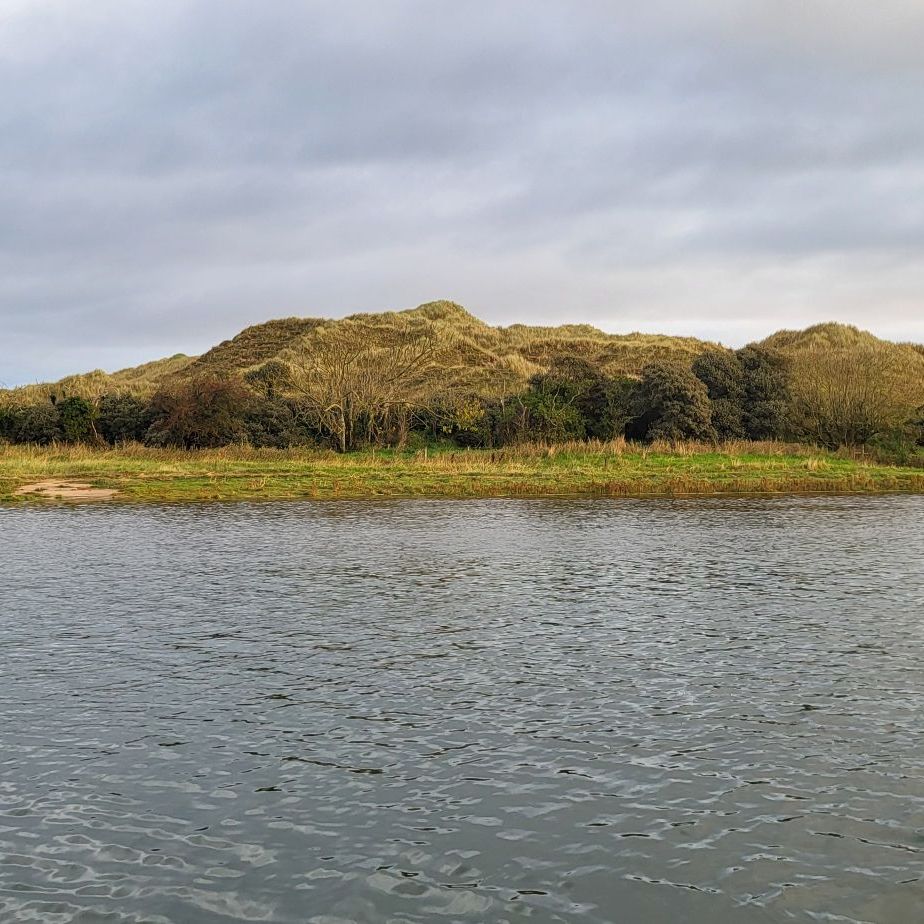
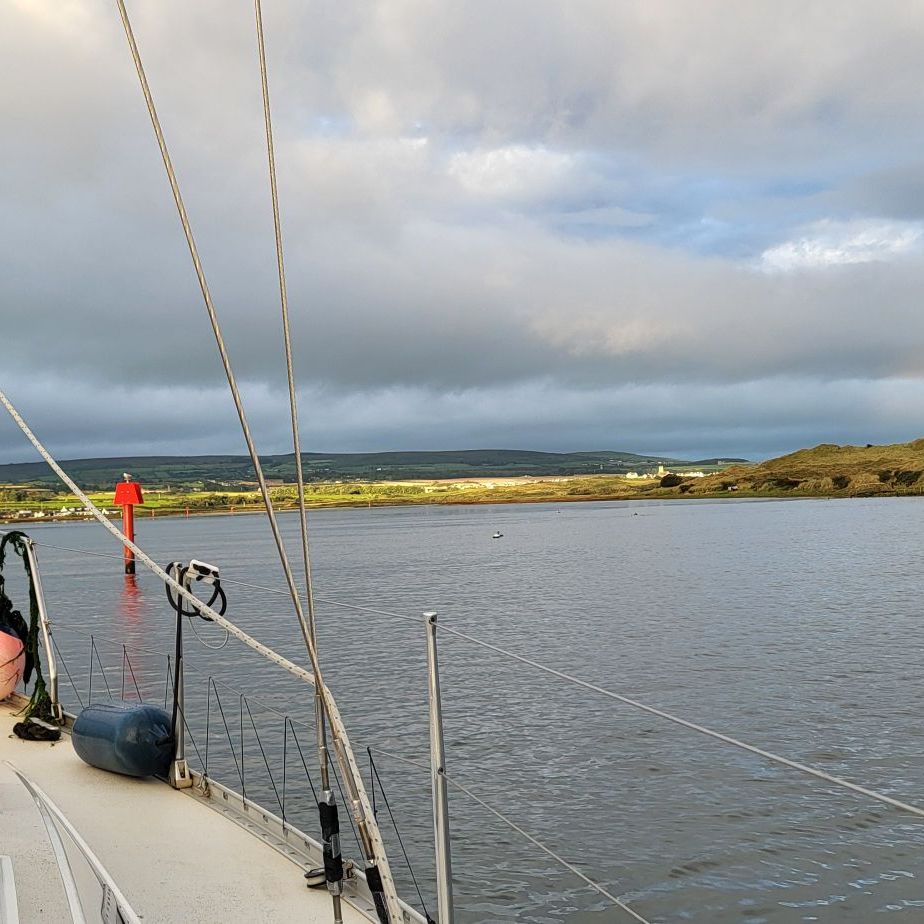
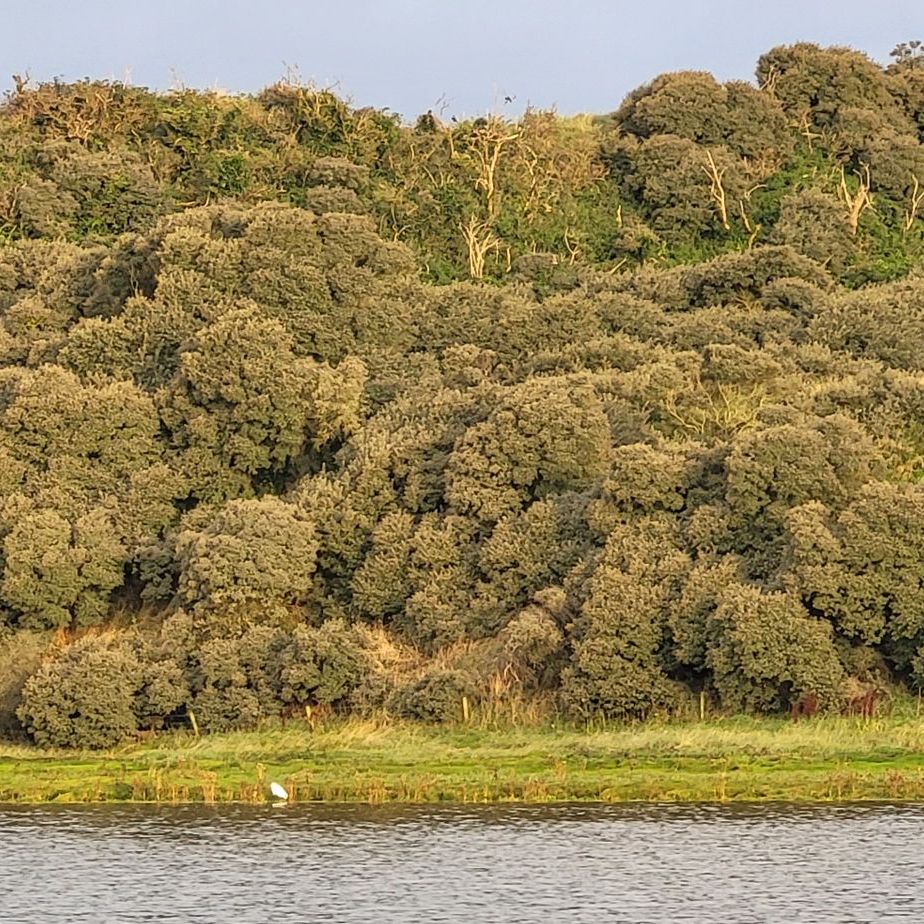
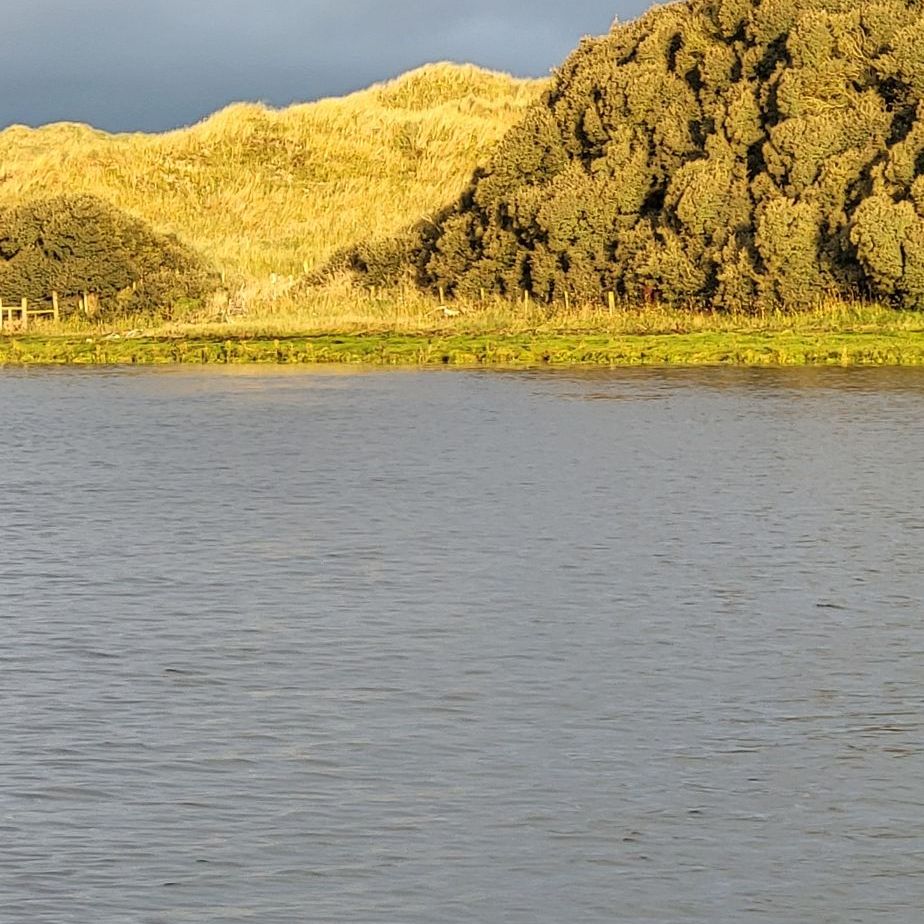
An unhurried rise and breakfast this morning for a change and we head up stream and through the railway bridge…
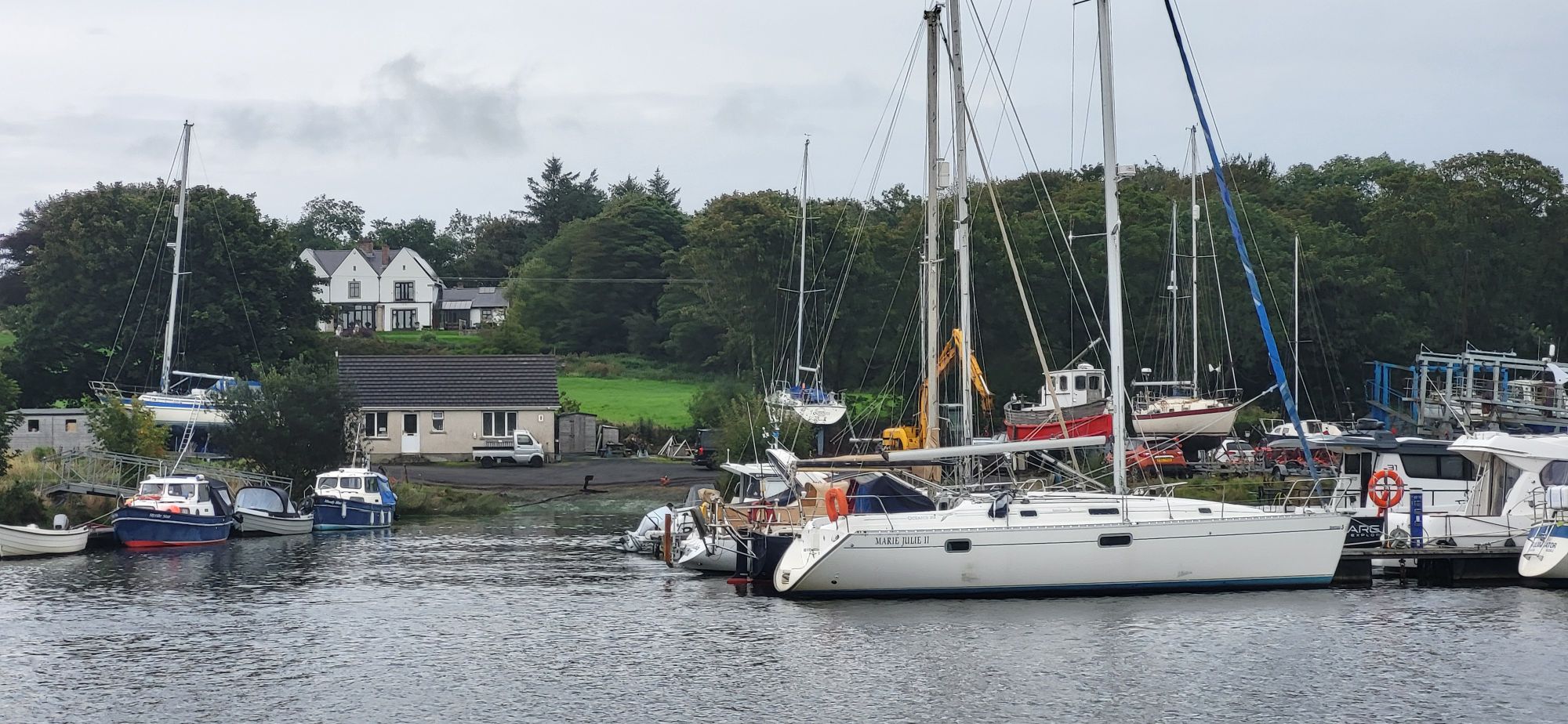
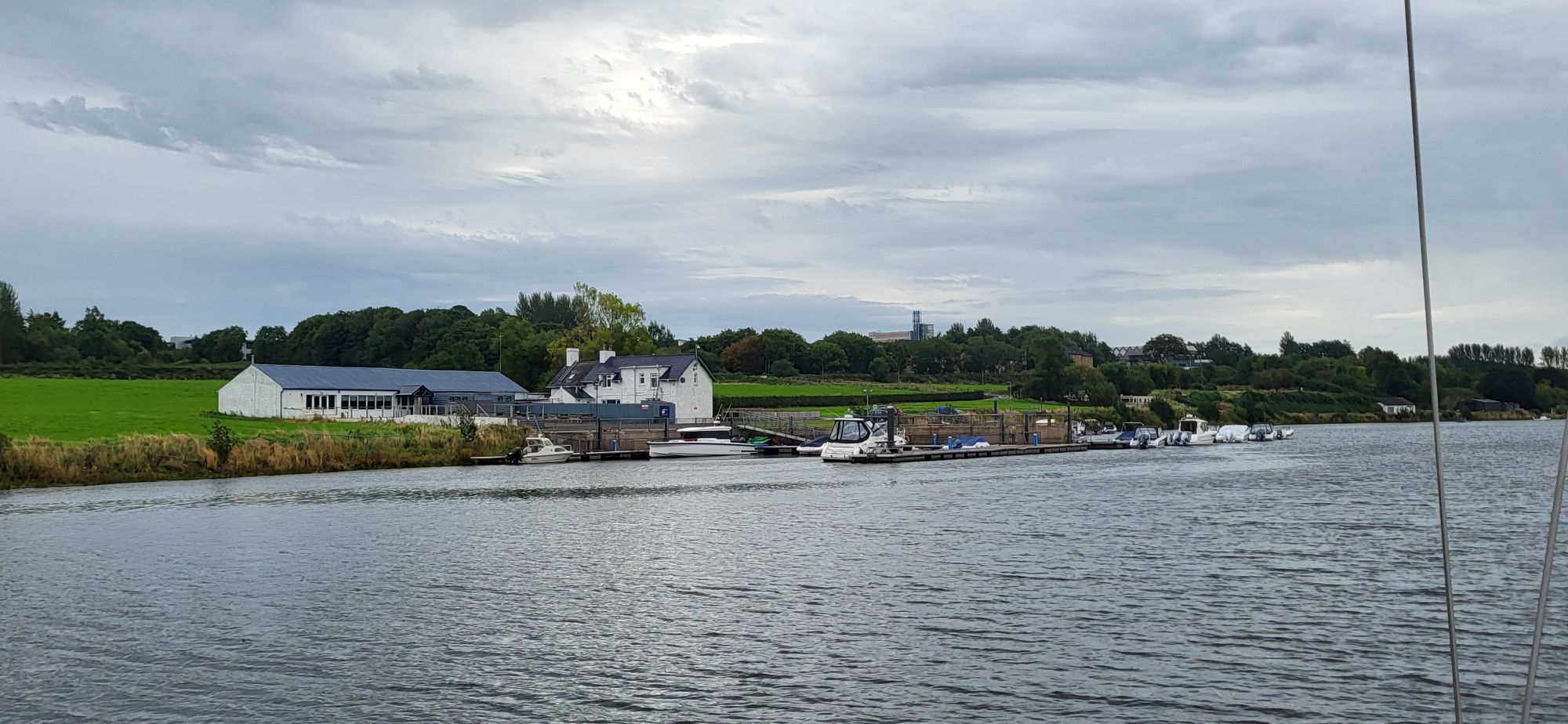
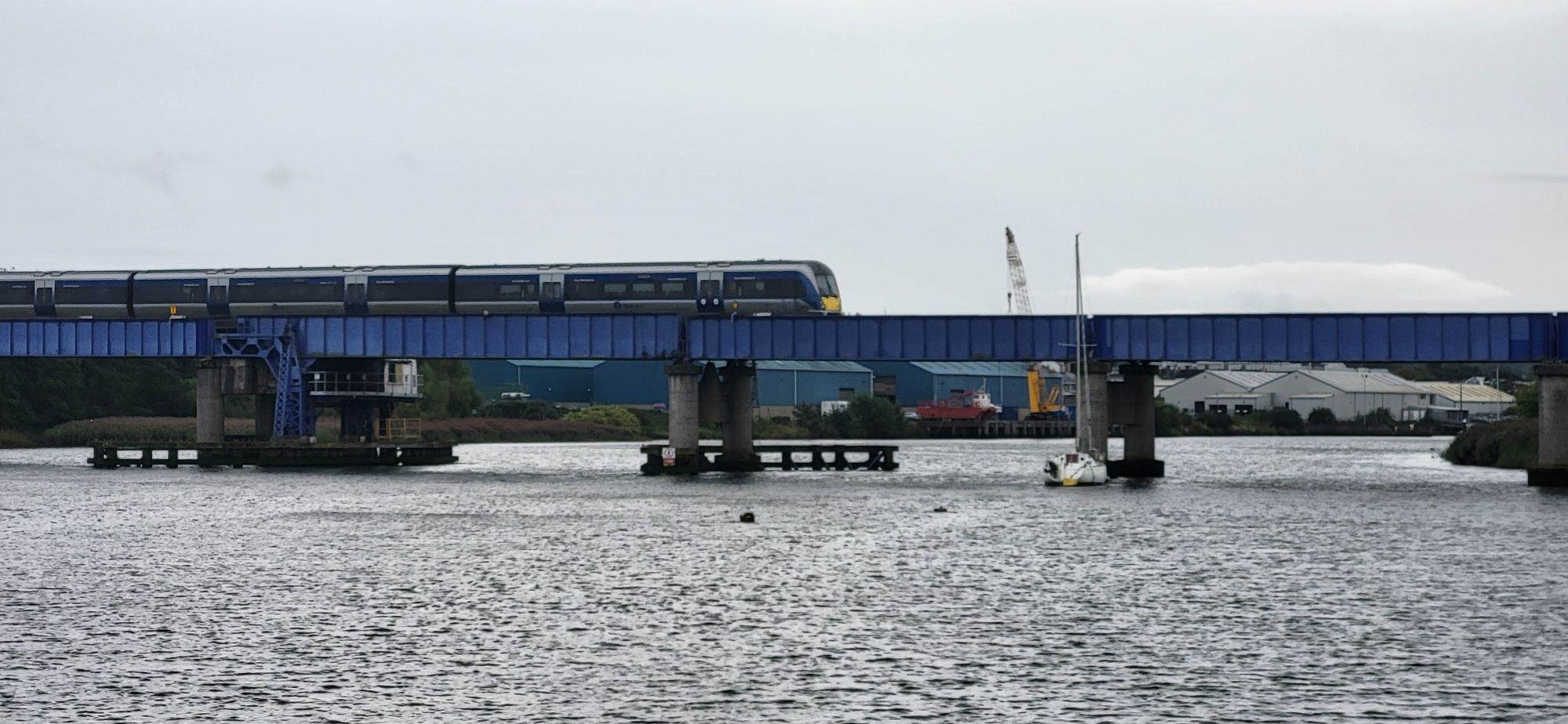
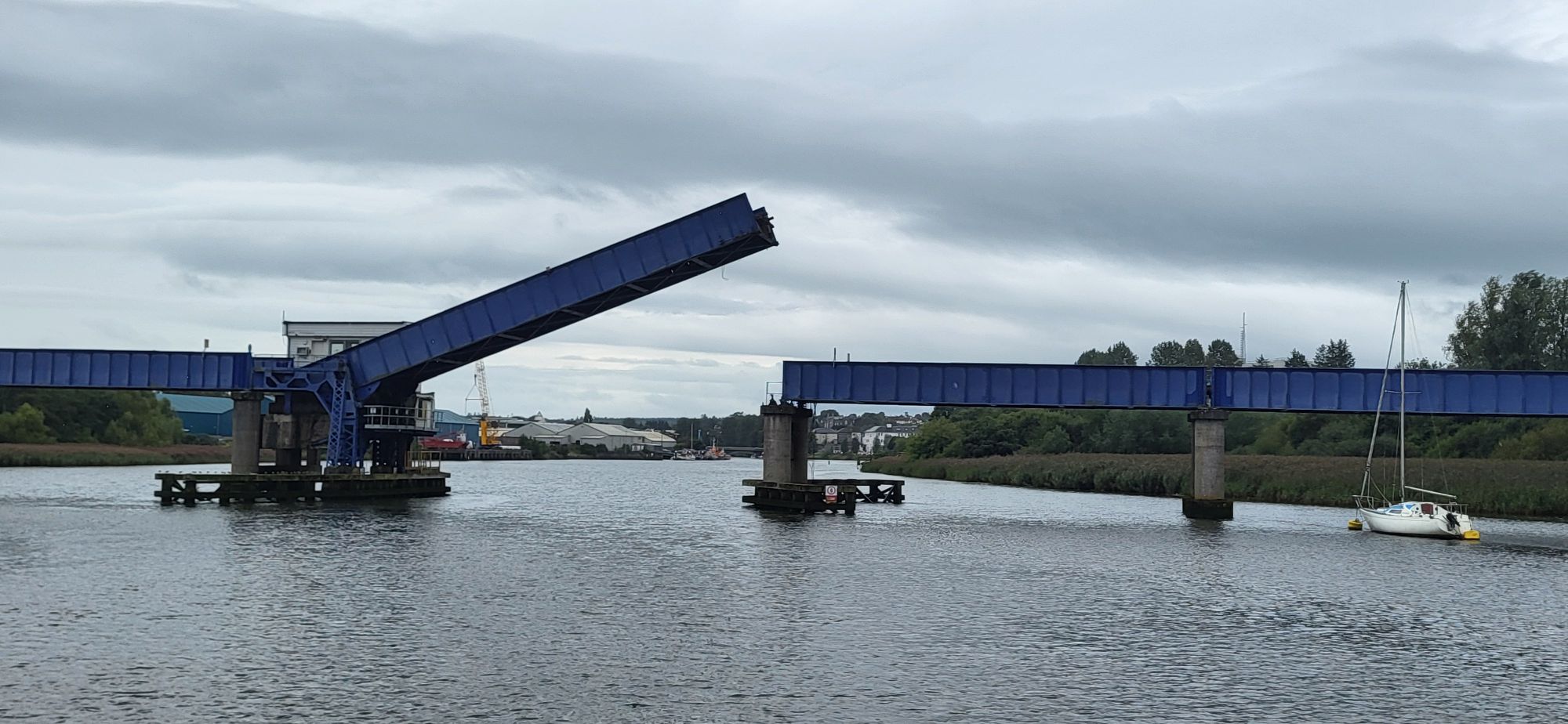
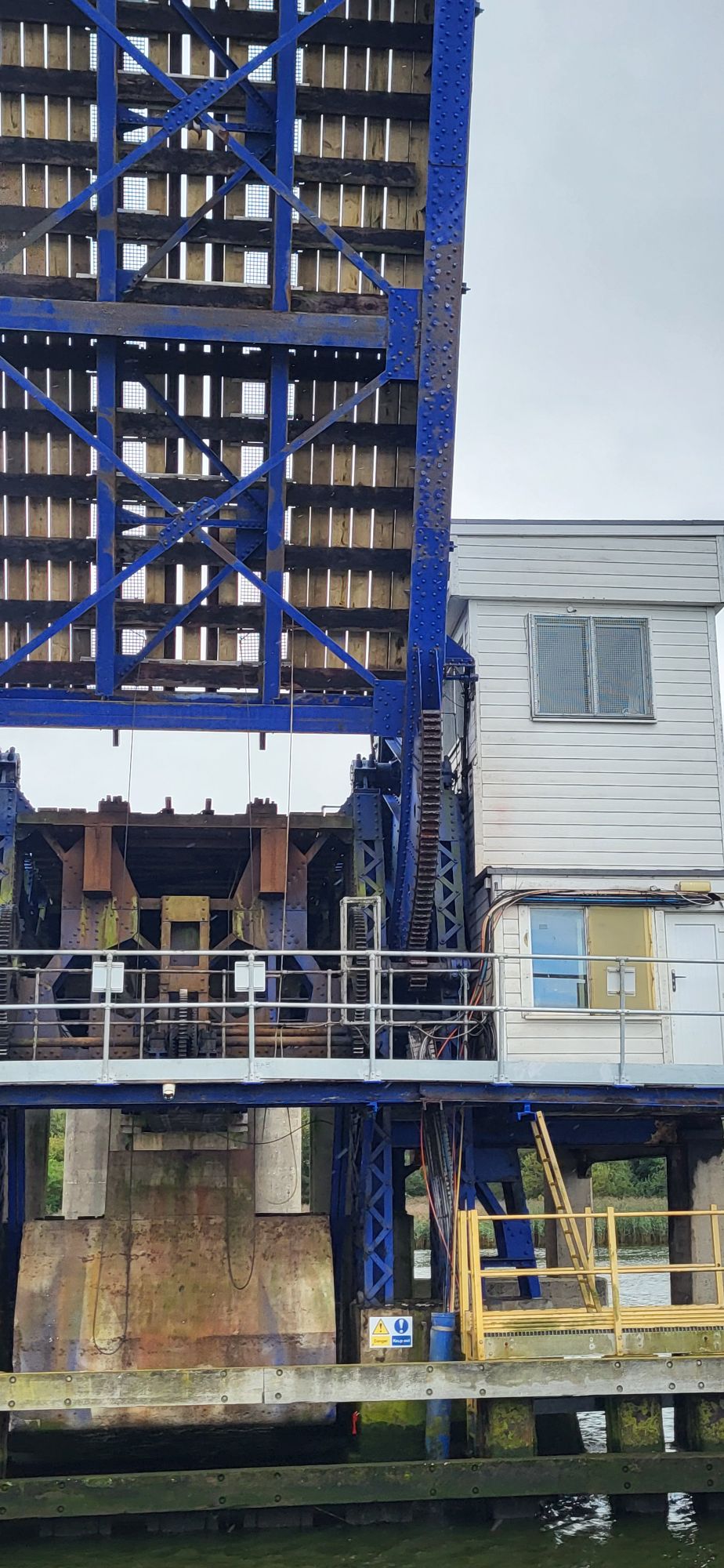
There is always, as ever, a short list of minor jobs waiting: this year the rudder seals need replacing and the transducers re-seating, so she will come ashore for a month or so while that is done. The harbour staff, as warm and as generously unbothered as always, offered the sort of remark that only makes sense in hindsight, delivered as the rain swept through: lucky you came over the Barmouth yesterday, if you hadn’t you’d be stuck outside for a week. Lucky indeed, we agreed, allowing ourselves a small, private satisfaction that it had, in fact, been plan C all along.
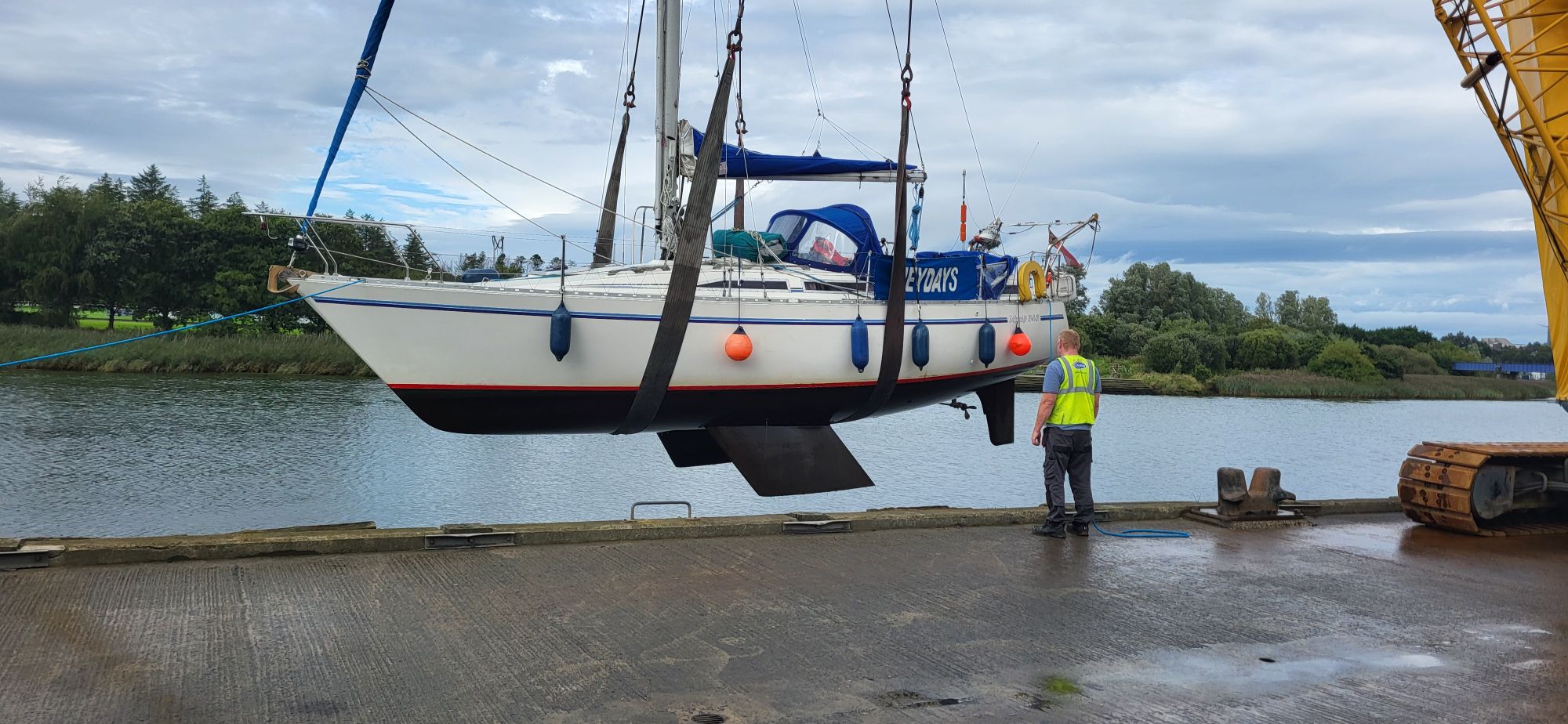
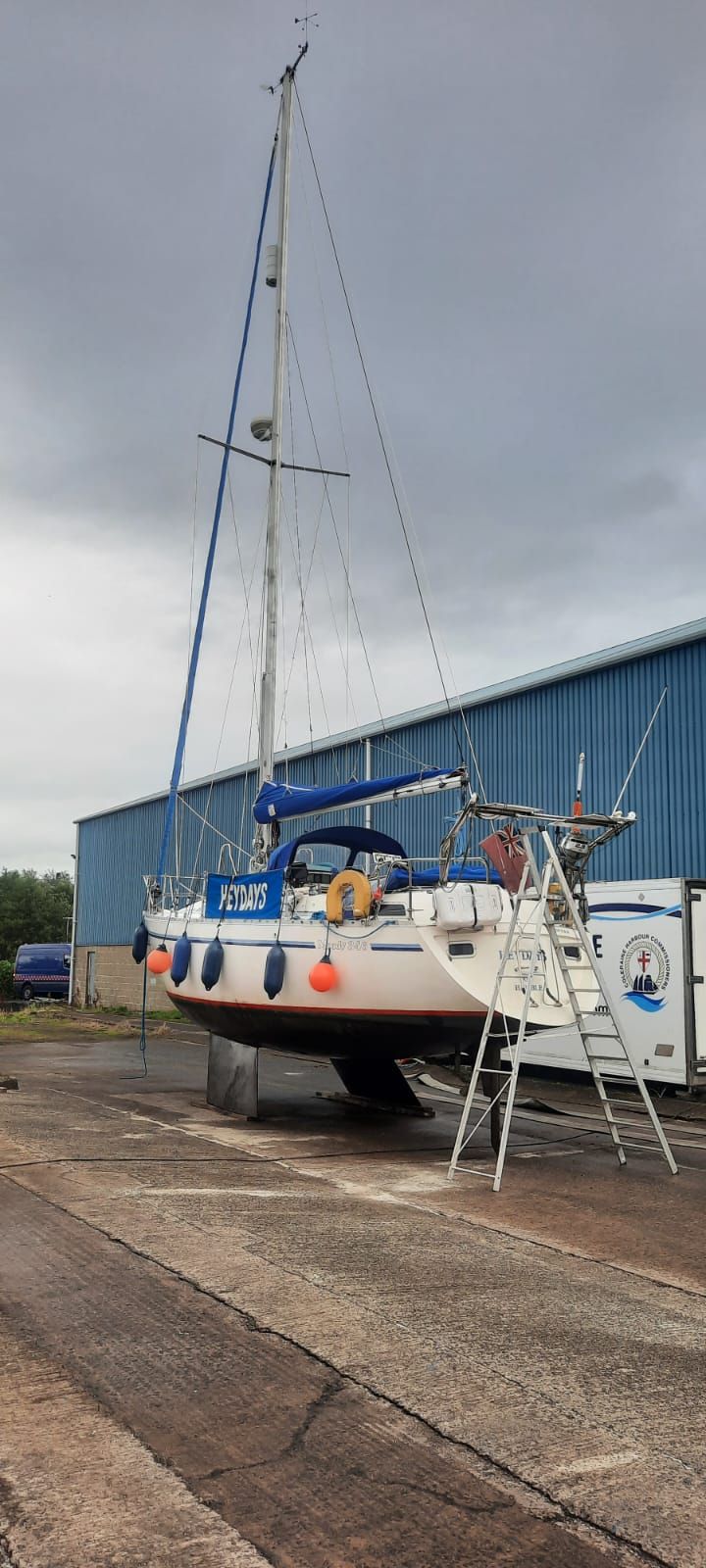
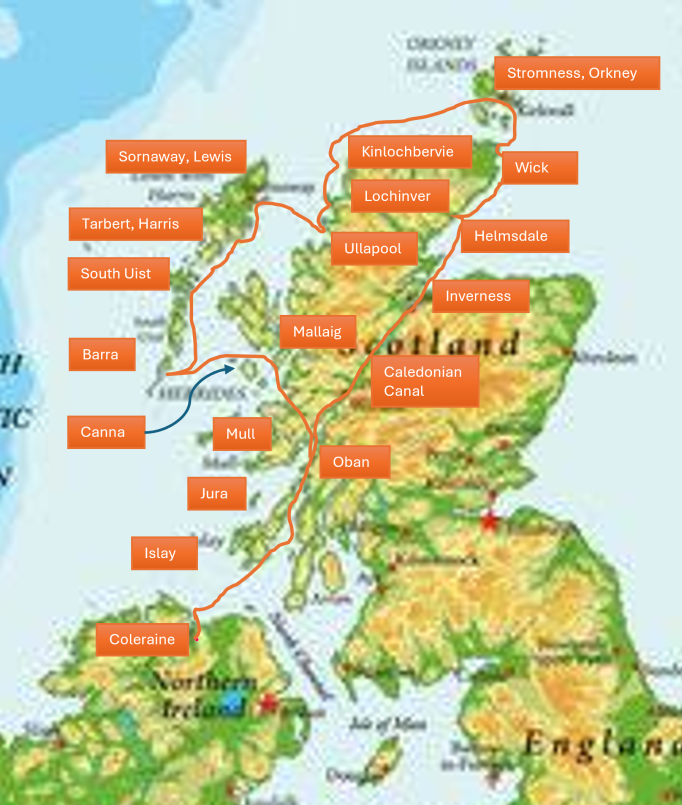
And here we leave Heydays and this blog until the spring, when we hope to pick up the voyage home by way of the parts of Ireland we missed last year, with a little more time allowed for the Scillies. Looking back over the whole run, the Highlands, Orkney, the Outer Hebrides, it has felt less like a cruise and more like a slow and occasionally humbling education in island life. The weather up there has not so much interrupted our plans as utterly changed them, making our careful routing into a work of fancy, until we stopped thinking of the changes of course as setbacks and started recognising them as simply how things are done up here. It is a lesson the islanders themselves seem to have learned generations ago, and one we were only ever passing through long enough to half learn.
Very final PS…..several friends have asked what it is like living with another couple on a smallish boat for weeks on end….we may have some thoughts in an occasional later post!!


Well done to you, and what a lovely trip, (weather and all!) Have enjoyed sharing your adventures, and loved the photos and videos (especially of the dolphins!) Look forward to your next escapades, especially around the Scilly Isles, (some favourite old haunts of ours) Safe travels home, and roll on Spring! xx
LikeLike
Thanks and any time you travel down south, come and see us. Would be great to see you again. xx
07887567097
LikeLiked by 1 person
We certainly would if we ever get down that way xx
LikeLike